The US government will take equity stakes worth a total of $2 billion in a slew of quantum computing companies, including a startup backed by a firm with links to the Trump family and one taken public by a Pentagon official.
The announcement by the commerce department that it had signed letters of intent with nine companies—including GlobalFoundries and IBM—sent shares in quantum specialists soaring on Thursday.
Both IBM, which is set to get $1 billion, and GlobalFoundries, which will receive $375 million, were up more than 6 percent in pre-market trading. D-Wave Quantum, an awardee that was taken public in 2022 by Emil Michael—now a top Pentagon official—was up more than 20 percent.
On a blazing hot day in South Africa, female southern pied babblers can’t think straight. The medium-sized black-and-white birds are trying to get at tasty mealworms behind a see-through barrier. On cooler days, the birds can quickly figure out that all they have to do is go around the small wall of plastic. But when the mercury goes up, the birds just keep stubbornly pecking at the barrier.
That experiment is part of a growing body of research showing that animals get their minds muddled during heat waves. When it’s hot outside, birds struggle to learn, dogs bite more often, goat-like chamois pick fights. This is bad news not just for those who get on Fido’s toasted nerves. If the animals can’t stay alert enough to find food or avoid predators, their chances of survival go downhill, says Amanda Ridley, a behavioral ecologist at the University of Western Australia who coauthored the pied babbler study.
With climate change making heat waves more common, such cognitive impairments across the animal kingdom could ripple through entire ecosystems, putting already fragile species at greater risk. If pollinators forget which flowers to visit, crops and wild plants may fail. If birds can’t find food as easily, their young may not survive. And on a warming planet, a sharp mind is particularly vital. “A changing climate means that your ability to behaviorally adapt is even more important,” Ridley says.
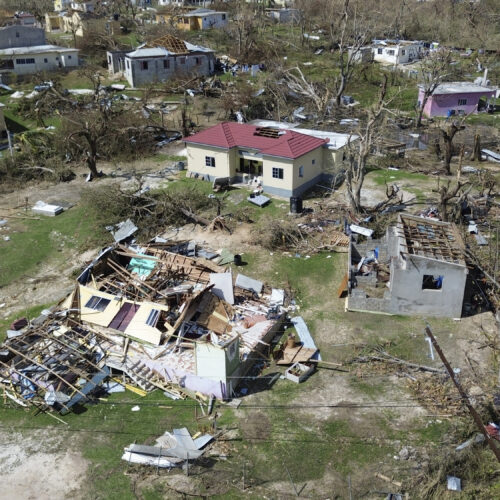
Forecasters are calling for below-average activity this hurricane season, which begins Monday, June 1.
The National Weather Service is predicting eight to 14 named storms, including three to six hurricanes and one to three major hurricanes of category 3, 4, or 5 strength, packing winds of 111 mph or greater. By comparison, a typical season is characterized by 14 named storms, including seven hurricanes and three major hurricanes. The season ends November 30.
“It just takes one,” said Ken Graham, director of the National Weather Service. “Now is the time to start thinking about your hurricane preparedness.”
For migrant workers trapped onboard Chinese distant water fishing fleets, cutting the fins off sharks as they writhe violently on rusted decks in the Indian Ocean isn’t accidental. It’s an intentional and lucrative act that marks the start of a bloody half-a-billion-dollar offshore supply chain, tacitly supported by Beijing yet covertly concealed from port inspectors globally.
The Center for Biological Diversity, a nonprofit focused on the protection of endangered species, filed a formal petition this month requesting the U.S. government potentially sanction China for failing to meet American shark conservation standards. Shark populations have declined by more than 70 percent since 1970, with more than one-third of all shark and ray species now threatened with extinction. Yet each year, Chinese-flagged vessels catch, brutally fin, and discard thousands.
Should the National Marine Fisheries Service identify China as having violated the US Moratorium Protection Act, then President Trump could be expected to ban the import of all $1.5 billion of Chinese seafood.
On a blazing hot day in South Africa, female southern pied babblers can’t think straight. The medium-sized black-and-white birds are trying to get at tasty mealworms behind a see-through barrier. On cooler days, the birds can quickly figure out that all they have to do is go around the small wall of plastic. But when the mercury goes up, the birds just keep stubbornly pecking at the barrier.
That experiment is part of a growing body of research showing that animals get their minds muddled during heat waves. When it’s hot outside, birds struggle to learn, dogs bite more often, goat-like chamois pick fights. This is bad news not just for those who get on Fido’s toasted nerves. If the animals can’t stay alert enough to find food or avoid predators, their chances of survival go downhill, says Amanda Ridley, a behavioral ecologist at the University of Western Australia who coauthored the pied babbler study.
With climate change making heat waves more common, such cognitive impairments across the animal kingdom could ripple through entire ecosystems, putting already fragile species at greater risk. If pollinators forget which flowers to visit, crops and wild plants may fail. If birds can’t find food as easily, their young may not survive. And on a warming planet, a sharp mind is particularly vital. “A changing climate means that your ability to behaviorally adapt is even more important,” Ridley says.
On a blazing hot day in South Africa, female southern pied babblers can’t think straight. The medium-sized black-and-white birds are trying to get at tasty mealworms behind a see-through barrier. On cooler days, the birds can quickly figure out that all they have to do is go around the small wall of plastic. But when the mercury goes up, the birds just keep stubbornly pecking at the barrier.
That experiment is part of a growing body of research showing that animals get their minds muddled during heat waves. When it’s hot outside, birds struggle to learn, dogs bite more often, goat-like chamois pick fights. This is bad news not just for those who get on Fido’s toasted nerves. If the animals can’t stay alert enough to find food or avoid predators, their chances of survival go downhill, says Amanda Ridley, a behavioral ecologist at the University of Western Australia who coauthored the pied babbler study.
With climate change making heat waves more common, such cognitive impairments across the animal kingdom could ripple through entire ecosystems, putting already fragile species at greater risk. If pollinators forget which flowers to visit, crops and wild plants may fail. If birds can’t find food as easily, their young may not survive. And on a warming planet, a sharp mind is particularly vital. “A changing climate means that your ability to behaviorally adapt is even more important,” Ridley says.
On a blazing hot day in South Africa, female southern pied babblers can’t think straight. The medium-sized black-and-white birds are trying to get at tasty mealworms behind a see-through barrier. On cooler days, the birds can quickly figure out that all they have to do is go around the small wall of plastic. But when the mercury goes up, the birds just keep stubbornly pecking at the barrier.
That experiment is part of a growing body of research showing that animals get their minds muddled during heat waves. When it’s hot outside, birds struggle to learn, dogs bite more often, goat-like chamois pick fights. This is bad news not just for those who get on Fido’s toasted nerves. If the animals can’t stay alert enough to find food or avoid predators, their chances of survival go downhill, says Amanda Ridley, a behavioral ecologist at the University of Western Australia who coauthored the pied babbler study.
With climate change making heat waves more common, such cognitive impairments across the animal kingdom could ripple through entire ecosystems, putting already fragile species at greater risk. If pollinators forget which flowers to visit, crops and wild plants may fail. If birds can’t find food as easily, their young may not survive. And on a warming planet, a sharp mind is particularly vital. “A changing climate means that your ability to behaviorally adapt is even more important,” Ridley says.
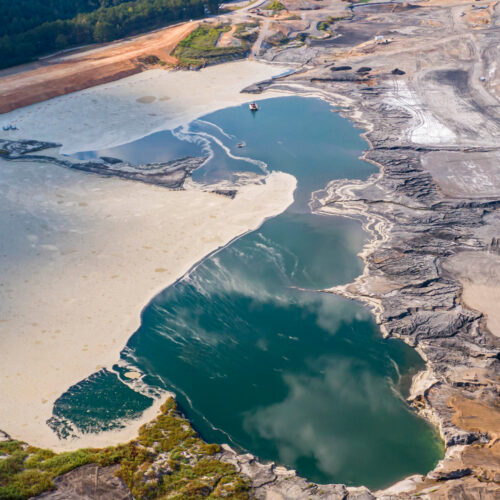
At a virtual public comment hearing hosted by the US Environmental Protection Agency on Thursday, a long line of environmental advocates voiced strong opposition to proposed new regulations weakening requirements that utilities must follow in cleaning up toxic coal ash residue at hundreds of sites across the country at which coal was burned to produce electricity.
“The Trump administration has jeopardized the nation’s drinking water supplies as a favor to polluters,” Lisa Evans, senior counsel at Earthjustice and a former EPA attorney, said in a statement. “It’s just not right.”
The Trump administration announced in April that it would repeal a rule put in place in 2024 by the Biden administration’s EPA that required utilities to monitor coal ash sites at inactive coal plants. The Trump EPA also said it would loosen requirements for protecting groundwater near those sites. Now the Trump administration wants to rely on states for coal ash monitoring and enforcement and enable them to bypass national standards in some cases.
At a virtual public comment hearing hosted by the US Environmental Protection Agency on Thursday, a long line of environmental advocates voiced strong opposition to proposed new regulations weakening requirements that utilities must follow in cleaning up toxic coal ash residue at hundreds of sites across the country at which coal was burned to produce electricity.
“The Trump administration has jeopardized the nation’s drinking water supplies as a favor to polluters,” Lisa Evans, senior counsel at Earthjustice and a former EPA attorney, said in a statement. “It’s just not right.”
The Trump administration announced in April that it would repeal a rule put in place in 2024 by the Biden administration’s EPA that required utilities to monitor coal ash sites at inactive coal plants. The Trump EPA also said it would loosen requirements for protecting groundwater near those sites. Now the Trump administration wants to rely on states for coal ash monitoring and enforcement and enable them to bypass national standards in some cases.
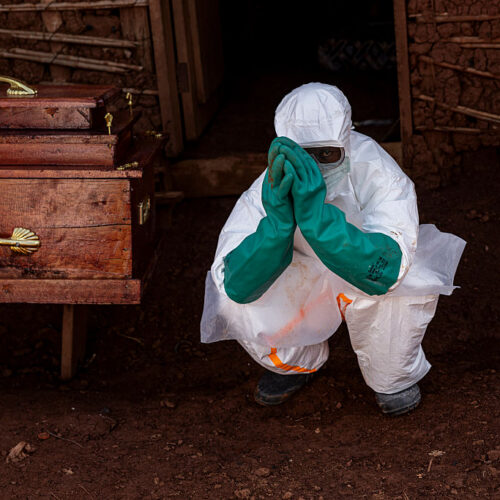
As the world struggles to contain the rapidly growing Ebola outbreak in the Democratic Republic of the Congo’s Ituri Province, a vital network of research centers has been unable to help on the ground. The reason: The Trump administration slashed its funding last year, in part due to conspiracy theories about the origins of COVID-19.
Established in 2020 by the National Institutes of Health, the Centers for Research in Emerging Infectious Diseases (CREID) Network was conducting research into viruses that emerge from wildlife and spill over to people, including the family of viruses that Ebola belongs to. The network operated 10 sites around the world where these types of disease outbreaks are likely to occur, including in Central and East Africa. (The network was also researching hantavirus, a disease that saw a recent rare outbreak on a cruise ship.)
NIH provided CREID with approximately $82 million in funding over five years, and its funding was up for renewal in 2025. But last June, the centers received a stop-work order stating that their research had been deemed “unsafe for Americans and not a good use of taxpayer funding,” and that the agency’s priorities no longer supported the network.
As the world struggles to contain the rapidly growing Ebola outbreak in the Democratic Republic of the Congo’s Ituri Province, a vital network of research centers has been unable to help on the ground. The reason: The Trump administration slashed its funding last year, in part due to conspiracy theories about the origins of COVID-19.
Established in 2020 by the National Institutes of Health, the Centers for Research in Emerging Infectious Diseases (CREID) Network was conducting research into viruses that emerge from wildlife and spill over to people, including the family of viruses that Ebola belongs to. The network operated 10 sites around the world where these types of disease outbreaks are likely to occur, including in Central and East Africa. (The network was also researching hantavirus, a disease that saw a recent rare outbreak on a cruise ship.)
NIH provided CREID with approximately $82 million in funding over five years, and its funding was up for renewal in 2025. But last June, the centers received a stop-work order stating that their research had been deemed “unsafe for Americans and not a good use of taxpayer funding,” and that the agency’s priorities no longer supported the network.
Forecasters are calling for below-average activity this hurricane season, which begins Monday, June 1.
The National Weather Service is predicting eight to 14 named storms, including three to six hurricanes and one to three major hurricanes of category 3, 4, or 5 strength, packing winds of 111 mph or greater. By comparison, a typical season is characterized by 14 named storms, including seven hurricanes and three major hurricanes. The season ends November 30.
“It just takes one,” said Ken Graham, director of the National Weather Service. “Now is the time to start thinking about your hurricane preparedness.”
For migrant workers trapped onboard Chinese distant water fishing fleets, cutting the fins off sharks as they writhe violently on rusted decks in the Indian Ocean isn’t accidental. It’s an intentional and lucrative act that marks the start of a bloody half-a-billion-dollar offshore supply chain, tacitly supported by Beijing yet covertly concealed from port inspectors globally.
The Center for Biological Diversity, a nonprofit focused on the protection of endangered species, filed a formal petition this month requesting the U.S. government potentially sanction China for failing to meet American shark conservation standards. Shark populations have declined by more than 70 percent since 1970, with more than one-third of all shark and ray species now threatened with extinction. Yet each year, Chinese-flagged vessels catch, brutally fin, and discard thousands.
Should the National Marine Fisheries Service identify China as having violated the US Moratorium Protection Act, then President Trump could be expected to ban the import of all $1.5 billion of Chinese seafood.
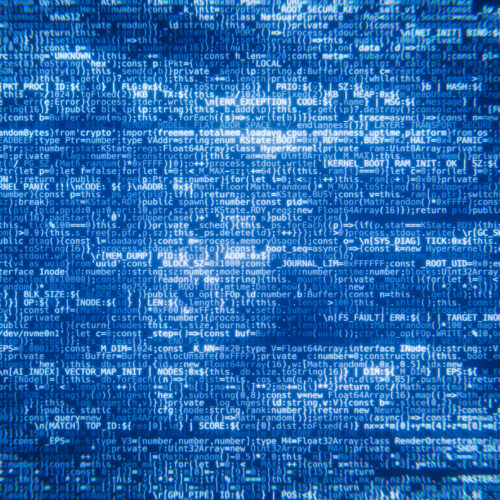
A so-called software supply chain attack, in which hackers corrupt a legitimate piece of software to hide their own malicious code, was once a relatively rare event but one that haunted the cybersecurity world with its insidious threat of turning any innocent application into a dangerous foothold in a victim’s network. Now one group of cybercriminals has turned that occasional nightmare into a near-weekly episode, corrupting hundreds of open source tools, extorting victims for profit, and sowing a new level of distrust in an entire ecosystem used to create the world’s software.
On Tuesday night, open source code platform GitHub announced that it had been breached by hackers in one such software supply chain attack: A GitHub developer had installed a “poisoned” extension for VSCode, a plug-in for a commonly used code editor that, like GitHub itself, is owned by Microsoft. As a result, the hackers behind the breach, an increasingly notorious group called TeamPCP, claim to have accessed around 4,000 of GitHub’s code repositories. GitHub’s statement confirmed that it had found at least 3,800 compromised repositories while noting that, based on its findings so far, they all contained GitHub’s own code, not that of customers.
“We are here today to advertise GitHub’s source code and internal orgs for sale,” TeamPCP wrote on BreachForums, a forum and marketplace for cybercriminals. “Everything for the main platform is there and I very am happy to send samples to interested buyers to verify absolute authenticity.”
The US government will take equity stakes worth a total of $2 billion in a slew of quantum computing companies, including a startup backed by a firm with links to the Trump family and one taken public by a Pentagon official.
The announcement by the commerce department that it had signed letters of intent with nine companies—including GlobalFoundries and IBM—sent shares in quantum specialists soaring on Thursday.
Both IBM, which is set to get $1 billion, and GlobalFoundries, which will receive $375 million, were up more than 6 percent in pre-market trading. D-Wave Quantum, an awardee that was taken public in 2022 by Emil Michael—now a top Pentagon official—was up more than 20 percent.
The US government will take equity stakes worth a total of $2 billion in a slew of quantum computing companies, including a startup backed by a firm with links to the Trump family and one taken public by a Pentagon official.
The announcement by the commerce department that it had signed letters of intent with nine companies—including GlobalFoundries and IBM—sent shares in quantum specialists soaring on Thursday.
Both IBM, which is set to get $1 billion, and GlobalFoundries, which will receive $375 million, were up more than 6 percent in pre-market trading. D-Wave Quantum, an awardee that was taken public in 2022 by Emil Michael—now a top Pentagon official—was up more than 20 percent.