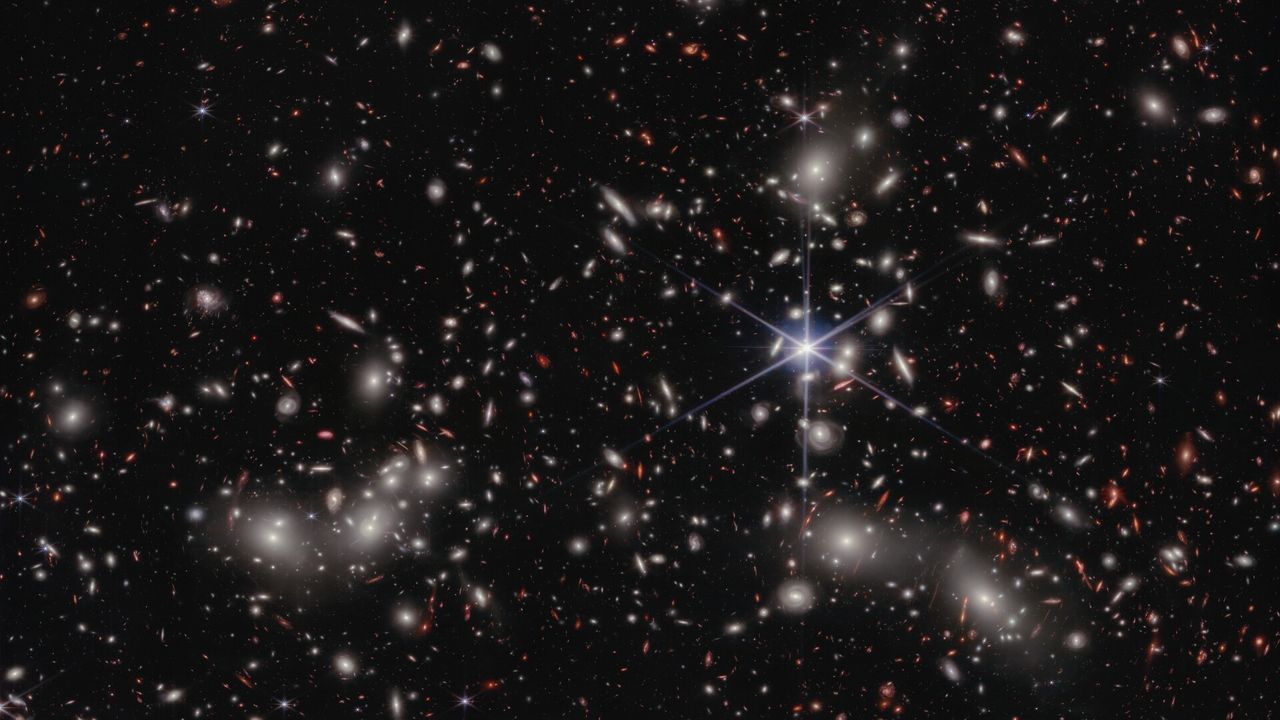
Researchers say the isolated white dwarfs Gandalf and Moon-Sized define a new class of stellar remnant because they share five traits, including X-ray emission. Across the immense scale of the Universe, a single unusual object can prompt astronomers to look for others like it, sometimes leading to the recognition of an entirely new class of [...]
A new method could improve cosmology research by analyzing supernovae together with the galaxies that host them. An international collaboration led by scientists at the Institute of Cosmos Sciences of the University of Barcelona (ICCUB) has created a new approach that may sharpen what researchers can learn about how the Universe expands and what dark [...]
Models suggest that impact-ejected material from Earth could reach Venus’ clouds and potentially survive there briefly. Panspermia is the idea that life, or the ingredients needed for life, can move through space on asteroids, comets, and other objects. If life’s building blocks appear on one planet, a powerful impact could blast material from its surface [...]
Summer arrives this month and with it come long, sweltering days along with all-too-brief nights. But if you can dodge the fireflies and stock up on mosquito repellent, there’s still stargazing to be done! This month’s highlight is a conjunction between our solar system’s two biggest show-offs. There’s also the summer equinox to consider—along with a very tasty-sounding full moon.
June 9: Conjunction of Jupiter and Venus
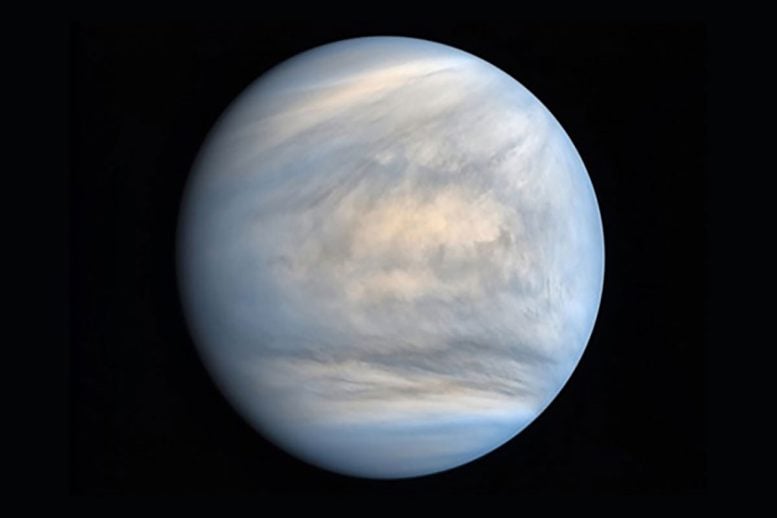
Fellow fans of the solar system’s large adult son may have noticed that Jupiter has been rather quiet of late. But fear not! Our big rambunctious lad is back in the spotlight this month, galumphing his way across the sky toward the beckoning goddess of love. The gas giant will reach his destination early this month, and the result for us earthbound folk will be the chance to witness a Jupiter-Venus conjunction.
The two planets will be at their closest on June 9, when they’ll be spotted lounging happily together above the northwestern horizon just after sunset. There’ll also be a couple of peeping Toms in the vicinity. The twin stars Castor and Pollux will be peeking out in space just to the right of the two planets. Spotting these two malcontents might require binoculars, but Jupiter and Venus should absolutely be visible to the naked eye.
June 21: Summer Solstice
There’s an argument to be made that the longest day of the year is always the Wednesday of the current week. But in a technical sense, the longest day of 2026 arrives on June 21. That’s right—get ready for the summer solstice!
We tend to think of the solstice as the start of summer, but that’s not technically what the term denotes. Instead, it has to do with the Earth’s orbital axis.
The orbital axis is the imaginary line through the north and south poles around which our planet spins. Like many planets, Earth’s orbital axis isn’t perfectly perpendicular to its orbital plane. It’s tilted at approximately 23.44° and the tilt remains constant in relation to the orbital plane. This means that as the Earth moves around the sun, the angle at which it leans toward the sun changes. This is the reason behind our seasons!
The solstice is the day when this tilt toward the sun is most pronounced as shown below.
Solstices fall in June and December, while equinoxes fall in September and March. Image: Popular Science.
On the left, we see the Northern Hemisphere’s winter solstice, while the Southern Hemisphere is tilted sharply toward the sun. Halfway around, the Earth’s axis is perpendicular to the sun, so neither hemisphere is leaning inward. This is the equinox, and there are two of these every year. On the right, it’s the Northern Hemisphere leaning toward the sun, marking the northern summer solstice—which arrives this year at 10:22 p.m. EDT .
June 29: Full Strawberry Moon
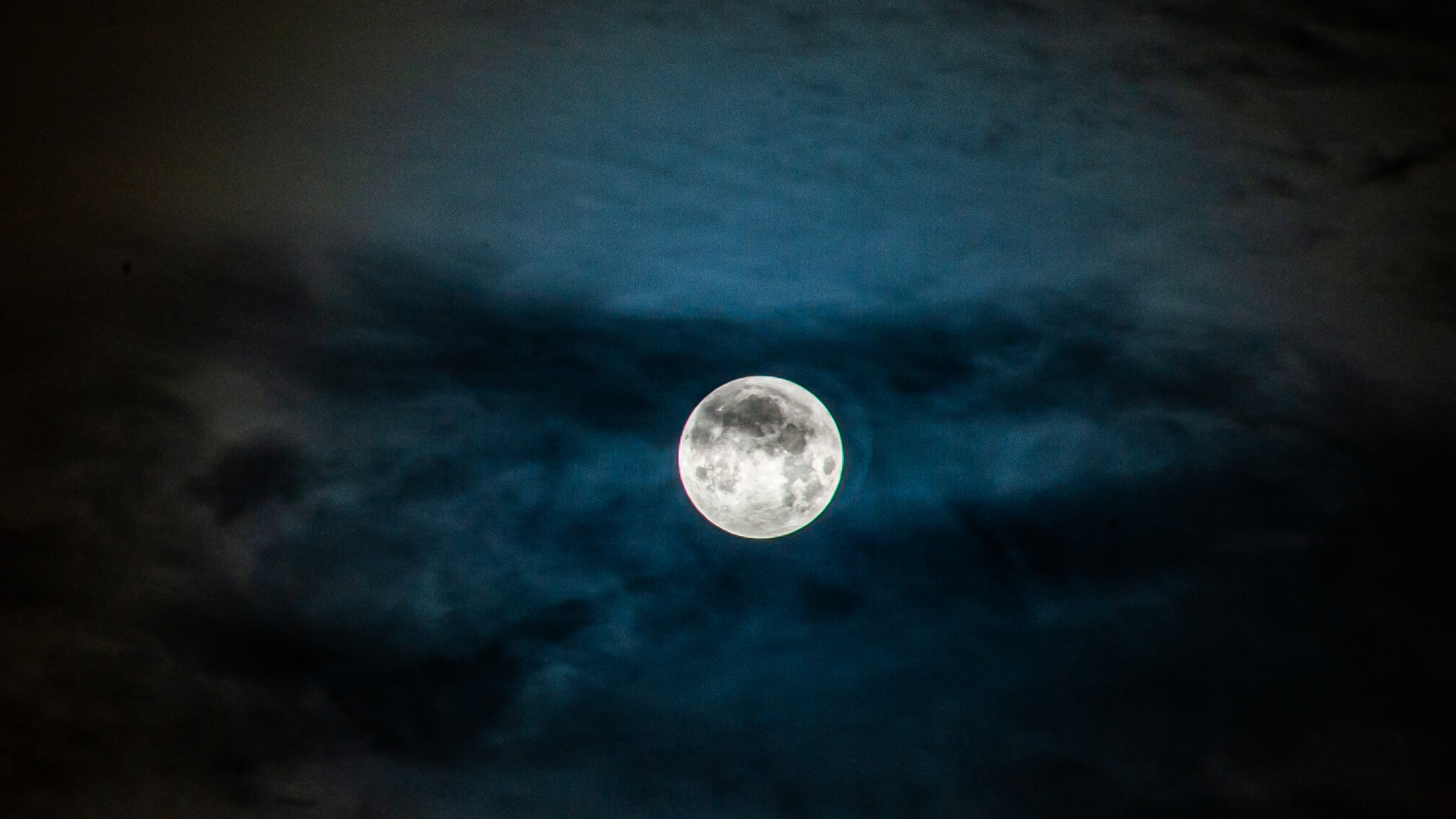
For the last couple of months, we’ve had early full moons. But thanks to May’s Blue Moon, our satellite will wait until almost the very end of the month to emerge in its full sunlit glory. As per the Farmer’s Almanac, the Strawberry Moon’s moniker comes from similar names given to June’s full moon by multiple Native American nations, including the Algonquian, Ojibwe, Dakota, and Lakota peoples. It’s a beautiful and rather poetic name, and a perfect fit for the moon that will rise at the end of this month’s long, hazy summer twilights.
June 30: Asteroid Day
June 30 is Asteroid Day, a day to celebrate the fact that Earth has not been hit by a decent sized asteroid in well over a century. The date was chosen to commemorate the 1908 Tunguska event, the last time the Earth experienced a significant impact. Fortunately for humans, that collision took place in a remote part of Siberia, where it flattened 500,000 acres of forest and caused a shock wave that was felt as far away as Indonesia.
In 2014, the United Nations declared June 30 as a “sanctioned day of public awareness of the risks of asteroid impacts.” So be aware! One of the people behind the idea was Brian May. Yes, the same Brian May who plays lead guitar in Queen. May moonlights as an astrophysicist when he’s not tearing up the fretboard of the guitar he and his father built together in the early 1960s.
When the sun finally does go down, remember that you’ll get the best experience gazing at the cosmos if you get away from any sources of light pollution, give your eyeballs some time to adjust to the darkness, and review our stargazing tips before setting out into the night.
Attention creative souls! While NASA might feel like an exclusive den of scientists, engineers, and otherworldly athletes, the agency is reaching out to storytellers and artists via two new initiatives.
“As NASA pushes the boundaries of exploration and innovation for the benefit of humanity, the agency is looking for partners to share mission stories covering Artemis Moon missions, nuclear propulsion, aeronautics, and more,” NASA wrote in a press release. Since “journalists” aren’t mentioned in either of these calls for creatives, it would appear that NASA is seeking other means to keep people talking about its missions.
Specifically, they are seeking proposals from creatives including documentarians, songwriters, storytellers, and poets for projects about missions including Artemis III in 2027 and Space Reactor-1 Freedom to Mars in 2028, among others. Proposals are due by the end of June.
NASA is also launching another creative initiative called Moon Joy June.
“To keep the Moon Joy alive after the Artemis II mission, NASA is hosting a month-long art challenge on Instagram, Threads, and Tumblr. Each week during the month of June 2026, NASA will provide a prompt to inspire participants to make and share their artistic creations,” they explain in an FAQ page.
The prompts have already been released, so artists looking to participate can already start brainstorming. Week one’s prompt is “launch,” week two will be “moon,” week three will be “crew,” and week four will be “Earth.”
A note to the competitive-minded—the agency highlights that Moon Joy June is not a contest but an art challenge, meaning there will be no prize. And as if it could get any worse for type-A people, participants don’t actually have to follow the prompts. It seems like we’re in for a free-for-all artistic takeover of the three social media platforms.
Non-traditional art forms like nail art and latte foam art are also welcomed. In NASA’s words, “The sky is (not) the limit!”
This weekend, Earth will be treated to a nice blue moon. Our planet’s only natural satellite won’t put on a pleasant azure hue (indeed, blue moons have nothing to do with color). Instead, it will be the second full moon for the month of May, following the full Flower Moon on May 1. The blue moon will reach peak illumination at 4:46 a.m. EDT on Sunday May 31.
A seasonal blue moon is one extra full moon within an astronomical season, or the dates between solstices and equinoxes. A typical astronomical season has three full moons within it. If it has four full moons instead, then the third may be called a blue moon.
A calendrical (or monthly) blue moon is the one most of us are familiar with. It is the second full moon to fall in one calendar month—like in May 2026. It takes the moon roughly 29.5 days to complete one cycle of phases (new moon to new moon). So if a full moon falls on the first of the month on the calendar, there will be a second full moon at the end of the month. The only month in which a calendrical blue moon cannot fall is February.
How rare are blue moons?
Blue moons are not quite as rare as the phrase “once in a blue moon” makes it sound. Calendrical blue moons happen every 2.5 years (or 30 months) on average, and seasonal blue moons fall about once every two to three years.
Two blue moons can also occur in one year. In 2018, January and March both had two full moons, with no full moon in February. The next time two blue moons will fall in one calendar year won’t be until 2037.
Why is it a micromoon?
May’s blue moon will also be a micromoon and the smallest micromoon of the year. Micromoons have nothing to do with size and everything to do with distance. Typically, the moon is about 238,855 miles away from Earth. Micromoons are further away, and this month’s micromoon will be 252,360 miles away. With the further distance, a micromoon may appear a bit smaller and dimmer than usual.
On the opposite end of the spectrum are supermoons, which are closer to Earth at only 225,130 miles away.
NASA has also put together a handy lunar photography guide if you want to snap that perfect moon pic. If using a smartphone, NASA recommends stabilizing the device, turning off the flash, and tapping the moon on screen to focus the camera directly on it instead of the sky. Your brightness also needs to come down and taking pictures at twilight or as the moon clears the horizon will give the sensor less contrast.
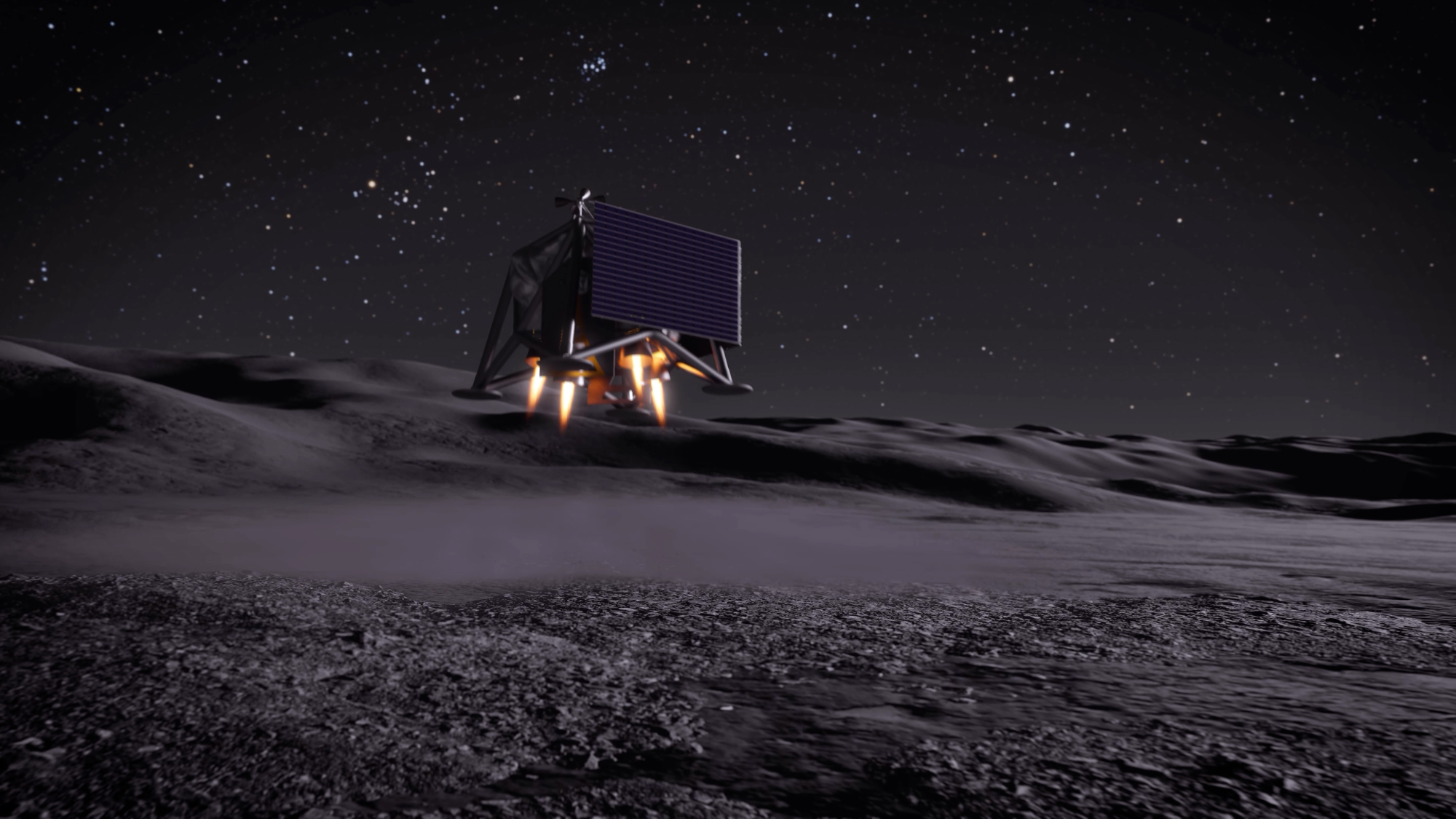
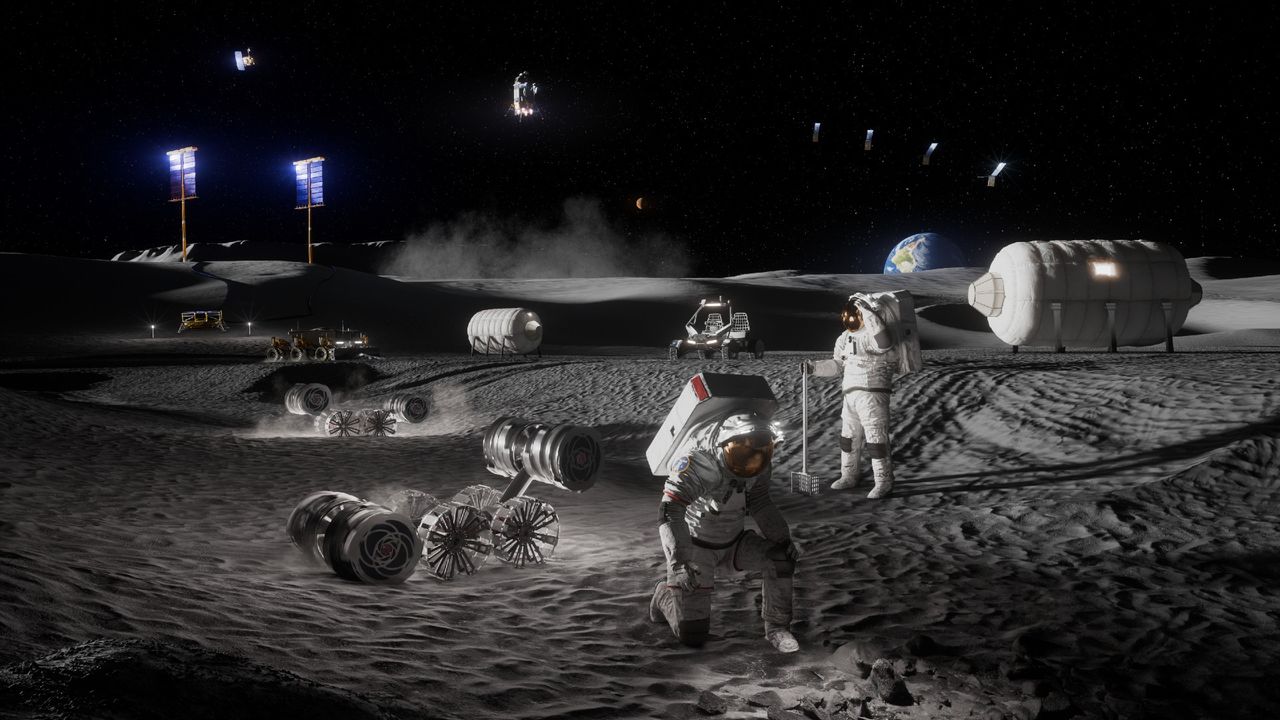
As NASA looks ahead towards Artemis III in mid-2027, the agency is sharing new details on several projects, including a future permanent moon base and a drone mission called MoonFall. The mission will send four drones to survey the surface of the moon’s South Pole to spot potential landing sites for future Artemis astronauts.
According to the update, the Jet Propulsion Laboratory (JPL) in Southern California has been developing the drone design and testing prototype hardware ahead of the scheduled 2028 launch. Each drone will land on the moon’s surface and gather high-resolution imagery of the terrain over the course of a single lunar day (up to 14 Earth days). After each drone’s last flight, its survive-the-night payload will continue to work for several months. Payloads that are designed to survive-the-night can endure the sub-zero temperatures of the lunar night, which can get as cold as -208 degrees Fahrenheit.
Each of the four drones should weigh about 550 pounds, and stand at four-feet tall and seven feet in diameter. They will use a Lunar Dashcam imaging system to create maps of the terrain. The drones will also be equipped with a laser retroflector array so that mission control can precisely locate the drones, a neutron spectrometer system to help determine how much (if any) subsurface water is present, and a spectrometer to measure radiation.
Texas-based Firefly Aerospace was selected to build the spacecraft that will transport the drones. Firefly’s Elytra spacecraft will carry the drones for a 45-day transit from the Earth to the moon. After entering lunar orbit, it will deorbit and perform a braking maneuver to send out the drones roughly 31 miles above the lunar South Pole.
No stranger to lunar exploration, Firefly Aerospace’s Blue Ghost lander became the first commercially built lander to reach the lunar surface in March 2025. While on the moon, Blue Ghost delivered 10 NASA instruments designed to gather lunar subsurface data and also snapped some beautiful images of a solar eclipse.
As of now, NASA and 66 other nations have signed the Artemis Accords. While not an international treaty, the Artemis Accords is an agreement for high-level principles of space exploration and provides a basic legal framework for exploring and developing the lunar surface during this century. However, the NASA-led Artemis group is in direct competition with an initiative led by China to explore the lunar South Pole and potentially extract its resources.
For a few select evenings in the late spring and early summer, sunlight aligns with Manhattan’s grid. The city’s bustling streets are washed with golden light as the sun sets, while tourists and locals alike flood the streets to snap that perfect picture. This event is nicknamed Manhattanhenge and it will begin on May 28 and continue through July 12.
However, you don’t need to live in the Big Apple to see a “henge” like Manhattanhenge. They actually pop up in a few places and a website called Hengefinder can help you find the closest henge.
Meet Hedgefinder
Data scientist and engineer Victoria Ritvo created the website, while software engineer John Pribyl built the accompanying app. Ritvo wrote about creating Hedgefinder in her blog, and details the three basic steps that scientists can use to find a henge. First, find the angle of the road, or its bearing relative to true north. Second, find the angle of the sun at sunset, or its azimuth. Third, find the dates when those two angles match.
While you don’t have to do any of that high-level math, you can read about how Rivoto and Pribyl made their calculations. You simply put in an address or city and can get a calculation for the closet henge near you.
“Having Hengefinder active means henges are now explorable outside of Manhattan, and I’ve been searching for them using the app,” Ritvo writes. “My favorite one so far, I haven’t actually seen. I’m intrigued by the Haarlemmertrekvaart, a canal which traces the southern edge of Westerpark in Amsterdam.”
Interestingly, much of Europe is left out of henge mania due to medieval street design. Amsterdam’s famed canals do offer an option, where sunlight can reflect off of the water. Henges may have been occurring twice a year for the past 400 years on the Haarlemmertrekvaart.
How henges work
The sun does not set in the same place every day. Its position changes along the horizon with the seasons. While the angle does not usually match the directions of a street, it will on a few days each year if the street is angled correctly.
In 1997, the term Manhattanhenge was first coined by Neil deGrasse Tyson, an astrophysicist and director of the Hayden Planetarium at New York’s American Museum of Natural History. Tyson noted that the setting sun framed by Manhattan’s building was comparable to how the sun’s rays strike the center of England’s Stonehenge on the solstice. The Neolithic humans who built the stone circle in stages between 3100 BCE and 1600 BCE intended for the light to shine that way on the solstice. But the builders of Manhattan? Not so much.
Chicagohenge in Illinois and Baltimorehenge in Maryland both occur when the sunset lines up with the grid systems in those cities around the spring and fall equinoxes in March and September. In Canada, Torontohenge occurs in February and October.
On May 22, 2026, the Pentagon released a second batch of previously classified photos and videos showing what appear to be unexplained flying objects. These file dumps were the culmination of a process that was set in motion back in July 2023, when a group of government whistleblowers testified before Congress that the U.S. government was secretly in possession of extraterrestrial spacecraft and suspected alien body parts.
That congressional hearing marked the beginning of a cultural shift in which UFO reports are increasingly treated as a matter for serious discussion, both within the government and the scientific community.
The Pentagon released over 200 previously classified UFO files in May 2026. Image: Department of Defense
But is this newfound legitimacy deserved? As an aerospace scientist who studies aircraft and spacecraft design, I approach this question using math, physics and the principles of engineering. To assess the plausibility of alien visitors, it’s necessary to understand the obstacles that an extraterrestrial vessel would need to overcome to reach Earth.
The tyranny of distance
There is no evidence of intelligent alien life in our solar system. So any extraterrestrial visitors would likely have to come from another star system within our Milky Way galaxy.
Proxima Centauri, the star closest to our Sun, is located 4.25 light-years (about 25 trillion miles or 40 trillion kilometers) away.
For perspective, if Earth were the size of a pea, the distance to Proxima Centauri would roughly equal the distance between New York and Sydney, Australia.
Even the stars closest to Earth are incredibly far away.
Since only a fraction of stars are thought to host intelligent life, the nearest alien civilization – if one exists – is surely much farther away than Proxima.
A need for speed
Given the scale of interstellar distances, it’s inevitable that any alien voyage to Earth would span many years and possibly several centuries. But as the time spent in transit increases, so does the risk of catastrophic accidents or system malfunctions that could jeopardize the mission. So it’s important to avoid an overly lengthy journey by traveling as fast as possible.
No object can reach or exceed the speed of light (roughly 186,000 miles or 300,000 kilometers per second). But well before approaching that threshold, engineering constraints begin to assert themselves. Limited fuel availability and the potential for structural damage will restrict the spacecraft’s peak velocity.
There is no universally accepted upper limit on interstellar flight speeds, but studies tend to converge around 19,000 miles per second (30,000 km/s) – 10% of the speed of light – as a realistic cruise velocity. At this speed, a journey of 10 light-years will take approximately 100 years to complete.
Fueling the dream
Finding a way to accelerate the ship to its target cruise speed is the central challenge facing any would-be alien explorers.
Interstellar space is unforgivingly vast, but the emptiness has some advantages. The lack of atmosphere means there is no aerodynamic drag. So when the ship reaches its cruise speed, it can shut down its propulsion system and coast toward the final destination. Unfortunately, the lack of atmosphere also means there is nothing to slow the ship down prior to arrival. So ideally, the propulsion system would be used for both acceleration at the start of the trip and deceleration at the end.
One of the more exotic propulsion strategies employs high-powered laser beams to push the ship through space. The beam is projected from a stationary array near the travelers’ home planet and directed toward a thin reflective sail attached to the ship. The beam’s photons exert radiation pressure on the sail, propelling the ship forward.
This approach has a major advantage in that it requires no onboard fuel. But the amount of energy and infrastructure needed to operate the laser would be staggering. Also, beamed propulsion provides no mechanism for deceleration. At best, this method could be deployed as part of a hybrid strategy that uses a separate system for deceleration.
A more practical approach is to use rocket propulsion. Rockets generate propulsive force, also known as thrust, by expelling high-velocity exhaust in a rearward stream. By reversing the direction of the exhaust, rockets can also be used to slow the ship down.
Their main disadvantage is that rockets must carry their own fuel in addition to carrying the passengers, the habitat and other life-sustaining systems. The extra load necessitates even more fuel. In other words, you need fuel to transport your fuel. The result is a costly snowball effect that can cause the total fuel requirement to balloon to absurd proportions.
Rocket propulsion can be divided into three broad categories.
Chemical propulsion uses chemical reactions – typically combustion – to extract energy from the bonds between atoms. All human space missions thus far have used chemical propulsion. The problem with this method is that it accesses only a tiny fraction of the energy contained within the fuel.
Antimatter propulsion is theoretically the most efficient option. When antimatter comes into contact with ordinary matter, the two undergo mutual annihilation and 100% of their combined mass is converted into energy. This makes it possible to achieve the same cruise velocity – one-tenth the speed of light – with fuel accounting for less than a quarter of the ship’s total mass. This is science fiction-level fuel efficiency, which makes antimatter an attractive option for interstellar propulsion.
NASA has been working to develop nuclear propulsion. This artist’s impression shows what a nuclear-powered rocket could look like. Image: Public Domain, John Frassanito & Associates/Wikipedia
These numbers assume that our extraterrestrial visitors have figured out how to efficiently convert the energy released by their reactor – whether nuclear fusion or antimatter – into thrust.
Just as importantly, they must be able to create optimized fuel tank structures that are ultra lightweight yet highly secure. Designing the structure of the ship, from the fuel tanks to the hull, would be one of the biggest engineering challenges of the entire mission.
Interstellar space contains a sparse smattering of hydrogen atoms and microscopic grains of cosmic dust. At 19,000 miles per second (30,000 km/s), dust particles would smash into the ship’s hull with the energy of a .22-caliber bullet. The bombardment of hydrogen atoms would produce a violent cascade of radiation that could erode even the most resilient engineering materials.
Surviving the onslaught would require no less than a flying fortress with complex magnetic shielding. This would increase the total mass of the ship, which further drives up the demand for fuel.
This example is just one of the hundreds of delicate design trade-offs that would plague any interstellar vessel. Each individual design requirement acts as a filter, reducing the number of feasible solutions.
Finding a single system that simultaneously satisfies all the requirements is analogous to shopping for a car online. With each new filter you apply – four-wheel drive, black exterior, less than 10,000 miles on the odometer – the number of available options dwindles.
When design requirements are in tension with one another – for example, requiring a structure that is lightweight but also supremely durable – the number of feasible solutions can drop to zero.
No single law of physics prohibits an interstellar voyage to Earth. But the combined effects of hundreds of extreme, often conflicting engineering requirements may render it physically infeasible.
It’s also possible that alien civilizations have discovered novel technologies that outperform anything currently known to humans. But like the examples discussed here, any such technology will inevitably encounter its own engineering hurdles.
The trillion-dollar question
Ultimately, engineering challenges are just some of the many barriers to interstellar travel. Any prospective alien visitors must also have sufficient cognitive ability, technological maturity, physical resources, collective desire and proximity to Earth.
That said, if the stars were to align and an alien vessel made it to Earth intact, it would trigger a torrent of burning questions: Where are they from? What do they want? What are they made of?
But the question that would go furthest in shedding light on the deeper mysteries of the universe is, “How on Earth did they get here?”
While a holiday weekend has come and gone, May 26 is not without a cause for celebration. It’s National Paper Airplane Day!
The annual day commemorates the homemade aeronautical toy that has fascinated (and frustrated the less crafty) children and adults for generations. According to National Day, the practice of constructing paper planes is sometimes called aerogami, after origami, the Japanese art of folding paper. Building paper planes that can soar through the air like a bird is believed to have originated in ancient China, where paper was invented around 105 CE. However, the art of folding it into an airplane may have been perfected in Japan, as it is similar to origami.
Here in the United States, instructions for folding the Basic Dart were included in a children’s book published in 1859, so it is safe to say kids and adults alike have been making them for over 167 years. The term paper airplane was then coined in 1907 and replaced paper dart as the dominant term by the 1950s. In 2022, Kim Kyu Tae nabbed the Guinness World Record for the Longest Paper Airplane Throw Ever with a flight of 252.6 feet. According to Guiness World Records, the longest time flying a paper aircraft is 31.2 seconds and was achieved by Rao Chongyi and a team in China in February.
If you’re inspired to create the world’s best paper airplane, we have you covered. You can also look to the great minds at NASA for inspiration. After all, the first letter “A” in NASA stands for aeronautics. Their step-by-step NASA Space Crafts tutorial will not only help you make a colorful paper airplane, but also NASA’s X-57 Maxwell and the X-59 Quiet SuperSonic Technology.
May your National Paper Airplane Day be free of paper cuts.
To effectively travel on Mars, rovers need to deal with a lot of sand. German engineers have created a new kind of ground rover that uses swimming motions to push through sand that may otherwise cause the wheels to get stuck. Its inspiration: the African sandfish (Scincus scincus), a lizard known for burrowing into the Sahara Desert and literally swimming through its sand like a fish. It’s one of the animal kingdom’s strangest methods of propulsion, but it may help shape the future of Mars exploration.
A video of the rover, released this week by the University of Würzburg, shows a mini-fridge-sized, silver rover making its way through a sandy, Martian-mimicking test floor. Rather than rolling forward, each of its four wheels cuts through the sand in what looks like a figure-eight motion. The rover pushes on several yards and then cuts a corner and returns to where it started.
“The wheels mimic the animal’s [sandfish’s]characteristic interaction with the ground, generating both longitudinal and lateral forces,” University of Würzburg researcher Amenosis Lopez said in a statement. “The rover leaves sinusoidal tracks in the sand.”
The sandfish: nature’s cute solution to slippery sand
Though most people likely associate space rovers with round wheels or tracks reminiscent of those on WALL-E, neither design is ideal for dealing with Mars’s uniquely harsh and sandy environment. Sand is unique because it’s a material with both solid and liquid-like qualities. On top of sand’s mixed texture, rovers roaming on the Red Planet have to deal with steep slopes and uneven terrain, where varying levels of slipperiness can cause imbalance. Patches of softer sand are also a nightmare for wheels, making the prospect of a rover getting stuck never far from mind
But nature figured out a solution to this issue millions of years ago, and it’s called the sandfish. Contrary to its name, the Sahara Desert native is a lizard in the skink family. Above ground, the sandfish uses its tiny legs to scrabble around much the same as any lizard. Things get more interesting when it burrows down into the sand. X-ray imaging shows the sandfish propelling itself forward under the sand, using a powerful waving motion to generate thrust and overcome drag. The result looks like an animal swimming through the sand, remarkably similarly to how a fish would oscillate its body to move through water
Engineers at Georgia Tech took those observations and used them to create their own sandfish robot in 2011. Testing with their robots showed that the little lizard’s oddly wedged shaped head may also help it generate lift forces and more easily swim through sand.
Sink or swim: new rover did both
Researchers working on the sandfish-inspired robot said it outperformed a wheeled version when navigating through a sandy test track. Where the round wheels would wobble and weave, the oscillating wheels stayed relatively stable. That’s not to say the new approach worked right out of the gate. Early models of the design were reportedly so heavy that the rover literally sank into the sand. The team went back to the drawing board and made a second version, this time increasing each wheel’s width and reducing overall mass
It’s unlikely these oddball new wheels will become the main chassis system for NASA rovers, at least not in the immediate future. More work still needs to be done to increase their overall controllability and account for slippage that can occur in complicated, real-world environments. There are also the added variables of accounting for scientific instruments and other cargo a rover might have to carry.
More than anything, the wheel design is a testament to the sandfish’s innate ingenuity and evolutionary gifts. Many scientists only recently began to truly appreciate these traits and what other technology they could inspire.
The Crystal Ball Nebula has captivated astronomers for more than 200 years, and it offers a bittersweet glimpse of a dying star system similar to our own.
Researchers have uncovered an unexpected phenomenon, dubbed the Zwan-Wolf effect, squeezing plasma "like toothpaste" in Mars' upper atmosphere. This effect, which also happens on Earth, was thought to be impossible on the Red Planet.
Two pairs of "rogue" Jupiter-size, planet-like objects have been found in a large star-forming region in the Milky Way, a new study claims. The findings suggest the weird objects actually do exist, and are not an illusion.
Astronomers weighed a black hole in a "little red dot" discovered by the James Webb telescope. They found it to be so overmassive that it may have formed before its host galaxy had a chance to develop.

 Login
Login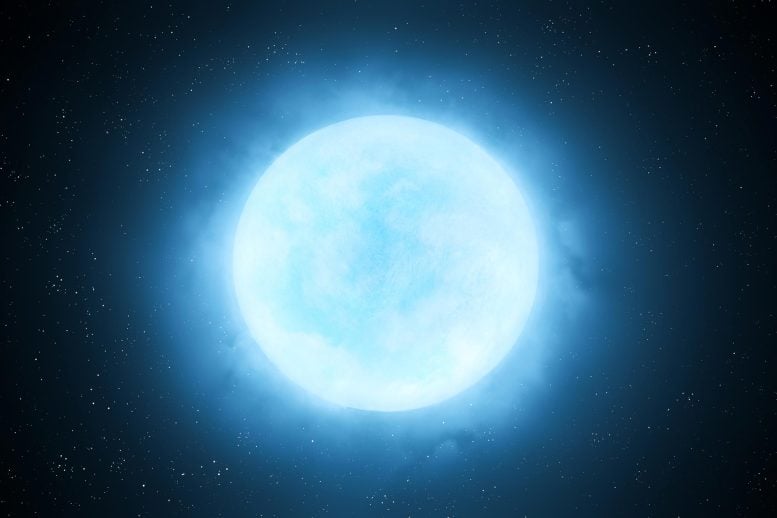

 Researchers say the isolated white dwarfs Gandalf and Moon-Sized define a new class of stellar remnant because they share five traits, including X-ray emission. Across the immense scale of the Universe, a single unusual object can prompt astronomers to look for others like it, sometimes leading to the recognition of an entirely new class of [...]