Over the past decade, there’s something I’ve hinted at, mentioned in passing as a part of broader discussions, and told more people than I can count privately via email and other one-on-one conversations.
And now, as the writer of the internet’s longest-standing Android column and newsletter — a fancy way of saying someone who is apparently now old as molasses — I feel like I’d be doing a disservice if I didn’t just come out and say it as prominently and plainly as possible:
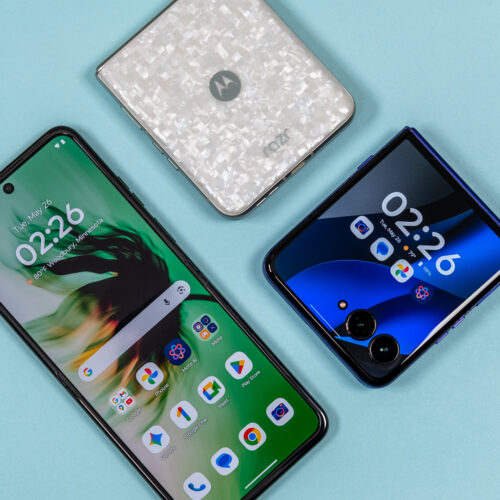
There is no valid reason anyone should be buying Motorola Android devices in 2026. None.
It’s a shame, too, ’cause Motorola has a heck of a history within Android and the mobile realm in general. And, to its credit, the company does still make some impressive-looking and at times quite interesting hardware.
But the compromises that come with that package are just too serious and consequential to be forgiven. That’s been the case for some time now, truth be told — but with yet another facepalm-inducing infraction being added onto the list now, it’s time to say it loud and clear:
Please stop buying Motorola Android phones. And please join me in telling everyone you know the same thing.
Trust me: You’ll be doing them a major favor. And here, with no punches pulled and absolutely no sugarcoating, is exactly why.
[Get level-headed knowledge in your inbox with my free Android Intelligence newsletter — three new things to try every Friday and tons of other tasty treats.]
The Motorola Android compromise: Part I
I won’t beat around the bush: The most pressing reason Motorola Android phones are completely inadvisable to buy is the reason that’s been present for the longest — and that’s the company’s complete and utter disregard for even minimally acceptable post-sales software support.
It’s something I’ve noted in my data-based Android Upgrade Report Cards for more years than I can even remember at this point, and it’s almost comically consistent: Year after year, upgrade cycle after upgrade cycle, Motorola simply does not give a damn about investing the time or the money to bring current Android versions to its existing customers in anything close to a timely manner. Once you’ve forked over your phone and put away your wallet, good luck: You’ll be lucky if you get a single software update from Motorola after that, half a year to a year after the fact — and you almost certainly won’t hear a single peep from the company about the progress (or lack thereof) at any point along the way.
Motorola has managed to score an almost impressive number of back-to-back “F” scores on my annual analyses; no other Android device maker even comes close to that record. And lest you think this is purely about pokiness in providing polish and surface-level progress, remember that practically every Android software update is packed with critically important changes around privacy, security, and performance — and the way apps are able to interact with both your data and your hardware.
Running outdated software isn’t just dangerous — it’s downright irresponsible, especially if you’re a professional using your phone for business purposes but even if you’re just a regular ol’ schmoe focused purely on personal stuff. No one who understands a thing about security would ever recommend that, and that’s exactly what you’re signing up for anytime you buy a Motorola-made device.
So that’s part one, and that’s the biggest problem with Motorola’s Android products. But it isn’t the end of this tale nor the reason I was finally moved to write this missive, with the hopes that it’d eventually reach any Android-interested phone-buyers with Motorola on their minds.
Motorola’s more recent Android offenses
All update-related issues aside, the problem with Motorola’s Android products is that they make all sorts of compromises that are all about lining Motorola’s pockets at the expense of your experience.
The most recent example and the straw that broke the Android columnist’s (increasingly creaky) back is the new discovery that Motorola had seemingly been indirectly hijacking the Amazon app on its devices and sneakily injecting an affiliate code into links. The end result of such actions, according to observations published this week, is generating unearned revenue from your day-to-day purchases.
That’s an underhanded and shady-seeming practice, to say the very least. It just feels icky and ethically reckless. And clearly, what was demonstrated was intended to go unnoticed, which is always a pretty apparent sign in my mind that someone’s doing something shifty.
Following the discovery and subsequent outcry, Moto released a statement saying that the behavior was “unintended” and the result of its partnership with a company called Device Native. According to Moto, it had teamed up with that organization to develop “an app search and suggestion experience for the Moto App Launcher.” You can choose to interpret that how you will, but the reality is that Device Native is a company that exists to inject personalized, native-seeming ads directly into the core Android software experience, as its website plainly establishes — with “no user opt-in required,” allowing for easier “scale” of “monetization globally.”
On some level, at least, Motorola evidently decided to work with this company and integrate its ad technology into the Android experience on its phones. Regardless of whether the Amazon code injection was truly deliberate, which organization caused it to happen, and who was or wasn’t aware of the actions, Motorola opted to place this ad-serving system into the phones it was selling and to allow the company behind it to exert this kind of control over its customers’ experiences — as well as, one would imagine, likely leaning on it for other forms of invasive system-level ad integration.
And sure, maybe Moto will back down from this practice and perhaps even distance itself from the partnership entirely if the outrage grows loud enough. But does someone stopping a shady-seeming practice simply because they got caught and people complained make for the kind of company you want to trust in general?
It’s similar to the way Moto lards up its devices with so much preinstalled bloatware that you actually have to fight to get through it or — Goog forbid — remove it and reclaim the product you paid hundreds of dollars to purchase. Heck, even the company’s top-of-the-line, nearly $2,000 folding Razr Fold phone is guilty of this sin, and that’s just embarrassing for a device of that price and caliber.
Even with Motorola’s lower-level phones, though, we’re talking about devices that often cost $500 or close to that. These aren’t bottom-of-the-barrel, heavily subsidized garbage gadgets. You could get one of Google’s Pixel 10a phones for that same price or often even less — without any of the bloatware, the link-hijacking and potential ad-injecting shenanigans, or the unforgivable software support failures. You’d get a full seven years of guaranteed timely and reliable software updates, from major Android versions to monthly security patches and the quarterly feature drops that accompany those. And that’s to say nothing of the superior camera experience and other assorted advantages.
You could go with one of Samsung’s midrange models, too, imperfect as those are in their own ways, and it’d still be a massive step up from the Motorola madness.
We’ve reached a point where there really is just no comparison — and, again, no reason why anyone should be buying a Motorola phone anymore. The issue, unfortunately, is that most of the people who are buying Moto devices are the same people who aren’t reading columns like these. They’re the people who waltz into a carrier store, see whatever model is featured on the shelf or pushed by a commission-earning, partnership-promoting salesperson, and walk out with whatever caught their eye or had the best promotional pricing on that particular day.
Make no mistake about it: These types of devices give Android a bad name and propagate the myth of the entire platform being a second-rate dumping ground for “folks who can’t afford iPhones.” Android is so much more and so much better than that. You deserve so much better than that.
Plain and simple, this isn’t the Motorola of yesterday. At this point, there’s no excuse — and no reason to keep setting yourself up for failure when so many better options exist.
Say goodbye, Moto. And make sure everyone you know who won’t be reading this column knows why they should do the same.
Apple has spent billions of dollars to develop satellite connectivity for iPhone; I very much doubt it did so solely to rescue stranded hikers. The company will most certainly have had a bigger prize in its sights when it first began working with GlobalStar (now owned by Amazon).
The most logical reason to invest in satellite coverage for its devices is the most obvious — to provide network infrastructure for new breeds of device and new service models. You don’t acquire access to massive amounts of bandwidth for nothing. And Apple’s steady introduction of new satellite-supported services shows it is interested in introducing these services, even though the offer isn’t extensive enough yet to require iPhone users to pay for access, yet.
The decision not to charge for those satellite services suggests they’re just the thin end of the company’s plans for satellite deployment.
It’s possible the company’s ambitions were limited by GlobalStar’s ability to put satellite constellations in orbit. That work was ongoing last time I looked, and I fully expect existing Apple satellite services will be extended to new nations, even under Amazon’s watch.
Amazon enters the room
Amazon’s recent $11.6 billion acquisition of GlobalStar is interesting. You can see that Apple is now forced to work with its old frenemy, even as both partners already profit from strong, steady Apple hardware sales via the online retailer. So they know they can make money together.
“Apple and Amazon have a long and proven track record of working together through Amazon’s core infrastructure services, and we look forward to building on that collaboration with Amazon Leo,” Greg Joswiak, Apple’s senior vice president of worldwide product marketing, said when the deal was announced. (The transaction isn’t expected to close until next year.)
Making money together is often seen as a strength in business relationships and Amazon has agreed to continue supporting Apple products and to collaborate with Apple on future satellite services.
When it comes to mobile telecoms, Amazon isn’t the only game in town, and neither is Starlink. Cellular operators are inking deals with satellite providers all over the world, all with the intention of bringing network access to those who otherwise can’t get a decent connection.
Just today in the UK, Virgin Media O2 announced plans to switch on the O2 Satellite service for iPhone users tomorrow, enabling customers — particularly in rural areas — to get a satellite connection where traditional cellular coverage is unavailable. It could simply identify new ways to enhance the Find My service.
Orange last year offered its own satellite comms to French customers, while Deutsche Telekom partners with others to provide SMS via satellite in Europe and the US. You’ll find similar alliances in most key territories, including Australia and Japan. The direction of travel exposes an industry embracing satellite as a way to widen existing cellular infrastructure, which makes sense given the relative cost of installing conventional masts in some regions.
Many ways to crack it
There’s speculation Apple could become a satellite carrier, a move that would put it in competition with carrier partners. But Apple doesn’t need to do to provide satellite communication services to iPhone users, nor would it want to relinquish the symbiotically profitable relationships it’s developed with carriers.
It could, for example provide satellite calling as a hardware feature available with every iPhone across all supported carriers, possibly as an additional service that guarantees customers can get a connection, even in the countryside. It could evangelize the service as being “Private by Design,” and supplement this with data over satellite to support apps, particularly agentic AI apps.
Combined with the next wave of AI enhancements Apple is expected to deliver for its systems, the combination of an always-on, resilient, private data connection and AI could prove invaluable to many customers. That’s particularly true for enterprise customers seeking global solutions that respect sovereign data, privacy, data retention policy and managed AI services – especially as terrestrial infrastructure becomes an attack target. Such scenarios will only become more widely understood as 6G emerges, with its built-in support for satellite infrastructure.
What will Apple do?
Will Apple move in that direction, or maintain its focus on the consumer markets? Will it decide that rather than deploying its own part-owned satellite constellations as it was with GlobalStar, it is better to work with carrier partners? Will it wait for 6G with its enhanced, standards-based support for satellite communications?
Those are answers we don’t yet have. But it is quite clear that as satellite communications truly enter the mass market, Apple has put together many of the technical, hardware, software and infrastructure pieces it will need to ensure the iPhone is a peer player in whatever use cases emerge.
For the last several years, Motorola's smartphone headliners were the Razr flip phones, but 2026 is different. This time around, Moto's first tablet-style foldable, the Razr Fold, somewhat overshadows the flip phones, but a bulky $2,000 folding phone that isn't made by Samsung occupies the smallest niche in the smartphone market. A Razr flip phone is much more practical, both financially and logistically. But are these phones actually worth buying over a flat phone?
Smartphones are no longer something you need to convince people to buy. Unless you're going out of your way to exclude technology from your daily life, a smartphone is just a necessary convenience. The way some companies market their phones—making relatively boring phones look like a lifestyle choice—doesn't really take this into account. However, Motorola knows what a Razr is.
All the Razrs are big phones when you open them up (Razr Ultra seen here).
Credit:
Ryan Whitwam
These phones are first and foremost about vibes. They're fun and colorful; there are desk clock displays, mini apps for the outer display, and a quirky camcorder camera mode. Foldables are universally gadgety and visually interesting, but the Razrs take this to the extreme with unique textures and Pantone-certified colorways. That gives the Razrs a selling point before you even get to the specs or hardware. And they need that because the speeds and feeds are nothing special.
When Ben Elton didn’t distract from the pain of moving my body, I found the perfect solution – the interactive smartphone game Zombies, Run!
At 56, I am running my first marathon, an old, fat, bald dad surrounded by millennials in body-hugging Lycra and smiles that look AI-generated. But I am ahead of them. For they are only competing for positions and personal bests, and I am being chased by zombies.
The black dog of depression hit me around the time of my last birthday. I didn’t feel I had achieved anything of note for an eternity. I used to work out but, for years, work kept getting in the way. I decided to kill two circling, carcass-sniffing vultures with one stone and run my first marathon.
As part of a growing anti-tech movement, startup dumb.co is pushing flip phones as a way for young people to find ‘social and spiritual freedom’
“They aren’t as dumb as they look,” our facilitator said, referring to the dark gray flip phone in his hand. He just as easily could have been talking about us, the 28 New York residents before him who had signed up to use the device for the entire month of March. He explained that the relic was loaded with WhatsApp, iMessage, Google Maps, Uber, Microsoft 2FA – nothing like my seventh-grade flip phone.
We each had paid $75 to participate in Month Offline, or MO, a program that challenged us to swear off our smartphones entirely. Another $25 went to dumb.co, the company behind MO, for the so-called dumbphones we would use as we navigated daily life.
For the last several years, Motorola's smartphone headliners were the Razr flip phones, but 2026 is different. This time around, Moto's first tablet-style foldable, the Razr Fold, somewhat overshadows the flip phones, but a bulky $2,000 folding phone that isn't made by Samsung occupies the smallest niche in the smartphone market. A Razr flip phone is much more practical, both financially and logistically. But are these phones actually worth buying over a flat phone?
Smartphones are no longer something you need to convince people to buy. Unless you're going out of your way to exclude technology from your daily life, a smartphone is just a necessary convenience. The way some companies market their phones—making relatively boring phones look like a lifestyle choice—doesn't really take this into account. However, Motorola knows what a Razr is.
All the Razrs are big phones when you open them up (Razr Ultra seen here).
Credit:
Ryan Whitwam
These phones are first and foremost about vibes. They're fun and colorful; there are desk clock displays, mini apps for the outer display, and a quirky camcorder camera mode. Foldables are universally gadgety and visually interesting, but the Razrs take this to the extreme with unique textures and Pantone-certified colorways. That gives the Razrs a selling point before you even get to the specs or hardware. And they need that because the speeds and feeds are nothing special.
 Login
Login