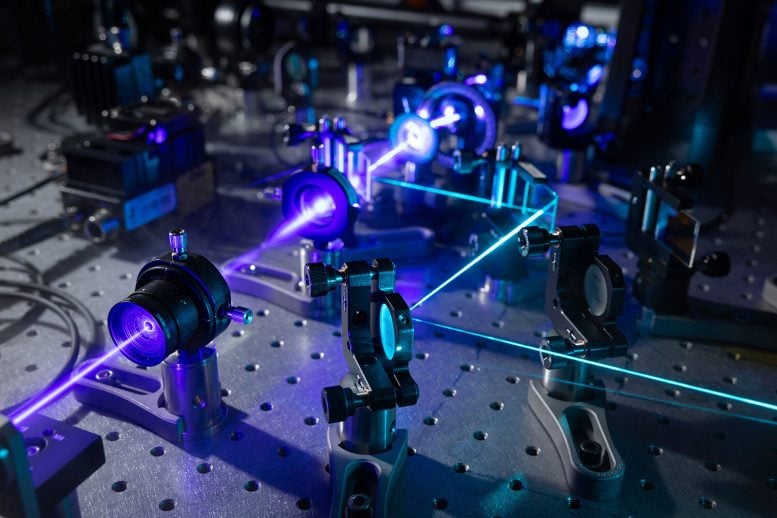
Stanford researchers have developed a microscope that can show how nanostructures interact inside living cells at the highest resolution achieved so far. The view into living cells just got better. Stanford researchers have merged two microscopy methods to build a unique instrument that can capture cell structures interacting in real time at an unprecedented resolution [...]
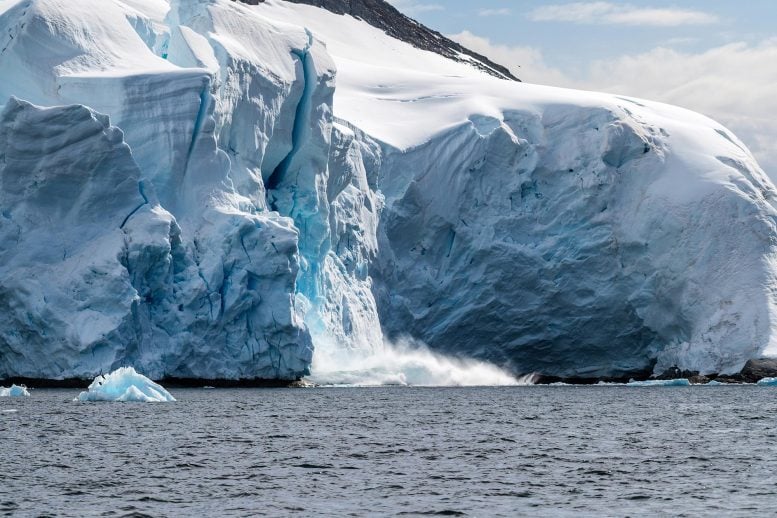
Scientists discovered that Antarctica’s ice sheet became dramatically more climate-sensitive after crossing a critical threshold one million years ago. A new study published in Nature Geoscience suggests that Antarctica’s massive ice sheet underwent a major change about one million years ago, becoming far more responsive to shifts in Earth’s climate. The research, led by scientists [...]
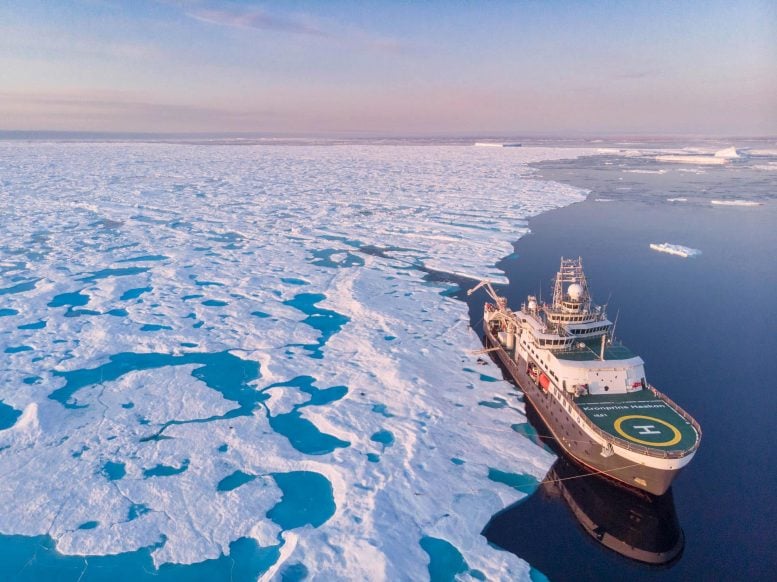
Scientists say melting sea ice may have pushed the Arctic Ocean past a tipping point, triggering changes that could reshape marine life for decades. Scientists have identified what appears to be a major and potentially irreversible change in the Arctic Ocean. According to a new study, climate-driven sea ice loss has altered the region’s chemistry [...]
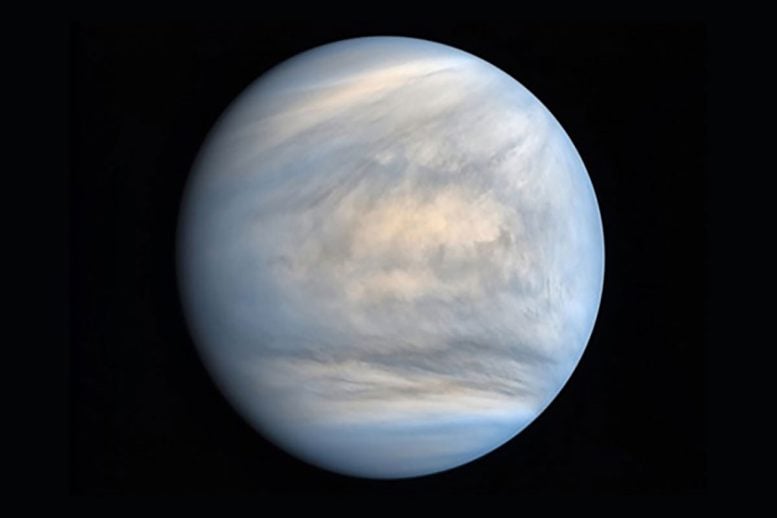
Models suggest that impact-ejected material from Earth could reach Venus’ clouds and potentially survive there briefly. Panspermia is the idea that life, or the ingredients needed for life, can move through space on asteroids, comets, and other objects. If life’s building blocks appear on one planet, a powerful impact could blast material from its surface [...]
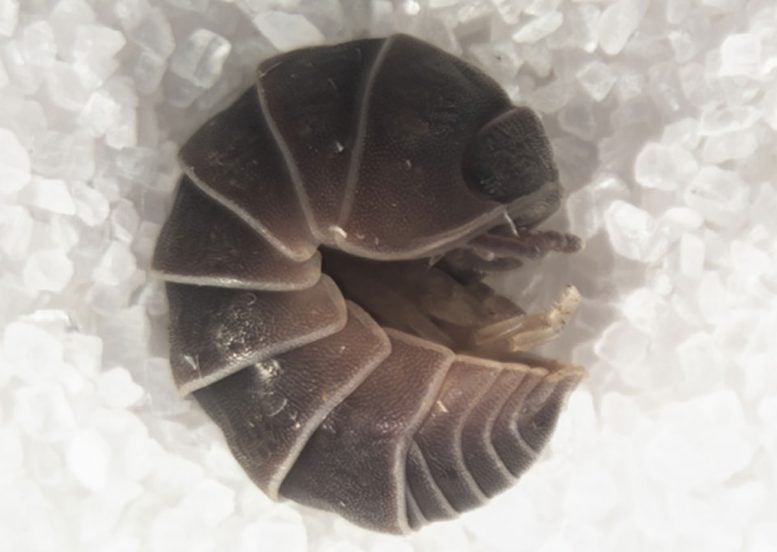
Artificial streetlights can lure isopods into massive circular processions that may leave them vulnerable to predators. Researchers have made a world-first observation of thousands of Israeli isopods leaving their normally solitary shelters and moving together in huge synchronized “death spirals” caused by artificial streetlights. By testing different light arrangements, the team found that vertical beams [...]
A new study challenges the widely accepted idea that word meanings are organized around emotion. After analyzing billions of words, scientists found that language may be shaped by something more basic: the need for safety. Researchers at the University of Vermont have found a new way to understand language, challenging a major assumption in psychology, [...]
A tiny worm discovered in the Great Salt Lake could help scientists better understand the origins and resilience of life in extreme environments. Its story remains largely a mystery. The Great Salt Lake is famous for brine shrimp, brine flies, and water so salty that few animals can survive in it. Now scientists have added [...]
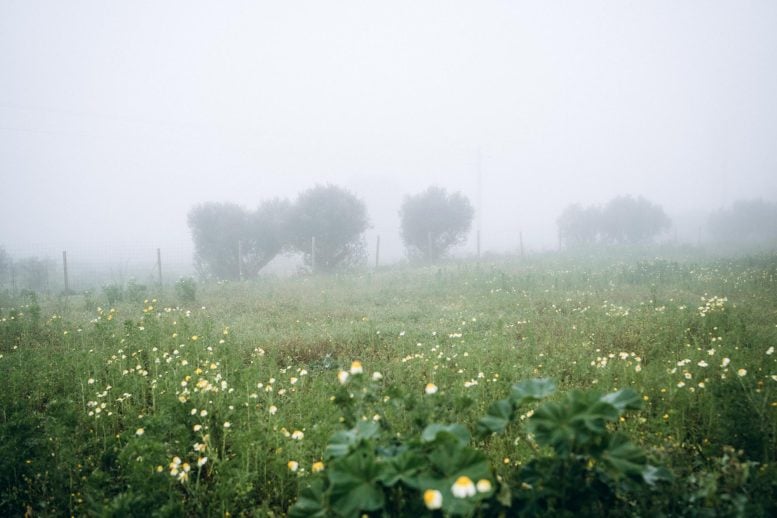
Scientists discovered that fog droplets can host living bacteria that grow and help remove harmful pollutants from the atmosphere, revealing fog as a surprisingly active microbial environment. Every breath you take may contain microscopic hitchhikers floating through the atmosphere. Scientists have known for years that bacteria drift through clouds and air currents, but new research [...]
Parents in rural, low-income households who maintained strong family routines reported fewer behavior problems and ADHD symptoms in their children. Starting elementary school is an important step for children, but the shift can be challenging. Some children experience separation anxiety, while others have difficulty adjusting to classroom rules and daily school structure. A Penn State-led [...]
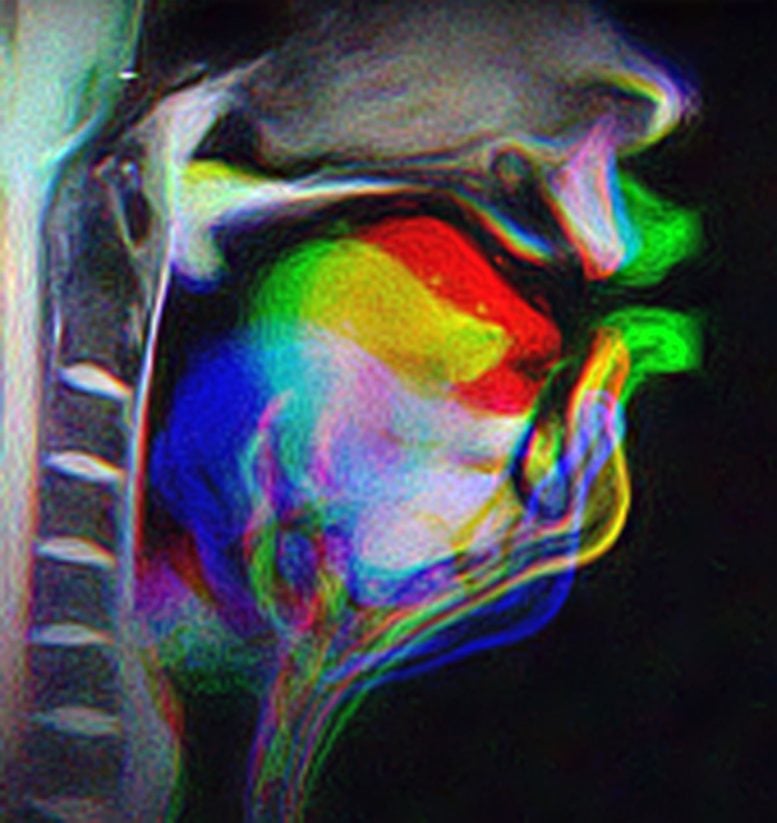
Scientists have discovered that the brain’s sensory systems play a much larger role in speech learning than previously believed. New research suggests that learning to speak a new language, or recovering speech after injury, relies more heavily on the brain’s sensory systems than on regions responsible for controlling movement. The findings, from researchers at McGill [...]
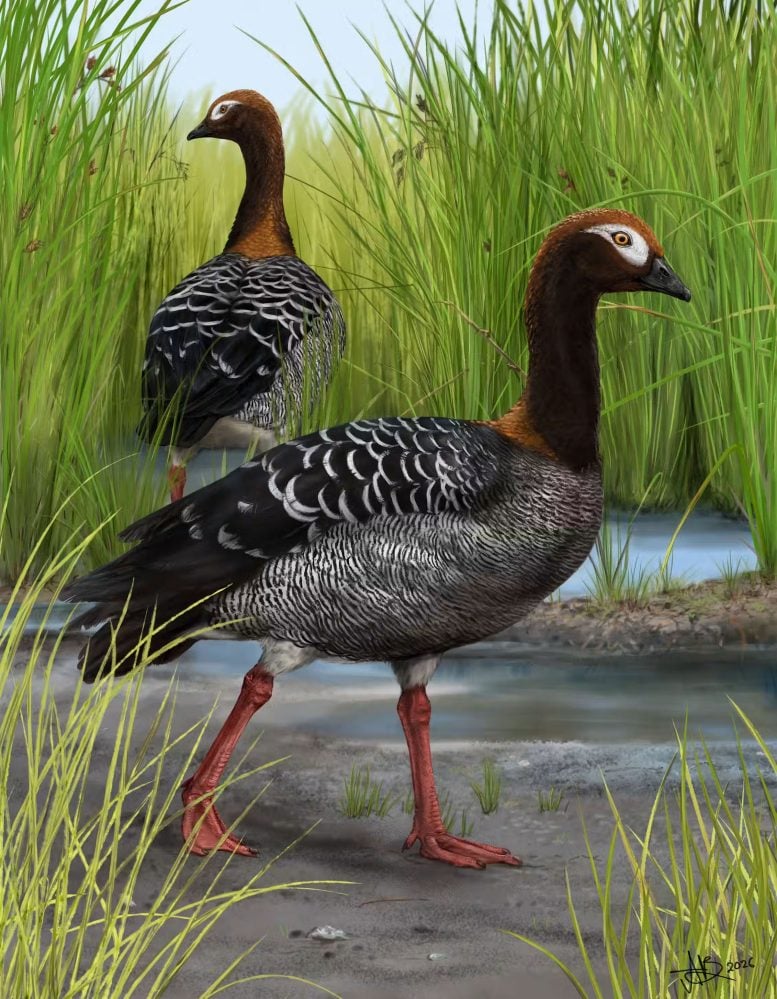
A newly described fossil goose shows that New Zealand’s bird history involved repeated arrivals, extinctions, and rapid island evolution. A rare fossil goose found in the remains of an ancient lake in Central Otago is changing how scientists understand the bird history of Aotearoa New Zealand, according to a researcher at the University of Otago [...]
Summer arrives this month and with it come long, sweltering days along with all-too-brief nights. But if you can dodge the fireflies and stock up on mosquito repellent, there’s still stargazing to be done! This month’s highlight is a conjunction between our solar system’s two biggest show-offs. There’s also the summer equinox to consider—along with a very tasty-sounding full moon.
June 9: Conjunction of Jupiter and Venus
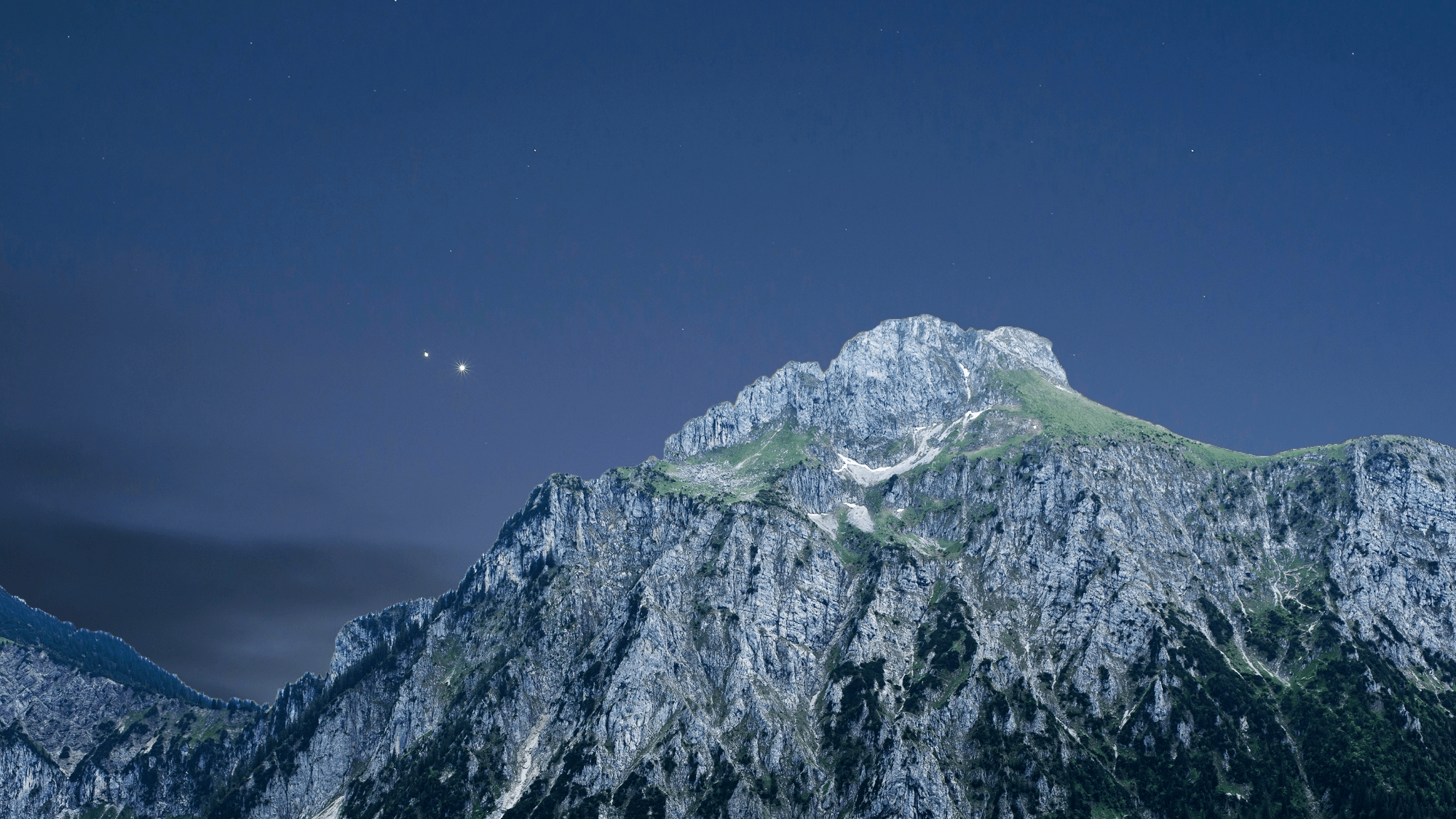
Fellow fans of the solar system’s large adult son may have noticed that Jupiter has been rather quiet of late. But fear not! Our big rambunctious lad is back in the spotlight this month, galumphing his way across the sky toward the beckoning goddess of love. The gas giant will reach his destination early this month, and the result for us earthbound folk will be the chance to witness a Jupiter-Venus conjunction.
The two planets will be at their closest on June 9, when they’ll be spotted lounging happily together above the northwestern horizon just after sunset. There’ll also be a couple of peeping Toms in the vicinity. The twin stars Castor and Pollux will be peeking out in space just to the right of the two planets. Spotting these two malcontents might require binoculars, but Jupiter and Venus should absolutely be visible to the naked eye.
June 21: Summer Solstice
There’s an argument to be made that the longest day of the year is always the Wednesday of the current week. But in a technical sense, the longest day of 2026 arrives on June 21. That’s right—get ready for the summer solstice!
We tend to think of the solstice as the start of summer, but that’s not technically what the term denotes. Instead, it has to do with the Earth’s orbital axis.
The orbital axis is the imaginary line through the north and south poles around which our planet spins. Like many planets, Earth’s orbital axis isn’t perfectly perpendicular to its orbital plane. It’s tilted at approximately 23.44° and the tilt remains constant in relation to the orbital plane. This means that as the Earth moves around the sun, the angle at which it leans toward the sun changes. This is the reason behind our seasons!
The solstice is the day when this tilt toward the sun is most pronounced as shown below.
Solstices fall in June and December, while equinoxes fall in September and March. Image: Popular Science.
On the left, we see the Northern Hemisphere’s winter solstice, while the Southern Hemisphere is tilted sharply toward the sun. Halfway around, the Earth’s axis is perpendicular to the sun, so neither hemisphere is leaning inward. This is the equinox, and there are two of these every year. On the right, it’s the Northern Hemisphere leaning toward the sun, marking the northern summer solstice—which arrives this year at 10:22 p.m. EDT .
June 29: Full Strawberry Moon
For the last couple of months, we’ve had early full moons. But thanks to May’s Blue Moon, our satellite will wait until almost the very end of the month to emerge in its full sunlit glory. As per the Farmer’s Almanac, the Strawberry Moon’s moniker comes from similar names given to June’s full moon by multiple Native American nations, including the Algonquian, Ojibwe, Dakota, and Lakota peoples. It’s a beautiful and rather poetic name, and a perfect fit for the moon that will rise at the end of this month’s long, hazy summer twilights.
June 30: Asteroid Day
June 30 is Asteroid Day, a day to celebrate the fact that Earth has not been hit by a decent sized asteroid in well over a century. The date was chosen to commemorate the 1908 Tunguska event, the last time the Earth experienced a significant impact. Fortunately for humans, that collision took place in a remote part of Siberia, where it flattened 500,000 acres of forest and caused a shock wave that was felt as far away as Indonesia.
In 2014, the United Nations declared June 30 as a “sanctioned day of public awareness of the risks of asteroid impacts.” So be aware! One of the people behind the idea was Brian May. Yes, the same Brian May who plays lead guitar in Queen. May moonlights as an astrophysicist when he’s not tearing up the fretboard of the guitar he and his father built together in the early 1960s.
When the sun finally does go down, remember that you’ll get the best experience gazing at the cosmos if you get away from any sources of light pollution, give your eyeballs some time to adjust to the darkness, and review our stargazing tips before setting out into the night.
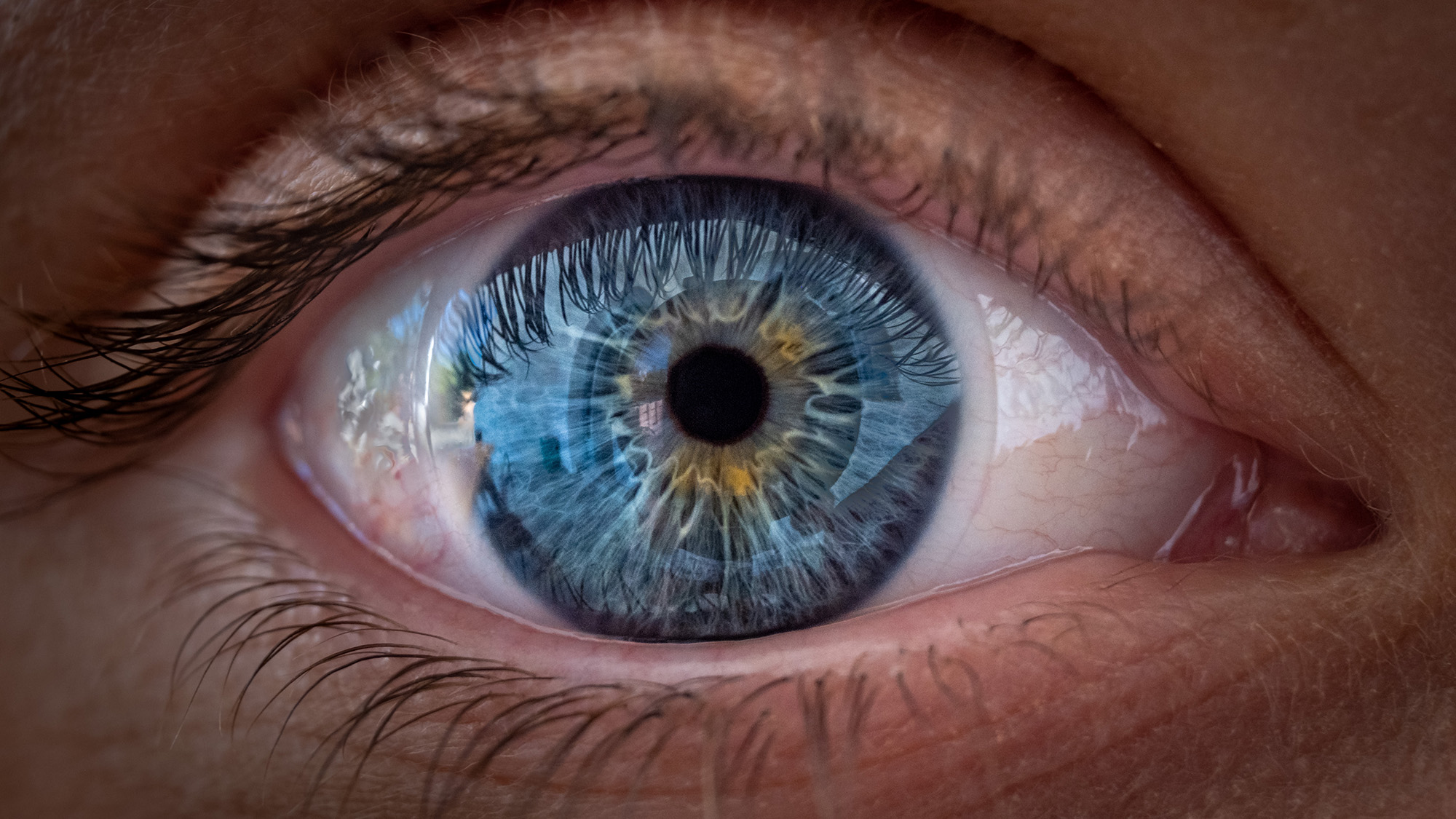
Blue, green, amber: Someone’s eye color immediately attracts our attention. But there’s something unusual about human eyes: We have a large visible area of white that surrounds the iris. Most other mammals have entirely dark eyes with almost indistinguishable pupils. So why are we different? What is the white part of our eyes actually for?
The whites of our eyes help us connect
Scientists paid little attention to that question until 1997, when Shiro Kohshima, a Japanese biologist at Kyoto University, decided to take a closer look. He compared the eyes of nearly half of existing primates and found that only humans had white in their eyes.
His theory was that the white part of the eye (the sclera) helps us communicate because it makes it easier to tell where someone is looking. The contrast between the white sclera and dark pupil makes the outline of the eye more visible. We also have more elongated eyes than other animals, which makes it even easier to tell where someone may be looking.
Following someone’s gaze is surprisingly powerful. It can indicate if they’re telling the truth, draw attention to something, and even help us bond. Language, after all, can be complicated and ambiguous. “It’s important to build up a fast communicative step,” says Fumihiro Kano, a cognitive scientist at Kyushu University in Japan. “White sclera help towards that.”
The cooperative eye hypothesis
In 2007, Michael Tomasello, a psychologist at Duke University, expanded on Kohshima’s earlier ideas to develop the cooperative eye hypothesis. He argued that the white sclera are particularly useful for human collaboration.
For instance, the whites of our eyes help us figure out what someone is focused on. It may even have helped our ancestors hunt together and share resources. Central to his idea was the theory that humans are unusually sensitive to where others are looking.
To test this, he conducted an experiment involving human infants and gorillas, chimpanzees and bonobos. A scientist looked at the ceiling with only his eyes, only his head, or both.
In an experiment, gorillas rely primarily on head movement rather than eye gaze to know where someone is looking. Image: Shutterstock
Human infants primarily followed the eye direction of the scientist. They looked up nearly three times more often when he glanced towards the ceiling using only his eyes than when he just raised his head with his eyes shut.
Apes did the opposite, relying primarily on head movement rather than eye gaze. They looked towards the ceiling roughly 2.5 times more often when the researcher lifted his head but closed his eyes.
Why eye contact is so important for babies
From an early age, humans are particularly sensitive to eye contact. In a study of newborns, within the first five days of their lives, researchers found that babies looked longer at faces whose gaze was directed at them. The ability to actively follow where others look emerges between two and four months, and by eight months it becomes consistent behavior.
“Eye gaze is a natural pointer which makes it easier to understand each other,” says Kano. “If you look at a human infant, then that infant becomes interested in you.”
“The cooperative eye hypothesis taps into the bias of human exceptionalism,” says Perea-García. “That’s why it’s so compelling.” Since Tomasello’s 2007 study that proposed the theory, research has shown there are other primates with white sclera.
Perea-García also points out that, for some people from South Asia, Africa, and Australia, their sclera is not uniformly white but more pigmented. So he argues that it’s not the whiteness of the eyes that’s important for communication, but the contrast between the sclera and the iris. Chimpanzees also have dark sclera with bright irises which could serve a similar purpose.
But this may not be the whole story. While human sclera are not always uniformly white, we tend to show considerably more of the whites of our eyes than most primates and experiments suggest that difference matters.
Kano and his team compared how humans and chimpanzees interpreted images of human and chimp eyes. They found that both species were better able to discriminate gaze direction from humans. They then made both images smaller and darker. Chimp eyes became even harder to read than humans.
Chimpanzees, one of our closest relatives, have almost no white in their eyes. Image: Shutterstock
The team even digitally altered chimpanzee eyes to have white sclera and found that gaze discrimination immediately improved.
“Our work suggests that gaze visibility depends not only on iris-sclera contrast, but also on the visibility of the overall eye outline,” Kano says. In other words, it’s not just about how well the iris stands out. The white sclera makes the whole shape of the eye more visible against the face, something that’s difficult to discern in the dark eyes of chimpanzees. It’s these features working together that seems to make it easier to follow our gaze direction in poor visibility conditions.
The whites of our eyes also indicate health and age
White eyes may also have another purpose: They make it easier to notice changes in eye color which can indicate significant information about health or age.
As we get older, the whites of the eyes gradually become more yellow or red because of fatty deposits and more blood vessels around our eyes. This shift can occur more rapidly with poor health or diet.
However, if the sclera suddenly changes color, it can signal more serious health problems. Severe yellowing is closely related with jaundice, a failure of the liver to filter blood properly, while acute reddening may indicate an eye infection. A yellow or red sclera also affects how healthy others think you are.
Researchers tested this by digitally manipulating pictures of eyes to be more red or yellow. Individuals with yellow or red eyes were seen as less healthy, older, and less attractive. It’s an immediate frame of reference that shows how much information we get from our eyes.
So, next time you catch the eye of someone across the room and smile, take a second to appreciate the importance of the white in their eyes. Without it, that connection might never have happened.
In Ask Us Anything, Popular Science answers your most outlandish, mind-burning questions, from the everyday things you’ve always wondered to the bizarre things you never thought to ask. Have something you’ve always wanted to know? Ask us.
Routine checkups for humans are usually straightforward. The doctor tells you what to do, and unless you’re a squirming baby or terrified of needles, you pretty much follow instructions.
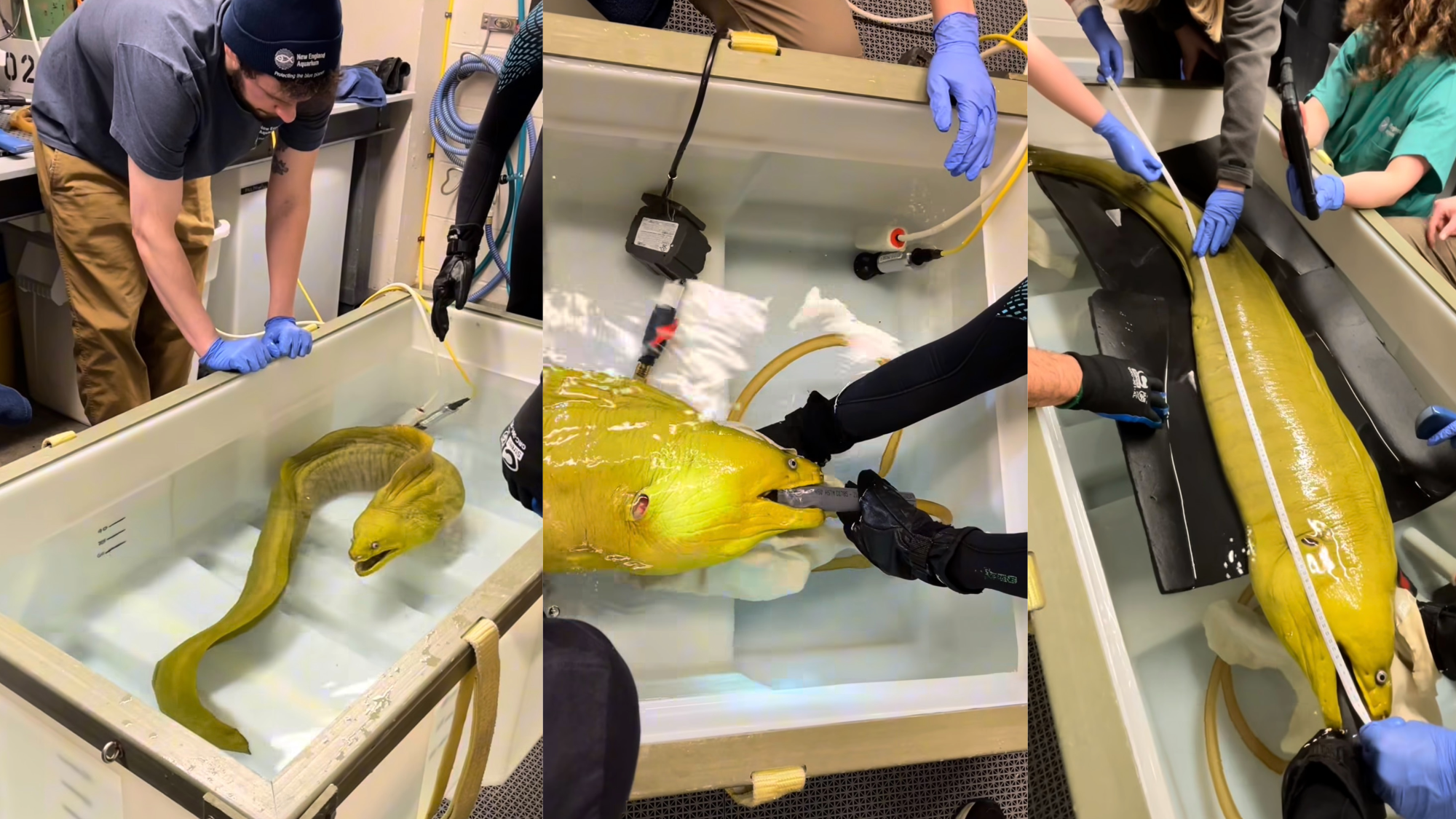
But what happens when the patient is a giant yellow-orange eel with sharp teeth? Things get a bit slippery. At the New England Aquarium, experts need to follow a complicated process in order to get Thomas, a green moray eel (Gymnothorax funebris), ready for his yearly checkup.
The first step consists of retrieving Thomas from the aquarium’s giant ocean tank. Divers get him into a plastic barrel.Thomas and the barrel are then submerged into a different water tank with powdered anesthetic water, Melissa Joblon, New England Aquarium’s director of animal health, tells Popular Science.
“We have to be really cautious to make sure that he’s fully anesthetized before we handle him because they can be dangerous,” she adds, “and they’re very slippery and can kind of slither away if we’re not really careful.”
Once Thomas is essentially knocked out, the team lifts him from his sedation bin and onto a rack. They then flush water—with more of the anesthesia agent—which allows him to continue breathing.
The medical exam is preventative care, meaning the team is on the lookout for any health issues to catch them before they become serious. The session includes a physical exam, bloodwork, a full ultrasound, and an electrocardiogram. The team is essentially investigating the eel’s outsides and insides.
“We do full routine annual exams on the majority of the animals that live at the aquarium, similar to bringing your cat or dog to a vet once a year,” Joblon explains.
Thomas is probably 18 to 21 years old, but he was a juvenile when the New England Aquarium took him in. A pet owner donated him after wisely deciding that they couldn’t care for the eel anymore—Thomas was becoming too big. Green moray eels are, after all, among the largest morays—they can be eight feet long.
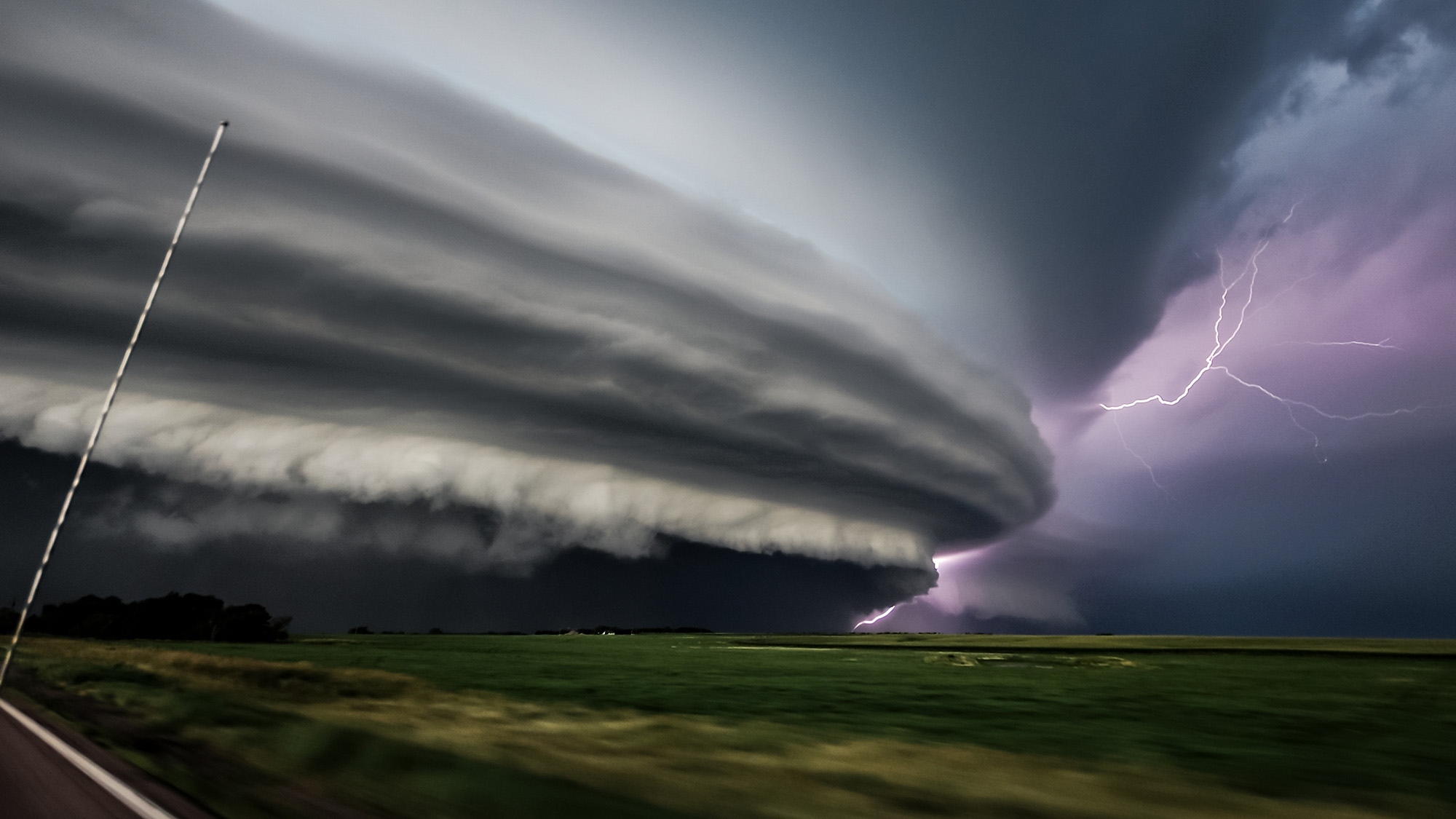
We’ve all seen the movies. Scientists gear up to chase tornadoes across the Oklahoma plains, competing with each other to get there first. But is the reality of storm chasing anything like the movies? In a new episode of Popular Science’s Ask Us Anything podcast, we ask real life storm chaser, Cyrena Arnold, to untangle fact from fiction and break down what it’s really like to go speeding after tornadoes.
Sarah Durn: It’s a balmy Saturday afternoon in Kansas, and you’re driving along a wide open road. You glance in the rear view mirror and your heart skips a beat. Huge, black storm clouds are building in the sky behind you. Lightning flashes. Thunder rumbles. On the radio, an alert blares. A tornado has been spotted not far away.
As you drive as fast as you can away from the storm, a caravan of 10 SUVs whizzes by. What the heck are they doing? Why would anyone drive towards a tornado?
Little do you know, that caravan is packed with hardened storm chasers, just like Helen Hunt’s character in the 1996 classic film Twister. But is real storm chasing anything like the movies?
Laura Baisas: And hello, I’m news editor Laura Baisis.
SD: Here at Popular Science, we can’t stop thinking about all the world’s strangest questions, and this week, we have a special interview episode of Ask Us Anything delving into all things storm chasing. Woo-hoo. What is it? Who does it? And is it anything like the movies? Laura, you actually interviewed real-life storm chaser and meteorologist Cyrena Arnold for this episode.
LB: I did. Cyrena is the absolute coolest.
SD: Ah, I wanna go storm chasing with her so bad.
LB: Kinda do and kinda don’t. Kind of a little afraid of it, but also if I’m gonna go storm chasing with anybody, I think a seasoned meteorologist is kind of the perfect person to go with.
SD: Yeah, I don’t know. I might get too scared, but the idea of it seems fun.
LB: The idea of it’s great. Sounds great on paper.
SD: Sounds great. And you also wrote a story for Popular Science all about storm chasers, so before we get into your interview with Cyrena, let’s lay a bit of groundwork here. Can you tell us what exactly is storm chasing?
LB: So it’s a term that’s evolved quite a bit over the years, but Hollywood tornado movies basically get a lot of it right.
In general, storm chasing means tracking a severe thunderstorm where a tornado is likely to form.
SD: So badass. So where do chasers typically go to track these storms?
LB: It varies, but tornadoes primarily happen here in the United States.
SD: Really, you don’t get tornadoes elsewhere?
LB: You do. While tornadoes happen in China, Canada, and even Australia, nowhere has tornadoes like the good old U.S. of A.
We have by far the most frequent tornadoes, as well as the most dangerous storms.
SD: I don’t know if that’s an award you want.
LB: No.
SD: And when and where do most of these tornadoes happen in the U.S.?
LB: So it can vary a bit. Peak tornado season for the Southern Plains, so that’s Texas, Oklahoma, and Kansas, is from May into early June.
On the Gulf Coast, it’s earlier in the spring, and in the Northern Plains and Upper Midwest—so think North and South Dakota, Nebraska, Iowa, Minnesota—tornado season is more June and July.
SD: And what are chasers actually doing when they go out?
LB: So that’s cool. That all depends on the specific chaser. For a lot of hobby storm chasers, it’s all about getting that great picture or video of a tornado.
SD: Kinda like Glenn Powell’s character in Twisters?
LB: Exactly. So then you have storm chasers with more of a meteorology background. These chasers can collect really important data on these storms, so things like wind speed, direction, precipitation. All of this helps weather forecasters get on-the-ground data that even the most advanced radar might not see.
SD: Okay, so it’s a little more like Daisy Edgar-Jones’s character in Twisters, or Helen Hunt’s character in the original film.
LB: Exactly.
SD: And I imagine the fact that these real-life storm chasers can report things that radars can’t see is really important, right?
LB: Absolutely. Storm chasers in the field can radio back in to the National Weather Service about what they’re seeing, and from there, the Weather Service can issue potentially life-saving warnings.
SD: Wow, so storm chasers are actually saving lives.
LB: Absolutely, and that’s not something I necessarily even realized until I spoke with Cyrena and she talked about how important that is. Storm chasers are able to be the eyes and ears on the ground and help keep people safe.
SD: No pressure.
LB: Yeah, yeah. None whatsoever.
Now, before we get into my interview with real-life storm chaser Cyrena Arnold, we want to hear from you. What questions are rotating around in your brain? Submit your question by clicking the “Ask Us” link at popsci.com/ask. Again, that’s popsci.com/ask, and click the “Ask Us” link.
SD: We’ll be right back with Laura’s interview with a real storm chaser, after this quick break.
LB: And welcome back. Today, we have a very special guest interview. With us is Cyrena Arnold, a meteorologist, author, and host of the Storm Front Freaks podcast. She’s currently based in New Hampshire, where she is the director of product marketing at Atmospheric G2, and importantly, has 20 years of chasing storms.
Cyrena, thank you so much for joining.
Cyrena Arnold: Yeah, you’re welcome.
LB: So first, tell me, how did you get into storm chasing?
CA: Ah, that’s a very good question, and how I got into storm chasing was accidentally storm chasing. So I was born in the southern Caribbean where they don’t even get hurricanes, where the weather is really nice.
And when I was five, we moved to Denver, Colorado, or a suburb of Denver, and all of a sudden one day there was this thunderstorm, and I’d never seen a thunderstorm before, and then there’s hail, and I’d never seen hail before, and there was lightning, and I hadn’t seen that, and then a funnel cloud formed.
LB: Ah.
CA: And it formed a tornado, and the tornado just went across this big field, and I so vividly remember standing in the doorway of my house, looking out at that and going, “Wow.” That’s, that’s cool.
And a switch flipped in me when that happened. And so I just, I just loved weather, and I have really dedicated my entire life to it, you know, all of my education and every science fair project and everything like that.
So I knew I wanted to study severe weather. I knew I wanted to go to the University of Oklahoma, and when you’re out there at the meteorology school. It was wonderful. My first big storm chase was Cordell, Oklahoma, October 9th of 2001, where we saw seven tornadoes. One was a F3 tornado.
LB: Wow.
CA: And that’s the beginning.
LB: And one thing I think, like, me, myself, and anybody that watches some sort of a sci-fi or some sort of fictional take on a very real thing has to wonder: What do the actual scientists think about this portrayal? So can you tell me, what do you think about the Twister films specifically? Are they at all accurate?
CA: Yes and no.
LB: Right.
CA: There are some things about them that are super accurate.
LB: Mm-hmm.
CA: And there are some things about them that are not. I think the, for me, the funniest thing is how successful they are in storm chasing. They make it seem so easy.
LB: Right.
CA: You, you know, we’re out, oh, we’re gonna get in the car, and you drive 30 minutes, and there’s a tornado, and there’s another tornado, and, and no. No. No, no, no, no. The, the real story—
LB: Hmm…
CA: —is that you see a tornado on average about one out of every 10 of your storm chases.
SD: Wow.
CA: So you have a very low percentage rate. And then in order to do that, you’ve gotta forecast this right. You’ve gotta set yourself up in the right place. You’re possibly driving hundreds of miles, and you’re putting in a tremendous amount of time for a couple seconds.
Most tornadoes are very short-lived. They’re small, and there are some bigger ones, but you spend a lot of time and work to be successful, and I’ll go entire years and not see one. That’s probably one of the biggest things is that they just make it look so easy and, and so simple, and it’s not. Some other things that they get right or wrong, there’s always, like, a rivalry, right?
Yeah. Like in Twister, you know, it was Jo and, you know, Jonas and, and they fought. And, in the Twisters movie, same thing, right? You know, these competitive chase teams. This is a hobby that has some of the greatest camaraderie out there, and if you don’t believe me check out a gas station any time you see a whole bunch of storm chasers there.
They’re not fighting in the parking lot. They’re doing stuff together, looking at weather models together. They’re taking pictures together, laughing, joking, playing, like, football together. This is a like, a group thing. And I know when we’re out there with the Storm Front Freaks, we’ll see people that we’ve interviewed on our podcast and that we know and talk to, and you, like, run up to these people and give them hugs and high fives.
You know? You know these people, and we have this common bond.
LB: Yeah.
CA: So there is a lot more camaraderie in it, and very, very little competition.
LB: What about some things if it’s like your group, where you’re going out there and you’re, you’re not necessarily doing pictures and video, you’re doing more research and data.
How is that portrayed in the movies, that side of it?
CA: Yeah. It’s funny because in the movies it seems like everyone’s out there for research purposes. And that’s really cool, and in the 1980s and ’90s, that was absolutely true. Most of the people who went storm chasing were meteorologists. It was for scientific purposes, stuff like that.
Today because of those movies, they’ve made it a lot more popular where a vast majority of the storm chasers that are out there now have absolutely no meteorological credentials. And that’s totally cool. That’s fine as long as you go through a lot of training education, ’cause this is still an, this is an incredibly dangerous thing to be doing.
You can’t just walk out your front door and say, “I’m gonna go chase a tornado today,” or you’re gonna get yourself hurt. So most of the people who are out there are hobbyists. They do it for fun. They’ve taken a lot of chaser education courses and talked with other chasers, and a lot of those people who are doing it for fun or into photography.
They, maybe they want a picture of a tornado. Maybe they want really great storm structure. There are still researchers out there. There are still research projects. You have mobile radar on wheels teams out there with remote mesonet sites, so cars or stations you can move to have weather sensors on the ground, and they are collecting data, and we are still trying to understand how tornadoes form.
And that’s a part of it as well. And then you have the small sliver, fraction of a percent of, let’s just call them YouTuber using yahoos or stuff like that like wanna try to touch a tornado and bring you as close to it as possible, but that’s a real small sliver, so—
LB: Okay.
CA: —storm chasing is an incredibly wide spectrum of what’s out there, and, and I’d say a vast majority of them are out there to witness the beauty of nature and actually don’t have any degree or credentials or education in meteorology at all.
LB: And you mentioned the danger. How dangerous is it really?
CA: That can vary. If you wanna stay back from the storms, and you’re wanting to get storm structure, you wanna see the mammatus, and you wanna see the anvil. Maybe you’re far enough back you can see, like, an overshooting top. That’s, that’s pretty good.
LB: Yeah.
CA: You’ll find yourself okay there. But the hazards aren’t just the tornado. The hazards are downbursts. The hazards are lightning. The hazards are hail. The hazards are flooding, flash flooding. Water and flooding kills more people in weather than all of the different weather perils combined.
LB: Wow.
CA: So flooding is incredibly dangerous.
But if you have properly educated yourself, you understand the storm structure and where these different things are located and understand storm motion and dynamics and thermodynamics—
LB: Mm-hmm …
CA: —it can be done in a relatively safe way.
LB: Have you ever been caught up in a situation that you’ve thought, “Maybe I shouldn’t have gotten myself into this,” or, you know, any, um, dangerous storms?
CA: Absolutely. Absolutely. Uh, I got caught one time in a wet microburst of a storm structure that I didn’t understand, and I have never felt wind and rain like that in my life. I was stuck inside my truck. I couldn’t see anything. It was rocking like I was in a hurricane, and the bed liner in the back of my truck was bowing from how much wind was going through there.
I thought it was gonna pop out and go flying away. My ears popped from this wet microburst. It was crazy.
LB: Mm-hmm. Wow.
CA: I remember when this happened, I was like, “I’ve messed up. This is not a safe place.” I’ve been way too close to lightning. When you’re out storm chasing, that’s just inevitable as well.
So I got a car stuck in the mud one time because the mud out there is a special kind of mud that when it gets wet, that turns into the slickest stuff you’ve ever seen, and unless you have four-wheel drive, you’re not getting out of it. Learned that the hard way, and while running to safety, almost got hit by lightning.
I’ve chased tornadoes at night, ’cause I thought that would be fun, and then I realized I couldn’t see anything. So in, in my early days, in my college days, I’ve made a ton of mistakes, and I’m really lucky to say that I, you know, I learned from all of those experiences.
LB: Do you have… I, I know that this might be like asking, you know, what’s your fav- who’s your favorite kid, but do you have a favorite chase?
CA: Ooh. There was a storm in Clovis, New Mexico May of 2003 that was probably the angriest storm I’ve ever seen, and it was actually, it’s funny, we called her Tina because it was the day we chased her was either the day of or the day after Tina Turner passed away. And you know, and she was a, like, powerhouse, right?
And so this storm was just ferocious. And so we called her Tina, and so I’ll always remember Storm Tina. It had inflow winds blowing into the storm at, like, 67 miles an hour sustained. This thing was just sucking up air from the lower atmosphere and throwing it up high like I had never seen in a storm before.
The teals and the green colors you saw inside the storm from the hail that it was producing in the places that I didn’t wanna be were incredible. This storm was just, it was angry, and it was ferocious.
There’s also a storm, God, in the early 2000s. I was in, like, Okarche, Oklahoma, and this one, I, was hilarious ’cause we have our old-school video cameras. We’re filming it. We know we’re in the right area. We’re looking at the storm structure. The sirens in the town go off, which gives you goosebumps, and when you’re a storm chaser, is one of the coolest sounds in the world. If you’re living there, that’s terrifying. And we’re looking for it, looking for it, and we, you know, kind of, kind of finally see it at the end, but then we gotta drive away and get to safety.
We go back and watch our video that night, and with the resolution of the video camera, the contrast was better, and there was a funnel and a tornado in front of us the whole time, and we couldn’t see it because of—
LB: Whoa …
CA: —the way the light was and the brightness and the contrast. We were in, like, just this weirdest place.
LB: Just the whole time, it was there? Just—
CA: The whole time, yep.
LB: Hanging out.
CA: Just hanging out, had no idea, and so it was, yeah, and that one was, that, like, that’s just one that, uh, me and, and my friends from college, we just look back at and laugh. Like, to this day, we’re still like, “Oh, yep, you know? That Okarche day, man.”
LB: So when you’re actually out there, how is that whole team setup and dynamic different than it is in the movies?
CA: The movies are funny ’cause it’s almost like there’s the set day. Yeah. Where, where all of a sudden, hey, on the calendar, oh my God, it’s May 1st, tornado season is, is opening. You know, and that’s not how it is at all.
There are opportunities where chasers can get together. There’s storm chasing conferences. They usually happen in the off-season in, like, February, which is nice. But with a changing climate too, we have changing storm times, and we’re actually seeing Tornado Alley shift further east, and the seasons are longer.
We’re seeing it fall more into, uh, February, March in, in the southeastern parts of the U.S.. So people just start showing up, and you start chasing on their own. And once you really start getting into the severe season, yeah, you meet up, and you see other people when you’re out there, and in the gas station parking lots, people are there, and you see each other and can hang out for a bit while you’re staging and waiting for storm initiation or whatever.
But it’s not like they show in the movies where it’s like, “Oh my God, everyone mark your calendar for this day and we’re all gonna meet at this gas station in this small Oklahoma town.” It doesn’t work that way at all, and there’s days you can have a line of storms that form from Texas through the Dakotas, and so storm chasers just spread out all along across that line naturally, and it’s just a very natural sort of process. That’s not as scheduled and not as quick and easy as they make it look in the movies.
LB: There you go. Last question, but I love to ask scientists this one, whether it be from movie, TV, comic books, books, favorite fictional scientist?
CA: Miss Frizzle. Does she count?
LB: Oh, 100%. She, she definitely has a PhD, but is also teaching elementary school as a scientist, yes.
CA: You know she’s a teacher—
LB: Mm-hmm.
CA: But man, Miss Frizzle embodies everything about science, the curiosity, the willing to learn, making mistakes and trying again, and also, like, rocking outfits.
LB: Yes.
CA: Like, really cool science-y dresses and stuff while doing it, and making science fun, and I think that is awesome. I am so … I’m game. That’s great. Sign me up. She’s amazing.
LB: Cyrena, thank you so much for joining us. Now, if people wanna find you on the internet, where should they look?
CA: Everything for me is at wxcyrena, and Cyrena is spelled really unusually. Thank you, Mom and Dad. Love you so much. It’s C-Y-R-E-N-A, so W-X-C-Y-R-E-N-A on all the social media platforms.
My website, everything is at wxcyrena. And find me. Find me on social media. We’re gonna be talking about the storm chase while we’re out doing it, so check in and see what’s going on there. And we were just talking about Miss Frizzle. She’s one of my favorite people, and I am trying to be her, I think, more and more every day.
I’ve written three children’s books about weather, too, and so you can find those through the links in trying to find me. I have The Weather Story, The Hurricane Story, and The Tornado Story, which are factual books, real meteorology, but in a nice, lyrical, easy to understand way for kids, and it’s just so important to me that science communication and science education piece is a cornerstone of what I do, so go check those out, too, if you’re looking me up.
LB: Awesome. Well, thank you, and good luck chasing.
CA: Thank you. I hope you find some wonderful, what we, other people call terrible, weather.
SD: What an interview. Now I really wanna go storm chasing with her.
LB: I know. I’m more convinced now.
And that’s it for this episode, but don’t worry, we’ve got more episodes of Ask Us Anything live in our feed right now. Follow or subscribe to Ask Us Anything by Popular Science wherever you enjoy your podcasts.
And if you like our show, leave a rating and review.
SD: Our producer is Alan Haburchak. This week’s episode was based on an article written for Popular Science by Laura Baisis.
LB: Thank you, team. Thank you, meteorologists and storm chasers, and thanks everyone for listening.
SD: And one more time, if you want something you’ve always wondered about explained on a future episode, go to popsci.com/ask and click the “Ask Us” link.
Until next time, keep the questions coming, and listen to those storm warnings.
A team of engineers at the University of California San Diego (UCSD) have developed a humidity-based image encoder that looks straight out of James Bond’s Q-Lab. The postage stamp-sized chip can store a hidden message that is only revealed when exterior humidity levels surpass 60 percent. The image can then be concealed again by bringing humidity back down. In practice, that means someone handed an object with the chip on it could simply breathe on it to unveil its secret message.
While it’s a potentially nifty tool for an undercover spy, the researchers say the encoder could also be used to reveal a security code on a credit card, or even serve as a visual indicator of climate changes in a particular area. In all of these cases, humidity essentially acts as a key. The findings were recently published in the journal Light: Science & Applications.
“You can imagine using this as a built-in security feature with the environment acting like a key that unlocks different pieces of information,” study co-author and UC San Diego electrical and computer engineering postdoctoral researcher Asad Nauman said in a statement.
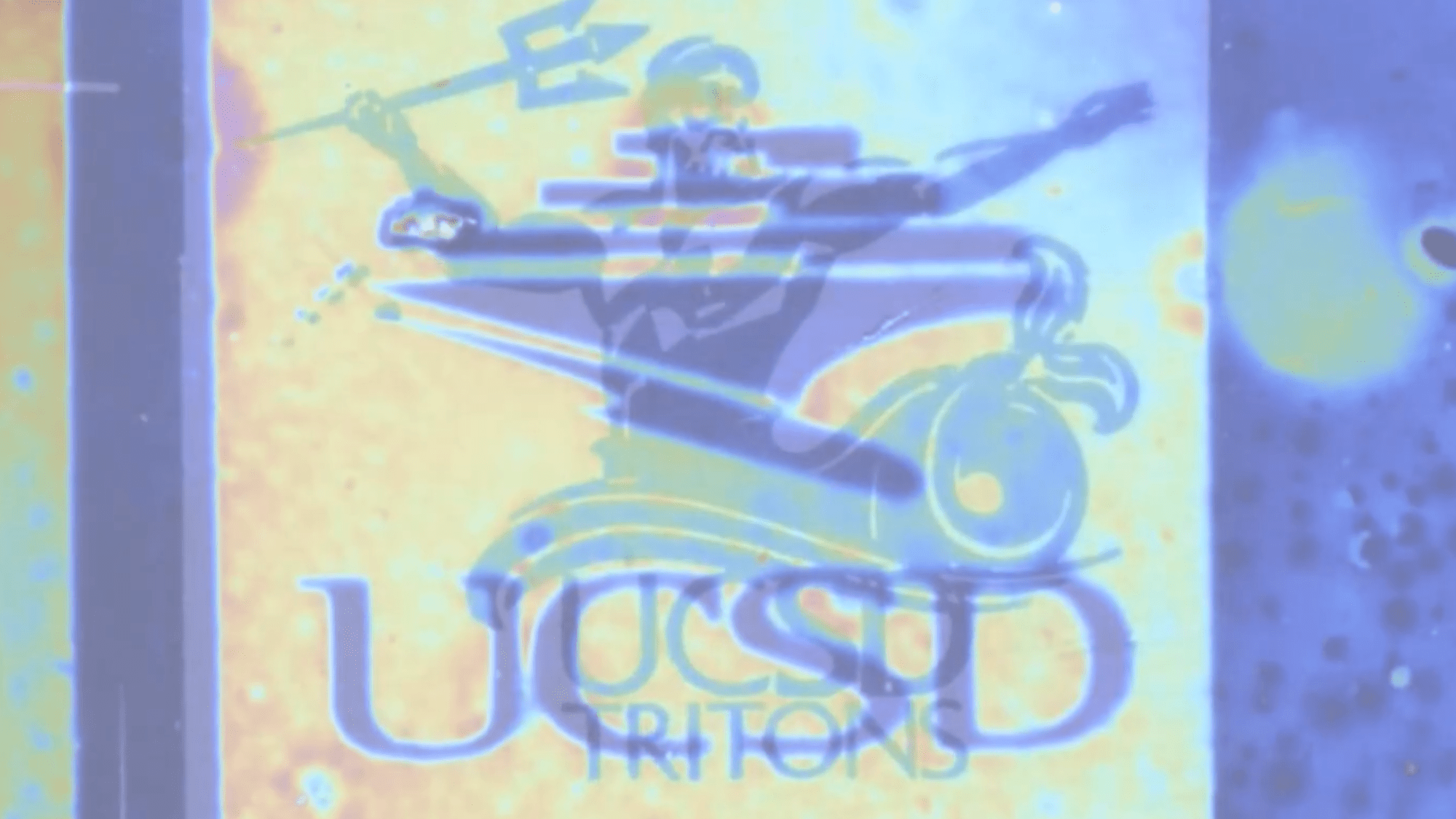
In a video demonstration, a clear blue image of a UCSD trident logo appears and then quickly begins to fade as the area around it brightens. After only a few seconds in, the UCSD library logo emerges. The image then fades back to the man with the trident before switching back once more to the library logo.
Hiding a message in plain sight
The chip consists of two separate hydrogel layers. The bottom layer, made of a phase-changing material called antimony trisulfide, essentially acts as a canvas onto which lasers can etch messages. These can be text or, as in the example above, full images. The top layer is made of a softer hydrogel material called azido-grafted carboxymethyl cellulose. This layer swells in humid conditions and shrinks in dry ones, which is why the hidden message becomes visible.
The transformation of the UCSD Triton logo to the UCSD library logo. Left to right: The UCSD Triton logo is visible at a 40% humidity level; the UCSD library logo begins to appear and overlap the Triton logo at a 60 percent humidity level; the UCSD library logo is solely visible at an 85% humidity level; and both images are overlapped at a 95 percent humidity level. Image: NDAO Lab
The first, low-humidity image or message is visible when humidity levels are at or below 40 percent. As humidity levels approach 60 percent, the hidden message starts taking shape. It is then fully visible at 80 percent humidity. The image reveal is also accompanied by a color shift due to small gaps between the two hydrogel layers. When the top layer swells and expands, the increased space between the layers alters the way light reflects off them, resulting in a shift from blue to red.
Of course, for any of this to work, a spy or other user would need to operate in an area with a predictable climate. Blowing on a message in a tropical environment where the air is already thick with moisture probably won’t do the trick. Still, in a pinch, it might beat having to write out long, intricate messages on finicky invisible ink.
Attention creative souls! While NASA might feel like an exclusive den of scientists, engineers, and otherworldly athletes, the agency is reaching out to storytellers and artists via two new initiatives.
“As NASA pushes the boundaries of exploration and innovation for the benefit of humanity, the agency is looking for partners to share mission stories covering Artemis Moon missions, nuclear propulsion, aeronautics, and more,” NASA wrote in a press release. Since “journalists” aren’t mentioned in either of these calls for creatives, it would appear that NASA is seeking other means to keep people talking about its missions.
Specifically, they are seeking proposals from creatives including documentarians, songwriters, storytellers, and poets for projects about missions including Artemis III in 2027 and Space Reactor-1 Freedom to Mars in 2028, among others. Proposals are due by the end of June.
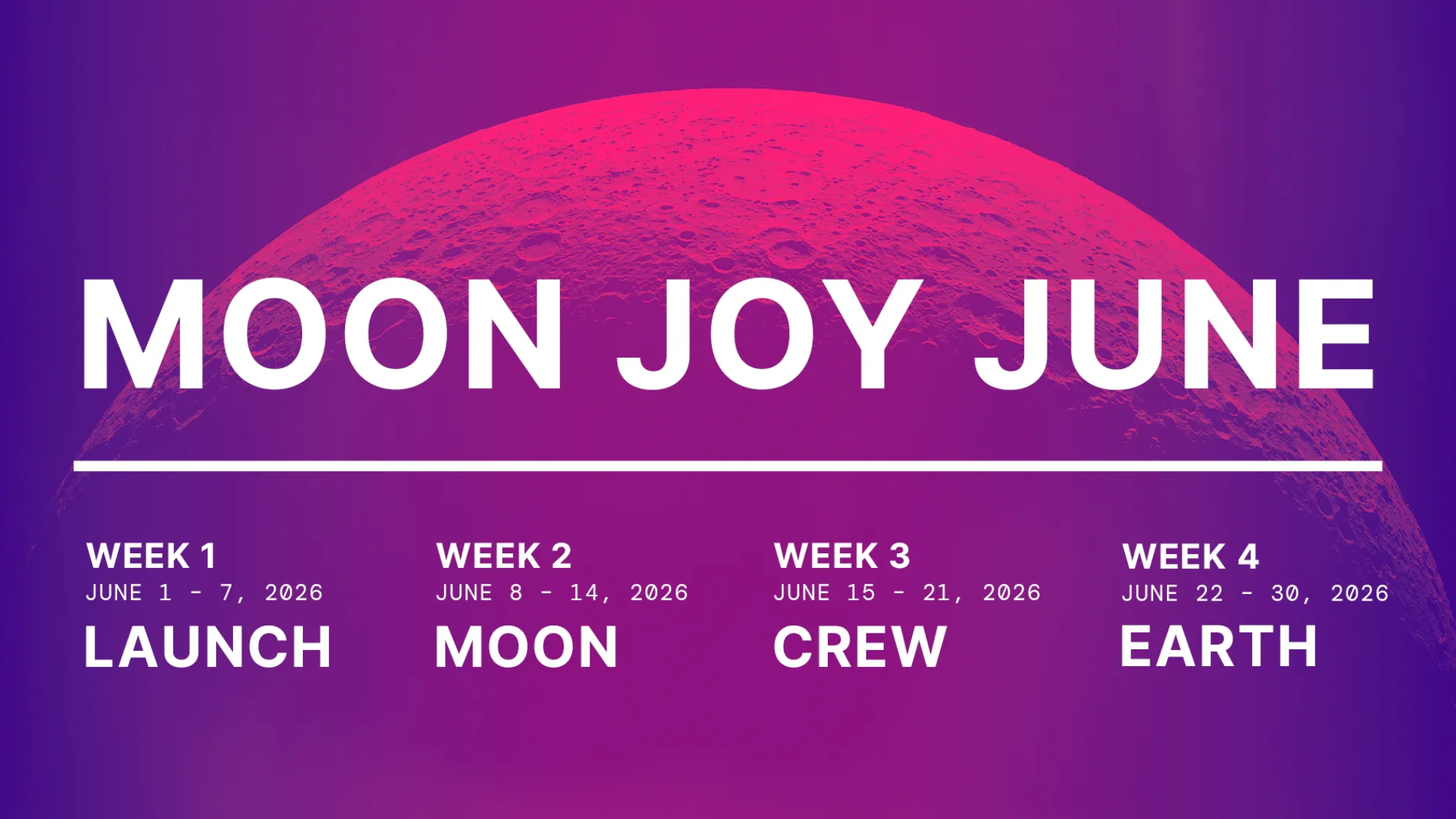
NASA is also launching another creative initiative called Moon Joy June.
“To keep the Moon Joy alive after the Artemis II mission, NASA is hosting a month-long art challenge on Instagram, Threads, and Tumblr. Each week during the month of June 2026, NASA will provide a prompt to inspire participants to make and share their artistic creations,” they explain in an FAQ page.
The prompts have already been released, so artists looking to participate can already start brainstorming. Week one’s prompt is “launch,” week two will be “moon,” week three will be “crew,” and week four will be “Earth.”
A note to the competitive-minded—the agency highlights that Moon Joy June is not a contest but an art challenge, meaning there will be no prize. And as if it could get any worse for type-A people, participants don’t actually have to follow the prompts. It seems like we’re in for a free-for-all artistic takeover of the three social media platforms.
Non-traditional art forms like nail art and latte foam art are also welcomed. In NASA’s words, “The sky is (not) the limit!”
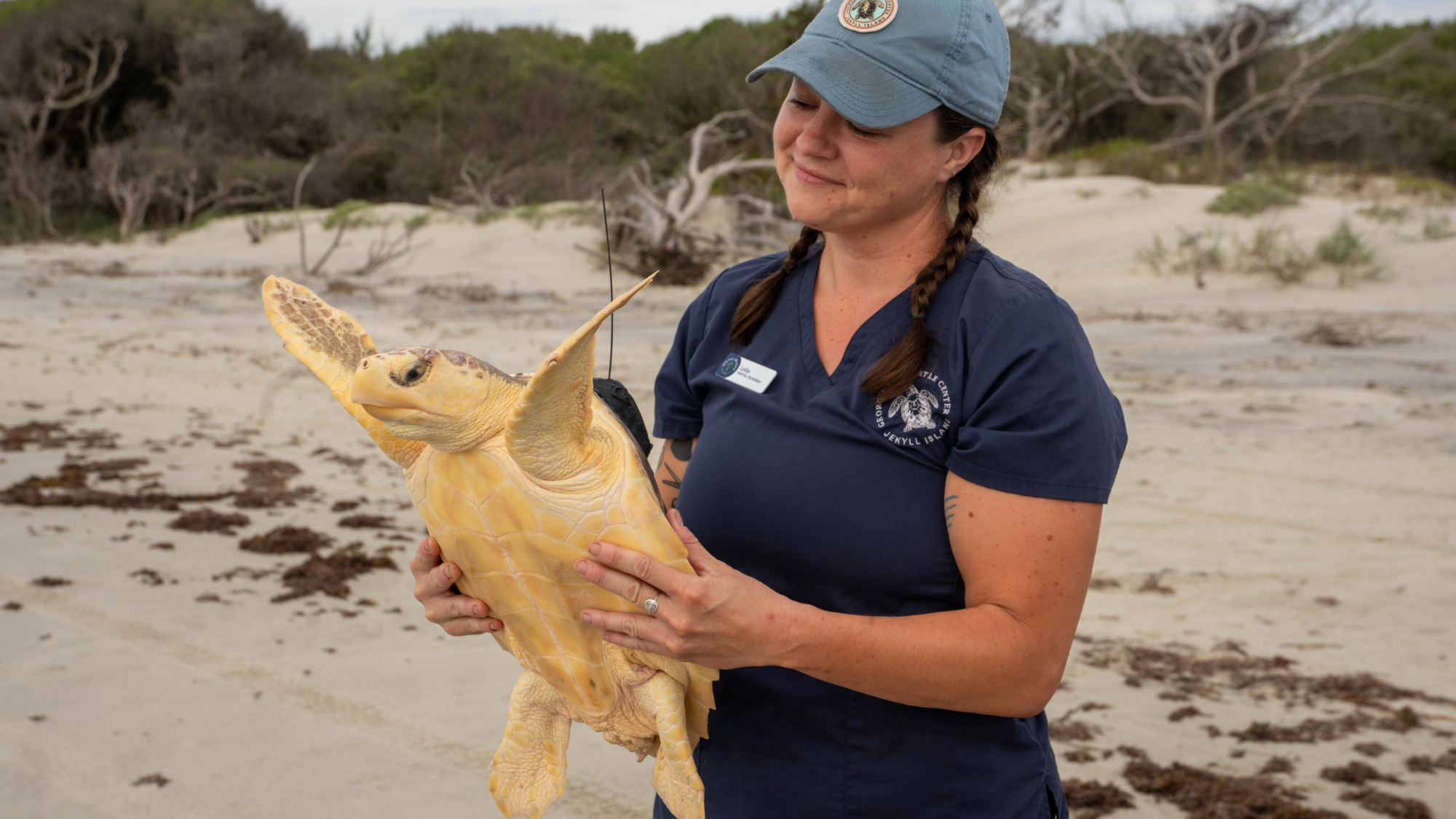
A unique turtle is officially getting a second chance at life in the big blue. Last month we reported on a special resident at the Georgia Sea Turtle Center in Jekyll Island, Georgia: a first-generation hybrid sea turtle, the child of a Loggerhead sea turtle father (Caretta caretta) and a Kemp’s ridley sea turtle (Lepidochelys kempii) mother. Nicknamed Earl Grey, the reptile-turned-celebrity has returned to the wild.
This Hannah Montana of turtles was slated to be released on Wednesday, but on Tuesday the Georgia Sea Turtle Center announced a change of plans because of “some unexpected pre-release complications.” Luckily, these complications must have been resolved. He was sent on his way Thursday morning, only one a day behind schedule.
“Yesterday evening, veterinarians at the Georgia Sea Turtle Center determined that the best course of action for Earl Grey’s well-being and successful transition back into the ocean was to conduct a private release,” according to a George Sea Turtle Center spokesperson.
The turtle was rescued from a beach in Brewster, Massachusetts, where it was stranded and cold-stunned. The turtle’s mixed background was revealed by genetic testing after the Loggerhead ridley (or Kemp’s Loggerhead?) arrived at the turtle center. Hybrid animals are natural, but we don’t know how many wild hybrid sea turtles there are. Most hybrid animals are only confirmed with genetic testing.
Earl Grey on his way to the beach for release. Image: Jekyll Island Authority.
“From an evolutionary perspective, hybridization could be one of many ways genetic diversity is introduced into a population,” Jaynie L. Gaskin, Georgia Sea Turtle Center director, told Popular Science in April. “We encourage other rehabilitation facilities to consider genetic testing for any suspected hybrid sea turtles, as there may be more individuals than we currently realize!”
In a Facebook video, the turtle center highlights the traits that the rare hybrid sea turtle inherited from each species, including a hook-shaped beak of a Kemp’s ridley (the mother) and the colors of a Loggerhead (the father). A combination of, in their words, the “best of both worlds.” .
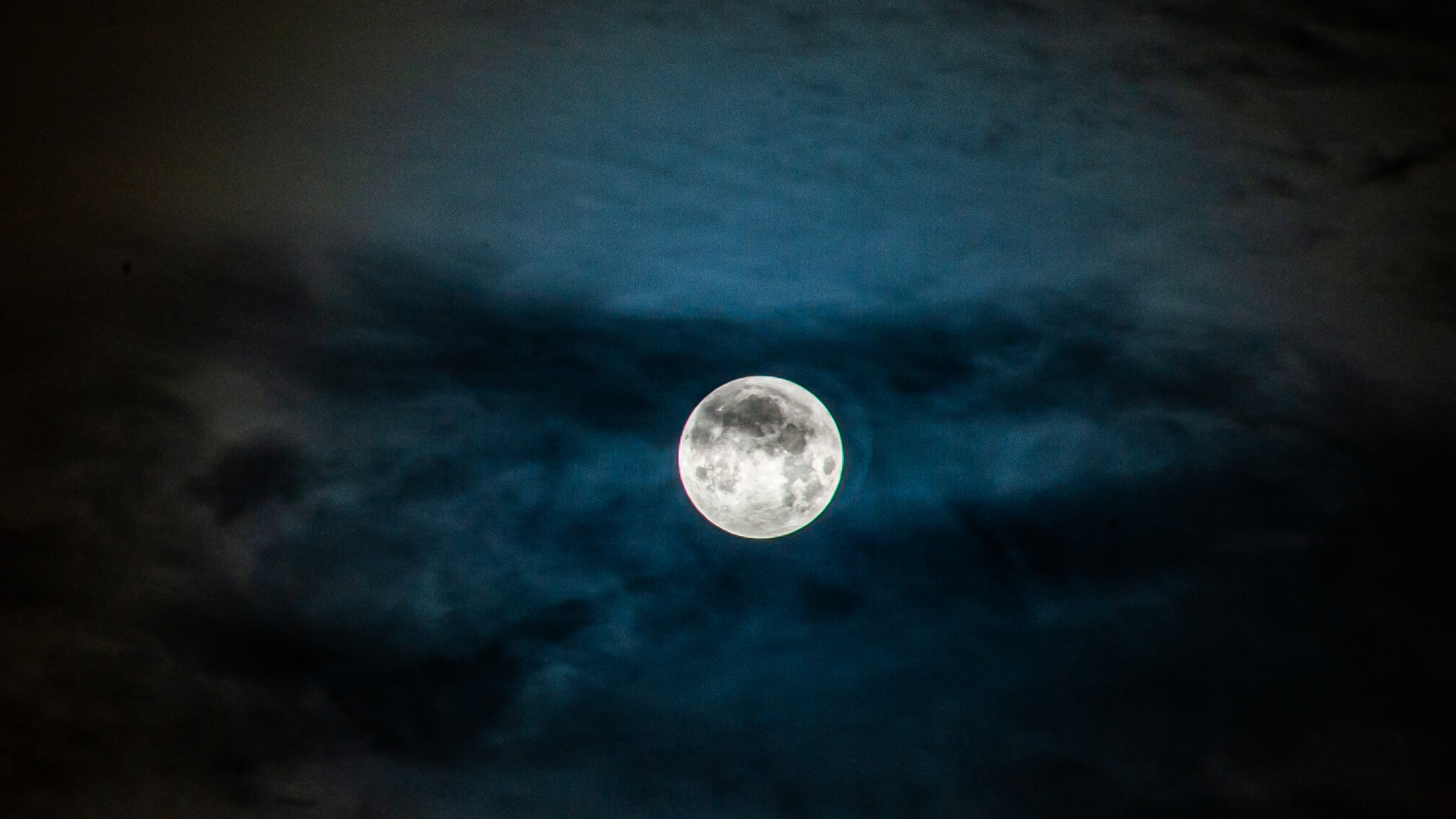
This weekend, Earth will be treated to a nice blue moon. Our planet’s only natural satellite won’t put on a pleasant azure hue (indeed, blue moons have nothing to do with color). Instead, it will be the second full moon for the month of May, following the full Flower Moon on May 1. The blue moon will reach peak illumination at 4:46 a.m. EDT on Sunday May 31.
A seasonal blue moon is one extra full moon within an astronomical season, or the dates between solstices and equinoxes. A typical astronomical season has three full moons within it. If it has four full moons instead, then the third may be called a blue moon.
A calendrical (or monthly) blue moon is the one most of us are familiar with. It is the second full moon to fall in one calendar month—like in May 2026. It takes the moon roughly 29.5 days to complete one cycle of phases (new moon to new moon). So if a full moon falls on the first of the month on the calendar, there will be a second full moon at the end of the month. The only month in which a calendrical blue moon cannot fall is February.
How rare are blue moons?
Blue moons are not quite as rare as the phrase “once in a blue moon” makes it sound. Calendrical blue moons happen every 2.5 years (or 30 months) on average, and seasonal blue moons fall about once every two to three years.
Two blue moons can also occur in one year. In 2018, January and March both had two full moons, with no full moon in February. The next time two blue moons will fall in one calendar year won’t be until 2037.
Why is it a micromoon?
May’s blue moon will also be a micromoon and the smallest micromoon of the year. Micromoons have nothing to do with size and everything to do with distance. Typically, the moon is about 238,855 miles away from Earth. Micromoons are further away, and this month’s micromoon will be 252,360 miles away. With the further distance, a micromoon may appear a bit smaller and dimmer than usual.
On the opposite end of the spectrum are supermoons, which are closer to Earth at only 225,130 miles away.
NASA has also put together a handy lunar photography guide if you want to snap that perfect moon pic. If using a smartphone, NASA recommends stabilizing the device, turning off the flash, and tapping the moon on screen to focus the camera directly on it instead of the sky. Your brightness also needs to come down and taking pictures at twilight or as the moon clears the horizon will give the sensor less contrast.

 Login
Login