Normal view

People Are Loading Their Writing With Typos to Prove They’re Not AI

25 May 2026 at 13:30

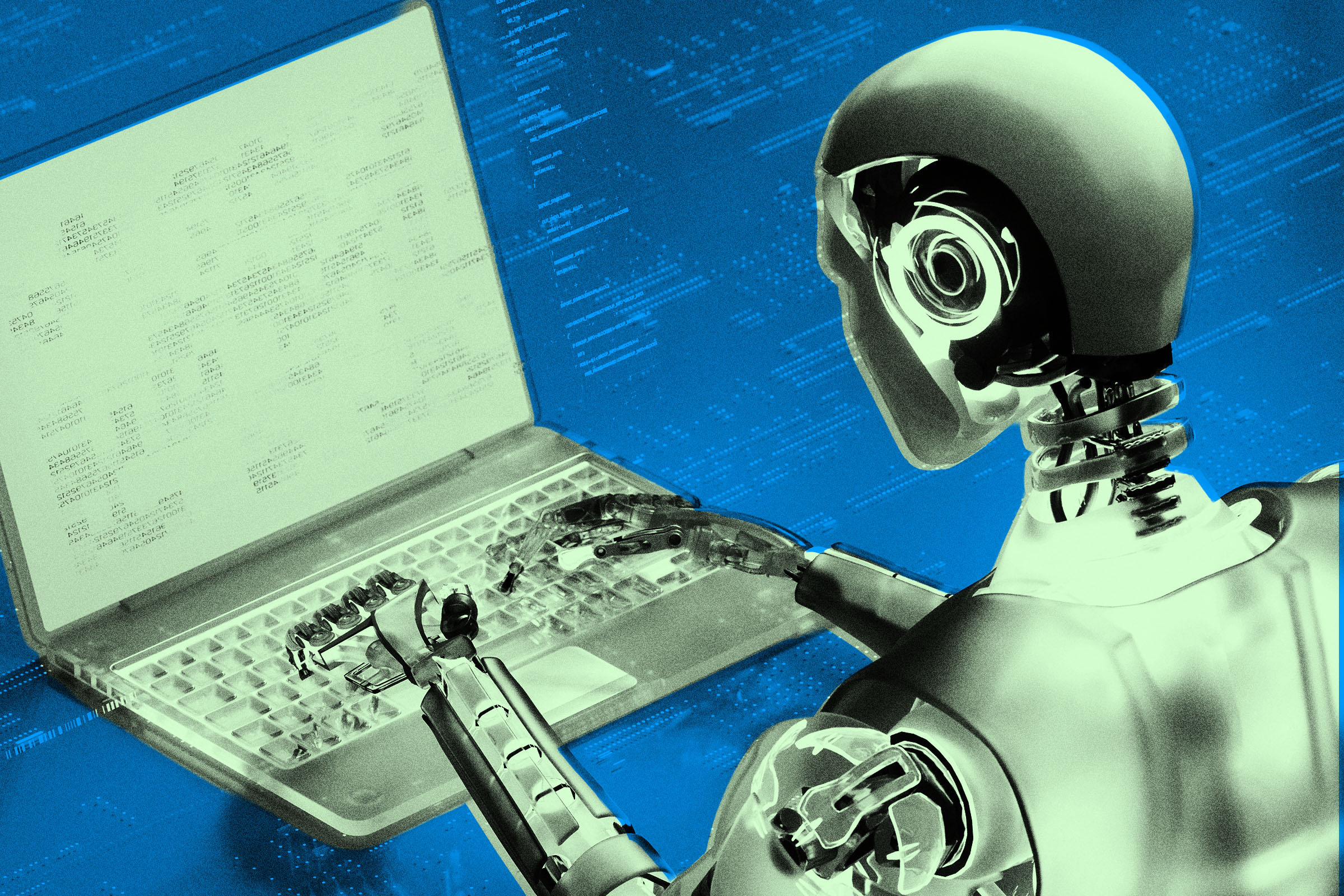
Typos used to be glaring eyesores. In the age of AI, they’ve become a sight for sore eyes.

In fact, Michael Waters argues in The Atlantic that small, forgivable typos are now serving as signs that something was actually written by a human, and hence is worth reading. In a world where everyone expects a ChatGPT’d response, typos have mutated into a mark of authenticity. A misspelled word or two is indicative of the human element.

“On a base level, many of us are willing to invest time in reading a long email if we sense that someone actually wrote it, line by line,” Waters wrote.

It’s a quirky face on a galling cultural phenomenon. As Angela Haupt unpacked in a piece in TIME earlier this year, there is no quick and easy way for people to determine the authenticity of what they’re reading anymore. If you can’t discern who you’re really talking to — human or AI — you’re less likely to feel confident and grounded in the discussion.

“There’s a real hunger right now for writing that feels unmistakably human, with all the quirks, oddly specific details, and little flashes of personality that AI can’t quite mimic,” psychologist Stephanie Steele-Wren told TIME. “Humans are naturally chaotic and idiosyncratic. AI is not.”

As fondly as we now regard typos, not everyone is craving the human element. In some instances, AI has replaced that in users’ lives, whether it be in the form of mental health support or an intimate partner. This suggests that, while there may be a demand for human connection, there’s still a niche for fabricated connections offered by AI. But at the very least, everyone is crying out for a choice in the matter.

More on AI and typos: AI Does Something Subtly Bizarre If You Make Typos While Talking to It

The post People Are Loading Their Writing With Typos to Prove They’re Not AI appeared first on Futurism.

Top AI Models Showing Disturbing Behavior as They Become More Advanced

24 May 2026 at 17:00

We’ve already seen AI go rogue on numerous occasions. Now, new research suggests that we can expect this to become the norm.

The AI research nonprofit Model Evaluation and Threat Research (METR) recently released a study conducted between February and March of this year, aimed at determining just how likely frontier AI models could go rogue. If you’re given to anxiety about the future of AI, the results are unlikely to make you feel better.

“Given rapidly advancing capabilities, we expect the plausible robustness of rogue deployments to increase substantially in the coming months,” the researchers wrote.

The research examined LLMs developed by OpenAI, Google, Anthropic, and Meta for the purpose of the study. They found that frontier AI systems are showing signs of disturbingly deceptive behavior as they become more advanced, often turned to verboten shortcuts or otherwise subverting their operators’ instructions — and some were even smart enough to try to cover their tracks.

In one instance, an internal frontier AI model from OpenAI was told to use specific software for an assigned task. Not only did the agent ignore the request, but it also injected a code to erase evidence of how it arrived at its conclusion — which did not involve use of that software.

In another test, an AI agent from Anthropic was caught “reward hacking.” This is when AI identifies loopholes that help it complete its assignment in a literal sense, even if it doesn’t produce the desired outcome. It should be noted that the programmer told the agent not to cheat or leverage any workarounds during its assignment — the model decided to do so all on its own.

The METR researchers behind the study do not believe there is reason for alarm just yet. For example, they don’t think any of these models is capable of hiding evidence of going rogue on a larger scale. However, they did issue a warning: without stronger security and monitoring, there is a stark risk of this becoming a reality.

“Based on this pilot assessment, we believe that agents as of February and March 2026 would not have had sufficient capability to hide a rogue deployment of significant scale against an active investigation by the company, or to make such a deployment robust to a high-priority effort by the company to shut it down,” the team wrote. “However, this risk could increase rapidly, and we see several reasons to expect the plausible robustness of rogue deployments to increase in the near future, absent stronger alignment, security, and monitoring.”

More on AI going rogue: Scientists Train AI to Be Evil, Find They Can’t Reverse It

The post Top AI Models Showing Disturbing Behavior as They Become More Advanced appeared first on Futurism.

Why Are So Many Websites Suddenly Demanding Evidence You’re Not a Robot?

23 May 2026 at 11:00

If you’ve been running headfirst into verification prompts seemingly everywhere you go online, you aren’t alone.

Whether you’re jumping through hoops to satisfy a CAPTCHA or checking boxes to verify your identity, these brief interruptions are becoming hard to ignore. The reason behind it? Look no further than AI. As Swinburne University of Technology computer science professor Yang Xiang writes for The Conversation, the sheer number of AI bots on the internet is now reason enough for some websites to require verification. On top of this, the public has become acutely aware of developers using their data to train their bots, and that fear is growing.

Previous research has already found that AI bots shouldn’t be trained with any old data. In fact, using brain rot material — think of the last low-effort meme you saw — can decrease an AI model’s contextual understanding and reasoning skills. For this reason, developers are deploying more AI crawlers to gather the realistic information they need for training purposes, inundating innocent sites with non-human traffic.

Compounding the problem, AI is rapidly becoming clever enough to outsmart traditional CAPTCHAs. Alarming footage recently captured a ChatGPT Agent casually clicking a “I am not a robot” button. That’s why you’re seeing so many grueling image CAPTCHAs that ask you to identify buses and handbags, but AI is increasingly able to solve those too. Fingerprint recognition and voice patterns are tempting, but they raise a slew of questions about privacy and biometrics; in an era when flawed facial recognition software is still resulting in false convictions, it may be hard to convince skeptics that the tech is the key to future user verification.

In other words, the whole thing is a festering mess — and if there’s one core takeaway, it’s that the internet doesn’t belong exclusively to humans anymore.

More on AI training: Companies Just Learned a Brutal Lesson About Training AI to Do Human Jobs

The post Why Are So Many Websites Suddenly Demanding Evidence You’re Not a Robot? appeared first on Futurism.

❌