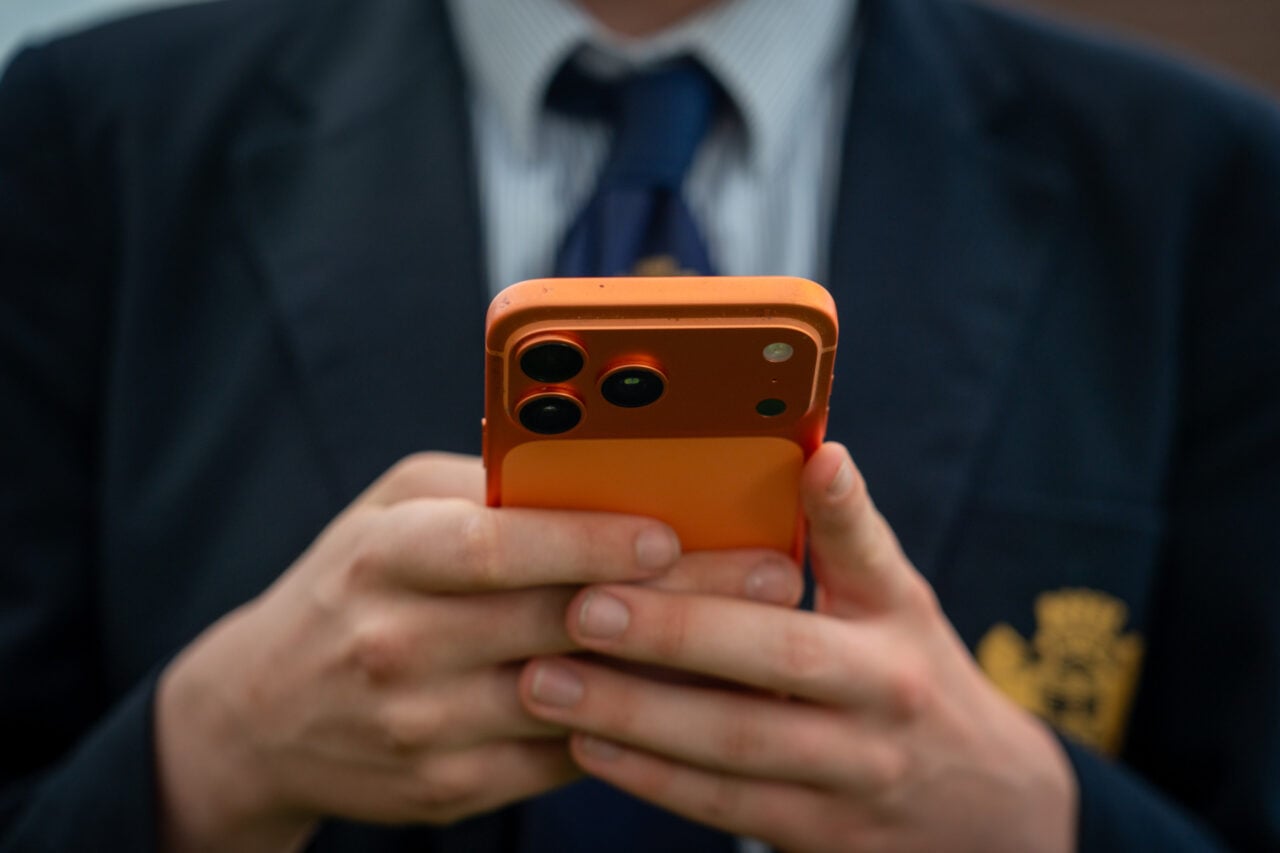
Researchers at Rutgers University have found that frequent exposure to real-world gun violence through the media may affect our mental health. The research suggests that regularly viewing firearm-related news and social media content is linked to higher levels of depression and emotional distress among adults throughout the United States.
The study examined 5,000 adults nationwide. Throughout the study, the research team focused on exposure to real-world firearm violence through popular media outlets such as Instagram, cable television news, newspapers, and other related media. Unlike fictional violence seen in movies, video games, or television dramas, the study took a direct look at the reactions to actual incidents of gun violence reported in the media throughout the United States.
“One of the most critical elements is ‘threat system activation,’ essentially how the brain’s survival system (fear/vigilance) gets activated again and again from violent images/narratives,” according to Niloufar Esmaeilpour, a Registered Clinical Counselor and the Founder of Lotus Therapy & Counseling Center.
Esmaeilpour, who was not connected to the study, told The Debrief in an email that “Although an individual might not be at risk personally, seeing shootings, victims, police/emergency response, etc., repeatedly in the media could cause individuals to inaccurately judge their personal safety,” invoking a cognitive bias known as “availability heuristic.”
“Chronic activation of the body’s threat response through repeated viewing could result in chronic stress responses (sleep disturbances, irritable mood, emotional numbing), and potentially later symptoms of anxiety/depression,” Esmaeilpour said.
Another outside perspective was provided by Dr. Clint Salo, a Board-Certified Psychiatrist at The Grove Recovery Community. “What’s happening neurologically is that the brain doesn’t fully distinguish between witnessing violence directly and consuming it repeatedly through a screen,” Salo said. “The threat response activates either way.”
“So chronic exposure to graphic news content keeps the nervous system in a low-grade state of vigilance, and over time, that contributes to anxiety, depression, and a distorted sense of how dangerous the world actually is,” Salo said. “Algorithms make this significantly worse because they’re optimized for engagement, and fear and outrage drive engagement.”
The Findings
The researchers found that people who watch or frequently encounter firearm-related content reported more days when they experienced poor mental health and a higher rate of depression symptoms. Researchers used statistical models to compare levels of media exposure with personal emotional well-being, revealing a connection between repeated exposure and negative emotional or mental health outcomes.
Devon Ziminski, a postdoctoral fellow at the New Jersey Gun Violence Research Center at the Rutgers School of Public Health, says in a statement that the findings “support existing research that repeated exposure to firearm violence may negatively affect well-being, and that real-world media firearm violence exposure may also have negative implications.”
Even watching highly-publicized firearm violence events like mass shootings, how the event is shaped, its narrative, the volume of coverage, and how it’s framed in the media—even if the outlet is credible—can all lead to negative mental health outcomes. Fundamentally, the idea is that the coverage could reinforce perceptions of threat and harm.
The overall outcome is that large amounts of gun voilence consumed can contribute to poor mental health. Researchers believe the emotional effects of repeatedly watching violent real-world events should be part of a broader discussion about how people receive their news and are exposed to information.
“While much work focuses on direct victimization, these findings suggest that cumulative media exposure to real-world firearm violence could contribute to a mental health burden, even for those not personally involved in an incident,” Ziminski says.
While researchers are not suggesting we turn off all our media devices, they are encouraging people to be well-informed and to work toward a better understanding of how negative media can shape emotional well-being. Strategies such as limiting repetitive exposure to distressing content, taking breaks from it, and balancing news consumption with positive activities may help reduce emotional strain.
“When consuming news, I recommend creating a ‘news dosing schedule,’ setting aside specific times each day (e.g., 20-30 min once/twice per day) for news consumption instead of constant browsing,” Esmaeilpour suggests. “Browsing continuously can overwhelm emotions, making it difficult to manage one’s mental health.”
“Intentional selection of high-quality news sources that include contextual information and do not repeatedly present graphic detail will also help mitigate the emotional response to news stories,” Esmaeilpour added. “In addition, taking some type of physical/cognitive break immediately following exposure (i.e., going for a walk, listening to music, talking with others) is beneficial because it changes the state of the nervous system away from being in a continued threat state.”
The recent study, “Associations between media gun violence exposure (GVE) and mental health: a national cross-sectional study,” was published in BMC Public Health.
Chrissy Newton is a PR professional and the founder of VOCAB Communications. She currently appears on The Discovery Channel and Max and hosts the Rebelliously Curious podcast, which can be found on YouTube and on all audio podcast streaming platforms. Follow her on X: @ChrissyNewton, Instagram: @BeingChrissyNewton, and chrissynewton.com. To contact Chrissy with a story, please email chrissy @ thedebrief.org.

 Login
Login