Normal view

Received — 1 June 2026 Quanta Magazine

The Dirt That Refused To Die

1 June 2026 at 15:44

For 15 years, Sébastien Fontaine has been trying to kill dirt. The biochemist, who runs a lab at the French National Institute for Agriculture, Food, and Environment, wanted to know how much carbon is released by soil — just dirt alone, completely devoid of life. His team sealed dirt into jars and blasted them with sterilizing gamma radiation. Then they waited for the carbon dioxide released by…


Source

Received — 31 May 2026 Quanta Magazine

Key Chemistry Question Answered, No Quantum Computer Required

29 May 2026 at 14:54

What Garnet Chan cares most about is basic science. He entered chemistry decades ago to understand some of the most consequential biochemical processes on Earth. But since then, he’s become a central figure in a different arena: the debate over whether quantum computers will have a decisive advantage over ordinary “classical” ones. Over the past decade, many quantum computing researchers have…

Source

How We See the Beautiful, Violent Sun

28 May 2026 at 15:16

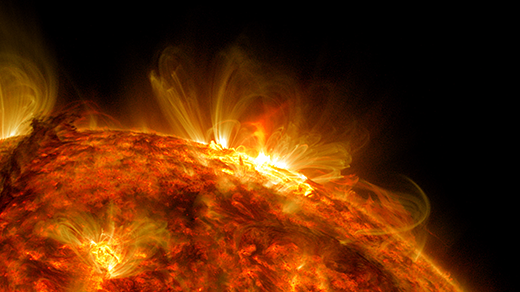
The sun is one of the most studied objects in the history of science. The ancient Babylonians and Chinese tracked sunspots and solar eclipses, etching their observations into clay tablets; these records would outlast their civilizations. When the telescope arrived in the early 1600s, astronomers such as Galileo Galilei, Christoph Scheiner, and Johannes Fabricius turned these instruments toward…

Source

When Quiet Undersea Volcanoes Turn Disruptive

26 May 2026 at 16:29

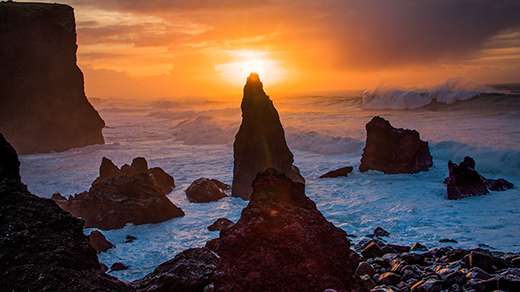
Jonas Preine, a recently minted Ph.D. from the University of Hamburg, squinted at a computer screen in the lab of a ship as it bobbed in the North Atlantic near Iceland. The image before him just didn’t make sense. It was June 2024, and Preine was among a crew of scientists who had set off from Reykjavik under slate-colored skies, trading their regular lives — family, friends…

Source

How Ecotypes Harbor the Genetic Memory of a Species’ Past

21 May 2026 at 15:48

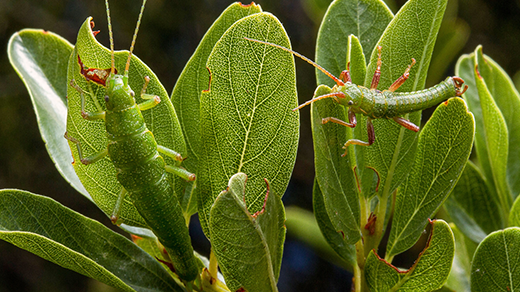
When she was a graduate student in the 1970s, the evolutionary biologist Kerstin Johannesson regularly walked the shores of a Swedish archipelago, scanning the ground for pebbles that moved: marine snails. Her adviser, a taxonomist, had tasked her with describing the species present there by documenting their traits. She noticed that snails with thicker shells stayed on the shore…

Source

Two Researchers Are Rebuilding Mathematics From the Ground Up

20 May 2026 at 15:52

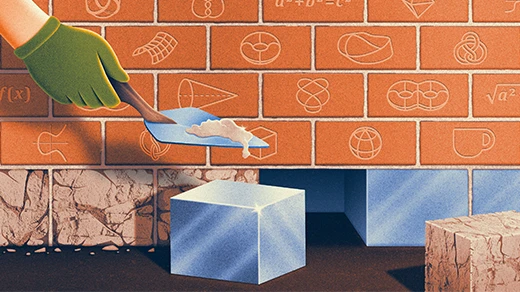
Let’s start with what’s probably the most tired, overused joke in math: A topologist is someone who can’t tell a coffee cup from a doughnut. Both, you see, have a hole in them. Topology is usually described as a sort of “rubber sheet” geometry in which two shapes are considered the same if one can be stretched or compressed into the other without tearing it. But this summary leaves out something…

Source

❌