Normal view

Received today — 3 June 2026 Ars Technica – Science

Male bowerbirds prefer to dazzle females with bright human-made items

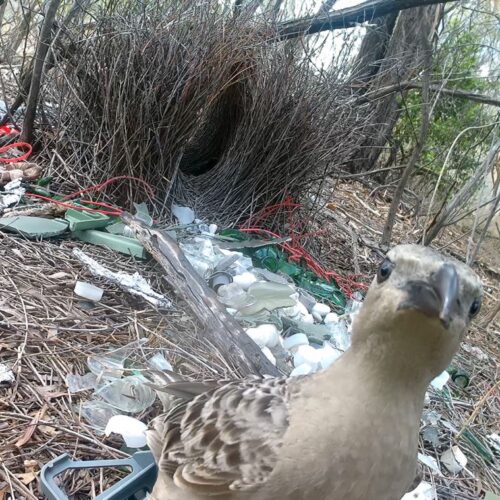
Male bowerbirds are notorious for their complex mating rituals. They build intricate tunnels out of twigs—the bowers from which they get their name—and then decorate them with random colorful items gleaned from the environment. When a female of the species shows up to check out a male's fancy digs, the male tosses his shiniest objects in her direction and shows off his plumage in hopes of impressing her.

According to a new paper published in the journal Royal Society Open Science by University of Exeter scientists, urbanization and the associated growing availability of brightly colored human-made items have had a significant impact on courtship display behavior in Australian male bowerbirds. There are marked differences in the choice of decorations for bowerbirds in urban versus rural environments. This might be because urban birds simply have greater access to the items than their rural counterparts, since birds in both environments show a marked preference for human items.

The University of Exeter researchers monitored the bowers of 61 male great bowerbirds in two sites in Australia's northern Queensland—the rural Dreghorn Cattle Station and the urban Townsville City—during the prime breeding season (September–December 2023). Then they photographed the bower decorations in situ from above in both visible and UV light (bowerbirds can see in the UV range), using an umbrella to create diffuse lighting.

Read full article

Comments

© Caitlin Evans

Received — 1 June 2026 Ars Technica – Science

Why cats prefer silver vine to catnip and other May highlights

It’s a regrettable reality that there is never enough time to cover all the interesting scientific stories we come across. So every month, we highlight a handful of the best stories that nearly slipped through the cracks. May's list includes the discovery of a possible prehistoric mining site in the Pyrenees; a new species of tiny blue octopus; why cats seem to prefer silver vine to catnip; and why political polarization might behave like a phase transition, among other noteworthy stories.

Prehistoric mining in the Pyrenees

Archaeological excavation works at Cova 338 Credit: IPHES-CERCA

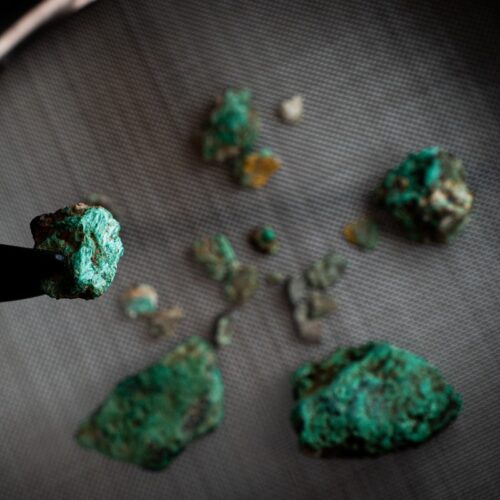
High in the eastern Pyrenees is a prehistoric cave, excavated between 2021 and 2023. Based on analysis of artifacts uncovered at the site, a team of Spanish archaeologists believes this may have served as an ancient copper smelting spot, with far more frequent occupation by humans than previously thought. The researchers described these preliminary findings in a paper published in the journal Frontiers in Environmental Archaeology.

Read full article

Comments

© Maria D. Guillén / IPHES-CERCA

Received — 31 May 2026 Ars Technica – Science

How pigeons exploit magnetic fields for navigation

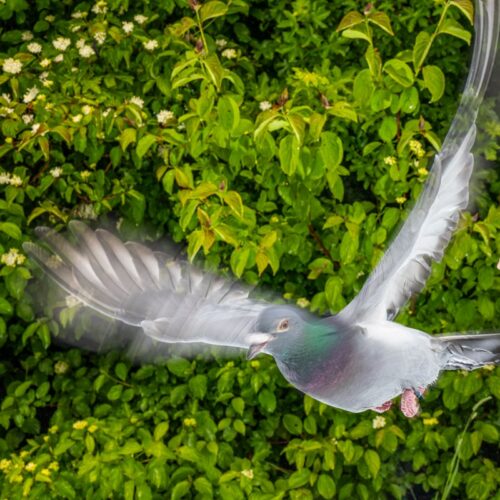
Scientists have long known that migrating birds and homing pigeons navigate in part by sensing the Earth's magnetic fields, especially at night or in overcast conditions when visual landmarks or sunshine are in short supply. But exactly where this magneto-sensing occurs in the body—and the mechanism that enables it—remains a matter of intense debate. A new paper published in the journal Science suggests that homing pigeons have iron-rich immune cells in their livers that help them detect magnetic fields and transmit that information to the brain.

There are three primary hypotheses for how birds might sense Earth's geomagnetic field. One is a compass-like mechanism, whereby the Earth exerts a pull on magnetic particles in a bird's upper beak that relays directional information via a large nerve in the cranium. A second is that it happens biologically via cellular ion channels sensitive to voltage, enabling birds to sense changes in the magnetic field. And a third suggests that physical effects on retinal pigments enable birds to detect photons and send signals to the brain, although this mechanism is really only viable in the light.

None fully explain how animals can sense magnetic fields. However, “We had some clues that the liver and spleen have magnetic properties, because they break down red blood cells and so store much iron in the body,” said co-author Clivia Lisowski of the University of Bonn and the University Hospital Bonn. This refers to a 2015 paper suggesting that red pulp macrophages in the spleens of mice and humans are intrinsically superparamagnetic and hence more sensitive to magnetic fields. But it wasn't clear if those properties were involved in any kind of magnetoreception.

Read full article

Comments

© Christian Ziegler/ Max Planck Institute of Animal Behavior

❌