Normal view

Received today — 3 June 2026 Ars Technica - All

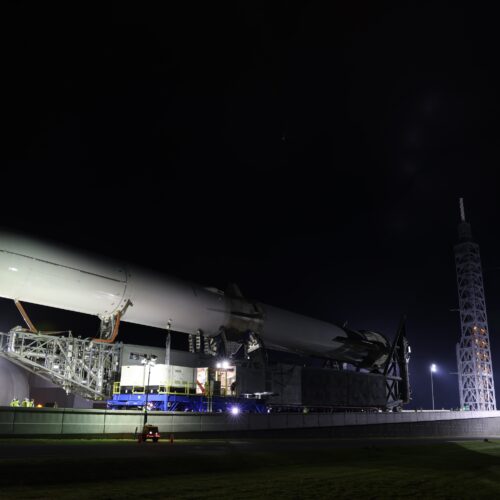
How long will it take to rebuild Blue Origin's launch pad? We asked some SpaceX vets.

3 June 2026 at 11:00

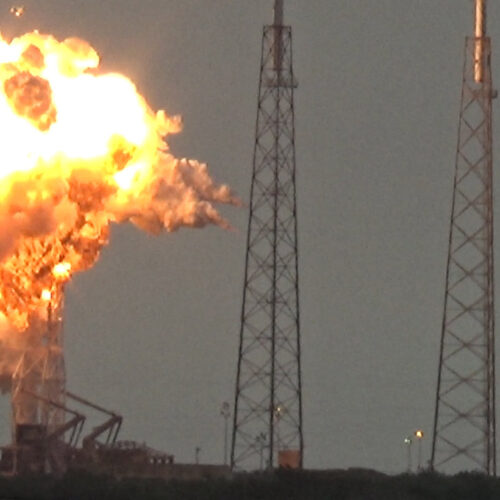
A former NASA engineer named John Muratore sat on console as launch director in early September 2016 as propellant flowed onto a Falcon 9 rocket in Florida. Ahead of a planned launch two days later, SpaceX was preparing for a static fire test of the vehicle.

Then, all of a sudden, the rocket exploded. "It came out of nowhere, and it was really violent," Muratore said. This fireball resulted in the destruction of the rocket, much of its launch site, and the AMOS-6 satellite already attached to the vehicle.

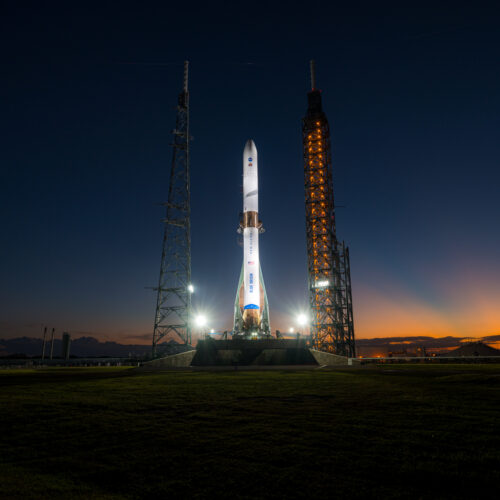
Nearly a decade later, on May 28, Blue Origin conducted a static fire test of a new rocket, with its larger New Glenn vehicle a few miles down the Florida coast. The company had gotten further into its test, reaching engine ignition, before its rocket also exploded.

Read full article

Comments

© USLaunchReport

Blue Origin has set a very aggressive return-to-flight timeline

2 June 2026 at 16:16

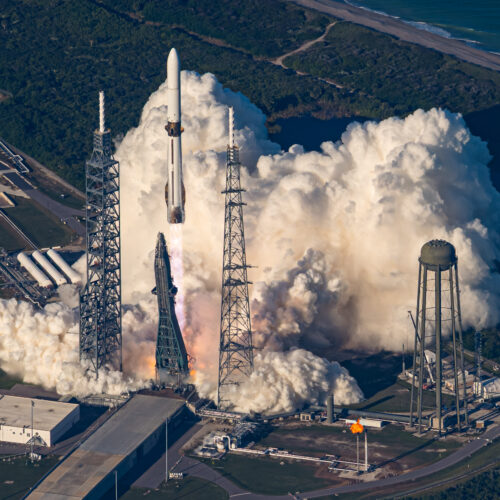
The chief executive of Blue Origin, whose large New Glenn rocket exploded spectacularly less than a week ago at the company's launch site in Florida, vowed Monday night that the company would launch again before the end of 2026.

Writing on the social media site X, Blue Origin's Dave Limp said the company had been able to complete a preliminary survey of the LC-36A launch site.

"Now that we’ve had access to the pad and integration facility, we can share a bit of good news," Limp said. "The propellant farm, oxygen, liquid hydrogen and LNG tanks are all in good shape. This is good luck because these are very long lead items. The water tower is also good."

Read full article

Comments

© Blue Origin

Impulse Space raises $500 million as orbital maneuvering race heats up

2 June 2026 at 13:00

Getting around space, as it turns out, is kind of a big deal.

On Tuesday, Impulse Space, a company dedicated to improving space mobility, announced it has raised $500 million in Series D funding. Since it was founded five years ago by SpaceX veteran Tom Mueller, the company has now raised more than $1 billion.

"Timing is everything," Mueller said in an interview about the new round of funding. By this, he means the company has found its way into a lot of markets.

Read full article

Comments

© Impulse Space

Received — 31 May 2026 Ars Technica - All

On its 40th anniversary, we reassess 1986's SpaceCamp

Forty years ago, the future seemed just around the corner—and the vehicle that was going to take us there was NASA's Space Shuttle. Originally envisioned as part of a larger integrated space transportation system, the shuttle was billed as a fully reusable vehicle, totally unlike the one-and-done capsules of the fading Apollo era, capable of making monthly (and perhaps even weekly) ferry flights to low Earth orbit.

The shuttle, it was hoped, would transform human space flight from extraordinary to mundane. Brands like Coke and Pepsi were quick to hop aboard and expand the Cola Wars into space, and there were even plans to blast Sesame Street's Big Bird into orbit.

The loss of Challenger in January 1986—carrying educator Christa McAuliffe, who would have been the first private citizen in space—put the kibosh on all of that. The shuttle, while fantastically advanced, would never be the vehicle to help humankind slip all of our surly bonds, so to speak. Even operating at its most frantic peak in 1985 just before Challenger's loss, the shuttle hardware managed a maximum of nine flights in one calendar year; for most of the 1990s, it performed at five or six flights per year. Civilians in space—to say nothing of Big Bird—would have to wait.

Read full article

Comments

© 20th Century Fox

Here's why the failure of Blue Origin's New Glenn rocket is so catastrophic

29 May 2026 at 13:43

Thursday night's detonation of Blue Origin's New Glenn rocket during a static-fire test produced a spectacular fireball over Florida, sending shards of the rocket flying far and wide, into the sea and across the coastal scrubland nearby.

With sunrise on Friday teams from Blue Origin, the US Space Force, and NASA will be able to begin more thoroughly assessing the damage to Blue Origin's facilities and begin picking up pieces of the rocket.

pic.twitter.com/EfYn4QWW9M

— Nick Johnson (@NickJohnson315) May 29, 2026

Read full article

Comments

© Blue Origin

The most spectacular rocket explosion since N1 just happened in Florida

29 May 2026 at 03:21

On Thursday evening, Blue Origin attempted to test fire its massive New Glenn rocket at its Florida launch site, but something went very wrong after engine ignition. The super heavy lift rocket exploded in spectacular and disastrous fashion.

The static fire test was being filmed by NASASpaceflight.com on its Space Coast Live feed, which captured video of the conflagration that followed the destruction of the booster. The first stage of New Glenn, fueled with methane, produced a massive fireball above the launch site along the Florida coast, LC-36A. It is possibly the most dramatic and powerful rocket explosion since the Soviet Union's N1 rocket was destroyed during a launch attempt in 1969.

Blue Origin's New Glenn just blew up at LC-36 while attempting to Static Fire ahead of NG-4.https://t.co/tANS0dWyIH pic.twitter.com/PztxFoBqIw

— NSF - NASASpaceflight.com (@NASASpaceflight) May 29, 2026

Read full article

Comments

© Blue Origin

❌