Normal view

Received today — 3 June 2026 Interesting Engineering

Chloride-based seawater battery material delivers 10,000x boost in ion conductivity

3 June 2026 at 19:09

Scientists have boosted the movement of chloride ions through a solid material by up to 10,000 times, advancing efforts to develop seawater-based batteries for large-scale renewable energy storage.

The international team, involving researchers from Switzerland, Canada, and the United States, modified lanthanum oxychloride by adding small amounts of calcium, magnesium, or strontium. The changes significantly improved chloride-ion conductivity, one of the major barriers preventing chloride-based batteries from becoming practical.

The work could help expand battery options beyond lithium, which currently dominates energy storage technologies but faces growing demand and supply concerns.

Unlike lithium, chloride is abundant and can be sourced from seawater. Researchers believe chloride-ion batteries could one day support grid-scale storage systems that store electricity generated by wind turbines and solar farms.

Building ion highways

One of the biggest challenges with chloride-ion batteries is that chloride ions move slowly through solid materials. Their relatively large size makes it difficult for them to travel through battery electrolytes, reducing energy storage performance.

To address this, the researchers altered the atomic structure of lanthanum oxychloride. The modifications created easier pathways for chloride ions to move through the material.

According to the team, calcium produced the strongest effect, increasing chloride-ion conductivity by as much as 10,000 times compared with the unmodified material.

The researchers used ultrabright X-rays at the Canadian Light Source (CLS) at the University of Saskatchewan to understand how the structural changes improved ion transport.

The analysis showed that the added elements made the crystal structure softer, allowing chloride ions to move more freely through the solid electrolyte.

“We’re not looking to entirely replace lithium-ion batteries, but we need other solutions in the next few decades if we are going to meet this massive need that the world will have for hundreds of terawatt hours that allow for effective use of solar and wind,” said Sarbajit Banerjee, professor at ETH Zürich and head of the Laboratory for Battery Science at Switzerland’s Paul Scherrer Institute.

Beyond lithium storage

The researchers emphasize that the technology remains at an early stage. The study does not demonstrate a complete chloride-ion battery but instead establishes a promising electrolyte platform that could support future battery development.

“We are exploring uncharted territory,” said Jingxiang Cheng, a PhD student involved in the research. “We’re expanding the horizon of the battery field and we’re hoping to use this platform to build more on it, and to explore things that lithium-ion batteries are not super good at.”

The team believes alternative battery chemistries will be necessary as demand for energy storage continues to grow alongside the expansion of renewable power generation.

Banerjee noted that the project aims to establish the foundations for more sustainable battery technologies capable of supporting large-scale energy storage in the future.

The researchers also credited the CLS, particularly its VLS-PGM beamline, for enabling measurements needed to understand the material’s behavior at the atomic level.

The study was published in the journal ACS Applied Energy Materials.
💾

Scientists boost chloride-ion movement 10,000x, advancing seawater-based batteries for renewable energy storage.

Laser-powered hydrogen experiment resolves long-running proton size mystery

3 June 2026 at 00:53

Physicists at Colorado State University have measured the radius of a hydrogen proton with unprecedented precision, helping resolve a decade-long discrepancy that had raised questions about one of the most fundamental particles in nature.

The team determined the proton’s radius to be about 0.84 femtometers, or less than one quadrillionth of a meter. The result differs from the previously accepted value of 0.876 femtometers and aligns with more recent measurements that suggested the proton is slightly smaller than scientists once thought.

The finding helps close the so-called “proton radius puzzle,” a long-running debate that emerged when different experimental methods produced conflicting measurements of the proton’s size.

For years, physicists obtained one value when measuring hydrogen atoms using electrons. But experiments using muons, heavier cousins of electrons, consistently pointed to a smaller proton radius. The mismatch prompted speculation that unknown physics could be influencing the results.

Precision ends debate

The new measurement suggests otherwise.

According to the researchers, the result agrees with predictions from the Standard Model, the framework that describes how fundamental particles interact. The study also reduces the likelihood that a previously unknown force or particle was responsible for the discrepancy.

“Our test shows precise agreement with theory on the size of a proton to parts-per-trillion levels of accuracy, eliminating the possibility of a new force or particle being responsible for the discrepancy in this case,” said Dylan Yost, associate professor in Colorado State University’s Department of Physics.

“That would have significantly changed the Standard Model and is something researchers have been looking for,” he added.

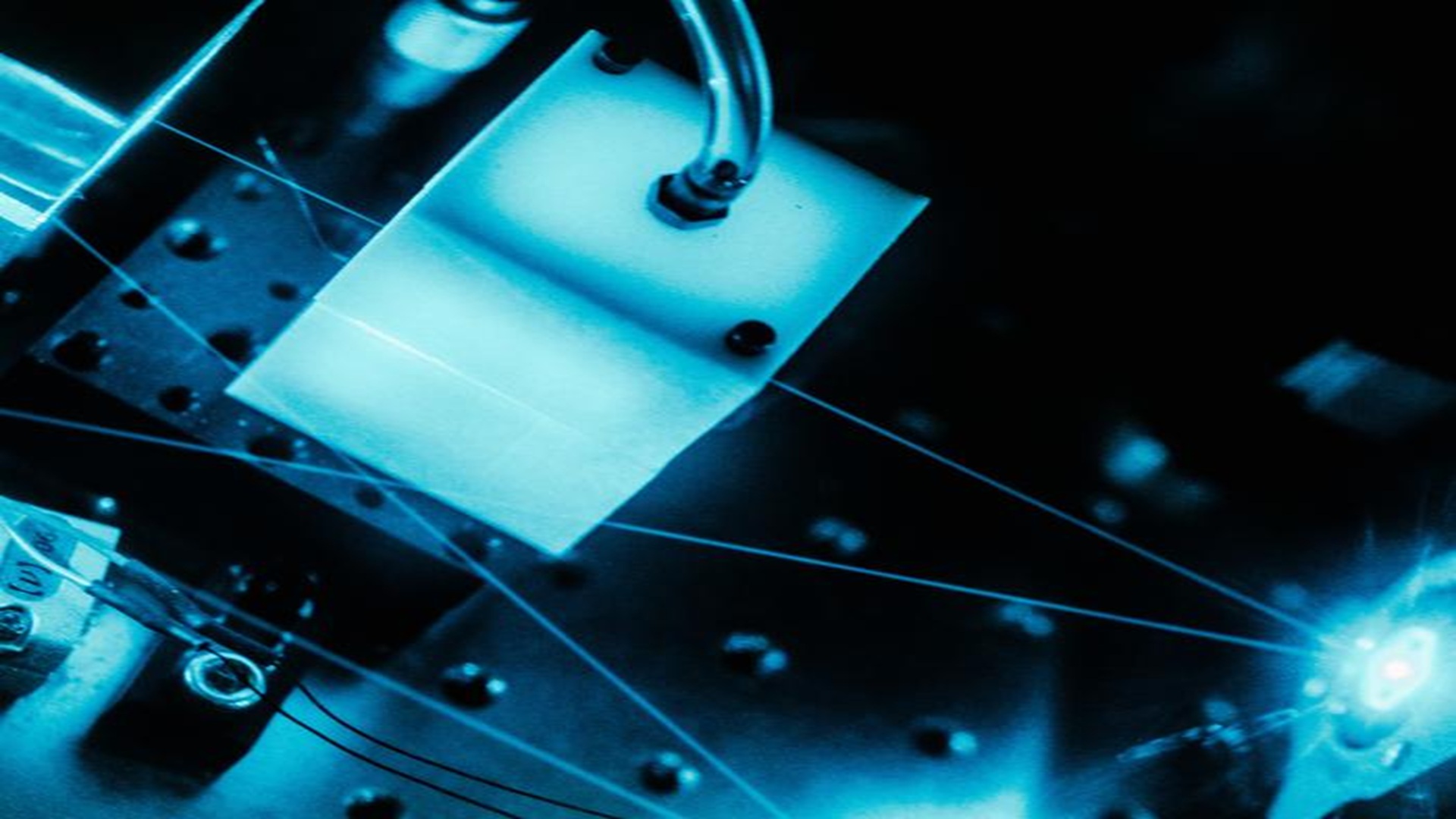
To make the measurement, the researchers generated a beam of atomic hydrogen inside a vacuum chamber and used ultraviolet lasers to excite electrons between different energy levels. Because the proton’s size subtly influences how electrons behave around the nucleus, the team could infer the proton’s radius by precisely measuring those energy transitions.

The experiment also served as a test of quantum electrodynamics, the theory describing interactions between light and matter.

New laser method

One of the biggest challenges was obtaining clean measurements from fast-moving hydrogen atoms, which interact with laser light for only a short period.

To overcome this limitation, the team developed a new technique that uses two laser fields simultaneously.

“These atoms move very fast and do not interact with the laser for long, which can wash out the signals that we are looking for,” said Ryan Bullis, a Ph.D. student and lead author of the study.

“We developed a new technique that uses two laser fields at the same time to increase the precision of our measurements.”

The result was independently confirmed by a team at the Max Planck Institute using a different measurement approach, further strengthening confidence in the revised proton size.

Researchers say the laser techniques developed during the project will now be applied to more complex forms of hydrogen, including deuterium, to probe other aspects of atomic physics.

Yost said the work demonstrates how precision tabletop experiments can complement large facilities such as particle accelerators in the search for new physics and deeper tests of existing theories.

The study was published in the journal Physical Review Letters.

Majorana 2 quantum chip unlocks 1,000x stability, keeps qubits alive 20 seconds

2 June 2026 at 23:24

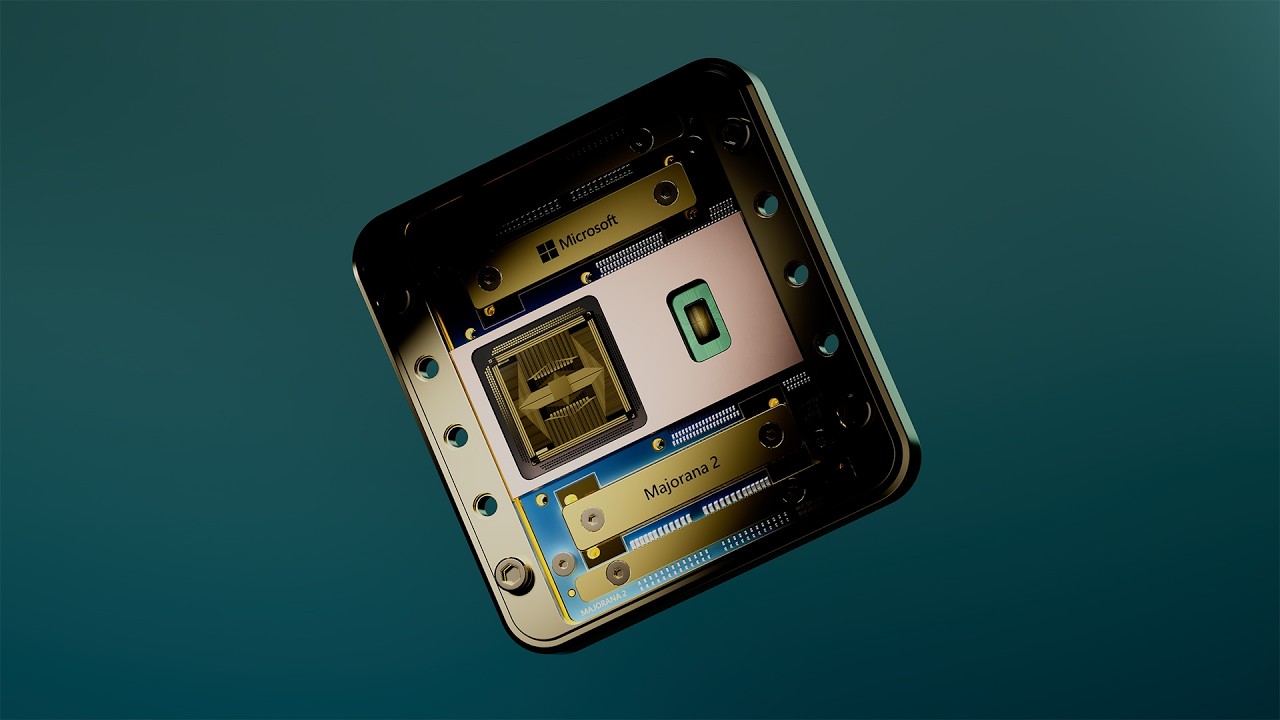
Microsoft has unveiled Majorana 2, its next-generation quantum chip, claiming a 1,000-fold improvement in qubit reliability and a faster path toward a commercially useful quantum computer.

The company said the new chip was developed with the help of Microsoft Discovery, an agentic AI platform designed to accelerate scientific research. Microsoft now expects to achieve a scalable quantum computer by 2029, cutting its previous timeline in half.

Majorana 2 builds on the topological quantum computing approach Microsoft introduced with Majorana 1 in 2025. The new chip uses an updated materials stack and significantly more stable qubits, which are the fundamental building blocks of quantum computers.

According to Microsoft, the average qubit lifetime in Majorana 2 is now 20 seconds, with some lasting as long as one minute. That marks a substantial improvement over the previous generation and could help address one of quantum computing’s biggest challenges: maintaining fragile quantum states long enough to perform useful calculations.

Longer-lasting quantum states

The company said Majorana 2 achieves this reliability through changes in its materials design. While Majorana 1 used aluminum-based superconductors, the new chip uses lead, a material better suited to shielding qubits from external disturbances that can introduce errors.

“We need to make improvements each year that will get us closer to delivering a computer that we believe will have massive commercial and societal value,” said Chetan Nayak, Microsoft technical fellow.

“We’ve got to keep marching to that roadmap to accomplish that, but where are we relative to last year? We’re 1,000 times better.”

Microsoft said the improved qubit stability, combined with operation speeds measured in microseconds and extremely small qubit dimensions, has strengthened its confidence in reaching a scalable quantum computer by the end of the decade.

The company also highlighted the role of Microsoft Discovery in speeding up development. The platform uses autonomous AI agents to assist researchers with tasks ranging from managing data and workflows to analyzing measurements and identifying manufacturing issues.

AI speeds discovery

According to Microsoft, its quantum team used agentic AI to automate complex measurements, optimize fabrication processes, analyze decades of research data, and uncover previously unnoticed problems that affected device performance.

“Agentic AI has permeated almost everything we do—it’s just become kind of a very natural part of our workflow,” Nayak said.

The company said AI agents can help researchers process information across multiple scientific disciplines, generate hypotheses, and identify patterns that may be difficult for humans to detect.

Microsoft also announced the general availability of Microsoft Discovery, allowing organizations to deploy AI agents for scientific and engineering research. The company additionally introduced a preview version of the Microsoft Discovery app, which individuals can download and run locally using a GitHub Copilot account.

The announcement comes as technology companies race to make quantum computing practical for real-world applications such as drug discovery, materials science, energy production, and logistics optimization.

The research describing Majorana 2’s qubit performance, “20 Second Parity Lifetime in an InAs-Pb Device,” is available through Microsoft.

💾

Microsoft says Majorana 2 boosts qubit reliability 1,000-fold and targets scalable quantum computing by 2029.
❌