
 Login
Login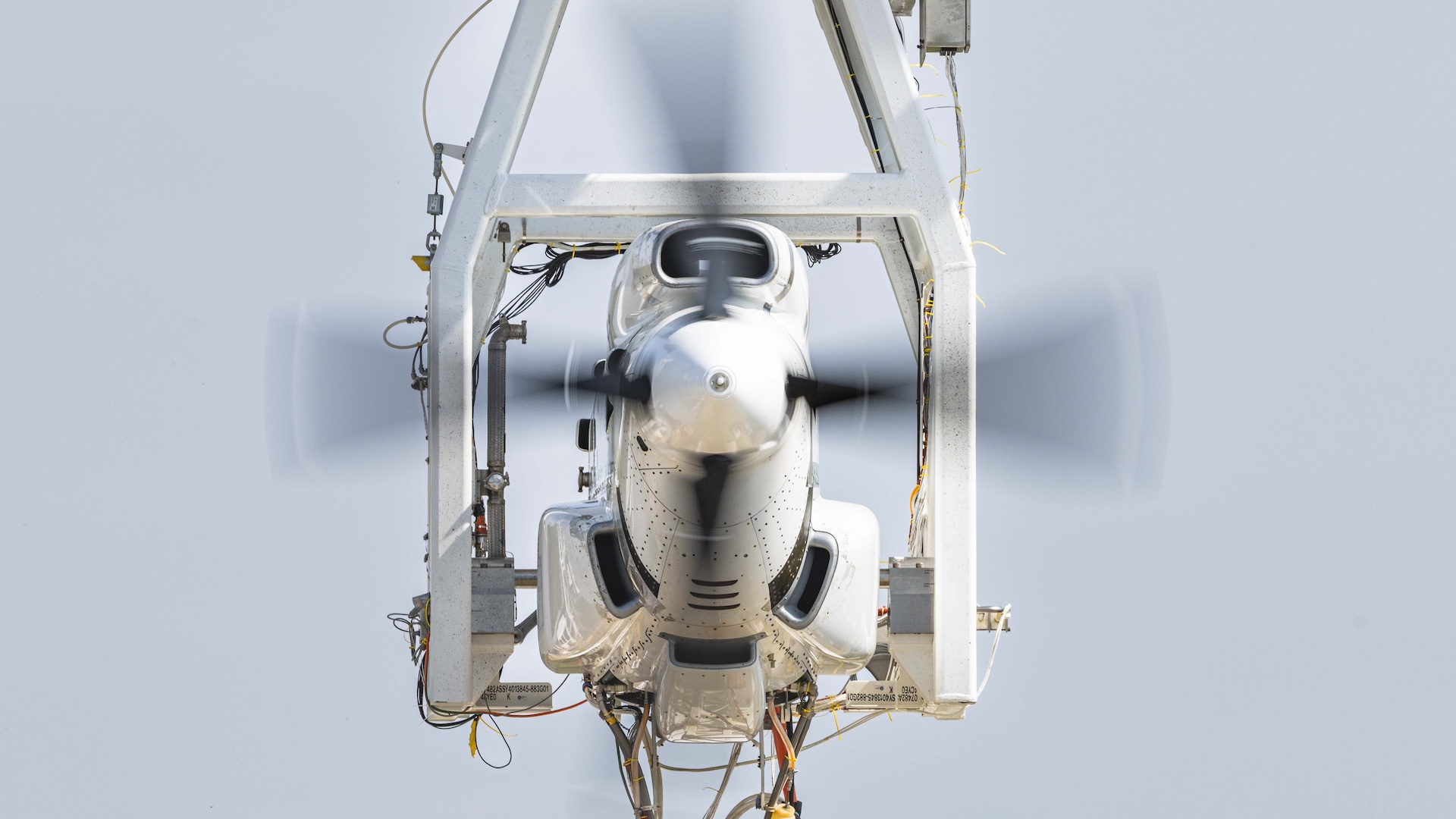

US firm uses megawatt-class hybrid-electric CT7 turboprop plane engine for tests

GE Aerospace is edging towards a major milestone in electrified flight. The company successfully completed initial ground tests of a hybrid-electric version of its CT7 turboprop engine.
The tests, conducted at GE’s facility in Peebles, Ohio, validated the full integrated megawatt-class hybrid-electric system. The engine maker developed the demonstrator with NASA funding under the Electrified Powertrain Flight Demonstration (EPFD) project.
GE Aerospace’s hybrid engine tests
During the tests, engineers simulated multiple flight phases, including taxi, take-off, climb, and cruise.
“The ground test was the company’s first to validate the full integrated system,” GE Aerospace explained in a press statement on June 2. “Teams simulated various flight phases such as taxi, take-off, climb, and cruise. The electric powertrain helped successfully power the propeller and generated power to the battery.”
The engine’s parallel hybrid architecture allows both the gas turbine and the electric system to drive the propeller.
GE Aerospace developed key components for the hybrid engine, including proprietary motor-generators, controllers, power converters, and inverters. BAE Systems developed the batteries used for the tests, while Boeing subsidiary Aurora Flight Sciences supplied the complete nacelle.
GE Aerospace subsidiaries Dowty and Avio Aero provided propellers, as well as gearboxes, and a CT7 engine, respectively.
According to GE, this ground test clears the path for eventual flight testing, though the company has not provided an updated timeline. The firm previously announced it was targeting mid-2020s flight trials on a modified Saab 340 regional airliner, with one of the aircraft’s two CT7 engines replaced by the hybrid unit.
The future of hybrid-electric technologies
The recent test is part of a broader effort to advance hybrid-electric technologies.
These efforts are also informing the design of GE Aerospace’s open-rotor engine under the Revolutionary Innovation for Sustainable Engines (RISE) program.
Conducted with Safran via the CFM International joint venture, the RISE open-rotor concept targets next-generation narrowbody aircraft that Airbus and Boeing expect to introduce in the 2030s.
“The ground test is a major turning point in our understanding of hybrid-electric powertrains for aviation and a fundamental building block for the future,” explained Arjan Hegeman, GE vice-president for future of flight. The test “positions GE to have the technologies ready to meet customer needs for greater durability, efficiency, and range,” he added.
GE has accumulated more than a decade of experience in electric propulsion. In 2016, it ground-tested an electric motor-driven propeller, followed by 2022 evaluations of a megawatt-class hybrid system at NASA’s Electric Aircraft Testbed. In 2025, the company demonstrated hybrid-electric power transfer and injection using a modified Passport turbofan under NASA’s Hybrid Thermally Efficient Core program.
With its latest test, GE is pushing toward sustainable aviation technologies amid industry demands for reduced fuel consumption and emissions. While details on specific efficiency gains remain limited, the company views hybrid systems as key to lowering emissions.
