Normal view

Received today — 3 June 2026 Interesting Engineering

Meta claims new Business Agent can help companies increase output by up to 100X

3 June 2026 at 21:11

Meta has unveiled a new AI system designed to help businesses automate customer support, sales, and daily operations across its messaging platforms. The company said the new Meta Business Agent could help companies increase output by “10X or 100X” through AI-driven automation and personalized customer engagement.

The rollout expands Meta’s push into enterprise AI tools as competition intensifies among major tech companies building AI systems for businesses. Meta said companies can deploy the agent within minutes or connect it directly to existing enterprise infrastructure.

Scaling customer conversations

Meta said more than one million businesses already use AI-powered agents on WhatsApp and Messenger to communicate with customers around the clock. The company now plans to expand those capabilities globally to businesses of all sizes.

The Business Agent can answer customer questions, recommend products from catalogs, schedule appointments, qualify leads, and help close sales. Businesses can also decide when a human employee should take over a conversation.

Meta is also extending the service to Instagram. Businesses can activate the tool through Instagram and other Meta business platforms. The company said access remains free for now, though paid subscription tiers will launch in the coming months.

The company highlighted localization as a major feature. Business Agents can respond in customers’ preferred languages and match a company’s communication style. Meta said the system allows businesses to “show up for every customer” without needing to dramatically expand support teams.

AI assistant for operations

Meta also positioned the Business Agent as an operational assistant for business owners and employees. The AI tool can generate morning briefings that summarize missed customer conversations and surface insights from ongoing message threads. Meta said it is initially testing those features with select businesses using WhatsApp Business, Messenger, Instagram Pro, and Meta Business Suite.

The company plans to expand the assistant’s capabilities further. Future versions could support market research, product analysis, calendar management, and competitive intelligence tasks. Meta said the long-term goal is to reduce operational overhead while helping smaller businesses handle enterprise-scale workloads.

Enterprise infrastructure push

Alongside the launch, Meta introduced the Meta Business Agent Platform, which provides infrastructure for businesses deploying AI agents at scale.

The platform lets businesses customize and manage AI agents while connecting them with external systems such as Shopify, Zendesk, and Shopee. Meta said those integrations will allow agents to perform actions directly on behalf of businesses instead of only responding to messages.

The company also added enterprise-grade controls, measurement tools, and built-in guardrails for larger organizations. Meta is additionally working to improve business discovery inside WhatsApp. Users will soon be able to search for businesses directly through the app or share business contact cards in chats.

The company believes those discovery features could help businesses attract new customers while maintaining faster response times through AI-powered support systems. The announcement marks another step in Meta’s broader effort to expand generative AI across its consumer and business ecosystem as messaging platforms increasingly evolve into commerce hubs.

Lost in Space: NASA declares MAVEN Mars spacecraft unrecoverable after 11 years

3 June 2026 at 20:29

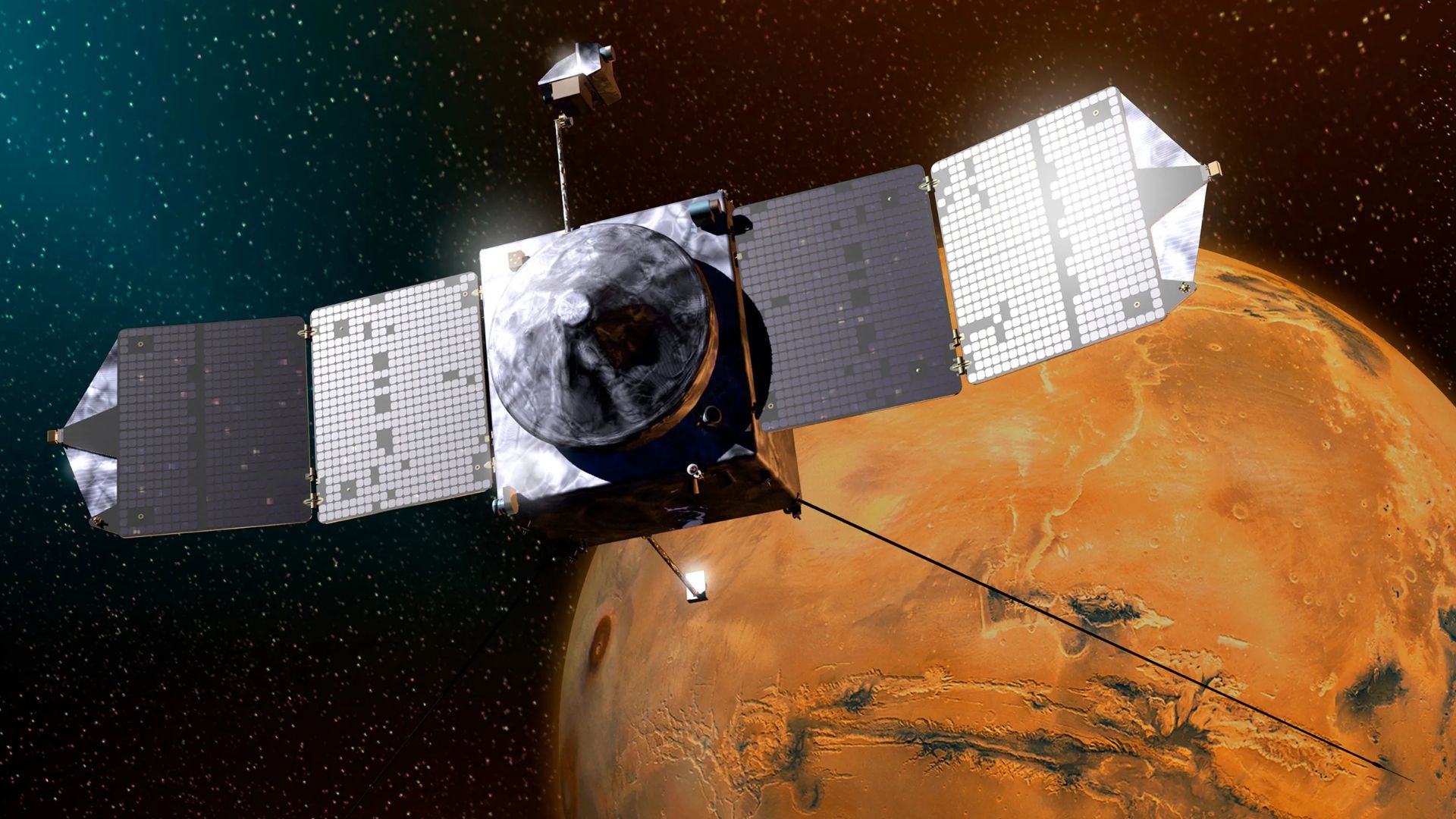
NASA has officially ended the MAVEN mission after losing contact with the spacecraft around Mars late last year. The decision closes a major chapter in the agency’s long-running effort to understand how the Red Planet lost much of its atmosphere.

The space agency said a review board determined the spacecraft could no longer recover from an anomaly that occurred in December. MAVEN, short for Mars Atmosphere and Volatile Evolution, last communicated with Earth on Dec. 6 after passing behind Mars.

The mission spent more than 11 years orbiting Mars and studying its upper atmosphere. MAVEN also continued operating for nearly a decade beyond its planned one-year science mission.

Sudden loss of contact

Before communication stopped, telemetry showed the spacecraft operating normally. NASA expected MAVEN to reappear after moving behind Mars, but ground controllers never received another signal from the spacecraft.

Engineers later analyzed radio data recorded by NASA’s Deep Space Network and uncovered signs of a serious problem. The data suggested MAVEN entered safe mode and started rotating at an unusually high speed after emerging from behind Mars.

NASA said the rapid spin likely disrupted the spacecraft’s orbit and drained its batteries. Once battery levels dropped too low, the communications system lost power, leaving the spacecraft unable to contact Earth again.

The agency assembled an anomaly review board in February to evaluate recovery options and determine the spacecraft’s condition. After months of analysis, the board concluded that MAVEN could no longer perform science observations or support relay operations around Mars.

Investigators still have not identified the root cause behind the anomaly. NASA expects the review board to release a final report later this year.

Decade of discoveries

NASA launched MAVEN in November 2013 as the first mission focused entirely on studying the Martian atmosphere and its evolution. Scientists used the spacecraft to investigate how solar activity stripped atmospheric particles away from the planet over billions of years.

The mission helped researchers better understand how Mars transformed from a wetter and potentially habitable world into the cold, dry planet seen today. MAVEN also provided new insight into the planet’s climate history and the fate of its ancient water.

Louise Prockter, director of NASA’s Planetary Science Division, said the spacecraft’s findings will continue supporting future exploration efforts. She said MAVEN’s data plays an important role in helping scientists understand radiation conditions astronauts could face on future crewed missions to Mars.

NASA also plans to archive the mission’s full dataset so researchers can continue using the information for future studies and planetary science work.

Supporting Mars exploration

Along with its scientific mission, MAVEN played a critical support role for other spacecraft operating at Mars. The orbiter helped relay information from NASA’s Curiosity and Perseverance rovers back to Earth during surface operations.

That relay support allowed scientists to receive larger amounts of rover data and strengthened communication links across multiple Mars missions. MAVEN also contributed to observations of Martian weather and even studied a rare interstellar comet during its extended mission.

Shannon Curry, MAVEN’s principal investigator at the University of Colorado Boulder, said the mission produced a lasting scientific impact. She said the spacecraft significantly improved scientists’ understanding of the Martian atmosphere and planetary evolution.

Although MAVEN’s mission has officially ended, NASA believes the spacecraft’s scientific legacy will continue influencing Mars research and future exploration planning for decades.

Trump signs executive order granting US early access to frontier models before launch

3 June 2026 at 00:42

President Donald Trump signed a new executive order Tuesday that asks artificial intelligence companies to share advanced AI models with the federal government before public release. The move marks the White House’s latest effort to tighten national security coordination around rapidly advancing AI systems without introducing formal licensing requirements.

The order creates a voluntary framework for AI developers to work with federal agencies on evaluating models with advanced cyber capabilities. Under the proposal, companies could provide government officials with access to certain frontier AI models up to 30 days before wider deployment.

Trump signed the order privately after delaying a planned public event with technology executives several weeks ago. At the time, he told reporters he disliked parts of the original proposal.

The White House framed the directive as a balance between accelerating AI innovation and protecting critical infrastructure from cyber threats. Administration officials repeatedly stressed that the order does not establish mandatory government approval for AI releases.

Cybersecurity takes priority

The executive order directs multiple federal agencies to strengthen cyber defenses within 30 days. The Department of Homeland Security, through the Cybersecurity and Infrastructure Security Agency, must issue new operational guidance to protect federal networks and critical infrastructure systems.

The administration also ordered agencies to expand AI-driven cybersecurity programs and improve access to defensive tools for state governments, utilities, hospitals, and community banks.

Another section creates a voluntary AI cybersecurity clearinghouse led by the Treasury Department. The initiative will coordinate vulnerability scanning, software patching, and threat detection efforts alongside private industry partners.

Trump’s order repeatedly positions AI as both a national security asset and a growing cyber risk. The administration argues that advanced AI tools could help defend government systems while also creating new attack surfaces for adversaries.

Frontier model reviews

A central part of the order focuses on so-called “covered frontier models,” which refer to advanced AI systems with significant cyber capabilities. Federal agencies, including the National Security Agency and the National Institute of Standards and Technology, must develop a classified benchmarking process within 60 days. That process will assess whether a model meets the threshold for additional government review.

Companies could voluntarily ask the government to evaluate models still under development. Developers may also grant federal agencies early access to those systems before releasing them to outside partners. The order additionally allows the government to collaborate with AI companies on selecting “trusted partners” that receive early model access. However, the White House included language aimed at calming industry concerns over federal overreach.

“Nothing in this section shall be construed to authorize the creation of a mandatory governmental licensing, preclearance, or permitting requirement,” the order states. That provision reflects ongoing tension between Silicon Valley and Washington over how aggressively the government should regulate frontier AI systems.

Anthropic welcomed the executive order and signaled support for the White House approach. “This Executive Order is an important step in strengthening America’s leadership in AI,” the company said on X. Anthropic added that it looks forward to working with the administration on implementation efforts.

This Executive Order is an important step in strengthening America’s leadership in AI.

We look forward to collaborating with the White House to support its implementation.https://t.co/ZwDimPrp3t

— Anthropic (@AnthropicAI) June 2, 2026

Criminal AI use targeted

The order also directs the Justice Department to prioritize cases involving criminals who use AI tools to hack computer systems, steal data, or support cybercrime operations. Federal prosecutors will focus on existing laws tied to computer fraud, identity theft, and wire fraud when AI systems play a role in illegal activity.

The directive arrives during an intense global race to develop more powerful AI models. Major technology firms continue to release increasingly capable systems while governments worldwide debate how to manage security, economic, and geopolitical risks tied to the technology. Trump’s administration has largely favored lighter regulation compared with previous White House AI proposals. Tuesday’s order continues that approach while expanding federal coordination around cybersecurity and advanced AI deployment.

Airbus flies world’s longest-range jet targeting nonstop 22-hour Sydney-London trips

2 June 2026 at 23:25

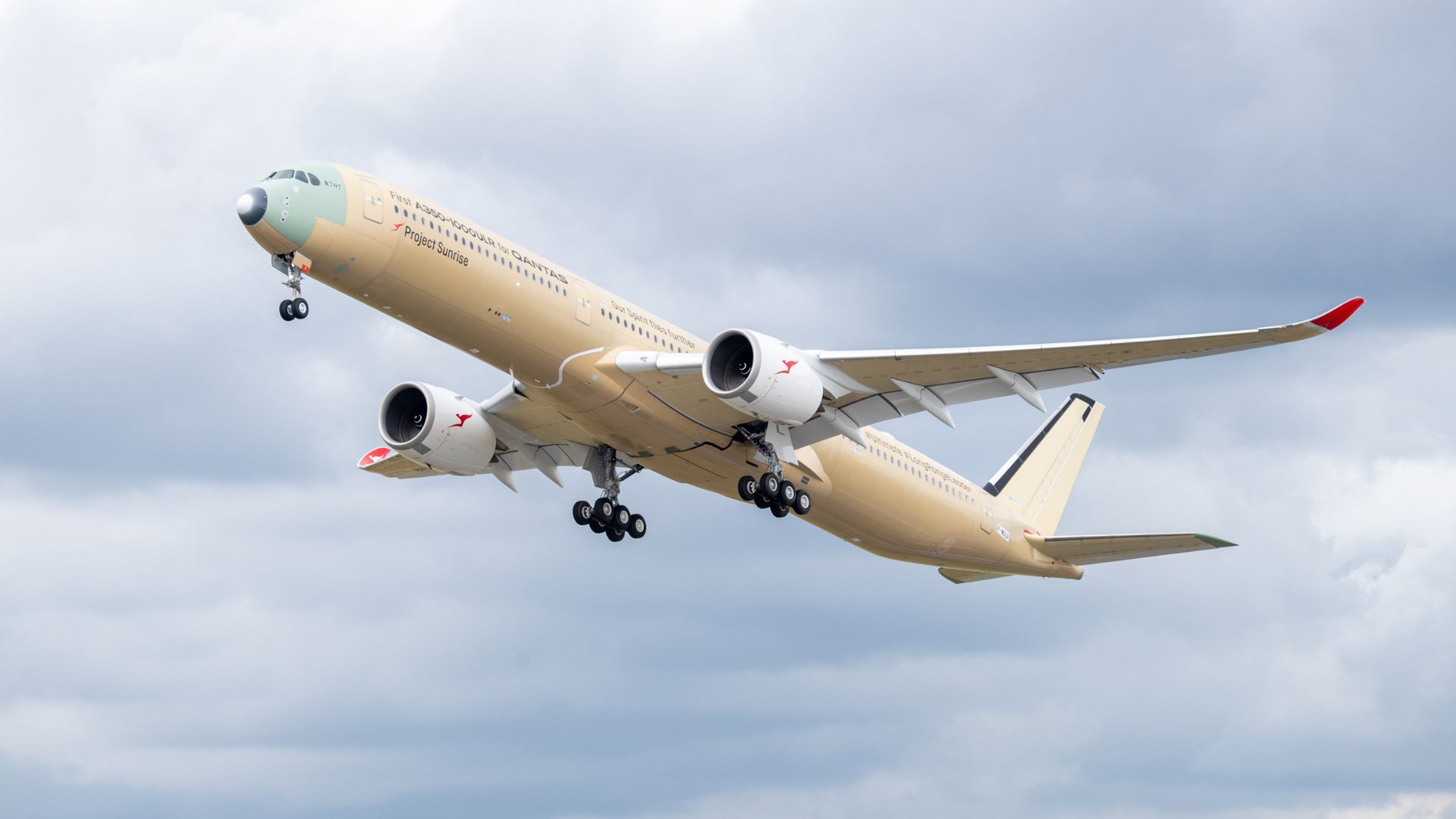
A modified fuel system, an extended range, and the ability to remain airborne for nearly a full day are now undergoing real-world testing. Airbus has completed the first flight of its A350-1000ULR, the aircraft selected by Qantas for its ambitious Project Sunrise program.

The test flight took place in Toulouse, France, where the aircraft spent three hours and 43 minutes in the air and climbed to more than 41,000 feet. The jet is the first of 12 A350-1000ULR aircraft ordered by Qantas and marks the beginning of a certification campaign for a variant designed to push the limits of long-haul commercial travel.

Engineering for longer range

The A350-1000ULR was developed to support nonstop flights between Sydney and London, a route spanning nearly 10,000 nautical miles. To achieve that range, Airbus engineers modified the aircraft’s structure to accommodate an additional rear center fuel tank. The extra capacity extends the aircraft’s range by roughly 1,000 nautical miles compared with a standard A350-1000.

That design change could allow the aircraft to remain airborne for as long as 22 hours, opening the door to direct flights between Australia and Europe that previously required at least one stop. During the maiden flight, Airbus crews evaluated overall aircraft performance and tested the redesigned fuel system architecture. The mission also marked the start of a two-month flight-test campaign aimed at certifying the aircraft’s modifications before it enters commercial service.

Testing critical systems

The certification effort extends beyond range and fuel capacity. Airbus will also validate a newly developed galley cooling system designed specifically for ultra-long-haul operations. The company says the system uses lighter and more efficient refrigeration equipment, helping reduce weight while supporting extended flight durations.

Engineers will also assess cabin ventilation and temperature-control performance during the testing campaign. Those systems play a critical role on flights that can keep passengers and crew onboard for nearly a full day. After certification work concludes, Airbus will retrofit the aircraft to Qantas’ final commercial specifications ahead of delivery preparations.

Meanwhile, production of the second A350-1000ULR is progressing through final assembly. Airbus said the aircraft is expected to emerge from the paint facility soon before receiving its engines and premium four-class cabin configuration. That aircraft is scheduled to become the first A350-1000ULR delivered to Qantas in April 2027.

Project Sunrise advances

Project Sunrise represents one of the aviation industry’s most ambitious efforts to eliminate distance barriers on long-haul travel. Qantas has committed to 12 A350-1000ULR aircraft for the program and has also ordered 12 standard A350-1000 jets for broader international operations.

The ultra-long-range aircraft joins a growing A350 lineup that includes the A350-900, A350-900ULR, and A350-1000 passenger variants. Airbus is also developing the A350F freighter, which is expected to complete its first flight later this year.

Demand for the A350 family remains strong. By the end of April 2026, Airbus had secured 1,579 orders from 68 customers worldwide. More than 700 A350 aircraft are currently in service with 41 operators, primarily on long-haul international routes.

For Airbus and Qantas, the successful first flight marks an important milestone as Project Sunrise moves closer to commercial operations and the prospect of nonstop Sydney-to-London travel.

❌