Normal view

Received today — 3 June 2026 Interesting Engineering

Laser-powered hydrogen experiment resolves long-running proton size mystery

3 June 2026 at 00:53

Physicists at Colorado State University have measured the radius of a hydrogen proton with unprecedented precision, helping resolve a decade-long discrepancy that had raised questions about one of the most fundamental particles in nature.

The team determined the proton’s radius to be about 0.84 femtometers, or less than one quadrillionth of a meter. The result differs from the previously accepted value of 0.876 femtometers and aligns with more recent measurements that suggested the proton is slightly smaller than scientists once thought.

The finding helps close the so-called “proton radius puzzle,” a long-running debate that emerged when different experimental methods produced conflicting measurements of the proton’s size.

For years, physicists obtained one value when measuring hydrogen atoms using electrons. But experiments using muons, heavier cousins of electrons, consistently pointed to a smaller proton radius. The mismatch prompted speculation that unknown physics could be influencing the results.

Precision ends debate

The new measurement suggests otherwise.

According to the researchers, the result agrees with predictions from the Standard Model, the framework that describes how fundamental particles interact. The study also reduces the likelihood that a previously unknown force or particle was responsible for the discrepancy.

“Our test shows precise agreement with theory on the size of a proton to parts-per-trillion levels of accuracy, eliminating the possibility of a new force or particle being responsible for the discrepancy in this case,” said Dylan Yost, associate professor in Colorado State University’s Department of Physics.

“That would have significantly changed the Standard Model and is something researchers have been looking for,” he added.

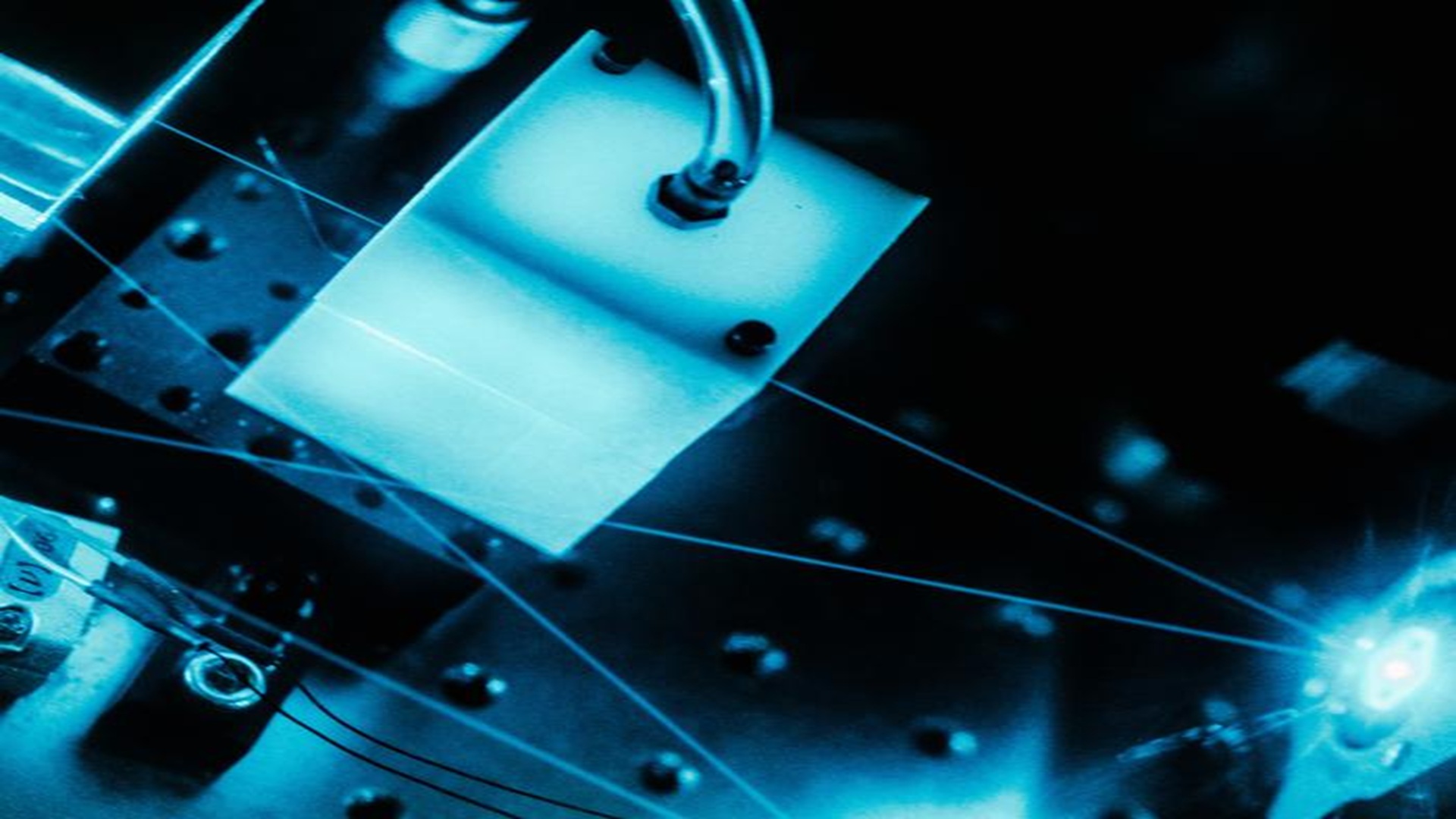
To make the measurement, the researchers generated a beam of atomic hydrogen inside a vacuum chamber and used ultraviolet lasers to excite electrons between different energy levels. Because the proton’s size subtly influences how electrons behave around the nucleus, the team could infer the proton’s radius by precisely measuring those energy transitions.

The experiment also served as a test of quantum electrodynamics, the theory describing interactions between light and matter.

New laser method

One of the biggest challenges was obtaining clean measurements from fast-moving hydrogen atoms, which interact with laser light for only a short period.

To overcome this limitation, the team developed a new technique that uses two laser fields simultaneously.

“These atoms move very fast and do not interact with the laser for long, which can wash out the signals that we are looking for,” said Ryan Bullis, a Ph.D. student and lead author of the study.

“We developed a new technique that uses two laser fields at the same time to increase the precision of our measurements.”

The result was independently confirmed by a team at the Max Planck Institute using a different measurement approach, further strengthening confidence in the revised proton size.

Researchers say the laser techniques developed during the project will now be applied to more complex forms of hydrogen, including deuterium, to probe other aspects of atomic physics.

Yost said the work demonstrates how precision tabletop experiments can complement large facilities such as particle accelerators in the search for new physics and deeper tests of existing theories.

The study was published in the journal Physical Review Letters.
Majorana 2 quantum chip unlocks 1,000x stability, keeps qubits alive 20 seconds

2 June 2026 at 23:24

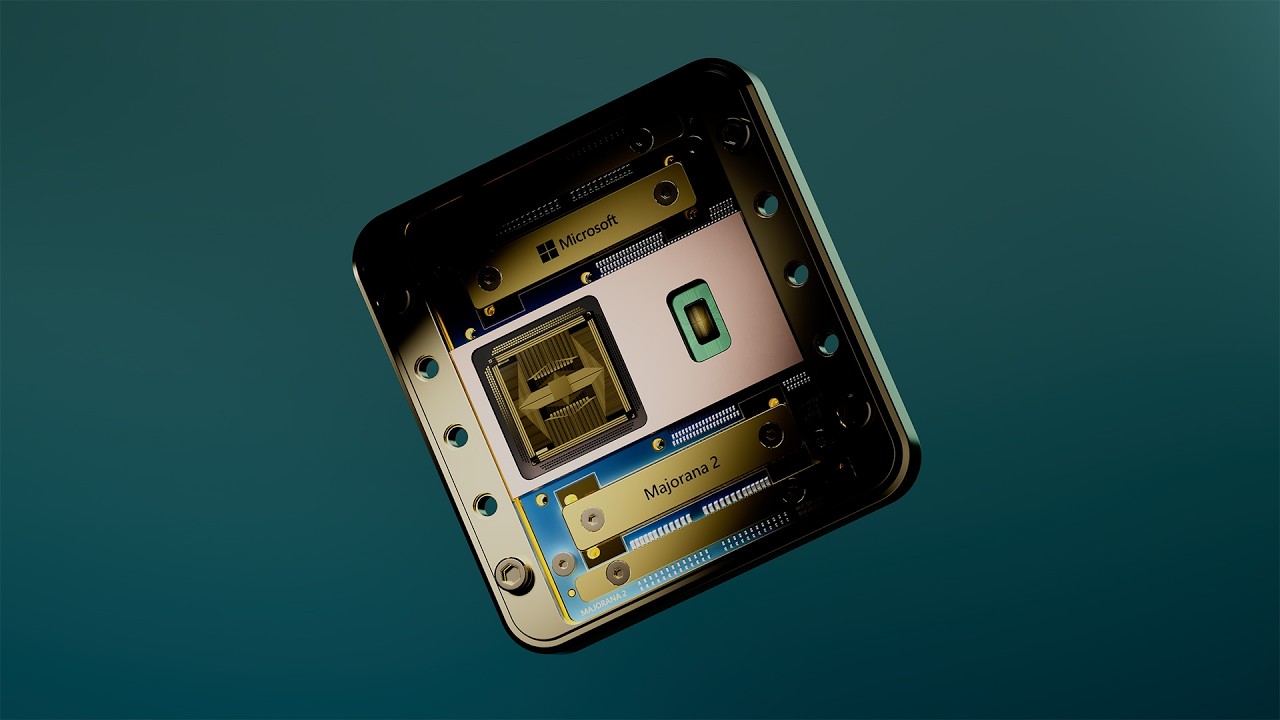
Microsoft has unveiled Majorana 2, its next-generation quantum chip, claiming a 1,000-fold improvement in qubit reliability and a faster path toward a commercially useful quantum computer.

The company said the new chip was developed with the help of Microsoft Discovery, an agentic AI platform designed to accelerate scientific research. Microsoft now expects to achieve a scalable quantum computer by 2029, cutting its previous timeline in half.

Majorana 2 builds on the topological quantum computing approach Microsoft introduced with Majorana 1 in 2025. The new chip uses an updated materials stack and significantly more stable qubits, which are the fundamental building blocks of quantum computers.

According to Microsoft, the average qubit lifetime in Majorana 2 is now 20 seconds, with some lasting as long as one minute. That marks a substantial improvement over the previous generation and could help address one of quantum computing’s biggest challenges: maintaining fragile quantum states long enough to perform useful calculations.

Longer-lasting quantum states

The company said Majorana 2 achieves this reliability through changes in its materials design. While Majorana 1 used aluminum-based superconductors, the new chip uses lead, a material better suited to shielding qubits from external disturbances that can introduce errors.

“We need to make improvements each year that will get us closer to delivering a computer that we believe will have massive commercial and societal value,” said Chetan Nayak, Microsoft technical fellow.

“We’ve got to keep marching to that roadmap to accomplish that, but where are we relative to last year? We’re 1,000 times better.”

Microsoft said the improved qubit stability, combined with operation speeds measured in microseconds and extremely small qubit dimensions, has strengthened its confidence in reaching a scalable quantum computer by the end of the decade.

The company also highlighted the role of Microsoft Discovery in speeding up development. The platform uses autonomous AI agents to assist researchers with tasks ranging from managing data and workflows to analyzing measurements and identifying manufacturing issues.

AI speeds discovery

According to Microsoft, its quantum team used agentic AI to automate complex measurements, optimize fabrication processes, analyze decades of research data, and uncover previously unnoticed problems that affected device performance.

“Agentic AI has permeated almost everything we do—it’s just become kind of a very natural part of our workflow,” Nayak said.

The company said AI agents can help researchers process information across multiple scientific disciplines, generate hypotheses, and identify patterns that may be difficult for humans to detect.

Microsoft also announced the general availability of Microsoft Discovery, allowing organizations to deploy AI agents for scientific and engineering research. The company additionally introduced a preview version of the Microsoft Discovery app, which individuals can download and run locally using a GitHub Copilot account.

The announcement comes as technology companies race to make quantum computing practical for real-world applications such as drug discovery, materials science, energy production, and logistics optimization.

The research describing Majorana 2’s qubit performance, “20 Second Parity Lifetime in an InAs-Pb Device,” is available through Microsoft.

💾

Microsoft says Majorana 2 boosts qubit reliability 1,000-fold and targets scalable quantum computing by 2029.
Received yesterday — 2 June 2026 Interesting Engineering

Intel-backed memory tech powers 26-billion-parameter models on PCs with just 16 GB RAM

2 June 2026 at 18:55

Phison says its new memory extension technology can run a 26-billion-parameter language model on a PC with just 16 GB of RAM, potentially allowing more advanced smart software to operate locally without relying heavily on cloud infrastructure.

The company unveiled the technology, called aiDAPTIV, at Computex 2026 in Taipei as part of a collaboration with Intel. The system combines Intel Core Ultra Series 3 processors with Phison’s storage-based memory extension platform to support larger models and longer-running workloads on consumer PCs.

As smart applications become more capable, they increasingly require more memory to handle larger models, maintain session history, and execute multi-step tasks. Many current PCs lack enough DRAM to run these workloads efficiently, forcing users to depend on cloud-based services.

Phison says aiDAPTIV addresses this limitation by extending working memory beyond traditional DRAM and into high-performance NAND flash storage. The technology uses what the company calls Pascari aiDAPTIV Cache Memory to make additional memory resources available to local workloads.

Breaking memory limits

According to Phison, internal testing showed that a 26-billion-parameter model could run on a system equipped with 16 GB of DRAM when aiDAPTIV was enabled. The same workload required 32 GB of DRAM without the technology under identical test conditions.

The company said the platform also supports runtime features such as KV cache reuse, which helps retain information from previous interactions and reduces the need to repeatedly process the same data.

The collaboration with Intel is focused on enabling aiDAPTIV on Intel AI PC platforms powered by Core Ultra processors. The companies are also working on support for Intel’s OpenVINO toolkit and evaluating optimized workloads for future performance demonstrations.

“AI PCs are evolving into platforms for more sophisticated local AI workloads, including agentic applications and larger MoE models that place increasing demands on memory capacity and responsiveness,” said KS Pua, CEO and Founder at Phison Electronics.

“Through our collaboration with Intel, aiDAPTIV helps expand the necessary memory available to AI workloads on Intel AI PC platforms, allowing OEMs, developers and end users to run more capable AI applications locally while maintaining privacy and infrastructure efficiency.”

Local models expand

At Computex, the companies demonstrated a local chat interface running a mixture-of-experts model that would normally exceed the available system memory. Phison also showcased a hybrid large-language-model routing system built on OpenClaw, an open-source agent framework.

The demonstration allowed larger models to run locally while using cloud-based resources only when more complex requests required additional processing.

Intel said memory remains one of the primary barriers to running advanced models on client hardware.

“More users and businesses want to run AI locally — faster, more private and without the cost of sending everything to the cloud,” said Jim Johnson, Senior Vice President and General Manager, Client Computing at Intel.

“Our collaboration with Phison enables Intel AI PC platforms to support larger local AI workloads with simpler memory configurations, so customers can turn their own data into useful applications and real business value at a lower total cost.”

The announcement was made at Computex 2026 in Taipei.

❌