
Normal view

Received today — 3 June 2026 Interesting Engineering

US firm uses megawatt-class hybrid-electric CT7 turboprop plane engine for tests

3 June 2026 at 16:16

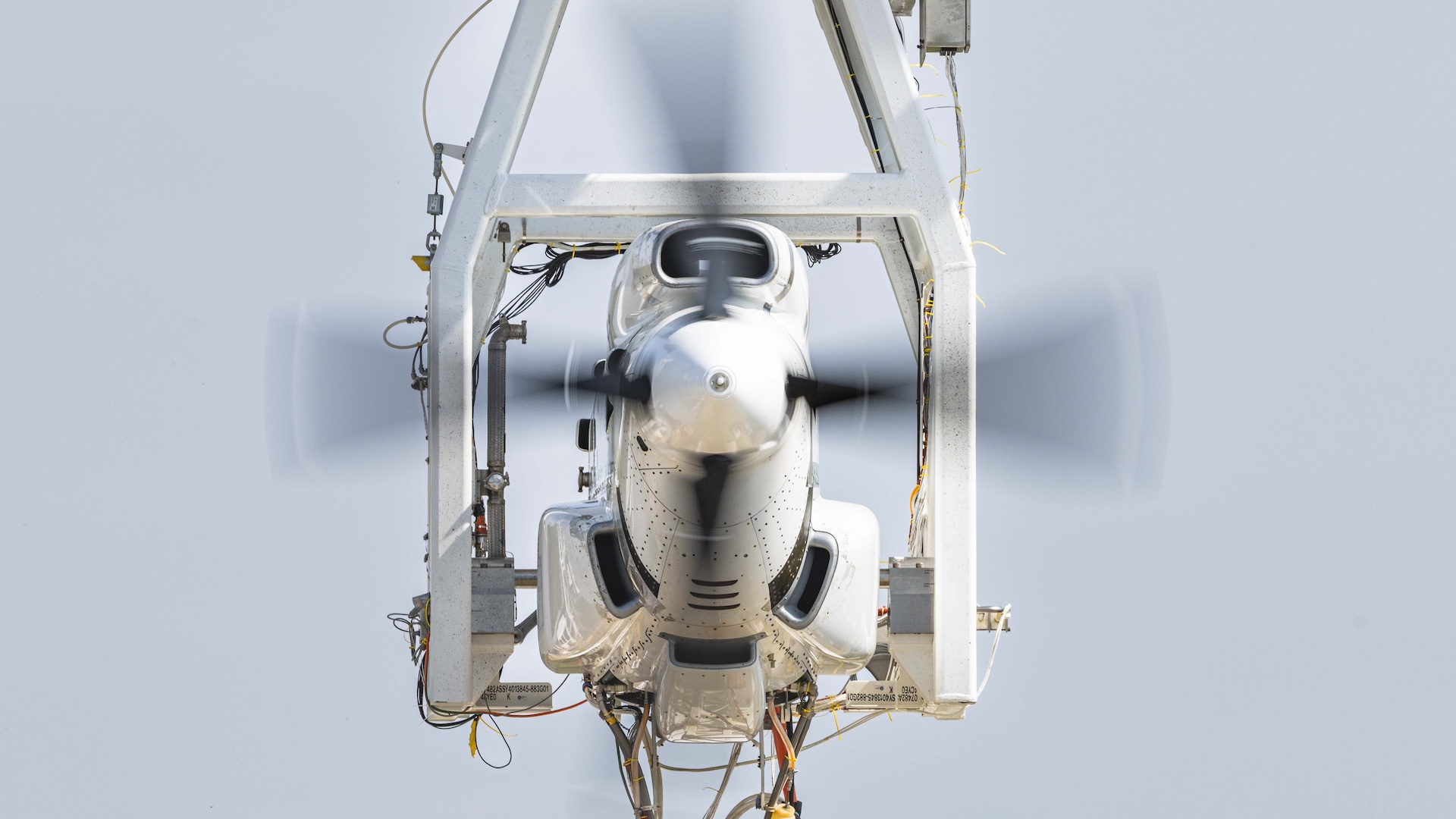
GE Aerospace is edging towards a major milestone in electrified flight. The company successfully completed initial ground tests of a hybrid-electric version of its CT7 turboprop engine.

The tests, conducted at GE’s facility in Peebles, Ohio, validated the full integrated megawatt-class hybrid-electric system. The engine maker developed the demonstrator with NASA funding under the Electrified Powertrain Flight Demonstration (EPFD) project.

GE Aerospace’s hybrid engine tests

During the tests, engineers simulated multiple flight phases, including taxi, take-off, climb, and cruise.

“The ground test was the company’s first to validate the full integrated system,” GE Aerospace explained in a press statement on June 2. “Teams simulated various flight phases such as taxi, take-off, climb, and cruise. The electric powertrain helped successfully power the propeller and generated power to the battery.”

The engine’s parallel hybrid architecture allows both the gas turbine and the electric system to drive the propeller.

GE Aerospace developed key components for the hybrid engine, including proprietary motor-generators, controllers, power converters, and inverters. BAE Systems developed the batteries used for the tests, while Boeing subsidiary Aurora Flight Sciences supplied the complete nacelle.

GE Aerospace subsidiaries Dowty and Avio Aero provided propellers, as well as gearboxes, and a CT7 engine, respectively.

According to GE, this ground test clears the path for eventual flight testing, though the company has not provided an updated timeline. The firm previously announced it was targeting mid-2020s flight trials on a modified Saab 340 regional airliner, with one of the aircraft’s two CT7 engines replaced by the hybrid unit.

The future of hybrid-electric technologies

The recent test is part of a broader effort to advance hybrid-electric technologies.

These efforts are also informing the design of GE Aerospace’s open-rotor engine under the Revolutionary Innovation for Sustainable Engines (RISE) program.

Conducted with Safran via the CFM International joint venture, the RISE open-rotor concept targets next-generation narrowbody aircraft that Airbus and Boeing expect to introduce in the 2030s.

“The ground test is a major turning point in our understanding of hybrid-electric powertrains for aviation and a fundamental building block for the future,” explained Arjan Hegeman, GE vice-president for future of flight. The test “positions GE to have the technologies ready to meet customer needs for greater durability, efficiency, and range,” he added.

GE has accumulated more than a decade of experience in electric propulsion. In 2016, it ground-tested an electric motor-driven propeller, followed by 2022 evaluations of a megawatt-class hybrid system at NASA’s Electric Aircraft Testbed. In 2025, the company demonstrated hybrid-electric power transfer and injection using a modified Passport turbofan under NASA’s Hybrid Thermally Efficient Core program.

With its latest test, GE is pushing toward sustainable aviation technologies amid industry demands for reduced fuel consumption and emissions. While details on specific efficiency gains remain limited, the company views hybrid systems as key to lowering emissions.
Received yesterday — 2 June 2026 Interesting Engineering

Space laundry solved: Cold plasma tech kills bacteria on astronaut clothing

2 June 2026 at 14:52

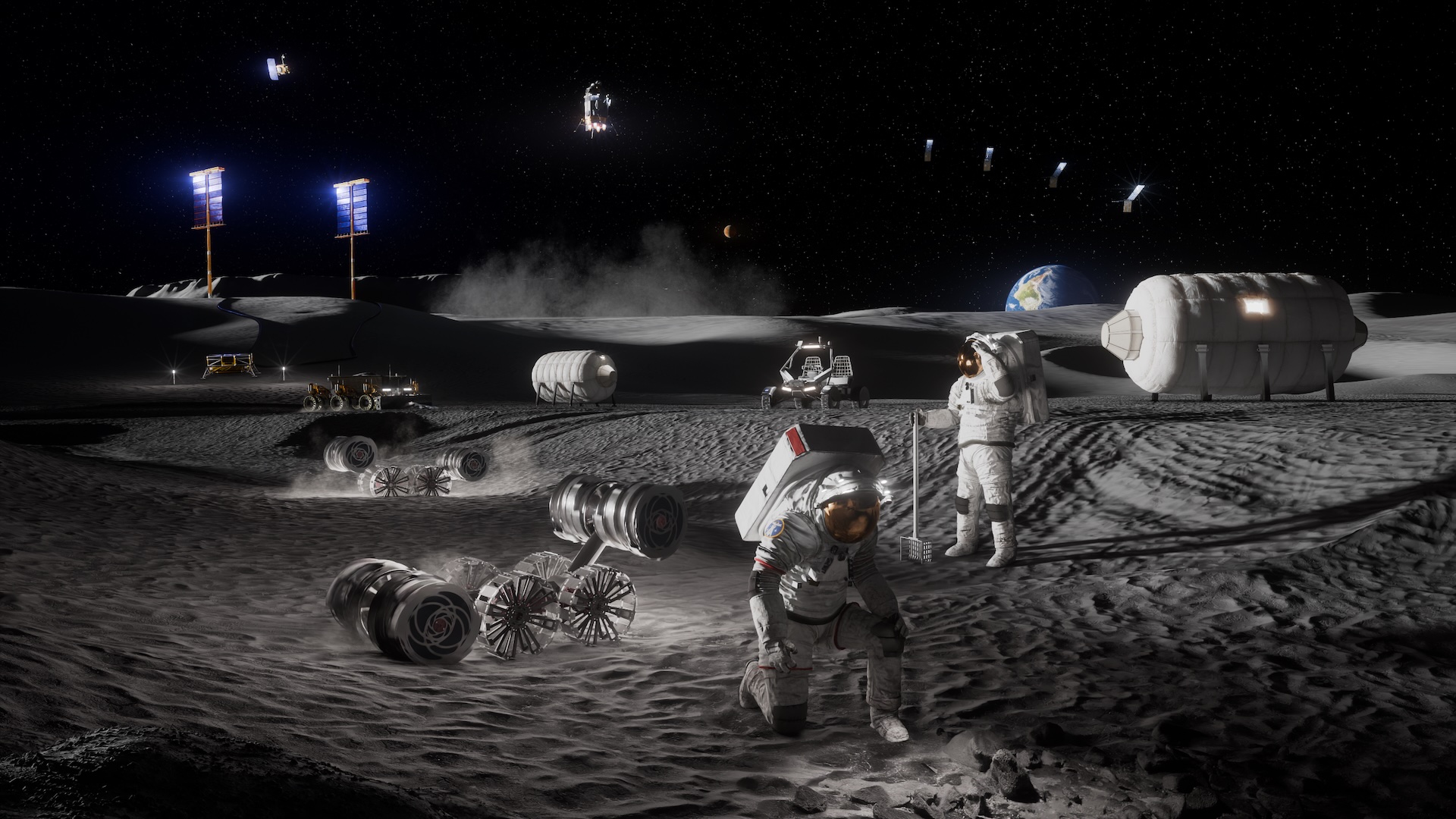
While SpaceX and Blue Origin engineers work against the clock to prepare their respective spacecraft for the first moon landing since 1972, scores of scientists are addressing the myriad technological challenges future space explorers will face on long-duration missions to the moon and beyond.

One team of scientists has just demonstrated a water-free approach to cleaning laundry in space. The researchers demonstrated a cold-plasma technology that could sanitize astronaut clothing and habitats on future lunar and Martian bases without water.

Keeping clean in space

On the International Space Station (ISS), crews use dry vacuuming devices and chemical surface wipes to clean their clothes. Neither is particularly effective.

This means the ISS crew also have to resort to another method: They wear garments for extended periods, finally discarding them when they are too dirty. This practice is unsustainable for long-duration missions to the Moon or Mars, where resupply missions will be limited.

Water is also a precious resource in space, making traditional washing impractical. The team behind the new water-free solution was led by Gabe Xu of the University of Alabama in Huntsville, in collaboration with NASA microbiologist Chelsi Cassilly. They developed a compact device that generates a pencil-thin jet of cold plasma to kill bacteria on fabrics.

They presented their proof-of-concept device at the Astrobiology Science Conference last month. The device uses high-voltage electricity to ionize a mixture of helium, air, and water vapor. When aimed at fabrics, the plasma generates reactive oxygen species such as ozone. These penetrate fabric fibers and destroy microbes through oxidative stress.

Unlike hot plasma or arc welding, this cold plasma operates at room temperature and poses no risk to fabrics or human skin.

In laboratory tests, the team trained their plasma jet on samples of Staphylococcus caprae, a skin bacterium previously detected on the ISS. They found that their device reduced bacterial spore colonies on cotton samples from approximately 250,000 per milliliter to about 60,000 per milliliter.

Ultimately, the technique killed the bacteria more effectively than existing methods used on the ISS. According to the researchers, their method might not remove noticeable stains, but it will kill the bacteria that could make astronauts sick.

In an interview with LiveScience, Xu explained that “there are microbes that are UV resistant, but as far as we can tell from our experiments, there is nothing that is oxidative-stress resistant – if you eat poison, it kills you.”

Enabling healthy habitats for future space explorers

The current prototype cleans only a small area at a time, roughly the width of a pencil.

The researchers aim to develop scaled-up versions, including a plasma chamber resembling a washing machine and a combined plasma jet-vacuum system for surfaces. These tools could also be used to sterilize spacesuits, tools, and soft furnishings in habitats.

As NASA looks to extend humanity’s footprint into space, microbial control will be critical for crew health and survivability. Small populations living in compact habitats will be especially vulnerable to bacteria and illness. While vacuuming removes dust, it fails to eliminate biological contaminants effectively, making the new system particularly valuable.

Though it shows great promise, further testing is needed to confirm efficacy against a broader range of microbes, as well as its long-term impact on fabric durability.

If successful, plasma-based sanitation could help support a permanent human presence beyond Earth. It would help to minimize resource consumption and contamination risks while enabling astronauts to explore the unknown.

❌