
Normal view

Received today — 3 June 2026 Interesting Engineering

World’s first two-seat Gripen F jet can coordinate drone swarms for added lethality

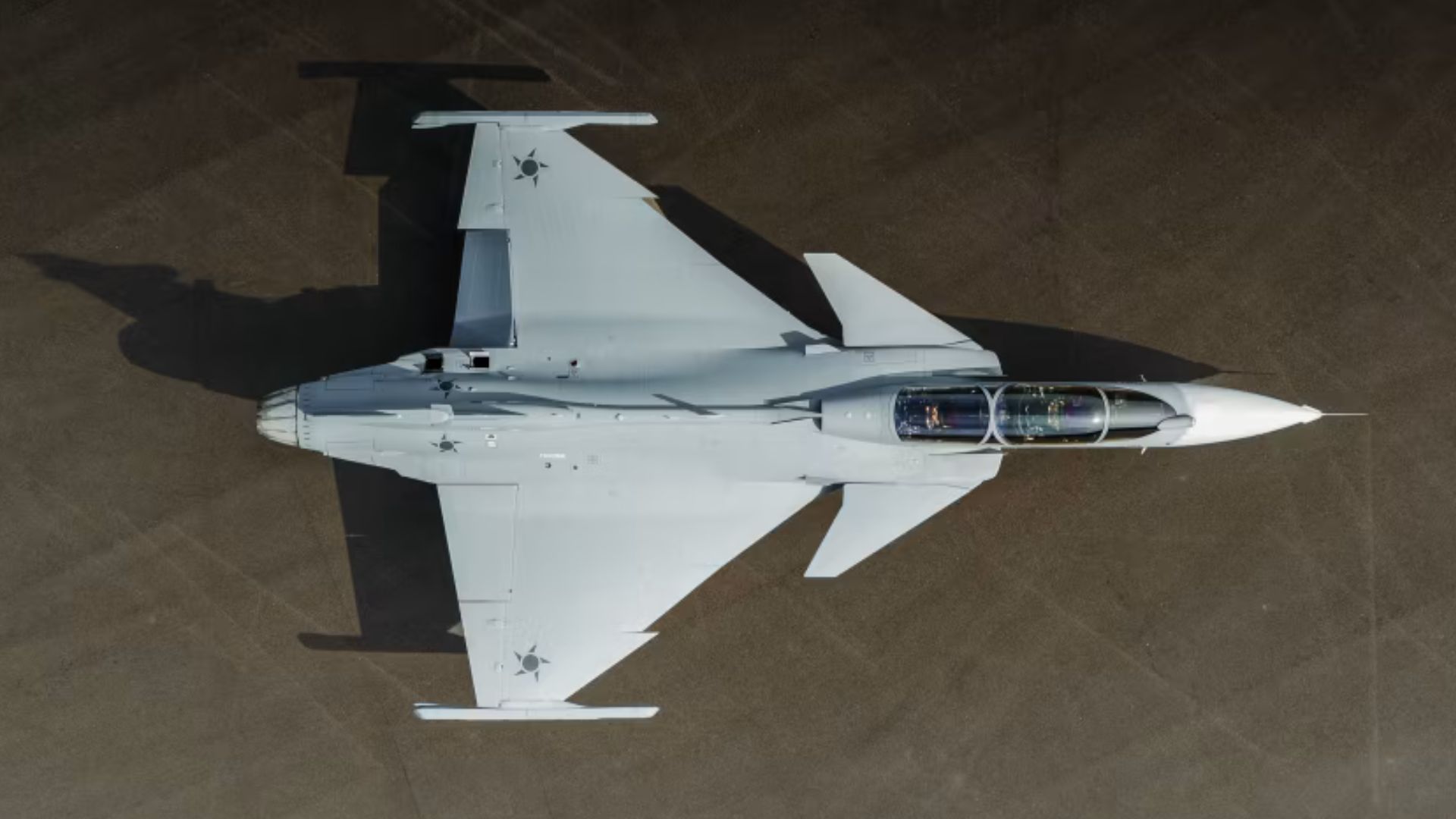
Sweden-based Saab has rolled out the world’s first Gripen F fighter jet at a ceremony held at its facilities in Linköping. It is the two-seat variant of the Gripen E series, which has been developed to meet the training and operational requirements of modern air forces.

The two-seat fighter jet has been developed by Saab in collaboration with Brazil. The Gripen F will not head to Saab’s Flight Test Center ahead of handover to the Brazilian Air Force.

In 2014, Brazil placed an order for a total of 36 Gripen fighter jets with Saab. The order included 28 single-seat Gripen E variants and eight two-seat Gripen F aircraft. Saab had started building the first Gripen F jet in 2020. As of today, 11 aircraft have been handed over to Brazilian forces under the deal.

World’s first Gripen F fighter jet

The Gripen F is unique in the sense that it is not just meant as a combat aircraft, as it also has a second seat for an instructor. The second cockpit can also help ease the workload on the main pilot and prove handy in mission support.

The aircraft retains the fighting capability of the Gripen E variant and can also be used for training. The company says that the addition of a second pilot will boost training for the entire fleet and will also improve its performance in dangerous scenarios.

The addition of a fully independent second cockpit enables instructor-guided missions in a fully operational fighter, providing trainee pilots with realistic, live-mission conditions.

“The rollout of Gripen F represents a shared achievement between Saab, Brazilian industry and the Brazilian Air Force, reflecting the deep trust we have built together over many years. Developing this aircraft together demonstrates the maturity of this collaboration. It represents not only a highly capable fighter for the Brazilian Air Force, but also the tangible outcome of sustained joint development and shared ambition,” said Lars Tossman, head of Saab’s business area Aeronautics.

More about Saab’s aircraft

The aircraft has an overall length of 52 feet (15.9 meters) and a width of 28 feet. While it is slightly longer than the Gripen E variant, it retains the width and the maximum take-off weight of 36,376 pounds (16,500 kg).

The jet has 10 hardpoints for carrying payloads, a maximum thrust of 98 kN, and an aerial refueling facility, just like the earlier single-seat variant. Saab also says that Gripen F is designed for next-day integration. “Whether it is new software, advanced AI algorithms or next-generation hardware, Gripen F can be re-equipped almost immediately.”

The addition of an extra seat will allow the second Gripen F pilot to command, monitor, and coordinate multiple unmanned systems in real time. These can be used to coordinate precise, multi-axis attacks, put drones in contested or enemy airspaces for intelligence gathering, and overwhelm enemy air defenses.

The company also adds that the Gripen F can carry all weapons that its predecessor does, be it the AESA radar, the beyond-visual-range missiles, or the capability for electronic warfare.
Received yesterday — 2 June 2026 Interesting Engineering

Cambridge’s new robot could help solve millions of years old evolution mystery

A team of scientists from Cambridge has developed a robot that can help unravel the mystery of how early vertebrates evolved the ability to walk on land hundreds of millions of years ago.

The fish-like robot can also help demystify how some species of fish can walk on land today. The team relied on computer models, the observations of fish found in nature, and their own creation to come up with a basic theory.

The team has found that a wide range of unrelated fish species have independently evolved the same basic walking gait, which essentially mimics a swimming motion on land, according to a statement.

Solving an evolutionary question with modern tech

The simple walking pattern adopted by fish, which the Cambridge researchers call an ‘undulating tripod gait’, can appear to be quite clumsy and involves too much flopping. But the team says it is one of life’s most ancient solutions to a problem: how to escape predators or move from one habitat to another, without specialized limbs.

The method is actually quite simple: fish can propel themselves forward with their tails while using their front fins and head for support. This feat has been observed in a wide variety of species – ranging from the African lungfish to armored catfish.

The ability to move around in an extra mode can be seen as an evolutionary benefit, allowing them to survive and expand their territory.

The team says that there have been efforts in the past to study walking fish, but they have been focused on a single species. They add that this is the first time that “unifying locomotive principles across multiple species have been identified.”

“If you’ve got the ability to walk on land and your predator doesn’t, then you can escape, and hopefully the predator moves on,” said lead author Dr Michael Ishida, from Cambridge’s Department of Engineering. “You’ve also got the ability to move from one shallow-water environment to another, like tide pools, for example.”

This example of convergent evolution – where multiple species evolve similar abilities independently – can also help them understand how the first vertebrates made the transition from living in water to surviving on land.

The scientists first created a computer model based on the movement of grey bichir – which is native to Africa – and other walking fish species. The model revealed similar modes of locomotion across several species.

“We kept seeing this recurring kind of walking motion, although it’s very primitive,” said Ishida, an engineer in Professor Fumiya Iida’s lab at Cambridge. “A number of different fish, spread out across the evolutionary tree and not closely related to each other, all do it. It’s such a simple movement and can recur from a very basic starting point.”

Ishida added that a swimming fish uses its body to propel itself through the water, “so if you take that, put it on land, give it some ability to shuffle its front fins, that’s exactly what it’s doing.”

Robot fish and computer modeling

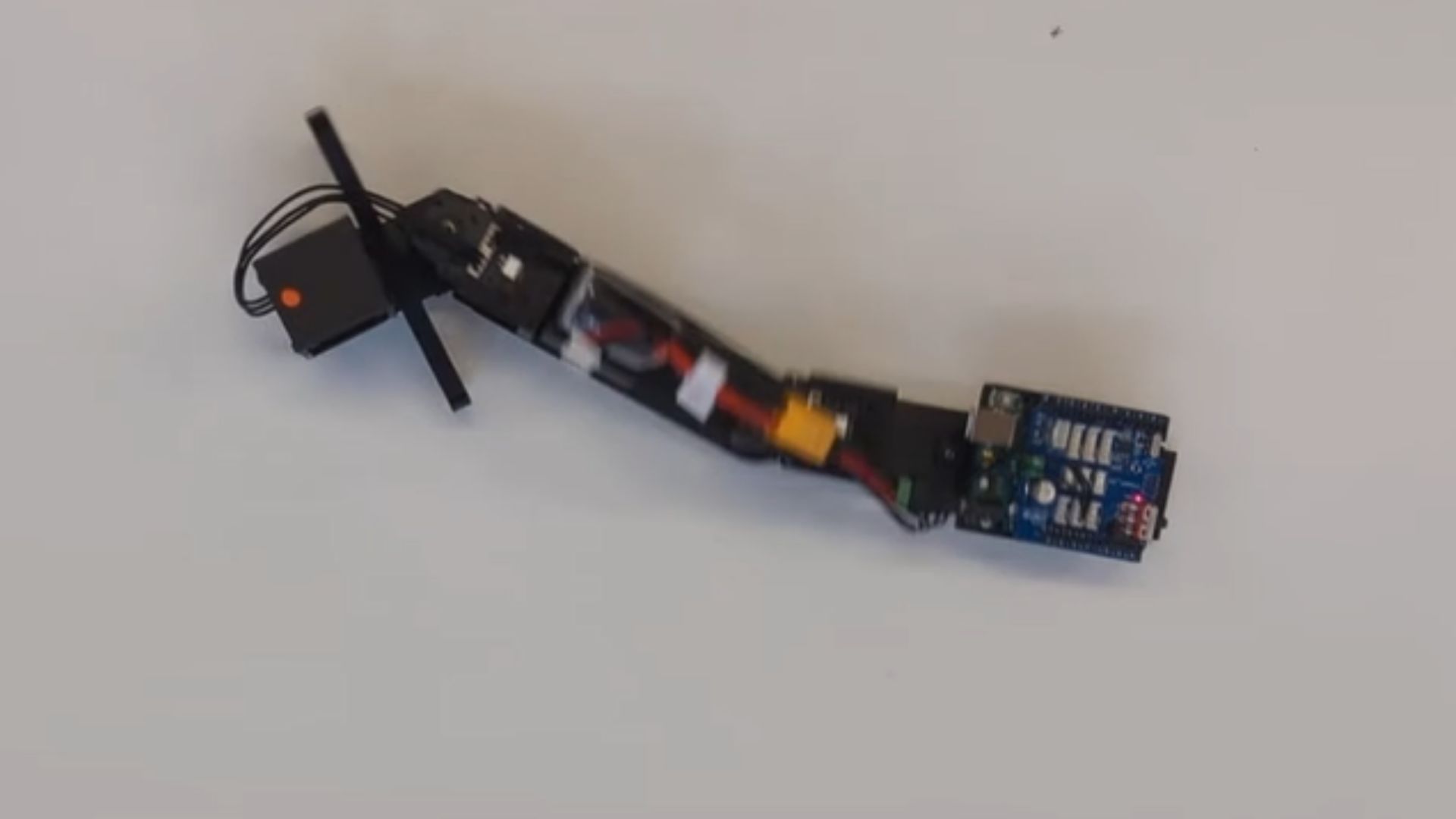
The team then designed a physical robot fish to test their results and found that the most efficient movement closely matched the bichir’s movements and the results from the computer model.

“We tried all kinds of different gaits on the robot, and every other gait we tried was slower,” said Ishida. “Any time we changed how the body bended, or what sequence it was bended in, it was worse. It was surprising that the optimal walking pattern in the simulation and robot matched what the real fish actually do.”

The team plans to test the model on fossil fish such as Tiktaalik, an important fossil link in the transition from water to land. A combination of computer modeling and robotics could help determine how the ancient species first walked on land.

The findings have been reported in the journal Nature Communications.

❌