Login
Login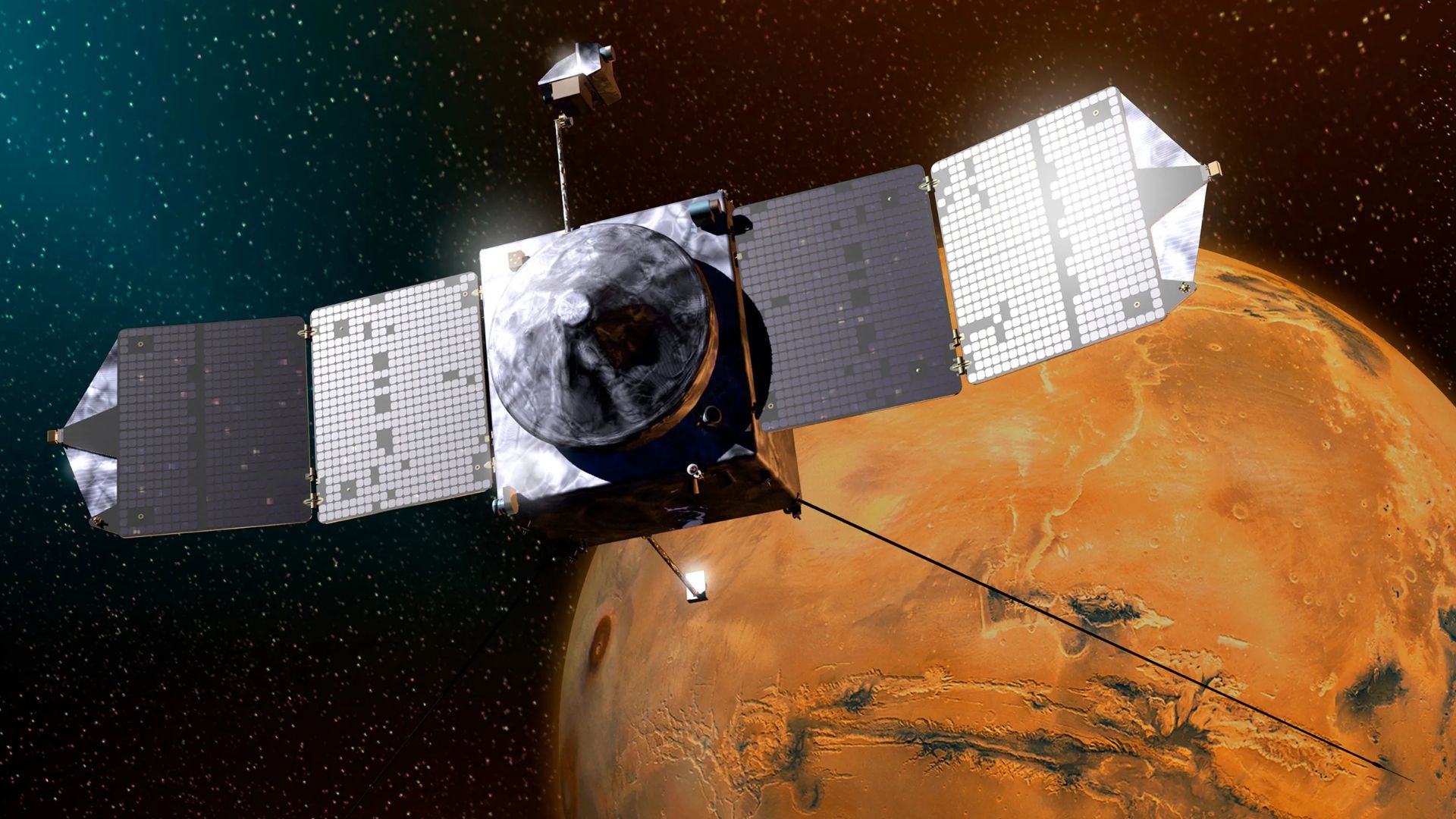

Lost in Space: NASA declares MAVEN Mars spacecraft unrecoverable after 11 years

NASA has officially ended the MAVEN mission after losing contact with the spacecraft around Mars late last year. The decision closes a major chapter in the agency’s long-running effort to understand how the Red Planet lost much of its atmosphere.
The space agency said a review board determined the spacecraft could no longer recover from an anomaly that occurred in December. MAVEN, short for Mars Atmosphere and Volatile Evolution, last communicated with Earth on Dec. 6 after passing behind Mars.
The mission spent more than 11 years orbiting Mars and studying its upper atmosphere. MAVEN also continued operating for nearly a decade beyond its planned one-year science mission.
Sudden loss of contact
Before communication stopped, telemetry showed the spacecraft operating normally. NASA expected MAVEN to reappear after moving behind Mars, but ground controllers never received another signal from the spacecraft.
Engineers later analyzed radio data recorded by NASA’s Deep Space Network and uncovered signs of a serious problem. The data suggested MAVEN entered safe mode and started rotating at an unusually high speed after emerging from behind Mars.
NASA said the rapid spin likely disrupted the spacecraft’s orbit and drained its batteries. Once battery levels dropped too low, the communications system lost power, leaving the spacecraft unable to contact Earth again.
The agency assembled an anomaly review board in February to evaluate recovery options and determine the spacecraft’s condition. After months of analysis, the board concluded that MAVEN could no longer perform science observations or support relay operations around Mars.
Investigators still have not identified the root cause behind the anomaly. NASA expects the review board to release a final report later this year.
Decade of discoveries
NASA launched MAVEN in November 2013 as the first mission focused entirely on studying the Martian atmosphere and its evolution. Scientists used the spacecraft to investigate how solar activity stripped atmospheric particles away from the planet over billions of years.
The mission helped researchers better understand how Mars transformed from a wetter and potentially habitable world into the cold, dry planet seen today. MAVEN also provided new insight into the planet’s climate history and the fate of its ancient water.
Louise Prockter, director of NASA’s Planetary Science Division, said the spacecraft’s findings will continue supporting future exploration efforts. She said MAVEN’s data plays an important role in helping scientists understand radiation conditions astronauts could face on future crewed missions to Mars.
NASA also plans to archive the mission’s full dataset so researchers can continue using the information for future studies and planetary science work.
Supporting Mars exploration
Along with its scientific mission, MAVEN played a critical support role for other spacecraft operating at Mars. The orbiter helped relay information from NASA’s Curiosity and Perseverance rovers back to Earth during surface operations.
That relay support allowed scientists to receive larger amounts of rover data and strengthened communication links across multiple Mars missions. MAVEN also contributed to observations of Martian weather and even studied a rare interstellar comet during its extended mission.
Shannon Curry, MAVEN’s principal investigator at the University of Colorado Boulder, said the mission produced a lasting scientific impact. She said the spacecraft significantly improved scientists’ understanding of the Martian atmosphere and planetary evolution.
Although MAVEN’s mission has officially ended, NASA believes the spacecraft’s scientific legacy will continue influencing Mars research and future exploration planning for decades.