Consider it civilian reconnaissance. Protesters in Turkey are using Google Maps to track police movement, plot out barricades, and rally together.
Created Saturday, the map of Istanbul Police Movements centers on Taksim square, the heart of recent (and ongoing) protests against the Prime Minister Recep Tayyip Erdogan’s government. It began last week with trees and a barracks. Erdogan’s government plans to renovate an Ottoman barracks, a structure dating back at least a century, near the square. To get construction equipment to the barracks, officials wanted to raze trees from the nearby Gezi Park. Protesters prevented this, demonstrating in defense of the green space for over a week. Since then, protests expanded, evolving into a critique of the current ruling party.
Mapping protests and police response in real-time is a relatively new phenomena. In 2010, students protesting in London used a Google Map to track police action, documenting riot vans and helicopters moving against the protesters. But some features of the Turkish protests are straight out of Les Misérables, or indeed any number of historical protests. Barricades keep vehicles, police, and even horses away from the protesters, take time to tear down, and protect against thrown objects or gunfire, should the police response turn violent. In centuries past, governments brought in armies to quell protesters, and used cannons to knock down barricades. Paris, the site of so many protests, even underwent a major urban redesign with wider streets to make barricades more difficult.
In addition to the red triangle markers of barricades, here are some features of the map:
A green tent to mark the heart of Taksim Square
Road warnings in green, letting people know which one are open and which are blocked
Pink tags for groups announcing who they are and where they are protesting
Light blue flags for police locations and reported movements
Warnings of police tracking servers online, confusingly under light blue as well.
General rallying cries, slogans, and mottos from protesters are marked with house symbol
Notably absent? Sensitive information, like the location and identity of specific individuals, like volunteer doctors. In the jargon of secrecy, that’s called good Operational Security. In plain talk, it’s just common sense.
North Carolina’s blueberries may have a beetle problem. For the first time, scientists in the Tarheel State have documented the presence of Prionus imbricornus eating blueberry bushes. This longhorn beetle and itslarvae can chomp their way through the state’s valuable blueberry fields. The findings are described in a study published this week in the Journal of Integrated Pest Management.
Blueberries are native to North Carolina, but were not cultivated until 1935. The state is the sixth largest blueberry producer in the United States, and the blueberry industry is valued at roughly $70 million. Protecting the plants from pests is crucial, as blueberries are considered one of North Carolina’s most valuable and desirable crops.
Several species including the blueberry maggot (Rhagoletis mendax), plum curculio (Conotrachelus nenuphar), and cranberry fruitworm (Acrobasis vaccinii Riley) can threaten blueberry crops. The long-horned beetle P. imbricornus may now join their ranks. P. imbricornus is known for their long antennae and are considered wood-boring beetles. The adult females typically lay their eggs in the soil near the roots of hardwood trees. The larvae then eat and destroy the roots. These larvae can grow up to five inches long and potentially kill trees, since the adults don’t feed.
P. Imbricornis larva. The larva, which can grow up to five inches long, feed on the roots of blueberry bushes. Image: Matt Bertone/NC State.
North Carolina is the first state to report that P. imbricornus is actively feeding on blueberry bushes. However, reports of unidentified larvae from the Prionus beetle genus feeding on and damaging blueberry bush roots go back to 2010. In the 16 years since, identifying the specific species responsible has been difficult since the larvae live near the roots of the plants. Different types of longhorn beetle larvae also look very similar, and not identifying a species can harm efforts to combat harmful bugs.
“Before now, researchers often just assumed the species of Prionus on their commodities based on adult identification,” Kenneth Geisert, a study co-author and NC State graduate student, said in a statement. “If that guess was incorrect, it could mean using a treatment strategy that did not line up with the problem and incorrectly associating species and their hosts.”
For example, P. imbricornus attacks roots, but another longhorn beetle species may go after a tree’s dead branches or trunk.
“Without knowing which species of beetle you’re dealing with and their ecology, incorrect management can cause adverse effects on non-target insects,” Geisert added.
For this study, the team used a series of black panel traps scented with sex pheromones to attract and gather adult beetles. The traps were placed at six farms across Pender, Sampson, Bladen, and New Hanover counties. The team then used a technique called genetic barcoding on the larvae to analyze small, standardized segments of their DNA to identify the species. They then compared the unknown larval sequences with the same genetic segments from known Prionus adults.
They matched the P. imbricornus with 98 to 99 percent accuracy. According to the team, this result is both good and bad news for farmers.
“On one hand, it’s very important that we know which species we’re dealing with,” said Lorena Lopez, a study co-author and entomologist at NC State. “On the other, North Carolina was the first state to ever report Prionus infestation in blueberries, and there are no insecticides currently labeled against this pest in blueberries.”
To address this shortfall, Lopez has begun insecticide trials. Pinpointing effective insecticides and timing during P. imbricornis reproductive cycles can potentially limit larval development. Fewer larvae could help prevent major root damage and provide blueberry farmers with an effective management tool to protect their crops.
It’s four in the morning and you wake from a dream. It wasn’t a nightmare exactly, but it was vivid and unsettling—a circus of imagery in which the other commuters stuck in gridlock beside you were all octopi or your feet were transformed into a pair of horse hooves while going through airport security.
Maybe you don’t often remember your dreams but this one, this episode that fused the mundane with the outlandish, it sticks. Even days later, you can still see those tentacles gripping the steering wheels or feel the awkwardness of your gait running to catch your flight.
It couldn’t have been that joint you smoked before bed, could it? Science says maybe.
How weed effects sleep cycles
Reports of vivid dreams are “very well known” in cannabis and neuroscience research, says Andrew Kesner, assistant professor of psychology at Indiana University in Indianapolis. But “we still don’t really know the neurobiology of dreaming and what sort of features make you remember your dreams better or worse.”
Cannabinoids are found naturally in the brain in a non-psychoactive form called endocannabinoids. Endocannabinoids control our sleep/wake cycle, aka our circadian rhythms, by modulating and maintaining the brain’s biological balance through an abundant receptors neuroscientists call CB1.
“When people fall asleep, the brain makes its own cannabinoids that increase and decrease throughout the sleep-wake cycle, and throughout the day,” explains Kesner.
Marijuana contains a different form of cannabinoid than the one naturally produced by the brain, THC or tetrahydrocannabinol. THC also works on the brain’s CB1 receptors but, unlike endocannabinoids, it is psychoactive, meaning it makes users feel high by producing feelings like euphoria and paranoia.
Blooming cannabis plant ready to be harvested into various THC-based products. Image: Sunan Wongsa-nga / Getty Images Sunan Wongsa-nga
When you smoke weed before bed, the THC added to the brain’s natural endocannabinoids sends the brain’s CB1 receptors into overdrive. And when those CB1 receptors are in overdrive, they change the way you sleep.
Natural sleep in healthy adults begins with a short period of nodding off followed by a stage of “slow-wave” sleep, that deep sleep from which it’s hard to wake someone up. Cycles of lighter sleep punctuated by bouts of REM (rapid eye movement) sleep follow, growing longer and longer throughout the night.
“REM sleep is classically the time when you’re dreaming,” says Kesner, when “your brain acts like it’s awake but the brain stem paralyzes your body so you can’t act out your dreams.”
Consuming THC appears to suppress REM sleep: It causes it to arrive later in the sleep cycle and to make up less of the overall percentage of sleep. THC also causes more frequent interruptions to REM sleep. That, says Kesner, may be the origins of its reputation for causing weird dreams.
“We know if you wake someone up in REM sleep, that’s when they have the highest chance to remember their dreams,” he explains. So, while there’s no evidence that dreams under the influence of THC are any different than THC-free dreams, the ability to remember them more easily may make the sleeper believe they are more bizarre or intense.
“It’s possible that the THC could be making dreams more intense by changing cortical activity [the way the brain functions], making them wonkier and maybe adding some variability to what you’re dreaming about,” Kesner continues. But the huge variability among individuals in both sleep and the effects of THC use makes objectively studying weed-induced dreams “kind of a nightmare”—pun not intended.
Researchers still don’t even know exactly what dreams are or why they happen—though there’s a good chance that it may be the brain coming up with different learning scenarios, according to Kesner. Someone who plays with puppies all day may, for example, dream that night about being chased by wolves. That way, if it ever happens in real life, the dreamer is better prepared to react to them.
Whether the weed was smoked or taken in edible form is probably also important; THC immediately affects the brain when smoking while edibles take time for the body to metabolize. One study in which participants reported weird dreams after smoking weed before bedtime, therefore, may have had to do more with the way REM sleep “rebounds,” or immediately returns to longer and more robust natural cycles, when the brain experiences THC withdrawal than with THC’s psychoactive effects.
It’s well documented, says Kesner, that chronic THC users experience more intense REM sleep after they stop using it. The same might happen in occasional users, whose REM sleep could theoretically become more intense as the acute effects of weed wears off during the night. In other words, you don’t sleep as well while weed’s psychoactive THC is bouncing around your brain but it becomes much more restorative as soon as its effects wear off.
Ultimately, there probably is no “one-size-fits-all for what cannabis does to sleep or how it affects dreams,” Kesner concludes. As of now, there’s simply not enough data to come to any meaningful verdict. THC or not, dreams are, by their very nature, weird.
In Ask Us Anything, Popular Science answers your most outlandish, mind-burning questions, from the everyday things you’ve always wondered to the bizarre things you never thought to ask. Have something you’ve always wanted to know? Ask us.
When it comes to reproduction, animals will pull out all the stops to attract a mate. Sending out noisy mating calls, showing off colorful wings, inflating a throat pouch, and shaking a literal tailfeather all ensure that the next generation of a species happens. Some insects will go as far as making themselves look like an entirely different living thing—leaves.
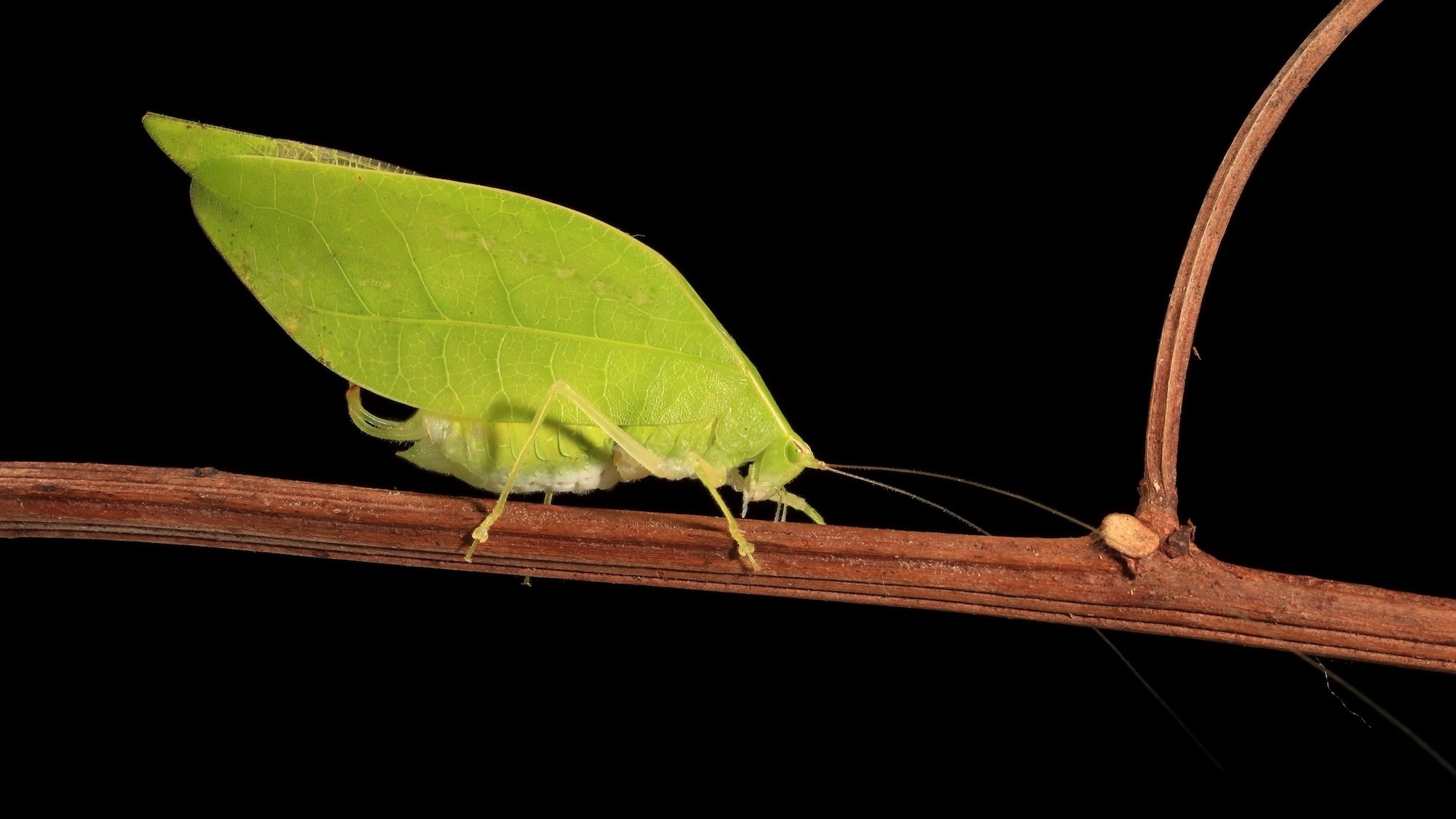
Usually used as a means of camouflage, male katydids appear to use their leafy disguise to amplify mating calls and make themselves more attractive to the opposite sex. The findings are detailed in a study published today in the journal Proceedings of the Royal Society B, and offer one of the first demonstrations of how leaf mimicry enhances a male katydids’ sexual signals.
To shield themselves from predators, various species of katydids have evolved wings with structures that look like leaves. Panama’s leaf-masquerading katydids (Arota festae) will even change from green to hot pink in order to better mimic leaves. What’s been less clear to entomologists is whether or not these leaf-mimicking structures play a role in katydid mating.
This new study looked at a species called Viadana brunneri from Barro Colorado Island, Panama. To attract mates, katydids create songs by rubbing together specialized structures on their wings. In many tropical species like V. brunneri, the portion that mimics leaves makes up the majority of their wing’s surface area.
Most of the wing structure is devoted to helping male katydids look more like a leaf. Image: Christian Ziegler.
Previously, scientists believed physical adaptations for survival and for attracting mates can function in conflict with one another, particularly if they are physically connected. A male peacock’s flashy tail feathers may help it attract a female, but it also makes it easier for predators to find them. Male katydids, on the other hand, are able to use the acoustic properties of the structures that they use for defense to their reproductive advantage. They are a rare example of how an adaptation for self-defence and reproduction can work together without necessarily putting the animal in jeopardy.
The team performed a series of bioacoustic, behavioral, and biophysical experiments, showing that these leafy structures on their wings make them more attractive to females, while also helping conceal them. After removing the leafy portions of a male V. brunneri’s wings, the pitch became higher and the volume of their songs also changed. The team then played these calls for females who preferred the lower pitch calls from males with their leafy wing sections still intact.
While male katydids do all the singing, females indicate their interest by replying to the song with clicks. The insects produce short, sporadic and infrequent calls, possibly for only two seconds in a single night. They perform these calls in ultrasounds, which our ears can’t pick up. They also found that the leafy portions of the male katydid wing will vibrate to amplify their songs, making them more detectable to females.
“Our study provides a rare example of natural and sexual selection acting in harmony, producing traits that simultaneously improve survival and mating success,” Dr. Benito Wainwright, a study co-author and evolutionary biologist at the University of St Andrews, said in a statement. “We are now extremely excited to start exploring how such an interesting interaction evolved in katydids.”
Amazon’s pre-Prime Day Anker sale is live right now, three weeks before the actual event kicks off on June 23rd. The sale runs across wall chargers, power banks, wireless chargers, and docking stations, with cuts of up to 35% on most of the lineup. The Anker Prime 20,100mAh Power Bank drops to $125.99 (was $179.99) and the 13-in-1 USB-C Triple-Display Docking Station is $139.99 (was $199.99). Whether these hold through Prime Day or bump back up before then is anyone’s guess, but the prices are real right now.
The Anker Nano 45W USB-C Charger has a built-in Smart Display that shows real-time wattage output on the face of the brick, and a Care Mode that automatically throttles back when a phone hits 80% to protect the battery long-term. It’s a single USB-C port, compact and foldable, and at $27.99 it’s the least expensive way to get into Anker’s Smart Display lineup. Most people who track charge speeds will find it useful. Everyone else just has a very good 45W GaN charger at a price that makes it easy to keep one at a desk and another in a bag.
Anker 100W 3-Port GaN USB-C Charger with Smart Display $49.98 (was $69.99)
One wall outlet, enough wattage for a laptop, tablet, and phone
The Anker 100W 3-Port GaN USB-C Charger puts 100W total across three USB-C ports, with a smart display and touch control to see and adjust per-port output. With a single device plugged into the top port, you get the full 100W, enough for a 16-inch MacBook Pro at full charge speed. With all three ports active, it splits automatically. At $49.98 it’s 29% off and covers the most common use case: one charging brick, everything on your desk, no hunting for the right outlet.
Anker Prime 3-in-1 Qi2.2 25W MagSafe Charging Station $149.99 (was $229.99)
Anker’s best MagSafe dock, $80 off list and Qi2.2 certified at 25W
The Anker Prime 3-in-1 Qi2.2 25W Charging Station is certified to the Qi2.2 standard, which pushed the MagSafe peak from 15W to 25W on iPhone 16 and later. It charges iPhone, Apple Watch, and AirPods simultaneously, with a built-in AirCool aerospace-grade thermoelectric cooling system that keeps the phone pad running at full 25W without throttling under sustained load. The on-unit display shows per-device wattage in real time. At $149.99 it’s the biggest dollar-amount discount in the current sale, $80 off a model that doesn’t typically go this low.
Anker Wall Charger and Cable Deals at Amazon
The Anker 140W 4-Port MacBook Charger with Smart Display is $64.99 (was $89.99), which is enough single-port output to run a 16-inch MacBook Pro at full speed while simultaneously charging an iPad and two phones off the other three ports. The Prime 100W 3-Port Foldable GaN Charger at $39.98 (was $69.99) is the deepest percentage cut on any single item in the current sale at 43% off.
Anker Wireless Charger and Car Charger Deals at Amazon
The Anker Zolo Qi2 MagSafe Charging Pad 2-Pack at $23.99 (was $39.99) is the biggest percentage cut in the wireless section at 40% off, which works out to under $12 per pad. The 3-in-1 Cube MagSafe Charging Stand drops to $89.99 (was $129.99) for a compact foldable unit that handles iPhone, Apple Watch, and AirPods together.
The Anker Prime 14-Port Docking Station is $169.99 (was $269.99), a 37% cut on the 160W dual-4K model, and the top-end Prime TB5 Thunderbolt 5 dock is $339.98 (was $399.99), which supports 120 Gbps transfer and dual 8K display output. On the budget end, the USB-C to HDMI adapter is $12.99 and the 5-in-1 hub is $15.99.
The wreck of an American submarine from World War II has been found off the coast of Matsua Island, Japan. The USSHerring (SS-233) currently rests over 300 feet down in the Pacific Ocean, where it is sitting upright and “maintains a high degree of integrity,” according to United States Naval History and Heritage Command (NHHC). The discovery was announced exactly 82 years after the vessel sank, based on evidence collected from an international team of researchers.
Herring’s final mission
The Herring was first launched from Portsmouth Naval Shipyard in Maine on January 15, 1942, and officially commissioned on May 4, 1942. The vessel completed eight war patrols in both the Atlantic and Pacific Oceans during the war. Herring sank seven enemy ships, including four Japanese cargo ships during what would be the submarine’s final patrol.
Herring was last seen by the crew of the USS Barb during the evening of May 31, 1944. The submarines met to determine who would patrol areas off the Kurile Islands, an archipelago east of Japan. Early on June 1, 1944, Barb’s crew recorded hearing the sound of weapons designed to attack a submarine from a ship or aircraft called depth charges exploding in the distance.
Japanese historical records also confirm that Herring was struck in two direct hits during a counterattack by a shore battery. The strikes ultimately sank Herring and the vessel was presumed lost when Herring failed to report to Midway on July 13, 1944. The sinking killed all 83 crewmembers.
USS Herring Memorial statue at the Battleship Memorial Park in Mobile, Alabama. Image: Ron Buskirk/UCG/Universal Images Group via Getty Images Ron Buskirk
A protected final resting place
In 2017, a joint expedition between Russian Geographic Society (RGS) and the Russian Military reported a submarine wreck in the area. Based on its location and appearance, the RGS reported that the wreckage was Herring. A subsequent joint expedition returned to the wreck in 2022 to document its status and honor the lost crew. The expedition team also placed a plaque on site. The data collected and shared by the RGS was analyzed by two U.S. volunteer researchers and one researcher in Japan. NHCC confirmed the wreckage on June 1, 2026–82 years to the day after Herring is believed to have sunk.
Importantly, the wreckage shows battle damage around the submarine’s conning tower. This tower is a raised platform from which an officer can conn (conduct or control) a vessel. This damage, along with evidence of grounding at the submarine’s bow, correlates with the historical record of the Herring’s sinking.
The wreckage is currently protected by U.S. law and under the jurisdiction of the Department of the Navy. The Navy allows some non-intrusive activities on sunken military craft, but any activity that may disturb the sunken vessel must be coordinated with NHHC.
“Most importantly, the wreck represents the final resting place of Sailors who gave their lives in defense of the nation and should be respected by all parties as a war grave,” the NHHC wrote in a press release.”
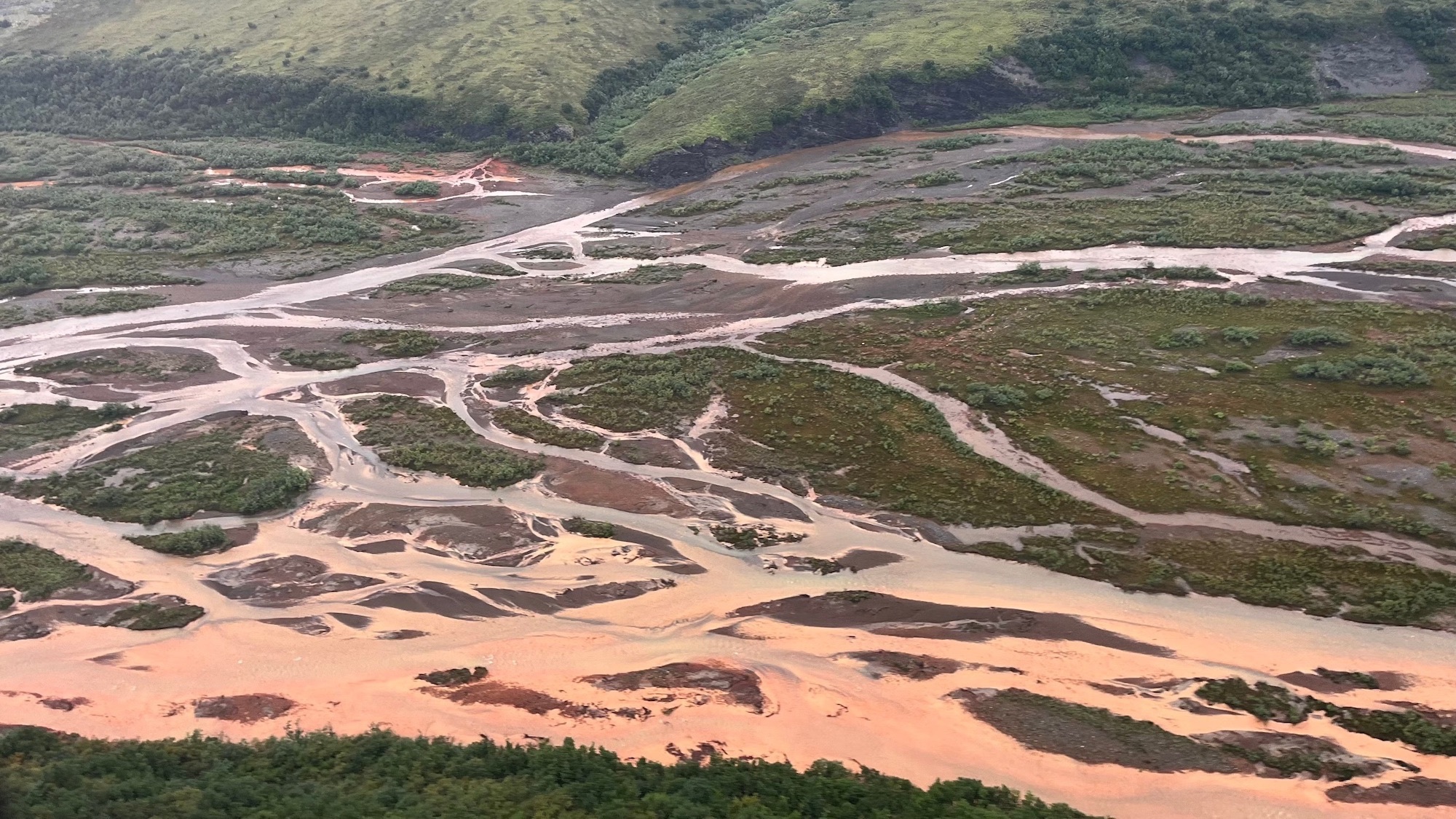
Alaska’s Arctic rivers have a big, orange problem. Previously clear rivers are turning a cloudy orange color due to iron particles, and it’s more than unsightly. The particles can suffocate fish and choke insects, threatening the food web and ecosystem as a whole.
Scientists have long pointed to previously frozen soil beginning to thaw as the potential culprit behind the contamination of rivers in northern Alaska’s remote Brooks Range, and a study recently published in the Communications Earth & Environment proves it. The research also shows two distinct ways that this thawing soil is rusting the rivers and can help scientists predict where the damage is likely to spread next.
“You’d think if any ecosystem could hide from the effects of warming and big human footprints, it’d be this one. But it’s not so,” Tim Lyons, a study co-author and biogeochemist at the University of California, Riverside, said in a statement. “There is no safe place.”
Researcher sampling rusty Alaskan river water. Image: Tim Lyons/UCR.
As the ice-filled permafrost begins to thaw due to climate change, it can turn into mud that can’t support the weight of the soil or vegetation above it. This can threaten human-built infrastructure such as homes, pipes, and roads. It can also expose iron particles from rocks that turn rivers orange, a process called rusting.
Rusting has severe ecological consequences. The fine iron particles can stay suspended in water for over 60 miles, smothering algae, disrupting insect populations, and clogging fish gills. These changes may already be affecting salmon in Alaska and Canada who rely on the gravel riverbeds for spawning and rely on algae as food during early life stages.
A top-down, fool’s gold problem
For this new study, the team looked at a wide regional view of the roughly 600-mile Brooks Range. They then zoomed in on a specific river system, followed by an even closer look at one creek. This top-down approach helped them to connect the bigger regional patterns to specific, on-the-ground processes.
“At middle, more heavily forested elevations, there isn’t much going on. But at the higher and lower elevations we could see distinctly different phenomena,” said Roman Dial, a study co-author math and biology professor emeritus at Alaska Pacific University.
At the higher elevations, the problem begins in the rocky ground containing pyrite, aka fool’s gold. Since the ground was frozen for many years, water and air didn’t affect the pyrite. Yet the rising temperatures have started to melt the ground, kicking off a process called acid rock drainage. The minerals and rocks are exposed to oxygen and water and degrade the water quality.
“When pyrite meets water, it comes apart. It breaks down into iron and sulfur, creating sulfuric acid as well as sulfate and other toxic metals,” said Lyons. “When the iron-rich water mixes with more oxygen, the iron turns into rust-like particles that color the water and stain the bottom sediments orange.”
It’s an entirely different story at the lower elevations. The landscape is covered with wetlands that are changing shape and expanding downward as the permafrost melts. In these more soggy places, the soils are low in oxygen. So instead of breathing in oxygen, the microbes in the water (mostly bacteria) are taking in iron.
“When we breathe, oxygen goes in and gets converted to the carbon dioxide that we exhale,” Dial said. “Similarly, microbes are consuming iron in the lowland soils and converting it into a water-soluble form that seeps into streams and results in rusting as it meets oxygenated surface water.”
Taken together, both acid rock drainage and microbes breathing in more iron help explain why orange waters are appearing across such large and remote regions across northern Alaska, closely tracking to areas where permafrost is thawing.
The direct link
The team also found a delayed effect that could help predict future contamination. During the summer, the active, top layer of soil thaws to its deepest point. It then refreezes before the winter. The iron released during one summer thaw can become trapped and then flushed into rivers the following year.
By studying long-term ground temperature data and stream chemistry, this lag can be used to anticipate increases in metal levels.
“That means we can use ground temperatures to help predict water quality in the future,” added study co-author and University of Alaska ecologist Paddy Sullivan. In 2019, Sullivan first noticed the dramatic river changes that looked “like sewage” during fieldwork in the region.
Since mines typically control the waters near them to minimize pollution, the team partnered with scientists at the Red Dog zinc mine in northwest Alaska. The scientists there have long-term temperature records from boreholes that are drilled deeply into the earth and from chemistry sampling in stream water. Linking the underground measurements with changes in the stream’s chemistry directly connected the thawing permafrost to the rusting rivers.
While this problem is difficult to contain and manage, predicting where the contamination may pop up next could help pinpoint and protect critical habitats. This forecasting is especially important for communities that depend on these waters and the fishing living there for food and cultural practices.
“There’s no fixing this once it starts,” Lyons said. “But we can give people downstream a heads up and work hard to protect the places that are still safe and less vulnerable to the rusting.”
How do you determine how many months or years animal mothers nurse their babies? If you’re not in a rush and can observe this dynamic, you could supposedly stick around to see when the baby, mother, or both decide that they’re done. However, that could take years. A team of researchers investigating breastfeeding in orangutans recently opted for a different, perhaps surprising strategy—searching for particular proteins in poop.
In a preliminary study published in the journal Communications Biology, researchers searched for milk‑specific proteins in the feces of wild Bornean orangutans (Pongo pygmaeus) living in the Danum Valley Conservation Area, in the Malaysian part of the island of Borneo. These proteins prove that he or she is continuing to drink breast milk.The practice of recognizing particular proteins in feces is called fecal proteomics and it can help scientists better understand what animals are consuming.
“Orangutans have a slow life history with one of the longest interbirth intervals and the lowest reported infant mortality rates among primates or even mammals,” the team wrote in the study. “Breastfeeding is a key factor in their life history because it possibly promotes offspring health and increases maternal interbirth intervals.”
The team gathered fecal samples for over two and a half years, and found milk‑specific proteins in all the 20 samples from orangutans less than six and a half years old. This indicates that the young great apes were continuing to breastfeed until they were at least that age.
According to the team, these results are “consistent with the behavioral evidence as having one of the longest breastfeeding periods in mammals.”
What’s more, “milk intake was significantly correlated with higher levels of biological defense and probiotic bacterial proteins.”
In other words, the more milk a young orangutan drinks, the more probiotic intestinal bacteria it has and the sturdier its biological protections are. Such consistent and enduring breastfeeding probably helps the very high survival of orangutan babies and plays a role in their slow reproductive approach.
Unfortunately, Bornean orangutans are critically endangered, and the paper highlights why their populations don’t rebound quickly after a decrease. Safeguarding what’s left of their rainforest habitats is crucial.
The opium poppy (Papaver somniferum) has a weird double life. The plant’s seeds give a tasty, nutty flavor to bagels, breads, and cakes in bakeries around the world. But the plant’s seed pods also give the class A drug heroin its numbing and euphoric effects.
That’s because the seed pods exude a milky substance called latex, which is rich in natural chemicals called opiates, such as morphine. Dried-out poppy latex is called opium, and the chemicals it contains can be used as medical-grade painkillers or processed to make street drugs like heroin.
This doesn’t mean that your next deli bagel is going to send you into a stupor, because processed poppy seeds are carefully washed of any residual latex. But the washing process isn’t so thorough as to remove all traces of opiates from your body. Here’s why anyone in a job that requires random drug tests should try their next bowl of porridge without adding any black little poppy seeds.
Processing a poppy plant
The round structure that sits on top of a poppy plant’s stem is called a capsule. This is a pod that contains hundreds of tiny poppy seeds. The plant produces opiates, like morphine, codeine, and thebaine, within the capsule to help it grow. These are contained in the milky latex, which will drip from the pod if it’s broken or cut.
A single poppy pod typically holds hundreds of tiny poppy seeds. Video: Poppy Seed Harvest!, @Freedom_Flare
During harvesting, poppies that have died and dried out are mechanically harvested, removing the above-ground portion of the plant. Crushing, sieving, or other cleaning techniques separate the seeds from the seed capsules. The seeds that later end up on our bagels and breads are washed seeds, meaning they are carefully cleaned after being separated from their seed capsules to remove any opiate-containing latex.
Urbah Viqar, a doctor at Central and Northwest London NHS Foundation Trust, says that if you eat “one to two teaspoons” of poppy seeds, then you could return a positive opiate result. Given that some poppy seed bagel recipes recommend sprinkling a teaspoon of seeds on a single bagel, these breakfast treats should be treated with caution if you might be tested for drugs.
But this isn’t the whole story. If you eat unwashed poppy seeds, the effects are radically different.
Yes, you get high off unwashed poppy seeds
In 2023, Viqar heard reports that men were reporting to their family doctors complaining of constipation. These patients, mainly from the local Indian Punjabi community, weren’t blocked up by a lack of fiber. Instead, their symptoms were a consequence of their unwashed poppy seed addiction.
Viqar explains that in some communities, unwashed poppy seeds have been a traditional remedy for generations. Without washing, the seeds retain the opiate-rich latex released during harvesting. As a result, consuming them can make you feel sleepy and relaxed.
But opiates are, of course, highly addictive. Viqar and her colleague Noah Stanton, who is also a doctor at Central and Northwest London NHS Foundation Trust, wrote a review summarizing the cases of 16 men, nearly all from the Indian Punjabi community, who had become addicted to unwashed poppy seeds.
“They start with a very small amount, maybe they’re just taking half a teaspoon,” explains Viqar. Many of the men would grind the seeds and consume them as a dry powder, or mixed with water, or brew them as tea.
The effects of the unwashed seeds are milder than a powerful opioid like heroin, but that made the patients’ addiction more “insidious,” says Stanton. “It took place over a much more gradual time period,” he adds. The unwashed seeds produce a drowsy, sedative effect.
But by the time Viqar and Stanton saw them, some of the men had seriously ramped up their poppy habit. Two men, who had each been consuming unwashed poppy seeds for over 15 years, were taking 20 tablespoons of seeds every single day. That dose would contain enough opiates to make someone without a strong tolerance overdose, said Viqar.
An opiate overdose would likely slow breathing until the heart stopped. Viqar wasn’t able to point to any cases she was aware of where people had died from unwashed poppy seeds, but said that there was little research into what a safe limit might be.
“You don’t know how much is a safe amount, how much is a lethal amount,” she explained. Long-term addiction could also impact a patient’s social life and relationships, said Stanton. Several of the men in the study worked with heavy machinery, which tends not to play well with opiate-related drowsiness.
Both Viqar and Stanton said that better regulation was badly needed. Unwashed poppy seeds can be purchased in bulk in the United Kingdom and the United States at low prices. Awareness among clinicians would also help, they added. Drug screening questionnaires regularly ask about alcohol and drug consumption. A new question to add to the list, Viqar says, is “Have you ever used poppy seeds?”
In Ask Us Anything, Popular Science answers your most outlandish, mind-burning questions, from the everyday things you’ve always wondered to the bizarre things you never thought to ask. Have something you’ve always wanted to know? Ask us.
The dreams of every young guitarist are born from another artist’s fingers. The virtuosos that came before forged the inspiration to hunt and to chase rhythms, lead lines, and ultimately a tone to adopt as our sonic fingerprint. It’s a chase that often takes many years and thousands of dollars to complete, making it an intimidating prospect for players of all stripes.
Enter the Positive Grid REACTOR. It’s a performance-ready guitar amplifier designed to close the gap between the tone you hear in your head and the sound it produces. It brings together Positive Grid’s years of experience designing amp and FX engines and combines it with a custom-trained AI model that can deliver any tone you can describe or capture in seconds. It’s no gimmick. I’ve played guitar for close to 30 years, and this is one of the most fun pieces of guitar tech I’ve used in years.
Wonderfully versatile—just as at home on that stage as in the bedroom
Powerful tone-shaping possibilities, impressive range
AI tone generation isn’t a gimmick—it’s genuinely useful and a lot of fun
Tones are generated in sets—rhythm, lead, back-up, all at once (usually)
Approachable and intuitive controls are easy to learn; RTFM, but you’ll be alright if you wait a jam session or two
Surprisingly well-priced
Cons
Advanced players may not benefit as much from its features
Bluetooth audio can be very hit or miss
Some of the best features of the Spark are entirely absent
Trial and error is still required
The short version
With years of software experience and generations of Spark amplifiers under its belt, Positive Grid knows a thing or two about helping guitarists craft the perfect tone. The REACTOR is the union of everything the company has learned about software and hardware. Refined, tight, and well-priced, it leverages AI for good, helping players stop fiddling and start dialing in their sound using natural language.
REACTOR, craft me a tone that captures …
The build and purpose
Positive Grid has been a major player in the guitar world for years, thanks to its excellent line of guitar software and impressively capable Spark practice amps. While the original Spark 40, the company’s first amplifier in 2019, has begun to show its age, the REACTOR doesn’t suffer the same learning curve as the Spark. Over the last seven years, the company honed its skills. The Spark may have been best suited for the bedroom, but the REACTOR is made for the stage. And also the bedroom.
The REACTOR lacks nothing in terms of robustness, at least compared to my Fender Deluxe. The speaker enclosure is made of wood, thick and sturdy, with tight, hard leather surfacing. The controls live on the top panel, easily accessible mid-performance if you keep the REACTOR nearby. Each knob, switch, and button is tight with crisp, tactile feedback. As ever, time will be the ultimate judge of its build quality, but first impressions are exceptionally positive, especially compared to the company’s first hardware release.
Positive Grid also deserves kudos for offering such a generous array of connectivity options. In addition to the guitar input, you’ll also find power amp and MIDI support, Bluetooth audio to jam along with, an FX loop, USB Type-C (the REACTOR doubles as an audio interface for home recording), and a headphone jack for when one watt is too much. It’s a full-featured, premium-feeling package and gives the Boss Katana a run for its money.
The REACTOR comes in two variants: 50-watt and 100-watt. I was sent the 100-watt version and, unlike most of the Spark series, it’s sized like a normal 100-watt amp. Inside is a custom-tuned 12-inch guitar speaker designed for each model (not a full-range, flat-response cone), and it gets loud. We’re talking 100-watt guitar-amplifier loud, not Bluetooth-speaker loud, and that means it will rattle the windows far before it reaches its peak. When Positive Grid says that REACTOR is performance-ready, it isn’t kidding.
There are far more interesting features than simple loudness, however. While you can play loudly, you don’t need to at all. Both versions feature 25W and 1W amplification modes that reduce volume without significantly altering your tone. The three power modes are well-suited to playing alone, playing with a group, and performing on a stage.
That’s the first hint that there’s some interesting engineering under the hood. For this release, Positive Grid outfitted the REACTOR with a powerful digital signal processor (DSP) and features powered by AI, which stands for “Amp Intelligence” in their parlance, making it an all-in-one solution perfect for both new and veteran players.
Between the amplifier’s eight built-in presets, endless cloud saves, two dozen amps, and eight simultaneous stomp boxes, and community sharing through PG’s ToneCloud service, there’s enough tonal possibility here that you can lose hours demoing—and that’s before getting to its “smart features.”
The REACTOR is so tightly tethered to its app that if you’re opposed to using it, this simply isn’t the amp for you. Once the Spark app is connected to the amplifier, you have full control over every setting and parameter, and a much easier interface for making those changes. The app also houses the Creator Hub: your digital home to create, edit, and save custom tones. It’s also where you’ll find the amp’s AI assistant, which is the prime driver of the REACTOR’s charm.
The sound and performance
It’s at this point that I should probably make a confession: Even though I’m a longtime fan of Positive Grid’s work with Bias FX and Bias Amp, a guitar amplifier had not entered my mind as something that could possibly be enhanced with AI. And yet, what Positive Grid has delivered here is an impressive showcase of how AI can support guitarists rather than steal from them.
While I was impressed with the out-of-the-box presets and their 24 included amp models, which make it entirely possible to simply plug it in and play without worrying about app or AI support, the real “a-ha” moment for me came when I experimented with the Creator Hub for the first time.
To generate a tone, all you need to do is upload a picture, sound sample, or describe your desired tone in a sentence. Admittedly, generating a tone from a picture is a little gimmicky unless you happen to be taking a picture of a guitar setup that you’d like to emulate, but text generation was nothing short of shocking.
Create a tone to match “Glass Eater” by Atreyu …
That was all I gave it, and I had four separate click-to-use tones within 10 seconds, two options each for both rhythm and lead parts. Not just one tone. Every tone, to play every guitar part, in the song. The quality of the tones was also exceptionally good. They weren’t always perfect, but they were usually close enough that a couple of manual tweaks were all it took to get them there. Once you get into the groove, dialing up a preset, even for obscure songs, becomes second nature.
The power of this simple functionality can’t be overstated. The REACTOR removes a barrier to entry so fundamental to progress and performance on the guitar that it has driven many to quit the instrument entirely. We all have a sound in mind: a searing lead or a djenty, brutal rhythm. Even if you master every note of a lead line you’ve been struggling with, the achievement feels incomplete without the tonal identity tying it all together.
With the Creator Hub and its resulting tones, you’re up and playing faster than ever, but you’re also learning how those tones are made, making you a more capable musician. Once they’re downloaded, you can navigate to another section of the app to study, tweak, and tailor every element of the signal chain. Over time, you’ll begin to notice how certain sounds or effects are achieved. That knowledge improves your craft.
As dependent on AI and machine learning as it is, things aren’t perfect. There are times that the tones it produces are off-base, and you need to try again or refine the prompt (“add more gain”, etc.). The amp features two toggleable Amp Intelligence modes, Heat and Push/Smooth. Turning up the Heat setting monitors your playing style and either pushes or draws back the amp to match your playing. The Push/Smooth toggle also changes how it responds, with Push feeling more lively and responsive to the touch and Smooth rounding out the rhythm and body tones. Both of these systems are fine, and they accomplish their job, but neither feels like a game-changing innovation in the way that the Creator Hub is.
As I’ve tested and explored the REACTOR, I’ve developed a sense that Positive Grid is putting it in a bit of a box. According to the company itself, the REACTOR occupies a different space in its lineup from the Spark. If the Spark series is about home practice, the REACTOR is all about tone and performance. It has better hardware and higher-resolution sound quality that puts the Boss Katana and other all-in-one modeling amps on notice.
Ahead of this review, Positive Grid told me that it had trained its tone engine through countless hours of studying hundreds of amps and effects it seeks to emulate, down to the gain stages, transformers, bias points, and harmonic response. Because of this, it can respond much more like its real-life inspirations. That’s impressive stuff, and after testing it for myself, I believe it.
Yet, even the AI behind the REACTOR has its limits. Ask it to recreate anything washed in multiple reverbs or delays, and you’ll see it struggle. If you’re hoping to emulate a Strymon BlueSky, you’ll be disappointed. Pretty much anything running on a proprietary algorithm for its soundscape will be outside of its scope to recreate entirely, as you would expect it to be.
Positive Grid
The verdict
The Positive Grid REACTORamp retails for $349 for the 50-watt version or $449 for the 100-watt version. A wireless foot controller, the REACTOR Control [shown above], is also available for an additional $149 and allows you to control stompboxes and settings from afar—perfect for a silent stage setup. Together, that’s $498 to $598, but the quality and tone-shaping capabilities of the REACTOR make it a standout value even at that price and an easy recommendation.
1 x 12-inch, wooden cabinet, top-mounted controls, rear I/O
Inputs
¼-inch guitar input, Bluetooth, USB-C, MIDI, power amp, FX loop
Hardware memory and presets
Eight onboard presets, user-replaceable with custom settings
Amplifier and effect models
24 included amp models, eight simultaneous effects categorized by type
App and cloud features
Intelligent tone creation (text, audio, or image-based user inputs), cloud storage of user presets, signal chain editing and customization, tone refinement
Form factor
50W and 100W versions available
Best for
Practice, small to medium-sized gigs, intermediate-level practice, and guitarists looking for an all-in-one, budget-conscious solution
Dinosaur enthusiasts with deep pockets will have their chance to buy one of the largest and most complete Tyrannosaurus rex specimens ever discovered. Meet Gus, a 12.5-foot tall skeleton that took paleontologists three years to excavate. Auction house Sotheby’s values the specimen at $20–30 million, the highest estimate ever placed on a dinosaur.
Late cattle rancher Gary “Gus” Licking found Gus on his land in South Dakota. For years, Licking came across teeth and small bone fragments on his ranch, and realized more bones may be lurking beneath the soil. To find out, he recruited Thomas Heitkamp and his team from Theropoda Expeditions.
Licking suggested that the team start digging in a 6,500-acre parcel of land. And that’s exactly where Gus was found in 2021. Licking died only one year into the excavation, so he never got to see the complete specimen. The team named the T. rex “Gus” in his honor.
“This specimen took three years to excavate—with the team sometimes working for weeks straight without finding a thing,” Heitkamp said in a press release. “The site was a complex fossil bed and preserved many fossils of the flora and fauna that comprised the larger Cretaceous ecosystem. We documented each stage with quarry maps, inventories, and collection data. In the end, our diligence paid off and we were delighted to discover what turned out to be a huge and incredibly complete T. rex specimen.”
In addition to the three summers it took to excavate, the team also had three years of lab work. In the lab, they carefully extracted the fossil from the rock before the bones could be prepared, cleaned, and identified.
The skeleton is made up of 183 fossil bones representing 82 percent of all of the dinosaur’s bones, including a well preserved skull, furcula (wishbone), and a completely represented pelvis. Its body is roughly 38-feet long and its skull alone is over four-feet long.
“It really does feel like tackling the world’s hardest puzzle, except we have to find all the pieces first,” said Heitkamp. “All those bones separated for 67 million years that we can now, almost magically, fit back together. There’s something deeply satisfying about that.”
Gus will be up for auction on July 14 during Sotheby’s Natural History auction. The fossil will also be on display to the public at Sotheby’s galleries in New York City beginning on July 1.
“For me the added bonus was knowing that Gus was just one of the many pieces of history hidden in the land that Gary and I loved to share,” added Licking’s wife, Dana. “It will be exciting to see how many others will get to enjoy this spectacular discovery.”
There’s also the question of the fees private landowners may receive, meaning that the person with the largest bank account may receive favorable access over scientists. Some countries including South Africa, Brazil, and Canada have gone as far as to place heavy restrictions on significant fossils wherever they are found.
Internet-famous eagles Jackie, Shadow, Sandy, and Luna are not the only residents of their beautiful pine tree overlooking big bear lake. And sometimes, the watchful parents will let their presence be known.
According to Friends of Big Bear Valley (FOBBV), one of the tree’s most famous residents came close to the eagle family over the weekend. Fiona the squirrel made several appearances overnight between May 30 and 31. During one visit, Jackie decided to send a message to the bushy-tailed rodent.
“Jackie responded with a dramatic slap and some backtalk that reminded us she is not tolerating Fiona while trying to sleep,” FOBBV writes.
The not-so-little-anymore eaglets Sandy and Luna also practiced their squirrel-shooing skills and wing flaps later in the day.
Fiona is one of the catchall names of the flying squirrels that live near Jackie and Shadow. FOBBV is not sure how many of the rodents are in the area, but Fiona and Fast Freddie (another nickname) have had cameo appearances on the livestream for years. The squirrels will visit the nest from time to time, primarily searching for food scraps.
According to the United States Fish and Wildlife Service, the nocturnal creatures are San Bernardino flying squirrels, (Glaucomys sabrinus californicus) a subspecies of the Humboldt’s flying squirrel. They can glide for as far as 300 feet in the air and primarily eat truffles, conifer seeds, and lichens. FOBBV volunteers have noted that the squirrels are “very fond of Shadow’s fish tails, coot feathers, egg shells and even crunchy beetles!”
So far, Jackie and Shadow’s eggs and eaglets have not been in any serious danger from the squirrels. The same can’t be said for the tree’s ravens, who destroyed the pair’s first two eggs this breeding season.
All of the action can be found 24/7 on the eagle nest livestream.
It’s been another roller coaster nesting season for Jackie and Shadow, a pair of internet-famous bald eagle parents living in San Bernardino National Forest in Southern California. After two of their eggs were destroyed by ravens in January, Jackie and Shadow laid two new eggs that have successfully hatched.
Chick 1 hatched on April 4 at 9:33 p.m. PDT, while Chick 2 followed on April 5 at 8:30 a.m. Their large nest in Big Bear Valley east of Los Angeles is livestreamed 24 hours a day by nonprofit Friends of Big Bear Valley (FOBBV) and has captivated millions.
On May 1, FOBBV announced the chicks’ names: Sandy and Luna.
Before leaving the nest, the chicks face threats from other birds of prey, including hawks, ravens, other eagles, and owls. Inclement weather can also present challenges for the chicks. In 2025, a March snowstorm resulted in the death of one of Jackie and Shadow’s three chicks.
During fledging, only 70 percent of eaglets survive. One of the greatest threats is from cars that can injure or kill the birds while they scavenge for food on roadkill.
Who are Jackie and Shadow?
The pair first got together in 2018 and successfully raised chicks in 2019 and 2022. However, their eggs failed to hatch in 2023 and 2024. Only 50 percent of eagle eggs successfully hatch, so this pair has already beaten the odds.
What happened to Jackie and Shadow’s 2025 eaglets?
In 2025, Jackie laid three eggs that all hatched in early March. On March 13, a strong snowstorm dumped up to two feet of snow and battered the nest with strong winds. Only two of the chicks were visible on the live cam when the storm passed by the next morning. FOBBV later confirmed the passing of one of the chicks. The two surviving chicks were later named Sunny and Gizmo after 54,000 names were submitted by fans.
What happens after chicks fledge?
Young eagles usually fledge–or leave the nest and fly–when they can flatten their wings and have feathers capable of flight. This typically occurs when the birds hit 10 to 14 weeks of age. Males also tend to take their first flight a little sooner than females.
According to FOBBV, fledglings from Southern California have been spotted as far south as Baja California, as far north as British Columbia, and as far east as Yellowstone National Park.
About 70 percent of bald eagles survive the fledgling stage. FOBBV does not tag their eagles, so it’s not possible to follow the chicks’ journeys after they flee the nest.
Can I help Jackie and Shadow?
Yes. Environmental groups are currently fundraising $10 million to protect Jackie and Shadow’s foraging area from development. Learn more at SaveMoonCamp.org.
The best deal at RYOBI Days at The Home Depot right now isn’t a price cut, it is a free tool. Right now, you can buy one of the qualifying RYOBI ONE+ 18V kits and pick a second ONE+ tool at no extra cost. The priciest free options on the higher-tier kit are worth up to $229. I haver a number of Ryobi tools in my kit and they almost always perform way above their price tag. And that’s even before the discounts. The free-tool menu changes as stock moves, so the good picks tend to disappear before the kits do.
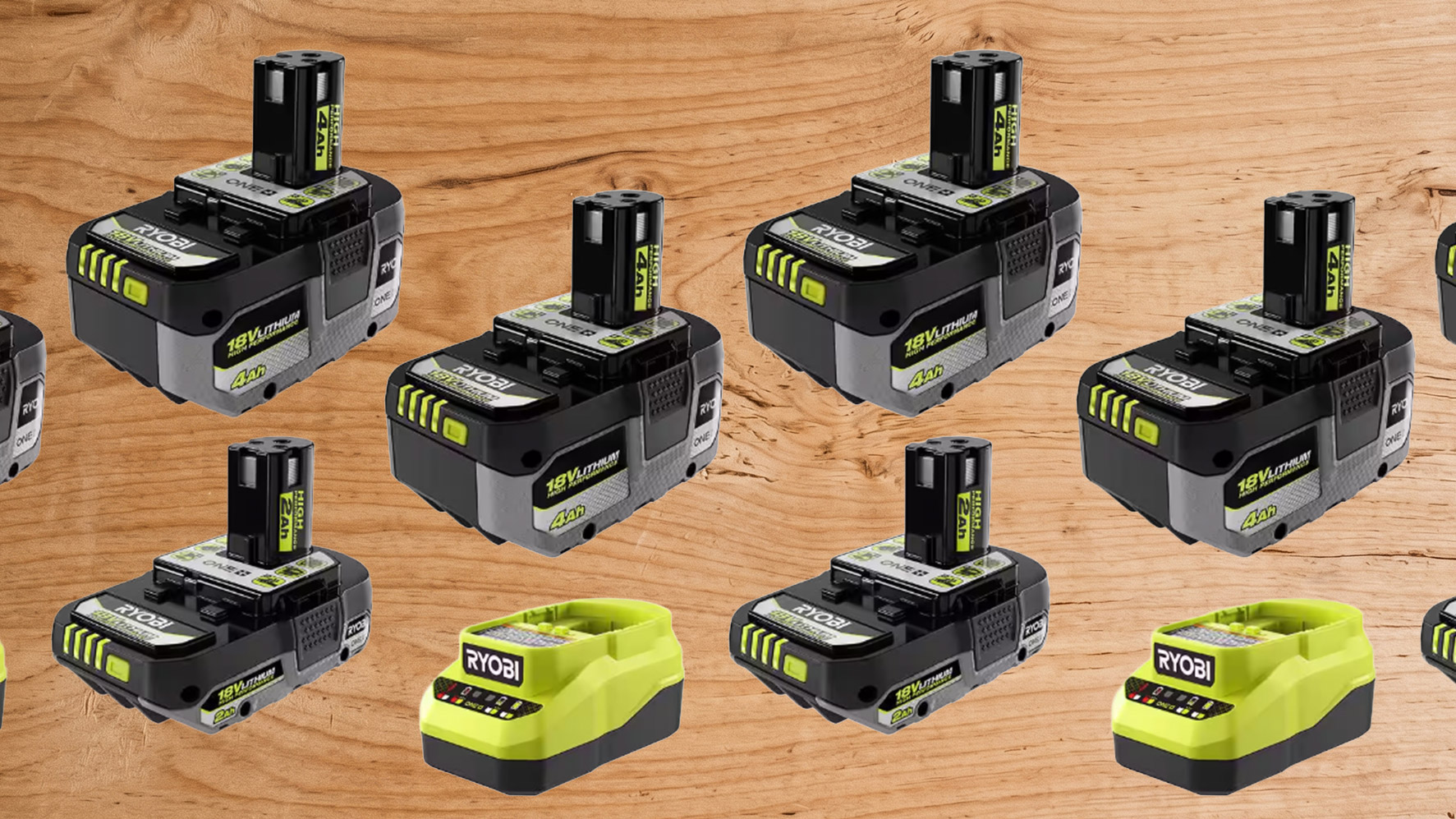
RYOBI ONE+ 18V Starter Kit with 2.0Ah and 4.0Ah Batteries and Charger $99.00 (was $228.00)
57% off the most useful entry point, and it unlocks a free ONE+ tool
The RYOBI ONE+ 18V Starter Kit (PSK1212SB) is the one to grab first at $99, down from $228, because it covers the two battery sizes you actually use. You get a 4.0Ah HIGH PERFORMANCE pack for high-draw tools like saws, a lighter 2.0Ah pack for drills and lights, and a charger, and the kit qualifies for a free ONE+ tool worth up to $89. Any RYOBI 18V ONE+ battery runs the entire 300-plus tool ONE+ catalog, so this is the cheapest honest way into the system.
RYOBI ONE+ 18V 13-Inch Cordless String Trimmer with 2.0Ah Battery and Charger $99.00
A finished yard tool at $99 that still comes with a free ONE+ tool
The RYOBI ONE+ 18V 13-inch String Trimmer (P20150) is the better $99 buy if you also need to cut grass, since it ships ready to run with a 2.0Ah battery and charger and still qualifies for a free ONE+ tool. It handles edging and trimming on a typical lot, and the included battery drops straight into any other ONE+ tool you own. Pairing it with a free blower or hedge trimmer from the offer list basically builds a starter yard kit for the price of one tool.
RYOBI ONE+ 18V HIGH PERFORMANCE Starter Kit with 2.0Ah and Two 4.0Ah Batteries and Charger $199.00 (was $361.97)
Three batteries, 45% off, and the longest free-tool menu in the event
The RYOBI ONE+ 18V HIGH PERFORMANCE Starter Kit (PSK108SB) is the pick if you want the strongest free tool, because at $199 it opens a 20-item menu that includes options worth more than the kit itself. You get three HIGH PERFORMANCE batteries (one 2.0Ah and two 4.0Ah) plus a charger for $199, down from $361.97, and the free-tool list runs up to a $229 battery two-pack. If you are starting from zero and want to skip the upgrade later, this is the kit that pays for itself fastest.
How the RYOBI Days free-tool deal works
The RYOBI Days free-tool offer is structured around three qualifying purchases: the $99 ONE+ Starter Kit, the $99 ONE+ String Trimmer, and the $199 HIGH PERFORMANCE Starter Kit. Add a qualifying kit to your cart, then choose one tool from that kit’s eligible list and it lands in the order at $0. The $99 kits draw from a 13-tool menu topped by an $89 reciprocating saw, while the $199 kit expands the menu to 20 tools and adds the high-dollar options. Stock is the only real catch, since the offer is limited to what The Home Depot has on hand and the best free tools sell through first.
Free RYOBI ONE+ tools you can claim with a $99 kit
With either $99 kit, the RYOBI ONE+ 18V Reciprocating Saw is the highest-value free pick on the 13-tool menu at a regular $89.00, followed by the 18-inch Hedge Trimmer at $79.97. Every option below is a real ONE+ tool that runs on the battery your kit already includes, and the price shown is what you would otherwise pay.
The $199 HIGH PERFORMANCE kit unlocks bigger free tools
Step up to the $199 HIGH PERFORMANCE Starter Kit and the free RYOBI ONE+ 18V 4.0Ah Battery Two-Pack becomes the standout claim at a regular $229.00, more than the kit costs. The same menu adds the brushless Pet Stick Vacuum at $199.00, the 4-Mode Impact Wrench at $179.00, and the 7-1/4-inch brushless Circular Saw at $139.00, none of which appear on the $99 list.
While swimmers and boaters don’t have to fear sharks or giant squid in the Great Lakes watershed, invasive fish the size of large dogs lurk in the freshwater. Invasive carp have wreaked havoc on the ecosystem for over a century, but officials have hit a milestone worth celebrating in the fight against these mega fish.
In the past 15 years, wildlife officials have removed 50 million pounds of invasive carp from the Illinois River. That’s equivalent to roughly 5,000 elephants. The removal is part of a broader and coordinated effort to protect the rivers and lakes from this non native species.
Why are carp a problem?
Currently, four species of invasive carp cause harm in the Great Lakes and beyond—bighead carp (Hypophthalmichthys nobilis), silver carp (Hypophthalmichthys molitrix), black carp (Mylopharyngodon piceus), and grass carp (Ctenopharyngodon idella).
According to the Great Lakes Fishery Commission, all four species were imported to North America to help with pest control in aquaculture facilities in the 1970s. The carp escaped confinement in only 10 years, and have spread to the Mississippi River basin and other large rivers, including the Missouri and Illinois.
Each of the four invasive carp species can weigh more than 100 pounds and grow to four feet from tip to tail. Bighead carp and silver carp generally feed on the tiny plankton in the water, while grass carp eats rooted plants in shallow water, and black carp feed primarily on mollusks and snails.
“They consume so much food and can exist in such great numbers that they can really reduce the amount of [resources] for resident species of fish,” Peter Alsip, an ecologist with the NOAA Great Lakes Environmental Research Lab told Popular Science in 2024. “They can have indirect effects on the whole ecosystem because [silver carp] are consuming phytoplankton and zooplankton, which are essentially the base of the food web.”
Once inside a watershed, they can reproduce rapidly and compete with native fish species for resources. In areas where invasive carp are abundant, they have harmed other fish species and interfered with commercial and recreational fishing, according to the United States Fish & Wildlife Service (USFWS). They can also pose a danger to humans, as the giant fish can jump out of the lake and hit unsuspecting boaters.
What is being done to stop them?
Carp eradication measures have been active for over 100 years. These efforts include targeted mass removal efforts, developing barriers to block or impede their movement, and ongoing monitoring.
Cap being culled in the Illinois River. Image: Illinois Department of Natural Resources.
The 50 million pounds of fish removed from the Illinois River were part of a program focusing on the northern part of the river about 50 miles from Lake Michigan. The removal project is designed to suppress the mostly adult populations of carp living in the area, by limiting their ability to reproduce and reduce their migration upstream towards the Electric Dispersal Barrier System. Located about 37 miles from Lake Michigan, this electric barrier is designed to deter their movement through the Chicago area. It is one of the main tools wildlife officials are using to keep them from further entering the Great Lakes through the Illinois River. Another program in the Illinois River offers fish harvest incentives to commercial fishers in the river’s lower 240 miles.
“The more invasive carp we remove, the more we reduce their harmful impacts and the risk of them reaching Lake Michigan,” the USFWS wrote on Facebook. “Thanks to these and other efforts to monitor our waters and prevent the spread of invasive carp, Illinois and more than two dozen partners are safeguarding some of our most prized native fisheries, and the Great Lakes regional economy.”
Dangerous, frontline firefighting jobs may get a bit safer thanks to new heat-sensing sensors designed by NASA. The sensors are made from commonly available household materials, and attach to the bulldozers firefighters use to clear vegetation and brush in a fire’s immediate path, triggering an alarm when temperatures reach extremely dangerous levels.
Knowing when a fire is hot might sound obvious, but many new so-called fire dozers are being outfitted with enclosures to protect their operators from the flames. That’s a welcome change, but it also reduces the operator’s ability to gauge the surrounding heat. These new sensors help solve that problem, protecting the driver and helping prevent the dozers from sustaining too much damage.
The sensor setup is simple by design. It consists of a standard thermocouple similar to those found in a home oven, which is then wired to an LED light in the dozer’s cabin. If the light starts blinking, it’s time to get out of Dodge.
The entire system is powered by something that’s probably laying around your house: AA batteries. Using a simple power source like this is part of an attempt to make every aspect of the design affordable and accessible. University of Alabama, Huntsville research scientist Ryan Wade emphasized that point in a NASA blog post. He explained that during a recent trial installing the sensor in a fire dozer, his team realized that they were missing a part. Rather than waiting to hear back from NASA and having a custom piece shipped to them, they simply walked down the street to a hardware store and solved the problem.
NASA Wildland Fires Program science integration manager Jennifer Fowler holds an LED light on the dashboard of a fire dozer belonging to the Alabama Forestry Commission (AFC). The LED light is connected to a thermal sensor mounted in the window of the dozer, which turns the light on when the radiant heat from a nearby fire reaches a dangerous threshold. FireSense scientists have been working with the AFC to develop and install these thermal sensors onto these dozers, which they showcased during a stakeholder event on April 23-24, 2026 at the Solon Dixon Forestry Education Center in Andalusia, Alabama. Image: NASA/Milan Loiacono.
“NASA’s expertise in this case comes not in the novelty of the instrument itself, but in figuring out how to solve the problem quickly and integrate that technology into their existing system,” Wade said.
That flexibility is what makes the approach so valuable for firefighters. Alabama Forestry Commission fire analyst Ethan Barrett says the devices so far work “exactly as intended.” In Alabama, at least, officials are planning to outfit their entire dozer fleet with the sensors. The sensor system was developed by NASA’s FireSense project, whose interest in it was twofold. The sensors will more immediately help firefighters on the ground as fire season approaches, but the data they collect will also prove invaluable for future research. By placing sensors in the dozers, NASA will gather reams of data about fire strength and intensity straight from the front lines.
Raccoons get into all sorts of shenanigans. Last summer, we reported on a juvenile raccoon which, with his head stuck in a peanut butter jar, as if he were a character in a Looney Toons cartoon. He was extracted from the predicament at the New England Wildlife Center in Weymouth, Massachusetts, where employees are now dealing with another children’s show-worthy situation involving a raccoon.
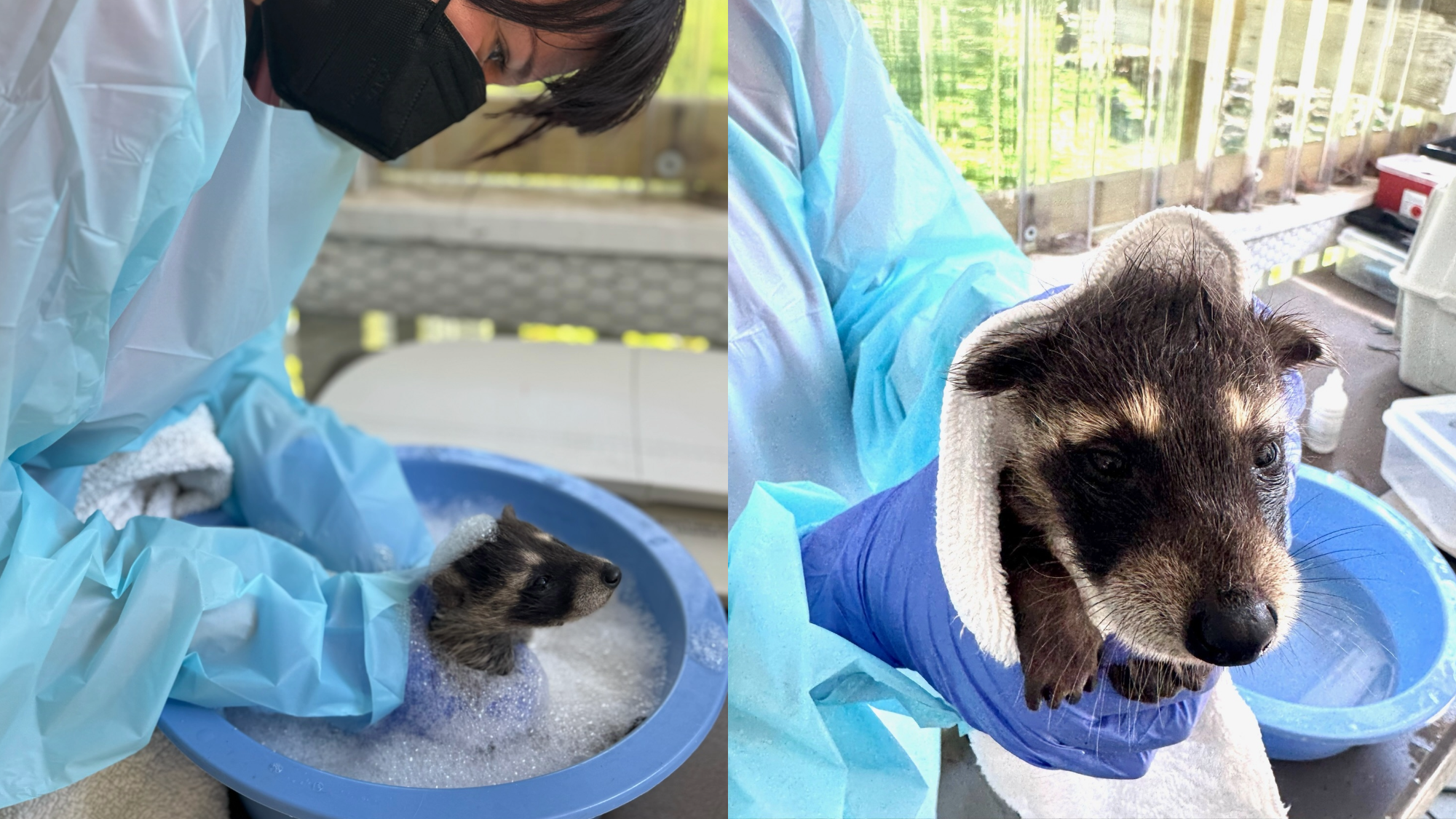
A baby raccoon taking a bubble bath, to be precise. A Facebook post by the wildlife center features two pictures of a member of the team washing the mammal in a big blue bowl. Another picture gives viewers a great close-up of his nose and thoroughly defeated expression as the employee holds it wrapped in a white towel, presumably newly clean.
The baby reached the New England Wildlife Center via a chimney. After the wannabe Santa Claus was discovered, the Wild Care Cape Cod brought him to the wildlife center, where he arrived filthier than Bert the Chimney Sweep in Mary Poppins.
“We don’t often bathe raccoons, but in this case there was so much soot packed into the fur around his face and body that it was beginning to irritate his skin and eyes,” the wildlife center wrote. “Our wildlife hospital team carefully cleaned him up, performed a full veterinary exam, and started supportive care. We are very happy to report he tolerated the bath very well (all things considered) and is now bright and alert with a great appetite!”
(Though hopefully not for peanut butter).
It’s not unusual to find raccoons in chimneys in the spring. Mother raccoons searching for protected denning locations are particularly common tenants. Sometimes young raccoons will even go back to their previous chimney homes, even if their mother has left.
Baby racoon Santa Claus will eventually be returned to the wild, but not right away. He will be briefly quarantined to make sure he’s in good health, before he is placed with foster siblings. This will allow him to continue his development with other young raccoons and gain the abilities that will be necessary when he returns to the wild.
The wildlife center also took the opportunity to share some important raccoon safety tips. Always cap your chimney and do not touch raccoons or raccoon waste—a rule for both humans and pets—which could transmit parasites and diseases.
As always, if you find an animal—young or old—that you think needs help, you should contact your local wildlife center. Here’s what to do if you come across a baby squirrel or baby opossum.
I’m watching Oslo wake from Vigeland Park, the grass and granite glazed by a North Sea sigh. Hundreds of figures hold poses around me. Angry children, entwined couples, and elders all wear features smoothed by 80-plus winters … and nothing else. Carved and cast by namesake Gustav Vigeland, these nude statues are stripped of uniforms in favor of unifiers. They display no decorations or discernible hierarchies. Yet they share textured stone expressions of unshielded experience. This mineral musculature exists to remind those bearing witness that we are born bare, equal before weather and time. It renders Norwegian humanism into a physical manifesto celebrating intrinsic dignity and communal resilience.
It’s a philosophy that follows me from Oslo’s bustling Havnepromenaden west to the wonky timber alleyways of Bryggen and the rain-varnished, pine-lined Mount Fløyen switchbacks above. It accompanies me north along the rocky slopes and 360-degree fjord views at Bruviknipa.
It’s a mindset that seems stitched into the design details coming out of Norwegian technical outerwear company Helly Hansen’s waterfront headquarters. It becomes the lens through which I experience several stimulating days in June 2025, learning about hydrophobic face fabrics, RECCO reflectors for searchability, friluftsliv (“open-air living”), and the annual Open Mountain Month. [Disclosure: Helly Hansen provided travel accommodations during the creation of this story.]
Founded in 1877 by sea-captain Helly Juell Hansen, the brand’s first products were coarse-linen slickers soaked in linseed oil. This workwear was makeshift armor against squalls that could soak sailors and sink fortunes. Today, Helly Hansen patterns that same survival instinct into performance textiles with 3L HELLY TECH membranes and LIFA waterproof/breathable fibers.
In a building staring out at the harbor, nestled roughly 70 km north of its origins, the company produces garments that are pressure-tested by lab scientists and professional partners before they ever reach storefronts. These include Search-and-Rescue (SAR) organizations like the Norwegian People’s Aid (NPA), alpine medics, and mountain guides who can’t afford a single wardrobe malfunction.
Whereas Vigeland’s frozen choreography memorializes the cycle of life, Helly Hansen’s taped seams and articulated sleeves celebrate the comfort to go about daily life. From commuting to summiting, a hardshell makes endurance something achievable. From contemplating cultural psychology in a drizzle to a simulated helicopter rescue demo, this clothing enables my curiosity.
My private thoughts on Oslo’s public spaces are echoed in Helly Hansen’s introductory presentation. The company declares its guiding light to be producing professional-grade gear “to help people stay and feel alive.” But its protective gear isn’t meant to separate you from the elements so much as allow you to endure nature’s power.
We proceed to a product overview with Philip Tavell, then-vice president at Helly Hansen. He gives us insight into how Helly Hansen delivers its “Trusted By Professionals” promise to 55,000 of them worldwide. It’s a process built on conversations and observations. “Sometimes people say [they need] something but act differently when they actually use the product,” Tavell explains.
“They make us improve. They make us be curious. They force us to find solutions that we didn’t know existed.”
When Helly Hansen designs a product, the company asks ski patrol, sailors, SAR volunteers, and other sleet-proof stoics to complain about what exists and what doesn’t. They try prototypes, destroy prototypes, and in the process expose what a garment should and could withstand. Their worst-case scenarios inform everyone else’s everyday rainwear.
Helly Hansen ambassador Izzy Holmes gives a professional’s perspective on the input that goes into something like an Odin Infinity Minimalist Jacket. Mountain guides were searching for a waterproof, windproof shell in their pack that they “don’t even want to be able to feel,” Holmes explains. But they also needed something they could always count on when fast-moving alpine weather turns. What they (and us) got is just 7.6 ounces but still 3.5 layers, breathable and packable for high-output adventuring.
And Tavell acknowledges the women’s shell must be built with the same technical ambition as the men’s. Women in the field are doing the same work and facing the same hazards, so they voiced frustration that brands thought they should get a “dumbed-down version.”
Helly Hansen Odin Infinity Minimalist Jacket
An NPA representative reinforces the stakes: when conditions have everybody heading home, volunteers have to go out and help those who can’t get in, and at that point, “we can’t discuss if the clothing is good enough; it should just work.” For this reason, zippers are shortened because a waist belt needs space, and a pocket is removed because a harness makes it ornamental.
The accumulated failures that inform successful workwear then trickle down to aestheticized rainwear, even if the reflective details that make a SAR uniform recognizable are less likely to. But one thing that’s shared is a repairability focus when new products are constructed. Replaceable zippers, snaps, Velcro, and other mechanical spare parts that can keep a jacket in service are a cornerstone of sustainability.
In-the-field anecdotes and accidents make for dramatic scenes and adjusted seams, but the stress tests begin way before fabric sees any vistas for validation. Off an unassuming corridor, Helly Hansen’s lab is where the indignities begin. Here, passing a standard test is merely a starting point. Shedding water for 30 seconds in controlled intervals doesn’t answer the questions asked by real-world exposure, which can last for hours. Something needs to address the grind of rain-soaked backpack straps on shoulders or the rub of salt-stiffened sleeves on sides. Somebody needs to account for the drag of oily hands on zippers or being dried badly, then stuffed into/pulled from a pack repeatedly.
The lab does its best to recreate and stretch past the conditions most clothes encounter. That means withstanding pressures, wet and dry abrasion, and punctures that bridge the gap between industry expectations and real-life weather, friction, and sweat, not to mention the lazy violence of daily use. We’re shown a waterproof test of the HELLY TECH Professional system that goes up to a 50,000-millimeter hydrostatic-head (HH) rating, though the promise communicated is an expedition-grade 20,000mm to be on the safe side.
Next to more traditional ways of measuring prolonged hydrostatic pressure or air permeability sit the custom chambers. There’s the cut-testing machine built around an actual ski edge, inspired by real Norwegian national team incidents. And then there’s the shock box. First, fabric samples, new and old, are turned into small bags loaded with tennis balls. Then, they are soaked, dropped, tumbled, scraped, contaminated, and just rudely treated with salt, sand, Velcro, sandpaper, and metal edges to watch the material age in fast-forward.
This accumulated abuse is all part of the proving ground for Helly Hansen’s signature waterproofing technologies. It’s also part of addressing the larger PFAS puzzle facing every shell maker. A waterproof jacket has to keep liquid out and let body vapor escape. And it has to do it through a laminate whose face fabric is absorbing physical punishment. So, it’s the lab’s job to make that contradiction measurable. They take field feedback and provide product managers with data that shows the full picture of what’s achievable.
Resisting wet-out used to be achieved in part with Durable Water Repellent (DWR) chemistries that repelled both water and oils. Per- and polyfluoroalkyl substances (PFAS) treatments moved surface energy down to roughly 6-12, good for both water and oils, we’re told in the lab. But the regulatory and industry-wide transition to PFAS-free hydrocarbon finishes hit roughly 25-30, enough for water repellency but only moderate oil resistance.
Helly Hansen’s top-tier no-added-DWR solution, LIFA Infinity Pro, took proprietary fibers developed in the 1970s for base layer moisture management and applied advanced textile engineering to heat and stretch them into a waterproof/windproof membrane. They then paired this sweat siphon with a highly breathable backer and a woven, inherently hydrophobic LIFA face fabric. In the lab’s language, the goal is to “let water-hating fabric do all the work by itself,” rather than overloading it with chemical treatments. That system came to market in 2020.
A newer iteration of LIFA Infinity is found in the Odin Infinity Minimalist Jacket. It utilizes a bicomponent ePP microporous membrane made without solvents and a recycled face fabric with a PFC-free DWR to facilitate an even softer, lighter, more pliable product. It’s a lot of invisible engineering … putting chemistry and construction and thought into a garment so reliability is the thing you don’t have to think about.
If Oslo supplied philosophy, and headquarters provided proof, the next stop offers perspective.
Pack on my back, To Helly & Back playlist of black metal and blackened rock in my ears, we shuffle to early a.m. shuttles. A short flight to Bergen and we’re back on a bus heading to Osterøy, one hour northeast and Northern Europe’s largest inland island. We’re welcomed at Klyvvikje, a greeting complete with folk costumes and hand-hammered artistry made in a blacksmith’s forge on the farm, a property in our hosts’ family for over 100 years. We’ll stay here overnight, not far from the village of Bruvik—though we only see that from above.
We have just enough time to snack and repack before we hit the trail. We arrive expecting one of the 200 to 240 days of downpours that annually sweep Bergen, the rainiest city in Europe, then continue into the nearby fjords. What we encounter is balmy, suspiciously kind. It’s downright disorienting. Temperatures pushing the 70s, out go the rain layers and out comes the Solen UPF 50+ sun protection. We’re only going on a day hike, but ounces matter when you’re ascending over 500 meters (1,873 ft). We head relentlessly uphill until we summit the Bruviknipa massif at 822 meters (2,697 ft).
After many, many stone steps and stacked curves, we’re greeted by a Norwegian flag at the summit register, plus a panoramic view of the Sørfjorden’s deep blue mountain mirror [shown above]. My Cascade Mid-Cut Hiking Boots maintain stability, and Helly Hansen Blaze Softshell Hiking Pants stretch stylishly as we complete our trek, around five hours and 9 kilometers (5.76 mi) round-trip.
Back at the farm [shown below], we set up our tents along the edge of the property, guests appreciating the hospitality you don’t get hut-to-hut hiking. But if there had been any more space between the farm and the water, we might not have even had to ask permission. Norway’s 1957 Outdoor Recreation Act codified that anyone and everyone has the right to hike through and camp on any land at least 150 meters from an occupied structure. Just leave no trace. This makes it easier to access the 20,000 kilometers of marked hiking trails and over 500 cabins maintained by Den Norske Turistforening, the Norwegian Trekking Association.
The mountains’ lavender silhouettes soften against the luminous half-light sky as we crowd around a fire and raise Aquavit to a rewarding day of good weather and goodwill. Skål! (“cheers!”) rings out repeatedly alongside the would-be clink of our paper cups. The sun may not want to go to bed, but I do.
We wake up to homemade waffles and dockside yoga, all safely recovering from yesterday’s calf-burning climb.
But what if we hadn’t? That’s the question posed as part of the morning’s dramatic RECCO demo.
Using a makeshift fjord-side landing pad, pilots from a SAR team based in northern Norway land a helicopter [shown below]. With them are representatives of the Swedish reflector-and-detector system, which is incorporated into several products we’ve been carrying, like the Odin 9 Worlds 3.0 Shell Jacket and Resistor Backpack, and could be key to a successful recovery mission.
But the product’s origin story begins with tragedy: founder Magnus Granhed lost a friend in an avalanche and, according to RECCO’s Gustav Crenér, “just sort of walked around with a ski pole trying to locate his friends.” From that helplessness came a mission “to make people in the outdoors searchable and help organize rescue, to save lives.”
Developed with friends at Stockholm’s Royal Institute of Technology, the technology [shown below] is almost disarmingly simple at the wearer’s end. The reflector is “a piece of copper, pretty much, with a diode in the middle,” Crenér explains. It weighs about 4 grams, contains no battery, and is “100% passive,” meaning it is always functional unless physically destroyed. These thin metal wafers are easily sewn into garments and equipment: jacket brims, pack top lids or haul handles, near sleeve cuffs or lower legs. They are not typically placed against the chest, however, because the water content of the human body can block effectiveness, especially if a buried wearer is face down.
A detector sends out a radio signal that, when it hits the reflector, echoes back an audio cue rescuers can follow. A handheld version, used by ski patrols, police, military, ambulance personnel, and other professional responders, weighs roughly 950 grams. Crenér describes it as standard avalanche-rescue kit alongside transceivers, dogs, and probes, but he is careful to frame RECCO as “an additional layer of safety,” not a replacement for comprehensive gear or common sense.
The helicopter serves as the ultimate extension of the RECCO detector. An airborne detector, which hangs roughly 10 meters below the helicopter to send energy downward, is about “100 times more powerful” than the handheld unit. Crenér explains that its mass, about 80 kilos, helps hold it steady as it operates about 100 meters up and 100 kilometers per hour, scanning a corridor roughly 100 meters wide. This allows it to cover a square kilometer in six minutes.
All of this is weather permitting, of course. The helicopter system is best deployed for bigger summer searches, like finding a mountain biker, mushroom picker, or hunter. Or for finding a hiker, as we soon see simulated. While the trail we took the day before seemed benign on our idyllic afternoon, that same path could be dangerous once the light dips or someone slips. Taken up in small groups, we do a sweep in the direction of the mountain we traversed. In our headsets, we hear quickening feedback and watch a meter flash red [shown above] as we approach a reflector stashed strategically in a gully.
A RECCO-equipped jacket plays an important role for both the wearer and SAR organizations, as reflector sales help place detectors and train personnel without cost to rescue teams. Typically, however, the RECCO badge has been associated with winter and ski wear. Or, at the very least, a premium price point, like the $400+ Odin 9 Worlds or Odin Infinity Minimalist jackets. Helly Hansen, however, saw an opportunity to make more people searchable and fund more detectors in the market, so they started putting RECCO in the 2025 Loke Jacket, its most affordable, high-volume shell.
After all, Helly Hansen’s annual Open Mountain Month events encourage and empower people to connect with the outdoors and each other (with guidance from professionals). And if you’re going to push for that, part of the social contract is making safety feel less like a luxury upgrade and more like a shared responsibility.
Two days later, back on land and back in Bergen, it’s finally rainy enough to put the Odin 9 Worlds 3.0 Shell to good use. Taking advantage of my limited time and growing tolerance for precipitation, I wander the harbor’s cobblestone contours, secure in a garment that will hold up. And, should curiosity carry me into some troll-infested, goat-inhabited forest beyond city limits, it could also help a rescue team narrow the search. Helly Hansen can’t make the elements disappear, but it can minimize the messiness of meeting them head-on, a technical expression of the old Scandinavian conviction that there’s no such thing as bad weather, only bad clothing.
The average American spends nearly an hour a day behind the wheel, according to the US Department of Transportation. Some people love driving. Others tolerate it in order to get around. But either way, on average we all spend a lot of time doing it.
So it’s understandable if, over time, we all come to believe a few things about our cars that aren’t true. There’s nothing more human than believing myths, but some of these false beliefs have people wasting money or getting upset at people who are actually doing the right thing. With that in mind, here are a few widely believed driving myths—and why research suggests they’re false.
Premium fuel is pointless (unless your car is made for it).
Diesel aside, there are three kinds of fuel at most gas pumps—regular, plus, and premium. The overwhelming majority of personal vehicles are built with regular fuel in mind; it’s basically just sports cars and a few luxury vehicles that require the higher octane.
Some people believe using premium fuel offers benefits, such as higher fuel economy, increased performance, or reduced tailpipe emissions. But there’s no evidence to support this idea. Engines are designed with a specific octane in mind. Using a higher octane won’t hurt anything, but it doesn’t benefit the vehicle in any way.
Save yourself the money. Image: Shutterstock Joel A Johnson
A 2016 study by the American Automobile Association (AAA) tested different fuels in identical cars. The study found no consistent increase in horsepower or fuel economy, and there was also no change in tailpipe emissions. The only real difference was the price of the fuel.
A 2003 publication from the US Federal Trade Commission put it plainly: “In most cases, using a higher octane gasoline than your owner’s manual recommends offers absolutely no benefit.”
Generally, if your car requires a higher octane fuel, there will be a sticker saying so when you flip open the fuel door. If not, check your car’s manual—it will state which kind of gas your car needs. But basically, if you don’t own a sports car or luxury vehicle, you should just use regular fuel.
Waiting to merge is good, actually.
There’s a widespread belief that, if there’s a lane closure up ahead, people should merge into the open lane as soon as possible. The problem is that doing this slows down traffic. “When most drivers see the first ‘lane closed ahead’ sign in a work zone, they slow too quickly and move to the lane that will continue through the construction area,” reported the Minnesota Department of Transportation. “This behavior can lead to unexpected and dangerous lane switching, serious crashes, and road rage.”
There’s research backing this up. A 1999 study by researchers from the University of Nebraska showed that traffic moves faster if people stay in their lanes until the merge point, then take turns merging. A 2018 study from North Carolina State University shows that there’s a real safety benefit to this system, which is referred to as a zipper merge. According to the study, “drivers merged at much safer distances after installation of the zipper merge at these sites than before the zipper merge was in place.” The study also found that the zipper merge was safer for construction workers. A 2024 paper by researchers from Iowa State University analyzed construction sites in Michigan and Missouri, where portable lit signs instructed drivers to stay in the closing lane until the merge point. They found increased traffic throughput at those sites.
The problem is that not many people know about the benefits of the zipper merge. Some drivers get angry at drivers who don’t merge early, and in some cases will even cut them off. But research suggests everyone would get home faster if we all stayed in our lanes until the merge point.
Manual transmissions aren’t more efficient than automatic ones.
This myth was true, at some point, and still might be true for particular cars with particularly skilled drivers. Overall, though, there’s no real fuel economy advantage to driving a modern manual car. That’s according to the US Department of Energy (DoE), which stated that “advances in automatic transmissions have improved their efficiency to the point that the automatic version of a vehicle often gets the same or better fuel economy than the version with a manual transmission.”
Anyone who is interested can head to FuelEconomy.gov, a website run by the US Environmental Protection Agency (EPA) and the DoE. On this site you can see the miles per gallon (MPG) for any make and model, allowing you to directly compare the manual and automatic versions of any car. You can dig into the numbers yourself, comparing the automatic and manual version of the same car—assuming, that is, that the car is available as a manual. Such vehicles are a relative rarity in the United States, possibly making this myth largely academic (and that’s before we factor in the shift toward electric cars).
Summer arrives this month and with it come long, sweltering days along with all-too-brief nights. But if you can dodge the fireflies and stock up on mosquito repellent, there’s still stargazing to be done! This month’s highlight is a conjunction between our solar system’s two biggest show-offs. There’s also the summer equinox to consider—along with a very tasty-sounding full moon.
June 9: Conjunction of Jupiter and Venus
Fellow fans of the solar system’s large adult son may have noticed that Jupiter has been rather quiet of late. But fear not! Our big rambunctious lad is back in the spotlight this month, galumphing his way across the sky toward the beckoning goddess of love. The gas giant will reach his destination early this month, and the result for us earthbound folk will be the chance to witness a Jupiter-Venus conjunction.
The two planets will be at their closest on June 9, when they’ll be spotted lounging happily together above the northwestern horizon just after sunset. There’ll also be a couple of peeping Toms in the vicinity. The twin stars Castor and Pollux will be peeking out in space just to the right of the two planets. Spotting these two malcontents might require binoculars, but Jupiter and Venus should absolutely be visible to the naked eye.
June 21: Summer Solstice
There’s an argument to be made that the longest day of the year is always the Wednesday of the current week. But in a technical sense, the longest day of 2026 arrives on June 21. That’s right—get ready for the summer solstice!
We tend to think of the solstice as the start of summer, but that’s not technically what the term denotes. Instead, it has to do with the Earth’s orbital axis.
The orbital axis is the imaginary line through the north and south poles around which our planet spins. Like many planets, Earth’s orbital axis isn’t perfectly perpendicular to its orbital plane. It’s tilted at approximately 23.44° and the tilt remains constant in relation to the orbital plane. This means that as the Earth moves around the sun, the angle at which it leans toward the sun changes. This is the reason behind our seasons!
The solstice is the day when this tilt toward the sun is most pronounced as shown below.
Solstices fall in June and December, while equinoxes fall in September and March. Image: Popular Science.
On the left, we see the Northern Hemisphere’s winter solstice, while the Southern Hemisphere is tilted sharply toward the sun. Halfway around, the Earth’s axis is perpendicular to the sun, so neither hemisphere is leaning inward. This is the equinox, and there are two of these every year. On the right, it’s the Northern Hemisphere leaning toward the sun, marking the northern summer solstice—which arrives this year at 10:22 p.m. EDT .
June 29: Full Strawberry Moon
For the last couple of months, we’ve had early full moons. But thanks to May’s Blue Moon, our satellite will wait until almost the very end of the month to emerge in its full sunlit glory. As per the Farmer’s Almanac, the Strawberry Moon’s moniker comes from similar names given to June’s full moon by multiple Native American nations, including the Algonquian, Ojibwe, Dakota, and Lakota peoples. It’s a beautiful and rather poetic name, and a perfect fit for the moon that will rise at the end of this month’s long, hazy summer twilights.
June 30: Asteroid Day
June 30 is Asteroid Day, a day to celebrate the fact that Earth has not been hit by a decent sized asteroid in well over a century. The date was chosen to commemorate the 1908 Tunguska event, the last time the Earth experienced a significant impact. Fortunately for humans, that collision took place in a remote part of Siberia, where it flattened 500,000 acres of forest and caused a shock wave that was felt as far away as Indonesia.
In 2014, the United Nations declared June 30 as a “sanctioned day of public awareness of the risks of asteroid impacts.” So be aware! One of the people behind the idea was Brian May. Yes, the same Brian May who plays lead guitar in Queen. May moonlights as an astrophysicist when he’s not tearing up the fretboard of the guitar he and his father built together in the early 1960s.
When the sun finally does go down, remember that you’ll get the best experience gazing at the cosmos if you get away from any sources of light pollution, give your eyeballs some time to adjust to the darkness, and review our stargazing tips before setting out into the night.
Blue, green, amber: Someone’s eye color immediately attracts our attention. But there’s something unusual about human eyes: We have a large visible area of white that surrounds the iris. Most other mammals have entirely dark eyes with almost indistinguishable pupils. So why are we different? What is the white part of our eyes actually for?
The whites of our eyes help us connect
Scientists paid little attention to that question until 1997, when Shiro Kohshima, a Japanese biologist at Kyoto University, decided to take a closer look. He compared the eyes of nearly half of existing primates and found that only humans had white in their eyes.
His theory was that the white part of the eye (the sclera) helps us communicate because it makes it easier to tell where someone is looking. The contrast between the white sclera and dark pupil makes the outline of the eye more visible. We also have more elongated eyes than other animals, which makes it even easier to tell where someone may be looking.
Following someone’s gaze is surprisingly powerful. It can indicate if they’re telling the truth, draw attention to something, and even help us bond. Language, after all, can be complicated and ambiguous. “It’s important to build up a fast communicative step,” says Fumihiro Kano, a cognitive scientist at Kyushu University in Japan. “White sclera help towards that.”
The cooperative eye hypothesis
In 2007, Michael Tomasello, a psychologist at Duke University, expanded on Kohshima’s earlier ideas to develop the cooperative eye hypothesis. He argued that the white sclera are particularly useful for human collaboration.
For instance, the whites of our eyes help us figure out what someone is focused on. It may even have helped our ancestors hunt together and share resources. Central to his idea was the theory that humans are unusually sensitive to where others are looking.
To test this, he conducted an experiment involving human infants and gorillas, chimpanzees and bonobos. A scientist looked at the ceiling with only his eyes, only his head, or both.
In an experiment, gorillas rely primarily on head movement rather than eye gaze to know where someone is looking. Image: Shutterstock
Human infants primarily followed the eye direction of the scientist. They looked up nearly three times more often when he glanced towards the ceiling using only his eyes than when he just raised his head with his eyes shut.
Apes did the opposite, relying primarily on head movement rather than eye gaze. They looked towards the ceiling roughly 2.5 times more often when the researcher lifted his head but closed his eyes.
Why eye contact is so important for babies
From an early age, humans are particularly sensitive to eye contact. In a study of newborns, within the first five days of their lives, researchers found that babies looked longer at faces whose gaze was directed at them. The ability to actively follow where others look emerges between two and four months, and by eight months it becomes consistent behavior.
“Eye gaze is a natural pointer which makes it easier to understand each other,” says Kano. “If you look at a human infant, then that infant becomes interested in you.”
“The cooperative eye hypothesis taps into the bias of human exceptionalism,” says Perea-García. “That’s why it’s so compelling.” Since Tomasello’s 2007 study that proposed the theory, research has shown there are other primates with white sclera.
Perea-García also points out that, for some people from South Asia, Africa, and Australia, their sclera is not uniformly white but more pigmented. So he argues that it’s not the whiteness of the eyes that’s important for communication, but the contrast between the sclera and the iris. Chimpanzees also have dark sclera with bright irises which could serve a similar purpose.
But this may not be the whole story. While human sclera are not always uniformly white, we tend to show considerably more of the whites of our eyes than most primates and experiments suggest that difference matters.
Kano and his team compared how humans and chimpanzees interpreted images of human and chimp eyes. They found that both species were better able to discriminate gaze direction from humans. They then made both images smaller and darker. Chimp eyes became even harder to read than humans.
Chimpanzees, one of our closest relatives, have almost no white in their eyes. Image: Shutterstock
The team even digitally altered chimpanzee eyes to have white sclera and found that gaze discrimination immediately improved.
“Our work suggests that gaze visibility depends not only on iris-sclera contrast, but also on the visibility of the overall eye outline,” Kano says. In other words, it’s not just about how well the iris stands out. The white sclera makes the whole shape of the eye more visible against the face, something that’s difficult to discern in the dark eyes of chimpanzees. It’s these features working together that seems to make it easier to follow our gaze direction in poor visibility conditions.
The whites of our eyes also indicate health and age
White eyes may also have another purpose: They make it easier to notice changes in eye color which can indicate significant information about health or age.
As we get older, the whites of the eyes gradually become more yellow or red because of fatty deposits and more blood vessels around our eyes. This shift can occur more rapidly with poor health or diet.
However, if the sclera suddenly changes color, it can signal more serious health problems. Severe yellowing is closely related with jaundice, a failure of the liver to filter blood properly, while acute reddening may indicate an eye infection. A yellow or red sclera also affects how healthy others think you are.
Researchers tested this by digitally manipulating pictures of eyes to be more red or yellow. Individuals with yellow or red eyes were seen as less healthy, older, and less attractive. It’s an immediate frame of reference that shows how much information we get from our eyes.
So, next time you catch the eye of someone across the room and smile, take a second to appreciate the importance of the white in their eyes. Without it, that connection might never have happened.
In Ask Us Anything, Popular Science answers your most outlandish, mind-burning questions, from the everyday things you’ve always wondered to the bizarre things you never thought to ask. Have something you’ve always wanted to know? Ask us.

 Login
Login