Normal view

There’s Something Living Inside Fog, Scientists Find

2 June 2026 at 20:04

There’s something living in the fog. Repeat: there’s something living in the fog.

It may sound like a twisted update to the classic John Carpenter film — or a log line for the new Apple TV horror series “Widow’s Bay” — but these low-hanging clouds are indeed rife with living bacteria, according to new research.

The findings, published in a study in the journal Environmental Microbiology, showed that fog is teeming with so much life that the researchers liken it to a vast aquatic ecosystem unto itself.

“We found that millions of bacteria inhabit… fog droplets,” coauthor Ferran Garcia-Pichel at Arizona State University, told USA Today

“When you take all of the droplets together, the concentration of bacteria is the same as in the ocean,” he added in a statement about the work.

The presence of bacteria in airborne water droplets isn’t a new revelation in itself. But the work helps elucidate what it is that bacteria do while suspended in fog and other clouds — something that wasn’t clear before — and the impact this has on the broader environment.

“There’s very limited knowledge about what kinds of bacteria are present in fogs, which are like clouds at the ground level,” lead author Thi Thuong Cao, a researcher at ASU, said in the statement.

To peer into this gloomy microscopic realm, the researchers meticulously collected air samples before, during, and after fog events. Since wind can blow fog banks away and confound attempts to get consistent samples, the researchers focused on a specific type called radiation fog that forms on calmer days when the ground cools and chills the air above it, allowing water droplets to condense close to the surface.

After assiduously collecting samples, the researchers found that only one percent of fog droplets contained bacteria. But a thimbleful of these droplets in all packs around ten million bacteria, which is nothing to scoff at. 

Some thrived more than others. The population of one bacteria called Methylobacteria, known for devouring simple carbon compounds including pollutants like formaldehyde, increased after fog events. A closer look showed that the bacteria were actively growing and multiplying.

“We observed them under the microscope to see that yes, the bacteria are getting bigger and they’re dividing, so there is growth,” Cao said. “We also found that they’re using the formaldehyde as food to support their growth.”

Garcia-Pichel said this marked a “mindset change” in how we think about fog. “If they are growing,” he said of the bacteria, “then the droplets are a habitat.”

From this habitat, bacteria could be influencing air quality, thanklessly sucking up pollutants. It’s a possibility that might give pause to calls to start collecting fog for drinking water, the researchers say.

“If we harvest fog, we are getting rid of our little friends in the air,” Garcia-Pichel said in the statement. “We don’t know if that’s going to make a big impact or not, but we should be considering that.”

More on biology: Scientists Intrigued by Chunk of Flesh That Refuses to Die After Several Years

The post There’s Something Living Inside Fog, Scientists Find appeared first on Futurism.

Elon Musk Says He Only Got Involved in Politics Because He Couldn’t Deal With Having a Transgender Child

2 June 2026 at 17:08

Dismantling the federal government. Building a “MechaHitler” AI. Waging a war on Woke. Donating nearly $300 million to get Donald Trump reelected as president. What caused Elon Musk, once a liberal hero, to go down this path?

According to Musk: his estranged daughter, Vivian Wilson.

Doing what he does best — compulsively doomscrolling his own social media site, X — Musk responded to a fan’s post claiming he wouldn’t be the based, Nazi saluting hero that he is today if it weren’t for his daughter’s transition.

“We should never forget that if not for Vivian, Elon Musk never would have gotten involved, never would have purchased Twitter, Kamala Harris would be President and the Left-wing would have total instrumental control over the construction of Skynet,” the poster claimed.

“True,” Musk replied.

Musk might be being a little facetious here, but there’s no denying that he has a weird and unhealthy obsession with Wilson, who publicly came out as transgender in 2022, and her gender identity. He has tirelessly repeated the line that the “woke mind virus killed my son,” and claims that this is why they’re estranged — actually, she disowned him — and not because he regularly misgenders her or says she’s suffering a “tragic mental illness.”

Of course, Wilson’s perspective is pretty different. In interviews, she’s described Musk — who has 14 known children with at least four different  women — as an absent and “cruel” father who would constantly demean her for being feminine, including yelling at her for having a high-pitched voice.

In spite of that, Wilson says that Musk signed the paperwork giving parental consent for her to start the medical interventions to begin her gender transition. It seems totally out of character for him today, but it wasn’t that long ago, we should remind you, that Musk was proudly boasting about how LGBTQ friendly his company Tesla was, even telling bigots, “Don’t buy our car if that’s a problem.” Encapsulating his political about-face, Musk now claims that he was “tricked” into approving Wilson’s gender treatments.

All that being said, Wilson finds ascribing Musk’s villainous turn to her transition somewhat insulting, and implied that his reactionary sympathies were always there.

“It’s such a convenient narrative, that the reason he turned right is because I’m a f**king tr**ny, and that’s just not the case. That’s not what that does to people,” she said in a 2025 interview with Teen Vogue.

“Him going further on the right, and I’m going to use the word ‘further’ — make sure you put ‘further’ in there — is not because of me,” she added. “That’s insane.”

More on industrialists: Trump Shovels $4 Billion Directly to Elon Musk, Who Spent a Fortune Getting Him Elected

The post Elon Musk Says He Only Got Involved in Politics Because He Couldn’t Deal With Having a Transgender Child appeared first on Futurism.

Now You Gotta Buy a Second Computer Just for Your AI Agent, Nvidia Declares

2 June 2026 at 16:43

While gamers beg for cheaper GPUs, and consumers at large yearn for affordable devices amid constant chip shortages, Nvidia is giving the people what they really want: laptops primarily designed for running AI agents.

On Monday, CEO Jensen Huang unveiled a new family of consumer PC chips, called the RTX Spark, designed for handling intense AI workloads. It’s a CPU and GPU rolled into one — like the processors that power modern Macbooks — and will be used in a new line of Windows computers that are “purpose-built for personal agents,” to use the wording of a company release.

Huang did not shy away from grand proclamations. At the annual Nvidia GTC event in Taiwan, he claimed RTX Spark was “the most efficient PC chip ever built,” extolled the new agent-focused design as “reinventing the personal computer,” and claimed that an RTX Spark PC “literally runs everything the world has ever created.”

“Plus, it now runs agents,” he added.

Audacious statements are par for the course for AI companies, but the pivot towards providing the hardware for personal agents raises heaps of questions. How big is the market for these laptops, and will they age like milk if agents go out of fashion?

Based on what Nvidia is teasing, they won’t be cheap. Mark Aevermann, Nvidia’s senior director of product development, said that the PCs will target “creators, AI developers and gamers” and will be priced at the premium end of the market, per The Wall Street Journal. The epic specs of the flagship version of its chip bear that out, boasting 20 CPU cores, 6,144 GPU cores, and 128 gigabytes of unified memory. All this power enables it to run AI agents with 120 billion parameters, Nvidia claims.

You can bet that a laptop with such a powerful chip will cost several thousand dollars at the very least, though Nvidia says it will offer cheaper, less powerful versions. And while AI agents are popular, especially in coding professions, it remains dubious just how many power users are out there demanding beefy machines to run AI models locally. 

Nonetheless, Huang imagines that in ten years, consumers will have “AI supercomputers in your house, running agents and assistants” connected to everything from your TV, security cameras, to dishwashers, per the Financial Times.

Skepticism may abound, but Huang’s has seemingly got all the major Windows PC manufacturers on board — to wit, Asus, Dell, Lenovo, HP, and MSI. Microsoft is also joining the pack by launching a new RTX Spark laptop called the Surface Laptop Ultra.

If there’s another takeaway, it’s that running AI agents is getting awfully expensive. Companies and individual developers are finding themselves stuck with exorbitant usage fees from using agentic tools like Claude Code. And perhaps that’s not surprising, since the preferred way to use them is to run multiple at a time in the background, each handling separate tasks. But now, if you want to be among the truly AI agent elite who walk around with their laptops half open, you should spend even more than you already do — on an Nvidia one.

More on AI: Neighbors Horrified by Data Center Twice the Size of Manhattan

The post Now You Gotta Buy a Second Computer Just for Your AI Agent, Nvidia Declares appeared first on Futurism.

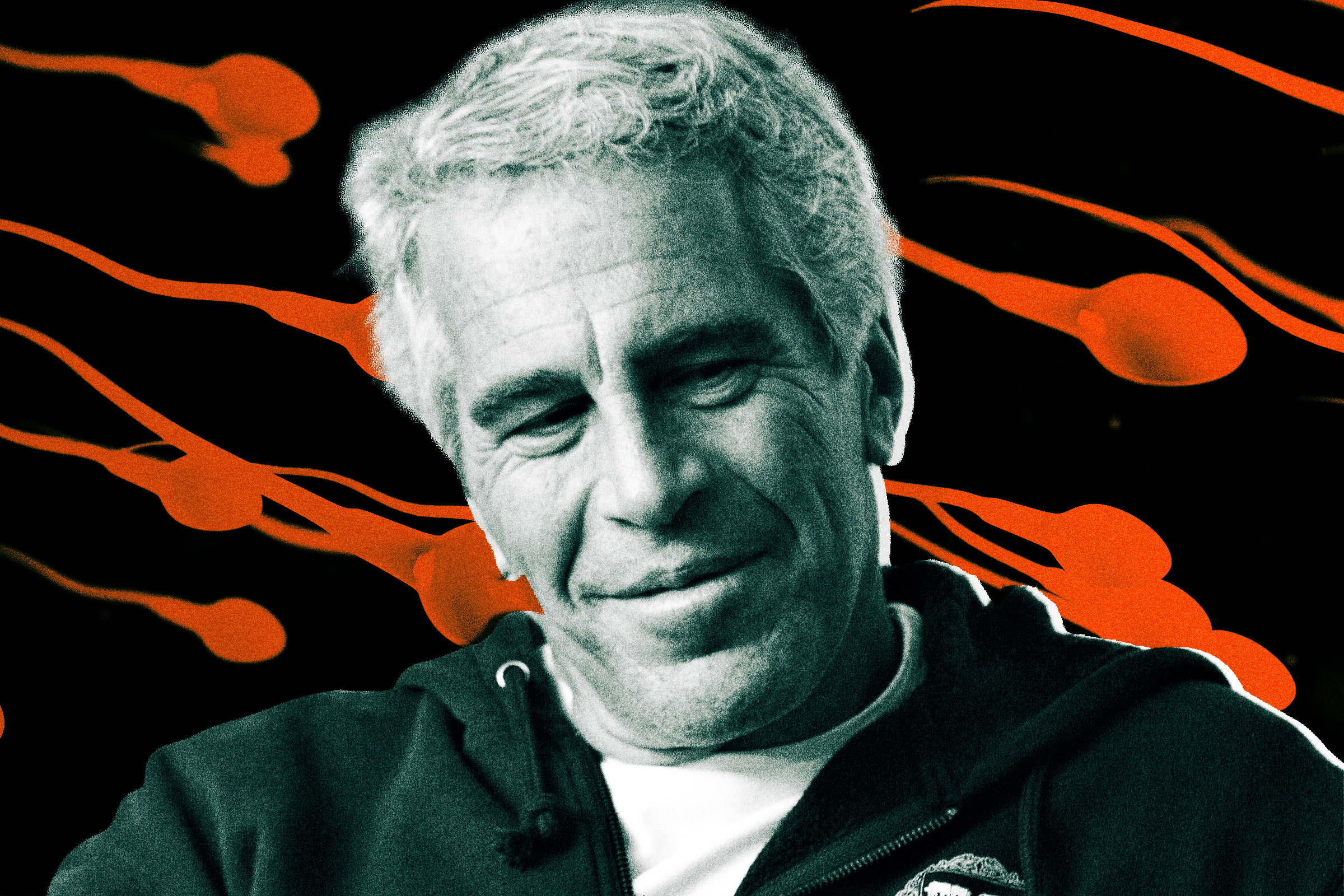
Jeffrey Epstein’s Biopreserved Sperm Is Missing

2 June 2026 at 14:13

Today in news we regret having to deliver: Jeffrey Epstein’s missing sperm.

According to documents in the Epstein files released by the Justice Department and viewed by The New York Times, the deceased child sex criminal and accused sex trafficker kept his sperm locked up in a cryobank several years before he died — but its current whereabouts are unknown.

A sample of his secretions were deposited with the California Cryobank sometime before 2012, and he signed a new contract in 2016, with files showing emails he received notifying him of an upcoming renewal payment. 

Epstein, who pleaded guilty to child prostitution in 2008 and was charged with sex trafficking before his death in 2019, indicated that he didn’t want his sperm discarded if he died. Instead, according to a contract in the files, it should fall under control of his estate or other legal representative. However, it’s unclear if these instructions were honored.

CooperCompanies, which has owned California Cryobank since 2021, appeared tight-lipped about the ordeal, telling the NYT that it “does not currently store any samples associated with Jeffrey Epstein,” and answering no further questions.

Adding to the mystery, the document for the trust that Epstein left most of his money and possessions makes no mention of his sperm. Naomi Cahn, a law professor at the University of Virginia, said that disputes over his sperm would likely be handled under the laws of the US Virgin Islands, where Epstein’s notorious island was located, and where his estate is administered.

Storing sperm isn’t an uncommon practice. But on top of him being a convicted sex criminal and pedophile, Epstein’s motivations for doing so, we can safely infer, were pretty dark. He had a lifelong obsession with eugenics and using science to supposedly improve human genetics, an ambition he weaved with his racist beliefs. As part of that worldview, he also wanted to “seed” the human race with his DNA by impregnating multiple women at a time at his New Mexico ranch.

More on Epstein: Elon Musk Not Doing Well After Epstein Files Reveal

The post Jeffrey Epstein’s Biopreserved Sperm Is Missing appeared first on Futurism.

Unfortunate Company Accidentally Blows Half a Billion Dollars on Claude in One Month

1 June 2026 at 17:50

Ever regret picking up everyone’s tab after getting the check? Something like that is probably going through the mind of the CFO of an unnamed company which reportedly racked up half a billion dollars in Claude usage fees in a single month.

The bonkers figure comes from new reporting by Axios on how organizations that rapidly adopted AI are now reckoning with its exorbitant costs, which are mounting in tandem with skepticism over the benefits the technology is supposed to provide. 

Regarding the unnamed and deeply unfortunate company, an AI consultant told the outlet that it blew a staggering $500 million in a month after the small oversight of “failing to put usage limits on Claude licenses for employees.”

It’s an astonishing amount that speaks both to the actual costs of using AI tools — especially AI agents, which are more sophisticated and expensive — and the corporate zeal around embracing AI as quickly as possible. Which is more to blame is a matter of debate, but the breathless hype around AI’s ability to maximize efficiency is clearly blowing back on the tech’s evangelists.

On the cultural angle, many companies whose CEOs are drunk on spiked AI Kool-Aid have been encouraging employees to use AI as much as possible, a trend that some call “tokenmaxxing.” Meta now includes AI usage on employee’s performance reviews, for example. Amazon had an internal leaderboard that tracked how much its employees used AI tools, which it recently shut down after finding that some tryhards were directing AI agents do useless tasks to boost their scores, the Financial Times reported

Other unnecessary costs may be less obvious; a chief technology officer told Axios that employees at their company were using AI models to check the weather, something they obviously don’t need AI to do. Velastegui Ventures CEO and former chief AI officer at Microsoft Sophia Velastegui opined that another explanation for spiraling AI costs is that “most people default to automating tasks they dislike rather than tasks most valuable to the company,” per Axios.

AI advocates might argue that we’re going through a phase of experimentation, and that after companies figure out how to smartly use the tech, costs will come down. That could happen, but it might mean scaling back AI usage, something that the AI industry doesn’t want, especially not as leaders like OpenAI and more recently Anthropic are pushing trillion dollar valuations

Moreover, some AI providers have been raising the rates they charge for using their models, placing tighter rate limits. That suggests that the AI rates could continue to rise as AI companies themselves grapple with the huge computing costs they’re footing to get customers on board with cheaper rates. Microsoft began cancelling its Claude Code licenses last month — despite, and perhaps because, of its immense popularity with software engineers.

More on AI: Corporations Reeling From Huge AI Costs With No Clear Benefits

The post Unfortunate Company Accidentally Blows Half a Billion Dollars on Claude in One Month appeared first on Futurism.

❌