Normal view

Received — 31 May 2026 Tech - Ars Technica

Roku OS’s home screen now features a large, permanent ad

27 May 2026 at 20:12

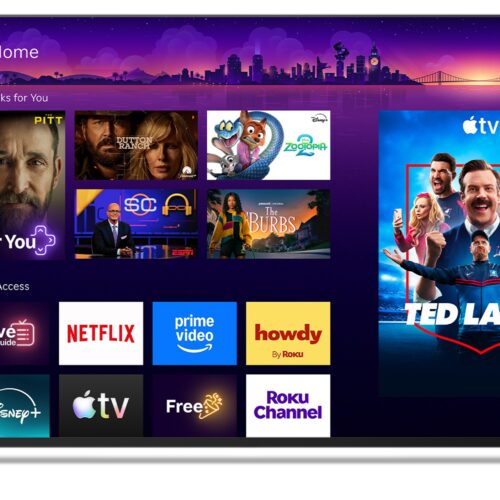
Roku just unveiled the biggest overhaul to its smart TV operating system (OS) in 10 years. One of the most noticeable differences is that ad space now takes up a large chunk of the screen’s landing page.

Before the update, loading up a Roku OS-powered smart TV or streaming device would yield a menu on the left side with sections including “What to Watch,” “Live,” and “Search.” The right side had a row of tiles for “Recommended” content above several rows of tiles representing downloaded apps. Once a user started started navigating the home screen, the menu would collapse, and they'd see a large ad on the right side of the screen.

The old Roku OS landing page before the ad is visible.  Credit: Roku

 

Read full article

Comments

Smart light company Govee apologizes for “white supremacy” marketing imagery

27 May 2026 at 18:00

Smart lighting manufacturer Govee is apologizing after a pair of books showing only the words “white supremacy” were featured in a marketing image on its website.

The books were visible in an image (shown above) on Govee’s US website for bedroom lighting. Disturbingly, the books sat under toy animals on a shelf just above a child’s bed. Only the books’ spines were visible.

The Verge was the first to report on the controversy after a reader contacted the publication. The publication reported that it contacted Govee, which subsequently removed the image but didn’t respond to the site's queries before it published its initial report.

Read full article

Comments

© Govee

First-generation Chromecast users stressed by devices suddenly failing

22 May 2026 at 22:42

Google’s first Chromecast was a hit. With 10 million units sold in 2014, it excelled as an easy solution for streaming TV and movies from the Internet to a TV. Released at a time when dumb TVs were more common, the first-generation Chromecast has a simplicity you don’t find in streaming devices these days. Press "Cast" in an app, select a TV with a Chromecast, and start watching. Foregoing extras like a UI or ads, the device remains active in some homes today, despite Google ending support for the $35 device in 2023.

However, this week it seemed like those days were over. Numerous people reported that their original Chromecast had suddenly stopped casting from popular apps, including Chrome, YouTube, and Paramount+. This brought concern that the original Chromecast was really dead now. A Reddit thread started by someone who claimed to have two first-gen Chromecasts suddenly stop working at the same time includes various responses from people who suspected that Google bricked the devices in order to force upgrades.

But Sahana Mysore, senior product manager for Google Home, told Ars Technica today that Google didn’t kill the devices, saying:

Read full article

Comments

© Getty

Marketer that claimed it could tap devices for ad targeting will pay $880K settlement

22 May 2026 at 18:48

In November 2023, we reported on dubious claims made by marketing firm Cox Media Group (CMG) Local Solutions. The company advertised a service called Active Listening on a website that said, “It’s true. Your devices are listening to you” and claimed it could use “voice data” to help advertisers target ads to specific people.

Naturally, panic ensued. 404 Media, which initially spotted the website, for instance, wrote that the idea of smartphones listening to people to sell products “may finally be a reality."

CMG Local Solutions screenshot
A screenshot taken in 2023 from a webpage that CMG has since removed.

The idea of a marketing firm using AI to “detect relevant conversations via smartphones, smart TVs, and other devices” in real time—according to a since-deleted CMG blog post from November 2023 (still viewable via the Internet Archive’s Wayback Machine)—has raised alarms.

Read full article

Comments

© Getty

IoT gadget maker AcuRite shares reasoning for killing customers’ favorite app

21 May 2026 at 23:26

AcuRite must kill its customers’ favorite companion app due to “obsolete technology," VP of product development Jeff Bovee tells Ars Technica.

AcuRite, which makes smart weather-monitoring devices, announced this month that the My AcuRite iOS and Android app that has been around since 2016 won’t be available after May 30. After that date, device owners must use AcuRite NOW, which AcuRite released in June 2025, to control their gadgets.

The announcement has frustrated long-time AcuRite users, largely because the new app lacks some of its predecessors' capabilities. For example, AcuRite NOW doesn’t allow renaming multiple temperature sensors, organizing on-screen sensors, or reporting temperatures as anything other than whole numbers (AcuRite says it's working on adding some of these features).

Read full article

Comments

© AcuRite

Hulu set to keep existing as standalone streaming service and app (for now)

20 May 2026 at 19:48

Disney currently has no plans to shutter Hulu as a standalone streaming service or app, according to a company representative.

In a report from Variety today, the spokesperson said that Disney, which took total ownership of Hulu in June 2025, will continue to sell subscriptions to Hulu in the US and that “there are no current plans to sunset the Hulu app.”

Disney owned two-thirds of Hulu before closing its acquisition of the streaming service’s remaining third from Comcast last year. Since then, some reports have suggested that the Hulu app would be phased out in 2026, while others have speculated that Disney would likely, but not definitely, shutter Hulu. Disney’s statement today means that people should be able to continue watching stuff on Hulu without having to pay for Disney+ for the foreseeable future; although, Disney is free to change its mind at any point.

Read full article

Comments

© The Walt Disney Company

Yearslong fight over users' right to tweak smart TV software heads to trial

20 May 2026 at 14:32

For years, owners of Vizio smart TVs have had little control over the software running on their sets—software that can track viewing habits, push ads, and generally shape the experience of using the device.

The Software Freedom Conservancy (SFC), a US nonprofit that promotes and provides legal support for free and open source software projects, isn't happy about that—so much so that it has spent eight years trying to force the release of the complete source code for Vizio's Linux-based smart TV operating system.

Now, after numerous delays since the SFC filed suit in 2021, a California jury will decide in August whether Vizio must provide that code in executable form to SFC and any Vizio TV owner who wants it.

Read full article

Comments

© Aurich Lawson | Getty Images

Plex's 200% Lifetime Pass price hike tries forcing users to another subscription

19 May 2026 at 20:52

As of July 1, at 12:01 am UTC—or June 30 at 8:01 pm ET—people seeking access to Plex's media server features through a one-time purchase will have to pay $750. That’s three times the current price of $250.

The new price will not affect current Lifetime Plex Pass holders.

A Lifetime Plex Pass allows you to stream from your own Plex Media Server to a device connected to your own network, to stream from the server remotely, and to allow others to stream remotely from your server.

Read full article

Comments

© Plex

❌