Normal view

Amazon’s AI-Generated Animated Series Canceled After Relentless Derision

3 June 2026 at 15:48

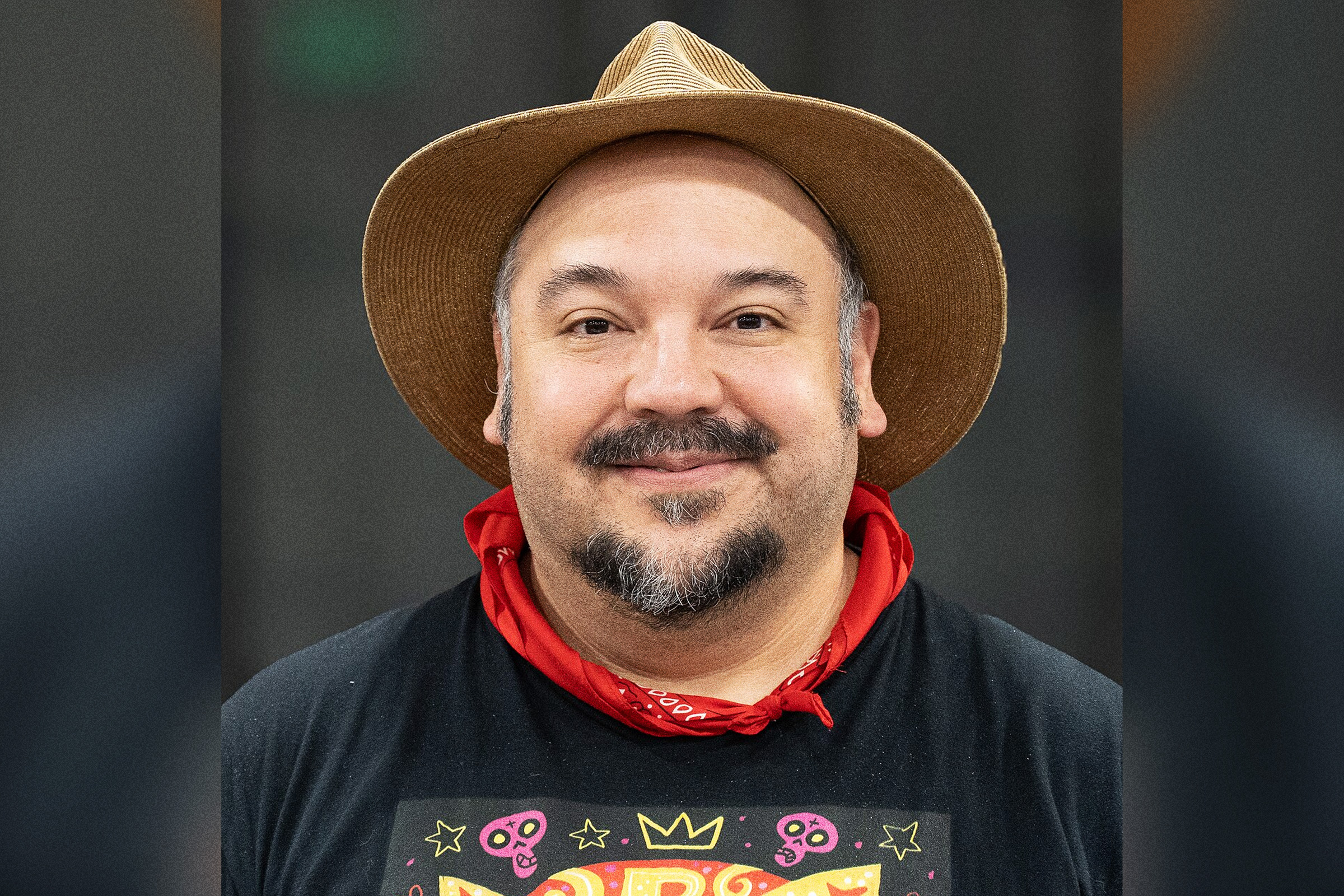
At first, it felt a bit like Emmy-winning writer director Jorge Gutierrez had been living under a rock.

On May 27, Amazon announced that it had ordered an animated series, dubbed “Punky Duck,” as part of its GenAI Creators’ Fund, celebrating it as a “creative breakthrough.” The fund, a collaboration between Amazon’s MGM Studios and its Amazon Web Services, was designed to hand creators “access to professional-grade AI tools and funding” to “produce high-quality cinematic entertainment.”

Gutierrez seemingly couldn’t believe the power he’d been handed.

“The best way I can describe it is, it’s like you have sex, and then someone hands you the baby,” he told a panel during an announcement last week. “It’s pretty crazy.”

However, given the way the conversation surrounding the use of AI in creative industries has been headed, it shouldn’t come as a surprise that reactions to the news were overwhelmingly negative, with Gutierrez swiftly becoming the target of an astonishing amount of online outrage.

His Wikipedia profile was edited to describe him as a “sellout” and early attempts to allow his fans to vent their frustration on his Instagram account didn’t go over well, either, forcing him to delete swaths of posts.

Not all the derision was from the online peanut gallery.

“It is very seductive that something now exists that contains the collective works of millions of artists and wordsmiths all thrown in a blender allowing one to pour out on demand things based on suggestions and prompts,” wrote acclaimed voice actor Billy West. “You become a soul stealer, a grave robber of sorts. You are an artist! God gave you a far greater gift and purpose to share with others. We need your true self!”

The backlash was so extensive, Gutierrez ended up backtracking on the lucrative gig entirely, in one of the clearest signs yet that AI has become toxic sludge to much of the audience Amazon is trying to woo.

“I have decided to drop out of the AI program at Amazon,” he tweeted on May 29, just two days after the company’s announcement. “I will not be making a Punky Duck series. Actions speak louder than words.”

The incident perfectly highlights just how much the AI backlash has grown, with experts warning that the tech is causing cultural stagnation while Hollywood actors panic over being replaced. Some of the biggest names in the industry have publicly spoken out against the use of AI in creative fields, forming a expanding line of resistance.

It apparently wasn’t just angry comments directed at Gutierrez for “selling out.” In a separate tweet, Gutierrez said that “the racist stuff and the attack on my kid were too much,” indicating pundits online had gone to extreme lengths.

Even this attempt to defuse the situation didn’t sit well, with users accusing him of pulling the “racism card,” while others claimed he was “making this up to deflect from your piss poor choices.”

Oddly enough, Gutierrez was once a vocal critic of AI, as the Los Angeles Times reports, posting several memes decrying the tech between 2023 and 2025.

“Threatening the dude and his family is obviously going way too far, but I’m still against major animators using AI, 100 percent,” one Reddit user argued. “I’m still glad he dropped out of it, but I f***ing hate that people threatened the dude.”

“Animation isn’t worth that, the hell is wrong with people?” the user added.

Meanwhile, Gutierrez has tried to get the angry mob back on his side.

“Learning a lot from many of you,” he tweeted. “Thank you. Lots of information that I’m digesting wholeheartedly. I am absolutely understanding the concern of using AI to assist an animation pipeline.”

“For all those showing me grace, I really appreciate it,” Gutierrez added. “I have a lot to think about.”

More on AI backlash: Harvard Graduation Speaker Unloads on AI in Profanity-Loaded Tirade, Prompting Cheers From Students: “I’m Here to Tell You the Mission of Your Generation Is to Destroy AI”

The post Amazon’s AI-Generated Animated Series Canceled After Relentless Derision appeared first on Futurism.

Anthropic and DeepMind Now Actively Investigating AI Consciousness

3 June 2026 at 14:55

Are AI models conscious, and if not, could they be in the near future? The possibility is far-fetched, but AI companies seem to feel it’s in their best interests to keep the question as open-ended as possible.

Now, the Financial Times reports that three of the industry’s top dogs — Anthropic, Google’s AI lab DeepMind, and Meta — have all hired experts in fields like psychology, philosophy, and ethics to pursue research into machine consciousness and AI welfare. 

Anthropic, which has arguably done the most out of the bunch to anthropomorphize its models and play up the AI consciousness angle — its chatbot has the human name of “Claude,” after all — has been testing its models for behaviors that resemble “panic” and “anxiety,” per the reporting, and is pursuing “model welfare research” to explore whether AI models might have experiences that matter morally.

“We remain deeply uncertain about this, but we think the question is serious enough to study carefully as AI systems get more capable,” the company said in a statement.

DeepMind, meanwhile, has hired University of Cambridge researcher Henry Shevlin as a philosopher working on machine consciousness, human-AI relationships, and AGI readiness, per the reporting. (Earlier this year, Shevlin sparked a wave of discourse in online AI circles after sharing his stunned reaction to an email he received from an AI agent.)

DeepMind ethicist Iason Gabriel, who leads the lab’s AGI and society team, called the question of AI consciousness “very complicated,” and described AI as “highly capable cognitive agents that are also just very deeply different from human beings and even from animal consciousness.”

These weighty claims are disputed by many scientists and AI researchers. But the FT, in seeking a counterargument to round out its reporting, quotes an expert who makes claims that ascribe a questionable degree of humanlike agency to chatbots. “[AI models] have goals, they can deceive, they can hide what their true interests are,” Susan Schneider, director of the Center for the Future of AI, Mind and Society, told the newspaper. But she added it’s “entirely scientifically possible that they’re doing this without having the felt quality of experience, which is what consciousness is.”

Certainly, the possibility of AI consciousness shouldn’t be completely dismissed out of hand. But neither should alien civilizations, which are generally treated more as a sci-fi musing than an urgent existential issue. 

Moreover, we should be skeptical when most of the noise on this topic is coming from the industry itself. Anthropic CEO Dario Amodei has repeatedly dangled the possibility of AI consciousness in interviews. And his company’s research frequently makes bold claims about their models showing humanlike behavior, such as supposedly harboring “emotions.” Just remember that it’s easier for AI companies to string us along with wild Skynet doomsday scenarios instead of confronting the tech’s far mundane consequences currently playing out before our eyes.

More on AI: Was This the Moment That AI Psychosis Began?

The post Anthropic and DeepMind Now Actively Investigating AI Consciousness appeared first on Futurism.

All These Galaxy-Scale IPOs Are Piling on Risk of an Economic Crisis

3 June 2026 at 13:51

The United States is facing what’s shaping up to be the largest series of initial public offerings in the history of the modern stock market. How they go is anyone’s guess, but the results are sure to be extreme one way or another.

There are three absolute whoppers looming on the horizon: Elon Musk’s absurd $1.75 trillion SpaceX public launch targeted for early June, as well as IPOs by the already-hulking AI firms Anthropic and OpenAI. As the Economist notes, the triple threat could feed some $4 trillion worth of value into the US stock market — if, that is, the market can keep them down, or even swallow them all in the first place.

As the publication observes, huge IPOs like his are typically seen as signs that a bull market, a long period of rising stock prices, is about to come to an end. For example, we saw similar conditions prior to market downturns in 2021, 2008, and the late 1990s. The Economist explains that mega-IPOs sometimes signal bear markets — prolonged periods of declining prices — as in 2021, but could likewise forewarn heavier downturns, like the Great Recession or the collapse of the dot-com bubble.

How severe that reversal could be depends in no small part on how those three mega corps perform. If there’s underwhelming investor appetite for their unprecedented valuation targets, the Economist notes the three IPOs could easily drag markets into correction territory all on their own.

That’s because each firm is heavily involved in the financial behemoth that is AI. With global private investment in the tech skyrocketing despite no tangible financial returns, the bill will eventually come due on the AI frenzy. If the IPOs disappoint, analysts fret, it could signal that patience has finally run out for the country’s unprecedented technological spending.

What ultimately sparks the panic that sends stock brokers stampeding for the door is impossible to predict, but it seems painfully clear this can’t keep on forever.

More on finance: Bank Warns of Tesla Stock Collapse

The post All These Galaxy-Scale IPOs Are Piling on Risk of an Economic Crisis appeared first on Futurism.

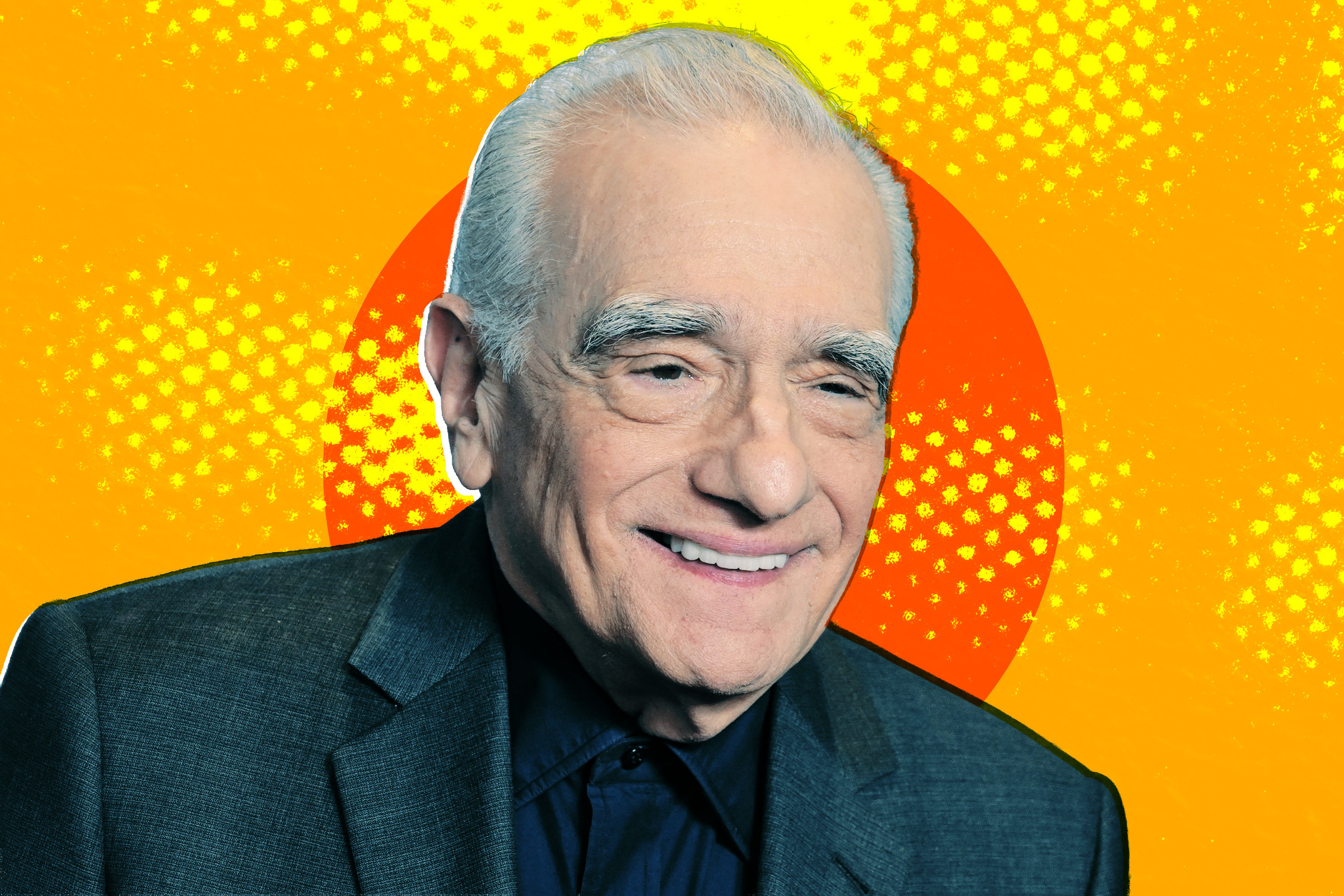
Film Community Aghast as Martin Scorsese Extolls AI Startup, Says He Now Uses AI for Storyboards

2 June 2026 at 22:04

The film community is in meltdown after acclaimed director Martin Scorsese promoted a new AI startup called Black Forest Labs, saying that he’s already using its tech to help plan his movies.

Scorsese revealed this collaboration in a statement to The New York Times on Tuesday, which was accompanied by the release of a new promotional video from Black Forest Labs depicting the 83-year-old film legend using its AI image generation tool for storyboarding, the process of visualizing scenes using illustrations in preparation for filming. According to the reporting, Scorsese signed on as a partner and an adviser to the venture last year.

Such shilling by a venerated artist for AI was, in the eyes of many filmgoers, the opposite of “Absolute Cinema.”

“Cannot stress enough how disappointing it is that Martin Scorsese is collaborating with an AI company and putting a stain on his name so late in his life and career,” wrote one cineaste.

“Putting storyboard artists out of work is bad and that should not be a controversial opinion,” another fumed.

For film journalist Richard Newby, the reaction was visceral. “I feel like I’m going to throw up,” he tweeted.

It’s easy to understand where they’re coming from, since Scorsese is one of the most revered filmmakers alive. The “GoodFellas” and “Mean Streets” director spearheaded a movement that cast off the shackles of the stodgy old studio system and ushered in a Renaissance of Hollywood filmmaking that embraced authorial intent, drawing on a deep reverence for foreign filmmakers — from Akira Kurosawa to the duo of Michael Powell and Emeric Pressburger — to create something more stylistic and transgressive, while taking a unflinching eye to social issues of the day. 

Beyond his role behind the camera, Scorsese has also been an important champion of overlooked international films, and has helped preserve cinema history through his Film Foundation. For him to throw his weight behind AI is a big victory for the industry — and a gut punch to artists who view the tech as not only a threat to their livelihoods, but to creativity itself.

That said, Scorsese is being conspicuously limited in how he praises AI, though this is likely to be little consolation to the anti-AI crowd. In the promotional video and in his remarks to the NYT, he was careful to stress that he only uses AI for storyboarding, claiming that it’s allowed his team “to move faster without sacrificing quality or craft” during preproduction.

“For 70 years, I’ve been creating my own storyboards,” Scorsese told the NYT in a statement (which is notable, since it definitely reads more like a company-approved release than something he’s said in one of his many insightful interviews.) “There’s always been this problem of how do you communicate what you see in your head to your cast and crew. There are some things you have to see and feel.”

“Now with this tool,” he added, “I can share what I’m visualizing more clearly and efficiently to my creative team — the production designer, art designer and cinematographer.”

The sense of betrayal hit one Scorsese fan especially close to home.

“Scorsese’s storyboards for Taxi Driver were a big inspiration for me, a poor artist, to feel confident drawing ideas to share with our illustrators,” the indie game developer lamented. “I can’t understand why so much of the older generation of artists are swayed by this crap when they already had it all figured out.”

More on AI: OpenAI’s Attempt at an AI-Generated Pixar-Style Movie Is in Shambles

The post Film Community Aghast as Martin Scorsese Extolls AI Startup, Says He Now Uses AI for Storyboards appeared first on Futurism.

World Cup Will Be Patrolled by Security Robodogs

2 June 2026 at 20:50

The Trump administration’s violent deportations and crackdown on protestors against Immigration and Customs Enforcement have set an ominous tone for the upcoming FIFA World Cup, which is taking across a number of North American host cities this month.

Both human rights and football fan groups have voiced concerns over the militarization of law enforcement and presence of ICE agents during the lead-up to the tournament, which is expected to draw many millions of international visitors.

Vice president JD Vance hasn’t exactly helped the situation, warning foreign visitors in chilling comments last year that they should “go home” after the event, or else “they’ll have to talk to [former secretary of homeland security Kristi] Noem.”

So it shouldn’t come as a surprise then that sightings of Boston Dynamics’ Spot robot dogs at the AT&T Stadium in Arlington, Texas, raised surveillance fears in the state, as Chron reports. Rumors that the robots were using facial scanning technology on passersby spread like wildfire on social media. However, a Boston Dynamics spokesperson told Chron that the robots “do not have facial recognition capabilities” and will be used to “assist security personnel with investigating things like suspicious packages or other potentially hazardous materials.”

The dogs are part of a broader “Security Spot” initiative by Boston Dynamics owner Hyundai. On its website, the company claims it’s “deploying its largest and most advanced mobility fleet to date and, through its collaboration with Boston Dynamics, becoming the first and only official partner to provide robotics for the tournament.”

“As part of this effort, Security Spot, a four-legged patrol robot, will support on-site security operations, helping contribute to a safer tournament environment,” the website reads.

Nonetheless, netizens were left unsettled by the sight, drawing comparisons to the “Black Mirror” episode titled “Metalhead,” which is set in a post-apocalyptic wasteland in which a woman is relentlessly hunted by an advanced, autonomous robot dog.

“Well, that puts a chill down my spine,” one Reddit user responded to a video of a robot dog cocking its head back and forth while glancing at the person filming, giving the impression of scanning their face.

“I can’t get over how they made it dance while it performs techno-authoritarian surveillance,” another user wrote.

Mexico, which is hosting matches across three venues for the World Cup, will also be patrolling grounds using four robot dogs, called “K9-X,” which function as a kind of first responder, as Wired reported earlier this year. (Authorities did not disclose who makes them or other technical details.) Officials told the publication that the robots will intervene in the event of a fight or drunken debauchery to protect officers’ safety — which, given the reputation of soccer fans, probably isn’t unlikely.

More on the cup: Nike’s AI Designed World Cup Jerseys Are a Disaster

The post World Cup Will Be Patrolled by Security Robodogs appeared first on Futurism.

There’s Something Living Inside Fog, Scientists Find

2 June 2026 at 20:04

There’s something living in the fog. Repeat: there’s something living in the fog.

It may sound like a twisted update to the classic John Carpenter film — or a log line for the new Apple TV horror series “Widow’s Bay” — but these low-hanging clouds are indeed rife with living bacteria, according to new research.

The findings, published in a study in the journal Environmental Microbiology, showed that fog is teeming with so much life that the researchers liken it to a vast aquatic ecosystem unto itself.

“We found that millions of bacteria inhabit… fog droplets,” coauthor Ferran Garcia-Pichel at Arizona State University, told USA Today

“When you take all of the droplets together, the concentration of bacteria is the same as in the ocean,” he added in a statement about the work.

The presence of bacteria in airborne water droplets isn’t a new revelation in itself. But the work helps elucidate what it is that bacteria do while suspended in fog and other clouds — something that wasn’t clear before — and the impact this has on the broader environment.

“There’s very limited knowledge about what kinds of bacteria are present in fogs, which are like clouds at the ground level,” lead author Thi Thuong Cao, a researcher at ASU, said in the statement.

To peer into this gloomy microscopic realm, the researchers meticulously collected air samples before, during, and after fog events. Since wind can blow fog banks away and confound attempts to get consistent samples, the researchers focused on a specific type called radiation fog that forms on calmer days when the ground cools and chills the air above it, allowing water droplets to condense close to the surface.

After assiduously collecting samples, the researchers found that only one percent of fog droplets contained bacteria. But a thimbleful of these droplets in all packs around ten million bacteria, which is nothing to scoff at. 

Some thrived more than others. The population of one bacteria called Methylobacteria, known for devouring simple carbon compounds including pollutants like formaldehyde, increased after fog events. A closer look showed that the bacteria were actively growing and multiplying.

“We observed them under the microscope to see that yes, the bacteria are getting bigger and they’re dividing, so there is growth,” Cao said. “We also found that they’re using the formaldehyde as food to support their growth.”

Garcia-Pichel said this marked a “mindset change” in how we think about fog. “If they are growing,” he said of the bacteria, “then the droplets are a habitat.”

From this habitat, bacteria could be influencing air quality, thanklessly sucking up pollutants. It’s a possibility that might give pause to calls to start collecting fog for drinking water, the researchers say.

“If we harvest fog, we are getting rid of our little friends in the air,” Garcia-Pichel said in the statement. “We don’t know if that’s going to make a big impact or not, but we should be considering that.”

More on biology: Scientists Intrigued by Chunk of Flesh That Refuses to Die After Several Years

The post There’s Something Living Inside Fog, Scientists Find appeared first on Futurism.

Bernie Sanders Announces Plan to Seize Half of AI Industry for the Public Good

2 June 2026 at 19:03

The hype surrounding generative AI has generated astronomical amounts of value, with tech companies raising tens of billions of dollars and many — including OpenAI and Anthropic — preparing to go public this year at sky-high valuations, in moves that will produce incredible wealth for their stockholders.

Whether the average Joe will ever directly benefit from all of this is looking dubious at best. That’s despite many of these tools relying on AI models that were trained on the creative output of millions of people, copyright be damned, the vast majority of whom have yet to see a single cent. Quite the contrary — many workers are facing a disastrous job market as a result of corporations stretching themselves thin through massive investments in AI.

Meanwhile, concerns continue to grow that the billionaire class is unethically enriching itself through the scheme, while shutting out the democratic process.

To independent senator Bernie Sanders (D-VT), that kind of injustice needs to end. In an essay published by the New York Times, Sanders argued for the creation of an “AI Sovereign Wealth Fund” that would be created through a “one-time 50 percent tax” on the stock of AI companies, including OpenAI, Anthropic, and xAI, to “give the public a direct ownership stake.”

In other words, Sanders is proposing to transfer half of the AI companies’ stock into a public fund — a one-time transfer as opposed to a tax on profits — which the government will manage. Generated revenues could be distributed as “direct payments to the American people.”

While many important details have yet to be ironed out, as Sanders admits, it would represent a massive shift and equity transfer — if his act were to pass, that is.

“The question, then, is not whether AI will change the world,” he wrote. “It will. The question is: Who will own and control that future? Who will benefit from it, and who will be hurt by it?”

Sanders argues such a fund would “give the public a direct role in determining the future of this technology,” while also guaranteeing that the “trillions of dollars potentially generated by AI are used to improve the lives of all of us — not simply to make the richest people in the world even richer.”

While chances of the senator’s idea surviving the Congressional approval process are likely slim — the AI industry holds immense influence over Congress — it’s a creative approach to an increasingly sticky problem. Even tech leaders, who have watched as the backlash to AI continues to grow, have turned their attention to possible solutions to address even greater wealth disparity caused by the emergence of AI.

Jeff Bezos recently argued that the bottom 50 percent of earners shouldn’t pay any taxes, while OpenAI CEO Sam Altman came up with a new concept called “universal basic compute,” which would provide free access to those who can’t afford costly AI tools. Meanwhile, SpaceX founder Elon Musk has called for a new take on universal basic income, uninspiringly dubbed “universal high income.”

Sanders’ sovereign wealth fund takes the idea a step further, giving Americans who don’t happen to be tech billionaires an opportunity to get in on the ground floor. The concept has already been “put into practice right here at home,” Sanders wrote, pointing to an Alaskan sovereign wealth fund that’s allowed residents to receive annual dividends through oil revenues.

“To start, the billions, if not trillions, of dollars generated by this fund would provide direct payments to the American people,” he wrote. “And as the fund generates more and more wealth, the proceeds would be used to ensure that every man, woman and child in our country has a decent and dignified standard of living, including health care, education and housing.”

More on Bernie Sanders: Unions Attack AI for Menacing Human Jobs

The post Bernie Sanders Announces Plan to Seize Half of AI Industry for the Public Good appeared first on Futurism.

Paper Claims the “Asteroid” Japan’s Probe Is Approaching Is Actually a Derelict Spacecraft

2 June 2026 at 17:51

After successfully rendezvousing with near-Earth asteroid Ryugu in June 2018 and sending a sampled cache of rocks back to Earth, Japan’s Hayabusa2 spacecraft is now making its long journey to its next destination, a tiny and rapidly spinning asteroid dubbed 1998 KY26.

The spacecraft is expected to reach the mysterious space rock by July 2031, giving scientists plenty of time to come up with theories as to what it could find once it gets there.

1998 KY26 is an intriguing new candidate for an entirely new class of objects. In 2017, interstellar visitor ‘Oumuamua — the first object from beyond the solar system to have ever been observed — inspired scientists to categorize it as a “dark comet,” a class of asteroids that share some behaviors with comets. (A brief refresher: asteroids are lumps of rock, ice or dust that orbit the Sun but are too small to be classified as planets, while comets are “dirty snowballs” that release gases to form a tail behind them as they pass by the Sun.)

Scientists suggest 1998 KY26 could also be a dark comet, making Hayabusa2’s visit five years from now an intriguing opportunity to get a closer look.

But according to Harvard astronomer Avi Loeb, who has spent years pondering the nature of ‘Oumuamua and its unusual behavior, 1998 KY26 could be something else entirely. As detailed in a yet-to-be-peer-reviewed paper, Loeb and his colleagues suggest the object could instead be a long-lost relic of the Soviet space program.

“In particular, we identify it as potentially a relic of a historical Russian mission to Mars, the Phobos 1 probe, which suffered a failure 2 months after the launch in July 1988, due to upload of a faulty command,” Loeb explained in a blog post this week.

Phobos 1 failed to send back a signal in August 1988 due to what later turned out to be a typo — a missing hyphen — in a command that shut down crucial systems.

In their latest paper, Loeb and his colleagues suggest that the probe’s thruster firings may have put it in a “similar” orbit to 1998 KY26’s, and that the “two orbits converge and are statistically compatible.” The researchers also argue that the defunct spacecraft and dark comet share roughly the same size and a “quite elongated” shape.

Still, the hypothesis is quite a stretch, given the vastness of space. However, in his blog post, Loeb argued that scientists should nonetheless extend their “training data set to include not just rocks and icebergs but also the space objects launched by humans over the past 69 years” just in case.

If 1998 KY26 does turn out to be technological in nature, Loeb argued that the finding could support his controversial theory that ‘Oumuamua may have also been a piece of technology sent to us by an advanced extraterrestrial civilization.

“I wonder whether the mainstream of comet experts will acknowledge that 1I/’Oumuamua may have not been a natural ‘dark comet’ if it becomes clear that their so-called ‘dark comet’ 1998 KY26 is technological in origin, beyond any reasonable doubt,” he pondered.

Nobody knows for sure what Hayabusa2 will find. Besides, thanks to the asteroid’s extremely fast spin, it could prove extremely difficult to land on.

But Loeb and his colleagues argue we should keep an open mind, just in case it turned out to be a long-lost Soviet era spacecraft.

“In anticipation of the Hayabusa2 observations in 2031, which will be decisive in resolving the origin of this object, we encourage further observational, dynamical, and theoretical studies aimed at more tightly constraining the nature and properties of 1998 KY26,” they concluded in their paper.

More on Hayabusa2: Scientist Left “Speechless” After Opening Asteroid Samples

The post Paper Claims the “Asteroid” Japan’s Probe Is Approaching Is Actually a Derelict Spacecraft appeared first on Futurism.

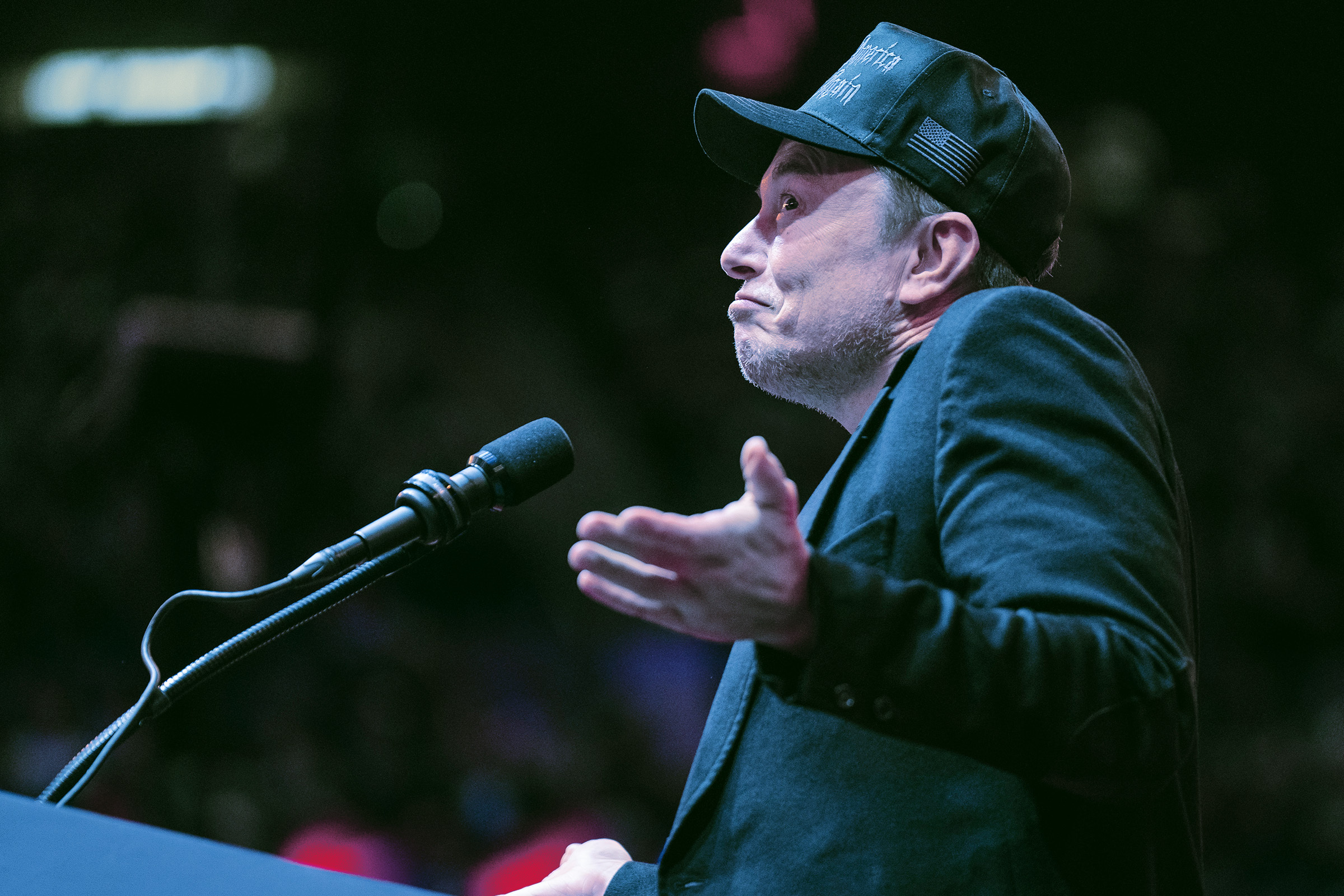
Elon Musk Says He Only Got Involved in Politics Because He Couldn’t Deal With Having a Transgender Child

2 June 2026 at 17:08

Dismantling the federal government. Building a “MechaHitler” AI. Waging a war on Woke. Donating nearly $300 million to get Donald Trump reelected as president. What caused Elon Musk, once a liberal hero, to go down this path?

According to Musk: his estranged daughter, Vivian Wilson.

Doing what he does best — compulsively doomscrolling his own social media site, X — Musk responded to a fan’s post claiming he wouldn’t be the based, Nazi saluting hero that he is today if it weren’t for his daughter’s transition.

“We should never forget that if not for Vivian, Elon Musk never would have gotten involved, never would have purchased Twitter, Kamala Harris would be President and the Left-wing would have total instrumental control over the construction of Skynet,” the poster claimed.

“True,” Musk replied.

Musk might be being a little facetious here, but there’s no denying that he has a weird and unhealthy obsession with Wilson, who publicly came out as transgender in 2022, and her gender identity. He has tirelessly repeated the line that the “woke mind virus killed my son,” and claims that this is why they’re estranged — actually, she disowned him — and not because he regularly misgenders her or says she’s suffering a “tragic mental illness.”

Of course, Wilson’s perspective is pretty different. In interviews, she’s described Musk — who has 14 known children with at least four different  women — as an absent and “cruel” father who would constantly demean her for being feminine, including yelling at her for having a high-pitched voice.

In spite of that, Wilson says that Musk signed the paperwork giving parental consent for her to start the medical interventions to begin her gender transition. It seems totally out of character for him today, but it wasn’t that long ago, we should remind you, that Musk was proudly boasting about how LGBTQ friendly his company Tesla was, even telling bigots, “Don’t buy our car if that’s a problem.” Encapsulating his political about-face, Musk now claims that he was “tricked” into approving Wilson’s gender treatments.

All that being said, Wilson finds ascribing Musk’s villainous turn to her transition somewhat insulting, and implied that his reactionary sympathies were always there.

“It’s such a convenient narrative, that the reason he turned right is because I’m a f**king tr**ny, and that’s just not the case. That’s not what that does to people,” she said in a 2025 interview with Teen Vogue.

“Him going further on the right, and I’m going to use the word ‘further’ — make sure you put ‘further’ in there — is not because of me,” she added. “That’s insane.”

More on industrialists: Trump Shovels $4 Billion Directly to Elon Musk, Who Spent a Fortune Getting Him Elected

The post Elon Musk Says He Only Got Involved in Politics Because He Couldn’t Deal With Having a Transgender Child appeared first on Futurism.

Now You Gotta Buy a Second Computer Just for Your AI Agent, Nvidia Declares

2 June 2026 at 16:43

While gamers beg for cheaper GPUs, and consumers at large yearn for affordable devices amid constant chip shortages, Nvidia is giving the people what they really want: laptops primarily designed for running AI agents.

On Monday, CEO Jensen Huang unveiled a new family of consumer PC chips, called the RTX Spark, designed for handling intense AI workloads. It’s a CPU and GPU rolled into one — like the processors that power modern Macbooks — and will be used in a new line of Windows computers that are “purpose-built for personal agents,” to use the wording of a company release.

Huang did not shy away from grand proclamations. At the annual Nvidia GTC event in Taiwan, he claimed RTX Spark was “the most efficient PC chip ever built,” extolled the new agent-focused design as “reinventing the personal computer,” and claimed that an RTX Spark PC “literally runs everything the world has ever created.”

“Plus, it now runs agents,” he added.

Audacious statements are par for the course for AI companies, but the pivot towards providing the hardware for personal agents raises heaps of questions. How big is the market for these laptops, and will they age like milk if agents go out of fashion?

Based on what Nvidia is teasing, they won’t be cheap. Mark Aevermann, Nvidia’s senior director of product development, said that the PCs will target “creators, AI developers and gamers” and will be priced at the premium end of the market, per The Wall Street Journal. The epic specs of the flagship version of its chip bear that out, boasting 20 CPU cores, 6,144 GPU cores, and 128 gigabytes of unified memory. All this power enables it to run AI agents with 120 billion parameters, Nvidia claims.

You can bet that a laptop with such a powerful chip will cost several thousand dollars at the very least, though Nvidia says it will offer cheaper, less powerful versions. And while AI agents are popular, especially in coding professions, it remains dubious just how many power users are out there demanding beefy machines to run AI models locally. 

Nonetheless, Huang imagines that in ten years, consumers will have “AI supercomputers in your house, running agents and assistants” connected to everything from your TV, security cameras, to dishwashers, per the Financial Times.

Skepticism may abound, but Huang’s has seemingly got all the major Windows PC manufacturers on board — to wit, Asus, Dell, Lenovo, HP, and MSI. Microsoft is also joining the pack by launching a new RTX Spark laptop called the Surface Laptop Ultra.

If there’s another takeaway, it’s that running AI agents is getting awfully expensive. Companies and individual developers are finding themselves stuck with exorbitant usage fees from using agentic tools like Claude Code. And perhaps that’s not surprising, since the preferred way to use them is to run multiple at a time in the background, each handling separate tasks. But now, if you want to be among the truly AI agent elite who walk around with their laptops half open, you should spend even more than you already do — on an Nvidia one.

More on AI: Neighbors Horrified by Data Center Twice the Size of Manhattan

The post Now You Gotta Buy a Second Computer Just for Your AI Agent, Nvidia Declares appeared first on Futurism.

AI Billionaires Are Starting to Get Scared

2 June 2026 at 15:01

As it turns out, telling the world’s workers to prepare for a dystopia rife with poverty and alienation isn’t the smartest way to market your exciting new tech.

As data centers are shut down by angry mobs and AI surveillance cameras are ripped from their poles, the world’s tech billionaires and CEOs are waking up to the reality that the masses are, broadly speaking, not on board with their plan to automate the world with AI. It isn’t necessarily that working people want to stay shackled to the wage-based employment system, but that folks need those jobs to have any hope of eating, seeing a doctor, and sleeping with a roof over their heads.

Instead of the tone-deaf hype we once heard about AI’s potential, these rich and powerful figures are now moderating their messaging, calling for policy measures to help workers weather the AI storm — or perhaps head off a violent revolt led by the many who lost their jobs.

For example, Amazon executive chairman Jeff Bezos — whose net worth would take the average US worker 3.8 million years to earn on their own — recently shared his new belief that the bottom 50 percent of US earners should pay no federal income tax.

“You could double the taxes I pay and it’s not going to help that teacher in Queens,” he said, painting the federal income tax as the main hurdle for working-class families (though he’s started paying his share in recent years, Bezos paid $0 in federal income tax in 2007 and 2011, when he was already a multibillionaire.)

Elon Musk, meanwhile, has floated the idea of “universal high income,” a play on the well-known concept of universal basic income, where a government issues cost-of-living checks to the broader population (from what we can tell, the only difference is that Musk’s version would be driven by humanoid robots creating radical economic abundance).

OpenAI CEO Sam Altman has similar ideas, like a “universal basic compute” where everybody’s income corresponds to a share of his company’s revenue — which would also conveniently make ChatGPT the most important AI chatbot on the planet.

There’s also another option that none of them seem to be pushing: if AI is as disruptive as they say, there’s always the option to pull the plug. That they won’t even consider this choice suggests that their appeals to the toiling masses aren’t in good faith — which at this point should be obvious to just about everyone.

More on AI billionaires: New Website Detects Apocalypse If Billionaire Jets Start Fleeing en Masse

The post AI Billionaires Are Starting to Get Scared appeared first on Futurism.

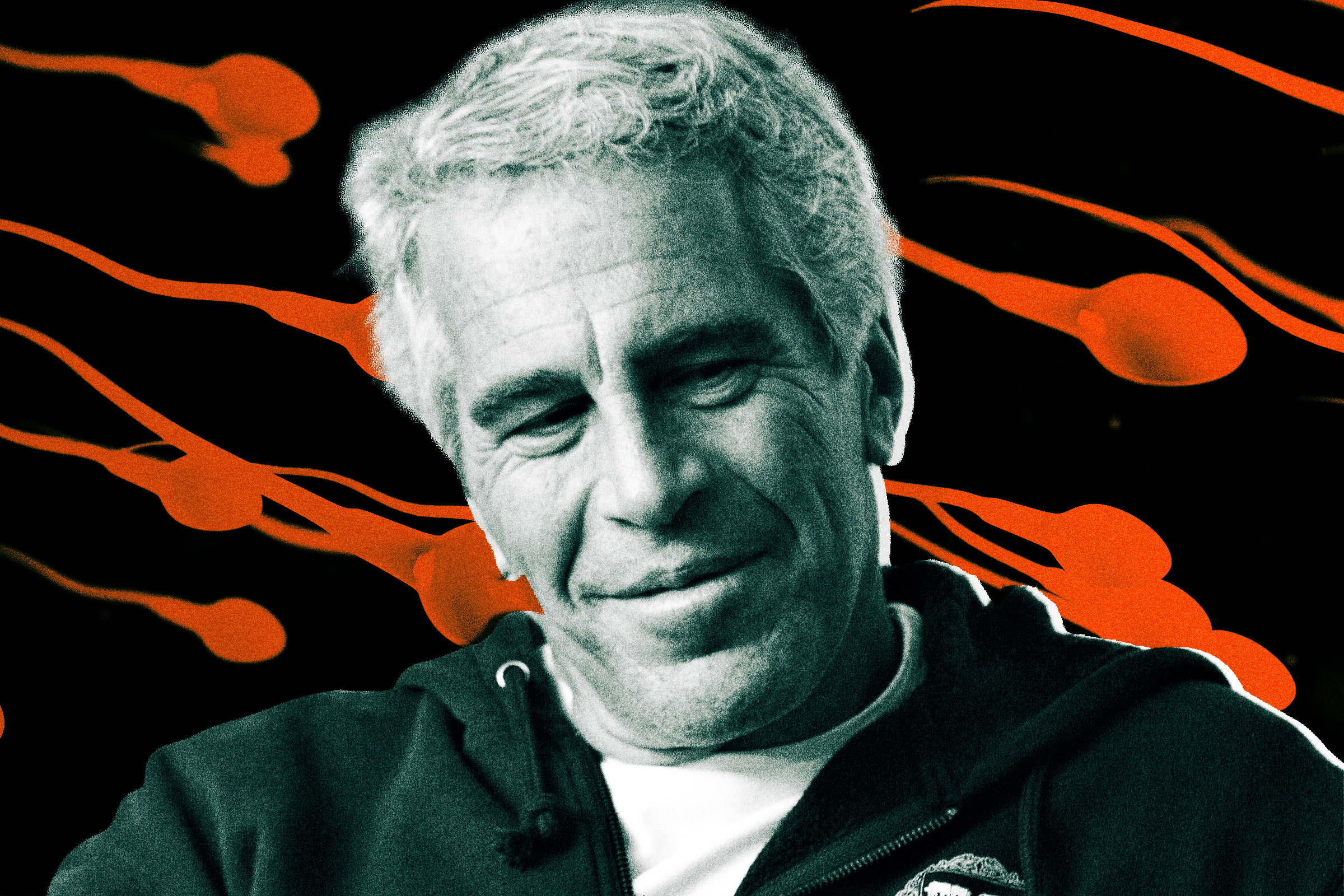
Jeffrey Epstein’s Biopreserved Sperm Is Missing

2 June 2026 at 14:13

Today in news we regret having to deliver: Jeffrey Epstein’s missing sperm.

According to documents in the Epstein files released by the Justice Department and viewed by The New York Times, the deceased child sex criminal and accused sex trafficker kept his sperm locked up in a cryobank several years before he died — but its current whereabouts are unknown.

A sample of his secretions were deposited with the California Cryobank sometime before 2012, and he signed a new contract in 2016, with files showing emails he received notifying him of an upcoming renewal payment. 

Epstein, who pleaded guilty to child prostitution in 2008 and was charged with sex trafficking before his death in 2019, indicated that he didn’t want his sperm discarded if he died. Instead, according to a contract in the files, it should fall under control of his estate or other legal representative. However, it’s unclear if these instructions were honored.

CooperCompanies, which has owned California Cryobank since 2021, appeared tight-lipped about the ordeal, telling the NYT that it “does not currently store any samples associated with Jeffrey Epstein,” and answering no further questions.

Adding to the mystery, the document for the trust that Epstein left most of his money and possessions makes no mention of his sperm. Naomi Cahn, a law professor at the University of Virginia, said that disputes over his sperm would likely be handled under the laws of the US Virgin Islands, where Epstein’s notorious island was located, and where his estate is administered.

Storing sperm isn’t an uncommon practice. But on top of him being a convicted sex criminal and pedophile, Epstein’s motivations for doing so, we can safely infer, were pretty dark. He had a lifelong obsession with eugenics and using science to supposedly improve human genetics, an ambition he weaved with his racist beliefs. As part of that worldview, he also wanted to “seed” the human race with his DNA by impregnating multiple women at a time at his New Mexico ranch.

More on Epstein: Elon Musk Not Doing Well After Epstein Files Reveal

The post Jeffrey Epstein’s Biopreserved Sperm Is Missing appeared first on Futurism.

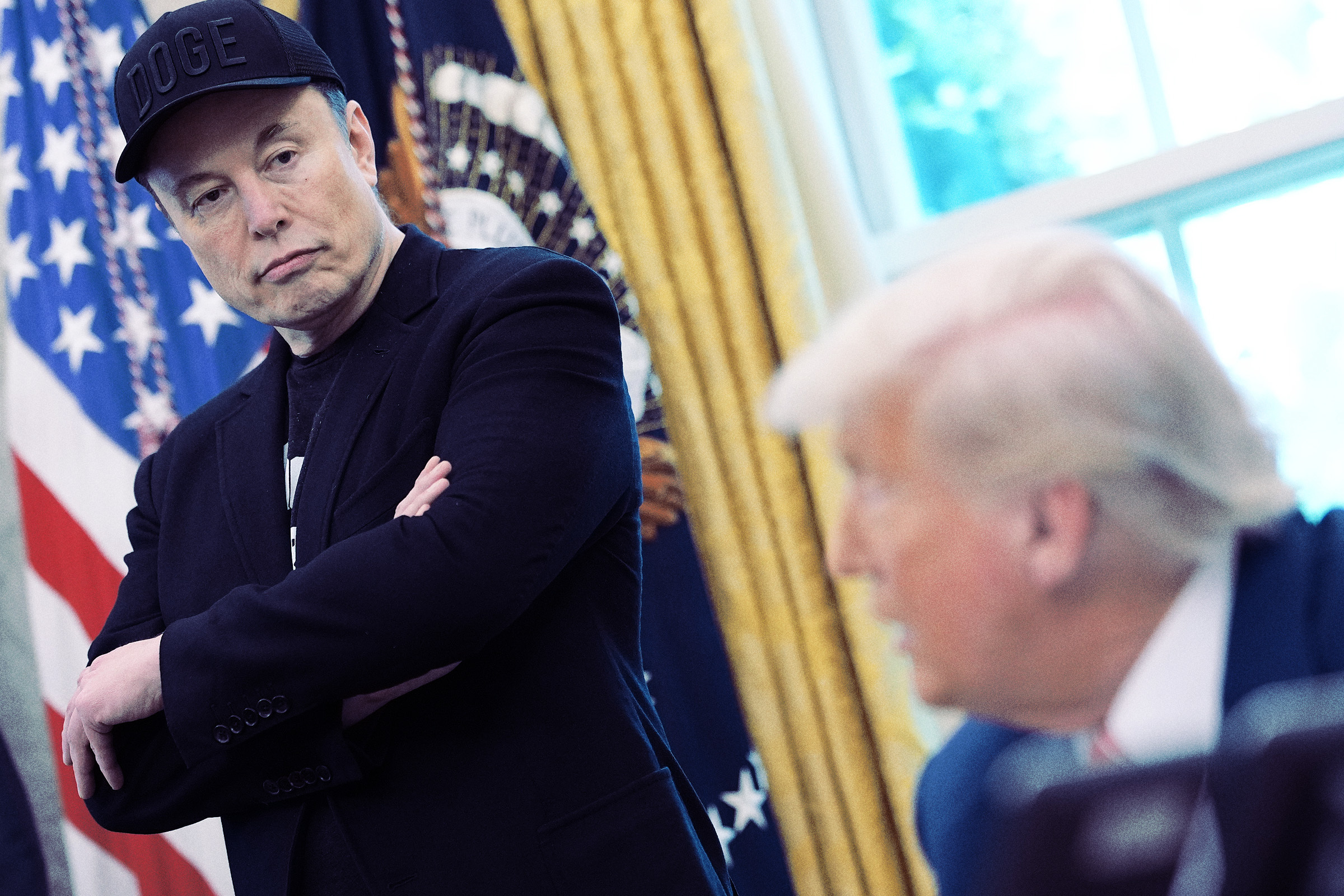
Trump Shovels $4 Billion Directly to Elon Musk, Who Spent a Fortune Getting Him Elected

1 June 2026 at 22:32

Elon Musk spent just shy of $300 million supporting Donald Trump’s reelection in late 2024 — a full-throated financial commitment that appears to be paying off in a big way.

Musk’s space company SpaceX, in particular, has massively benefited from the duo’s on-and-off-again relationship, scoring billion-dollar deals with the government.

Most recently, Reuters reports, SpaceX was awarded a $4.16 billion contract with the US Space Force to develop detection satellites that can track and target airborne threats. Just days earlier, the military arm awarded the company a separate contract, worth $2.29 billion, to build a military communications network in low-Earth orbit to support ground-based operations.

Besides the impossible-to-overlook role of Trump and Musk’s cozy relationship, the timing of the announcement will raise plenty of eyebrows. SpaceX is expected to go public soon at a valuation of north of $1.75 trillion, a blockbuster IPO that could directly benefit from a government partner signing a flashy contract.

The latest threat detection contract is part of the Trump administration’s so-called Golden Dome missile defense system. While plenty of fundamental questions remain over its design, the network could cost well over $1 trillion to build out, according to experts, which would be far than the White House has estimated.

The threat detection satellite contract, called the Space-Based Advanced Moving Target Indicator, will see SpaceX develop what Reuters likens to an “interconnected system-of-systems” that collects and analyzes data from a host of different sources, from space-based sensors, to secure communication links.

Zooming out, cushy government contracts have long played a key role in the flourishing and very survival of Musk’s space venture. According to an analysis by the Washington Post last year, SpaceX had received $38 billion in government contracts, loans, subsidies, and tax credits, as of February 2025.

Given their budding relationship and the latest multibillion-dollar contracts, that number has already grown substantially — and will very likely continue to grow, especially as SpaceX looks to go public.

The company is also set to play a key role in the Trump administration’s efforts to return astronauts to the surface of the Moon, and was awarded a $2.9 billion contract in 2021 to build the requisite lunar lander.

More on SpaceX: SpaceX Announces Plans to Put Billionaire on First Rocket to Mars

The post Trump Shovels $4 Billion Directly to Elon Musk, Who Spent a Fortune Getting Him Elected appeared first on Futurism.

Meta’s AI Support Bot Is Giving Hackers Access to Other People’s Instagram Accounts Just by Asking

1 June 2026 at 21:44

In March, Mark Zuckerberg’s Meta announced a new Meta AI support assistant feature on both Facebook and Instagram, providing users with a way to “resolve account problems” and help in taking down any offending impersonator accounts or scams.

Besides highlighting the tech industry’s seemingly insatiable appetite for automating customer service-level jobs with AI, the new feature appears to have backfired spectacularly. As 404 Media reports, the chatbot happily obliged when hackers asked it for access to high-profile Instagram profiles.

The ruse is shockingly simple: after matching the account owner’s geographic region using a VPN, the hackers asked the support chatbot to change the email address associated with the profile, thereby allowing them to successfully complete two-factor authentication. Worse yet, the vulnerability has been around for several months already, according to Telegram group messages reviewed by 404 Media.

“t’s either the new Meta Accounts Center glitching out or my Instagram account is being targeted in a hacking attempt,” former Meta researcher and self-proclaimed hacker Jane Wong wrote in a Threads post. “It appears that my password has been changed without my knowledge / I was not able to log in using my password.”

The exploit highlights glaring cybersecurity issues that continue to plague AI-powered chatbots. We’ve seen countless instances of large language model based tools being jailbroken, tricked into telling lies, or even hallucinate made-up company policies leading to plenty of confusion and even lawsuits.

Experts have also long warned against handing AI chatbots personal information, citing the risk of data leaks. Meta, in particular, has garnered a reputation for continuously treating user data with little care. In March, for instance, The Information reported that an in-house AI agent had caused a critical security incident at Meta, exposing sensitive user data to people without proper authorization.

While it’s unclear whether they were connected to the latest exploit, the news comes after several high profile Instagram accounts, including former president Barack Obama’s and Space Force chief master John Bentivegna’s, were hacked.

Hackers have been offering access to high-profile accounts in exchange for small amounts of money by using the vulnerability, per 404 Media.

Fortunately, Meta appears to have patched the issue, but considering the exploit was discovered months ago, the damage could be extensive.

More on Meta: Meta Workers Say They’re Seeing Disturbing Things Through Users’ Smart Glasses

The post Meta’s AI Support Bot Is Giving Hackers Access to Other People’s Instagram Accounts Just by Asking appeared first on Futurism.

Dick’s Sporting Goods Launches AI Personal Trainer to Fix Your Horrible Golf Swing

1 June 2026 at 19:50

These days, retailers are increasingly hitching their wagon to the AI horse: big box stores like Target have issued guidance that they’re not responsible for any errant purchases its AI agent charges to your credit card, while chain restaurants like Taco Bell and Pizza Hut have forced AI into their services, with dismal results so far.

Now, sports retail giant Dick’s Sporting Goods is getting in on the hype with its own AI personal trainer. Called “Coach by Dick’s,” the system will be an AI agent meant to give athletes tips on upping their game, which will of course include targeted ads for new sports equipment, Retail Dive reported.

According to a Dick’s press release, the AI system “delivers immersive conversational experiences that go beyond transactional shopping, guiding athletes using timely, relevant data and adapting to their stated preferences, goals and behaviors.”

Built on the Adobe Brand Concierge platform, the whole thing goes live on the Dick’s mobile app in June, at which time athletes will be able to “access training pro tips and product education grounded in Dick’s sport knowledge.”

Whether you ask for advice improving your forehand, or for tips on navigating the basketball league you just joined, Coach by Dick’s is overtly geared toward getting you to the checkout line.

As Dick’s chief technology officer Vlad Rak said in the press release, “Coach by Dick’s helps guide athletes to the right product, the right fit, and trusted expertise so every interaction is personal to what they need.”

Needless to say, how this plays out in reality is anybody’s guess — especially where physical activity is concerned, where misinformation or improper training from an AI chatbot could easily lead to debilitating injuries. We’ll be watching.

More on AI in retail: New York’s Beloved Bodegas Are Filling Up With AI Slop

The post Dick’s Sporting Goods Launches AI Personal Trainer to Fix Your Horrible Golf Swing appeared first on Futurism.

Sports Betting Scandals Are Tearing College Football Apart

1 June 2026 at 18:57

The rise of gambling platforms like DraftKings and Polymarket has supercharged a timeless phenomenon: sports stars ruining their careers by placing bets on their own games.

The latest case rocking the world of college sports is instructive. According to reporting from Fox News, Texas Tech star quarterback Brendan Sorsby is seeking an injunction in a Texas district court after the National Collegiate Athletic Association suspended him over hundreds of bets he’s placed throughout his four-year college football career, in direct violation of Association rules.

If granted, the court order would functionally allow Sorsby to play football during his senior year — while his lawsuit against the NCAA works its way through the courts.

Sorsby previously admitted to placing hundreds of bets worth some $90,000 through family members and friends, including on games he himself was playing in while at Indiana University and Texas Tech. He allegedly helped himself to a buffet gambling apps — according to court filings, Sorsby frequented books hosted by FanDuel, Underdog, Prize Picks, and Hard Rock Bet. After the allegations came to light, the young QB went so far as to check himself into gambling rehab for several weeks, CBS Sports reported.

“I want to be clear that I never bet to make money,” Sorsby wrote in his court statement. “Given the money I had and earned from NIL [name, image, and likeness], the total amount of money I made from 2022 to 2025 was not a big deal to me. I never kept track of my betting over time, but I’m pretty sure I lost more than I won.”

His case comes as college-aged men are increasingly losing themselves to gambling on sports betting apps and prediction markets like Polymarket and Kalshi, which are really just betting parlors by another name.

Back in January, the Associated Press reported that federal investigators had closed in on a massive scheme to rig games for bettors by exploiting students playing in the NCAA as well as the Chinese Basketball Association. In Fall of 2025, two separate investigations uncovered at least nine student-athletes who had manipulated their on-court performance to make sure certain bets hit. At the time, the NCAA said it was looking into 30 separate violations allegedly committed by current or former players.

Though the NCAA prohibits student athletes from betting on any game — whether they play in it or not — the culture around college sports is a breeding ground for gambling companies. Sportsbook advertise heavily in NCAA-adjacent spaces, for example, by partnering with broadcast networks like ESPN or even universities themselves.

In a society where college students are inundated with gambling ads — and prediction markets, not lawmakers call the shots — who’s really to blame when fledgling sports stars decide to join in on the fun?

More on sports: Fans Aghast as New York Jets Say They’re Switching to AI

The post Sports Betting Scandals Are Tearing College Football Apart appeared first on Futurism.

Scientists Say They’ve Cracked Mystery Behind a Dozen Strange Signals From Deep Space

1 June 2026 at 18:50

Since 2022, astronomers have been tracking highly unusual bursts of radio emissions that repeat at precise intervals, ranging from a few minutes to several hours. Some pulse for more than 30 years, while others wink out after only a couple of days. Scientists have discovered of a dozen of these sources so far, adding to the mystery and prompting plenty of speculation over their possible origins.

In an effort to better understand these “long-period radio transients,” an international team of scientists honed in on ASKAP J1745, a highly polarized repeating radio burst first detected by the Australian Square Kilometre Array Pathfinder (ASKAP) telescope.

As detailed in a new paper published in the journal Nature Astronomy, several different telescopes observed this burst across a broad spectrum of light, including X-ray and radio waves, giving them an opportunity to figure out what’s behind the phenomenon once and for all.

“Bearing the same message in three forms of writing, the famous Rosetta stone once helped scholars decipher ancient Egyptian hieroglyphs,” wrote coauthor and University of Sydney Astrophysics PhD Candidate Kovi Rose in a writeup for The Conversation. “Similarly, this extra information we found about ASKAP J1745 will help astronomers better understand the mystery of all long-period transients.”

They found that long-period transients likely aren’t caused by pulsars, the spinning and highly energized remains of dead stars, which had emerged as a popular theory among researchers. That’s because they repeat far slower than the average pulsar, which repeats every few seconds, as Rose argues.

The team concluded that ASKAP J1745 is likely a “cataclysmic variable” star, or a system made up of a pair of stars, with one of them being a white dwarf — the dense stellar core left over after a relatively low-mass star has exhausted its fuel. Rose and his colleagues believe the radio burst may be caused by the white dwarf accreting material from the other star, a process that generates heat and thereby releases X-ray light.

The pulsed radio light, on the other hand, is “typically caused by energetic particles interacting with strong magnetic fields,” as Rose explains. “Here, we have the perfect combination: two stars with strong magnetic fields (typically thousands of times stronger than an MRI machine), with charged particles flowing towards the white dwarf from the other star.”

“The simultaneous radio and X-ray observations provide an unprecedented view of how magnetic fields, accretion, and orbital motion interact, revealing behavior we had never before observed in a cataclysmic variable,” said coauthor and Institute of Space Studies of Catalonia researcher Nanda Rea in a statement.

In short, the findings shed light on the possible origin story of other long-period transients, with ASKAP J1745 acting as the deciphering Rosetta stone.

“We have spectroscopically confirmed [ASKAP J1745] as an accreting cataclysmic variable, identified through characteristic optical emission lines and an ongoing X-ray outburst,” the team concluded in its paper. “Our results strengthen the link between at least some LPTs and white dwarf binaries.”

Yet the researchers still have plenty of more work left to do to get a full picture of the odd phenomenon. For one, the team can’t rule out that ASKAP J1745, which remains hard to pin down, is unique when it comes to these transient signals.

Nonetheless, it’s an exciting first piece of the puzzle, and the team is hopeful to catch more signals in the act.

“Each new discovery is helping us piece together the bigger picture,” Rose explained in a statement. “We’re only just beginning to understand this new class of cosmic events.”

More on radio bursts: Astronomers Intrigued by 25 Mysterious Repeating Radio Signals From Deep Space

The post Scientists Say They’ve Cracked Mystery Behind a Dozen Strange Signals From Deep Space appeared first on Futurism.

Unfortunate Company Accidentally Blows Half a Billion Dollars on Claude in One Month

1 June 2026 at 17:50

Ever regret picking up everyone’s tab after getting the check? Something like that is probably going through the mind of the CFO of an unnamed company which reportedly racked up half a billion dollars in Claude usage fees in a single month.

The bonkers figure comes from new reporting by Axios on how organizations that rapidly adopted AI are now reckoning with its exorbitant costs, which are mounting in tandem with skepticism over the benefits the technology is supposed to provide. 

Regarding the unnamed and deeply unfortunate company, an AI consultant told the outlet that it blew a staggering $500 million in a month after the small oversight of “failing to put usage limits on Claude licenses for employees.”

It’s an astonishing amount that speaks both to the actual costs of using AI tools — especially AI agents, which are more sophisticated and expensive — and the corporate zeal around embracing AI as quickly as possible. Which is more to blame is a matter of debate, but the breathless hype around AI’s ability to maximize efficiency is clearly blowing back on the tech’s evangelists.

On the cultural angle, many companies whose CEOs are drunk on spiked AI Kool-Aid have been encouraging employees to use AI as much as possible, a trend that some call “tokenmaxxing.” Meta now includes AI usage on employee’s performance reviews, for example. Amazon had an internal leaderboard that tracked how much its employees used AI tools, which it recently shut down after finding that some tryhards were directing AI agents do useless tasks to boost their scores, the Financial Times reported

Other unnecessary costs may be less obvious; a chief technology officer told Axios that employees at their company were using AI models to check the weather, something they obviously don’t need AI to do. Velastegui Ventures CEO and former chief AI officer at Microsoft Sophia Velastegui opined that another explanation for spiraling AI costs is that “most people default to automating tasks they dislike rather than tasks most valuable to the company,” per Axios.

AI advocates might argue that we’re going through a phase of experimentation, and that after companies figure out how to smartly use the tech, costs will come down. That could happen, but it might mean scaling back AI usage, something that the AI industry doesn’t want, especially not as leaders like OpenAI and more recently Anthropic are pushing trillion dollar valuations

Moreover, some AI providers have been raising the rates they charge for using their models, placing tighter rate limits. That suggests that the AI rates could continue to rise as AI companies themselves grapple with the huge computing costs they’re footing to get customers on board with cheaper rates. Microsoft began cancelling its Claude Code licenses last month — despite, and perhaps because, of its immense popularity with software engineers.

More on AI: Corporations Reeling From Huge AI Costs With No Clear Benefits

The post Unfortunate Company Accidentally Blows Half a Billion Dollars on Claude in One Month appeared first on Futurism.

Authorities Alarmed as Mysterious Figures Emerge From Sewers

1 June 2026 at 16:15

City officials were were left scratching their heads following two separate incidents involving mysterious individuals climbing in and out of manholes in Brooklyn.

As local Fox affiliate WPIX reports, at least eleven people entered the sewers in the Gravesend neighborhood in southern Brooklyn late Thursday night, only to reemerge three hours later. A separate group of eight people also climbed into the sewers in Williamsburg — several miles away — mere hours later, leading to even more questions over whether the two incidents were in any way related.

And no, as far as we can tell, the individuals aren’t the Teenage Mutant Ninja Turtles, the beloved fictional gang of anthropomorphic crime-fighting turtle brothers who call the sewers of New York City their home, despite netizens drawing plenty of comparisons.

Surveillance footage obtained by local publication the Flatbush Scoop, shows what appears to be a group of men climbing out of the sewer one by one, removing dirty gear, loading equipment into vehicles, and driving away.

🚨 SHOCKING FOOTAGE – BREAKING STORY IN FLATBUSH: A bizarre and developing situation is unfolding on McDonald Avenue between Kings Highway and Avenue S, near Kosher Corner Supermarket.

Video shows approximately six individuals emerging from a manhole at around 2:00 a.m. after… pic.twitter.com/afm3L7Vfe8

— Moshe Schwartz (@YWNReporter) May 29, 2026

Why anybody would want to spend time inside the city’s sewers, especially at such a late hour, remains a mystery. Were they perhaps trespassing to explore the area and record “urban exploration” videos for social media — or were they possibly hiding contraband?

Police officials have ruled out any apparent links to terrorism, according to CBS News, and no arrests have been made.

The New York City Department of Environmental Protection was not pleased, emphasizing that entering the sewers isn’t just illegal, it’s dangerous as well.

“Sewers can contain numerous hazards, including noxious and potentially deadly gases, unstable surfaces, flooding risks, and confined spaces,” an agency spokesperson told WPIX. “For these reasons, members of the public should never enter a pipe, drain, catch basin, manhole, or outfall.”

There’s precedent to the baffling incidents. Three people who climbed into the sewers in Brooklyn’s Bensonhurst neighborhood in April 2025 were eventually charged with burglary and criminal mischief.

“Last time I heard about this was ‘Ninja Turtles,” local resident Lou Venturelli told CBS at the time.

More on sewers: Explosive Russian Sewage Leak Spurts as High as High-Rise Buildings

The post Authorities Alarmed as Mysterious Figures Emerge From Sewers appeared first on Futurism.

Neighbors Horrified by Data Center Twice the Size of Manhattan

1 June 2026 at 15:49

TV personality and businessman Kevin O’Leary is looking to construct a mammoth data center facility more than twice the size of Manhattan in Utah’s broader Salt Lake City region.

As Slate reports, the megalomaniac plans for the “Stratos Hyperscale Data Center” would see dozens of data center buildings, research facilities, and even worker housing be constructed across 40,000 acres of unincorporated land in Box Elder County, which is home to over 60,000 residents.

Given the widespread backlash to data centers across the entire country, it shouldn’t come as a surprise that many of these residents are now rushing to council meetings to forcefully refute the plans. After all, they’ve watched as other areas that welcome the facilities struggle with rising electricity prices, stressed water systems, and noise pollution.

Worse yet, the Great Salt Lake is already in crisis: it’s rapidly disappearing amid devastating droughts across the state. An extremely resource-intensive data center could place a massive new strain on it, regardless of the many reassurances from developers.

Despite initially setting aside a vote on the Stratos construction project, county commissioners eventually pushed forward, arguing that they had the “obligation” to start building, as Slate reports.

The debate drew thousands of negative comments, with hundreds of angry residents piling into a May 4 commission meeting, an all-too-familiar sight as countless Americans are desperately trying to publicly denounce plans for similar data centers in their counties.

Behind closed doors, Box Elder County commissioners eventually approved the data center, triggering an even louder outcry. Meanwhile, county attorneys argue that voters don’t have a legal say in the matter, rejecting a push for a referendum. As the Salt Lake Tribune reported last week, opponents said they were looking to take legal action after being shut out of the approval process.

“To me, and to other people I’ve talked to, it felt like it was done in the dark: backroom deals and assurances made with no transparency or government accountability,” Salt Lake City resident Larry Curtis told Slate.

Stratos remains adamant that the data center will be a boon for the region, creating 2,000 permanent jobs. Critics, though, say that figure is far too small for the sheer scale of the operation.

It’d be a fraught debate anywhere, but the backdrop here is grim: residents have been watching as the Great Salt Lake continues to shrink, with snow and rain becoming extremely sparse.

“In the past, one thing I could’ve agreed with [Utah governor Spencer Cox] on was that we need to save the lake,” resident Stephen Otterstrom told Slate. “Now this puts into question whether there is any sincerity in that.”

Yet the tides could soon start to change as the public blowback grows. The outcry has been loud enough for local politicians to backpedal after initially supporting the data center, as they realize it’s a major liability that could endanger their chances of being reelected.

More on data centers: You’ll Never Guess Trade Unions’ Position on AI Data Centers

The post Neighbors Horrified by Data Center Twice the Size of Manhattan appeared first on Futurism.

❌