Apple’s record stock performance leads into a discussion of Vision Pro and John Ternus’ explanation of its long-term potential. The MacVoices Live! panel considers spatial computing’s growing role in medicine, productivity, and professional workflows, along with whether the technology is ready for broader adoption. They also examine iPhone battery shipping limits, SoftRAID 9's support of RAID 6, and local versus cloud storage.
Conventional gym etiquette involves carefully wiping down the surfaces of any machines or equipment after using it. Businesses usually provide customers with wet wipes, or simple sprays and towels, to keep faux leather padding and other public surfaces pristine and sanitary.
But during professional events, that level of cleanliness isn’t always guaranteed. Organizers of a recent Hyrox competition in China, the spiritual successor of the Crossfit craze, have been accused of allowing participants be exposed to a trail of human waste — left behind, memorably, by the athlete who went on to win the competition.
As The Guardian reports, Australian world record holder Joanna Wietrzyk used shared stations, including rowing machines, sleds, and medicine balls, while “faecal matter” was “visibly running down her legs,” a horrifying incident vaguely reminiscent of one of the most infamous and reviled videos in internet history.
The incident drew an outburst of disgust across social media.
“I guess I’m never doing a Hyrox event,” one user wrote in a post on Bluesky. “Oh my god.”
“Saw a big Hyrox poster at the gym and all I thought of was that lady shitting herself,” another tweeted. “That’s their brand now.”
“This should result in a hard stop for the competitor because the public health risk is more important than the medal,” one user argued. “Hyrox has way too many shared touch points and surfaces to let this continue.”
Others used the opportunity to poke fun.
“A s****y situation for all parties and tough for Hyrox to save faeces,” another joked.
Organizers were criticized for allowing the competition to continue despite having clear bio-contaminant rules in place.
“Protocols designed for elite competition and mass participation became blurred, creating ambiguity in how they were applied and understood,” Hyrox World wrote in an statement, in one of the more acrobatic euphemisms we can recall.
“Hyrox made a mistake by not reacting immediately during the race,” he wrote. “In the end it is my job to foresee these potential incidents — and I did not.”
“Of course, we started improving event processes,” Fürste went on, “plus making rulebook changes immediately.”
The shocking incident highlights the fact that professional endurance athletes soiling themselves isn’t as rare as it may seem. Long distance runners, for instance, are known to suffer from “runner’s diarrhea,” like Paula Radcliffe, who had to relieve herself in full view of the public during the 2005 London marathon.
Radcliffe still won with a time of 2:17:42 — albeit with a little less dignity than she started.
Here’s a hazard you probably didn’t expect from too much screen time.
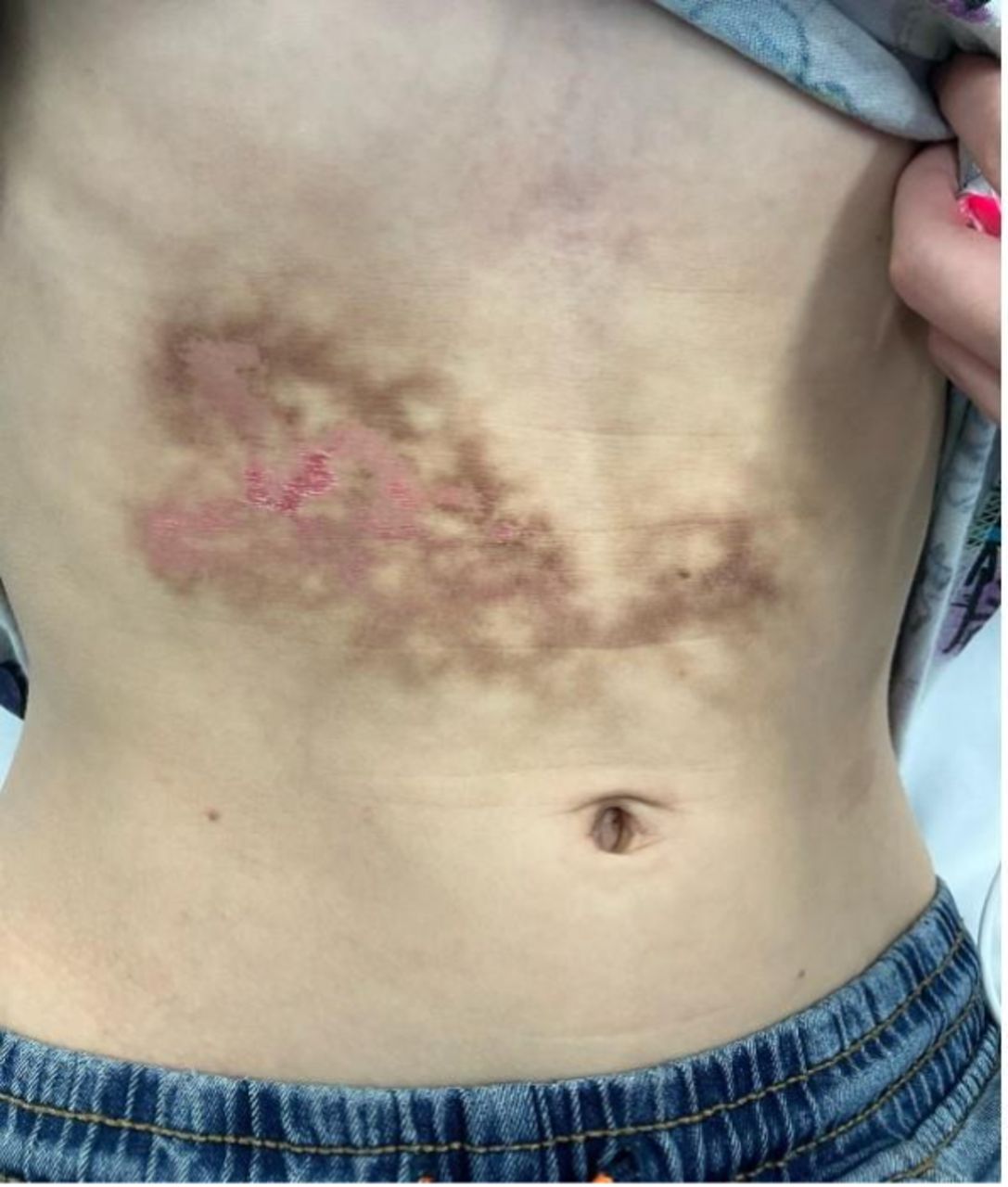
Two doctors in the UK reported in the journalBMJ Case Reports the bizarre case of a young boy whose laptop literally toasted his skin over weeks and maybe even months of using it. Thankfully, the kid’s fine and was never in any real pain, so we can dive into this medical oddity without feeling too guilty about it.
According to the eyebrow-raising paper, spotted by Ars Technica, the boy was first brought into an emergency department with reddish markings over his abdomen in a lace-like pattern. Nurses first described it as “spontaneous bruising,” but they didn’t find skin abnormalities anywhere else on his body. The boy also wasn’t in any pain, and didn’t have any history of trauma or illnesses that could explain the markings.
When doctors did a chest x-ray, they found some kind of build up in his lung, though it was unclear what it signified. The boy admitted that he got pushed into a chair while play-fighting with his siblings a week ago, leading the doctors to search for signs of a traumatic injury. But after a CT scan, they didn’t find any. They weren’t completely sure of what was going on, but the doctors discharged him with antibiotics for a suspected lung infection.
The boy was back several weeks later, though — and the rash was even worse. Parts of his abdomen were pinkish, exhibiting clear signs of skin breakdown, the doctors wrote, with mottled patches of dark brown. (You can view a photo, at your own peril, here, via Ars.)
That’s when the doctors began to suspect some kind of heat damage. But when they asked the boy about heat sources, nothing turned up.
Then, as they continued to question him, the boy mentioned something crucial: he was home-schooled and did most of his assignments on his laptop, sometimes for eight hours a day, often while charging. And of course, he usually rested the laptop on his torso while lying down.
This supported a diagnosis of a erythema ab igne (EAI), also known as “toasted skin syndrome.” It’s caused by repeated, close exposure to low heat, which slowly damages the skin over time. Patients often get it from heat pads and space heaters, but a warm laptop can cause it, too. It causes a distinctly lace-like rash, which explained the boy’s symptoms.
EAI is benign, and in most cases, its rashes disappear on their own once exposure to a heat source is stopped, taking weeks to months to heal. Once properly diagnosed, the boy’s rash was dressed, and he came back to the hospital several months later to confirm that he had fully healed. Now that he’s okay, he might try studying at a desk instead.
The myriad horrors of the US healthcare system have spawned generations ofmedical tourism from the wealthiest country on Earth to the periphery: Cuba, Mexico, Costa Rica, Canada, Turkey, and Thailand, to name just a few.
Now, Shanghai is quickly rising as one of the top destinations for cancer patients, as China’s biotech sector has spun an experimental treatment developed in the US into a standalone industry.
New reporting by the Wall Street Journal took a look at this fast-growth industry, centered around chimeric antigen receptor T-cell therapy, or CAR-T for short.
CAR-T is essentially a personalized form of immunotherapy, in which a patient’s own white blood cells are engineered to identify and attack specific proteins found in cancer cells. Though the process was first developed by US biotech giants, their inability — or unwillingness — to lower the cost and increase supply of the treatment has led to shortages throughout the country.
That’s where China comes in. As director of the CAR-T program at the University of Texas MD Anderson Cancer Center in Houston Sairah Ahmed told the WSJ, this therapy can cost around $150,000 to $230,000 in China — still a life-altering bill, but a sizeable discount compared to an insurmountable $550,000 to $850,000 in the US.
This, Ahmed says, is why she advises some patients to seek out treatment in the People’s Republic.
“China has basically done to CAR-T cell therapy the same thing that it’s done to other industries, which is, they’ve industrialized it,” Ahmed explained.
China’s CAR-T services aren’t just cheaper, either. They’re also faster, and come with a host of complimentary after-care treatments, the WSJ notes. As MD Anderson Cancer Center’s explainer on CAR-T therapy advises, the process of extracting and bio-engineering a patient’s cells to fight cancer can take over three weeks in the US. Compare that to China, where the WSJ reports labs near Shanghai can “crank out” the therapy in just a matter of days.
An important caveat here is that CAR-T cell therapy isn’t a catch-all for every type of cancer, and it’s typically only administered after other treatments have failed. It’s not exactly a walk in the park, either, requiring months of recovery and check-ups from a range of physical, neurological, and psychological health specialists. Still, if you had to go through with it, your first step should clearly be pricing out some flights to China.
GLP-1 weight loss drugs are changing lives in more ways than one.
In a new piece for The Guardian, the newspaper’s readers share how the weight loss journey that drugs like Wegovy, Ozempic, and Mounjaro have set them down on have drastically affected their interpersonal relationships — sometimes for the better, and sometimes for the worse.
Many of the GLP-1 users seem to harbor a sense of shame, hiding their use of the drugs. In their minds — and perhaps in the minds of those around them — they undermine the sense of accomplishment that comes with losing weight the old fashioned way, instead feeling that they “cheated” or are “being dishonest” about how they achieved their goals.
One parent wrote of how their 20-year-old daughter felt “worried, angry, and jealous” after she discovered they were hiding their use of Wegovy from her. “We had discussed weight, identity and GLP-1s, but I was so ashamed of going on it that I didn’t want to tell anyone,” they wrote, noting how food was a “huge part of our family life.” They wondered to themselves: “What kind of signal am I giving her and her brothers?”
Though they feel “mostly positive” about losing nearly thirty pounds using the drug, they added, they also can’t shake the feeling that they’re “cheating.”
“So much of my insecurity about my weight and appearance is offloaded on to an injectable pen,” they added.
Another wrote that despite their friends feeling pleased about their weight loss, they’ve kept their GLP-1 drugs secret for nearly two years. Their partner, they believe, “has felt insecure at times because of my glow-up.”
“I don’t want people to think I’ve cheated. I guess there is still fat shame somewhere,” they wrote.
Others don’t feel this guilt, but are frustrated that their spouses don’t realize how transformative the drugs have been for them. One complained that theirhusband was so unsupportive of their use of GLP-1s that they no longer could share their experience with him.
“This has been a life-changing drug so far, and I can’t share it with the person I’m closest with,” they lamented.
Though they’ve struggled with obesity their whole life, their “husband scoffs at characterizing obesity as a chronic and recurring disease” and “thinks people should just make better lifestyle choices and stop making excuses — which tells me a lot about how he views me, too.”
These downsides aren’t unique to GLP-1s. Significant weight loss has long been linked to divorce, and that doesn’t necessarily mean that someone who’s slimmed down is now feeling their oats. Weight loss can come with dramatic changes to a person’s lifestyle — from the food they eat and the exercise they do to how they socialize — and that can be a lot for someone close to them to adjust to.
“Relationships tend to develop a sense of equilibrium and predictability over time,” Lindsey Berisha, a clinical psychologist who’s worked with patients using GLP-1s for over a decade, told The Guardian. “When one partner undergoes a significant change, it can shift that equilibrium, and even positive change can create uncertainty for both partners.”
GLP-1s, of course, have made achieving this kind of significant weight loss much more accessible, which is why we’re now starting to hear about “Ozempic divorces.”
These days, large language models are pushing the line between schizophrenic break and reality closer than ever before.
In a wild new post that’s going viral on X-formerly-Twitter, an enterprising young biochemist named Douglas Yao showcased a new drug he’s been developing with the aid of ChatGPT. He’s not employed by any pharma company, and his drug lab is setup on a couple folding tables in his garage.
Specifically, Yao enthuses about a new drug he calls “PAC-3310,” which he says is meant to treat schizophrenia. “It was designed by ChatGPT,” Yao explains, “and I synthesized it in a chemistry lab I built in my garage.”
The result is a small vial of yellow powder — the first sample of 3310, apparently — which Yao says is modeled after the recently-authorized antipsychotic Cobenfy, “but improved.”
This vial contains a new drug called PAC-3310. It was designed by ChatGPT, and I synthesized it in a chemistry lab I built in my garage.
PAC-3310 is a new selective M4 muscarinic receptor agonist for treating schizophrenia – similar to the recent breakthrough drug Cobenfry, but… pic.twitter.com/o7z6iLR50T
On his GitHub page, Yao boasts that he’s used AI to “design several thousand new small molecule drugs” over the past year, including a “new Alzheimer’s drug,” which he’s developing in addition to the schizophrenia treatment.
“I then taught myself synthetic chemistry, built a chem lab in my garage, and synthesized a hundred of them,” he continued. “I’m now testing these compounds in cell lines and mice.”
But whatever the one-man pharma lab hopes to accomplish is difficult to say. Yao references the fact that “drug developers typically spend tens of millions of dollars generating pre-clinical efficacy evidence for a new drug,” saying that “my approach can do this at 1/1000 the cost.” This seems to suggest dreams of someday manufacturing the various drugs on a massive scale for human consumption — a process that would take years of grueling and expensive work for a well-resourced drug lab, let alone a solo entrepreneur using a box fan as a fume hood.
For instance, to even approach the Food and Drug Administration’s “New Drug Application” — itself a costly 12-month process requiring inspection of the facility where the drug will be manufactured — one first has to conduct rounds of preclinical testing followed by three phases of clinical trials. Forget “tens of millions,” as Yao mentions; this is a process that can easily cost several billion.
Even then success is far from guaranteed, as only 13.8 percent of drugs that enter clinical trials go on to obtain full approval from the FDA.
While Yao might have been right at home in the free-wheeling research landscape of the 1970s, we no longer live in a world where a mad genius can synthesize hundreds of new drugs a year from a private lab. For one thing, the regulatory environment is much more demanding, as outlined above, to say nothing of the fact that all the low-hanging fruit has been picked from the vine decades ago.
When it comes to Yao’s ChatGPT-generated Alzheimer’s treatment, the landscape is particularly fraught. As one 2019 study found, no new drug has been approved to treat Alzheimer’s since 2003, and not for a lack of trying: as the study notes, over 200 proposed substances meant to treat the disease have either failed in clinical trials or been abandoned by their creators.
The graveyard of failed Alzheimer’s treatments is so vast that the renowned organic chemist Derek Lowe has built a blog on drug discovery which routinely features after-actionreports on failed substances designed to treat the neurodegenerative disease. Simply put, to think that ChatGPT alone is enough to overcome these scientific and institutional hurdles is delusional.
Replies to Yao’s post were quick to point out the irony here, of using ChatGPT — which is well-known for leading vulnerable users down dangerous breaks from reality — to synthesize drugs to treat cognitive diseases like Alzheimer’s and schizophrenia.
“Hello schizophrenic, take this medicine that chatgpt made for you,” one poster quipped on X.
Another replied that “believing you single-handedly cured schizophrenia on a commercial laundry folding table in a garage is, ironically, a classic symptom of schizophrenia.”
For seafood lovers, there are few things more appealing than a simple slab of raw tuna — a fish whose fatty, savory, and tender muscle tissue has been a delicacy for thousands of years.
Unfortunately for those foodies, fresh raw fish comes with the distinct possibility of parasitic infection. Off the coasts of southern Brazil, that risk is rising, as hauls of the common skipjack tuna come with the near certainty of parasitic contamination.
Out of 53 skipjack, marine researchers counted over 1,600 worms infesting nearly every organ of every fish hauled in from the ocean. Only the kidneys and hearts of the tuna remained worm-free, the researchers noted. Everything else, including the muscle tissue we humans eat, was festering with flatworms and roundworms.
Though most preparation methods will kill the parasites, the images are pretty off-putting. As the researchers explain, the sheer volume of parasitic infection is alarming.
“These results highlight the importance of sanitary inspection and emphasize the importance of immediate evisceration to avoid the migration of larvae from the viscera to the musculature,” the authors write.
Still, parasitologists say the worms aren’t all bad. Though increased presence of worms also comes with more risk of infection, University of Washington parasitologist Chelsea Wood told ScienceAlert in a prior story that they can actually be a sign that the fish is well-sourced.
“Everyone assumes that worms in your salmon is a sign that things have gone awry,” Wood said. “But the anisakid [roundworm] life cycle integrates many components of the food web. I see their presence as a signal that the fish on your plate came from a healthy ecosystem.”
After health officials in Pennsylvania found that two young children died from measles, the Centers for Disease Control and Prevention is refusing to count their deaths as being caused by the deadly virus.
“This week’s measles outbreaks update will not include the two measles-associated deaths reported by the Pennsylvania Department of Health on Aug. 25,” the CDC posted on its website, in a high unusual announcement.
It’s a precedent shattering action. The New York Times called it an “extraordinary move for the CDC,” breaking with the agency’s long-standing procedure of accepting data shared by states.
The challenge by the CDC comes amid a political showdown between health secretary Robert F. Kennedy Jr, who oversees the CDC, and Pennsylvania’s Democratic governor Josh Shapiro.
At a news conference last week, Shapiro announced the deaths of the two children from measles and condemned Kennedy for spreading vaccine misinformation, saying that “there’s real life consequences for spreading misinformation.”
RFK Jr responded on social media by accusing Shapiro of taking “giddy delight” in their deaths and even suggested he may even “fabricated” them. The CDC’s own announcement that it would not be counting the deaths as measles related came just days after the public spat.
According to the latest reporting, one of the deceased was a newborn with a ruptured spleen, and the other was a child of unknown age. Both were unvaccinated and tested positive for measles, the Pennsylvania Health Department said, per the NYT. They came from Lancaster County, the center of a measles outbreak where 242 people have been infected with the disease so far, the most in the state.
Conflicting information over the children’s deaths gave rise to the heated controversy.
Though the state’s health department said both deaths were due to measles, Lancaster County coroner Stephen Diamantoni, a Republican, said that his office’s pathologist determined that the newborn — which was born infected with virus which it inherited from its mother — died of a ruptured spleen, not measles.
But some top medical experts have pushed back against Diamontoni. Measles can enlarge a baby’s spleen and make them prone to rupturing during birth, wrote Paul Offit, a renowned vaccine and pediatric infectious disease expert at Children’s Hospital of Philadelphia, in a widely reported essay on Substack. Once the spleen ruptures, it’s difficult to determine if it was enlarged after the fact.
Offit called on Diamontoni to provide more details surrounding the newborn’s death — and that, if it wasn’t measles, to offer an alternative explanation for the baby’s ruptured spleen. Since ruptured spleens in newborns is exceedingly rare and can be caused only by a handful of disorders or infections, he said, if one of those conditions wasn’t found in the child, then the “only obvious cause left would be measles.”
None of this explains why the CDC also refused to count the other child’s death, few details on whom have been released ot the public.
The Department of Health and Human Services, which oversees the CDC, defended its decision in a statement.
“The two measles-associated deaths announced by Pennsylvania have not been confirmed based on the information currently available to CDC,” it said, per the NYT. “The information currently posted reflects the best available information and our commitment to transparency and telling the American people the truth — a foundational principle of the Trump administration.”
If you’re one of the many people chowing down on melatonin gummies to help get to sleep, you may want to check out this study.
A new piece of research published by the American Heart Association made an alarming discovery about long-term use of melatonin supplements, an over-the-counter sleep aid used by tens of thousands. Basically, those who use melatonin over a year or more had a 90 percent higher risk of developing congestive heart failure over a five-year period.
Before you go flush your gummies down the toilet, there are a few caveats. For starters, the findings weren’t based on a clinical trial, but on data from a large database of anonymous health records. Researchers drew from data on chronic insomniacs, specifically, splitting them into two groups: those who have dosed the sleep-regulating hormone over a period of 12 months or more, and those who suffer without.
Still, the results are clearly worrisome. Overall, the study found that 4.6 percent of the melatonin group went on to develop heart failure, compared to 2.7 percent for the control group.
That wasn’t the only data point suggesting it may be time to wean off the ‘tone. A secondary analysis performed by the researchers found that melatonin users were nearly 3.5 times more likely to be hospitalized for heart failure than those in the other group, with hospitalization rates of 19.0 and 6.6 percent, respectively.
“Melatonin supplements are widely thought of as a safe and ‘natural’ option to support better sleep, so it was striking to see such consistent and significant increases in serious health outcomes, even after balancing for many other risk factors,” Ekenedilichukwu Nnadi, the study’s lead author and chief resident in internal medicine at SUNY Brooklyn, said in a press release.
While more in-depth research is needed to confirm the study’s results, the early findings indicate that melatonin use comes with some serious risks in the long-term.
“Melatonin supplements may not be as harmless as commonly assumed,” as Nnadi explained. “If our study is confirmed, this could affect how doctors counsel patients about sleep aids.”
It’s no secret that doctors across the world are using AI tools to do stuff from taking notes to looking up questions. But what about the next generation of doctors still in training? According to two medical professionals on the ground, the situation is looking pretty alarming.
With AI being used by med students, “the danger is not just deskilling but never-skilling,” write Simar Bajaj, a journalist and med student at the Stanford University School of Medicine, and Joseph Sakran, a trauma surgeon and executive vice-chair of surgery at Johns Hopkins Medicine, in an essay for The Guardian.
“Although a doctor who has forgotten how to reason is recoverable,” they added, “one who never learned how may not be.”
Bajaj and Sakran point to two alarming recent findings.
One is internal data showing that around two thirds of doctors in the US are using OpenEvidence, an AI chatbot specifically designed for clinicians. The technology is already prevalent and deeply woven into how medical professionals carry out their jobs.
The next is a new study published in the journal NatureMedicine that evaluated the reliability of these medical-specific large language models. Shockingly, the clinical AI tools performed worse at answering medical queries than general purpose chatbots like ChatGPT and Claude did, the work found. According to the authors, it performed about on par to Google’s AI Overviews, which are notorious for being wonky and inaccurate.
Even if AI tools may be handy for research — and putting aside the major questions over their reliability — they’re no substitute for relying on your brain, as fallible as it might be, because when you’re learning, “the struggle is the point.”
“For example, trainees once asked to build a list of potential diagnoses might struggle and offer an incomplete set, learning what they missed, sometimes painfully,” Bajaj and Sakran wrote. “Now, trainees can simply ask OpenEvidence and get a nearly perfect answer, complete with possibilities they might have never considered and none of the embarrassment of having overlooked them.”
Where AI is different from medical advances in the past is that it’s “not just expanding what doctors can see,” they wrote, “but inserting itself into the cognitive machinery that training is meant to build.”
“The process of deliberately crafting the note forces us to use our brains to really wrestle with what’s happening,” Jaideep Talwalkar, associate dean of educational technology and innovation at Yale School of Medicine, told Stat News. “There’s an importance in doing that with great repetition.”
Bajaj and Sakran have a few suggestions for how to deal with this. One is requiring trainees to periodically work through cases without any AI help, similar to how the Federal Aviation Administration advises aviators to periodically disengage autopilot and fly by hand. Of course, another powerful deterrent could be shame. A recent John Hopkins student found that doctors who used AI are viewed with scorn and skepticism by their peers.
Talk about homework: a large class of undergraduates at an unnamed university in Utah became the unfortunate subject of a severe public health response after an extraordinary bungle in a science lab.
In September of last year, the group of lab students were tasked with identifying a bacterium known as P. shigelloides, a relatively harmless pathogen known to cause diarrhea when ingested. But as lab results came in, students were alarmed to find the specimens handed out in class were actually the bacteria Neisseria meningitidis, a potentially deadly pathogen that causes meningitis.
Unlike P. shigelloides, the bacterium N. meningitidis calls for high-security practices, like double gloves, disposable clothes, and fit-tested N95 masks, as the bare minimum. (In one unfortunate case from 2012, a 25-year old microbiologist whose lab was ill equipped to handle N. meningitidis died mere hours after exposure to the aerosolized microbe.)
According to People, Utah public health authorities soon raided the Utah stockroom, finding samples labeled “N. meningitidis.” That discovery prompted a recommendation that all 33 of the exposed students begin a cautionary antibiotic regimen, especially given that the lab participants were only wearing gloves and lab coats at the time of exposure.
On top of the antibiotics dose, at least two people sought medical attention due to possible exposure symptoms, which included a painful and invasive spinal tap.
It was only after the frenzy that further professional lab tests identified the offending pathogen as Neisseria sicca, a bacterium “commonly found in the upper respiratory tract” that is “nonpathogenic in immunocompetent persons,” according to a recently-filed Center for Disease Control study of the Utah lab incident.
Student misidentification notwithstanding, the event underscores the importance of accurately labeling microbial cultures — lest aspiring biologists become victims of their own studies.
As of last week, the US had recorded 2,465 confirmed infections so far this year, already more than the 2,289 total cases in 2025. The last two years saw more total infections than the rest of the 21st century combined, as The Guardian reports, with 2026’s tally beating a 35-year record.
Now, in the midst of all that crisis crisis, a character has stumbled into the narrative who perfectly illustrates how it’s gotten so bad. As the LA Times reports, a measles-infected individual spent a whopping 11 hours at the Universal Studios Hollywood theme park last month, potentially exposing countless other visitors.
The Los Angeles County Public Health Department was forced to issue a stark warning: anybody who visited the amusement park on July 26 during teh hours between 10am and 9pm may have been exposed and should monitor for symptoms including fever, cough, or rash — and stay vigilant until August 16.
The virus is contagious up to four days before the characteristic rash appears on the skin, and up to four days after that.
Measles can easily spread through the air through just via talking or breathing, and can persist on surfaces for hours at a time.
The vaccine against it, available as part of the measles, mumps, and rubella combination (MMR) shot, is extremely worthwhile. Two doses are 97 percent effective in preventing a measles infection.
The department also urged “everyone to confirm their immunity and get the vaccine if needed, especially before traveling and attending crowded events.”
California has been hit particularly hard, recording at least three localized measles outbreaks this year so far. However, according to the state’s health department, all three outbreaks have ended.
According to the Centers for Disease Control and Prevention, there have been 38 new outbreaks in 2026 across the country so far this year, with several thousand cases spanning 47 states.
The danger to one’s health is substantial — especially to the unvaccinated. According to the CDC, roughly one in five unvaccinated people in the US who get measles are hospitalized. One out of 20 children with measles develop pneumonia. and one to three of every 1,000 children who become infected die from respiratory and neurologic complications.
In case you weren’t already feeling paranoid about how AI is shaping our future, scientists for the first time have used an AI model to create new and viable viruses that have never been seen in nature.
Before you panic, the work, detailed in a study published in the journal Science, involved creating viruses that only target bacteria and are harmless to humans. Bacteriophages, as they’re called, are an important medical intervention for targeting drug-resistant pathogens.
“This is an important milestone,” Patrick Cai, a synthetic biologist at the University of Manchester who was not involved in the study, told The New York Times.
Still, it’s an alarming testament to AI’s power and trajectory. The researchers at Stanford University and the Arc Institute trained an AI model to recognize patterns of genetic structure in nature to create new DNA molecules. These molecules were inserted into bacteria that, over time, turned into wholly new viruses, at the expense of killing their hosts.
In their research, which first gained attention last year but has now been peer-reviewed, the scientists used an AI model called Evo. Unlike a general purpose large language model, Evo is trained on billions of lines of genetic sequences, and for this work in particular, millions of bacteriophage genomes. But it still functions like an LLM, predicting what DNA building blocks — nucleotides — should follow each other like a chatbot predicts what words to spit out to finish a sentence.
The researchers chose to focus on a E. coli-killing virus called Phi X-174, a variant that’s so well studied that it serves as the equivalent of a lab rat in virology. Viruses in general are simple compared to complex cellular life, making them an ideal platform to test AI’s capabilities.
They used Evo to create new viruses based on Phi X-174, and it generated 700,000 candidates. They then narrowed it down to just 300 that they would recreate in the lab. Of those 300, 16 proved to be viable, infecting and killing their bacterial hosts.
There’s clear medical merit to using AI to create bacteria-slaying viruses, but there’s already fears that the technology could be abused to crank out pathogens that are deadly to humans.
“Although this is promising for life sciences applications, it also raises urgent biosafety and biosecurity questions. The ability to compose viral genomes using generative AI now exists; the governance to safely steer it does not,” warned Tom Inglesby and Moritz Hanke at the Center for Health Security at Johns Hopkins University in Baltimore in a perspective article.
Tom Ellis, a professor of synthetic genome engineering at Imperial College London who was not involved in the research, acknowledged this threat, but told The Guardian that it would be much harder to create more complex genomes and that controlling access to genetic data could stymy the threat.
And if someone were to deliberately engineer deadly viruses, he added, doing it by hand would probably be more practical.
“But honestly, the threat from full AI design and writing of a genome of a virus or bacteria is very overblown when we consider that just taking existing pathogens and making gain-of-function changes to their genomes is so much easier and much more likely to be a real pathogenic threat,” he said.
Prediction markets like Kalshi and Polymarket have long garnered a reputation for allowing users to make all kinds of ethically dubious bets, from the outcomes of deadly conflicts to mass famine.
As the New York Times reports, Kalshi will now even allow users to bet on whether clinical trials for potentially lifesaving drugs will succeed.
To critics, the move will effectively allow betting on the lives of patients trying a final intervention in the face of a lethal diagnosis. There’s even risk that those enrolled in these trials could choose to drop out if the market were to bet against a positive outcome.
“Turning loose a betting market in an ongoing randomized clinical trial really is a breach of scientific conduct,” Robert Califf, who served as FDA commissioner in the Biden administration, told the NYT.
Kalshi first announced its “biotech prediction markets pilot program” last month, the same day president Donald Trump’s teleprompter guy was busted for winning more than $100,000 on Kalshi by betting on what he would say.
The company argued in the announcement that a “publicly listed contract on a trial or regulatory outcome produces a continuously updated, public probability that reflects the weight of the evidence rather than the preferred messaging of the trial sponsor.”
In a statement to the NYT, spokesperson Jack Such argued that these bets wouldn’t undermine research integrity, but instead cut through the hype surrounding biotech companies and the drugs they’re working on.
Kalshi says it will prohibit betting by patients enrolled in a trial, as well as by employees of the company conducting it or its competitors, per the NYT. It will also ban betting on trials that “exclusively enroll minors,” at least at first.
But those enrolled in drug trials were left appalled by the news.
“We’re literally trying to stay alive,” metastatic pancreatic cancer patient Walter Ingaharro Jr told the NYT. “It’s not a game. The introduction of gambling into the process really creates an ethical mess.”
In an opinion piece for The Guardian, Boston University humanities professor Joshua Pederson talked about how his 12-year-old son has a “very aggressive tumor growing inches below his heart.”
“If Kalshi has its way, you could soon be able to bet on health treatments that could be essential to his survival,” Pederson argued.
While choosing a trial for his son’s cancer was a “terrifying experiment for which we feel ill-prepared,” turning to a prediction market instead of “our extremely qualified team of oncologists” feels “preposterous,” Pederson argued.
In short, it’s yet another example of prediction markets crossing a moral boundary by gamifying things with real-world consequences.
“The possibility that somebody out there might be wagering against my son, hoping that the treatment fails so they can make money, is enraging,” Pederson wrote. “How is this not just another type of ‘death market’ — like markets for war or assassination — that even Kalshi says it won’t abide?”
The headline of this story was updated to specify that the program would bet on the outcomes of clinical trials, and the piece was updated to more specifically refer to controversies around prediction markets like Kalshi, writ large, and to add details about Kalshi’s response.
For a president who upholds “Make America Healthy Again” as a load-bearing narrative pillar, Donald Trump has gone to remarkable lengths to make the US a breeding ground for a widening range of viruses, bacterium, and parasites — and no, we’re not talking about his cabinet.
Early into his second tenure as commander-in-chief, Trump and his cronies set to rapidly dismantling offices doing critical work on public health. His appointments were a one-two punch on longstanding institutions safeguarding the US from the ravages of disease: Elon Musk’s DOGE cut the government’s capacity to identify and track public health problems, while Robert F Kennedy Jr’s Department of Health and Human Services limited what the government was willing to do about them.
Case in point: the Centre for Disease Control has lost nearly a quarter of its workforce since January 2025, while those who remain have watched in horror as the CDC’s acting director cut the number of universally recommended childhood vaccines from 17 down to 11.
Examples of those kinds of policy faceplants abound, and the cumulative consequences will surely be felt for decades to come. And nowhere are the consequences of the Trump administration’s war on public health more obvious than in the diseases we’d previously had under control, but which are now surging back after a year and a half of MAHA.
There’s the cyclospora outbreak, of course, spreading from tainted lettuce to over 18,000 victims across 45 states. And those are just the ones we know about — the true extent may be far worse, as reporting delays create a major lag in fresh data. And while cyclospora flare ups come and go, it’s hard to overlook the fact that Trump officials made reporting of the parasite optional for the CDC in 2025, right before the largest known outbreak in modern history.
Separately, a nation-wide salmonella outbreak prompted officials to recall millions of cartons of eggs as at least 100 cases were reported throughout the country. Though salmonella reporting is still mandatory for the CDC, the Food and Drug Administration under Trump has delayed the implementation of a food traceability rule, designed to speed up the tracking of food borne illnesses back to their source.
Beyond foodborne illnesses, there are even more nasty bugs spreading around the country under Trump’s watch.
The formerly-eradicated measles is back, with over 2,300 American infected in 2026 alone, the highest number since 1992, Vox reported. Flesh-eating screwworms are ravaging livestock, as staffing cuts and mandatory budget reviews at the US Department of Agriculture slowed government containment efforts. Even the nightmarish botulism toxin has made it into the headlines, entering the food supply via contaminated infant formula after the Trump administration disbanded the National Advisory Committee on Microbiological Criteria for Foods — coincidentally right as the group was about to release a report on infant formula.
We could go on. While some will surely shoot back that these diseases are always hanging over us regardless of who sits in the Oval Office, that’s exactly the point.
Public health isn’t a game of checkers, where enemy pieces leave the board once they’re conquered. It’s more like a game of whack-a-mole, demanding quick reflexes, a mallet, and someone to wield them with unending focus. Under Trump, the mallet has been sold off to the highest bidder, while the player has wandered off, convinced the moles are a hoax.
For only the second time in its history, the American Red Cross has declared a “national blood supply crisis,” after donations fell to a four-year summer low.
The hotter summer months conventionally trigger blood shortages because people are more likely to injure themselves while spending time outdoors.
And this summer has been particularly extreme. According to the Red Cross, extreme heat, poor air quality, and widespread foodborne illnesses have compounded into blood donations dropping precipitously, causing supply levels to plummet to a historic low.
The news comes amidst record-breaking temperatures this summer, devastating heatwaves that have killed at least 25 people in the US. Public health officials are also battling an outbreak of an explosive diarrhea-causing parasite that’s has spread to 45 states.
As a result of plummeting donations, the Red Cross, which is the largest single provider of blood products, has “less than a one-day national supply of type O positive blood.” Type O positive is the most commonly transfused blood type, and highly valued because can safely be used to treat over 80 percent of the population.
The Red Cross declared its first-ever national blood crisis in January 2022, triggered by a previous low in donor turnout due to ongoing COVID-19 surge disruptions.
“Every donation has the potential to help save lives, and we urgently need everyone who is eligible to make an appointment to give blood as soon as possible,” said Red Cross Biomedical Services president Chris Hrouda in a statement.
The risks of an extremely limited blood supply are considerable.
“There’s always the possibility, when the blood supply dips like it has, that patients won’t be able to get the blood products they need, when they need,” Red Cross spokesperson Matt Trotter told NPR affiliate KOSU.
To get back on track doesn’t require drastic action, either. The organization says that just “three more donors at each blood drive this summer can end this crisis and stabilize the blood supply.”
“One donation can help save multiple lives, so if you’ve got an hour you can spare, you can do a lot of good with it,” Trotter told KOSU. “Many people who think they are ineligible actually can donate blood.”
Zillionaire eccentric Bryan Johnson, fresh off of being diagnosed with an incurable disease, says he just “cloned” himself “as a newborn.” Yep, you heard that right.
The immortality influencer shared in an X update that he has a “baby” version of himself growing in a petri dish that he says will allow him to become his “own blood boy” — doesn’t he already have a son who does that for him? — and potentially even “grow organs for transplantation.”
“This may be scary to some people… a dystopian future,” Johnson wrote. “But, for others, they will see it as the inevitable future of health.”
In case this is all starting to sound like the grim sci-fi plot of a certain Michael Bay movie or Kazuo Ishiguro novel, it’s not a literal, living breathing clone. (Although by posting an infamous picture of himself edited to look like a baby, Johnson’s certainly playing into that impression.)
Instead, Johnson’s created his own pluripotent stem cells. These stem cells can self-renew and develop into any type of cell in the body, making them invaluable for repairing damaged tissue.
Where Johnson’s claims of cloning himself as a “newborn” come in is the fact that these highly versatile stem cells normally only exist when we’re still an embryo. But in recent decades scientists have developed techniques to reprogram regular adult cells into an embryonic pluripotent state, which are called induced pluripotent stem cells.
Johnson is confident that by having his own store of stem cells on hand he can “rebuild” his body, repairing everything from damaged lungs to eyesight.
“This technology gives us a path to reverse aging,” he declares.
An alternative that doesn’t involve stem cells, xenotransplantation, harvests organs from a genetically modified animal pig, but has only been demonstrated in human recipients who were braindead, with the transplanted organ slowly rejected over the course of several days.
All that’s to say is that we should be skeptical about Johnson’s longevity advice, though we will certainly keep rubbernecking to see how his quixotic quest is going.
For over two decades, a notorious fugitive accused of horrible crimes in Rhode Island hid out in one of the places you’d most expect — the corner office of a Big Pharma company.
Reported by Stat News, a 70-year old chief medical officer at the California-based firm Immix Biopharma was found to be afugitive sex predator who disappeared during his 2005 trial. Though he went by Richard Graydon in the more than twenty years since, his real name turns out to be Ronald Fischer — an anesthesiologist accused of raping numerous women on his various yachts (yes, plural).
“Although I believe my trial has gone very well and expect to be acquitted and dismissed, the small chance of losing could carry extremely and unacceptably harsh penalties,” Fischer told his lawyer via email before fleeing in 2005. “I have therefore decided not to take the risk and leave the US and enjoy life in another country where I have long been carefully planning a good, safe, secure and comfortable life.”
As it happens, Fischer never left for another country — at least not for good — but restarted his medical career in the US, leading him to rack up a number of aliases. Refusing to abandon his yachts or the medical career that paid for them, Fischer reportedly worked his way through a number of biotech companies, like Atossa Therapeutics, which appointed him interim chief medical officer in 2022.
After being hired by Immix in March of 2026, Fischer was arrested after US Marshals boarded his 56-foot vessel, The Silver Lining, as it sailed down New York’s East River. While it remains to be seen how he evaded authorities for so long, if there’s any real silver lining, it’s that this horrible fugitive is no longer lurking around the Biotech sector, or society at large.
President Donald Trump has a major problem with explosive diarrhea on his hands.
On Tuesday, HHS secretary Robert Kennedy Jr declared that the ongoing outbreak of cyclosporiasis — a non-lethal but extremely unpleasant gut infection caused by the Cyclospora cayetanensis parasite — was “under control.”
“We’ve identified the source of the outbreak, and the companies that are involved have implemented a recall,” he said, without elaborating any further or naming the companies.
But considering that cases are still rising, the situation is very much not looking under control. According to a Tuesday update by the Centers for Disease Control and Prevention, there have been 4,173 laboratory-confirmed domestic cases of cyclosporiasis since May 1. There are an additional 7,400 cases that have yet to be confirmed, many of which were reported in Michigan and Ohio.
Those tallies appear to be underestimating the scale of the problem considerably. In Michigan alone, state officials warned on Wednesday that there were 7,171 cyclosporiasis cases since June 22, up from 6,571 on July 21, suggesting the outbreak is only getting started.
Cases reported by the Ohio Department of Health tripled to 1,192 cases in its July 16 update, compared to June 20 — another sign that the situation is getting worse, not better.
And that’s just the data we know about. Identifying the parasite is notoriously difficult in a lab, making it particularly difficult to trace, and requiring extensive detective work by health officials.
Yet the public messaging regarding news about the outbreak has been severely lacking and downright confusing. Over the same weekend, the Food and Drug Administration said it had determined the culprit, bagged shredded lettuce supplied by Taylor Farms, one of Taco Bell’s lead suppliers — only to claim that the results were a “false positive” less than a day later.
Taylor Farms, which continues to “voluntarily” recall its tainted lettuce, celebrated the update, claiming the FDA had “apologized to us” in a since-deleted Monday statement.
Just hours later, the situation flipped on its head once again, with the FDA saying that “FDA’s traceback investigation and outbreak data continue to converge on shredded iceberg lettuce from Taylor Farms locations in central Mexico.”
There are plenty of reasons to be highly skeptical of the government narrative. The Trump administration maintains a cozy relationship with Taylor Farms, a company that has made a major donation to Trump’s political action committee, MAGA Inc.
The White House has since vehemently denied accusations from the media that it may be colluding with Taylor Farms behind the scenes, with the Health and Human Services Department calling them “FAKE NEWS” in a Monday statement — the kind of knee-jerk reaction that’s bound to invite even more scrutiny.
Then there’s the Trump administration’s gutting of key public health programs that could make truly getting the cyclosporiasis outbreak under control. Budget cuts have led to massive layoffs at the USDA, CDC, and FDA. Key food inspection and surveillance programs ahve been terminated. A team specifically dedicated to tracking cyclospora was slashed by Elon Musk’s so-called Department of Government Efficiency last year from 11 to just three people.
In short, while Kennedy claims the situation is under control, there’s plenty of evidence to the contrary. Cases are on the rise and even the evidence behind FDA’s leading suspect appears to be shaky, by the agency’s own admission.
It’s the perfect storm of short-sighted austerity measures, chummy business relationships, and poor public messaging by officials who are unable to speak from a place of authority and conviction.
Put simply, Trump’s diarrhea troubles are likely only getting started.

 Login