❌

Normal view

Featured Image: Massive Stars in the Making

10 April 2026 at 17:00

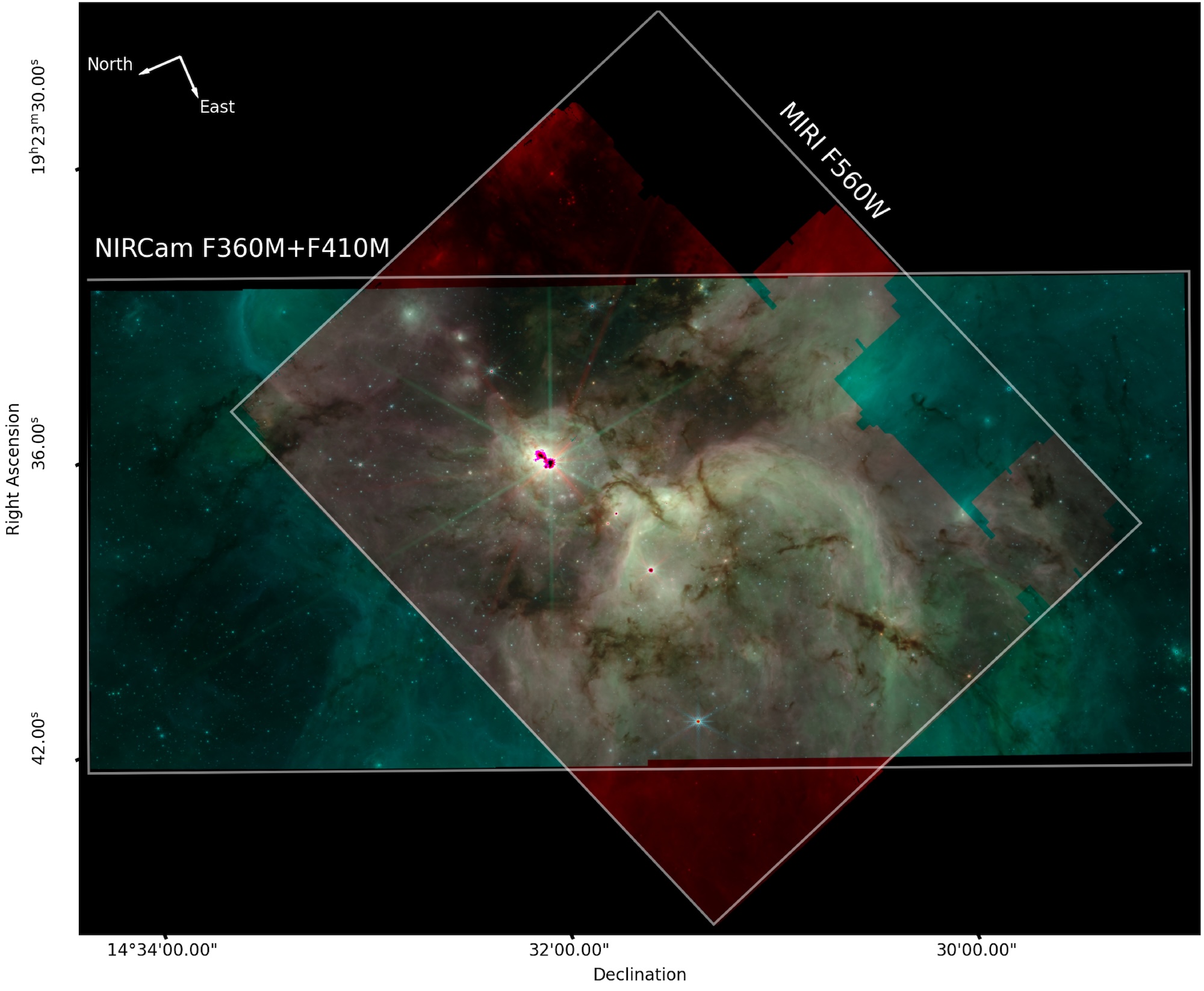
W51A star forming region

W51A study region

The full view of the study region, showing the NIRCam and MIRI footprints. [Yoo et al. 2026]

This image shows one W51A, of the most active star-forming regions in our galaxy. A research team led by Taehwa Yoo (University of Florida) recently observed this region with JWST, using the telescope’s Near-Infrared Camera (NIRCam) and Mid-Infrared Instrument (MIRI) to record fine structures in the swirling, dusty gas and reveal deeply embedded protostars. The JWST data enabled the team to study two protoclusters that are busily sculpting roughly 10,000 solar masses of gas — each! — into new stars. One protocluster, W51-IRS2 (containing the brightest source in the image above), has excavated a bubble around itself through intense stellar feedback, while the other, W51-E (down and to the right of W51-IRS2, where multiple dust lanes converge), is still being fed by dusty tendrils. For more details on this star-forming region, be sure to check out the full research article linked below.

Citation

“A JWST NIRCam/MIRI View of the W51A High-Mass Star-Forming Region,” Taehwa Yoo et al 2026 AJ 171 208. doi:10.3847/1538-3881/ae40b7

The post Featured Image: Massive Stars in the Making appeared first on AAS Nova.

Black Hole Baby Photos: JWST and Chandra Observe M31-2014-DS1

4 March 2026 at 17:00

illustration of M31-2014-DS1

One of the most luminous supergiant stars in the Andromeda Galaxy, M31-2014-DS1, has disappeared, potentially leaving behind a black hole shrouded in dusty gas. What do new infrared and X-ray observations tell us about this event?

Failure to Explode?

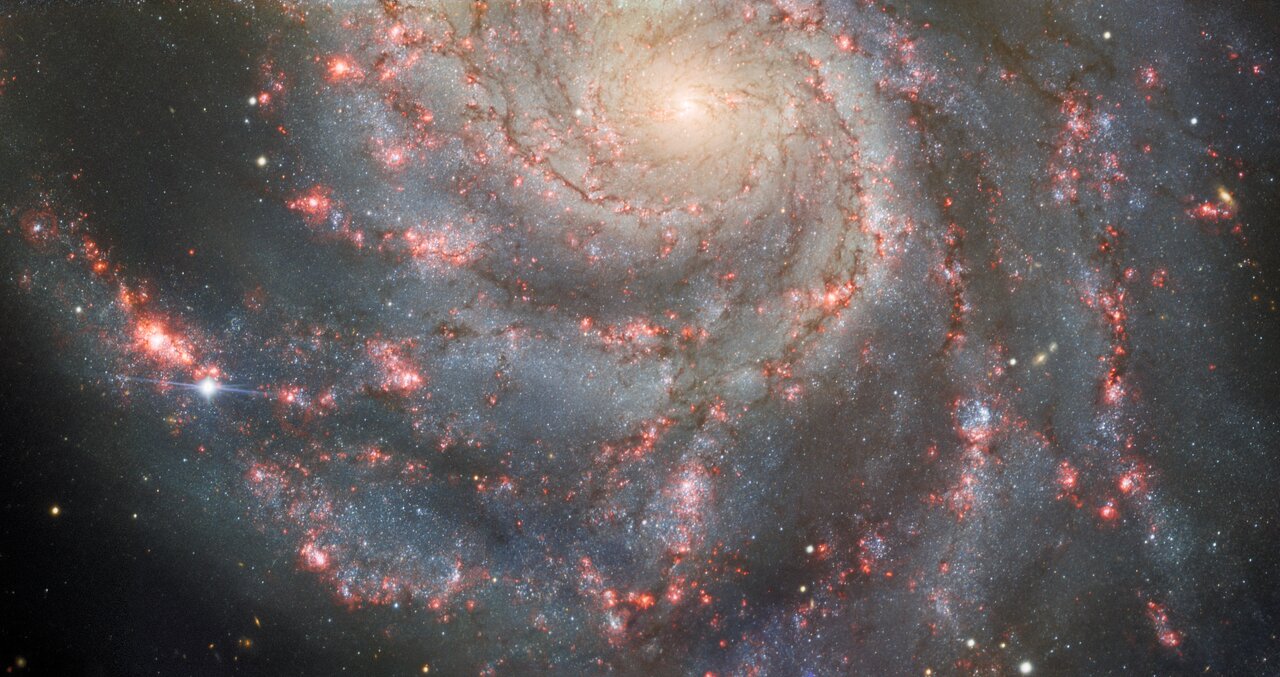
SN 2023ixf in Messier 101

This image from Gemini North shows the supernova SN 2023ixf along one of the spiral arms of Messier 101. Though less showy than core-collapse supernovae, “failed” supernovae may be another way to form stellar-mass black holes. [International Gemini Observatory/NOIRLab/NSF/AURA; CC BY 4.0]

Massive stars are famous for going out with a bang. After swelling into supergiants, these stars bring their brief lives to a close in a cosmic fireworks show: a supernova explosion that creates a neutron star or a black hole.

But a splashy supernova explosion may not be the only way for a massive star to go out. As observations have begun to suggest, some massive stars may — for reasons not yet fully understood — quietly collapse in upon themselves, going out with a whimper rather than a bang. Though less spectacular and far harder to spot, these “failed” supernovae highlight a possible pathway for the formation of stellar-mass black holes.

A Newborn Black Hole in a Dense, Dusty Blanket

Just last month, researchers reported their discovery of a potential failed supernova. The supergiant M31-2014-DS1 suddenly brightened in 2014 before fading to obscurity, leading researchers to suspect that the star had experienced a failed supernova and created a black hole. The event shared similarities with another failed supernova candidate, NGC6946-BH1.

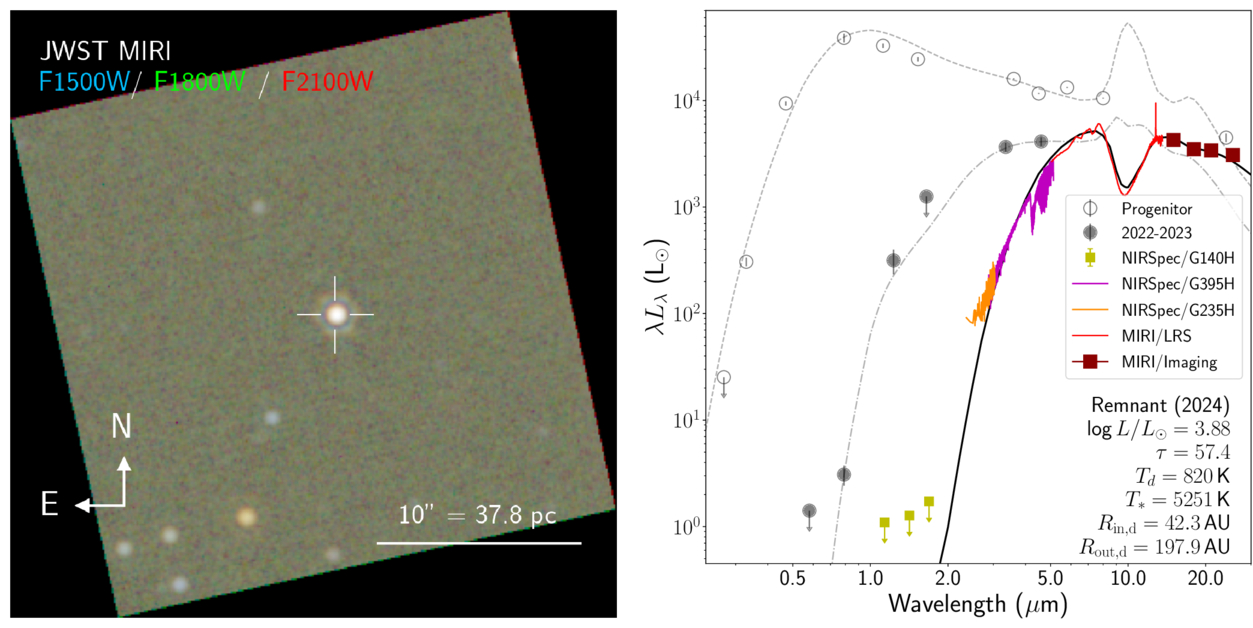
JWST data of M31-2014-DS 1

Left: A JWST image of M31-2014-DS 1. Right: Spectral energy distributions of the progenitor star/the remnant using data from 2005 to 2012 (empty circles), 2022 to 2023 (filled circles), and 2024 (colored lines). Click to enlarge. [De et al. 2026]

In a new article published in the Astrophysical Journal Letters, Kishalay De (Columbia University; Flatiron Institute) and coauthors have used JWST and the Chandra X-ray Observatory to learn more about what remained after M31-2014-DS1 disappeared. The JWST observations show an extremely red object that has faded considerably in just a few years, with a deep absorption feature from silicate dust and numerous narrow molecular absorption lines. Chandra did not detect any X-rays.

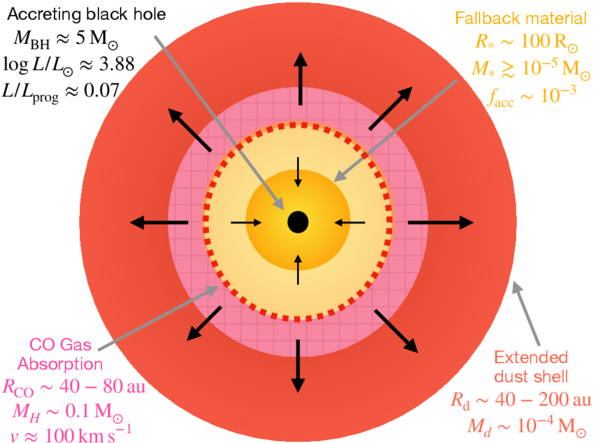
Together, these observations support a model in which the collapsing star ejected its outer layers in a relatively low-energy event (somewhere in the broad ballpark of one hundred-millionth to one ten-thousandth the energy of a typical core-collapse supernova) and formed a black hole. Some of the ejected material fell backward and fed the newborn black hole, while the remainder created a dense blanket that blocked the light from the accreting black hole from view.

Continued Evolution

schematic of the gas surrounding a newborn black hole

Cartoon showing the authors’ model and the model parameters inferred from the observations. Click to enlarge. [De et al. 2026]

In observations from 2024, the source had faded to just 7% of the progenitor star’s luminosity, supporting the conclusion that the star has disappeared and what lies beneath the dusty ejecta is a black hole. De’s team expects that as time goes on, the gas that obscures the accretion-powered luminosity of the newborn black hole will expand and become less dense along our line of sight. At some point — estimated to be no sooner than about 27 years from now — the X-ray emission from the accreting black hole should pierce the dusty shroud and become visible to sensitive X-ray observatories. In the infrared, JWST will be able to track the source’s evolution caused by continued dust creation in the expanding shell.

Thanks to its location in a neighboring galaxy, M31-2014-DS1 has granted astronomers a front-row seat to a poorly understood pathway for black hole formation. Going forward, we can expect further insights into M31-2014-DS1 and, hopefully, the discovery of many more sources like it.

Citation

“Fading into Darkness: A Weak Mass Ejection and Low-Efficiency Fallback Accompanying Black Hole Formation in M31-2014-DS1,” Kishalay De et al 2026 ApJL 999 L25. doi:10.3847/2041-8213/ae468d

The post Black Hole Baby Photos: JWST and Chandra Observe M31-2014-DS1 appeared first on AAS Nova.

JWST Spies a Potential Microlensed Massive Binary Star System

11 February 2026 at 17:00

galaxy cluster MACS J0416.1-2403

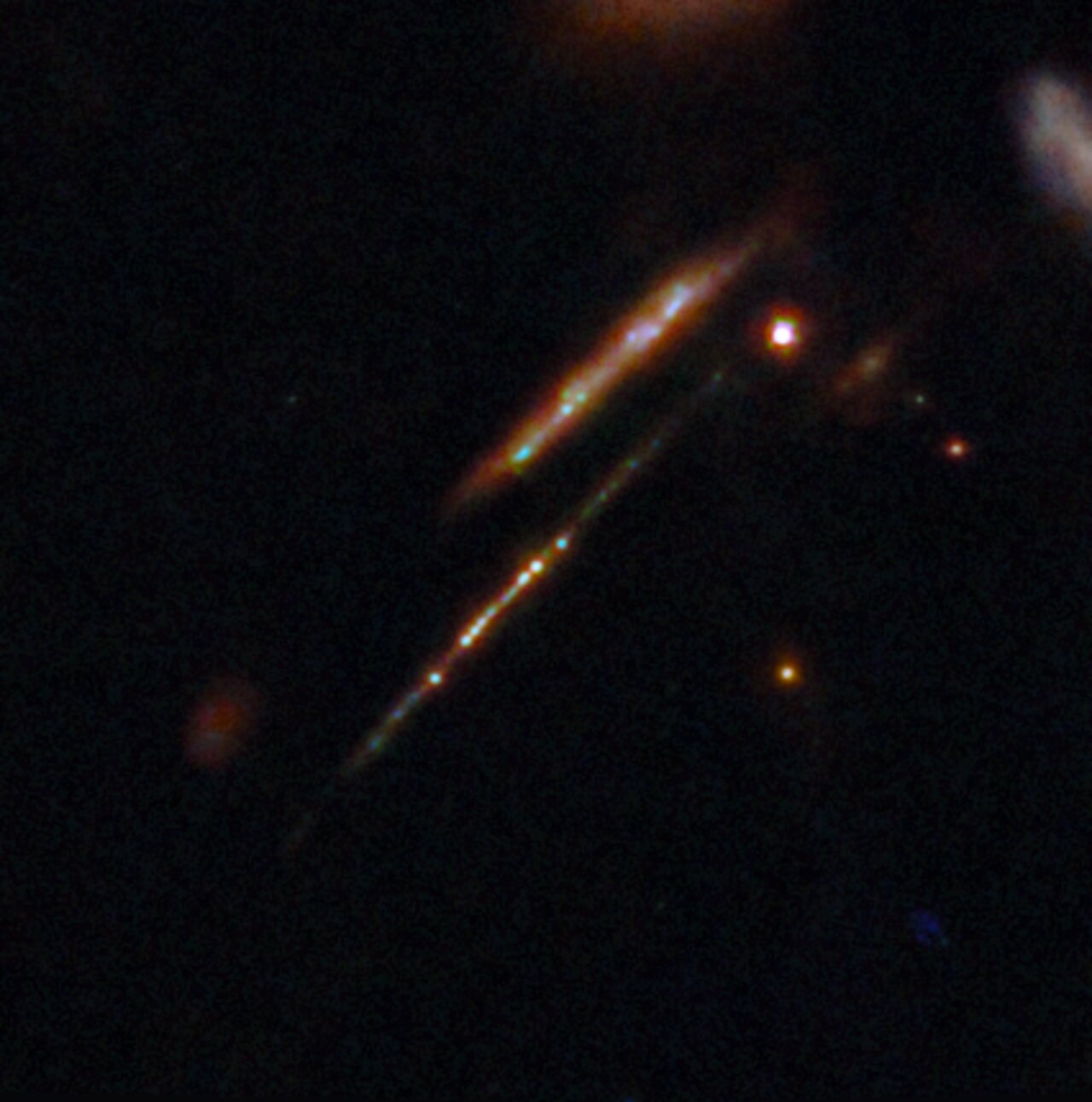
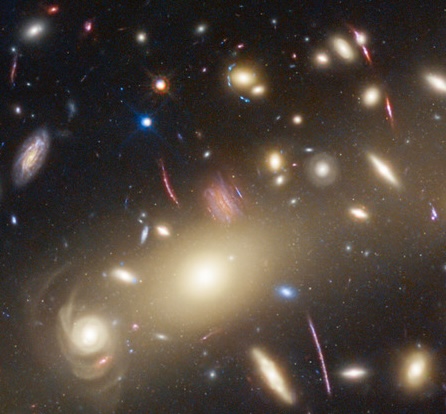
JWST images of galaxy clusters are rich with gravitationally lensed galaxies. Recent work examines a source in a lensed galaxy that may offer a glimpse into the lives of massive stars billions of years ago.

Cosmic Gems arc

JWST image of the gravitationally lensed Cosmic Gems arc, in which multiple individual star clusters are visible. [ESA/Webb, NASA & CSA, L. Bradley (STScI), A. Adamo (Stockholm University) and the Cosmic Spring collaboration; CC BY 4.0]

Glimpses of Single Stars

Galaxy clusters, the largest gravitationally bound structures in the universe, create the conditions necessary for astronomers to perform an extraordinary feat: examine individual massive stars and star clusters at far greater distances than our telescopes can typically achieve. This is possible thanks to gravitational lensing, the bending of spacetime by an immense mass, which warps and magnifies the light from more distant objects.

These glimpses of single stars and star clusters offer a rare chance to study massive stars in our universe’s distant past directly. In particular, these observations allow us to probe whether factors like the multiplicity fraction — how many massive stars are in binary or multiple systems — have changed over cosmic time.

Peering Through a Gravitational Lens

In a recent research article, a team led by Hayley Williams (University of Minnesota) reported on their examination of an intriguing source in a gravitationally lensed galaxy called the “Warhol arc.” This galaxy, located at a redshift of z = 0.94 (when the universe was roughly 6 billion years old), is gravitationally lensed by the massive galaxy cluster MACS J0416.1−2403. The cluster is located at a redshift of z = 0.396, corresponding to when the universe was about 9.4 billion years old.

Using data from the JWST Prime Extragalactic Areas for Reionization and Lensing Science (PEARLS) program and the Canadian NIRISS Unbiased Cluster Survey (CANUCS), Williams’s team analyzed a source in the Warhol arc called W2, which previous work suggests is either a binary star system or a small star cluster.

Multiplicity and Microlensing

Warhol arc

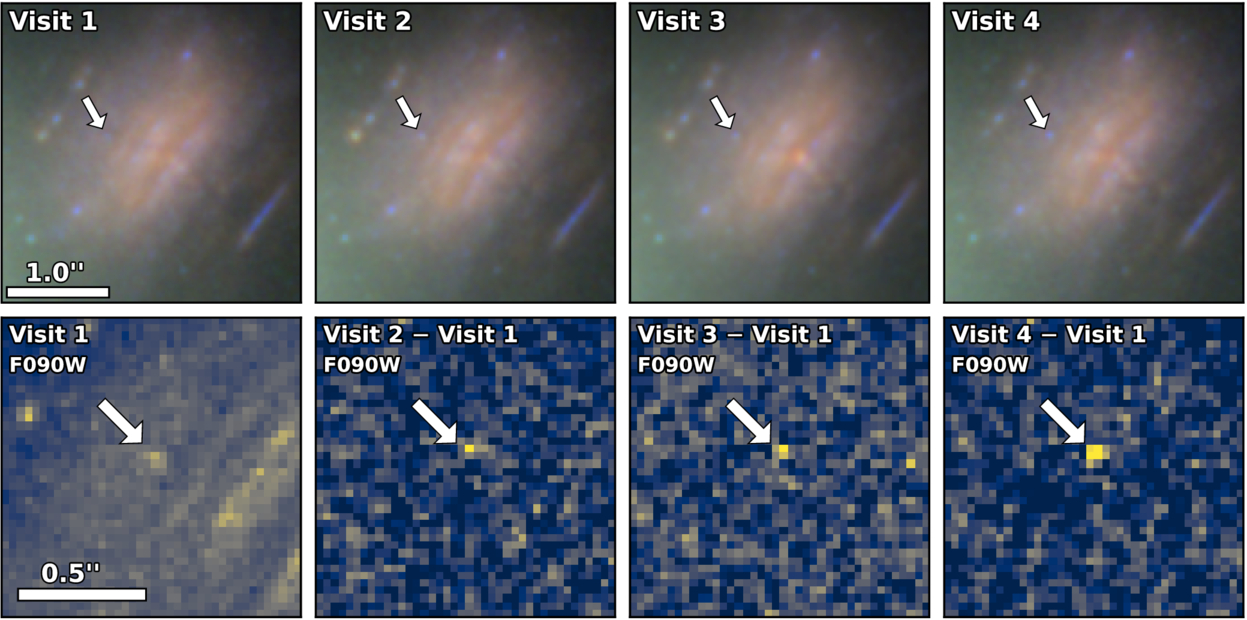
Top row: The Warhol arc during four epochs of JWST observations. Bottom row: On the left, a magnified image of W2 during the first epoch. The remaining images show the difference in brightness between subsequent epochs and the first epoch. Click to enlarge. [Williams et al. 2026]

Across four epochs spanning 126 days, the JWST observations show the source W2 within the Warhol arc. Williams and collaborators performed spectral fitting of the JWST light curves to investigate the multiplicity of the source. They found that the data are best matched by a binary system containing stars with temperatures of 3500K and 12600K.

W2 varies between observations in both brightness and color, a fact that the authors suggested is due to microlensing by a star within the lensing galaxy cluster, rather than variability within the binary system itself. Under this hypothesis, the orbital motions of the binary bring the stars across the microlensing caustic — a region in which the magnification is exceptionally high — and the brightness and color of W2 vary as the components of the binary approach and recede from the caustic.

Williams and collaborators also performed stellar population modeling to explore the binary configurations that could match the observations. They found that the stars likely have masses of 21–24 solar masses, with one being a cool red supergiant and the other a hot, main-sequence companion. Depending on the precise evolutionary stage of the binary, it’s possible that one of the stars is nearing a supernova explosion. Lending more support to the binary system hypothesis, the microlensing measurements constrain W2 to be no larger than 90 au — too small for even a compact star cluster.

The team closed by proposing further observations of W2’s position to rule out the possibility that the microlensing rate there is unusually high, an outcome that may suggest that microlensing of two unrelated stars, rather than a binary system, is responsible for these observations.

Citation

“JWST’s PEARLS: A Candidate Massive Binary Star System in a Lensed Galaxy at Redshift 0.94,” Hayley Williams et al 2026 ApJ 997 292. doi:10.3847/1538-4357/ae2003

The post JWST Spies a Potential Microlensed Massive Binary Star System appeared first on AAS Nova.

Selections from 2025: The Formation of Massive Stars

22 December 2025 at 17:00

star-forming region AFGL 5180

Editor’s Note: For the remainder of 2025, we’ll be looking at a few selections that we haven’t yet discussed on AAS Nova from among the most-downloaded articles published in AAS journals this year. The usual posting schedule will resume January 2nd.

The SOFIA Massive (SOMA) Star Formation Survey. V. Clustered Protostars

Published June 2025

Main takeaway:

A team led by Zoie Telkamp (University of Virginia) used the Stratospheric Observatory for Infrared Astronomy, SOFIA, to study massive protostars and test theories of high-mass star formation. Contrary to the predictions of some star-formation models, the team found no evidence that massive protostars require a certain surface mass density to form. Formation in a cluster environment, however, may limit the formation of the most massive protostars.

Why it’s interesting:

Massive stars are rare, short-lived, and luminous. They influence their environments across a vast range of spatial and temporal scales, from advancing the epoch of reionization in the early universe to impacting the formation of individual planetary systems in the present-day universe. The fundamental question of how high-mass stars form is still unsettled. Theories of high-mass star formation range from scaled-up versions of low-mass star formation to scenarios involving collisions between protostars.

More about this massive-star study and the potential impact of a cluster environment:

infrared images of massive protostars

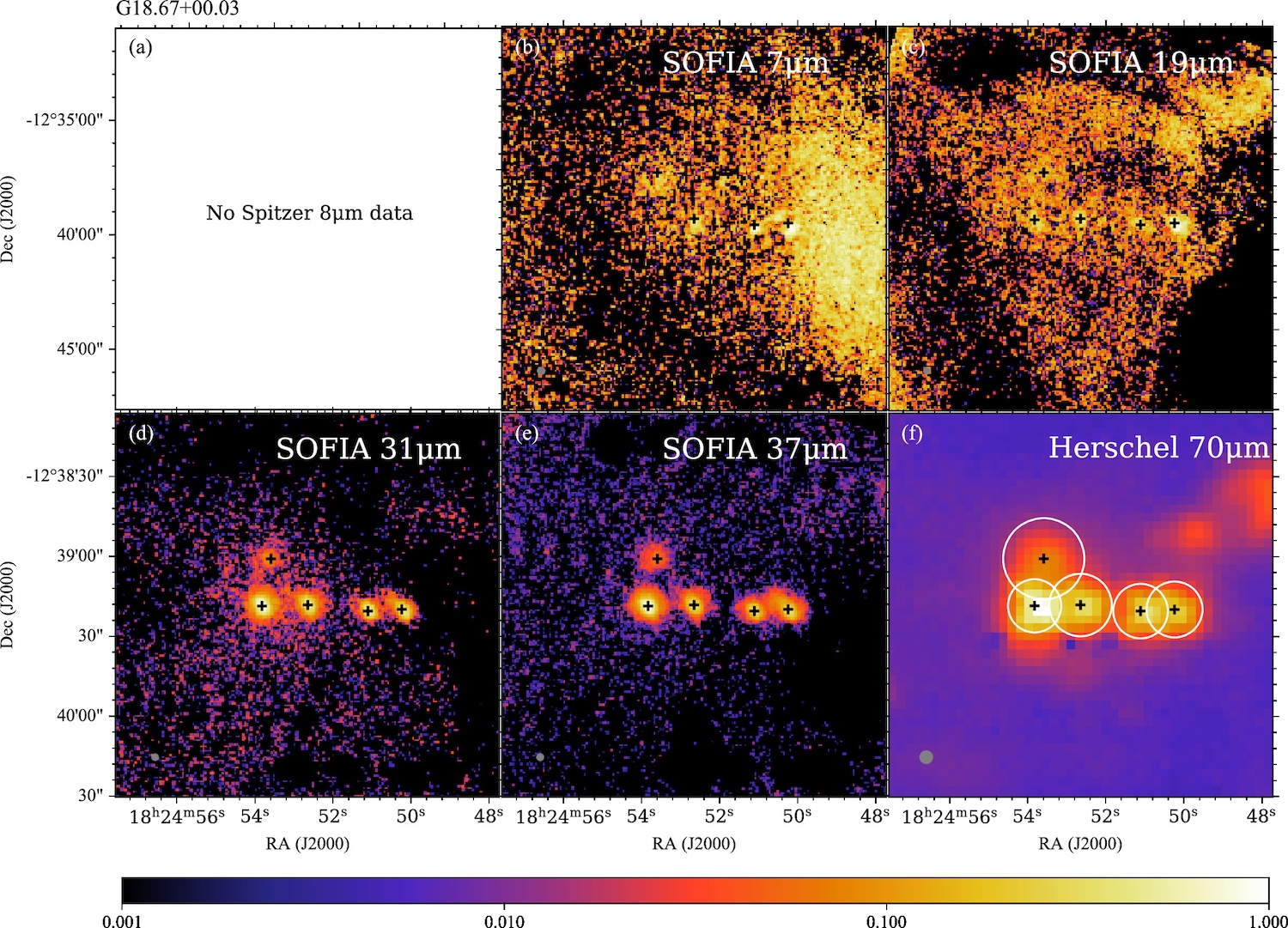
SOFIA FORCAST and Herschel Space Observatory images of protostars in the G18.67+0.03 star-forming region. Click to enlarge. [Telkamp et al. 2025]

Researchers developed the SOFIA Massive Star Formation Survey to investigate the origins of massive stars, targeting roughly 50 high-mass and intermediate-mass protostars in a wide variety of environments in our galaxy. This particular work, the fifth in a series of articles reporting the survey’s findings, described the team’s study of massive protostars forming in cluster environments. Using the Faint Object infraRed CAmera for the SOFIA Telescope (FORCAST), Telkamp and collaborators identified 34 protostars in seven star-forming regions and estimated their masses and other physical properties. The team noted a lack of protostars above 30 solar masses in these cluster regions, which might be evidence that competition for gas in dense environments can prevent the formation of more massive protostars. More work is needed to confirm this finding.

Citation

Zoie Telkamp et al 2025 ApJ 986 15. doi:10.3847/1538-4357/adcd79

The post Selections from 2025: The Formation of Massive Stars appeared first on AAS Nova.

Hubble on the Hunt: A Spectroscopic Search for Betelbuddy

24 November 2025 at 17:00

constellation Orion

Multiple research teams have turned to the famous red supergiant Betelgeuse in search of a possible companion star hiding in its glare. A carefully designed spectroscopic search has placed new constraints on the identity of Betelgeuse’s stellar buddy.

Betelgeuse and its companion star

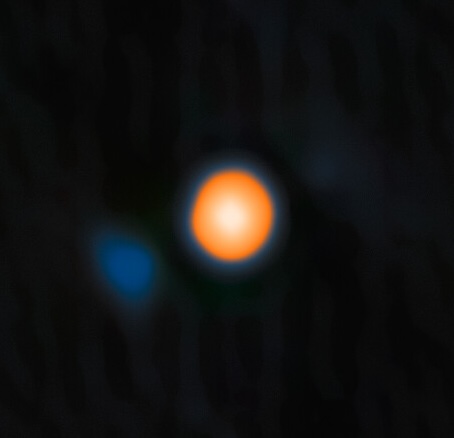
An image of Betelgeuse and its probable companion star from the ‘Alopeke instrument on the Gemini North telescope. [International Gemini Observatory/NOIRLab/NSF/AURA; Image Processing: M. Zamani (NSF NOIRLab); CC BY 4.0]

Betelgeuse and Its Buddy

Betelgeuse, a nearby red supergiant, is a variable star with a 400-day primary pulsation period and a 2,100-day secondary variation period. Recent studies have speculated that this secondary period is due to the presence of an 0.5–2.0-solar-mass companion star (often nicknamed “Betelbuddy”), and researchers using a speckle imaging technique likely spotted this companion earlier this year.

As is often the case when there’s an intriguing astronomical possibility, multiple research teams have sought out Betelgeuse’s purported stellar companion in different ways. One avenue recently described in a published paper was spectroscopic, searching for signs of ultraviolet emission lines from a growing young star.

Spectroscopic Search

In just 10 million years, Betelgeuse has sped through its main-sequence lifetime and taken on a new starring role as a red supergiant. In contrast, a 0.5–2.0-solar-mass companion star would not have even reached the main sequence in the same span of time. How is it possible to spot a tiny young stellar object next to a much brighter supergiant?

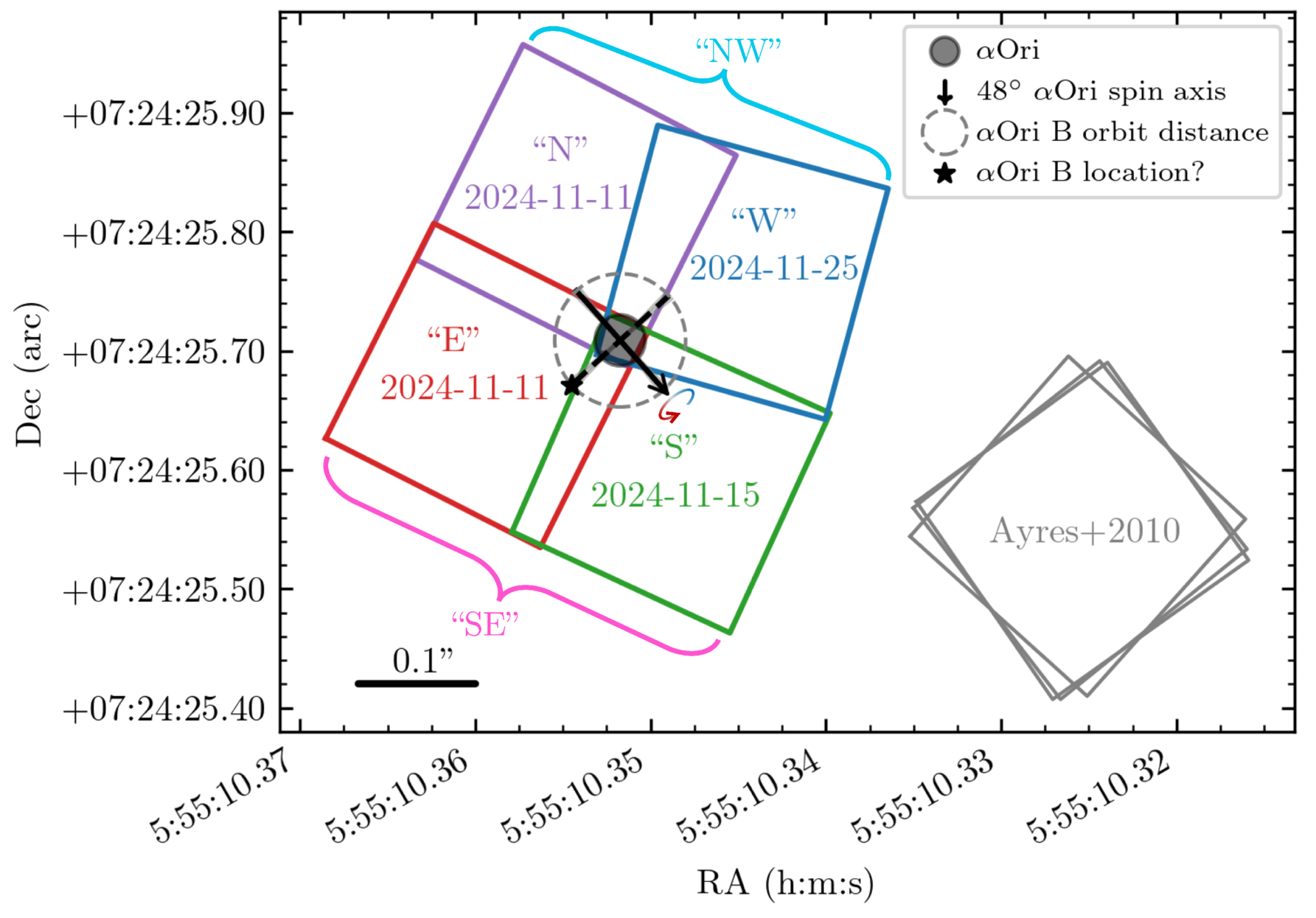
Hubble's observing pattern of Betelgeuse

Hubble observing pattern, showing how the quadrants are arrayed around Betelgeuse. Click to enlarge. [Goldberg et al. 2025]

A team led by Jared Goldberg (Flatiron Institute) found a possible way forward in the far-ultraviolet, where young stellar objects and red supergiants both display prominent emission lines. Though Betelgeuse would greatly outshine its stellar buddy, the companion’s orbital motion should shift its emission lines relative to those of Betelgeuse, bringing them into view. To guide their search, the team consulted spectra of known young stellar objects, finding a dozen ultraviolet spectral lines that either rival the strength of those from Betelgeuse or aren’t present in Betelgeuse’s spectrum at all.

The search is on: Goldberg and collaborators observed Betelgeuse with the Hubble Space Telescope in November 2024, timed to when the companion star’s emission lines would be shifted relative to Betelgeuse. The observations split Betelgeuse’s disk into quadrants, only one or two of which should contain the companion, helping the team tease out the signal from the smaller star, if present. Ultimately, though, no statistically significant signals were found.

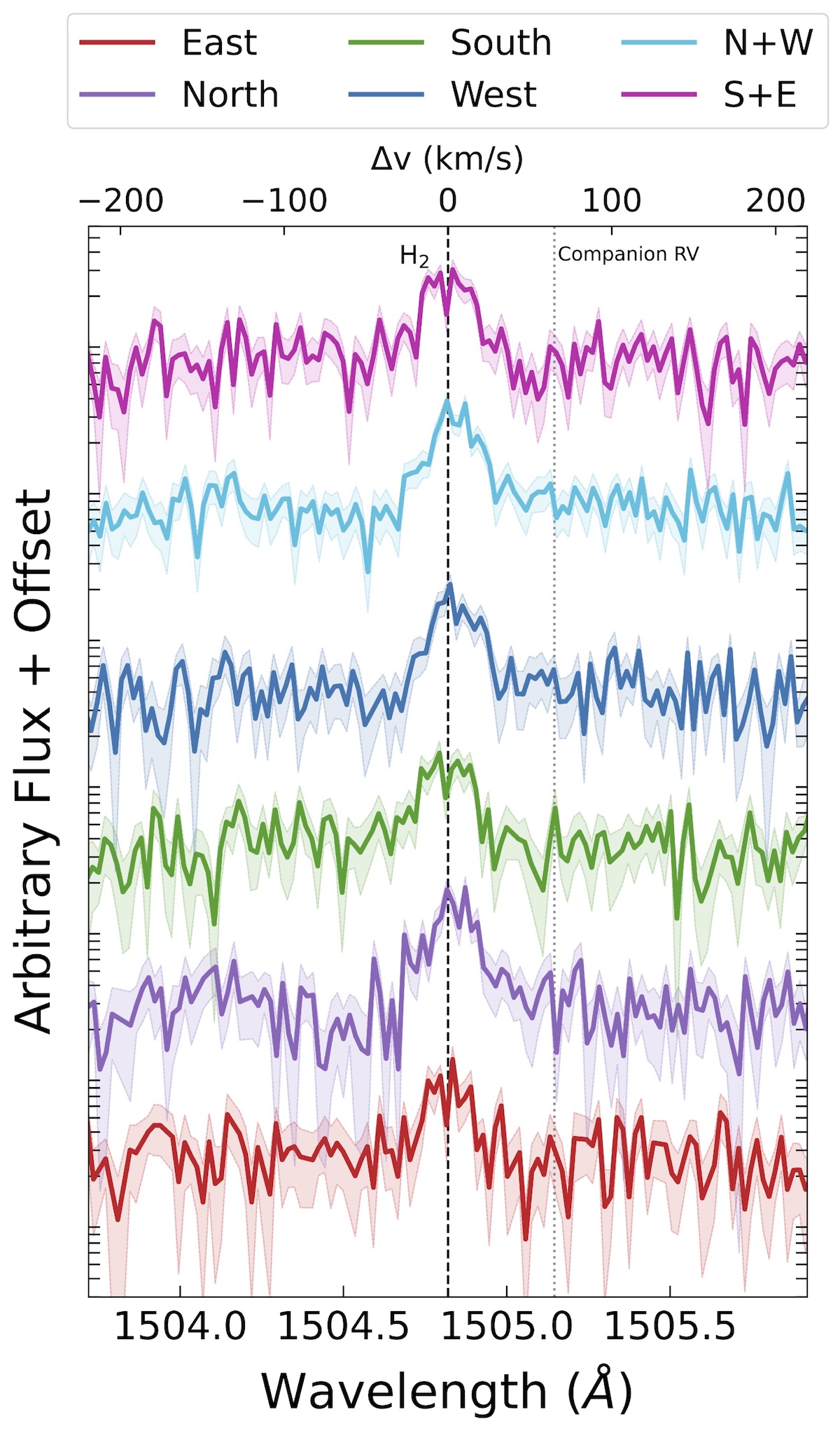
spectra of Betelgeuse

Emission around Betelgeuse’s 1504.82 Angstrom H2 line from each of the four observed quadrants as well as combinations of two quadrants. No significant signals were detected at the expected radial velocity of the companion star. [Goldberg et al. 2025]

When Finding Nothing Tells You Something

A lack of a significant detection doesn’t mean that the companion isn’t there, but it does place constraints on its identity. The data confidently rule out a companion star twice as massive as the Sun, marginally permit a star in the 1.1–1.5-solar-mass range, and favor a star lower than 1.1 solar masses.

Researchers assigned a likely mass of about 1.5 solar masses to the probable companion star imaged earlier this year. Though this is at the limit of what’s permitted by the ultraviolet observations, Goldberg and coauthors note that the companion star’s ultraviolet output could be suppressed due to tidal coupling with Betelgeuse or other processes. If the star’s ultraviolet emission is lower than expected, a 1.5-solar-mass companion remains consistent with Hubble’s non-detection of the star.

This is a fantastic example of how multiple lines of inquiry can converge on similar solutions. With the companion star expected to swing around to a favorable observing position again in 2027, this is certainly not the last chapter in the tale of Betelgeuse and Betelbuddy.

Citation

“Betelgeuse, Betelgeuse, Betelgeuse, Betel-buddy? Constraints on the Dynamical Companion to α Orionis from HST,” Jared A. Goldberg et al 2025 ApJ 994 101. doi:10.3847/1538-4357/ae0c0c

The post Hubble on the Hunt: A Spectroscopic Search for Betelbuddy appeared first on AAS Nova.

Double-Star Discovery Suggests There’s a New Nearby Supernova Progenitor

28 April 2025 at 17:00

DEM L 190 supernova remnant

New data suggest that the second-brightest star in the constellation Sagittarius is not one star but two. The two stars will someday merge to form a single star with a mass of 12 solar masses, and at just 228 light-years away, the resulting star will be the nearest core-collapse supernova progenitor to Earth.

One Star of Two?

The star Sigma Sagittarii, formally named Nunki by the International Astronomical Union, has been under scrutiny for decades. Various studies published in the last half-century have found Nunki to be either two stars in a tight binary system or a single star, depending on the methods and instruments used.

Paranal Observatory

Three of the Very Large Telescope Interferometer’s 1.8-meter Auxiliary Telescopes, which can be maneuvered into different positions. [Y. Beletsky (LCO)/ESO; CC BY 4.0]

Now, a team led by independent researcher Idel Waisberg has performed an interferometric investigation of the star, aiming to discern its single or binary status. The team used the GRAVITY instrument on the Very Large Telescope Interferometer (VLTI) at Paranal Observatory in Chile.

The VLTI encompasses eight telescopes, including four 8.2-meter telescopes that are fixed in place and four 1.8-meter telescopes that can travel between different stations, changing the resolving power of the interferometer. For this search, Waisberg and collaborators positioned the smaller telescopes so that the greatest distance between them was 130 meters, achieving a resolution of just 3.5 milliarcseconds.

Future Site of a Supernova

The VLTI data clearly show that Nunki is a close binary star system. The two stars have nearly the same mass — 6.5 and 6.3 solar masses — and are separated by just 0.60 au, orbiting one another every 50 days. Stellar isochrone modeling suggests that the stars are roughly 30 million years old.

illustration of a star filling its Roche lobe

Diagram of a binary star system in which one star has filled its Roche lobe. The blue shaded areas indicate the stars, while the black lines outline the two stars’ Roche lobes. [Philip D. Hall; CC BY 4.0]

Though the new data have shown that Nunki is in fact two stars, further analysis showed that this configuration is only temporary. As the two stars evolve, the more massive of the two will be the first to expand into a red giant. In 20 million years, the growing star will spill out of its Roche lobe — the volume in which gas is gravitationally bound to that star — and donate gas to its smaller companion. Unstable mass transfer will eventually lead the stars to merge, forming a single star of about 12 solar masses.

At 12 solar masses, Nunki will be massive enough to undergo core collapse, and at just 228 light-years away, it is the nearest core-collapse supernova progenitor system to Earth. Be sure to mark your calendar for tens of millions of years in the future — such a close supernova promises to be spectacular!

Citation

“Hidden Companions to Intermediate-Mass Stars. XXVI. Uncovering Nunki = Sigma Sagittarii as a 6.5 M⊙ + 6.3 M⊙, 0.60 au Binary,” Idel Waisberg et al 2025 Res. Notes AAS 9 71. doi:10.3847/2515-5172/adc739

The post Double-Star Discovery Suggests There’s a New Nearby Supernova Progenitor appeared first on AAS Nova.

❌