
❌

Normal view

C V Raman: the physicist with a ‘Himalayan ego’ who went to Stockholm convinced he’d win a Nobel prize
2 October 2026 at 11:00
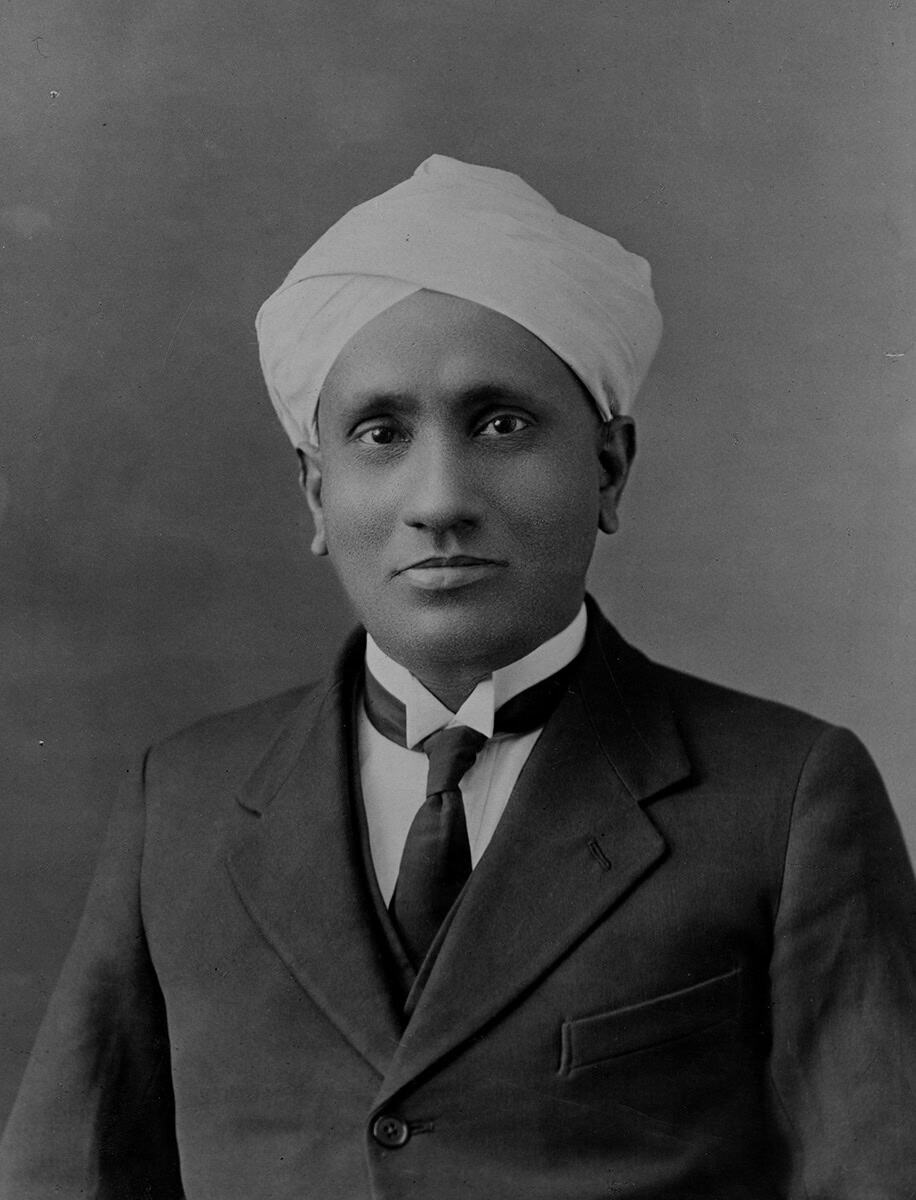
C V Raman portrait
Cocksure and confident C V Raman sailed to Stockholm in 1930 convinced he’d win that year’s Nobel Prize in Physics. (Photograph by A Bortzells Tryckeri, courtesy of AIP Emilio Segrè Visual Archives, W F Meggers Gallery of Nobel Laureates Collection)

How confident, or perhaps delusional, do you have to be to travel to Stockholm because you’re so certain you’ll be awarded a Nobel prize? Most of us wouldn’t have the time, money or self-belief to go to Sweden and hang out at the Royal Swedish Academy of Sciences on the off-chance that we might win. But one person who did just that was the Indian physicist Chandrasekhara Venkata (C V) Raman in 1930.

Back in those days, travelling from India to Sweden wasn’t a case of jumping on a jet plane, but involved a long, two-month journey by sea. So if he wanted to arrive in Stockholm in time for the award ceremony on 10 December 1930, Raman knew he couldn’t wait until the prize was formally announced in mid-November to set sail. In July 1930 he therefore booked passage for himself and his wife, the couple arriving in Stockholm on 9 December of that year.

Raman’s audacity, belief and the arduous journey paid off. He was duly awarded the 1930 Nobel Prize in Physics “for his work on the scattering of light and for the discovery of the effect named after him”, namely Raman scattering. In doing so, Raman became the first person from India to win a scientific Nobel prize – the poet, playwright and musician Rabindranath Tagore having previously won the 1913 Nobel Prize in Literature.

Obsessive nature

Born on 7 November 1888  in the city of Thiruchchirappalli in Tamil Nadu, Raman was a child prodigy, who at 16 came top in physics at the University of Madras and published his first research paper aged just 18. Appointed a professor of physics at the University of Calcutta in 1913, Raman had a long obsession with winning a Nobel prize. In 1924, upon being elected a fellow of the Royal Society, he was asked during the award ceremony what was next in line for him. “The Nobel prize of course!” he replied.

The discovery that bagged Raman the coveted prize in fact began on another sea voyage

The discovery that bagged him the coveted prize in fact began on another sea voyage. In 1921 Raman was travelling back from Southampton to Bombay (now Mumbai) on the SS Narkunda, having taken part in the Second Congress of the Universities of the Empire in Oxford. Rather than lounging on the sun deck or drinking in the bar, Raman spent the 15-day journey examining and analysing the deep blue colours of the Mediterranean, Red and Arabian seas with his pocket Nicol prisms, a small telescope and a diffraction grating.

In fact, Raman did more than just take data. While on board, he wrote up his findings in a short letter that he mailed to the journal Nature while the ship was docked at Aden in Yemen. Published on 20 October 1921, it gives Raman’s address as “SS Narkunda, near Aden” (Nature 108 242). He then wrote another paper to Nature (108 367) titled “The colour of the sea”, this time with the byline “SS Narkunda, Bombay Harbour”.

The spectrum of blue colours of the vast sea fascinated Raman and made him question the previous belief, primarily from the work by Lord Rayleigh, that the colour is simply due to the reflection of the sky – and has nothing to do with the colour of the water itself. Raman challenged this notion in his follow-up Nature paper, which was published on 17 November 1921.

Mediterranean sea
Natural fascination C V Raman was awarded the 1930 Nobel Prize in Physics for discovering that light can change colour when passing through a material because some photons scatter inelastically off it. Now known as “Raman scattering”, he came up with the idea while sailing from the UK to India in 1921 and taking measurements of the deep blue colour of the sea. (Courtesy: iStock/Ciuvelic Razvan)

“It was abundantly clear from the observations,” he writes, “that the blue colour of the deep sea is a distinct phenomenon in itself.” Raman believed that light diffracts as it passes through the water and concluded: “An interesting possibility that should be considered is that the diffracting particles may, at least in part, be the molecules of the water themselves.”

This curiosity led him to a series of experiments over the next few years, primarily carried out by his students at Calcutta University, culminating in the discovery that light changes its wavelength and energy when it passes through any material. The change in wavelength and energy, in fact, is a fingerprint of the material itself.

His discovery of what became known as the Raman effect is what eventually won him his most cherished recognition – the 1930 Nobel Prize in Physics. One of the many applications of Raman’s discovery is Raman spectroscopy, which uses the scattering of laser light to establish the chemical make-up of a material and forms the basis of airport security scanners.

Indian impact

Raman’s Nobel prize was significant not just for the scientific advancements that his discovery enabled, but also for the far-reaching impact it engendered in India, where opposition to the British Raj was gathering speed. In fact, he won the award less than a year after the declaration of Purna Swaraj – complete independence – on 26 January 1930 in a session of the Indian National Congress in Lahore.

For a country reeling under colonial rule and fighting for its identity, Raman’s Nobel prize could not have come at a better time to instil hope and aspirations to millions of people around the country. In fact, he holds the honour of being the first physicist outside western Europe or the US to win the Nobel Prize in Physics.

C V Raman at 1930 Nobel ceremony
Dream trip C V Raman (far left) picking up the 1930 Nobel Prize in Physics in Stockholm alongside (from left to right) fellow winners Hans Fischer (chemistry), Karl Landsteiner (medicine) and Sinclair Lewis (literature). (No known copyright restrictions, photographer unknown. Source: Wikimedia Commons)

Raman was fully aware of the impact that the prize would have in India, where research was far less developed than that enjoyed by his counterparts in, say, Cambridge, Göttingen or Copenhagen. In 1929 he therefore hesitantly wrote a letter to the Danish Nobel-prize-winner Niels Bohr, asking for his “influential support” for the 1930 Nobel prize. The request of such “personal character”, he explained, was only because he believed that Bohr would “sympathize with the scientific aspirations of India”.

Unbeknownst to Raman, Bohr had already nominated him for a Nobel prize in 1929 – that year’s prize going to Louis de Broglie for wave–particle duality – and he did so again in 1930. We now know a total of 10 different people nominated Raman for that year’s prize, including de Broglie as well as Ernest Rutherford and Charles Wilson.

Raman’s research and notoriety led to many students being attracted to Calcutta, with the physics department becoming a centre of world-class research

Raman’s research and notoriety led to many students being attracted to Calcutta (now Kolkata), with the physics department becoming a centre of world-class research despite its small size and the lack of an established scientific culture and infrastructure in India. Other leading physicists to have worked there include the astrophysicist Meghnad Saha and the theorist Satyendra Nath Bose in what some have touted as a “golden era” for Indian science.

Sadly, it ended prematurely a few years after Raman’s Nobel prize due to conflicts between these three leading scientists. This was partly due to parochialism and partly, as his biographer, the condensed-matter physicist Ganeshan Venkataraman famously put it, Raman’s “Himalayan ego and sharp tongue”.

Moving on

In 1933 Raman left Calcutta, becoming the first Indian director of the Indian Institute of Science (IISc, earlier the Tata Institute of Science) in Bangalore (now Bengaluru). Rutherford, when asked by the institute’s council as to who should replace the outgoing director Martin Forster, had made it clear there was no need to seek directors in Britain when India had a “distinguished candidate in the shape of Raman”.
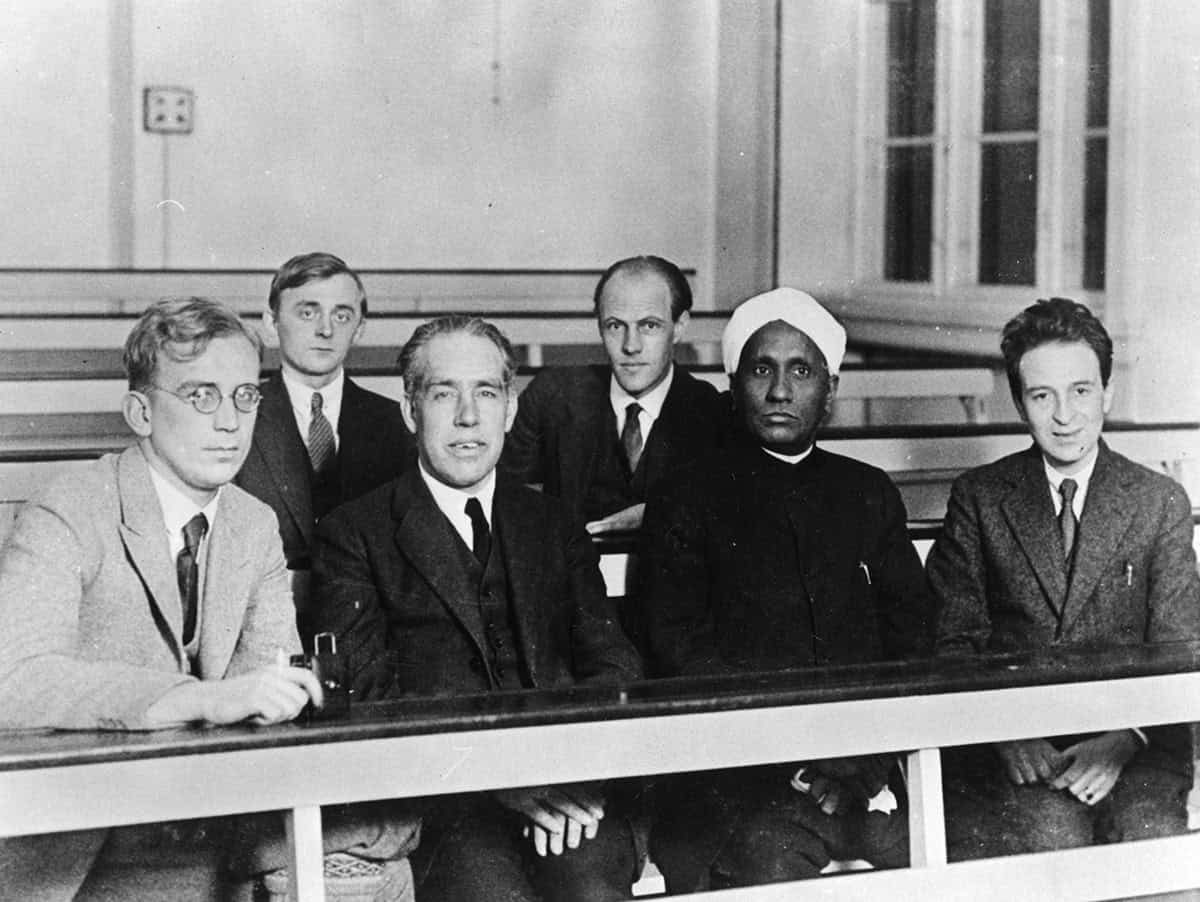
Formal portrait of Gamow, Bohr, Raman, Klein, Lauritsen, Rasmussen
Mixing of minds C V Raman (second right) personally wrote to Niels Bohr (second left) for his support for the 1930 Nobel prize. The pair are shown here at the Niels Bohr Institute, Copenhagen, alongside George Gamow (far left) and Oskar Klein (far right) and Charles (back row, left) and Ebbe Rasmussen (back row, right). (Courtesy: AIP Emilio Segrè Visual Archives, Margrethe Bohr Collection)

In 1934 he went on to found the Indian Academy of Science, which was significant in that it provided a way for researchers across the country to communicate and discuss research findings. Just as important, however, was the fact that membership of the academy was reserved exclusively for Indian scientists, effectively signalling an act of rebellion against the British.

Raman’s time at the IISc was controversial. On one occasion, he turned down the application for a research fellowship by a female student – the biochemist Kamala Sohonie – because he believed women were not competent to conduct research. Raman reversed his decision, albeit with humiliating conditions, after Sohonie staged a Gandhian-style protest (Satyagraha) outside his office.

Within three years, Raman was forced to resign from the directorship following a fallout with the council, primarily for allegations of bias towards physics research and overshadowing other areas of research of the institute. He remained a professor at the IISc until retiring in 1948. Later that year, he founded the Raman Research Institute with which he was actively involved until his death in 1970 at the age of 82.

Raman’s legacy

Despite his controversial past, Raman is still the flag-bearer of Indian physics, owing to the Nobel prize and the global recognition he enjoyed. India holds a National Science Day every year on 28 February to mark the occasion in 1928 when Raman and his associate Kariamanickam Srinivasa Krishnan announced their discovery of Raman scattering to the media. The work was reported in newspapers on 29 February and was formally published on 31 March 1928 in a paper entitled “A new type of secondary radiation” (Nature 121 502 ).

Almost a century on from his success, however, India has not yet produced another home-grown Nobel-prize-winning physicist. Raman’s nephew Subrahmanyan Chandrasekhar did share the 1983 Nobel Prize in Physics with William Fowler for his work on the evolution of stars, but he was based in the UK and then the US when the work for which he was recognized was carried out.

Raman’s divisive personality and sharp opinions turned more people against him than his ingenuity and scientific legacy ever won over

Sadly, Raman’s divisive personality and sharp opinions turned more people against him than his ingenuity and scientific legacy ever won over. His obsession with global recognition can be sensed from his reaction upon first receiving news of his Nobel prize, which came while he was en route to Stockholm. Learning of the award from his Calcutta collaborator Suri Bhagavantam, Raman’s first reaction was to ask if he was the sole awardee or whether he was to “share the bed with other strangers”.

Given his “Himalayan ego”, it should perhaps come as no surprise that Raman decided to travel to Stockholm on a whim. We do not have any documentation about what he thought or did on that two-month voyage. But for him, at least, it was a journey that was not wasted.

SmarAct Group logo

SmarAct proudly supports Physics World‘s Nobel Prize coverage, advancing breakthroughs in science and technology through high-precision positioning, metrology and automation. Discover how SmarAct shapes the future of innovation at smaract.com.

The post C V Raman: the physicist with a ‘Himalayan ego’ who went to Stockholm convinced he’d win a Nobel prize appeared first on Physics World.

Metasurface optical device boosts nonlinear frequency conversion

17 September 2026 at 09:30

By combining a band-structure engineered multi-quantum-well heterostructure with a nanostructure known as a metasurface, physicists in Austria and the US have created a device that can efficiently transform light into different frequencies – including those at technologically important near-infrared wavelengths. Their technique, which boosts nonlinear frequency conversion, could help in the development of smaller and more efficient components for telecommunications, quantum information transfer and other photonics technologies.

Nonlinear frequency conversion is an optical process in which a material is used to generate light of a different frequency to that incident on the material. It is now routinely employed in a wide range of photonics devices that rely on frequency mixing, ultrafast signal processing, broadband and pulsed light sources, and high-speed light modulation. It is also used to generate entangled photon pairs for quantum communication. One common type of frequency conversion, and the one used in this new study, is second-harmonic generation. Here, two input photons are combined to produce one photon with twice the energy.

Efficient nonlinear devices require light with high electric field strengths and materials that respond to these intense electromagnetic fields by producing a light polarization that is not directly proportional to the applied field. “Only a handful of such nonlinear crystals exist and these have complicated structures with weak nonlinearities, which means they require high optical powers to make photons interact with each other,” says Marcus Ossiander from the Institute of Experimental Physics at TU Graz in Austria, one of the authors of the new study published in Nature Nanotechnology. “While, new such crystals emerge from time to time, their structure is fixed, which dictates which light wavelengths they work at and how efficiently.”

Asymmetrically coupled multi-quantum wells

Recently, a group of researchers at the University of Texas at Austin in the US, led by Seth Bank, also an author of this latest study, succeeded in creating an optical nonlinearity not via a new crystal structure but by growing a semiconductor metamaterial made from nanoscale layers of gallium arsenide and aluminium gallium arsenide. These layers contain multiple quantum wells that are asymmetrically coupled to each other.

The quantum wells confine electrons in one dimension while allowing them to move freely in the other two dimensions, something that has the effect of restricting their energy levels into discrete, quantum states. Since they are asymmetrically coupled, the electrons end up mainly moving in one direction when exposed to light. This so-called “one-way street leads to increased nonlinear electron oscillations, allowing light waves to interact with each other extremely efficiently and exceed naturally occurring nonlinearities.

Ossiander and his colleagues, including Federico Capasso at the Harvard John A. Paulson School of Engineering and Applied Sciences (SEAS), have now added a second, two-dimensional metamaterial atop the first one. This metasurface, which consists of titanium dioxide pillars, each several hundred nanometres in size, precisely creates the particular light polarization required to deflect incoming light so that it scatters along the one-way street. This enhances the interactions between light waves even further and so increases the intensity of light in the structure.

An extra lap

Researchers have known for a while now that metasurfaces are extremely good at resonantly trapping light and increasing the interaction of light with matter. Usually, the process is straightforward, explains first author Pernille Undrum Fathi, who works in Capasso’s group: you implement a resonant metasurface, and it enhances, for example, the nonlinear effects that you are aiming for.

“The new material sent us for an extra lap, however, because, during our experiments, we discovered that the designable second-order nonlinear susceptibility tensor element (the required incident polarization) is different to that of conventional materials,” she says. “Therefore, when we shone light at exactly normal incidence, the metasurface–material combination generated light waves whose polarizations cancelled each other out completely, so annihilating any enhanced optical nonlinearity.”

However, the researchers found that tilting the sample by just 0.3° broke this symmetry and solved this challenge. Indeed, they were able to increase the effective nonlinear conversion of the light to three orders of magnitude higher than that for a non-patterned heterostructure. The effect is also higher than previously reported values for comparable devices at near‑infrared wavelengths.

“Nonlinear optics are ubiquitous in modern science and technology, with examples including the generation of light at new frequencies (where lasers might be unavailable), all-optical signal processing and the generation of entangled photon pairs for quantum communication,” Ossiander tells Physics World. “Enhancing the fundamental processes enabling this technology will allow for much more efficient, compact devices and enable new measurements that would previously be impossible.”

Metasurfaces offer an excellent route to control and enhance the interaction of light with matter, and the team was intrigued to find out what could be made possible when combining these materials with nanostructures, adds Fathi.

“Working with new materials of course comes with additional uncertainty, and we spent a lot of time learning about and understanding the mechanisms of these new structures and how the particular nonlinear tensor elements of this material interact with the resonant modes introduced by the metasurface,” she says.

“The material we studied is very interesting but also complex,” adds Ossiander, noting that the reseachers believe they can learn how to make even better use of the designer nonlinearity in it by further investigating its fundamental properties. “Indeed, there is a new publication in Optica by Bank’s group on how to improve the multi-quantum-well material even more.”

The post Metasurface optical device boosts nonlinear frequency conversion appeared first on Physics World.

Skyrmion topology makes long-distance optical communications more robust

10 September 2026 at 08:11

Researchers at the University of the Witwatersrand (Wits) in Johannesburg, South Africa, have succeeded in harnessing a relatively unexplored property of light – its topology – to robustly transfer information through the atmosphere. The work could advance the development of more reliable long-distance optical communications, including space-based ones, and connect remote and underserved communities worldwide.

Their work is detailed in two separate studies, one based on classical and the other on quantum optics. These studies show that the topological information can remain remarkably robust – even when the states of light carrying this information are subject to the severe distortions caused by atmospheric turbulence. Instead of relying entirely on increasingly sophisticated hardware or computational algorithms to correct atmospheric distortions before or after light transmission, the new concept provides a fundamentally different way of thinking about robust optical communication in complex environments, such as air or water, they say.

Both studies are based on the same fundamental idea: creating an optical topological structure known as a skyrmion in a light field and testing whether it remains robust when it passes through a distorting environment, explains Andrew Forbes, who is head of the Structured Light Lab at the Wits School of Physics. Skyrmions are quasiparticles with a two-dimensional, knot-like structure and were first observed in magnetic materials. They have, however, recently been seen in electromagnetic fields and the electric field of light waves. Here, the swirling structures are created by twisting the polarization or spin vectors of light in space so that every polarization is found exactly once, twice, three times and so on – the count being the skyrmion number. Skyrmions are topologically stable, which means that external perturbations do not affect them in any way.

Real-world test

In the first study, Forbes and colleagues used laser light with a wavelength of 532 nm shaped into various vectorial beams using a spatial light modulator and a modified Mach–Zehnder interferometer to generate optical skyrmions with skyrmion numbers of 1, 2 and 3. These numbers, which are always whole integers, describe how twisted the vortex-like structure of the skyrmion is. They then sent the laser light through a 270-m-long real-world free-space optical link located on Wits’ Braamfontein campus in the centre of Johannesburg.

The researchers measured the topology of the skyrmions with a Stokes polarimetry setup and found that the skyrmion number remains robust in a wide variety of atmospheric conditions, ranging from “calm, cool morning air to the highly erratic and intense distortions at midday” when it is hotter. “This result holds true even when the vectorial polarization of the underlying laser beam has been highly scrambled by atmospheric turbulence effects – and was therefore unrecognizable,” says Forbes.

In-built correlations

In the second work, the team created the topology through the in-built correlations between two photons entangled in their optical angular momentum (OAM). The OAM quantum states are not themselves stable in distorting environments and the information they encode is easily lost. The researchers investigated the robustness of a skyrmion with a skyrmion number of 1 in a controlled laboratory environment by studying photons in media with varying levels of turbulence.

The result? Despite local distortions, the skyrmions maintained topological numbers close to 1. This, they say, suggests the topological number is fundamentally decoupled from modal crosstalk induced by the turbulence and the spreading of an individual photon’s OAM.

Despite the very different physical systems, both experiments reveal a similar result, says Forbes: the conventional properties of optical fields can be strongly degraded by distortions, while the topological information encoded in those states remains remarkably robust. Together, the two works demonstrate that topology can be harnessed in both classical and quantum optical systems as a robust carrier of information in very different communication and information-processing scenarios.

Robust protection

Topology is a concept that appears throughout physics, from fundamental particle physics to magnetism and condensed matter systems. In many of these systems, explains Forbes, topology comes with a physical protection mechanism – such as an energy barrier – that explains why a topological structure is resistant to external disturbances. In optics, however, the situation is rather different. Optical topologies can be created and manipulated with relative ease, but their robustness is not necessarily guaranteed by any particular underlying physical protection mechanism. “We therefore wanted to address a fundamental question: how robust is optical topology when light encounters a real-world, highly distorting environment?

“The atmosphere provides a particularly interesting testbed because it is highly relevant to optical sensing and communications and represents an extreme case where the distortions vary rapidly both in space and time,” he tells Physics World. “Demonstrating robustness in this setting was therefore both a fundamental test of the dynamics and resilience of optical topologies and an indication of its potential practical value.”

Hurdles and challenges

One of the major challenges was simply doing precision optical experiments outdoors, he adds. “We had to contend with the unpredictability of nature: changes in sunlight and temperature, wind, rain and even the thermal expansion of buildings, which can affect optical alignment, making it difficult to maintain stable measurements over long periods.”

Another hurdle to overcome was to find a way of measuring the optical topology itself. Existing methods to do this can be quite sensitive to experimental noise and imperfections, so the researchers say they had to carefully distinguish genuine changes in the optical channel from apparent changes introduced by the measurement process. Ultimately, this meant developing new ways to both obtain and process the experimental data so that they could reliably track the topological properties of the light despite the noise that was present.

Applications include free-space optical, satellite and space communications, and linking remote or underserved communities, where atmospheric turbulence and the lack of physical infrastructure can present significant challenges, says Forbes. “More broadly, topology could be useful beyond communication,” he adds. “Indeed, its underlying robustness could potentially be exploited for optical sensing, information processing and other applications where light has to propagate through complex or noisy environments.”

The quantum experiment adds another possibility, he notes. “We know that entanglement decays in real-world conditions that are not pristine.  Our work shows that despite this, the quantum information stored in the topology remains intact.  This may allow us to distribute information across a quantum network in a more reliable and robust manner.”

Looking ahead, the Wits researchers say they will now assess whether the robustness they have observed extends to other kinds of challenging environments, such as underwater and biological tissue, where scattering, birefringence and other phenomena can be much more prevalent than in the atmosphere.

“We also want to develop detectors and techniques for measuring optical topology,” says Forbes. “Improving how we characterize these structures will be important for moving from proof-of-principle experiments towards practical applications.

“Finally, we would like to actually exploit the robustness of the topology we have identified in high-speed communication experiments. This means implementing realistic communication protocols and investigating how much information can be reliably transmitted using a ‘topological alphabet’.”

The post Skyrmion topology makes long-distance optical communications more robust appeared first on Physics World.

Plasmonic metamaterial makes a photonic time crystal

3 September 2026 at 09:00

Researchers in France and Germany have created the first all-optical photonic time crystal. The nanostructure could be used to make ultrafast optical computers and amplifiers, frequency converters and perhaps even new types of lasers that work in the terahertz range.

Photonic crystals are nanostructured materials with a refractive index that varies on a length scale comparable to the wavelength of light, producing a phenomenon known as a photonic bandgap. This gap affects how photons propagate through the material in a way that resembles how a periodic potential in semiconductors affects the flow of electrons by defining allowed and forbidden energy bands. In the case of photonic crystals, light in certain wavelength ranges can pass through the material, but other wavelengths cannot.

Photonic time crystals (PhTCs) are similar to this, except their properties vary periodically in time, not space. Among other adjustments, this means that instead of photonic bandgaps, they host momentum bandgaps. These gaps are special in that light waves whose momenta fall within them grow exponentially in time.

Optical modulation at THz frequencies

PhTCs show much promise for applications like new types of tuneable lasers and ultrafast frequency converters, but controlling their photonic properties has proven very difficult. This is because these properties need to be modulated very strongly and on ultrashort timescales – on the order of the temporal period of the light itself.

Producing such extremely fast modulations is a key goal for scientists working in a branch of highly nonlinear optics known as time-domain photonics. Previously, their efforts have paid off in the microwave frequency range using PhTCs containing electrical circuits, but all-optical systems have proven elusive.

A team of physicists led by Yannis Laplace of the Ecole Polytechnique in France has now made a PhTC with properties that can be optically modulated at terahertz (THz, 1012 Hz) frequencies. The new PhTC is made from a type of photonic crystal known as a plasmonic metamaterial: an artificially engineered nanostructure consisting of micron-sized cavities made of gold atop an insulating layer and a semiconductor material based on indium and antimony. The cavities trap photons between the gold and semiconductor layers, and surface plasmons – collective, coherent oscillations of conduction electrons that interact very strongly with light – then keep them on the surface of the semiconductor.

Working with scientists from the Collège de France and the Helmholtz-Zentrum Dresden-Rossendorf (HZDR) in Germany, the researchers applied pulses of THz light from the TELBE light source at the HZDR’s ELBE accelerator to their structure. They found that they could use this intense multi-cycle THz light field to modulate the material’s optical properties over timescales of just picoseconds.

Towards new types of lasers in the THz range

“This study builds on previous work in my group related to the development and study of tuneable plasmonic metamaterials in the THz range as a means to create functional devices to control light-matter interactions in this range,” Laplace says. “One of the central questions in our work was to determine if the temporal modulation of the metamaterial would be strong and fast enough.

“By developing a theoretical model in collaboration with our colleague Marco Schiró and his team at the Collège de France that reproduced the experimental observations remarkably well, we showed that the system presented the characteristic spectroscopic signatures expected for a PhTC and provided an explanation for the behaviour of the photons therein.”

The researchers, who detail their work in Nature, also found that the ultrafast temporal modulation reduced the dissipation of photons within the metamaterial by half and they are now looking to reduce these optical losses even further.

“The THz frequency range lies at the junction between electronic and photonic technologies and is historically less developed than these two,” Laplace explains. “With the THz PhTCs that are now achievable, we hope we can soon develop devices like THz amplifiers, frequency converters and maybe new types of THz lasers in this range, hence contributing to the closing of the so-called ‘THz gap,’” he tells Physics World.

The post Plasmonic metamaterial makes a photonic time crystal appeared first on Physics World.

Researchers harness sunlight to generate quantum entanglement

25 August 2026 at 09:00

As the world of quantum computing grows and researchers work towards scaling up quantum systems, energy consumption is becoming a major concern. Beyond the small scale and high level of control in a laboratory environment, the lasers that power quantum systems result in a large energy cost that may act as a bottleneck for the integration of quantum technology.

Publishing their findings in Optica, researchers have demonstrated that sunlight can be used to generate pairs of entangled photons, providing a more energy efficient alternative to laser-pumped systems. This collaborative project combined theoretical research led by Robert Boyd at the University of Ottawa with technology developed by Hanieh Fattahi’s research group at the Max Plank Institute for the Science of Light in Erlangen, Germany.

Overcoming assumptions

Optical quantum computers use pairs of entangled photons as qubits, with the nonlinear optical processes used to produce them typically relying on lasers. This is largely due to two assumptions: firstly, that high optical coherence is required, meaning that the light waves maintain a steady phase relationship; and secondly, that lasers are the only way to achieve the necessary optical power density for these methods.

Sunlight, while naturally abundant, is largely incoherent and is difficult to collect in concentrations comparable to that of lasers. As such, this natural reservoir of optical input has been largely overlooked as a direct resource for nonlinear optical processes.

The researchers behind this latest study are challenging these assumptions with a new system that uses sunlight to fuel a process called spontaneous parametric down-conversion (SPDC). In this process, a pump beam – usually a laser but replaced here with solar light – interacts with a nonlinear crystal, splitting individual photons into entangled pairs.

Previous work from Boyd’s team demonstrated that incoherent light from an LED can produce photons with entangled polarization states. By achieving entanglement powered by sunlight, this new research further overturns both assumptions about the necessary properties of the optical input.

Harnessing the Sun

To harness the plentiful yet highly dispersed sunlight, Fattahi’s team had to develop a device that focuses sunlight down to a point approximately 2 mm wide, to be coupled to a fibre as thin as a human hair. To achieve this, they used a Fresnel lens and spectral filter to collect sunlight, and a glass cone-shaped concentrator to funnel the light to a point, where it is coupled to the fibre. The fibre then directs the sunlight into the nonlinear crystal to induce SPDC.

Fattahi described the “significant practical challenges” involved with implementing such a system. Along with having to continuously track the Sun, the outdoor nature of the experiment left it vulnerable to both environmental effects and background light. Eventually compensated for by enclosing the system in a tent, the background light was initially offset by students beginning measurements at around 3 a.m. to make the most of the natural darkness.

Overcoming both theoretical and practical concerns, the system was able to successfully produce entangled photons. The states produced violate Bell’s inequality (as the photon correlations cannot be modelled classically) with an S value of 2.54, where S = 2 is the threshold for indication of quantum behaviour, and a 94% fidelity to the target entangled Bell state.

Significantly, when normalized in terms of the spectral bandwidth of the pump, sunlight-powered SPDC demonstrates a photon pair generation rate comparable to that of the laser-pumped process. This method eliminates the need for electrical-to-optical energy conversion, providing a viable path towards increasing energy efficiency.

The future of photon production

The development of quantum technology is vital for the future of secure communication, ultraprecise sensing and high-performance computation. Taking steps to develop a sunlight-driven method of photon pair production will potentially allow scaling of this technology without the major energy cost.

Minimizing energy consumption and system complexity would be a huge benefit for systems operating in demanding conditions, such as polar deserts. This research is particularly striking when considering space-based quantum technology. Sun-synchronous orbits could allow near constant access to a naturally occurring, reliable pump-source.

Fattahi and her team intend to develop a field-deployable version of this system, with a focus on greater integration which should “significantly improve mechanical stability, efficiency and overall practicality”. There is also potential to expand the portion of the solar spectrum used in this experiment. Fattahi described the “exciting possibility” of using different spectral regions to drive multichannel entangled-photon generation, increasing efficiency and capacity.

Research into new, energy-efficient photon production has the potential to remove a major barrier for the integration of quantum technologies and contribute to a brighter future for quantum computing.

The post Researchers harness sunlight to generate quantum entanglement appeared first on Physics World.

Sunlight can produce correlated pairs of photons

15 June 2026 at 09:00

Producing pairs of correlated or entangled photons usually requires a complex laser system. Now, however, researchers at China’s Xiamen University have shown that these crucial ingredients in quantum optics experiments can come from a far more basic source: sunlight. The discovery could simplify optical systems that rely on a process known as spontaneous parametric down-conversion (SPDC), allowing the technology to be deployed in space and other locations with limited or no access to electricity.

SPDC occurs when a short-wavelength photon passes through a nonlinear crystal and gets converted into twin photons with a longer wavelength. Traditionally, the initiating (pump) photon in this paired-photon source comes from a coherent laser. However, recent research suggested that fully coherent light sources might not be strictly necessary, and that partially coherent sources might also be able to drive SPDC.

A Sun-tracking system

In the new work, researchers led by Wuhong Zhang and Lixiang Chen took this idea even further. Could sunlight – which is inherently incoherent – also drive SPDC?

In principle, Zhang and Chen suspected the answer was “yes”. After all, a ray of sunlight, like a laser beam, is just a stream of photons. The problem is that unlike photons from a laser, the brightness and incidence angle of solar photons is constantly changing. This makes it difficult to collect enough pump photons to produce correlated photon pairs at high rates.

To overcome this problem, the researchers installed a Sun-tracking system on the roof of their laboratory building. This was essentially a telescope mount that moves with the Sun to collect light continuously throughout the day. They then worked out how to efficiently couple this collected sunlight into a multi-mode fibre and transmit it into their laboratory. There, they used the light to pump a nonlinear crystal made of periodically poled potassium titanyl phosphate (PPKTP). Within this crystal, the SPDC process converted pump photons into correlated photon pairs, demonstrating that it is indeed possible to use sunlight to generate photon pairs with strong position correlations.

The team faced numerous challenges along the way. The low spatial coherence and temporal instability of sunlight needed to be mitigated, and the coupling into the fibre needed to be very efficient. However, Chen notes that sunlight does have one advantage over traditional laser sources. “Sunlight is inherently broadband in its spectrum, so it can precisely provide any favourable wavelength,” he says. “This means it could be adapted to diverse application scenarios.”

Towards laser-free and electricity-independent SPDC light sources

According to Zhang, the team’s work shows that laser-free and electricity-independent SPDC light sources are possible. Potential applications could include correlation-enhanced sensing in remote areas and space-based quantum key distribution and teleportation, and he tells Physics World that one of the team’s next goals is to test the system in outdoor environments.

Chen adds that the system, which is described in Advanced Photonics, could also become a platform for fundamental studies of how the coherence of light affects the photon-splitting process in SPDC. He and his colleagues are now focusing on improving the efficiency of their sunlight collection system; optimizing the design of their nonlinear crystal so that it is better adapted to the Sun’s broadband spectrum; and implementing advanced image reconstruction techniques such as compressed sensing. “We think that introducing AI technologies such as artificial neural networks and deep learning into such imaging systems will be a key priority in going forward,” Chen says. “They will inform us on how to exploit sunlight more efficiently to implement various advanced quantum information protocols.”

The post Sunlight can produce correlated pairs of photons appeared first on Physics World.

❌