Discover the cosmos! Each day a different image or photograph of our fascinating universe is featured, along with a brief explanation written by a professional astronomer.
Ice Fishing for Cosmic Neutrinos
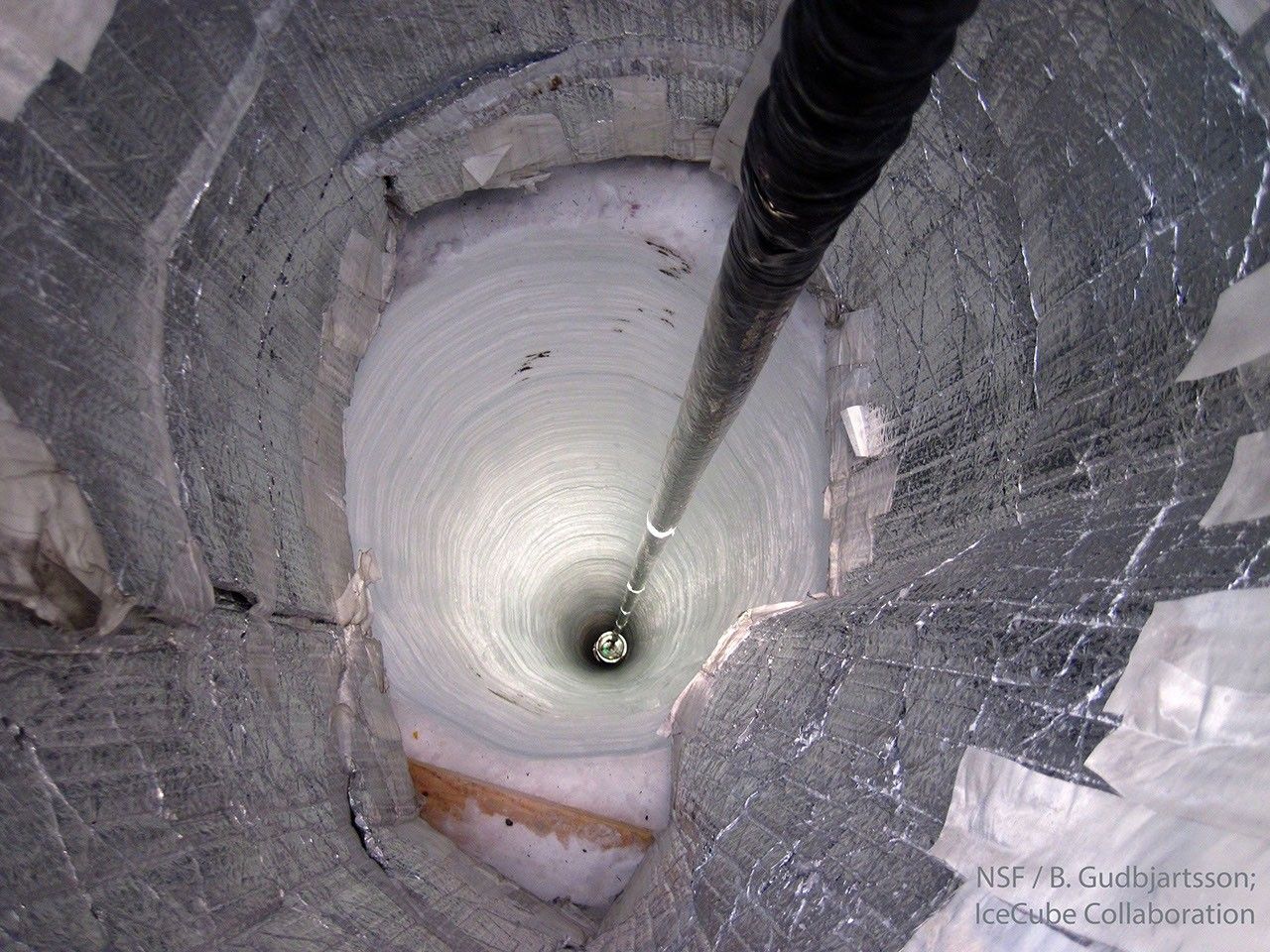
Explanation: Scientists are melting holes in the bottom of the world. In fact, almost 100 holes melted near the South Pole are now being used as an astronomical observatory. Astronomers with the IceCube Neutrino Observatory lowered a long string knotted with basketball-sized light detectors into each vertical lake. The water in each hole soon refreezes. The detectors attached to the strings are sensitive to blue light emitted in the surrounding clear ice. Such light results from fast-moving secondary particles liberated when high-energy neutrinos emitted by powerful processes out in the universe collide with ice molecules. IceCube has now detected many illuminating neutrinos. Pictured in 2010, one of the last of IceCube’s detector strings is lowered into the freezing abyss, making IceCube the largest neutrino detector ever created. In recognition of unprecedented discoveries, it was announced earlier this week that a founding leader of the IceCube Collaboration will be awarded the Nobel Prize in Physics.
Discover the cosmos! Each day a different image or photograph of our fascinating universe is featured, along with a brief explanation written by a professional astronomer.
Lunar Farside
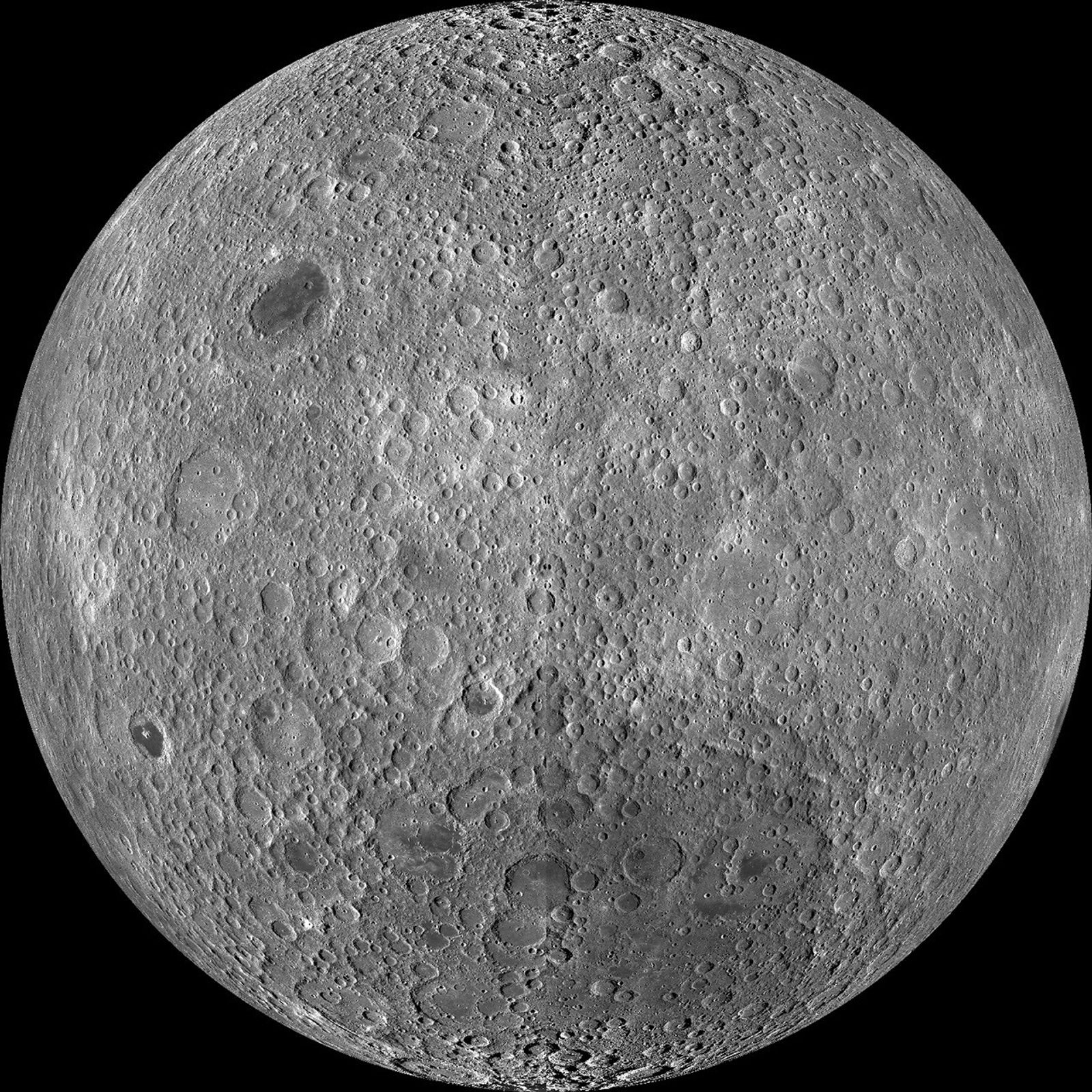
Explanation: Tidally locked in synchronous rotation, the Moon always presents its familiar nearside to denizens of planet Earth. From lunar orbit, the Moon’s farside can become familiar, though. In fact this sharp picture, a mosaic from the Lunar Reconnaissance Orbiter’s wide angle camera, is centered on the lunar farside. Part of a global mosaic of over 15,000 images acquired between November 2009 and February 2011, the highest resolution version shows features at a scale of 100 meters per pixel. Surprisingly, the rough and battered surface of the farside looks very different from the nearside covered with smooth dark lunar maria. A likely explanation is that the farside crust is thicker, making it harder for molten material from the interior to flow to the surface and form dark, smooth maria.
Presented by @ROLEX. Through its partnership with the National Geographic Society and as part of its Perpetual Planet Initiative, #Rolex supports expeditions exploring and protecting remarkable places around the world, a selection of which are featured in Africa Earth’s Wild Home. #PerpetualPlanet
Discover the cosmos! Each day a different image or photograph of our fascinating universe is featured, along with a brief explanation written by a professional astronomer.
Stickney Crater
Explanation: Stickney Crater, the largest crater on the martian moon Phobos, is named for Chloe Angeline Stickney Hall, mathematician and wife of astronomer Asaph Hall. Asaph Hall discovered both the Red Planet’s moons in 1877. Over 9 kilometers across, Stickney is nearly half the diameter of Phobos itself, so large that the impact that blasted out the crater likely came close to shattering the tiny moon. This enhanced-color image of Stickney and surroundings was recorded by the HiRISE camera onboard the Mars Reconnaissance Orbiter as it passed within some six thousand kilometers of Phobos in March of 2008. Even though the surface gravity of asteroid-like Phobos is less than 1/1000th Earth’s gravity, streaks suggest loose material slid down inside the crater walls over time. Light bluish regions near the crater’s rim could indicate a relatively freshly exposed surface. The origin of the curious grooves along the surface is mysterious but may be related to tidal stresses experienced by close-orbiting Phobos or the crater-forming impact itself.
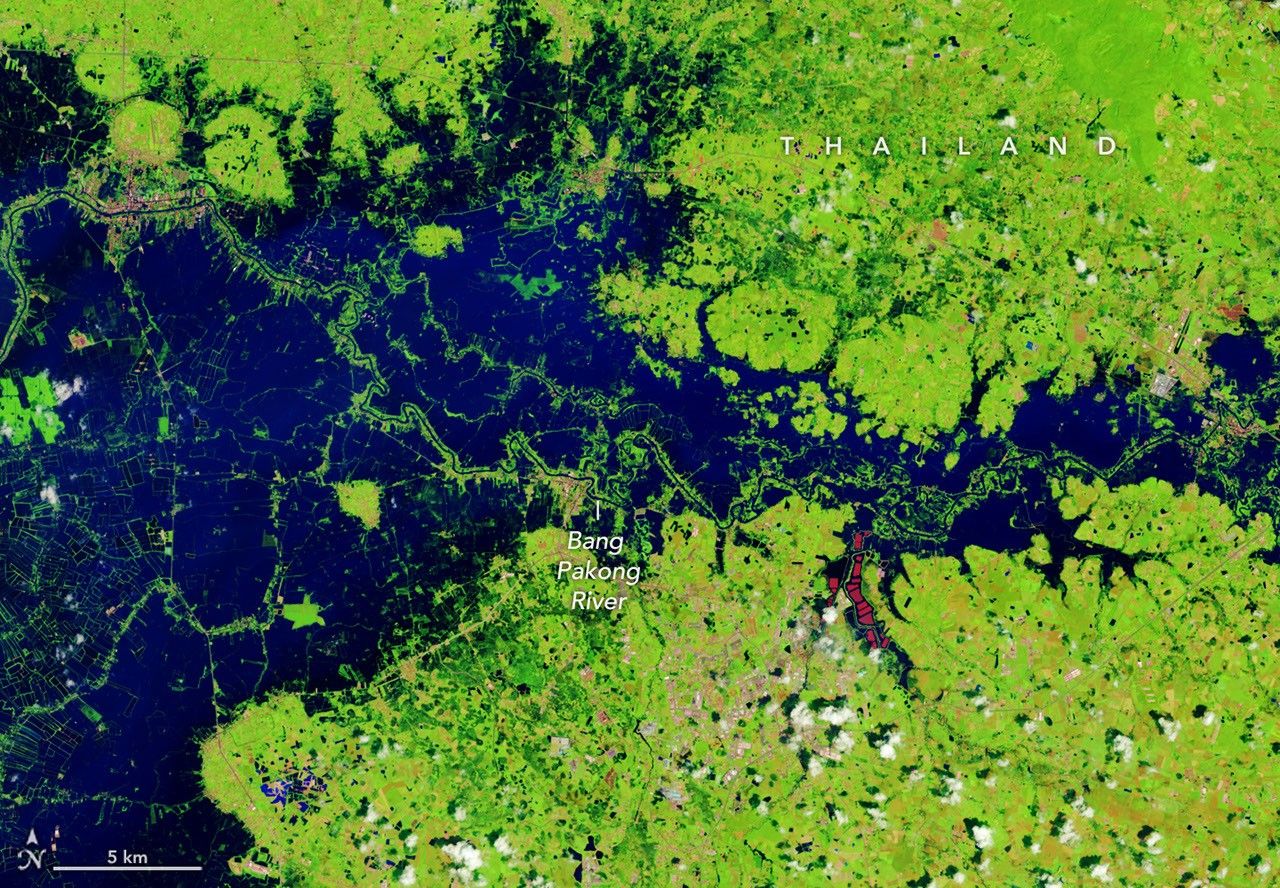
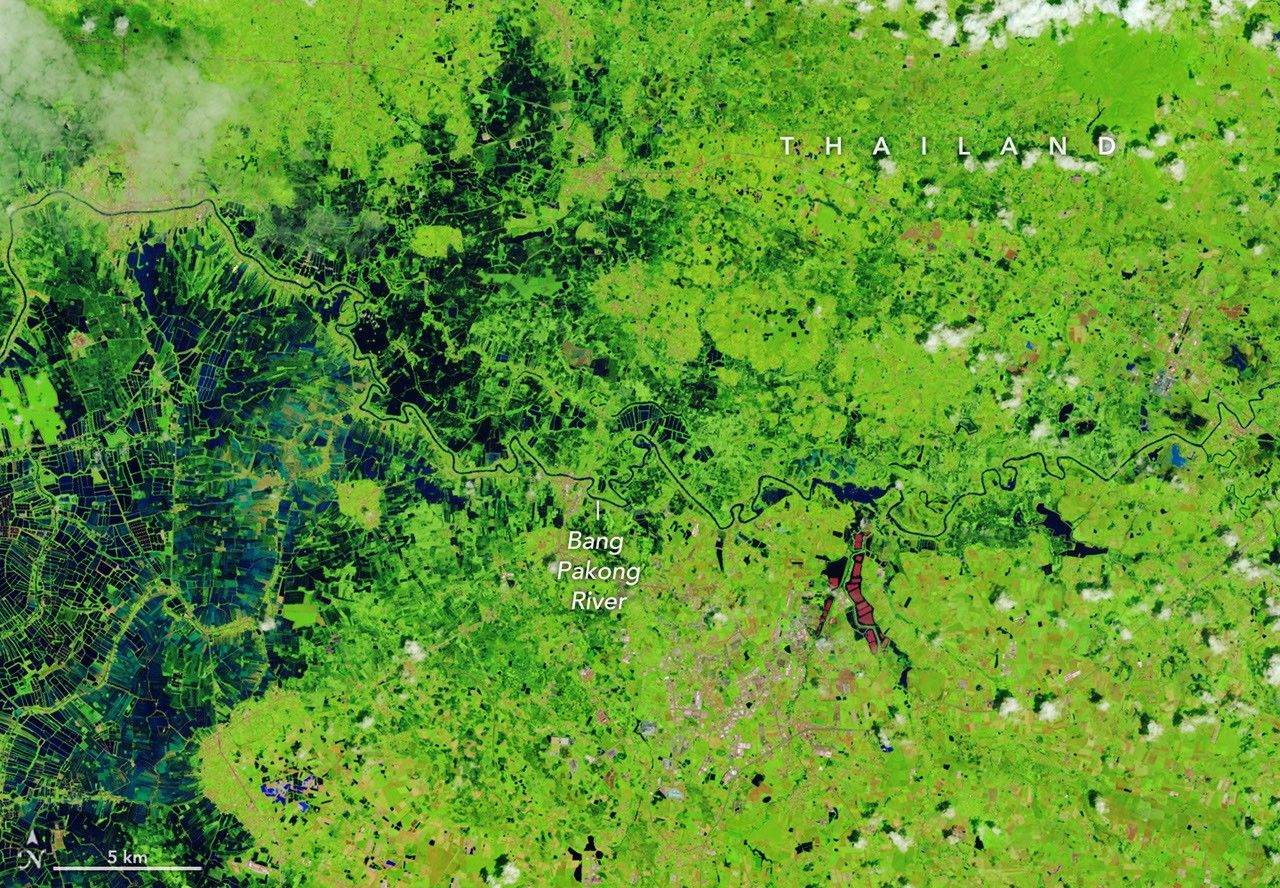
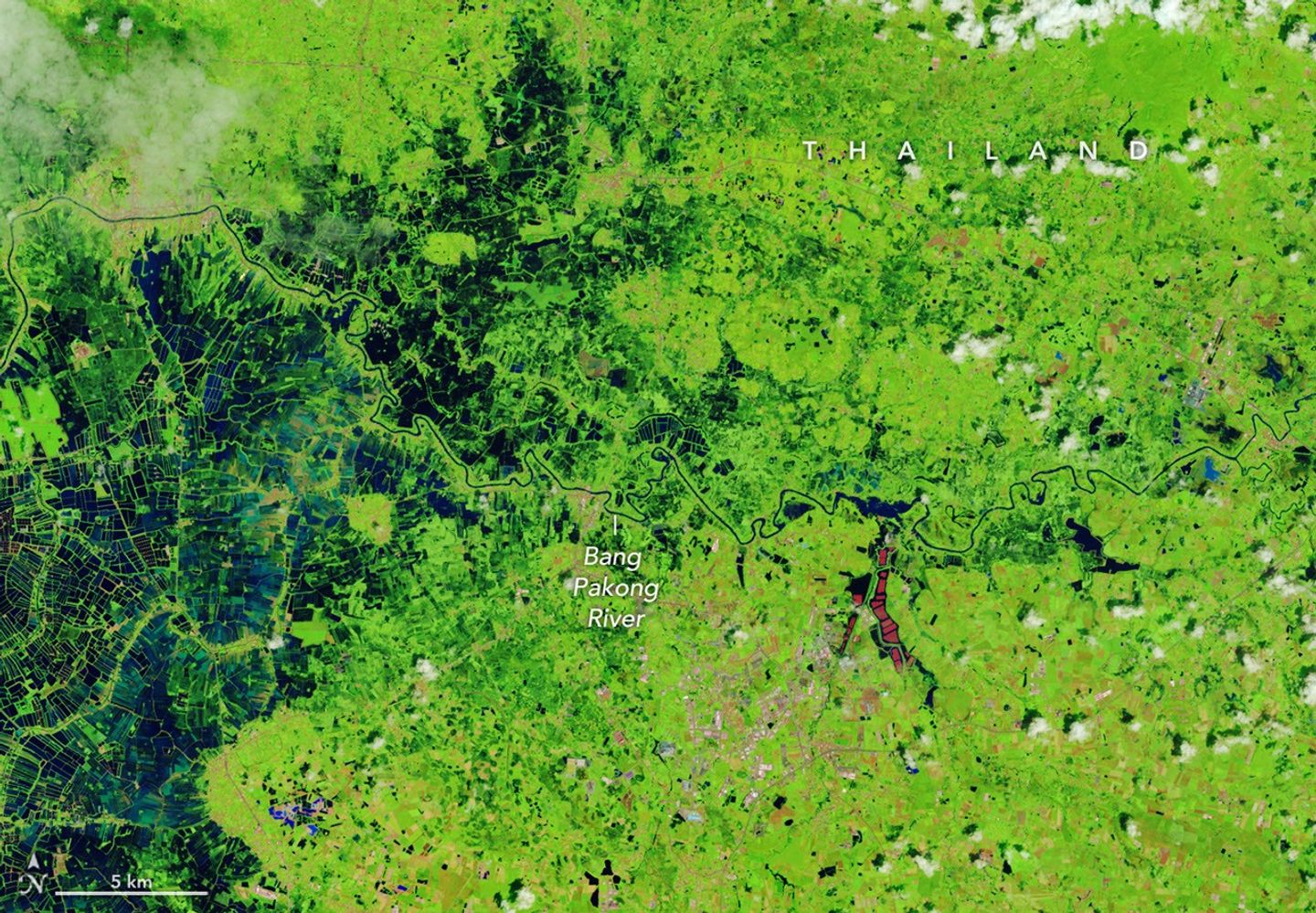
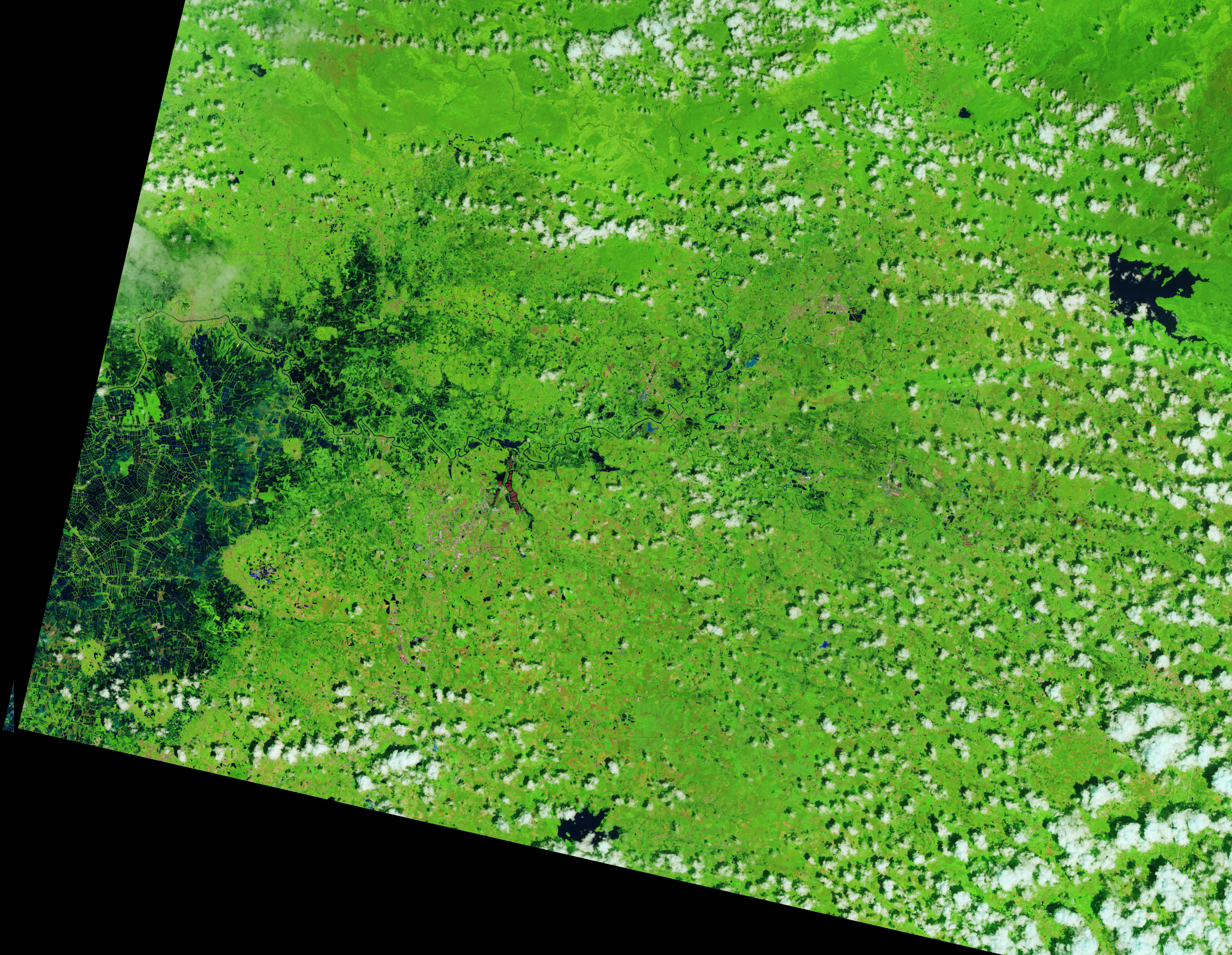
A narrow river (dark blue) meanders across vegetated land (bright green) in a false-color satellite image. Small geometric ponds or waterlogged fields appear on the left side of the scene.
NASA Earth Observatory / Lauren Dauphin
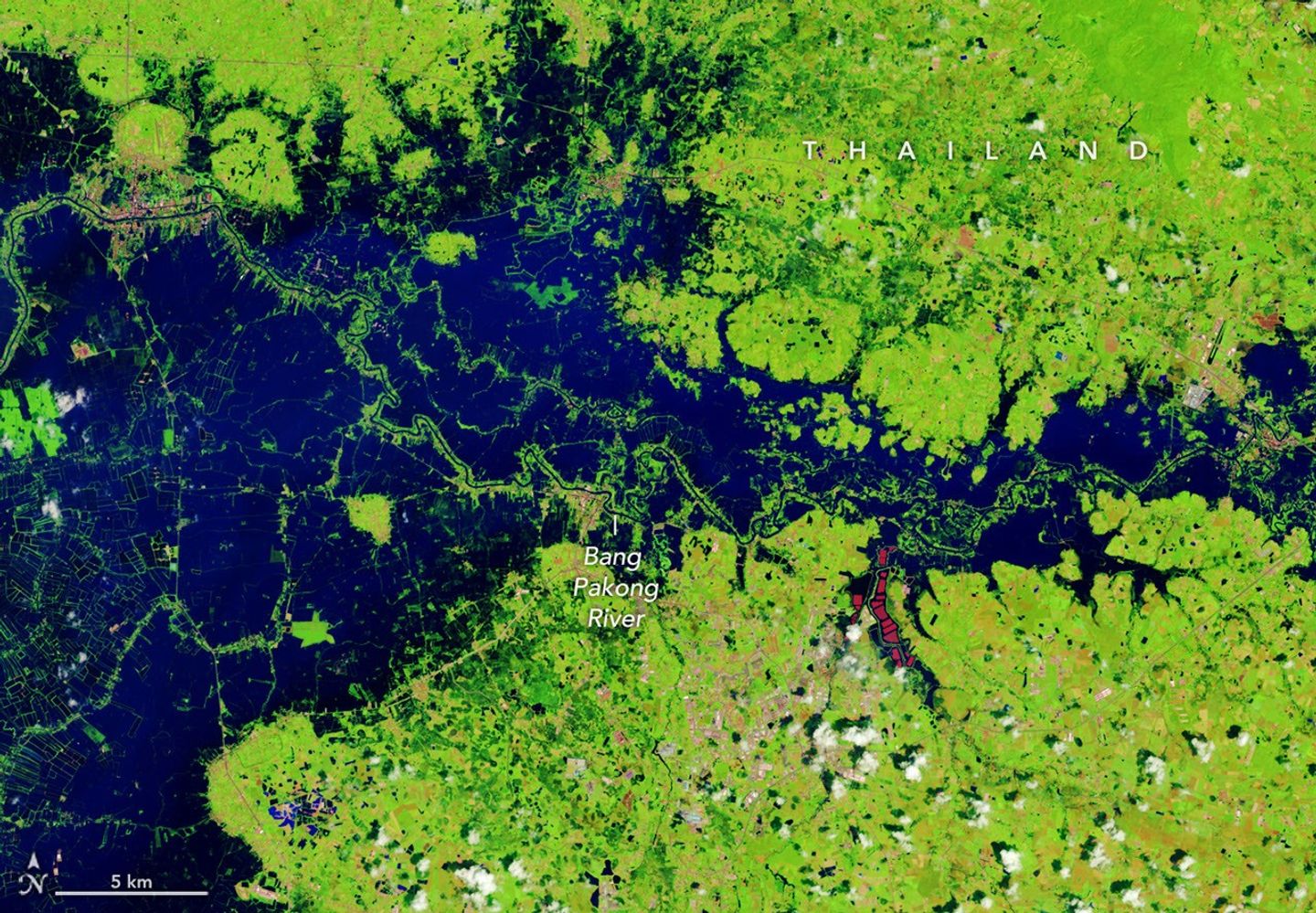
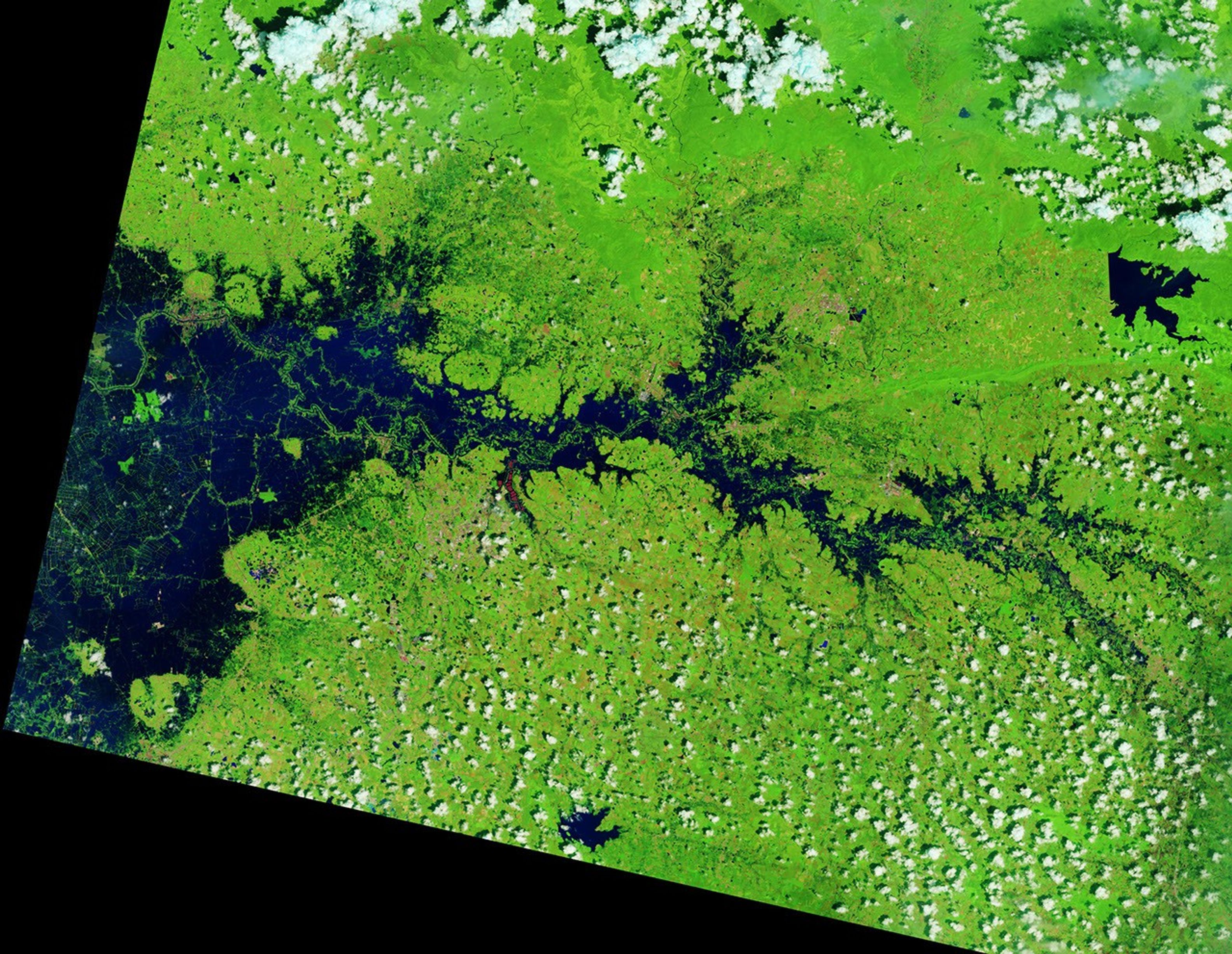
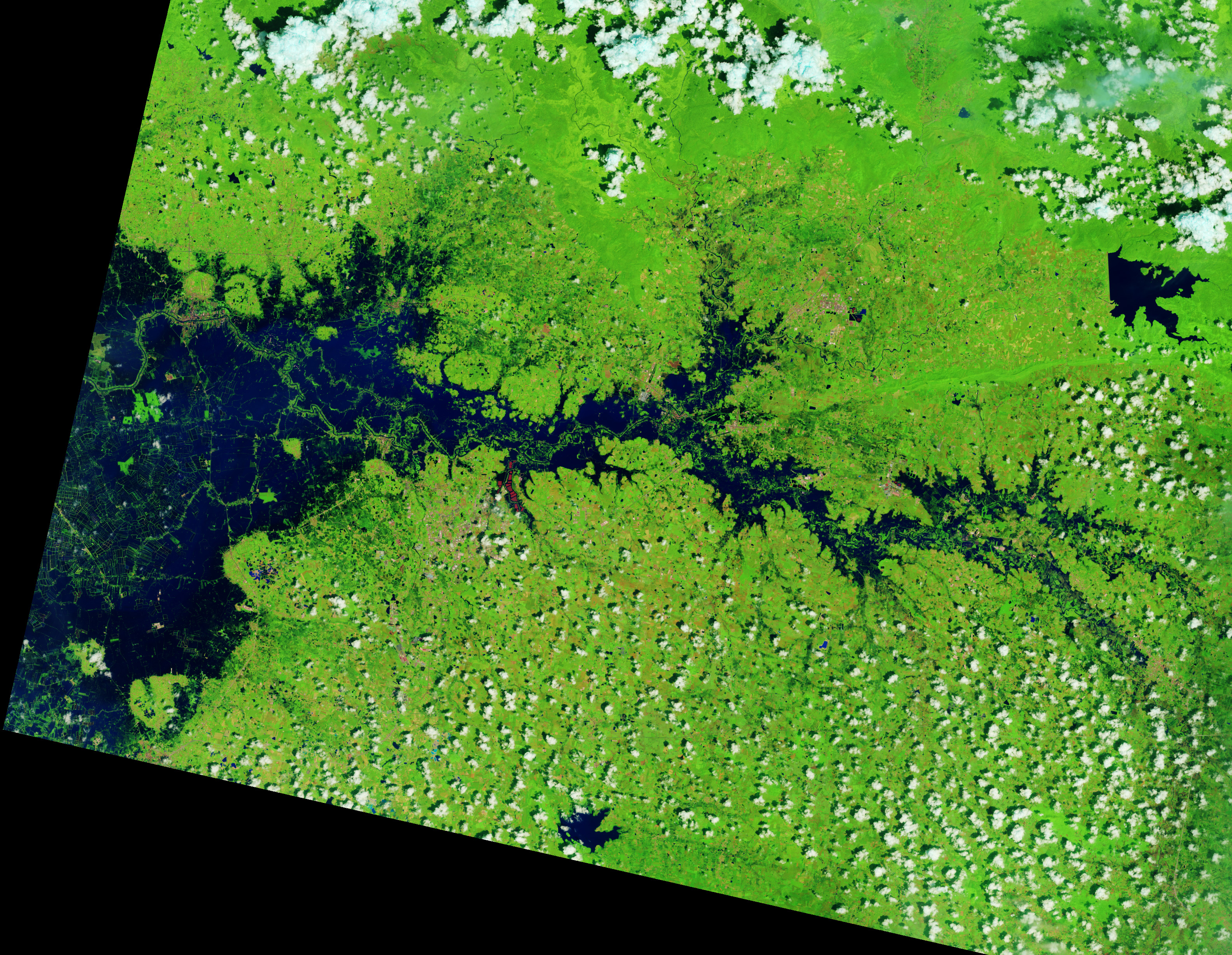
In a false-color satellite image of the same area, floodwaters (dark blue) flank a meandering river and cover a large swath of agricultural or aquacultural land primarily on the left side of the scene.
NASA Earth Observatory / Lauren Dauphin
October 7, 2025
October 2, 2026
September falls in the heart of the monsoon season in Thailand, where cities and towns are accustomed to the afternoon rains and thunderstorms that frequently roll through. But throughout late September and early October 2026, persistent heavy rains punctuated by intense downpours left low-lying areas across the country in Southeast Asia under sustained flooding.
Prachin Buri province was among the areas where flooding was widespread. The right image above shows land along the Bang Pakong River and nearby agricultural areas and aquaculture facilities inundated on October 2, 2026. The left image shows the same area at the same time of year in 2025. Acquired with NASA-USGS Landsat satellites, the images are false-color to better distinguish water from vegetation, developed land, and other surfaces. The bright red shapes are floating solar arrays.
Some of the flooding likely stemmed from a low-pressure system that stalled over the area for several days in late September. Stoked by moisture and energy from the warm Gulf of Thailand nearby, the system delivered especially intense rains to the region. About 100 kilometers (60 miles) to the west, Bangkok received nearly 300 millimeters (11.8 inches) of rain over a 48-hour period, according to news reports, close to the average monthly rainfall total for September of 344 millimeters (13.5 inches).
Since mid-September, flooding has occurred in 50 provinces across the country, affecting over 4 million people and causing dozens of deaths, according to the International Federation of Red Cross and Red Crescent Societies. Government agencies estimate about 270,000 hectares (670,000 acres) of farmland, including rice fields and fruit orchards, have been damaged.
NASA Earth Observatory images by Lauren Dauphin, using Landsat data from the U.S. Geological Survey. Story by Lindsey Doermann.
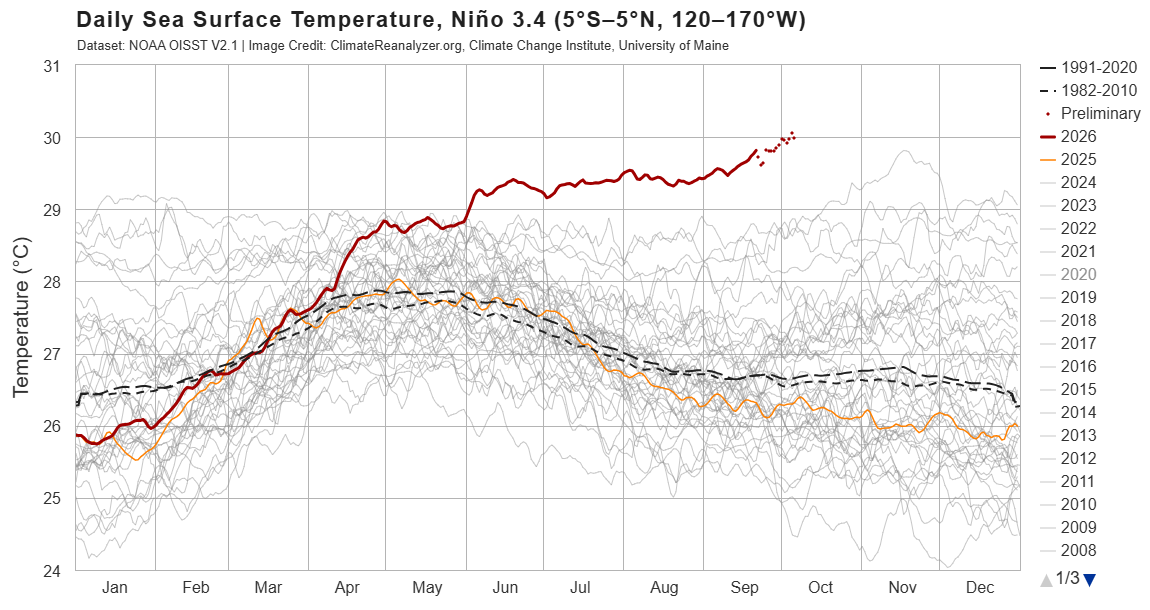
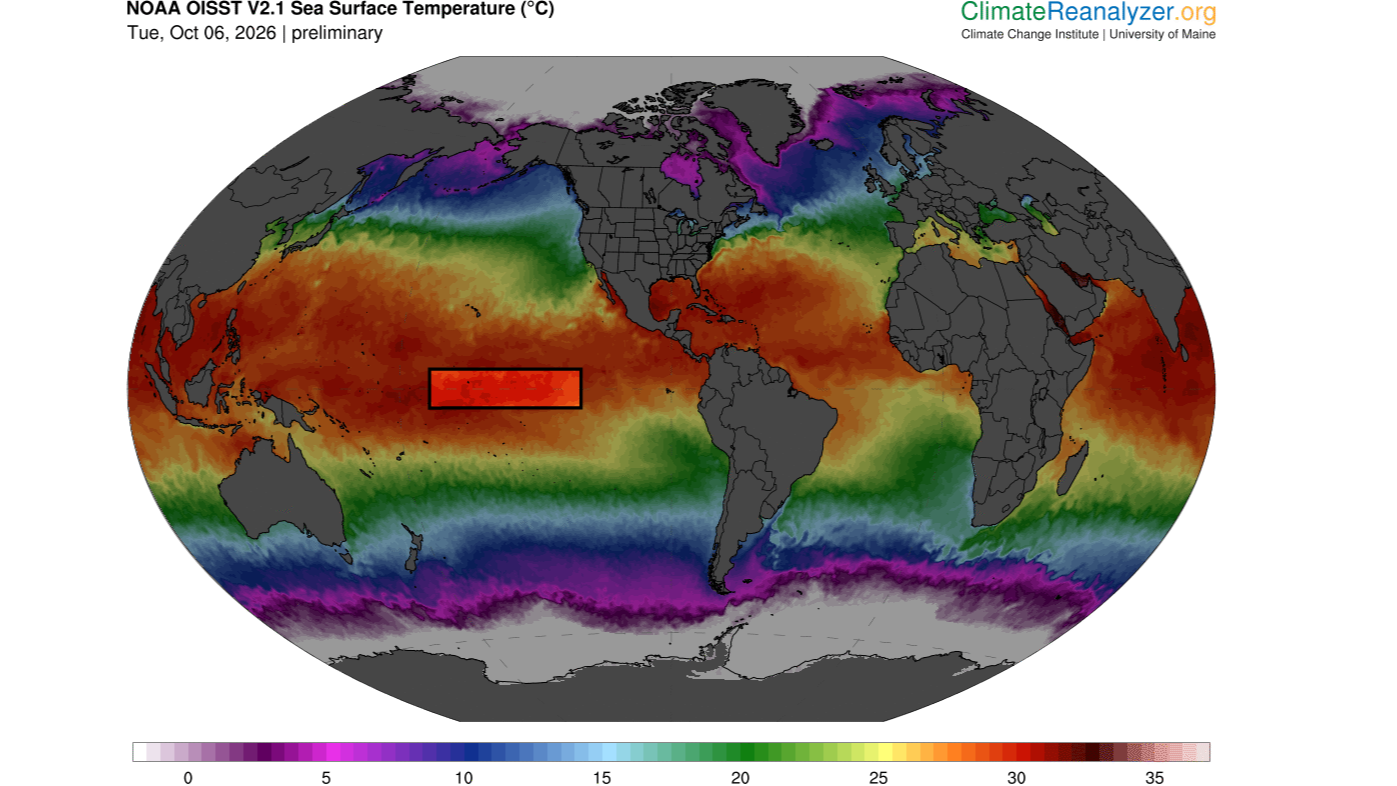
The sea surface temperature in a key section of the central equatorial Pacific Ocean has now surpassed all previous temperatures on record for this region, exceeding 86 degrees Fahrenheit (30 degrees Celsius) for the first time, according to preliminary data released Monday (Oct. 5).
Specifically, these temperatures occurred in the Niño 3.4 region, located between 5 degrees north and 5 degrees south latitude, and 120 degrees west and 170 degrees west longitude. Researchers use this region to monitor the progression of El Niño, the warm phase of a multiyear natural climate pattern that's currently in full swing and steadily intensifying. But how significant is this new record, and could it be a harbinger of increasingly extreme El Niño events in the future?
At this time of the year, sea surface temperatures above 86 F are common in the western Pacific warm pool, a mass of water located northeast of Australia. But the Niño 3.4 region is nowhere near the warm pool and usually has much cooler temperatures. This latest data indicates "an exceptionally warm state for this part of the tropical Pacific," said Jin-Yi Yu, a professor of Earth system science at the University of California, Irvine.
"If the reported daily El Niño 3.4 temperature above 30°C is verified in the observational dataset, it would be an extraordinary record," Yu told Live Science in an email.
Other experts agreed. A Niño 3.4 sea surface temperature above 86 F is a "very significant" new record, Timothy Osborn, a professor of climate science and the director of the Climatic Research Unit at the University of East Anglia in the U.K., told Live Science in an email. Mat Collins, a professor of climate systems and the head of mathematics and statistics at the University of Exeter in the U.K., also called the temperature "very significant" in an email to Live Science.
But it's important to note that absolute temperature is not the standard way of measuring the strength of El Niño, Osborn said. Researchers usually assess El Niño intensity by comparing sea surface temperatures in the Niño 3.4 region with the average conditions there or with sea surface temperatures across the rest of the tropics, with the latter method removing a skew in the data caused by the climate-change-induced heating of oceans globally.
"On those measures, the current event is already close to being the strongest [El Niño] on record and will likely soon exceed previous records given that the event is forecast to strengthen further," Osborn said. "For some measures, it is already record-breaking for the time of year."
"Super" El Niño
El Niño events happen when warm water in the western tropical Pacific Ocean migrates eastward along the equator, toward South America. This boosts global temperatures, triggering heavy rainfall and floods in regions like East Africa, southern China, the southern U.S. and the Pacific coast of equatorial South America, while places such as Indonesia, the Philippines, southern Africa and northern South America experience drought.
"El Nino impacts are greatest across the tropics and in the lands around the Pacific Ocean," Osborn said. "An El Nino with record strength is very significant because it greatly disrupts the atmospheric circulation which controls the weather patterns including patterns of rainfall."
As of Oct. 6, the temperature anomaly in the Niño 3.4 region is 6 F (3.34 C) above average and rising. A typical El Niño increases Niño 3.4 temperatures by a maximum of 1.8 to 3.6 F (1 to 2 C) above average, so the current condition is "exceptionally large," Yu said. "This indicates that a very strong, or what is sometimes called a 'super,' El Niño is developing."
Sea surface temperatures in the Niño 3,4 region exceeded 86 degrees F (30 C) on Oct. 5. (Image credit: ClimateReanalyzer.org (CC BY 4.0))
This year's El Niño is being amplified by human-driven global warming, which has increased background ocean temperatures. As a result, it's likely that sea surface temperatures in the Niño 3.4 region will keep rising over the coming weeks and peak in November or December, before declining again in 2027, Collins said.
While it's likely that future El Niños will be more extreme than past ones, on average, not every El Niño will be record-breaking and as dramatic as the one unfolding now, because these events tend to be very variable, Collins said.
As climate change intensifies, the big worry is that certain regions will be primed for extreme conditions even before an El Niño strikes, Osborn said. For example, regions that are getting drier due to global warming could see catastrophic droughts if they overlap with areas that experience dryness during El Niño events. Likewise, places that are getting wetter could see worse deluges of rain and flooding if they coincide with areas with higher precipitation during El Niños. But that doesn't necessarily mean extreme El Niños are the new normal, he said.
Instead, the location and duration of El Niño events may be transforming, Yu suggested. "In research by my group and collaborators, we have documented changes not only in El Niño intensity, but also in where the warming occurs and how long events persist," he said.
Yu and his colleagues helped to introduce the idea that we are seeing the emergence of two distinct types of El Niño: the eastern Pacific El Niño and the central Pacific El Niño. "Many El Niño events in the earlier observational record were dominated by warming in the eastern tropical Pacific, whereas Central Pacific El Niño events became much more prominent in recent decades," he explained, adding that El Niños have also been lasting longer.
Global warming may be creating a new kind of El Niño by strengthening atmosphere-ocean interactions in the subtropical Pacific, Yu said. If these interactions combine with processes in the equatorial Pacific, where eastern Pacific El Niños emerge, they might trigger unusually strong events with extreme heating in the central Pacific.
"That provides a physical reason to take the possibility of more frequent extreme El Niño events in a warmer climate seriously," Yu said. "But I would distinguish that from saying that every El Niño will become progressively stronger."
Have you ever wondered what it's like to be flipped off by an orangutan or seduced by a mantis? Well, wonder no more, thanks to the 2026 Nikon Comedy Wildlife Awards.
This photography competition showcases the amusing side of nature, usually by anthropomorphizing it in some way, and features a variety of comical critters from across the globe.
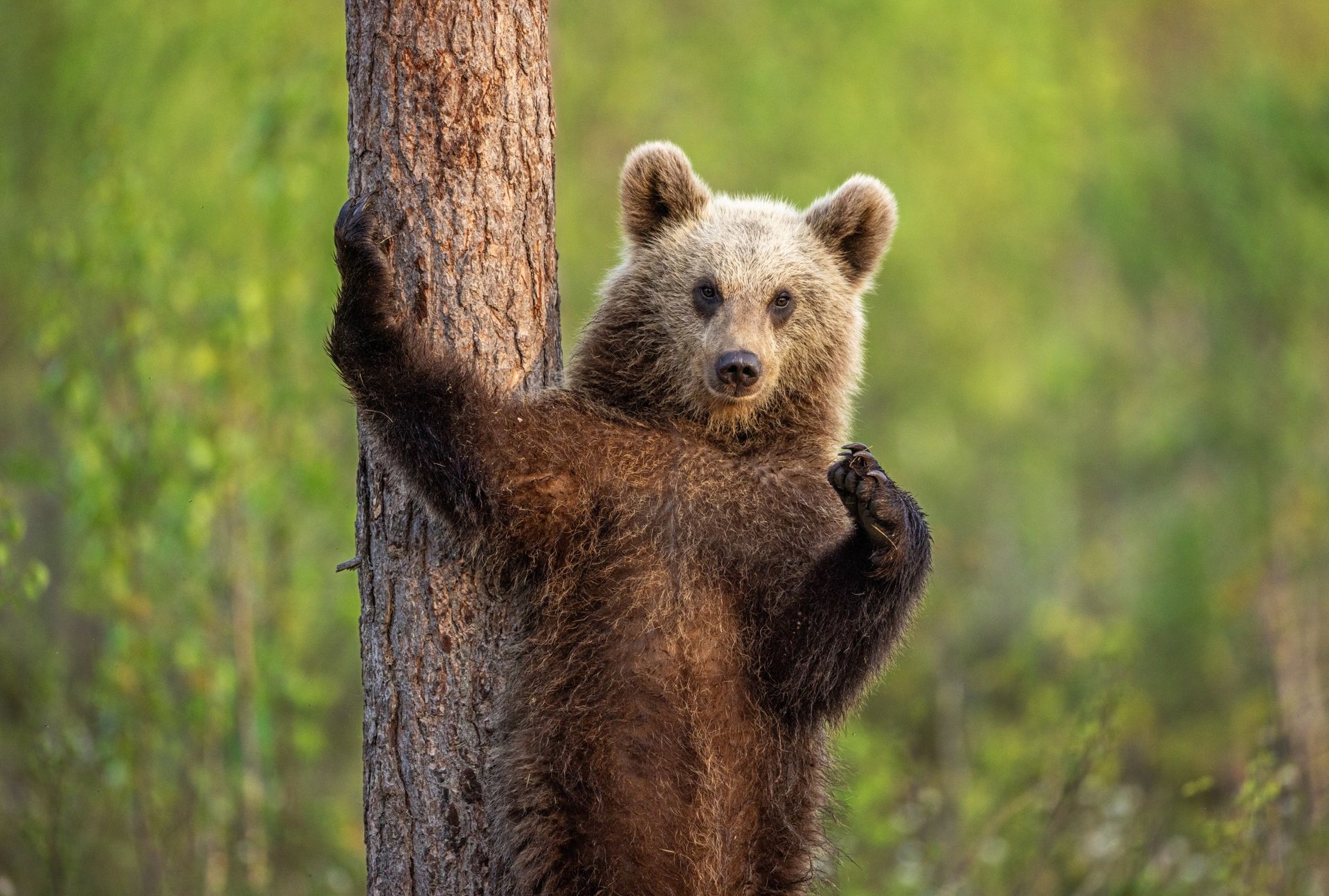
This year, a surprised owl and a brown bear striking a pose are featured among the more than 10,000 entries, with photographers competing for a luxury safari in Kenya's Maasai Mara National Reserve.
Live Science rounded up some of the funniest photos from the 2026 finalists for your enjoyment. And yes, the orangutan and mantis have made it to the finals.
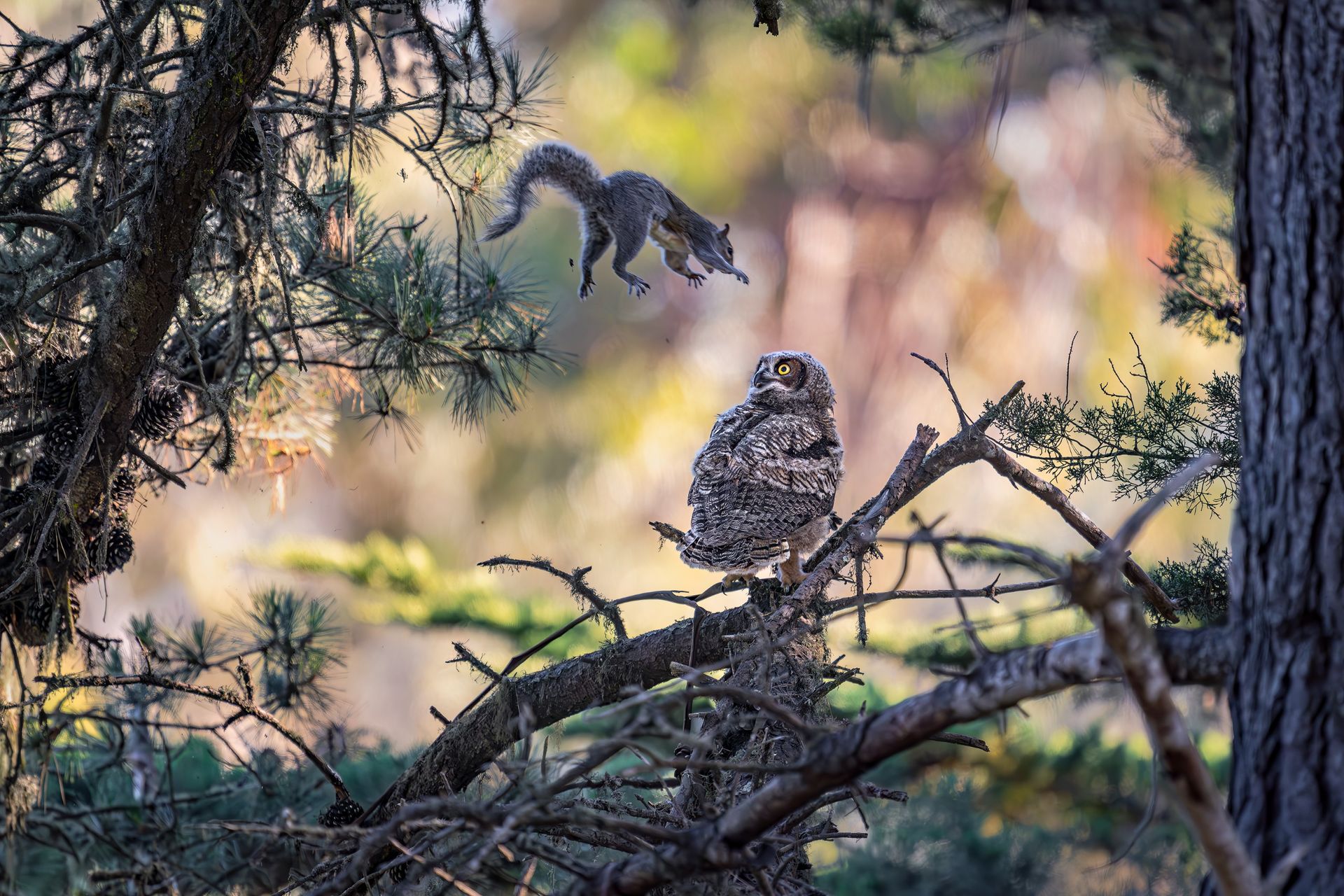
Here we see a squirrel launching itself at a great horned owl fledgling in Natural Bridges State Beach park in Santa Cruz, California. According to photographer Kevin Lohman, the squirrel knocked the owl off its perch three times.
Our video channels editor, Elise Poore, said this photo really made her laugh. I doubt the owl found it quite so funny. However, great horned owls (Bubo virginianus) do hunt squirrels, so it's no surprise that these rodents can get a little tetchy around the birds.
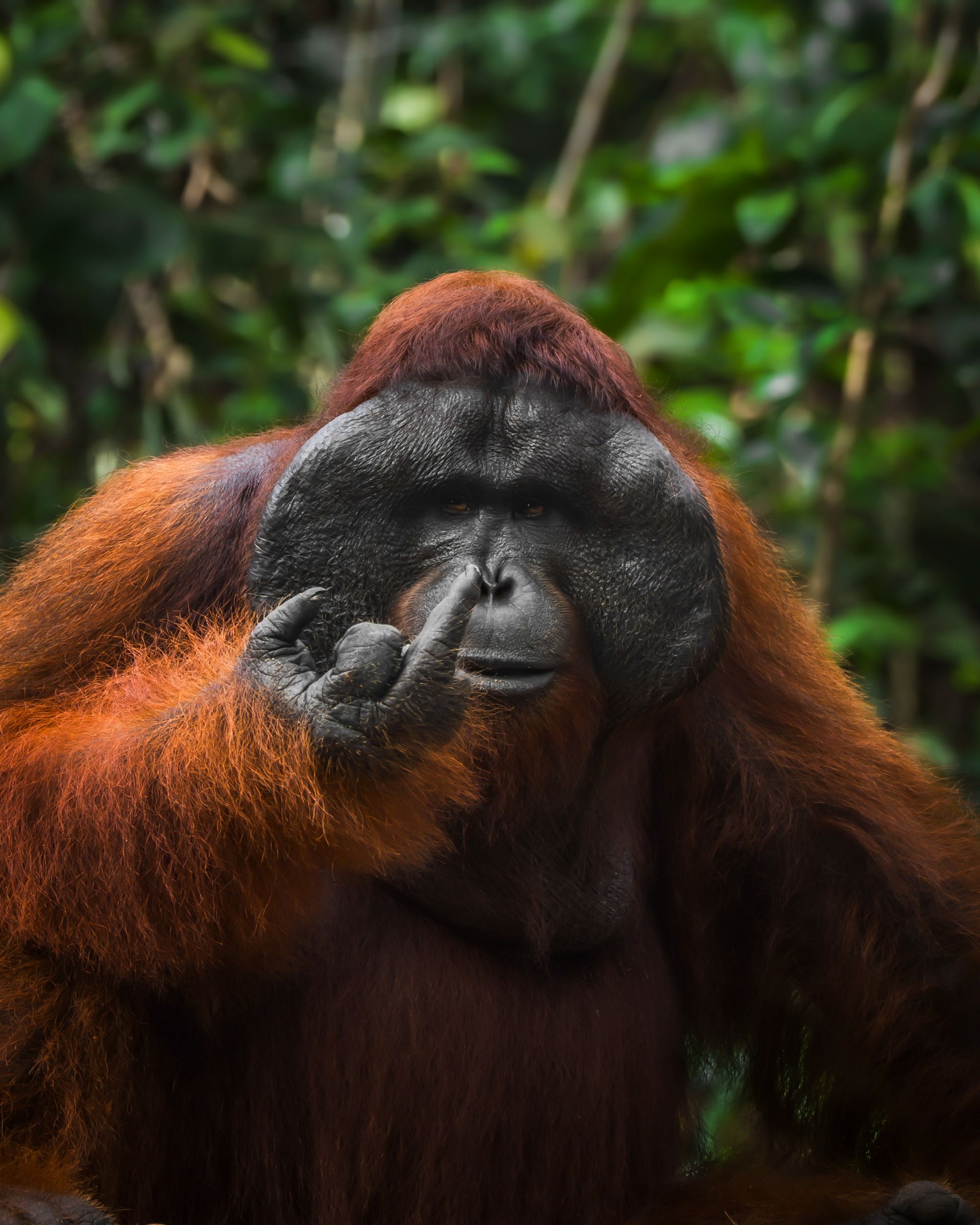
This "Spicy Orangutan" entry features a male Bornean orangutan (Pongo pygmaeus) raising one finger, giving the appearance that he's flipping off the camera. In the description accompanying the image, photographer Tanner Mansell explained that the orangutan was finishing his meal at the time.
"Even though he was completely wild and just enjoying his food, I couldn't help wondering, 'Does he know what he's doing?'" Mansell wrote.
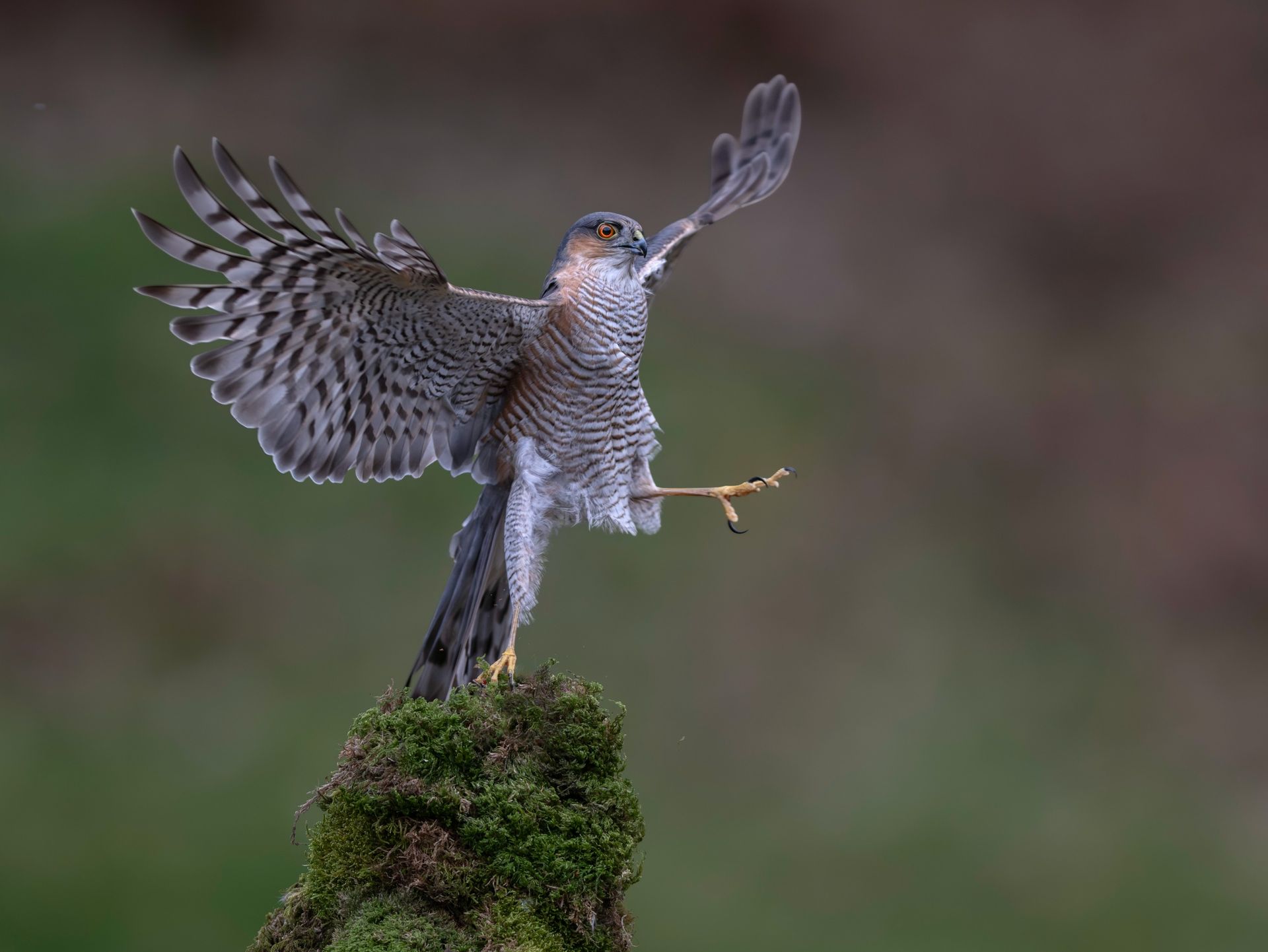
This photo of a sparrowhawk (Accipiter nisus) in Dumfries, Scotland, is titled "Ballet Dancer," but to me, the balancing bird looks more like an Olympic gymnast in the middle of a complex beam routine. Either way, perfect form!
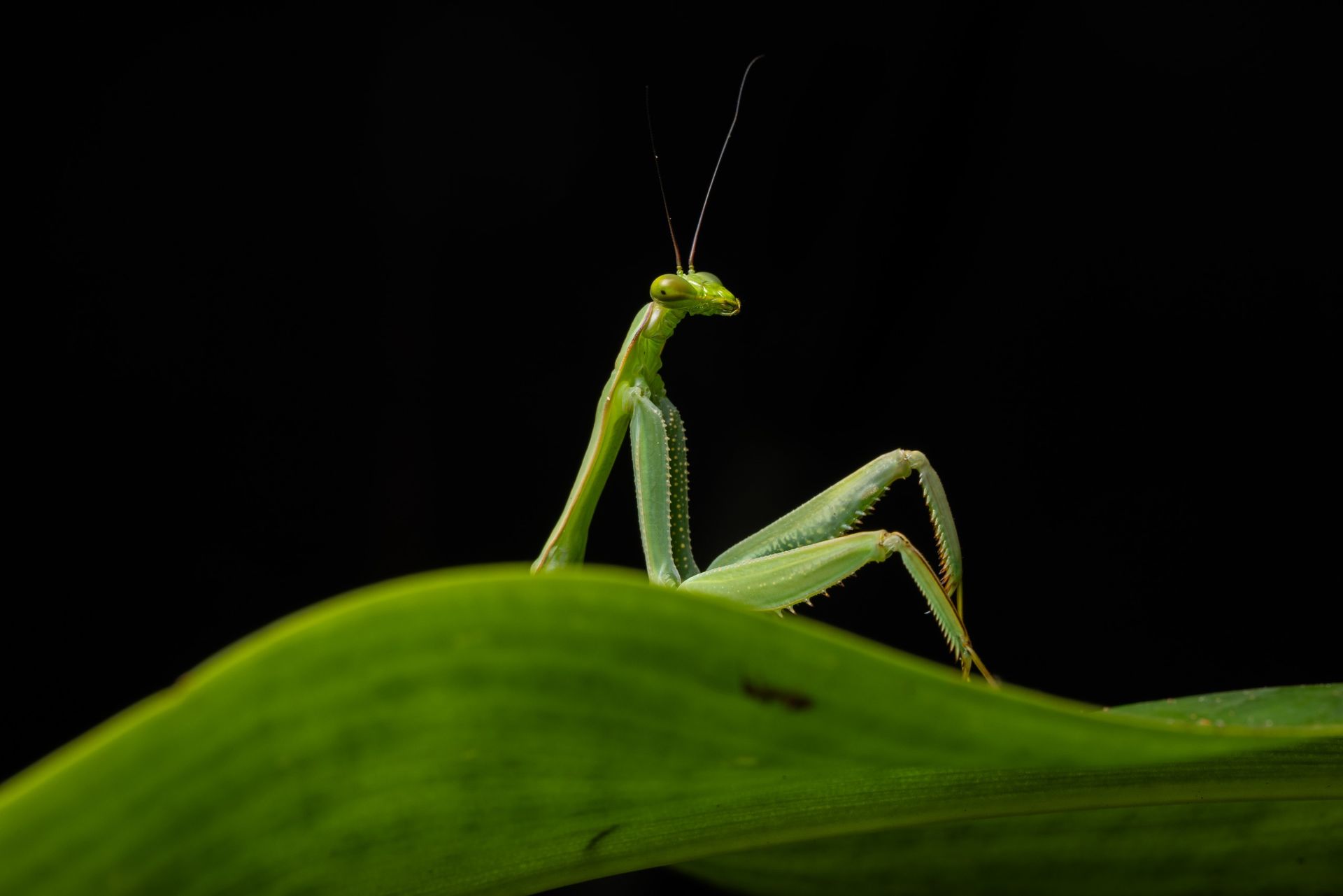
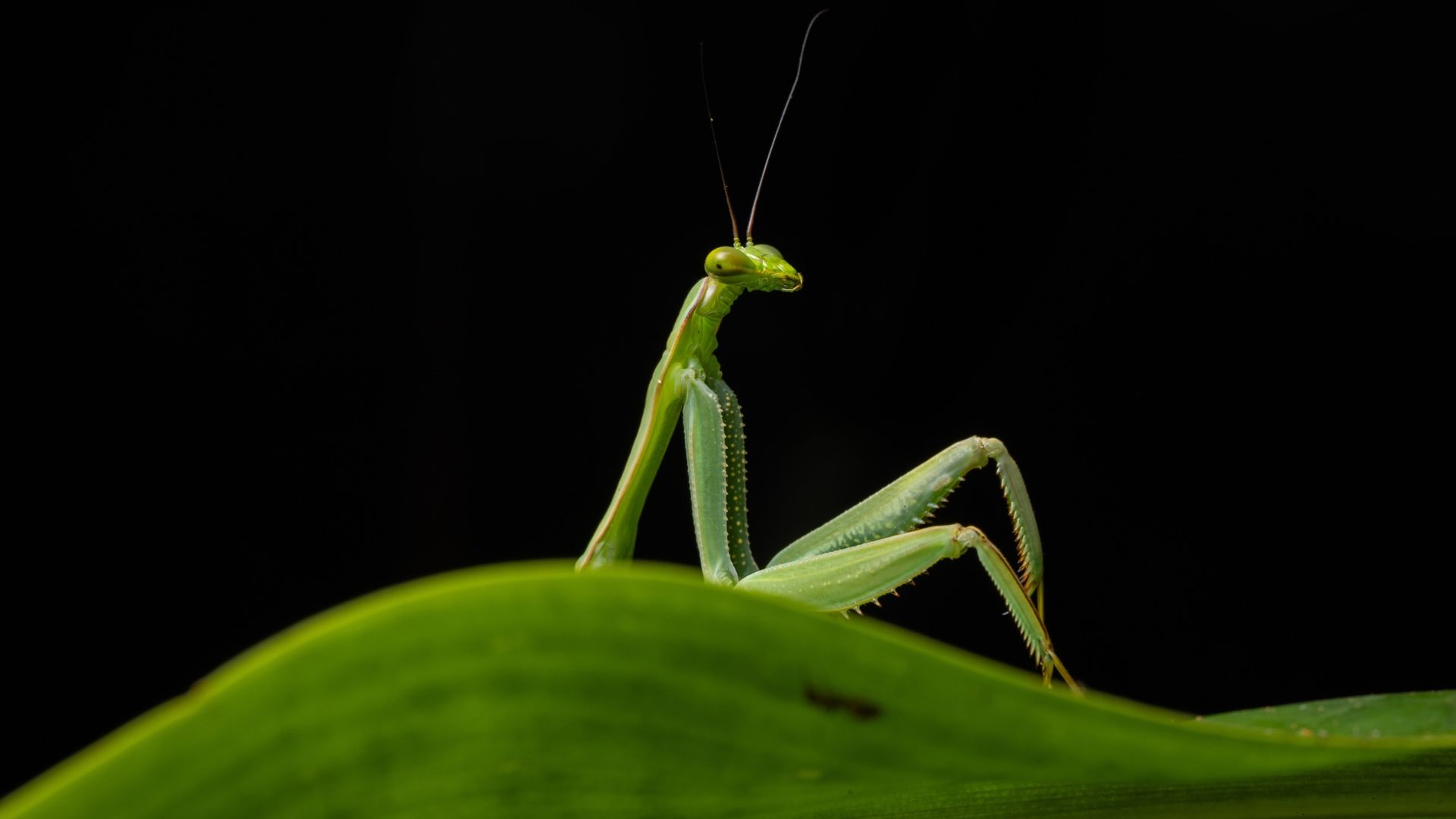
I know what you're thinking: This mantis looks like it's saying, "Draw me like one of your French girls." However, if you can look past the sexualization of an insect, you might notice a pretty neat trick in how the photo was framed.
Half of the mantis's body is hidden behind the leaf. What appears to be a torso and legs are actually the creature's forelimbs, which it uses to catch prey. Photographer Diego Perez explained that he snapped the mantis while documenting wildlife in the proposed Bosques del Araza Regional Conservation Area in Peru, which is currently threatened by illegal gold mining.
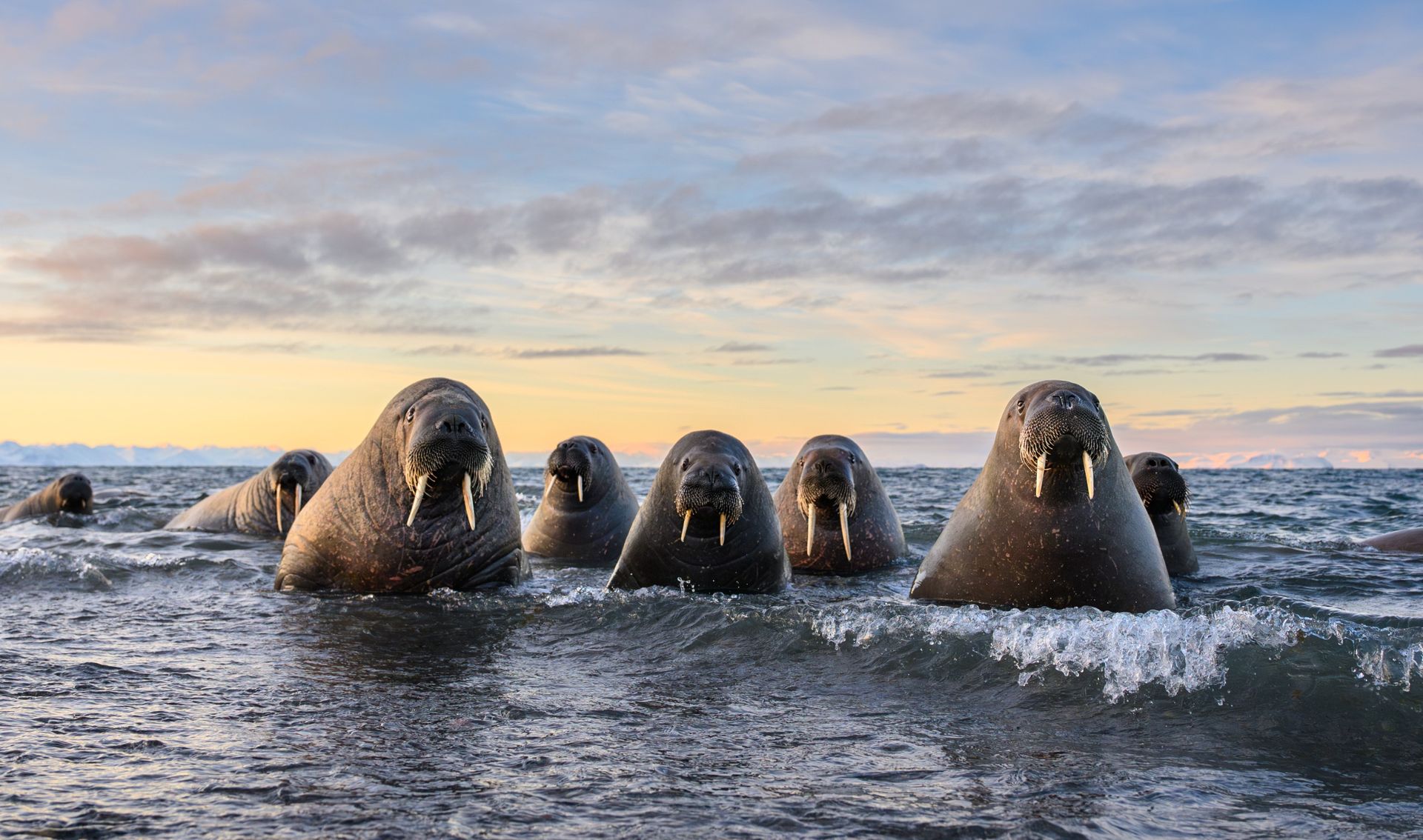
Here we see a herd of walruses on the coast of Svalbard in Norway. The photo is titled "Sea Gangsters," implying that the walruses look like tough guys. You'd probably feel tough, too, if your tusks (which are actually sabers) grew to around 3 feet (1 meter) long.
Ten out of 10. No notes. But, in all seriousness, red squirrels (Sciurus vulgaris) are known to grab materials like dried grass and moss to line their nests, called dreys, so maybe this little fellow is working on its home sweet home.
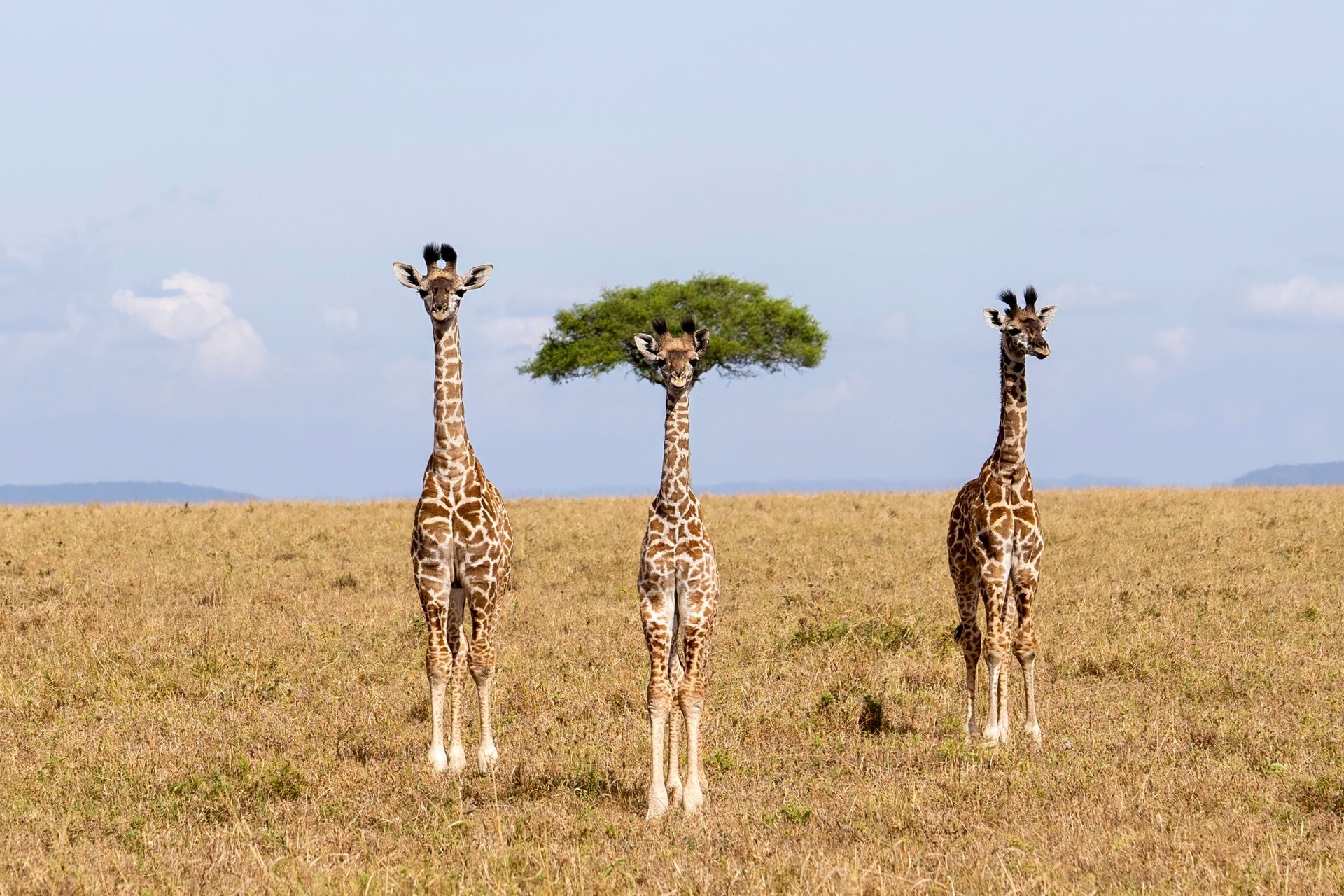
Sometimes, all a photographer needs is the Maasai Mara, three young giraffes and a perfectly placed acacia tree. It's nice that the photographer caught them at a standstill, since these ungulates can run up to 35 mph (56 km/h) in short bursts.
This is just a selection of the finalists. You can see the rest of the contenders in Nikon's 2026 finalists gallery. The winners will be announced Dec. 8.
What do you know about the animal kingdom? Test your knowledge with our animal quiz!
Presented by @ROLEX. Pangolins face intense pressure from illegal wildlife trafficking across Africa. The Tikki Hywood Foundation cares for those rescued from the trade, including babies, before releasing them into the wild.
Through its partnership with the National Geographic Society and as part of its Perpetual Planet Initiative, #Rolex supports expeditions exploring and protecting remarkable places around the world, a selection of which are featured in #AfricaEarthsWildHome. #PerpetualPlanet
Learn more about the efforts to save Africa's vanishing pangolins in the October edition of National Geographic: https://on.natgeo.com/c566e4
Presented by @ROLEX. National Geographic Explorer Steve Boyes has spent his life exploring Africa’s wild places and studying the patterns of the continent's wildlife. He approaches conservation through the lens of science, exploration, and—most importantly—hope.
Through its partnership with the National Geographic Society and as part of its Perpetual Planet Initiative, #Rolex supports expeditions exploring and protecting remarkable places around the world, a selection of which are featured in Africa Earth’s Wild Home. #PerpetualPlanet
#AfricaEarthsWildHome is now streaming on Disney+ and Hulu.
Subscribe: https://www.youtube.com/natgeo
Stream more on Disney+
➡ Disney Plus: https://www.disneyplus.com/browse/national-geographic
Get unlimited access to National Geographic stories, photography, and more by subscribing today:
➡ National Geographic Magazines: https://natgeo.com/ytngmagazine
#NationalGeographic #SteveBoyes #Africa
About National Geographic: National Geographic is the world's premium destination for critically acclaimed storytelling around science and exploration. Discover amazing wildlife, ancient civilizations, hidden worlds, and the incredible wonders of our Earth. Through world-class scientists, photographers, journalists, and filmmakers, Nat Geo inspires fans of all ages to connect with, explore, and care about the world.
Steve's Story #AfricaEarthsWildHome
https://youtube.com/shorts/mdhMtWpChHM
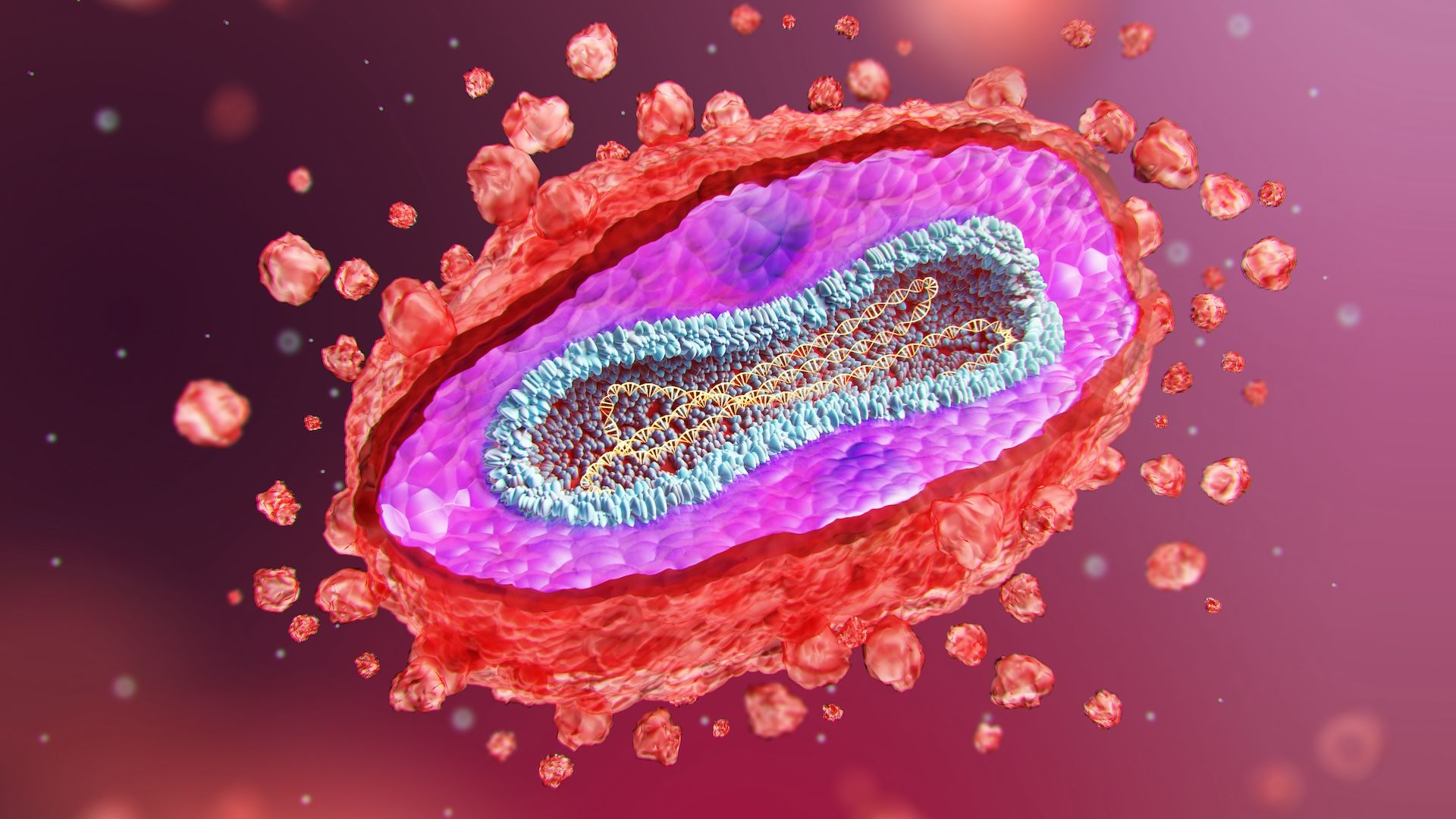
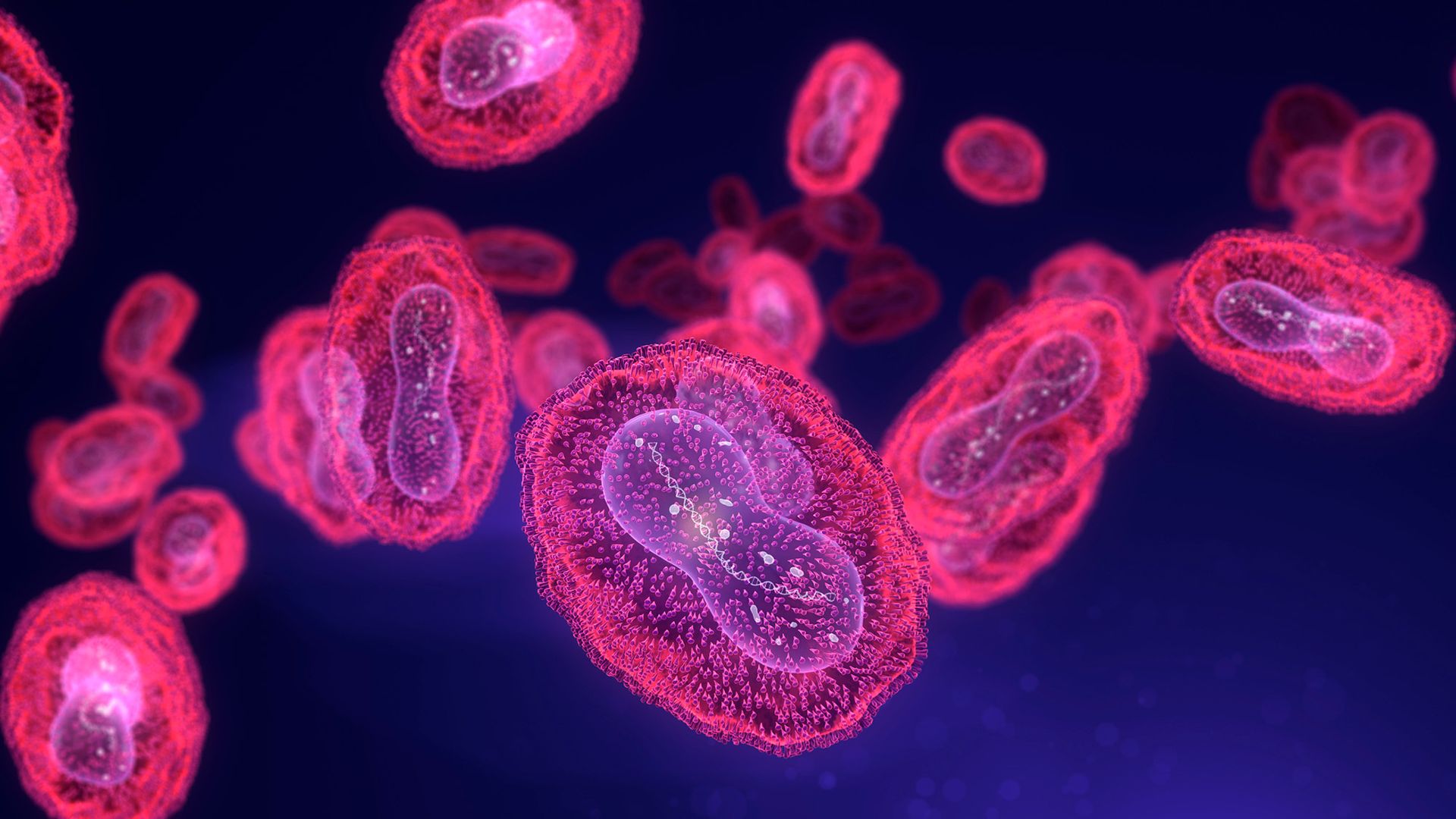
Mpox is an infectious disease caused by a poxvirus, meaning a virus in the same family as smallpox. The infection was formerly known as monkeypox.
Historically, mpox was endemic to Africa, and the virus consistently spread in the continent's central, eastern and western regions. In 2022, an unprecedented global outbreak spurred the widespread transmission of mpox in places that had seen only sporadic cases in the past.
Today, many countries affected by that outbreak — including Germany, Portugal and the United States — are still contending with local mpox transmission. Here's what to know about the virus, how it spreads and how to prevent infection.
What to know about mpox in the U.S.
Mpox is still spreading at low levels in the United States and may soon be considered endemic to the country. While case counts have fallen dramatically since the peak of the global outbreak in summer 2022, some people are still advised to get vaccinated against the virus.
Who should get vaccinated for mpox?
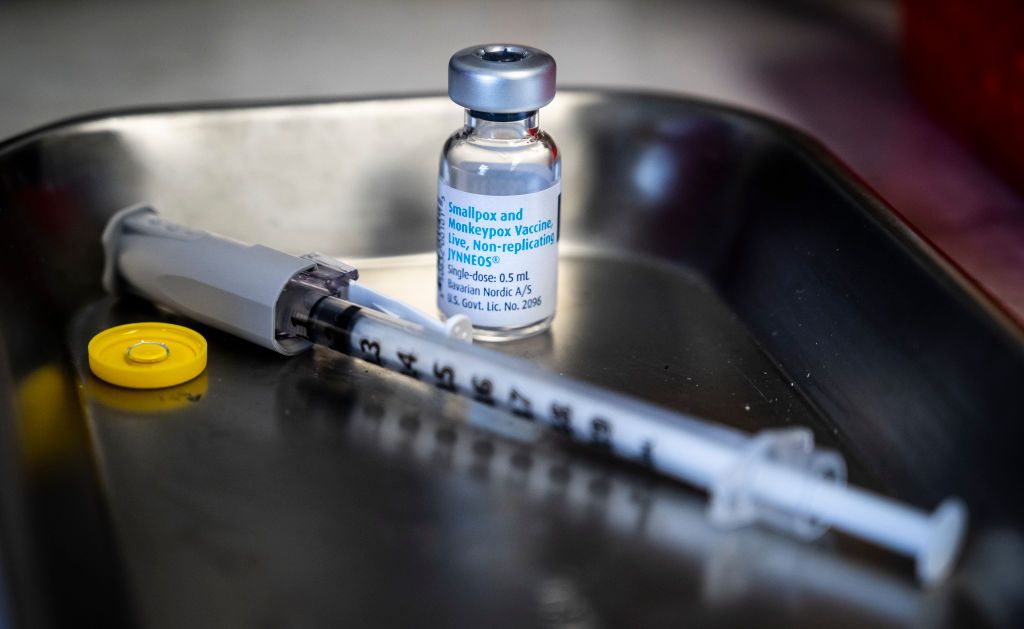
The mpox vaccine currently used in the U.S. is called JYNNEOS. One dose is about 35% to 86% effective, while the complete two-dose series is 66% to 90% effective. (The effectiveness varies, in part, because some studies include people with HIV and people without HIV, and inadequately treated HIV can undermine the body's response to vaccines.)
The JYNNEOS vaccine is not currently recommended for routine use in the general population because, beyond vulnerable groups, the risk is not high enough to warrant a universal vaccination strategy. The current outbreak is primarily affecting men who have sex with men, and those sexual networks are the primary targets for JYNNEOS vaccination.
However, not all men who have sex with men need to be vaccinated, according to the Centers for Disease Control and Prevention (CDC). Instead, vaccination is recommended for a specific subset of the group, including those who, in the last six months, have had more than one sex partner, have had sex at commercial sex venues, or have been diagnosed with other sexually transmitted diseases.
Nonbinary and transgender people with these risk factors are also recommended to get two doses of JYNNEOS, as are any sexual partners of anyone in the above groups.
"For those who are eligible and have not yet completed vaccination, now is a good time to talk with a healthcare provider about getting protected," Dr. Demetre Daskalakis, chief medical officer of Callen-Lorde, an LGBTQ+ community health center in New York City, told Live Science in an email.
With the exception of laboratory researchers who work with mpox, people who have received two doses of JYNNEOS are fully vaccinated and do not need a booster, he said. And if a person has caught mpox in the past and recovered, they do not need to get a vaccine, he added.
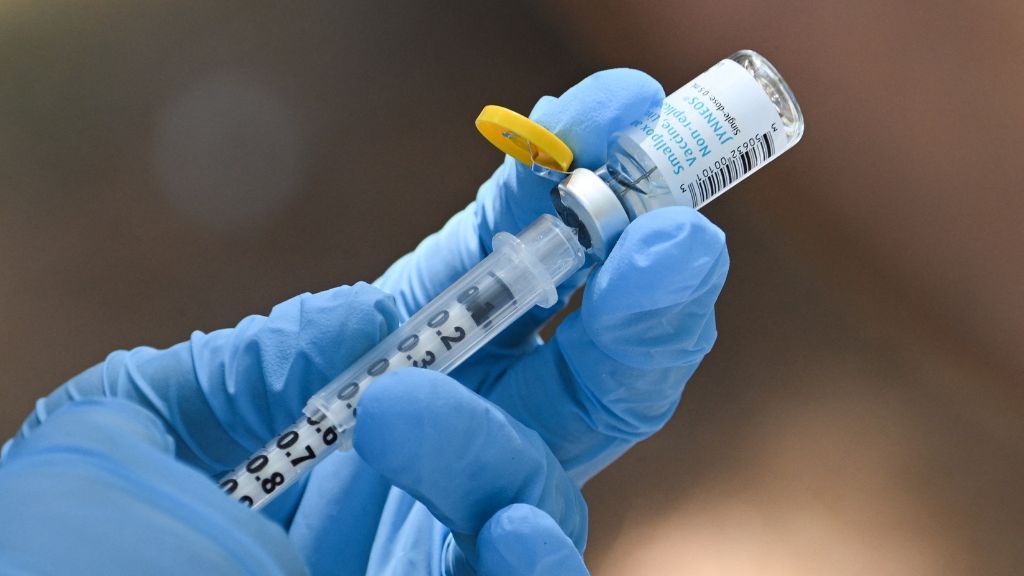
Individuals who are recommended to get vaccinated against mpox should get two doses of the JYNNEOS vaccine. (Image credit: PATRICK T. FALLON/AFP via Getty Images)
About the virus
The poxvirus family also includes smallpox, which has been eradicated worldwide. Mpox and smallpox cause some similar symptoms, but mpox tends to be far milder than smallpox. However, the viruses are closely related enough that vaccines designed to prevent smallpox can also protect against mpox.
Mpox was initially named monkeypox because the virus behind the disease was discovered in captive monkeys in Denmark. But monkeys are not the main hosts of the virus in the wild; rodents and small mammals mostly found in West and Central Africa likely are. Health officials changed the name to mpox in 2022.
There are two major branches of the mpox family tree, called clade I and clade II. These clades were historically thought to have very different death rates, with clade I being the deadlier of the two. The case-fatality rate (CFR) of clade I has been estimated to range from 1.4% to over 10%, depending on the outbreak, while the CFR for clade II has been estimated at between 0.1% and 3.6%.
However, as both clades have spread beyond Africa, data suggests that the CFR for clade I may be lower than once thought, said Joel Wertheim, a professor of medicine in the Division of Infectious Diseases and Global Public Health at the University of California, San Diego.
The features of a given outbreak — such as the surrounding health infrastructure, patients' access to timely medical care, and the population's underlying risk factors for severe disease — likely play a big role in determining the virus's death toll, Wertheim told Live Science. In short, rather than being an immutable feature of the virus itself, the CFR is dependent on the underlying health of and resources available to a given population.
How mpox spreads
Mpox can spread from infected animals to humans through the animals' bites or scratches. Additionally, people can get the virus when they come into close contact with animals and/or their bodily fluids during hunting, skinning, trapping, cooking, eating animals or handling carcasses, the World Health Organization (WHO) notes.
The virus also spreads from person to person, primarily through very close contact, including intimate contact during sex. The virus typically enters the body through broken skin, the respiratory tract or mucous membranes (thin tissues found in the eyes, nose, mouth, anus and genitals), spreading via bodily fluids such as spit, mucus or blood. People can also pick up the virus via objects, such as clothing or linen, that are contaminated with the bodily fluids of an infected person.
The virus can spread through small respiratory droplets expelled during speaking or breathing. However, this is thought to be a less-common transmission route than close contact. There is also evidence that asymptomatic spread sometimes occurs, though it's unclear how frequently that happens.
Mpox can spread from mother to baby during pregnancy or birth. This route of infection can result in pregnancy loss, stillbirth, death of the newborn, or complications for the mother.
Symptoms of mpox
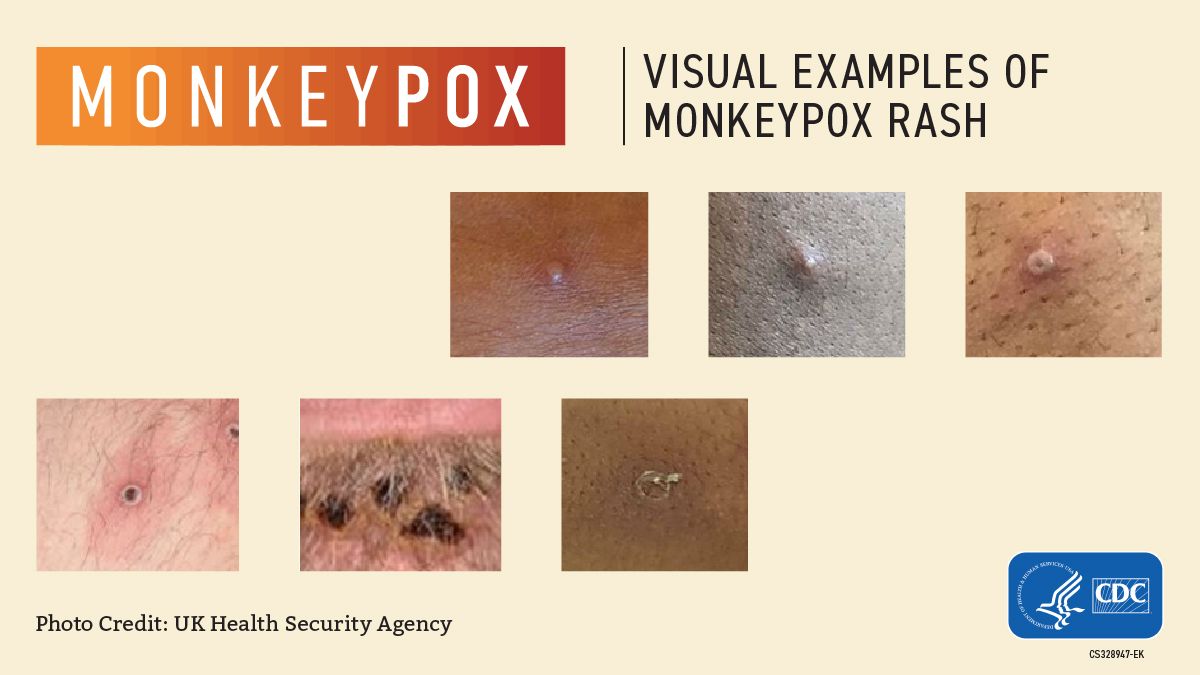
Centers for Disease Control and Prevention, National Center for Emerging and Zoonotic Infectious Diseases (NCEZID), Division of High-Consequence Pathogens and Pathology (DHCPP)Centers for Disease Control and Prevention, National Center for Emerging and Zoonotic Infectious Diseases (NCEZID), Division of High-Consequence Pathogens and Pathology (DHCPP)
Symptoms of mpox typically appear within a week of a person being exposed to the virus, but they can sometimes take up to 21 days to develop. Once they emerge, symptoms last about two to four weeks, although the illness can linger longer in people with weakened immune systems.
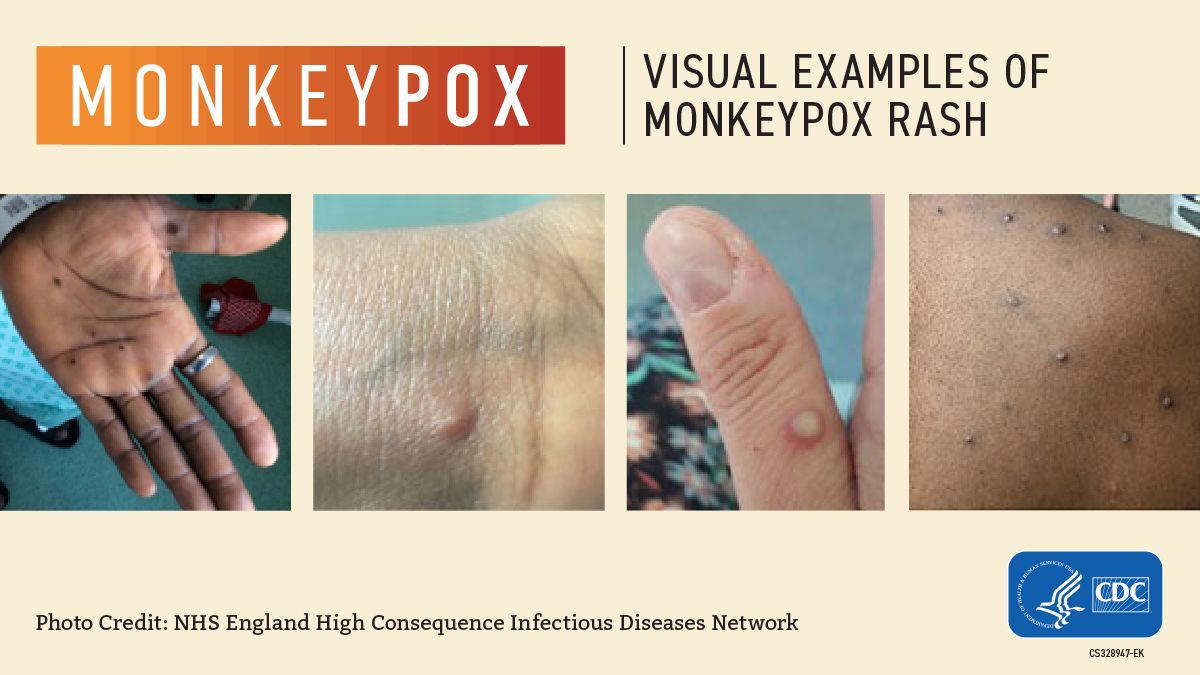
Common symptoms include rash (see images), fever, sore throat, headache, muscle aches, back pain, swollen lymph nodes and low energy. Often, mpox rashes first appear on the face and then spread to other parts of the body; however, if a person becomes infected during sex, the rash may instead start around their genitals. The rashes begin as flat, discolored patches of skin and then progress into raised bumps, blisters, and large, pus-filled pimples that eventually scab over and fall off.
Some people with mpox develop painful swelling of the rectum (proctitis), while others have pain and difficulty when peeing (dysuria) or when swallowing.
Mpox rashes can make people vulnerable to bacterial skin infections, which can cause abscesses or other serious skin damage. Additional complications of the illness include pneumonia, infection of the cornea that can cause vision loss, and vomiting and diarrhea that causes dehydration or malnutrition. Mpox can also lead to blood infections, the intense immune reaction sepsis and, rarely, brain infections (encephalitis) or heart inflammation (myocarditis).
Children, pregnant people, and people with weakened immune systems, including from HIV infection, have a higher risk of serious illness and death from mpox.
Mpox prevention measures
Beyond vaccination, other strategies to decrease the risk of mpox infection include washing hands frequently, avoiding contact with contaminated objects and materials used by people with mpox, avoiding contact with other people's scabs or rashes, and using condoms, although they may only reduce, not eliminate, the risk of mpox exposure during sex.
Mpox treatment
Mpox treatment aims to manage a person's rashes and pain while also preventing complications. "Early and supportive care is important to help manage symptoms and avoid further problems," according to the WHO.
There is no antiviral drug approved for use in mpox, although some are available for emergency use in various countries. For example, the U.S. allows the use of certain smallpox medicines for mpox.
Severe mpox infections also may be treated with vaccinia immune globulin intravenous, which contains antibodies taken from the blood of people who were immunized against smallpox.
People who have recently been exposed to mpox can be given an mpox vaccine to reduce the severity of their symptoms or to prevent the illness altogether. This approach is known as post-exposure prophylaxis, or PEP.
"Post-exposure vaccine should be given as soon as possible, ideally within 4 days of exposure; administration 4 through 14 days after exposure may still provide some protection against monkeypox," the CDC states.
Mpox spread across the world in 2022, triggering tens of thousands of cases in countries where the infection was once rarely seen. Although the disease has since fallen out of news headlines, mpox (formerly called monkeypox) continues to circulate. Now, recent data suggests that the viral illness may soon be endemic to the United States, meaning it will circulate in the country consistently.
Previously, mpox cropped up sporadically in the U.S. via travelers who had visited African countries where the disease is endemic, as well as imported, infected animals that spread the virus to people. Cases have fallen substantially since the peak of the outbreak in 2022, but they haven't disappeared. A report published in August found that there were 2,800 cases in 2024 and over 2,500 in 2025, with only a small fraction being tied to travel. Nearly all of the viral samples analyzed were descendants of the strain that sparked the 2022 outbreak. In short, once the virus arrived, it never went away.
"There's no set threshold for what constitutes endemicity of monkeypox virus (MPXV) in the United States," Ryan Standford, an epidemiologist in the Centers for Disease Control and Prevention's (CDC) Poxvirus and Rabies Branch and co-author of the report, told Live Science in an email. "But each year provides further evidence of this transition."
Why is mpox still spreading in the U.S., and what can be done to snuff it out? It's likely that too few people have received two doses of the mpox vaccine JYNNEOS, which together are 66% to 90% effective. But beyond low vaccination, there may be other, less-understood factors that are contributing to the continued spread, experts told Live Science.
"We don't quite know how it's able to persist at such low numbers across the entire country," said Joel Wertheim, a professor of medicine in the Division of Infectious Diseases and Global Public Health at the University of California, San Diego.
At the same time, public health efforts around mpox have dwindled. Without a sustained effort on that front, it's unlikely the disease will be eliminated from the U.S.
"We have vaccines, testing, and a much stronger understanding of the disease than we did in 2022," Dr. Demetre Daskalakis, chief medical officer of Callen-Lorde, a LGBTQ+ community health center in New York City, told Live Science in an email. "Our focus now should be making sure those tools remain accessible, especially for communities that continue to face ongoing risk," said Daskalakis, who coordinated the nation's mpox response during the previous presidential administration.
"People at increased risk should know that mpox has not disappeared."
Who is at risk of mpox in the U.S.?
In the U.S., mpox is predominantly affecting men who have sex with men, and current vaccine recommendations are aimed at this group and their sexual partners. Mpox mostly spreads from person to person through close contact, and transmission during sex is playing a major role in the ongoing spread in the U.S.
Men who have sex with men are not more prone to mpox infection than anyone else. Rather, this transmission pattern stems from the outbreak beginning within a specific sexual network and then continuing to persist within the same network. "The mpox virus rediscovered the same transmission network that HIV had explored decades earlier," Wertheim said.
In a paper published in 2025, Wertheim and colleagues described the transmission dynamics of mpox in New York City during the 2022 outbreak. Similar to how HIV previously spread, mpox triggered "densely connected" clusters of infection. Then, as people in the network gained immunity via infection and vaccination, the cases petered out, decreasing to the persistent trickle we see now.
Wertheim noted that he's not surprised that mpox has remained largely confined to the same network, rather than leaping into new groups.
"From an evolutionary, ecological perspective, it's not hugely successful," Wertheim said. "It's sort of barely hanging on as an STI."
Centers for Disease Control and Prevention, National Center for Emerging and Zoonotic Infectious Diseases (NCEZID), Division of High-Consequence Pathogens and Pathology (DHCPP)Centers for Disease Control and Prevention, National Center for Emerging and Zoonotic Infectious Diseases (NCEZID), Division of High-Consequence Pathogens and Pathology (DHCPP)
Why is mpox still circulating?
So if mpox is not hugely successful and we have a vaccine, how has the virus continued to circulate? One big factor is that too few at-risk people have been vaccinated, experts said.
The CDC's Center for Forecasting and Outbreak Analytics has crunched the numbers to see what percentage of that at-risk group needs to have immunity to stop mpox transmission, Daskalakis said. The at-risk group is estimated by counting the men who have sex with men who are either taking HIV-preventing medicines or have HIV, and then adding 25% to that total to account for additional people in the same sexual network. That estimate comes out to about 2 million people.
To prevent an outbreak bigger than the one in 2022, between 21% and 35% would have to have immunity through vaccination or a past infection. If over 50% of the group had immunity, that would mean there's a "very small probability" of sustained local transmission, the CDC's modeling suggested.
The current case counts suggest we haven't hit the 50% mark, or a total of roughly 1 million complete vaccinations or past infections.
Data from the August report on mpox seems to support the idea that too few people are vaccinated. That said, information about vaccination status was missing for about 62% of the reported cases. Among the remaining cases, 76% were unvaccinated, while 10% had gotten one dose and 14% had gotten two.
In a subset of 860 cases, the effect of vaccination was striking: Unvaccinated people had nearly 10 times higher odds of hospitalization due to mpox than fully vaccinated people did.
As the emergency phase faded from public attention, awareness and risk perception may have declined.
Dr. Demetre Daskalakis, chief medical officer of Callen-Lorde
Waning public health attention
It's difficult to pin down exactly how many at-risk people are vaccinated, given that that data is no longer tracked at the national level. "My understanding is that there's no mandatory reporting on mpox vaccination data," Wertheim said.
The CDC previously monitored national vaccination trends, comparing the number of people vaccinated to the overall at-risk population. But that tracking stopped in early 2024, when about 23% of the at-risk population had been fully vaccinated.
Some states, such as New York, previously mandated that clinicians provide their state health department data on the number of people given mpox vaccines. But that reporting is now voluntary, a spokesperson for the New York State Department of Health told Live Science in an email.
People recommended to get the JYNNEOS vaccine need two doses to be maximally protected from mpox. (Image credit: MediaNews Group/Orange County Register via Getty Images )
Meanwhile, "as the emergency phase faded from public attention, awareness and risk perception may have declined," Daskalakis said. Public health messaging about the virus and vaccination has also waned.
"In recent weeks, HHS [the Department of Health and Human Services] has pulled down some of the plain-language guidance, which is not helpful in supporting messaging," Daskalakis noted. This decision to remove online resources about mpox reflects the federal government's current stance against addressing issues that affect LGBTQ+ health, he told Live Science.
Complicating factors
Although JYNNEOS substantially lowers the risk of severe mpox infection, the vaccine is not perfect, said Rachel Roper, a professor of microbiology and immunology at East Carolina University.
The virus typically enters the body through broken skin, the respiratory tract or mucous membranes (thin tissues found in the eyes, nose, mouth, anus and genitals). The mpox vaccine is good at generating systemic immunity, but it's not as good at guarding against the virus's immediate effects at those mucous membranes, said Roper, who studies poxviruses and vaccines against them.
Because mpox is largely spreading through sexual contact that involves those membranes, that slight gap in protection may also help to explain some of the ongoing spread, she suggested.
Plus, "there are also some data supporting asymptomatic infection as a possible route of transmission, making it more difficult to eliminate local transmission of mpox," Daskalakis said.
What can be done?
Given that mpox is already well established within some sexual networks in the U.S., "preventing endemicity entirely may be increasingly difficult," Standford told Live Science.
And notably, some federal funding cuts could undermine efforts to address mpox, Daskalakis said. These include cuts to Medicaid, mental-health services, housing programs, and HIV services such as the Ryan White HIV/AIDS Program.
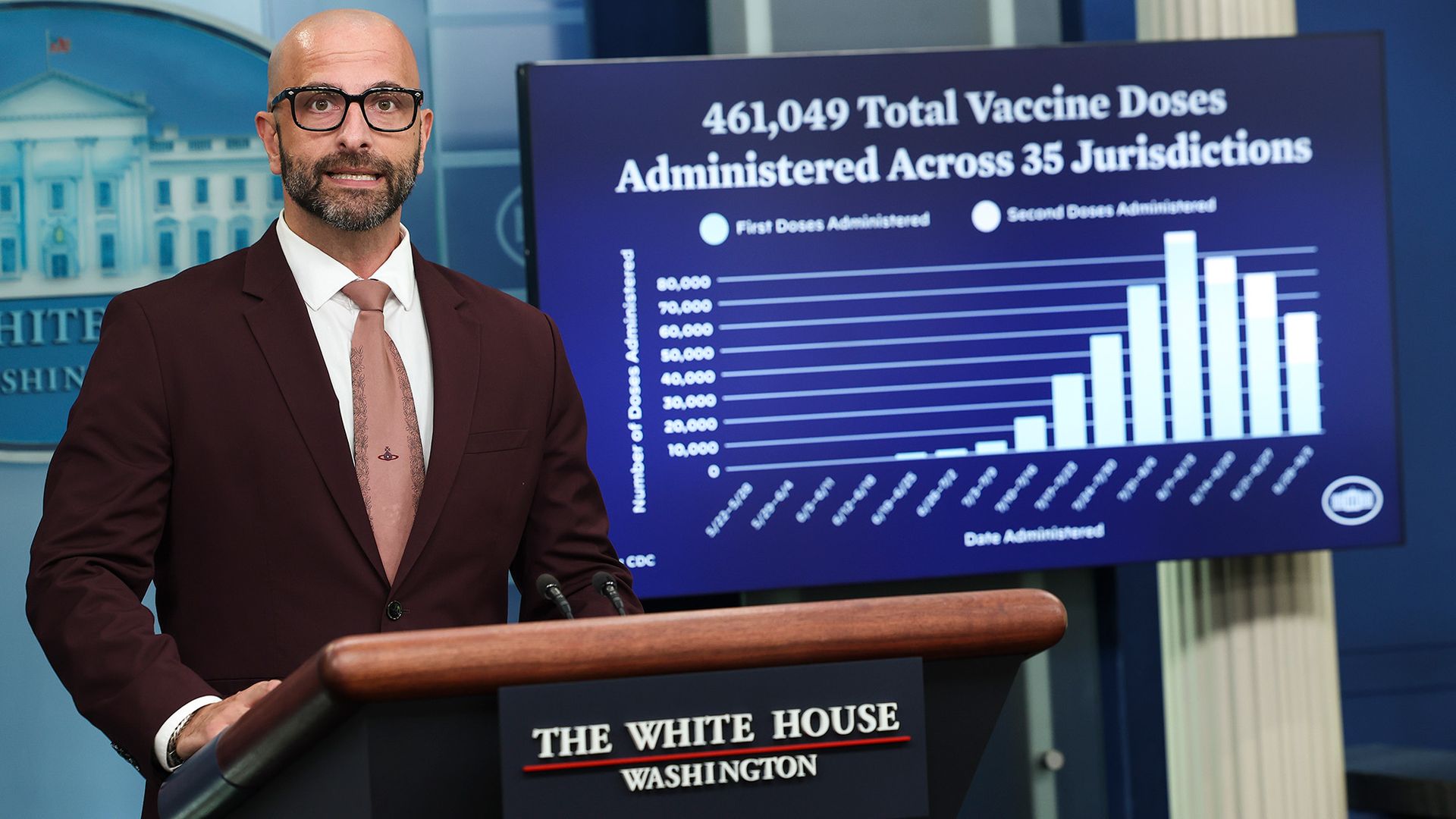
Dr. Demetre Daskalakis speaking at the White House on Sept. 7, 2022, when he provided an update on the administration's response to the ongoing mpox outbreak. (Image credit: Kevin Dietsch via Getty Images)
Thankfully, looking at current mpox trends, "there's no indication we're returning back to 2022 levels," Wertheim told Live Science. So far in 2026, just under 1,000 mpox cases have been reported, according to the CDC. Month over month, the number of cases is generally trending downward. So, at a glance, the current situation seems better than it was in 2025, he said.
"We sort of seem to be on this razor's edge between endemicity and extinction," he said. "And it's not really clear which way it'll go."
Tipping the virus toward extinction will require healthcare providers to be informed and equipped to spot and manage cases, Daskalakis said. And communicating the importance of vaccination is key.
"One lesson from 2022 was that trusted messengers matter," he said. "We [at Callen-Lorde] work closely with LGBTQ+ communities and make information and vaccination opportunities available in settings where people already receive care." The clinic integrates conversations about mpox vaccination into routine health visits, sexual health services, HIV prevention programs and community outreach activities.
Beyond vaccinating at-risk populations, educating patients about how mpox spreads and how to reduce their risk is also key, Standford noted. "Vaccination coverage is a very important factor, but it is not the only one," he said.
Tipping mpox toward extinction will also require enough investment to maintain the disease surveillance, vaccination, testing and treatment capacity that the federal government helped to expand in 2022, Daskalakis said. The vaccine itself is now commercially available to clinics and in adequate supply, he emphasized.
"The fact that we're seeing ongoing circulation underscores the need for sustained prevention efforts rather than viewing mpox as a resolved public health issue," he said. "Infectious diseases don't disappear simply because public attention shifts."
This article is for informational purposes only and is not meant to offer medical advice.
Presented by @ROLEX. Through its partnership with the National Geographic Society and as part of its Perpetual Planet Initiative, #Rolex supports expeditions exploring and protecting remarkable places around the world, a selection of which are featured in Africa Earth’s Wild Home. #PerpetualPlanet
Subscribe: https://www.youtube.com/natgeo
Stream more on Disney+
➡ Disney Plus: https://www.disneyplus.com/browse/national-geographic
Get unlimited access to National Geographic stories, photography, and more by subscribing today:
➡ National Geographic Magazines: https://natgeo.com/ytngmagazine
#NationalGeographic #AfricaEarthsWildHome #Rolex
About National Geographic: National Geographic is the world's premium destination for critically acclaimed storytelling around science and exploration. Discover amazing wildlife, ancient civilizations, hidden worlds, and the incredible wonders of our Earth. Through world-class scientists, photographers, journalists, and filmmakers, Nat Geo inspires fans of all ages to connect with, explore, and care about the world.
Africa Earth's Wild Home NOW STREAMING #Rolex #PerpetualPlanet #AfricaEarthsWildHome
https://youtube.com/shorts/YsDLkGtrUzw
About 1 in 8 cancer cases are caused by infections with viruses, bacteria or parasites, a new study finds, suggesting that one of the most effective ways to reduce cancer rates might be to prevent common infections.
In a new analysis published Sept. 28 in the journal The Lancet Oncology, researchers mapped the global impact of 12 cancer-causing pathogens. They estimate that infections drove about 2.3 million new cancer cases in 2024, or about 12% of all cancer cases diagnosed that year.
The study highlights that a large fraction of cancer cases could be avoided if these underlying infections were prevented, Dr. Prashant Mathur, director of India's National Centre for Disease Informatics and Research, who was not involved in the study, told Live Science in an email.
"When combined with other risk factors such as tobacco use, alcohol consumption, appropriate diet, physical activity, and environmental pollution, it is estimated that about 50 to 60 percent of all cancers in India are avoidable," he said. Past studies suggest that similar figures hold on a global scale.
In the new study, the researchers used the Global Cancer Observatory's GLOBOCAN database, which combines data from various cancer registries to estimate that about 20 million new cancer cases were diagnosed in 2024. The team combined that information with other published data examining the prevalence of different infections in people with specific cancers. This enabled them to estimate how many cases were attributable to each infection.
Their analysis focused on 12 pathogens tied to cancer, including human papillomavirus (HPV), hepatitis B and C, HIV and Epstein-Barr virus (EBV), the virus behind mononucleosis. The resulting breakdown revealed that just four pathogens accounted for roughly 92% of the cancer cases caused by infections.
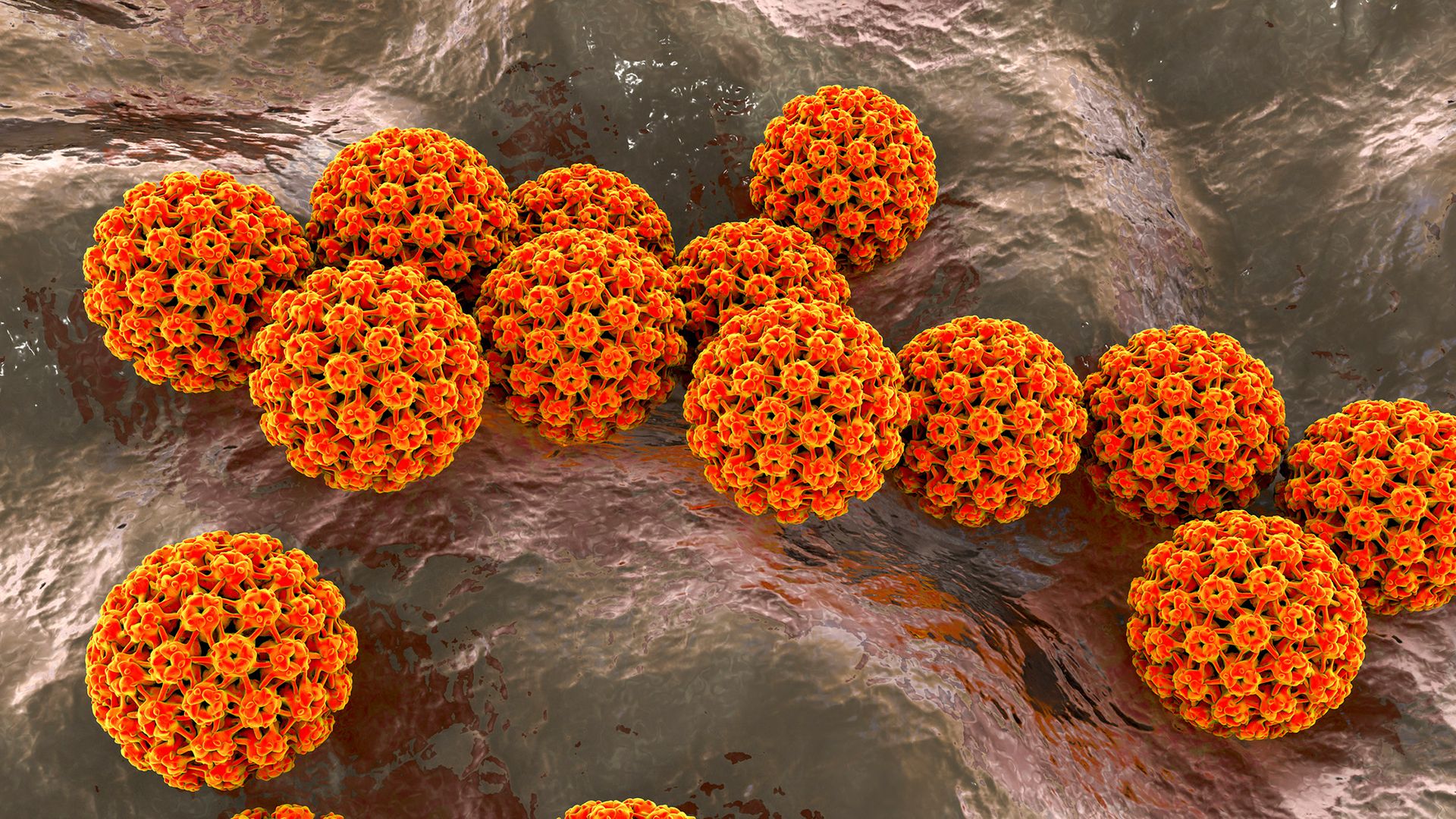
A bacterium called Helicobacter pylori, which infects the gastrointestinal tract, accounted for 760,000 cases, primarily gastric cancers. The other three leading cancer triggers were viruses. HPV accounted for 750,000 cases, including cervical, penile, throat and mouth cancers. The liver-attacking hepatitis B virus was responsible for 360,000 cases and EBV drove 260,000 cases. (EBV is known to increase the risk of throat cancers, as well as certain lymphomas and stomach cancers.)
The scale of the burden contrasts with gaps in prevention. In 2024, just 31% of eligible adolescent girls worldwide received at least one dose of the HPV vaccine, well below the 90% target, the World Health Organization reports. The degree of protection provided by the vaccine is striking in countries that have achieved higher coverage.
"We have now achieved the critically important milestone of cervical cancer starting to disappear in countries that quickly achieved vaccination rates of over 80 percent," said Dr. Rebecca Perkins, an obstetrician-gynecologist at Tufts University School of Medicine who was not involved in the study. "Research from Australia, England, and Finland have shown zero cases of HPV-related cancers or deaths in young adults who received vaccination by age 13," Perkins told Live Science in an email.
But these successes are concentrated in wealthy nations. The Lancet study found that low- and middle-income countries bear 77% of the global infection-driven cancer burden. For example, about 81% of HPV-linked cancers occurred in these countries.
Perkins pointed out that shifting from the standard two-dose HPV vaccine series to a single-dose regimen using the same vaccines could make mass campaigns easier worldwide by lowering costs and eliminating the need to track patients for follow-ups. The single-dose approach has been backed by recent trials.
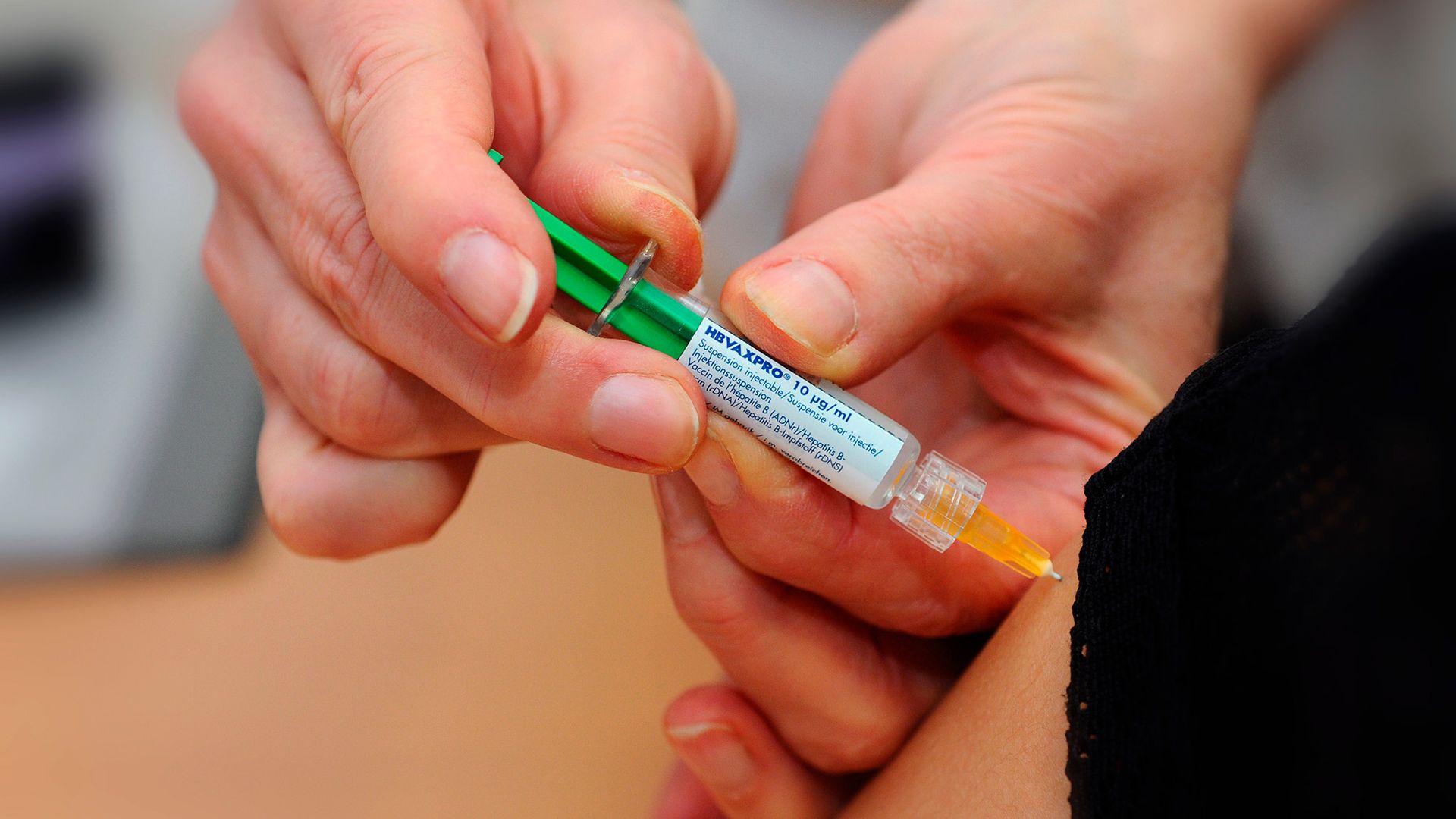
As with HPV, there is a highly effective vaccine for hepatitis B that can help prevent both the infection and related cancers. (Image credit: BSIP via Getty Images)
In the U.S., progress has been uneven across states with some boasting high vaccination rates and others lagging behind. One barrier is that some children's caregivers feel the shots are unnecessary or that their kids are too young to receive it."The biggest misconception from families is that the HPV vaccine is not needed or that it can wait," Perkins noted. "The reality is that you can't vaccinate too early, only too late."
There is also a highly effective vaccine for hepatitis B, and health officials recommend giving children their first dose as soon as possible after birth. (The U.S. Centers for Disease Control and Prevention recently made the decision to stop recommending universal vaccination at birth, which experts say could raise the country's rates of hepatitis B infections and related cancers.)
While the challenge with HPV and hepatitis B is getting their vaccines into widespread use, there isn't an approved vaccine for EBV yet.
"The biggest hurdle has been the complexity of the virus," said Claire Shannon-Lowe, a tumor virologist at the University of Birmingham in the U.K. who was not involved in the study. "Unlike many other viruses that use just one or two virus proteins to enter cells, EBV uses multiple proteins ... and it hides inside cells for our entire lifetime."
Epstein-Barr infections are also incredibly common, with up to 95% of people infected by adulthood; most people infected with the virus don't develop a related cancer, but it's still a major contributor to the global cancer burden. The germ has also been tied to several autoimmune diseases, which may help spur the development of a vaccine, Shannon-Lowe suggested.
"With the increased impetus following EBV's association with multiple sclerosis and lupus, we may finally have a potential vaccine in sight that could not only prevent virus infection but could help treat EBV-associated cancers," she said.
For H. pylori, meanwhile, researchers are pursuing population-wide testing for and treatment of the infection to help prevent gastric cancer, while vaccine development remains an area in need of further investment.
The true scale of the infection-related cancer burden may be even larger than the study suggested. Some of the registries used in the new research cover only about 19% of the global population, and only 2% of Africa's population. More high-quality data is needed to fill in these gaps.
For Mathur, though, the bottom line is that cancer prevention makes economic sense.
"Studies have clearly demonstrated that the return on investment of prevention on cancers is much higher than on its treatment in the long run," he said. "Preventive aspects must be strengthened for long-term gains."
This article is for informational purposes only and is not meant to offer medical advice.

 Login