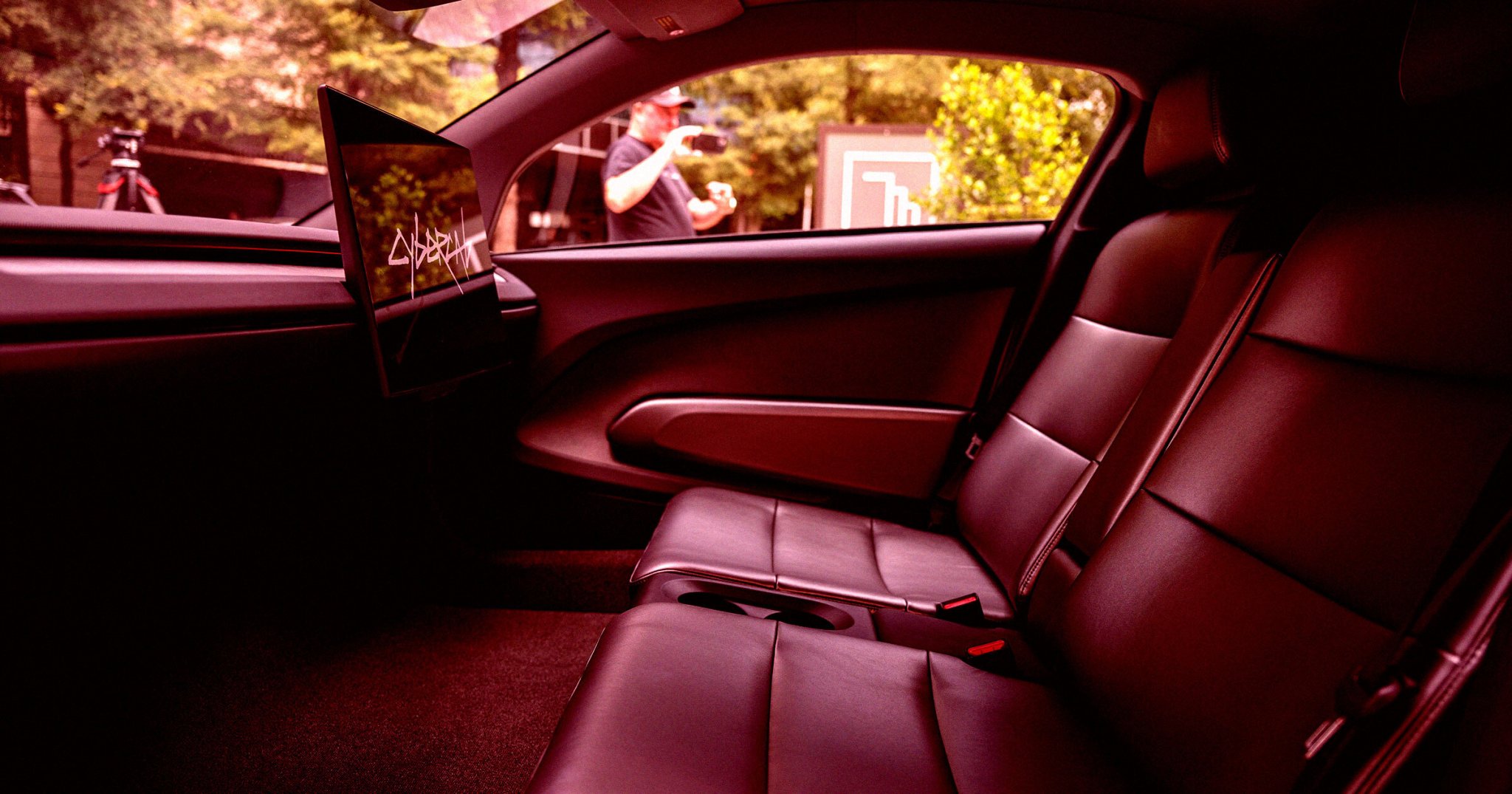
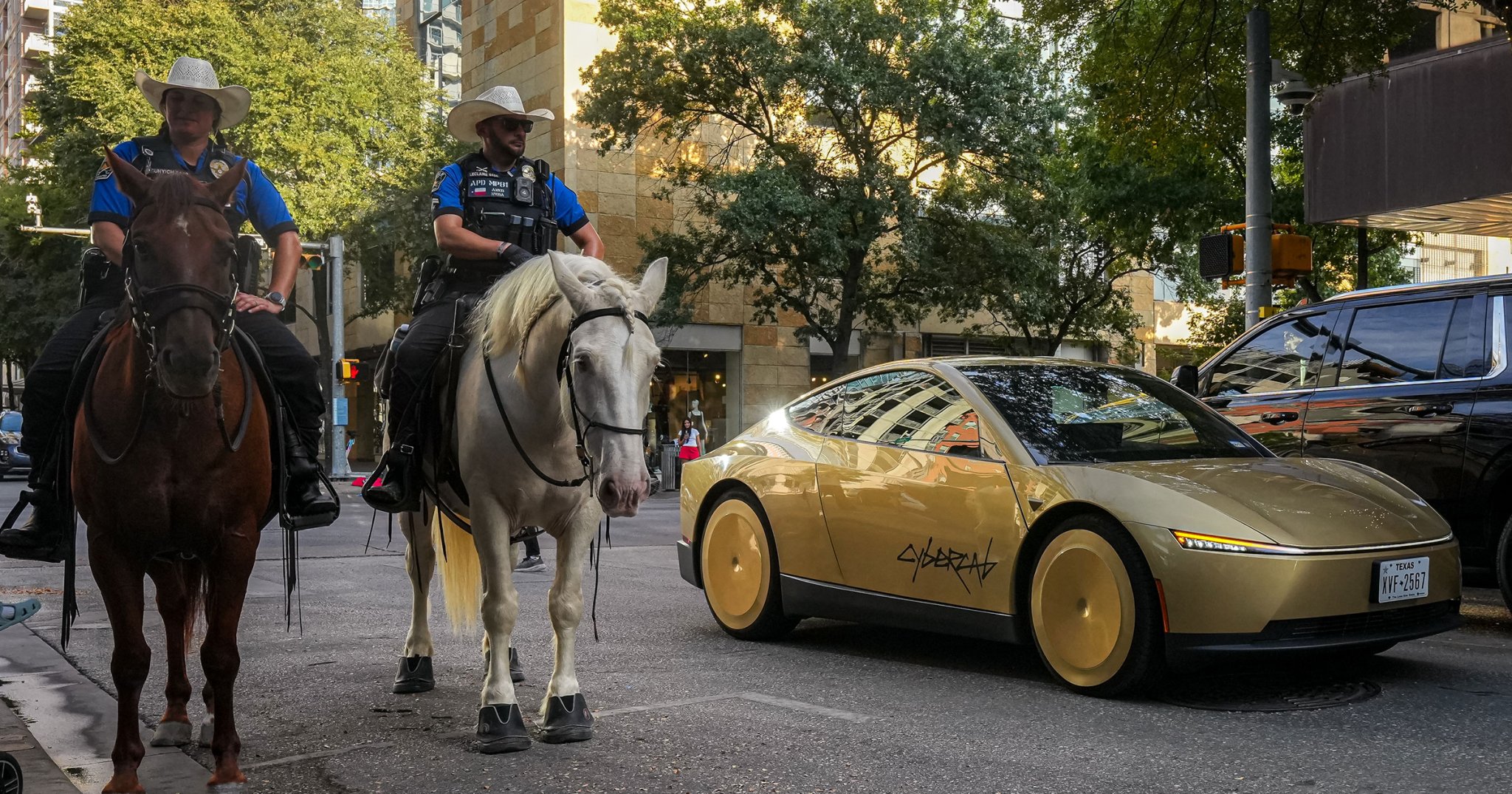
The Tesla Cybercab is innovating impressively impractical ways of getting from Point A to Point B.
One Cybercab passenger in Austin complained that what should’ve been a ten minute trip devolved into a 70-minute long nightmare as the steering-wheel-free robotaxi spiraled its way down the most circuitous route possible.
The driverless cab started the journey by driving in the complete opposite direction of the destination for miles, the exasperated passenger wrote in a Reddit thread, then turned around and took a “massive” detour through east Austin.
If it was instead a Google Maps car trying to image every inch of the city, you’d have to admit it was a job well done.
“My Cybercab held me hostage for an hour,” the rider wrote in the post, spotted by Electrek. “Guess the Cybercab wanted the scenic route today.”
According to Electrek, the reason that the trip took so long is almost certainly because the Tesla Cybercabs can’t drive on highways yet. The consequently tortuous routes that the cabs have to take may not immediately be clear to a passenger, though, as the app only shows a price estimate and not a projection of how long the trip will take, the blog noted.
Like other robotaxi services, the Cybercabs — which use a version of Tesla’s Full Self-Driving software that hasn’t been released to the public — operate only within a geofenced area that’s been extensively mapped. (Waymo, the leading robotaxi company, does already allow its cars to use highways in some cities.)
There are other signs that the Cybercabs (and Tesla’s confusing named “Robotaxis,” which are self-driving taxis in the form of modified Model Ys, instead of a purpose-built vehicle), are still walking on eggshells compared to its competitors. Some passengers say that the cabs also avoid railroad crossings, which could add to trip times. (Tesla is being investigated for FSD frequently going haywire near these crossings and driving into the path of oncoming trains.)
Do all these restrictions make for a properly autonomous cab? If you had a time machine, you could go back to 2019 and ask CEO Elon Musk for an answer: “If you need a geofence area, you don’t have real self-driving!” he infamously proclaimed.
Over the past few days, a lot of people who stand to make a lot of money from AI all publicly agreed that it's time to make everyone slow down before we lose control - including OpenAI CEO Sam Altman, Anthropic CEO Dario Amodei, Google DeepMind cofounder Demis Hassabis, Microsoft CEO Satya Nadella, and X CEO Elon Musk.
When people who profit from something declare that it's dangerous and needs to be regulated, there's always reason to be skeptical. But whatever their reason, this is far from the first time AI thought leaders have sounded the alarm.
Charles Darwin's theory of evolution prompted author Samuel Butler to warn about intelligen …
The US energy landscape is changing quickly. Demand for artificial intelligence is driving up power demand while electric vehicle (EV) adoption slows down and enters a more complex phase. Together, these trends are reshaping how utilities, policymakers, financiers and automakers respond to emerging challenges in the energy sector.
One of the benefits to being part of the Apple ecosystem is the plethora of apps that work across all of Apple’s devices so that you can access them whether you’re sitting in front of a Mac, out and about with your iPhone or even strapping on a Vision Pro headset. Come on — somebody out there has to be wearing one of those things.
This week’s look at interesting apps features four such multiplatform wonders that let you do everything from type with your voice, post on a social network or jot down random thoughts on at least two different Apple devices. And our lone macOS-only app should prove pretty useful in its own right.
If you’ve come across an app that you find useful no matter what device it works on, let us hear about it at apps@sixcolors.com.
Voice Keyboard Pro
My high school typing teacher would frown upon hearing this, but typing sometimes feels like it’s more trouble than it’s worth. And since I’m the type of person who tends to speak aloud the words as I type them, why am I even bothering with the middleman of a keyboard and not just letting my voice handle all the work?
Voice Keyboard Pro lets me do just that, allowing me to press and hold a key on my MacBook Air keyboard — the Control key, by default, to be exact — and dictate into any app that allows for text entry. I’ve used Voice Keyboard Pro to enter text into BBEdit, the built-in Notes app, and the Gmail web page in Safari, all without any fuss.
Transcription is fairly accurate — Voice Keyboard Pro knew enough to properly capitalize “BBEdit,” for example. But it’s not flawless, as my efforts to dictate a message to Jason Snell kept turning his first name into “JSON.” I imagine that’s something the app would learn to correct over time.
Voice Keyboard Pro isn’t just about dictation, as the app offers a Meeting mode that not only records what’s said in one-on-ones, standup sessions and sprint planning, but also offers a nice summary of what you talk about afterwards.
You can try out Voice Keyboard Pro for free on a limited basis with five transcriptions per day. A $4.99/month Pro subscription unlocks the app and adds custom vocabulary and offline modes.
Play
I cannot tell you how many times this scenario plays out: I will be scrolling through my YouTube feed when I see a video and think “My wife will probably enjoy watching this, I’ll have to remember it for later.” Of course, I will not because my brain is too crowded to remember random YouTube videos upon command.
The simply-named app Play now does the remembering for me. Copy a YouTube link into Play, and it’s kept in a watchlist complete with metadata — you can even watch YouTube videos directly in the app. In addition to YouTube, Play also supports Vimeo, TikTok and Instagram Reels; I’ve also posted Bluesky links with embedded video into Play, though I have to click through to the website to play back the video.
Play has a tagging feature that helps you organize videos. For instance, I can tag videos containing recipes with a Cooking tag for easy reference later on. Other bookmarking and customization features let you organize and annotate your video playlists as much or as little as you like.
You get to try out Play for seven days to get a feel for the app. After that, a $2.99/month subscription unlocks all the features. Though I’ve used Play primarily on my Mac, the app also works on iPhones, iPads, Apple TV and Vision Pro headsets.
Skyscraper
After the social network formerly known as Twitter followed its owner straight into the sewer, I’ve found that I’ve transitioned to Bluesky rather nicely. What I have yet to do is find a satisfying Bluesky client app, though Skyscraper looks like it might change that now that the version 1.6 update has delivered a native macOS version.
Skyscraper lets you scroll through your timeline, remembering where you left off across all your devices. (The app also comes in iOS/iPadOS, watchOS and visionOS versions.) It’s easy enough to switch between my curated feed and the different Discover and Popular with Friends feeds through a drop-down menu. I also find the stats included in the Notifications view showing how many people have replied, reposted or favorited my Bluesky posts to be a nice balm for my ego (or a devastating blow, based on the vagaries of my popularity).
The free download delivers enough features to get by, though some users will want to pay up for a $2.99/month Pro account that adds support for multiple accounts, notification customization and other niceties.
Einfall
My deep dive into the world of apps has revealed that there are a lot of options out there if you want something that helps you quickly jot down your thoughts. Einfall takes things a step further, not just by providing a quick way to jot down ideas as they occur to you, but to take action on them as well.
Once you’ve created an entry in Einfall — it could be anything from a list of to-dos to an idea for a story — you can then use the app to route it elsewhere, whether that’s creating a reminder or calendar entry, or even using AI tools to expand on your thought. Because Einfall works across multiple devices — there are macOS and iOS versions — you can store ideas that occur to you just about anywhere. I especially like the fact that there’s a lock screen widget for the iOS version so that you don’t even have to unlock your phone to get an idea down.
I don’t think the app is for everyone, as the actions interface is taking me some getting used to, but people who will find Einfall useful will likely realize that right away. At any rate, you can download the app for free and jot down ideas in it to your heart’s content. You can try 15 actions before you need to unlock Einfall for good with a one-time $29.99 payment.
Eyes Forward
If you have never longed for an app that turns your Mac into a teleprompter, then you can stop reading this column early today. But for podcasters who have to read tricky ad copy while on camera, actors who record their own auditions or anyone else who needs to stay on script without breaking eye contact, a teleprompter app becomes a very handy tool. And Eyes Forward — a $1.99 one-time download — offers an easy-to-use solution.
You enter in a duration or words per minute into Eyes Forward to set the scrolling speed for your text. You can also move the floating Eyes Forward window to just below your Mac’s camera, with developer Robert Hirsch recommending that you narrow the window to help make your eye contact seem more natural.
From there, it’s a matter of formatting the script — you can bold words, for example, if you want to remember to emphasize what you’re saying — saving it, and loading it into the virtual teleprompter. The ability to toggle between light and dark modes as you prefer adds an extra level of polish to an app that delivers exactly what it promises.
Two years ago, social psychologist Jonathan Haidt released his New York Times bestseller The Anxious Generation. The book posits that the rise of social media and smartphone use is largely to blame for the prominent decline in teen mental health since 2010. It quickly became a central rallying cry of the social media backlash. Haidt has been credited with helping inspire Australia's nationwide teen social media ban. He has joined forces with bereaved parents who are fighting tech companies in court. His name comes up unprompted in conversations with people in power who say his book opened their eyes to an online crisis.
There was no livestream and the media wasn’t invited. We didn’t even see a euphoric Elon Musk embarrassing himself on stage.
Tesla’s rollout of its two-seater Cybercab robotaxis on the streets of Austin, Texas, this month left investors scratching their heads. With little fanfare, the company stated on Musk’s social media platform X that “Cybercab rides” would “open to public” on September 4.
The “Cybercab event was largely a bust,” tweeted Future Fund Advisors co-founder Gary Black at the time. “The launch offered little detail and key questions remained unanswered.”
The lack of enthusiasm has reignited concerns over the company’s ability to catch up with some extremely steep competition. Its fleet remains extremely small and limited to a geofenced area of Austin. Major regulatory hurdles could make expansion into other states exceedingly challenging. Early testing and data gathering in New York City required the company to install steering wheels and hire human drivers for its Cybercabs, effectively turning them into glorified — and cramped — Tesla EVs.
Investors are already peering through the thin coating of gaudy, gold-colored paint. As a group of asset managers and traders, who — perhaps ironically — refer to themselves as the “Bears of Wall Street” noted in a post on Seeking Alpha, they’re maintaining a “rating of Sell for Tesla.” That’s in large part due to “mounting risks,” such as a “negative free cash flow, surging [capital expenditures] above $25 billion, intensifying competition, and regulatory audits delaying robotaxi expansion.”
The Cybercabs are one of three pillars Musk has bet the fate of Tesla on, along with its humanoid robot Optimus and AI. But without any meaningful strides almost two years after Musk first showed off its robotaxi to the world, investors are left wanting a lot more.
That’s especially true as regulators are starting to ask some tough questions, with the National Highway Traffic Safety Administration opening a probe into the safety certification of its Cybercabs.
The company is also looking to a spend over a whopping $25 billion this year and taking on even more debt, with a “borrowing capacity” of up to $30 billion, as it attempts to stay relevant in the fast-moving AI race.
“Capex will grow for the next two or three years as we expand our Robotaxi fleet, expand our production capacity for Optimus, make investments for semiconductor fab, install solar manufacturing capacity, and AI compute infrastructure, in addition to all the other expansions we’ll do for other manufacturing for automotive,” the company’s CFO Vaibhav Taneja told investors in July.
Waymo continues to run circles around the company, offering its services across ten US metropolitan areas and providing half a million paid rides per week.
Meanwhile, its core business of selling cars continues to atrophy. While delivery numbers have recovered somewhat from a disastrous 2025 performance, the numbers still have a lot of ground to regain.
Then there’s the specter of a possible merge with Musk’s SpaceX, which is looking increasingly likely, at least in the long run. It’s a highly risky move that could saddle Tesla with even more debt.
“All of those risks make us believe that Tesla remains greatly overvalued even after the volatility of the last two months,” the Bears of Wall Street argued, valuing the company’s stock at “around 78 percent below the current market price.”
“The Cybercab launch was the catalyst that was supposed to justify Tesla’s valuation, and it delivered almost nothing that investors could measure,” the group concluded. “Instead of a fleet expansion plan, the company got a federal investigation, while its main competitor keeps adding cities.”
Modern cars are fitted with features like autonomous emergency braking and fatigue monitoring. But do they support motorists or drive them to distraction?
This new car I’m test-driving boasts all the latest bells and whistles – or, rather, beeps and bings. Peer sideways for too long checking traffic and the car emits an irritating sound. Should I take a hand off the wheel to scratch an ear, I’m admonished with a strident beep.
When the car determines it’s too near a white line, it tugs the wheel against my hands and brakes as a car slows ahead. Its haptic “buttons” feel like fingers pressing back – as if an invisible presence has its hands and feet on the controls: a ghost in the machine I’m inside.
Elon Musk’s Tesla has a lot of catching up to do when it comes to its Robotaxi autonomous ride-hailing network.
The company is currently operating a fleet of just 45 of its cramped Cybercabs in Austin, Texas, still falling well short of investor and Tesla bull Dan Ives’ lofty expectations of the company adding “$1 trillion of value” for Tesla “over the coming years” with the service.
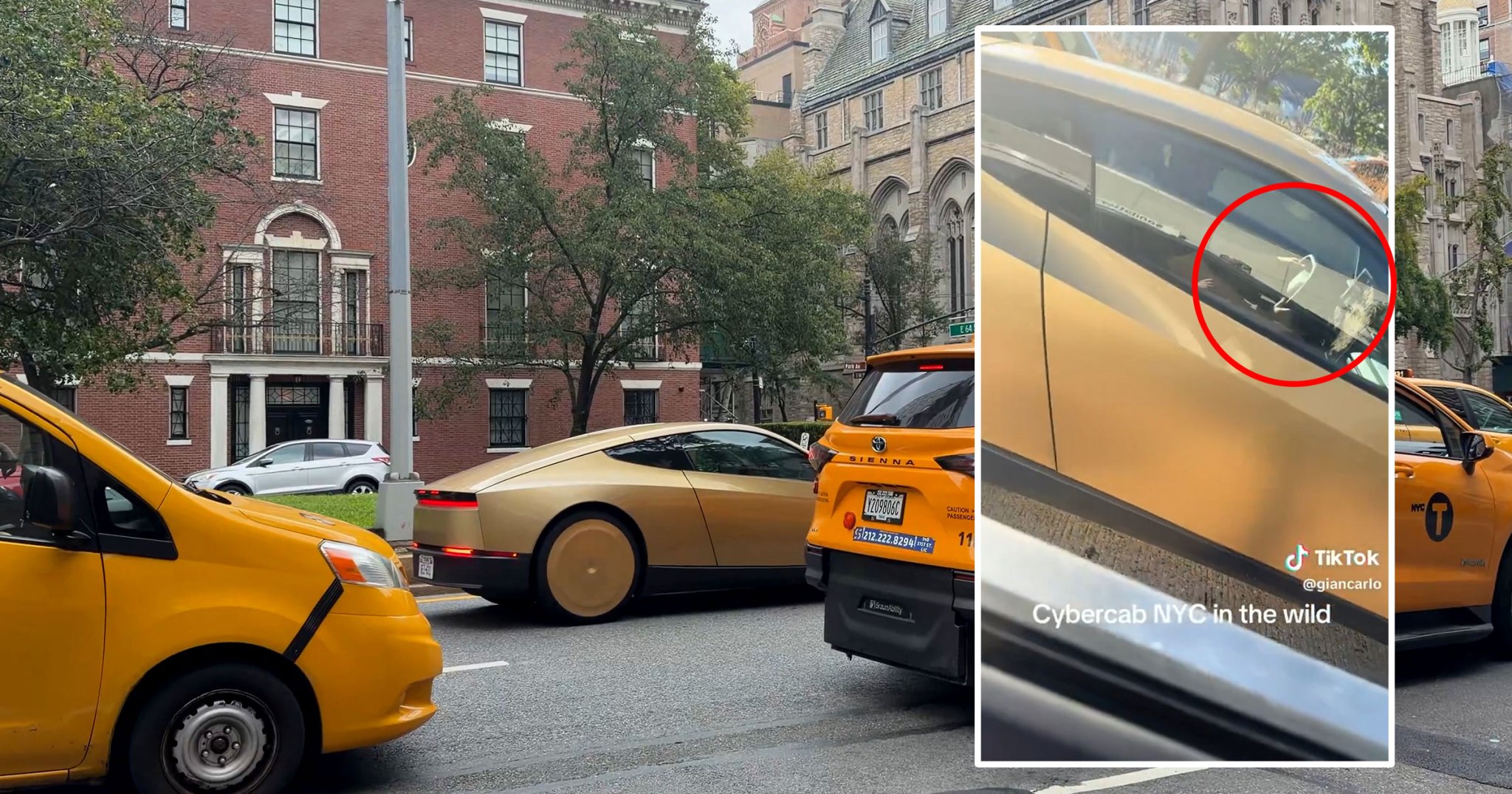
And unlike their counterparts in Texas and Florida, the Cybercabs that were recently spotted on the streets of New York City are featuring an unusual relic of a supposedly soon-to-be-bygone era: a steering wheel.
As Gothamist reports, the golden-hued cabs in the Big Apple are being overseen — and perhaps even operated — by a human in the driver’s seat with an old-fashioned steering wheel. It’s a significant departure from the original, steering wheel- and pedal-less Cybercabs Musk unveiled in 2024.
Officials confirmed the drivers are testing a “supervised” self-driving system, which still requires them to be able to take over control at any point. But Tesla refuses to say how many Cybercabs there are in the city or for how long they will be testing.
There’s likely a good reason Tesla has opted to go with more traditional controls. After all, it hasn’t even started the permit application process for autonomous vehicle testing with the New York Department of Motor Vehicles, as the Gothamist confirmed.
The EV maker is looking to collect driving data, not imminently launch a robotaxi service in the city.
In short, Tesla has a very long road ahead of it before it could ever roll out its Cybercabs nationally, let alone in other major urban areas. Other companies, however, have a massive head start, with Waymo claiming that it has already completed over half a million paid rides a week throughout the first quarter of this year. While Tesla has remained notably quiet on the matter, its numbers likely fall far short of that, considering it’s only operating with a fleet of a few dozen vehicles.
Meanwhile, Amazon’s Zoox vehicles received approval from regulators in late July to begin charging for rides in cars that don’t have a steering wheel. The company has been operating services free of charge in Las Vegas and San Francisco since 2025, according to the Associated Press.
Tesla’s mawkishly sleek new Cybercab has begun rolling out to Austin, Texas this week, with more sighted in cities like New York, Washington DC, and San Diego. It’s the latest development in the world of self-driving taxi cabs — and in one dubious economic indicator, the nation’s personal injury attorneys are on high alert.
Case in point, the New Jersey based law firm Sarofiem and Antoun already has a blog post up courting customers wronged by Cybercab accidents. Billing himself as a “Tesla Cybercab accident lawyer,” Kerollos Antoun poses an important question: “if a driverless Tesla Robotaxi causes an accident, who is responsible when there is no human driver behind the wheel?”
Though Antoun concedes that Cybercabs don’t appear to currently be active in New Jersey, his blog registers a laundry list of considerations considering who can be held liable in accidents involving the autonomous vehicles — each highly theoretical and short on concrete answers.
“Could autonomous-driving software cause an accident,” for example? “Potentially,” Antoun writes. “If an accident occurs, attorneys may need to determine whether the autonomous system perceived the environment correctly and whether the vehicle’s response contributed to the crash.”
Other firms, like Funes Law in Miami and Angel Reyes and Associates in Austin, offer similar pitches: if you’re in an accident with a Cybercab, they want to litigate your case.
Though the tailor-made Cybercab blogs follow a familiar pattern of opportunism by corporate law firms, their point is fair enough. The technology behind Cybercabs is in a very early stage, and the legal precedent is even younger.
Whichever firm happens to scoop up the first Cybercab injury case would be making legal history — a chance to litigate a brand new product made by one of the most valuable companies in the world.
Though self-driving cars are only a few years old at this point, they’ve already resulted in startling legal firsts. In August of 2025, a jury in Miami handed down a landmark verdict against Tesla over a fatal crash involving a Model S being driven on the company’s “Autopilot” mode.
In that case, the total damages came out to a whopping $243 million — a landmark verdict that the nation’s accident attorneys are eager to replicate as Tesla’s gold-tinted coupe hits the pavement.
It’s no secret that car owners have handed an immense amount of control over their vehicles to software. From infuriating touchscreens and convoluted user interfaces, to advanced — albeit flawed — driver assistance programs, we’ve never been more removed from the actual driving experience.
The situation become particularly harrowing for Sydney native Narghiza Ergashova, who watched helplessly as her former partner — who she says had already been abusing her for four years — started remotely controlling her Tesla from his smartphone.
As The Guardian reports, police records detail her terrifying experience at the hands of her domestic abuser, 50-year-old businessman Enrico Pucci, last year. Ergashova found that Pucci had activated a “parental control” profile on the vehicle, going as far as to tail her in his own car as he yelled at her about her new partner.
“You thought you’d get away with this,” he yelled, according to police records quoted by The Guardian. “I am in your car. I am in your maps.”
While Ergashova technically owns the vehicle, Pucci had previously offered to “assist her” by using the accompanying Tesla app, giving him extensive control over the car.
According to Tesla’s website, parental controls can be accessed via the accompanying mobile app and allow the user to change a long list of settings.
It also allowed Pucci to bring the Tesla to a crawl at just 25 mph on main roads, for instance, by activating a “Valet Mode” intended to only be used by valets. That caused “significant safety issues for the victim on the road,” according to the police documents.
Pucci also started setting the cabin temperature of the vehicle to extremely cold and hot temperatures and could even predetermine when the car could be driven by implementing curfew hours, features clearly intended for young learners.
“The victim has not had any control of her vehicle since she noticed the parental control profile added on the 1st November 2025,” law enforcement noted. “The accused has been the only one with access to the vehicle’s controls utilising the Tesla app. This has caused the victim significant stress, mental harm and fears for her physical safety when operating her own vehicle.”
Ergashova’s abuser has an extensive track record. Pucci has been convicted of 30 domestic violence-related offences, according to the Sydney Morning Herald, including eight counts of stalking, two counts of choking, one count of coercive control, and assault leading to bodily harm. He has also been convicted of creating revenge porn and theft.
Fortunately, he has been brought to justice. Pucci pleaded guilty and was sentenced to two years in prison last week.

 Login