❌

Reading view

Jensen Huang thinks China will develop its own advanced lithography chipmaking tools by 2030 β€” Nvidia CEO says achievement of that capability 'is just a matter of time'

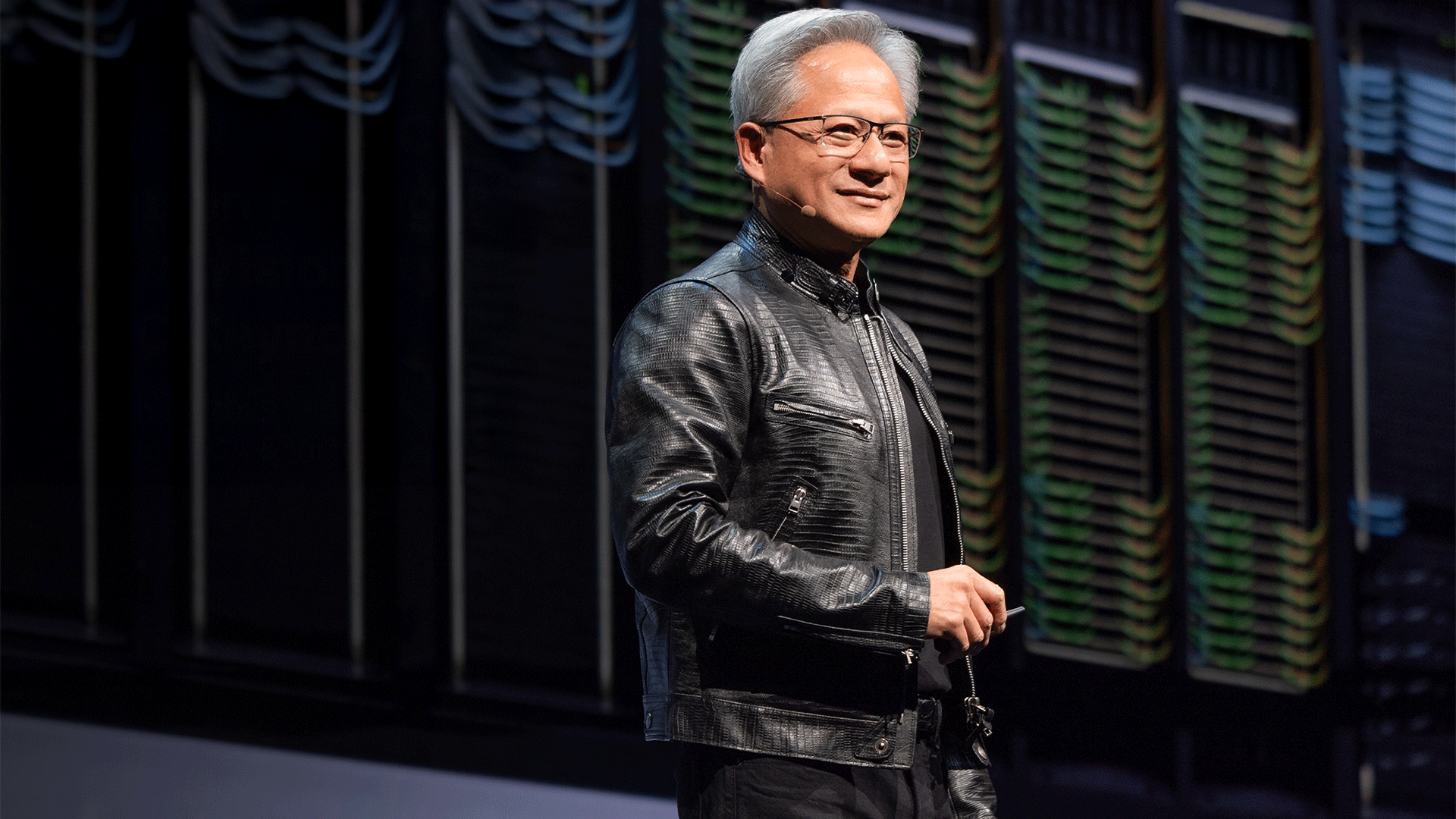
China's progress toward technological self-sufficiency in recent years is undeniable, but there is one thing that the country has so far failed to develop: lithography tools that are on par with those offered by ASML. That shortcoming has greatly hampered its domestic semiconductor industry. But Nvidia CEO Jensen Huang believes China will develop its own advanced lithography systems in just three or four years.

"They are going to get there by 2030," Huang said in an interview with The All-In Podcast (at 43:43). "2030 is just around the corner. The way to think about China is that it is really good at high-volume production. It is just a matter of time[...] so two or three years is just a click; it is nothing. So as far as they are concerned, they are already there."

Huang tends to look optimistically at China's technological development. Specifically, he is known for calling China's AI industry as being 'right behind' American frontier labs, which may well be correct, given how much capital China is investing in AI. But when it comes to the Chinese semiconductor industry in general and its lithography sector in particular, Huang may be too optimistic.

At present, China's leading producer of lithography tools β€” Shanghai Micro Electronics Equipment β€” can mass-produce a 193-nm ArF dry scanner that can be used to build chips on 90nm-class process technology. While the company has reportedly developed a 28nm-capable ArF immersion scanner, there is no public evidence that such systems are produced in volume and are used for high-volume chip production.

Although there are reports that Shanghai Aishengna Electronic Technology Group (a unit, or an affiliate of SMEE) has delivered its first immersion scanner that may be capable of printing chips using 28nm-class process technology, these tools will require extensive qualification before they can be used for high-volume manufacturing of semiconductors, so if deployment follows standard timelines, it will take years before this unit will be used for mass producing chips.

Even assuming that the first scanners are delivered to Chinese chipmakers in 2026, widespread production use before 2028–2029 appears unlikely. Furthermore, matching the capabilities of an early-generation ASML immersion scanner would still leave Chinese lithography suppliers considerably behind ASML's contemporary systems, which makes technological parity in ArF immersion lithography by 2030 highly unlikely.

China is considerably further behind in extreme ultraviolet (EUV) lithography. While there are reports that Chinese scientists have managed to develop a laser-produced plasma source that can generate the 13.5-nanometer wavelength light required for the technology, it does not look like China is close to assembling even a prototype EUV scanner itself.

Even if China can assemble an EUV experimental exposure platform without having mastered production-quality immersion DUV, it is hard to imagine a Chinese company producing EUV scanners without solving the hardest problems common to both DUV and EUV technologies. A production lithography scanner requires extraordinary capabilities in wafer and reticle stages, alignment, overlay, projection optics, and metrology, just to name a few.

If China is still struggling to industrialize these capabilities for immersion DUV, there is little reason to assume it has somehow solved them at the substantially more demanding EUV level. But given the potentially existential stakes of the AI race, and the determination of the Chinese government to achieve technological self-sufficiency, it may just indeed be a matter of time.
  •  

SK hynix reportedly discussing US memory chip manufacturing with Intel β€” options include leasing Ohio plant or forming joint venture with other AI hyperscalers

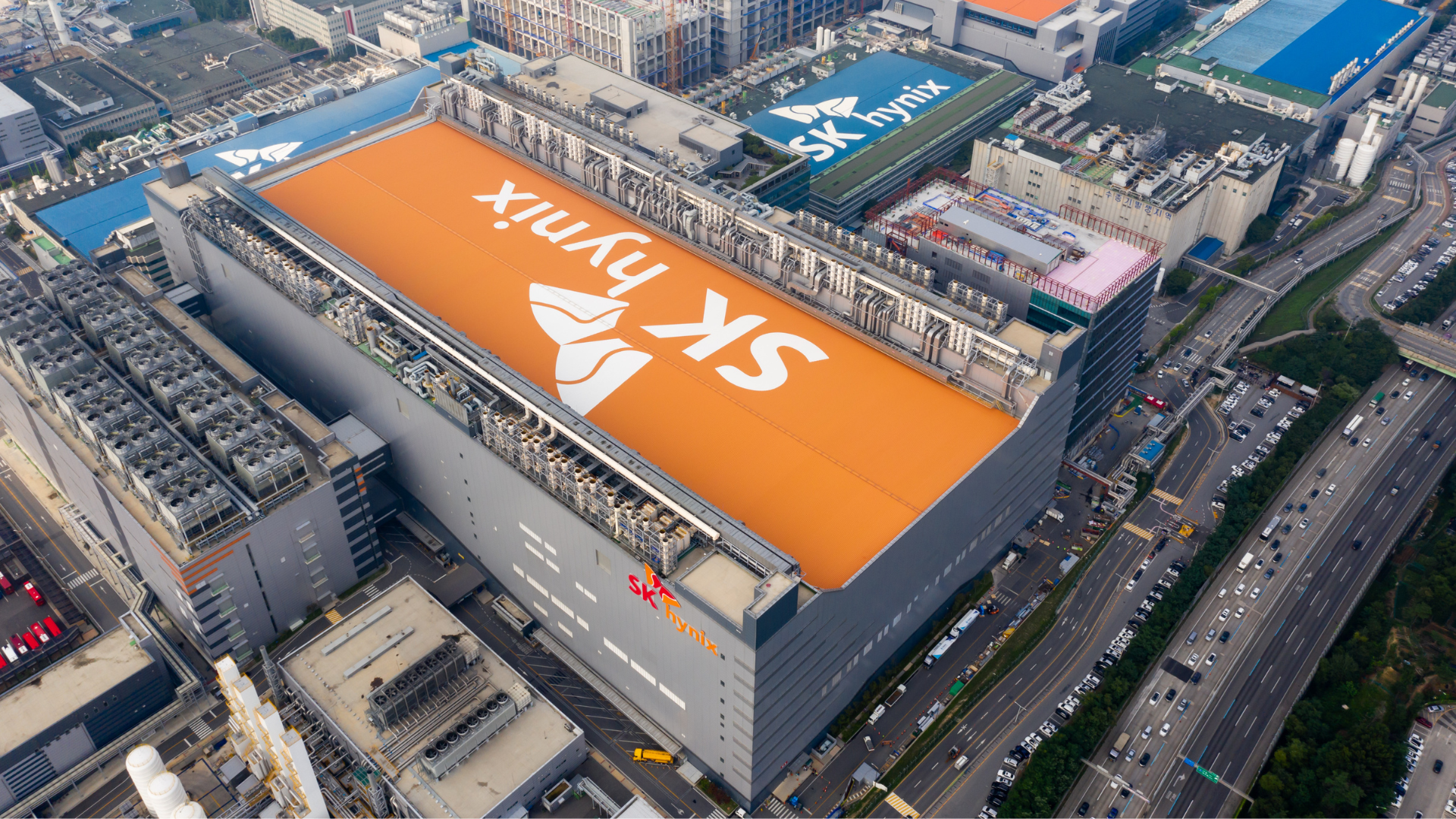
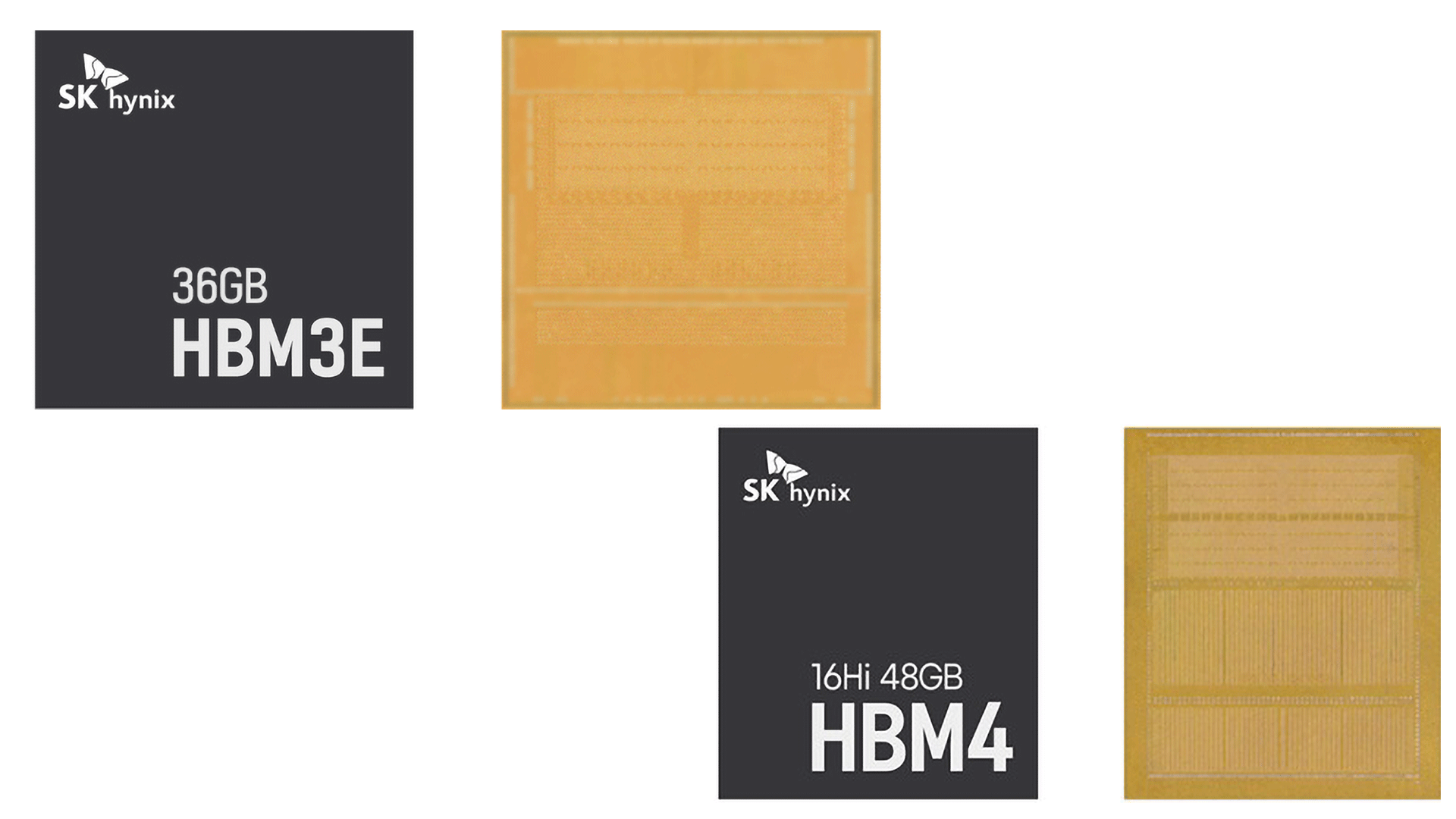
South Korean memory chip manufacturer SK hynix is in talks with Intel to start manufacturing inside the U.S., according to Reuters. The company is reportedly considering multiple options, including leasing space at the under-construction Intel Ohio One site and forming a joint venture with Intel and other AI hyperscalers desperate for HBM.

This move could help alleviate the memory shortage. It would also complement the company’s expansion in Indiana, where it recently broke ground on an HBM packaging plant a few weeks after its historic $26.5-billion Nasdaq listing. It’s unclear yet if these talks are part of the results of the South Korean president’s visit to Silicon Valley in an effort to expedite negotiations between its top tech companies and their U.S. counterparts, but SK Group chairperson Chey Tae-won told reporters in July, β€œI think we need to build a factory in the United States. If possible, I believe we should build it.”

However, there are also concerns that Seoul might object to such investment. The South Korean government just unveiled a $520 billion investment plan to increase chipmaking capacity within its shores and keep the country competitive in the AI race; at the same time, it’s also in talks with the U.S. to finalize its $350 billion investment commitment to Washington to reduce tariffs on South Korean goods, $200 billion of which is still undecided on which projects it will be deployed on. Meanwhile, the Commerce Department has threatened to impose more tariffs on South Korean and Taiwanese tech companies if they fail to invest in U.S. manufacturing. This potentially puts SK hynix at a precarious position, especially as it balances the demands from the White House and the Blue House.

Neither company has confirmed these rumors, though. SK hynix told Reuters that it’s β€œreviewing various measures, including establishing additional production bases, to strengthen the competitiveness of its memory business,” but β€œno matters have been determined at this stage.” On the other hand, Intel called them speculation and declined to comment on the matter, only saying that it was continuing to invest in the Ohio project, which is expected to come online between 2030 and 2031.

  •  

Micron offers Taiwan employees $31,650 cash bonus as unions threaten strike over AI windfall β€” workers reject record payout package, demand 15% profit-sharing plan

Micron has announced a one-time cash appreciation bonus of NT$1 million (US$31,650) as part of a broader compensation/reward package for its employees based in Taiwan. According to a Reuters report, the full package β€” which comes amidst ongoing disputes between the U.S. memory giant and its Taiwanese workforce β€” will see each employee earn a minimum of NT$1.7 million ($53,809.39).

The company called the payouts the largest rewards package in company history, confirming that more than 60,000 employees globally will receive scaled rewards for fiscal year 2026, β€œfollowing an extraordinary year for the company.” Across the last four quarters, Micron’s cumulative net income from sales of high-demand memory chips has crossed a staggering $50.47 billion, with its Q3 earnings representing a 346% year-over-year increase. After the announcement, the union representing workers at Micron's Taoyuan plant officially rejected the company's bonus proposal, calling the package a distraction.

Under the announced payout, every Taiwan-based employee who joined the company on or before August 29, 2025, is eligible for the flat NT$1 million cash bonus. Those hired during fiscal year 2026 will receive a prorated amount. For direct manufacturing and production-line workers, the total bonus rewards are equivalent to 35 to 68 months of basic salary. Direct labor employees will receive a minimum total cash compensation of NT$1.7 million (US$53,809), while the average total compensation for junior engineers is projected to reach NT$3.4 million (roughly US$106,250), comprising NT$2.9 million in cash and the remainder in equity grants.

The announcement β€” which mirrors bonus payouts by Samsung and SK Hynix amid the soaring profits from the AI boom β€” comes after local unions in Taoyuan and Taichung, representing 10,000 of Micron's 15,000 Taiwan workforce, began threatening a strike on September 1, demanding packages similar to the payouts that will see Samsung employees receive over $300,000 in bonuses. The Taiwanese government stepped in to force a mediation. However, unlike in Samsung's case, which also involved government intervention that narrowly averted a potential strike, the talks fell through on September 4 after both parties failed to reach a consensus, leading Micron to announce the NT$1 million bonus package a week later.

In an official statement following Micron's announcement, the union said the new package "sidestepped" the real discussion about a transparent bonus system. The union is pushing for structural change, including a permanent profit-sharing model in which 15% of the company's operating profits are allocated directly to workers and distributed quarterly. They are also demanding a larger one-off payment equivalent to roughly 83 months of salary for fiscal year 2026. Last September, South Korea’s SK Hynix reached a settlement with its union to allocate 10% of annual operating profit directly to employees as performance bonuses for the next decade, eliminating bonus caps.

Similar incidents have played out across the semiconductor industry as companies continue to pull in unprecedented profits from the AI boom. Workers in these industries believe they should share in profits and are requesting concrete institutional safeguards to ensure they are fairly compensated during high-profit AI booms, rather than relying on arbitrary, opaque bonuses decided solely by management. Samsung's unions were ready to strike before reaching an agreement with the company and even held a demonstration attended by over 30,000 Samsung union members.

In the case of Micron β€” which announced a record-breaking GAAP net income of $28.24 billion in just Q3 2026 β€” the threat of a strike continues to loom following the Union’s rejection of its proposed payout. A critical second round of mediation is officially scheduled for September 21, 2026. If that upcoming meeting falls apart, the union plans to hold a vote allowing members to strike. In an earlier internal survey, 80% of union members voted in favor of a strike.

  •  
❌