Preorders for the Nintendo Switch 2 The Legend of Zelda 40th Anniversary Edition went live shortly after yesterday's Nintendo Direct and sold out instantly. Walmart has listed the handheld gaming console but has enabled preorders. Meanwhile, you can preorder it on Amazon for $519.99, so you may still have a chance to get one at MSRP before the scalpers.
Major U.S. retailers, including Target, Best Buy, and GameStop, were the first to enable preorders for the Switch 2 The Legend of Zelda 40th Anniversary Edition, which instantly sold out. It did not take long for scalpers to hit eBay to resell preorders for as much as $1,000, almost 2X over Nintendo's MSRP. Zelda-exclusive consoles have always been prime targets for scalpers.
The Switch 2 The Legend of Zelda 40th Anniversary Edition, the first limited edition of the Switch 2 and a The Legend of Zelda-themed edition celebrating the franchise's 40 years, makes the handheld console even more desirable to hardcore fans and scalpers looking to make a quick profit. Plus, the console's $519.99 price tag, which is only $20 over the vanilla Switch 2, gives gamers extra incentive to purchase one. The problem is finding one in stock.
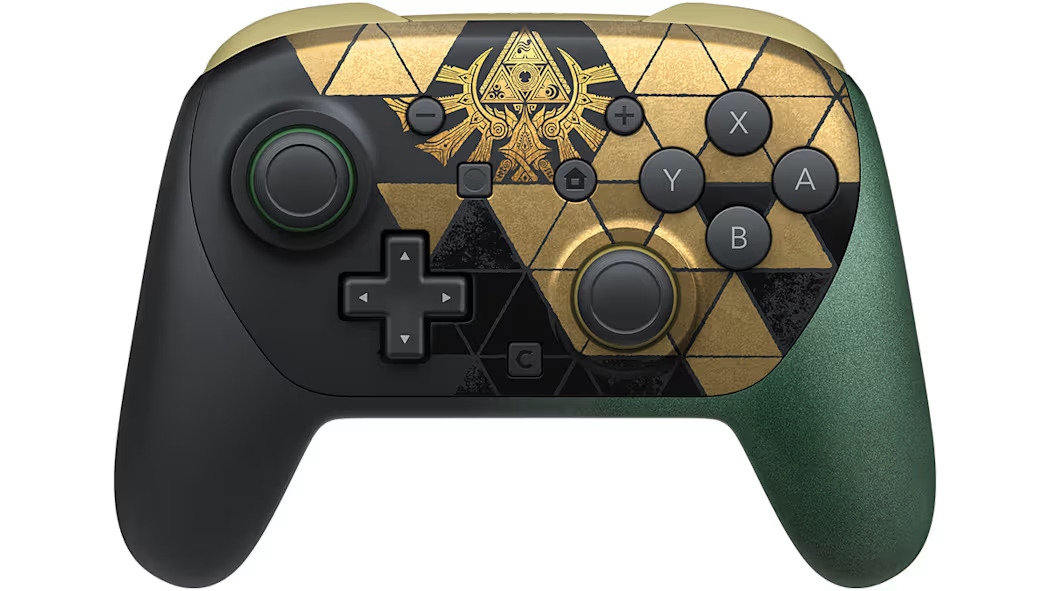
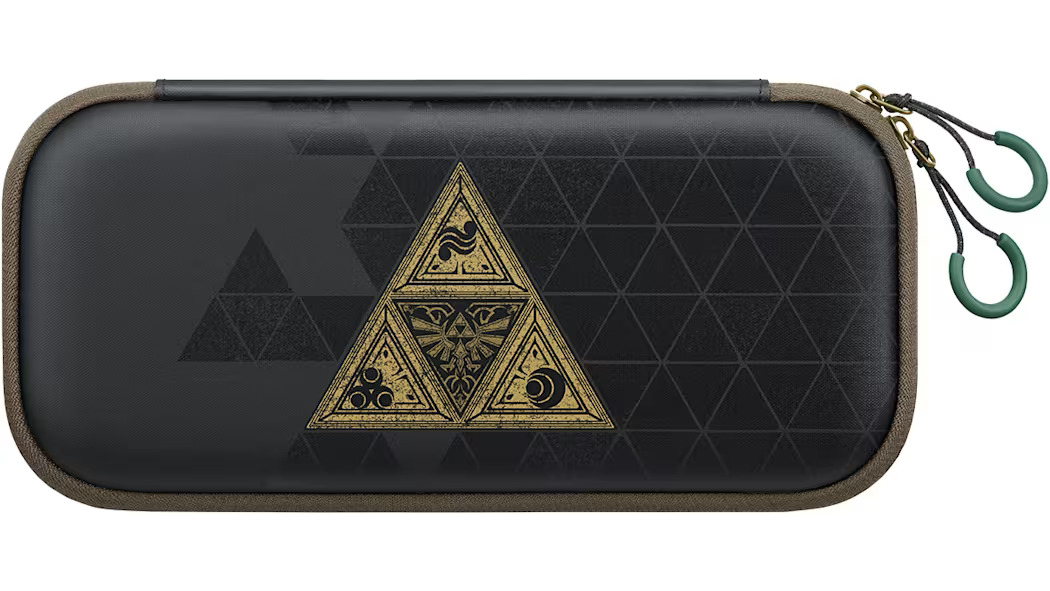
Along with the console, Nintendo also gave the Switch 2 Pro controller and carrying case with an included screen protector the same The Legend of Zelda 40th Anniversary Edition treatment. Best Buy currently has both up for preorder at $99.99 and $39.99, respectively.
The Switch 2 The Legend of Zelda 40th Anniversary Edition officially launches on October 29. Historically, The Legend of Zelda-themedconsoles are available for purchase on launch day. However, stock will likely be extremely limited, which is why many fans like to lock in their preorders early.
It remains to be seen whether Nintendo will produce many units of the Switch 2 The Legend of Zelda 40th Anniversary Edition. At least for the previous limited-edition consoles, like the Nintendo Switch OLED: Tears of the Kingdom Edition or Nintendo Switch Lite: Hyrule Edition, stock was not a problem since you can still buy them today despite being last-generation consoles.
Ieri Zelda, oggi Metroid e Kirby. Se il Direct di martedì era dedicato tutto ai 40 anni di Link, quello di oggi invece era un classico appuntamento "panoramico", di quelli in cui vengono mostrati i titoli third party e first party in arrivo. In 45 minuti i giochi mostrati sono tanti: potete recuperare l'evento integrale qui sotto. A spiccare sicuramente ci sono le due novità firmate Nintendo: Metroid Ravenous e Kirby and The World Beyond.
Cominciamo dalla nuova avventura di Samus, che poi è anche quella che arriverà prima su Switch 2: la data di lancio è fissata per il 28 gennaio 2027. Proprio come previsto dai rumor si tratta di un capitolo in 2,5 D, sulla scia del recente Dread insomma e non dell'ancor più recente Metroid Prime: 4 Beyond. Anche perché sembra proprio questa l'anima più apprezzata da pubblico e critica del franchise.
Non vedevate l’ora di mettere le mani sul nuovo NEOGEO AES+, la più recente operazione nostalgia rivolta agli appassionati di retrogaming? Ebbene, pessime notizie: la console, che doveva arrivare questo novembre, è stata posticipata, e di tantissimo - la nuova data è addirittura il 16 settembre dell’anno venturo. PLAION REPLAI ha citato problemi di produzione: in sostanza l’interesse da parte dei giocatori è stato di molto superiore alle aspettative e si è reso necessario ampliare la produzione per soddisfare la domanda.
La console continuerà a essere in prevendita sul sito ufficiale e presso i rivenditori interessati; tutti gli ordini già effettuati rimarranno validi, manterranno la priorità nelle consegne e non subiranno alcun aumento di prezzo. Leggendo tra le righe, emerge in modo molto chiaro che il problema principale non è l’assemblaggio della console, ma il recupero di quantità adeguate di determinati componenti - in altre parole, la crisi dei chip di memoria causata dalla grande corsa globale all’intelligenza artificiale ha colpito ancora.
If you play hard to get, you could get Xbox Game Pass for cheaper; at least that is what numerous users are reporting on a Reddit thread. One Xbox Game Pass subscriber shared a screenshot of Microsoft offering them the Ultimate plan for $16.09 for a month, 30% lower than the standard $22.99. Their secret? Cancel Xbox Game Pass almost every month.
Dynamic win-back discounts are perhaps the oldest trick in the book, but they remain widely used because of their effectiveness in re-engaging customers who have stopped buying a product or, in Microsoft's case, canceled their Xbox Game Pass subscription. These targeted offers, often disguised as "We Miss You" or "Welcome back" deals, aim to win back lost customers with exclusive or time-limited discounts.
According to the Redditor, they have used Xbox Game Pass on and off for about two years. However, instead of committing to an annual plan, the user frequently paused and resubscribed. In the Redditor's words, they were "not doing any sort of tricks lol...just got the offer randomly because I cancel gamepass almost every month, so maybe this was their way of keeping me."
This kind of customer behavior is not uncommon among subscription services, since buyers seek to maximize value and avoid unnecessary spending. Apparently, Microsoft seemingly noticed this user and proactively offered a 30% discount, dropping the Xbox Game Pass Ultimate price from $22.99 to $16.09 for a year. And it worked. The Redditor confirmed that they took the offer and locked in for the entire year.
At least one other Redditor confirmed they also received the same $16.09 offer. The thread quickly filled with additional posts as users shared their experiences with Xbox Game Pass discounts. For example, one Reddit user said that when they logged in with a secondary account on their Xbox console, they saw an $18 offer for 12 months of Xbox Game Pass Ultimate. Their main account allegedly never receives offers like this. Meanwhile, other users chimed in to report receiving $ 20-per-month offers.
It is unclear what criteria Microsoft uses to distribute these win-back discounts. Many speculate that the company may be considering activity, subscription history, or even multiple accounts. The discounts do not seem limited to the U.S., where the Redditor lives. Users in the thread have reported similar discounts in regions like México.
Despite Microsoft slashing Xbox Game Pass pricing earlier this year, many gamers still resort to digital key marketplaces such as Eneba, G2A, or Loaded, where one month of Xbox Game Pass Ultimate can cost as little as $9.28. By running targeted annual promotions, Microsoft can encourage subscribers to stick with Xbox Game Pass, secure long-term revenue, and avoid the risks of month-to-month cancellation.
However, these targeted discounts raise an important question: should Microsoft not reward loyal Xbox Game Pass subscribers with similar exclusive discounts? Win-back promotions are great for bringing back former subscribers, but long-time users will feel overlooked and see no reason to commit, since the generous deals go to those who cancel and return.
In August 2009, at the very first Gamescom expo, I sat in a small meeting room in Germany and played Mario Kart and World of Warcraft on a laptop, via technology that was then completely new: cloud gaming. It was a demonstration for a yet-to-be-launched service called Gaikai that promised to let you play any game in a browser window, without a console. (Here is an ancient video of that demonstration, featuring a very young Keza.) With a single click I could launch into any game, hosted on servers hundreds of miles away. It really did look like the future.
Since then, plenty of companies have tried to be the first to truly crack game streaming, vying to be the Netflix of games. Sony ended up buying Gaikai for $380m (£242m) in 2012; its technology now powers the streamable classic games library on PlayStation, and the PS5’s advanced game streaming. OnLive, Gaikai’s first competitor, launched in 2011 but shut down after less than a year, leaving Sony to acquire all its patents. Google’s Stadia cloud gaming service also imploded, launching in 2019 and shutting down three years later.
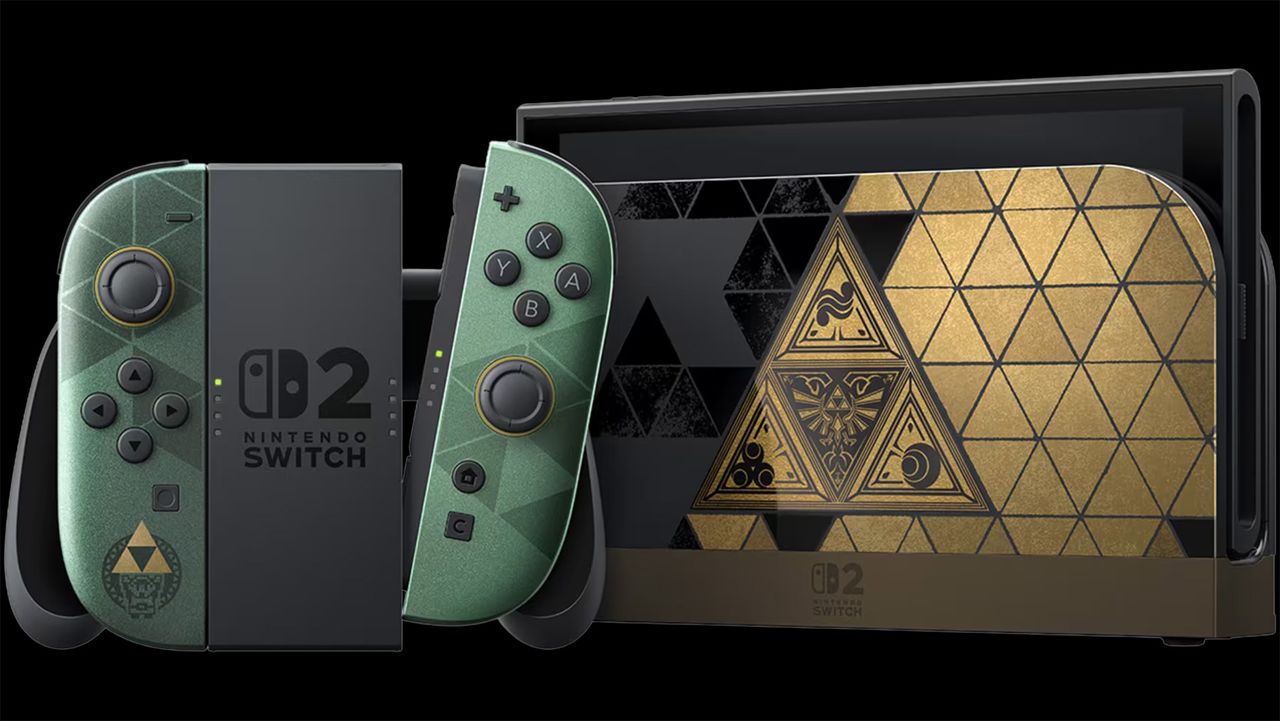
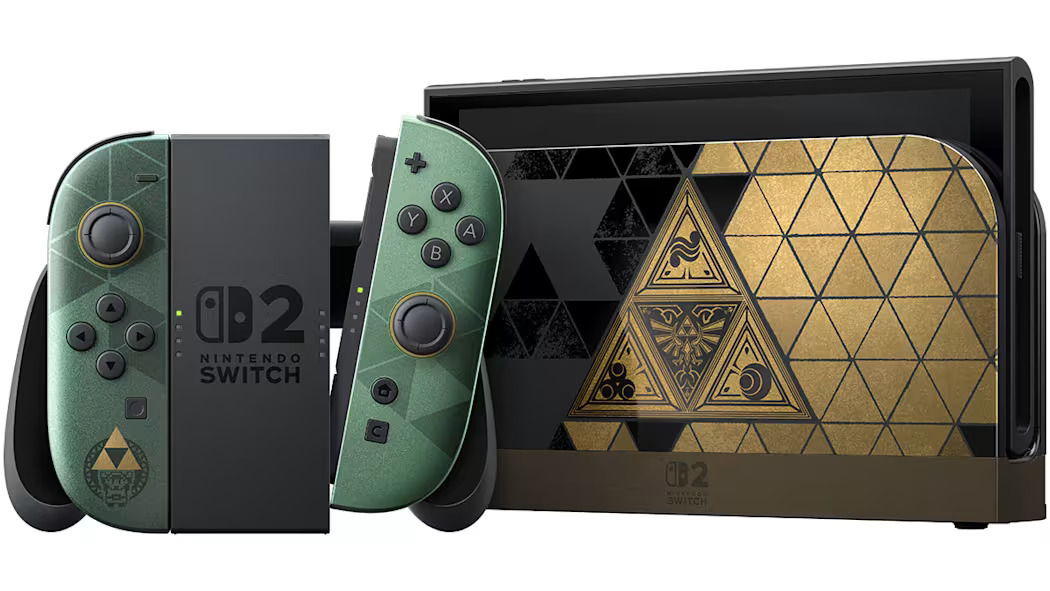
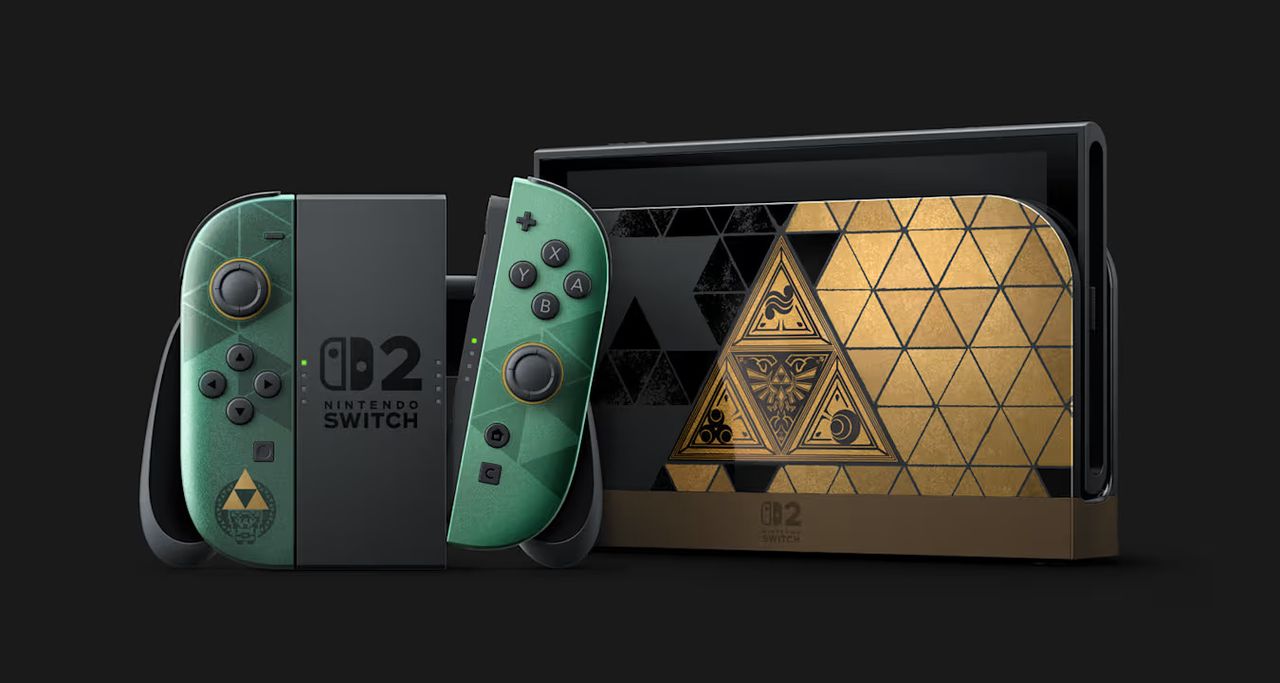
Nintendo just aired one of the most important Directs of the Switch 2 generation, showcasing the upcoming Ocarina of Time remake in all its glory. The presentation also brought along the announcement of the first special edition Switch 2 hardware: The Legend of Zelda 40th Anniversary Edition. The console costs $519.99, but there's also an identically themed Pro Controller for $99.99 that you can pre-order right now — either item ships later this year on October 29.
The company's first handheld to be adorned in special edition Zelda makeup was the Game Boy Advance SP released in 2004 alongside The Legend of Zelda: The Minish Cap. The first home console to receive the same treatment was The Wind WakerHD edition of the Wii U in 2013. Most recently, we got a Tears of the Kingdom-themed Switch OLED in 2023, followed by the Hyrule Edition of the Switch Lite next year.
Across every handled and home console released, The Legend of Zelda 40th Anniversary special edition Switch 2 will be the 12th piece of Zelda-themed hardware Nintendo has put out. Moreover, it took the original Switch just a few months to get its first limited-edition hardware (Monster Hunter XX Special Pack), but the Switch 2 has clearly taken its time with this design, and it's sure to be a collector's item.
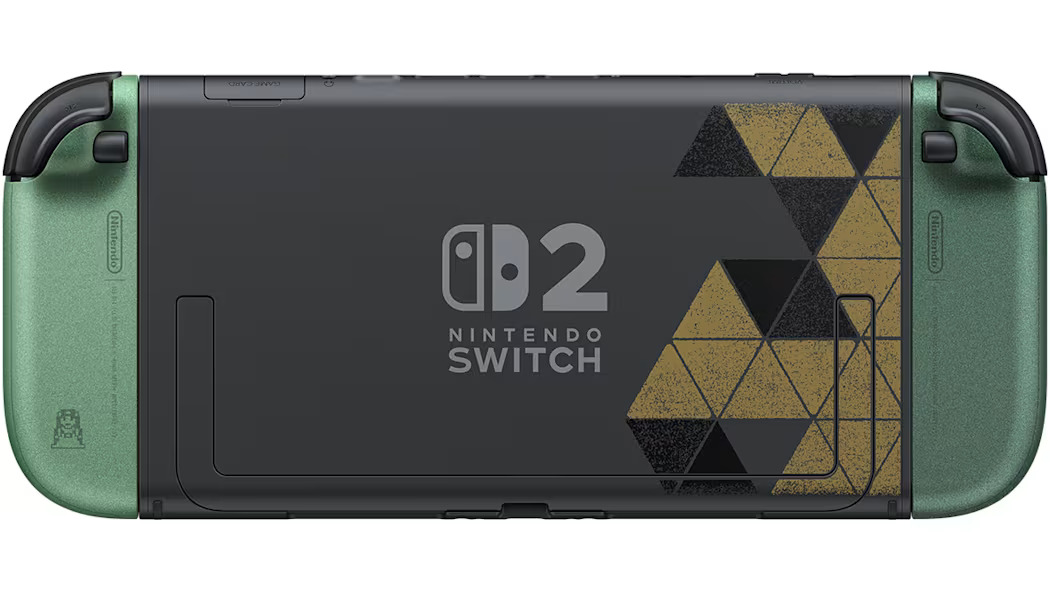
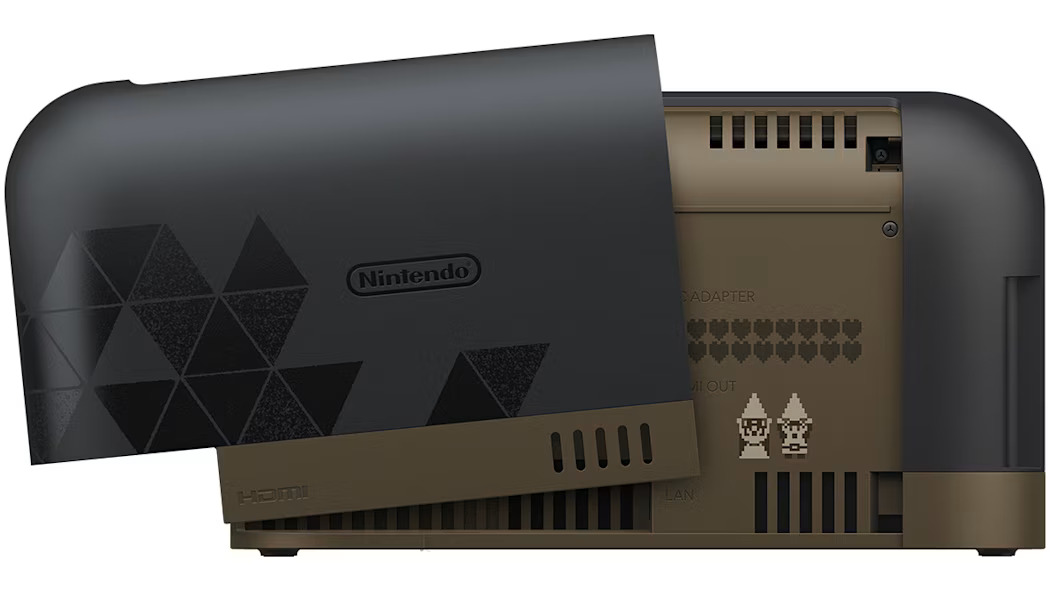
The tablet itself is mostly the same boring black except for a few golden triangles at the back. However, the Joy-Cons feature a beautiful green design with a Tri-Force symbol on the left. The dock is a gorgeous, two-tone golden and black color with a very bold Tri-Force theme across the front and some easter eggs on the back. Even the packaging is supposed to have textured foil cover art. The console will retail for $520 and does not come with any game.
NintendoNintendoNintendo
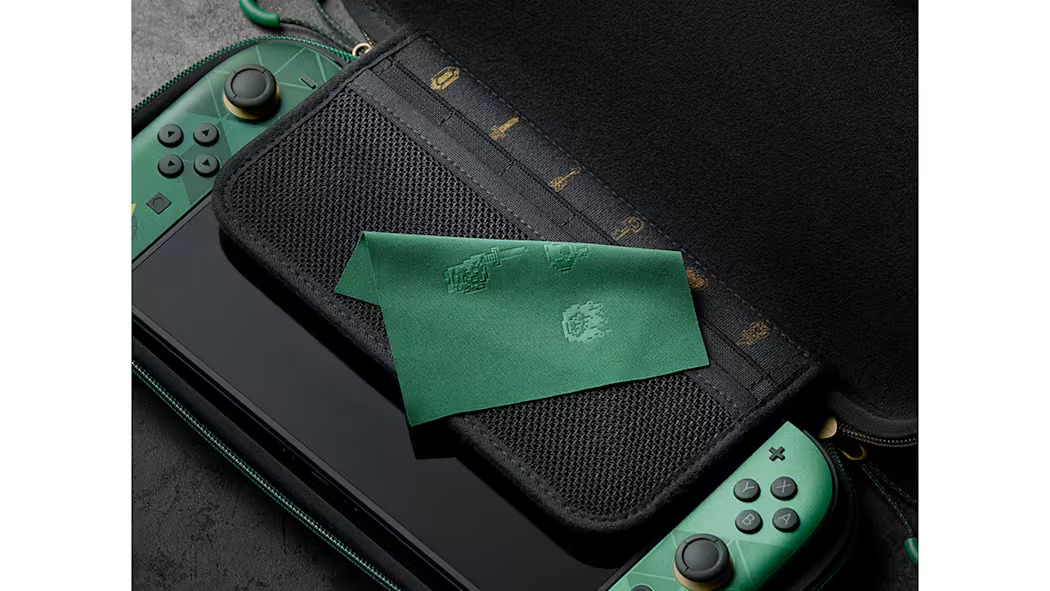
Alongside the console, there's a Switch 2 Pro Controller that looks very similar to the Joy-Cons, with a green and gold theme that combines elements of the Triforce with a crest emblem. It comes as is for $100, but you can also get it with a subtly themed display stand for $110. Finally, there's also a $40 carrying case adorned with Zelda illustrations. You even get a custom, green-colored microfiber cloth inside and a screen protector.
Keep in mind that all of this hardware celebrates the 40th anniversary of the Zelda franchise, which already passed earlier this year. It has nothing to do with the upcoming Ocarina of Time remake and, as such, the game is not included in the $520 limited edition Switch 2. Pre-orders for all the items discussed above are open, and they will be released on October 29, 2026. The Ocarina of Time remake drops next month, on November 19, 2026, and will be sold separately for $60.
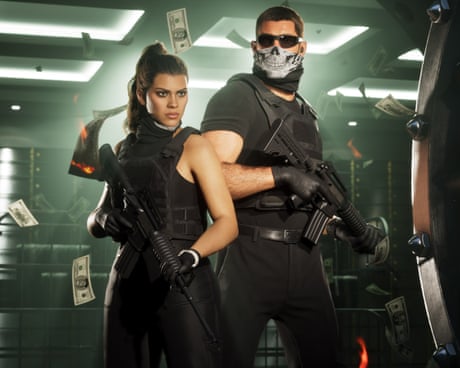
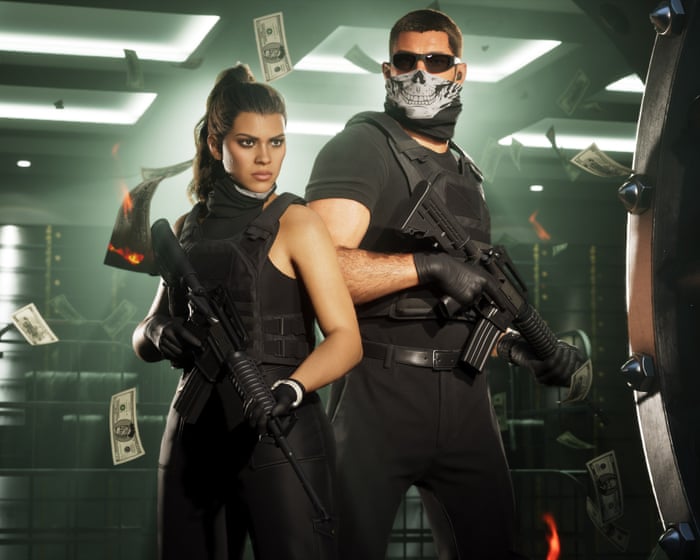
Historically a new Grand Theft Auto game inspired controversy around violence – but this time people are getting exercised about its romance
There was never any doubt that Grand Theft Auto VI’s extended look would elicit a viral reaction from the internet. Having won the Game Awards’ Most Anticipated award twice consecutively, Rockstar’s forthcoming crime opus is one of the most frothed-over games in recent memory, or indeed ever. It’s nothing short of a cultural phenomenon.
One aspect of the game has provoked an unexpectedly vehement response on social media: not violence, but romance. Protagonists Lucia and Jason are in love, you see, and as a player, part of your job is keeping their spark alive and their relationship strong, so that their criminal escapades are underpinned by a strong connection to one another. Holding hands, enjoying a date at the beach, spontaneously texting one another when apart – all of these interactions will strengthen their bond. You’ll be putting in a lot of work to ensure this couple thrives, which is why some people have come to believe that playing GTA VI counts as micro-cheating.
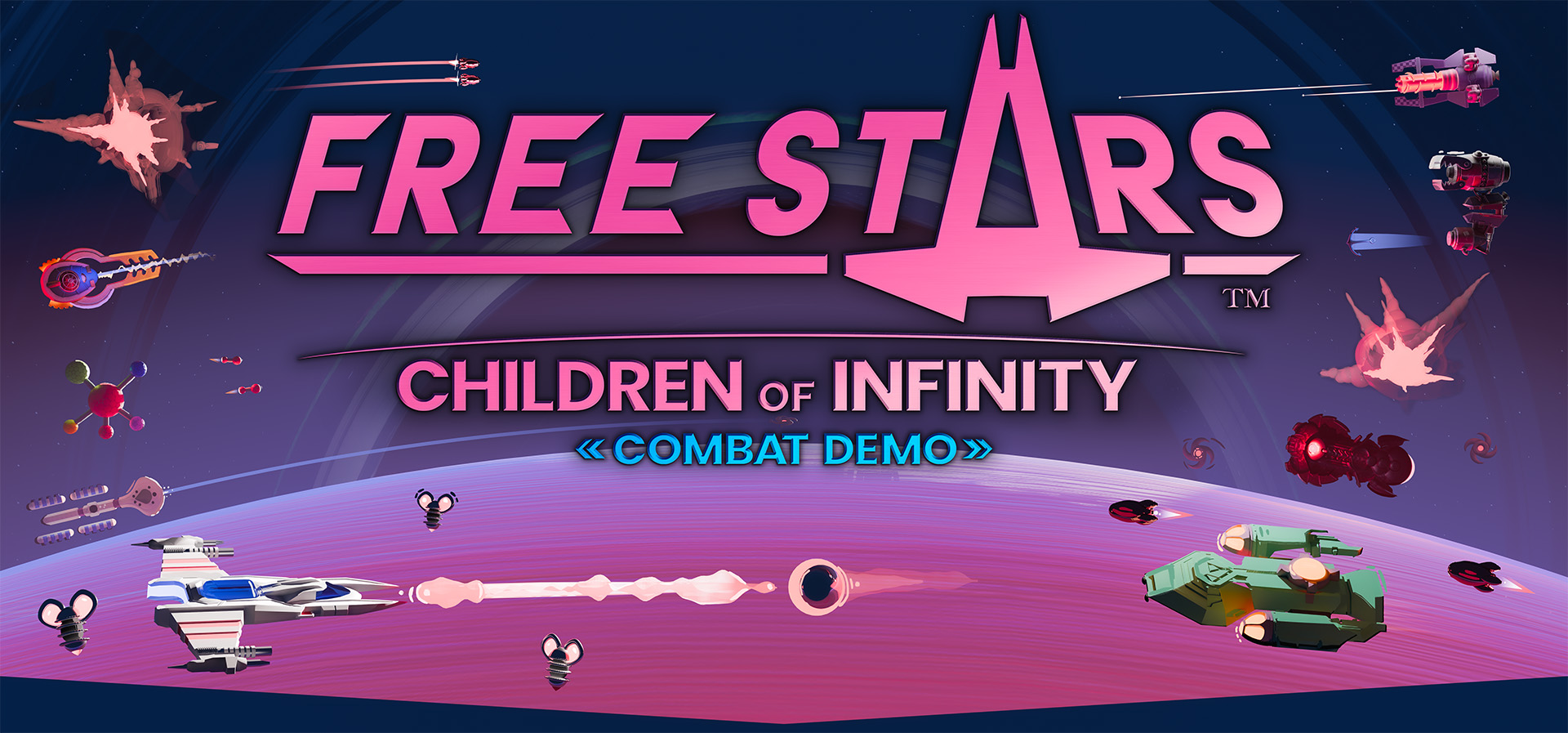
After five years in development, Free Stars: Children of Infinity—the official sequel to The Ur-Quan Masters by the old game's original creators—has released a free public demo. It's a "combat demo" in the style of UQM’s melee mode, where players can assemble a fleet from the game's roster of nearly 40 ships, then match those ships up in head-to-head arcade SpaceWar-style action. The demo can be found on Steam and GOG, and it's available for Windows, Mac, and Linux. (Console versions are coming, but they're not yet out.)
Pew pew!
Credit:
Pistol Shrimp Games
I have to present this news with a big disclaimer, though, because I've been part of the Children of Infinity writing team since 2021, working as a volunteer with the Pistol Shrimp Games crew and contributing NPC dialogue and some story bits. As a huge fan of the original games, it's been a dream opportunity. (Because I've been volunteering my time, I'm not financially involved and receive no compensation if you download the demo or, when it's eventually released, buy the full game.)
What's in the demo
Children of Infinity is a space adventure RPG, just like The Ur-Quan Masters (and its direct spiritual predecessors, Starflightand Starflight 2). What's been released today is just one part of the game—the arcade-style "melee" portion, which lets players jump into one-versus-one combat against another player or against a computer-controlled opponent. Each of the ships you can pick has its own maneuvering characteristics, weapons, and special abilities.
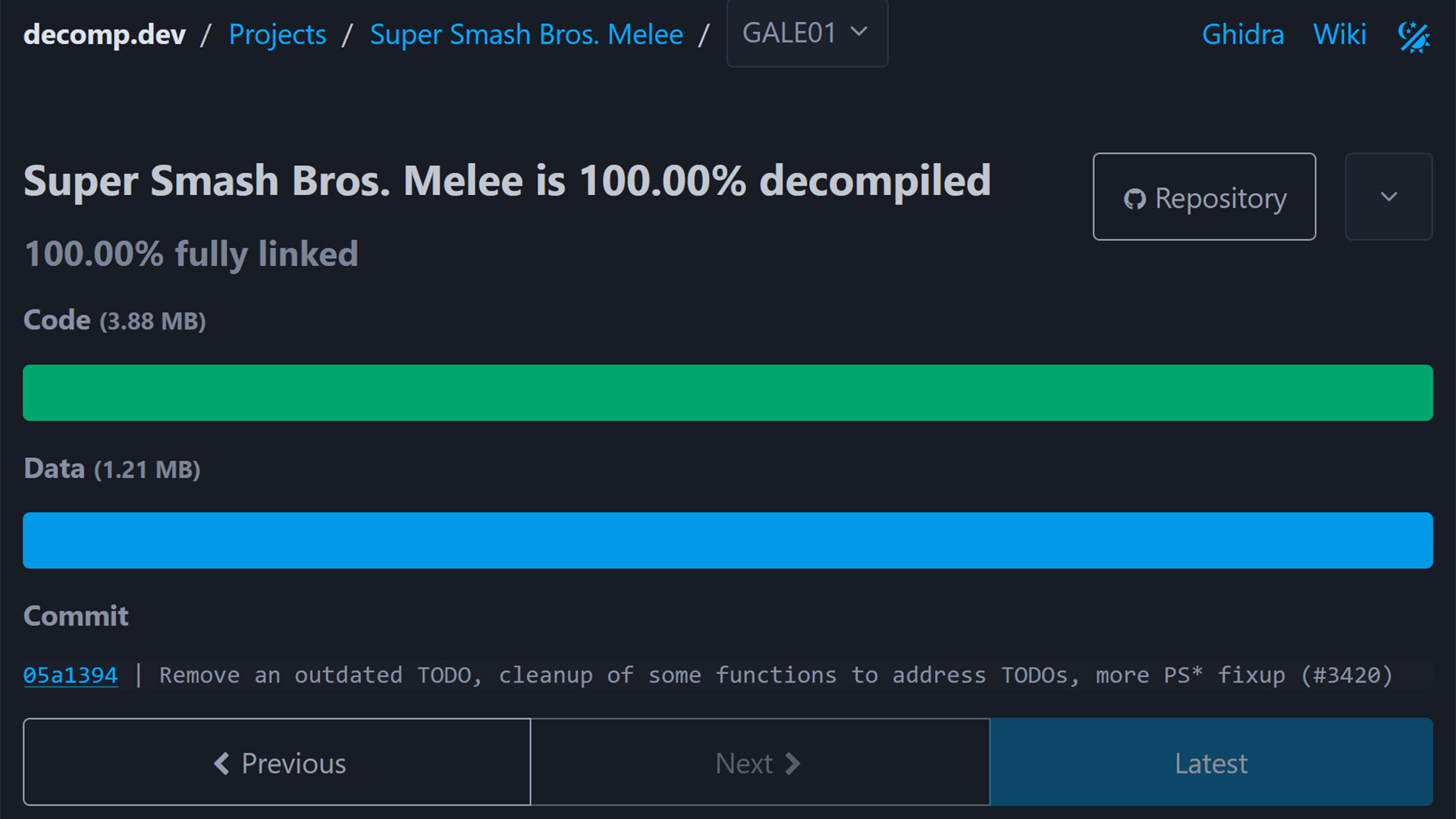
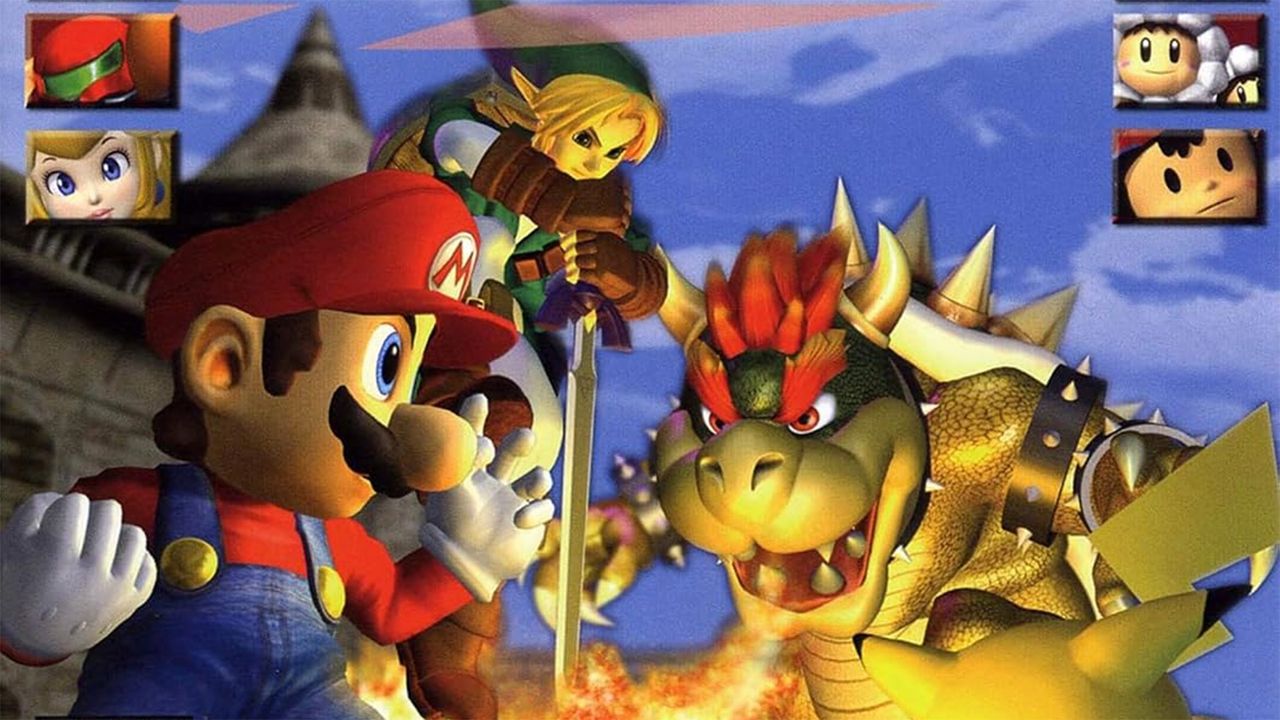
A Super Smash Bros Melee decompilation project hit its key long-standing goal a few hours ago. Nintendo’s legendary platform fighting game, which launched on the GameCube in 2001, has now been 100% decompiled by a team of developers. This is a complex game to convert to C code, but the project code can now be compiled into a binary byte‑for‑byte identical to Nintendo’s original main.dol. The effort has taken the team six years or more to get to this stage, with OpenAI's Astra part of the effort to get it over the line. Gamers may already be excitedly anticipating Super Smash Bros Melee ports and modding tools, but these too will take time and effort.
Decompilation projects seem like the latest trend to grasp the retro gaming and development communities, but some, like this, have been in progress for a very long time. Enthusiasts are spurred on by old console hardware becoming scarce, expensive, or uneconomical to repair. Thus, they want to preserve the original game code in a manner that can be ported to modern supported systems. Demanding 100% accuracy with a complex game like this was ambitious, but now that milestone has been reached.
Preservation isn’t the only goal, or result of projects like this. Seasoned developers will now be able to pore over the game’s C code and gain insights into Melee’s engine, physics, game mechanics, and more. Armed with this knowledge, we should eventually see the modding potential of this game blossom. This has happened in the wake of previous successful decompilation projects.
If you drop in on the doldecomp/melee GitHub page, linked above, you can check over the code for yourself. There are instructions for compiling this Super Smash Bros Melee C code on various platforms, including Windows. However, please remember these aren’t ports; you will just be recreating the v1.02 US release main.dol file from the GameCube, which weighs in at 3.88MB. You'll also need the original assets (textures, audio, etc.) from the GameCube disc that you own, in order to run the game.
Some highlight that the project was finalized with thanks in part to the latest AI tech, including GPT-6 Astra. Similar tech might also be used to rapidly develop the ports and mods that the crowds are looking forward to.
Sony Japan has officially implemented a new customer harassment policy to address ongoing customer backlash, following the company’s controversial announcement to phase out physical PlayStation game discs by January 2028. In an official publication on September 1, the company outlined prohibited customer behaviors to protect the dignity and safety of its employees and threatened to suspend customer service if the behaviors continued.
“The dignity and safety of our employees must not be threatened by customer harassment, such as words or demands from customers that exceed what is considered reasonable according to social norms,” the publication read. “If any behavior constituting customer harassment is confirmed, we may restrict or suspend customer service in order to protect the safety of our employees.”
Some of the examples of customer harassment detailed in the publication include “persistent and repeated, or prolonged, demands; excessive or unreasonable demands for compensation; abusive language, threats, slander, and other similar behaviors; requests unrelated to products or services; intimidating attitude; discriminatory or sexual conduct; and attacks and demands against individual employees.
The company also listed “forcing someone to prostrate themselves,” visiting company grounds without permission, and excessively asking for apologies as customer harassment, expressing willingness to use legal force if necessary. “We will take a firm stance against such actions and aim to build healthy and sustainable relationships while respecting both our customers and employees,” it said. “If we deem it necessary, we will cooperate with the police, lawyers, etc., and consider taking action, including legal measures and criminal proceedings.”
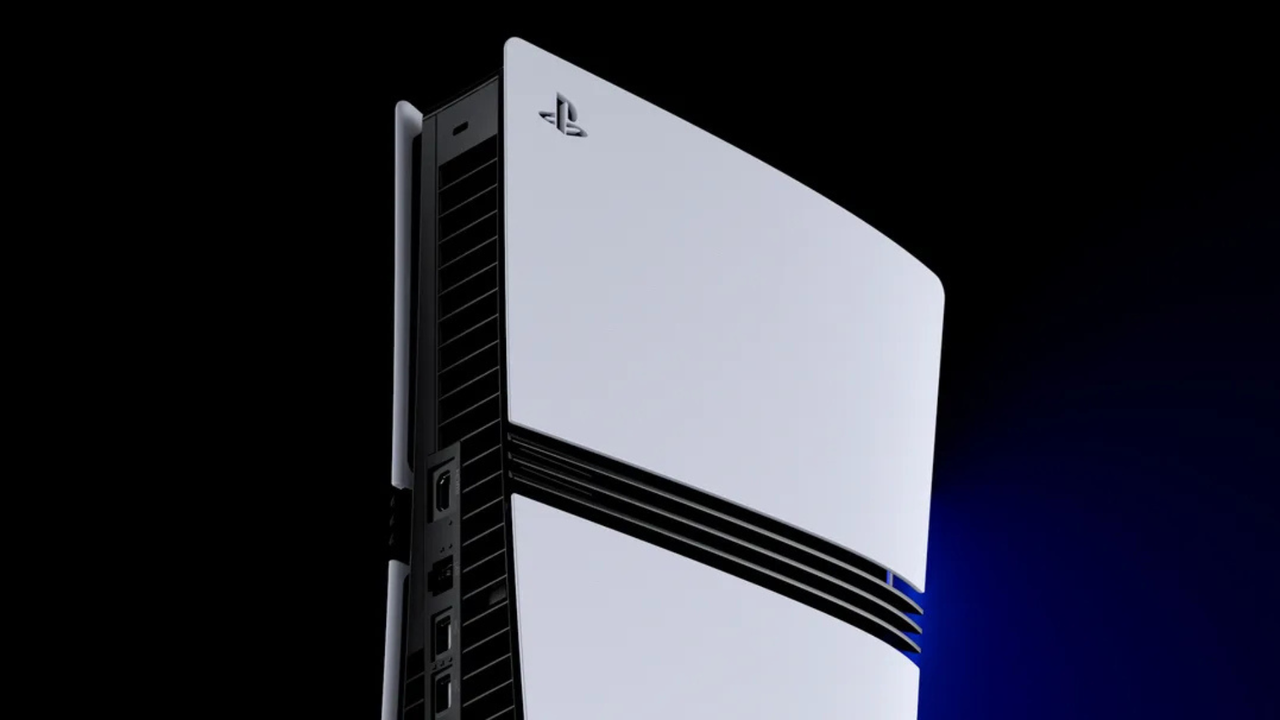
The new policies appear to be in response to the intense backlash over Sony's decision to end physical disc production by 2028. The decision was met with immediate, widespread backlash from the gaming community, which argued — among other things — that ending physical discs was equivalent to eliminating true ownership. Critics also argued that digital purchases were rentals and placed too much power in the company's hands, which could restrict access at will. Just 6 days after the July 1st announcement, a Change.org petition to stop the move had amassed 200,000 signatures and is now approaching 400,000.
The company doesn't appear to be backing down. After a class action lawsuit related to Sony’s decision to kill physical discs, the company moved to force the case into out-of-court arbitration, arguing that “reasonable consumers would not be misled into believing they own digital games.” The plaintiffs allege that Sony misleads consumers by using "Buy" buttons for digital PlayStation games without clearly disclosing that buyers are only purchasing a temporary, revocable license rather than actual, permanent ownership of the game.
Several other related lawsuits are ongoing. Regardless, Sony has said it will "cautiously move forward" with its decision despite “strong views” from players. The company hopes its new customer harassment policy will curb some of the backlash individual employees are currently facing. The policies also align with Japan's recent law that mandates companies to take measures to prevent customer harassment towards their workers.
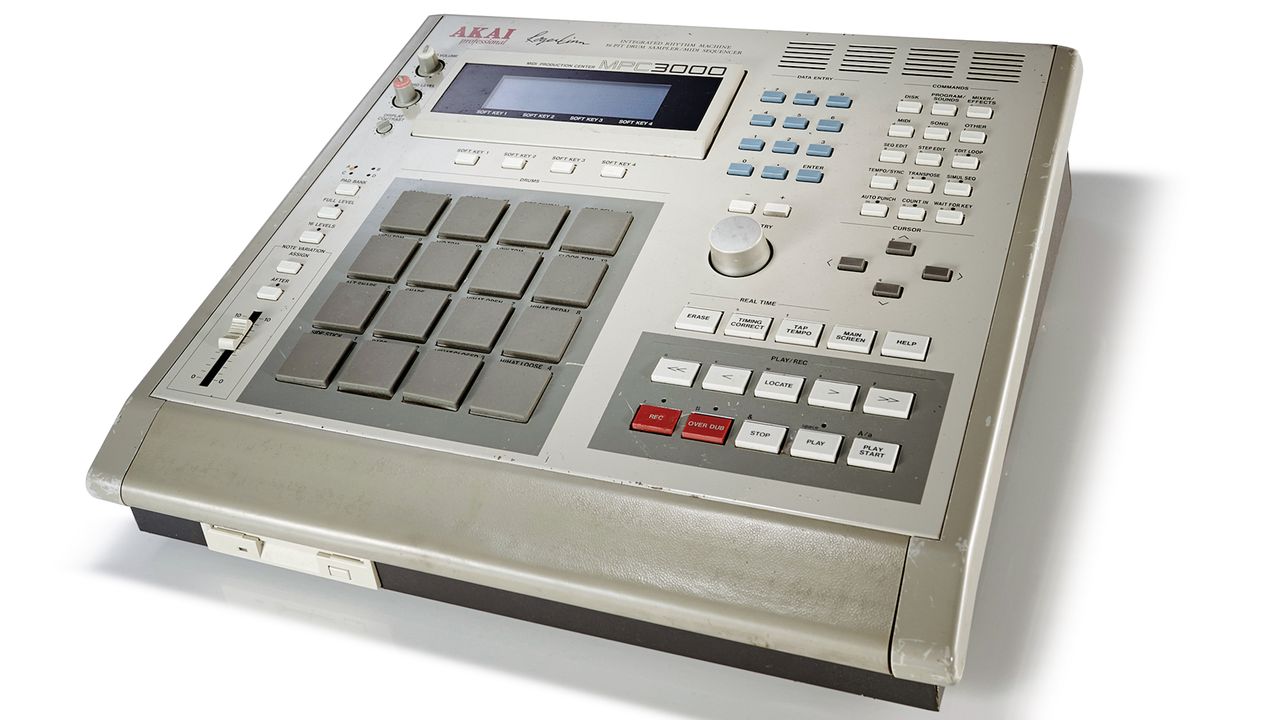
Musicians and synth-heads in the audience, rejoice. A new vintage synthesizer plugin has arrived that has the potential to blow many commercial offerings out of the water — and it's completely free, to boot. Audio software maker Autodafe has released the Vintage Emulator Studio (VES), a fresh new plugin that integrates a fair number of the open-source MAME emulator's synthesizer cores in one neat package.
The entire list of emulated synths is below, but it includes iconic entries like the Akai MPC3000, LinnDrum, Oberheim DMX, and Roland TR-707 — used by names like Dr. Dre, New Order, The Police, INXS, and Prince, among many other high-level acts. There are a total of 44 machines, all with component-level emulation.
What makes VES different from most other synth plugins is that instead of presenting a facsimile of the final output or a hybrid mix of component- and output-stage emulation, it employs — by way of MAME — full component-level emulation. Each processor, tone generator, envelope generator, filter chip, and converter should be faithfully reproduced, potentially resulting in a "perfect" emulation of the gear in question, more or less depending on the status of each driver core.
Notably, on machines whose MAME emulation is farther along, analog and/or digital output stages are faithfully recreated, meaning you won't need additional low-pass filters or any other trickery to make the synth sound like the actual hardware. Additionally, the skeuomorphic, HiDPI-ready UI replicates the units' control panels, dials, buttons, and LCD displays, making them easy to interact with if you're familiar with the real hardware — and probably a nightmare if you're not, as "ease of use" wasn't high on the list of priorities back then. Floppy disk, CD-ROM, and peripheral emulation ought to be included too.
If by now you're thinking this is all too good to be true, there are indeed a couple or three catches. First and foremost, as with any emulator, you'll need to provide your own ROM/firmware, and depending on the synthesizer, any associated sample packs. Although obtaining those is not too difficult, having a copy of that data is a legal gray area if you don't own the original hardware. Although we haven't tested it ourselves, the CPU usage of the plug-in ought to be somewhat high, considering all the work it's doing simulating every single component.
Additionally, while MAME's emulation cores aim for full component-level emulation, not every synth driver has had the same amount of work put into it. For example, the Akai MPC-3000 driver is nearly complete, while the Prophet-5's has only been introduced to MAME fairly recently — so your mileage may vary. We'd expect this VST to be updated somewhat frequently as work on its MAME core moves forward.
For the sake of argument, though, if only a handful of synths are fully emulated, that's still an impressive showing out of a list of 44, given that in theory you'll get output that tracks exceedingly close to that of the original hardware, all from one plugin. You can download the Vintage Emulator Studio right here, in VST3 or AU format, for every major OS: Windows, macOS Intel/M-series, and Linux. It's also available as a handy standalone application.
I'm a pretty thrifty guy; no one will ever accuse me of being a hoarder or a bulk shopper. You won’t ever see me at a Costco lugging around 48-count packs of toilet paper, hernia-inducing apple bags, or ginormous 5-pound boxes of Goldfish Crackers.
But after tinkering around with "The Last Starship" for a while, I think I could be converted into a doomsday prepper; someone who loads up on necessary supplies and has a keen sense of the proper protocol for acquiring stockpiles of food, water, ammo, and —if I were stuck out in deep space — oxygen.
After being available in early access for nearly three years, "The Last Starship" 1.0 was finally released on Feb. 6, 2026, for PC from Introversion Software, the same inventive creators of "Prison Architect". It's hardly a new release at this point, but I've been absorbed by it for the last few months, and it's definitely one that space game fans should check out.
This engaging indie sci-fi video game teaches single-player gamers how to strategically operate an interstellar shipping and trading conglomerate. It does this by repeatedly driving home the importance of planning ahead while operating in the cold vacuum of outer space and fortifying your sturdy spaceship.
Oh, and watch out for space pirates!
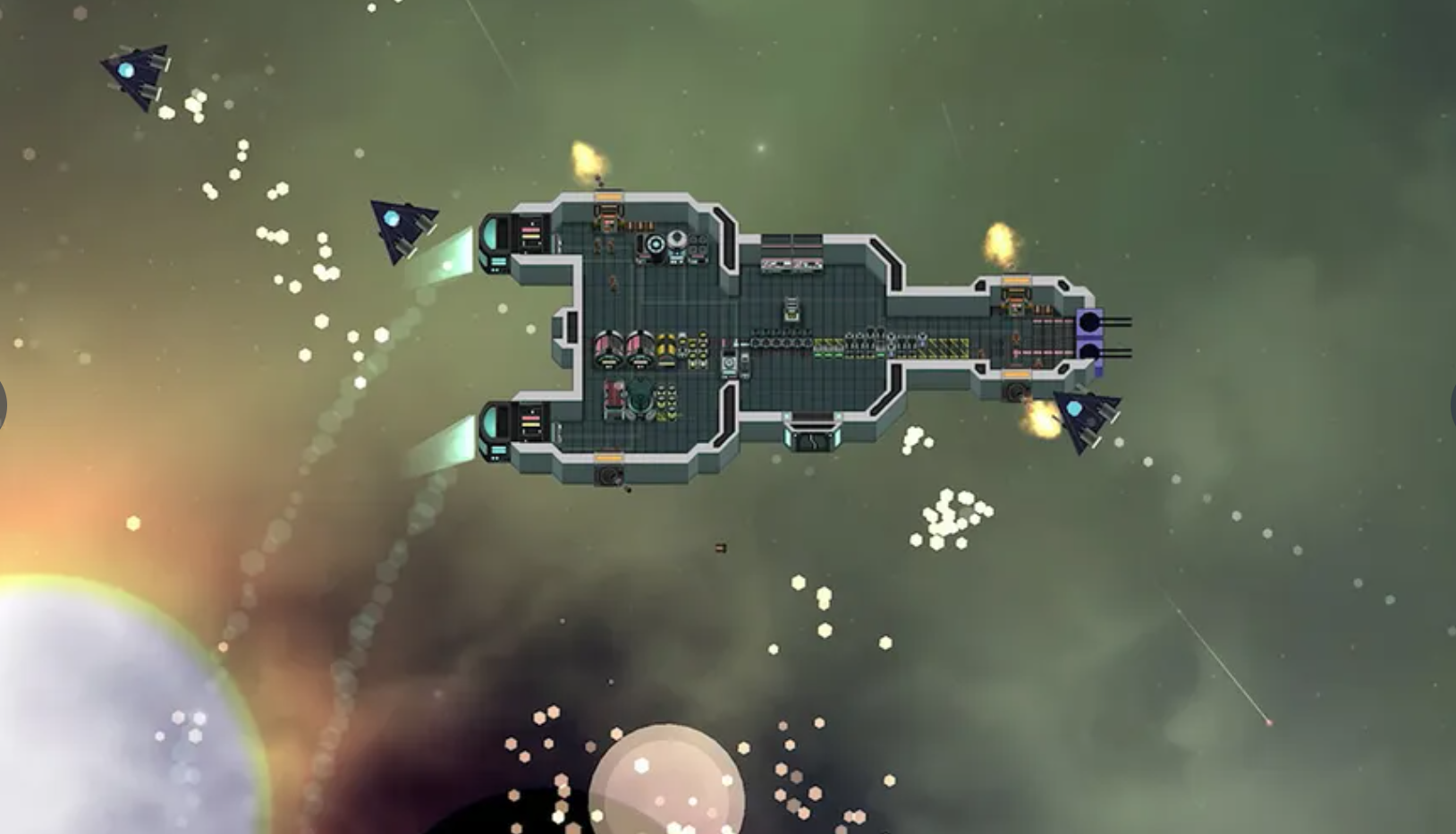
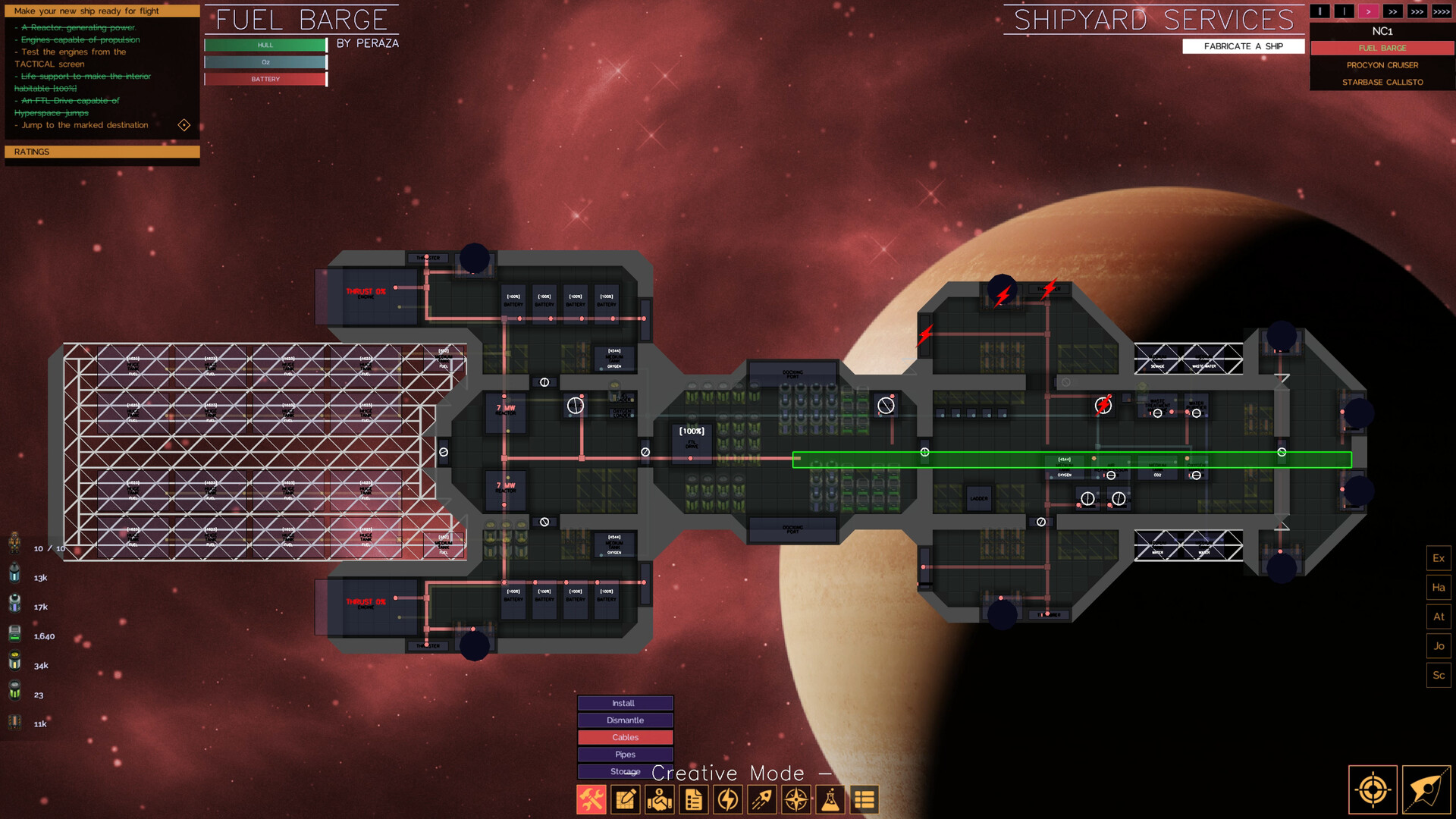
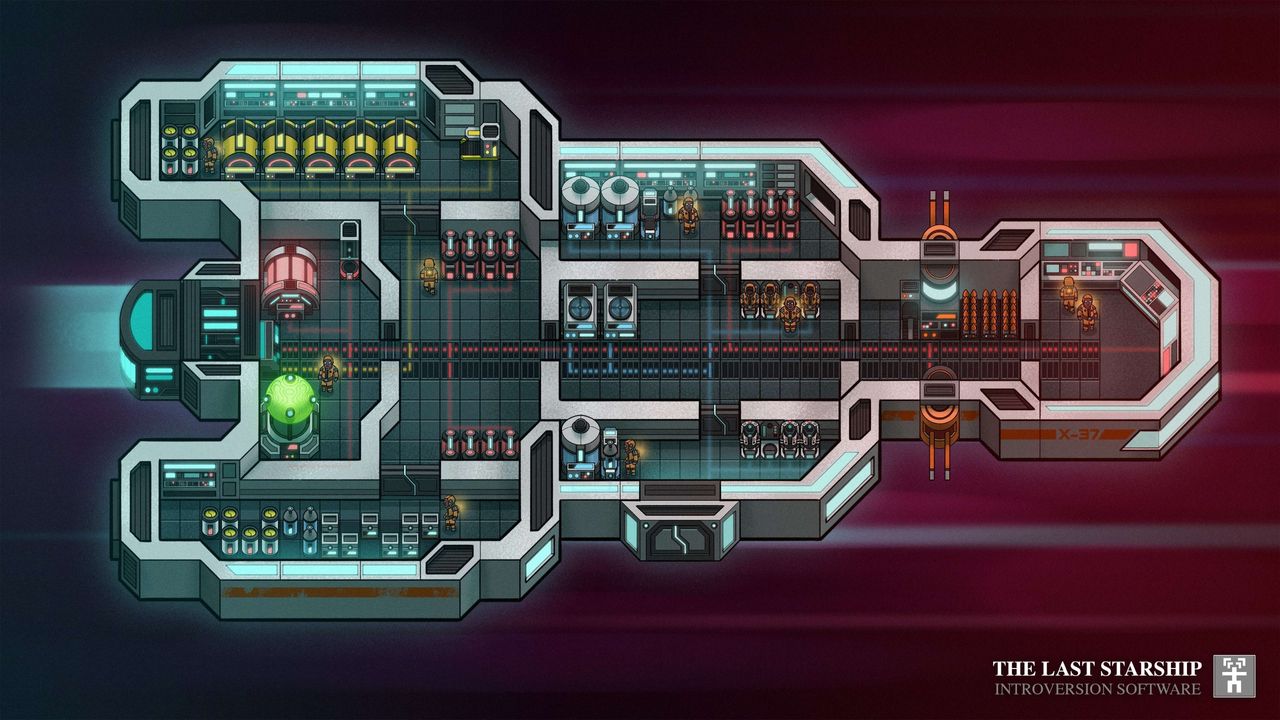
Introversion's "The Last Starship" is officially classified as a 2D space construction and simulation game, where you design, build, and upgrade your very own working starship. Once it’s in operational order, you strike out into the starfields to investigate colorful solar systems, discover rare resources, and even stumble upon arcane secrets.
There's a dreamy, meditative element to "The Last Starship" that can’t be denied, even in this middle-aged gamer’s attitude of flying by the seat of my pants and holding an advanced degree in procrastination from Cambridge University.
You get a sense of genuine pride in accomplishing goals, fine-tuning your interstellar trading operations, and seeing them flourish before you.
Just as in real life, your specific choices will dictate your personal odyssey, whether you’re a brave soul itching to become a pirate hunter, a working joe looking to get into salvaging, mining, or transport delivery, or a visionary scientist like the Stargate engineer.
First, choose an appropriate spaceship hull, then boost its propulsion system with engines, add critical life support systems, external sensors, thrusters. Then, supply your crew with tasty chow, and some bristling lasers and autocannons to test your might on the battlefield against space buccaneers. Rescue crews and civilians in peril, or go into business for yourself organizing an asteroid mining camp for profit. The choice is yours.
It's all hands to battle stations in this scene from "The Last Starship" (Image credit: Introversion Software)
And for my fellow right-brained individuals who can barely fathom how a basic kitchen toaster works, this indie gem is a real eye-opener to the planning and engineering know-how that goes into such fantastic machines.
Once you’re up and running and your dutiful crew is bustling about carrying out various operational tasks, you're free to explore the galaxy in your new cosmic ride as its proud captain, picking up missions.
Gliding around the cosmos as the master of your own epic domain with your starship humming happily beneath you provides a supreme sense of satisfaction. Mostly you’ll be hopping around the open-world environment, building and customizing your vessel, and grabbing contracts for a variety of legitimate and illegitimate enterprises to fatten your alien-skin wallet.
(Image credit: Introversion Software)
Feeling ambitious? Become a hustler as a commercial spacebus driver or strike out excavating and smelting minerals for profit to sell and bolster your bank account to purchase even larger starships or equipment upgrades. Feeling lazy? Just play around and create cool ships while traversing the universe!
For intrepid commanders, the game’s procedurally generated map delivers missions and meteor storms featuring a multitude of characters inhabiting their own storylines waiting to be uncovered.
Managing your resources will be of the utmost importance, but organizational aptitude and drone deployment will exponentially increase your survivability in the final frontier. Intense space combat sessions do remind me of some of the cooler "close quarters battle" scenes in "The Expanse."
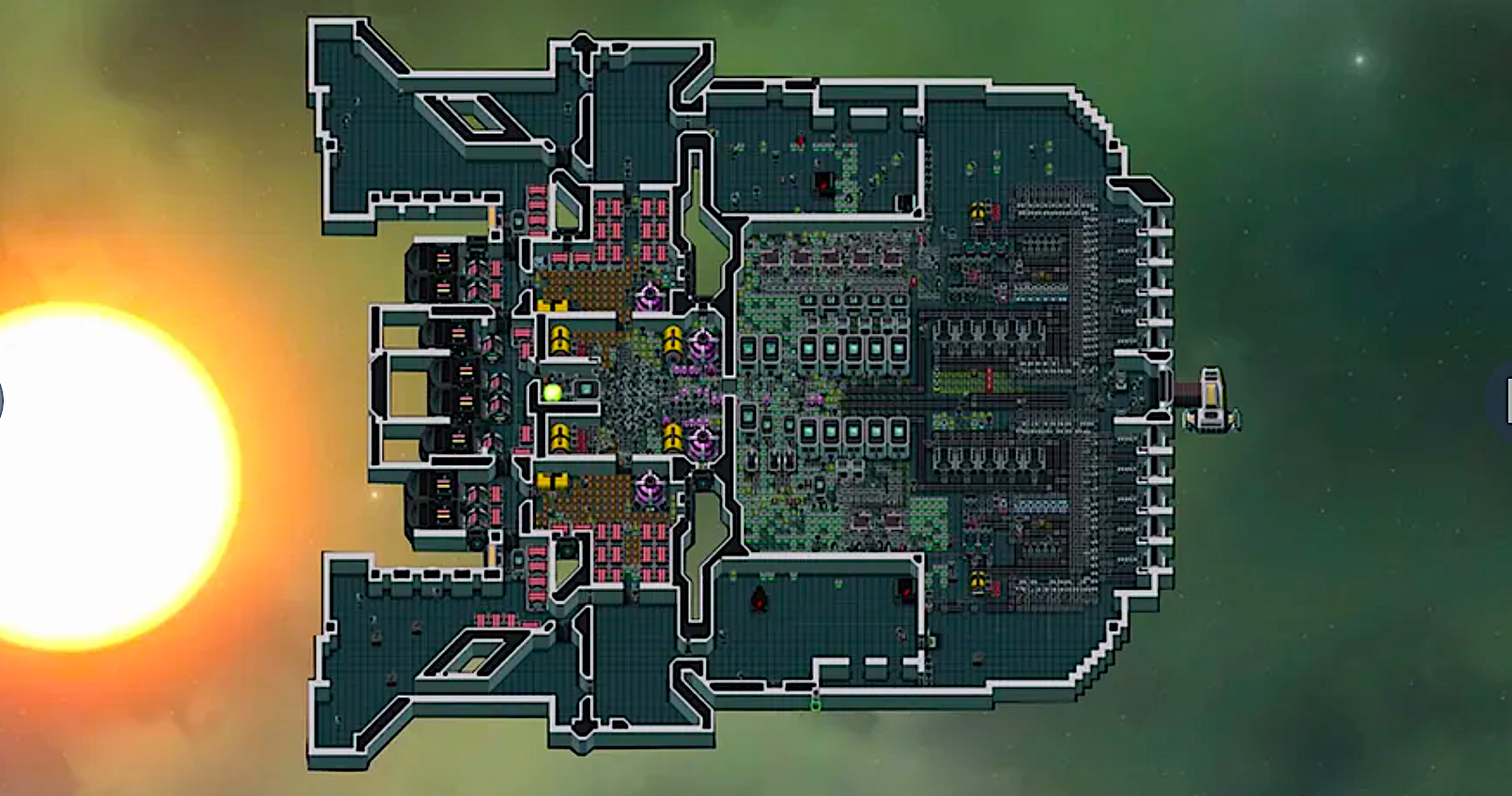
Cruising a massive spaceship build from Introversion's "The Last Starship" (Image credit: Introversion Software)
On the slight downside, "The Last Starship" might be a bit rudimentary for gamers seeking more challenging logistical endeavors, as I've found it's pretty easy to build up your spaceship. Obstacles are usually solved easily by slapping on another module or installing more reactors and managing your oxygen and CO2.
Despite that, it’s a thoroughly enjoyable initial iteration that’s constantly receiving attentive updates and patches, so hang with it, ye gallant captains.
"The Last Starship" is an excellent 2D open-world, spaceship-building game that offers tons of strategy fun in a nostalgic visual package. If you’re an "F.T.L." fanatic, you’ll absolutely dig it!
"The Last Starship" is available for purchase on Steam, Humble Store, and GOG for Windows and macOS. Oh, and there's a free demo you can check out if you're on the fence.
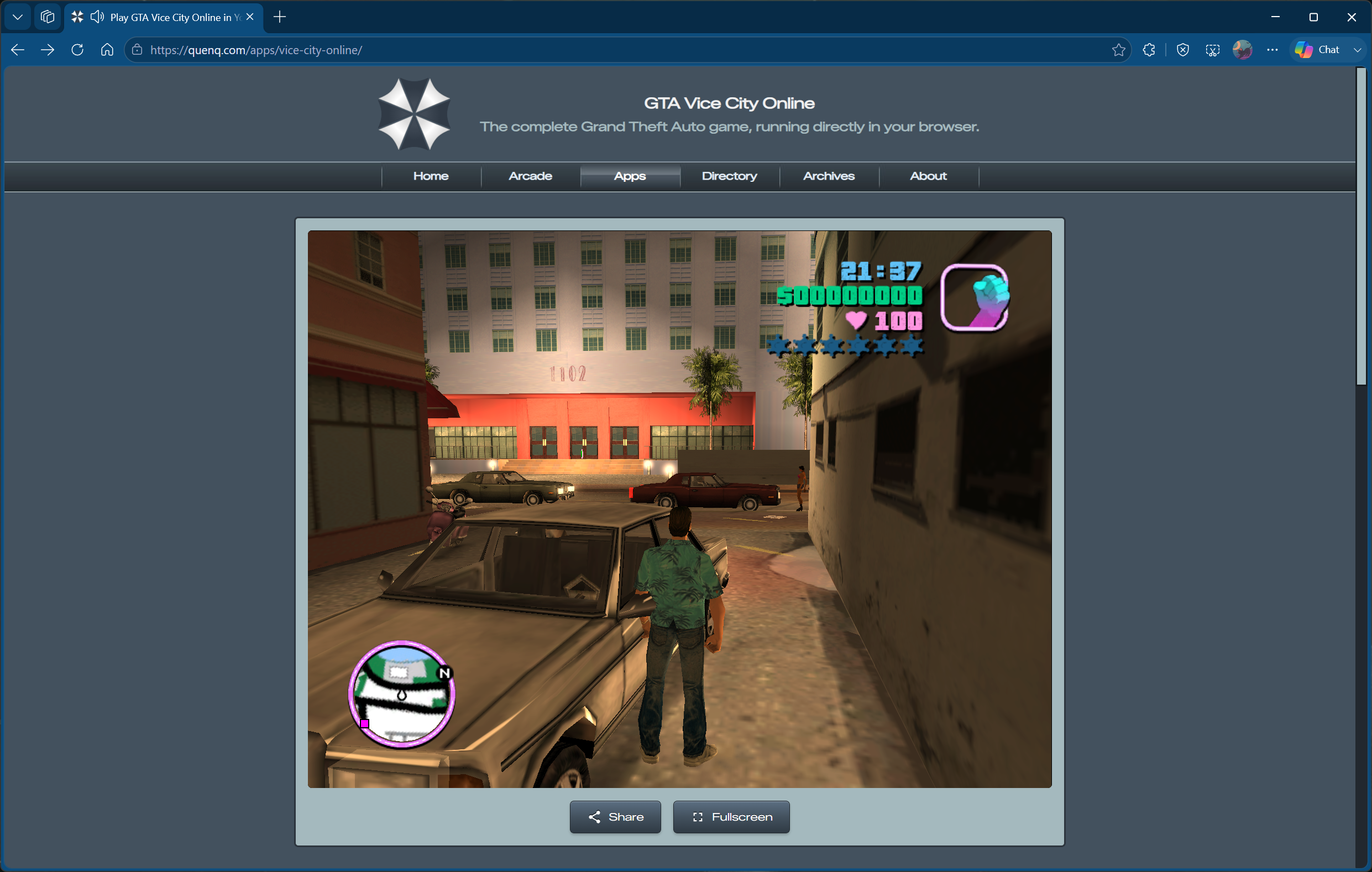
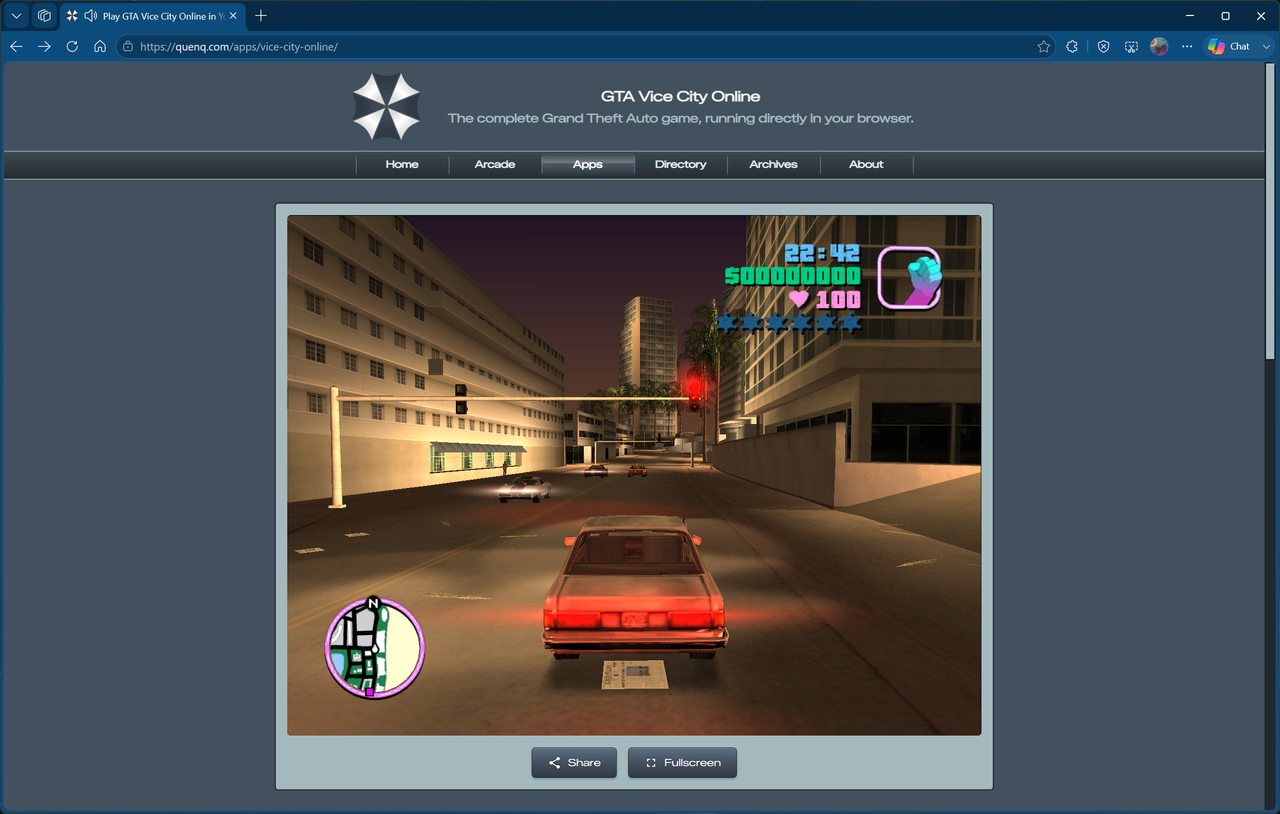
Grand Theft Auto: Vice City has cemented itself as one of the most legendary games of all time. It originally came out in 2002 on the PS2 before making its way to the Xbox and PC a year later. Fast forward to 2026, and now the game is entirely playable in a browser window. It was actually already playable last year on DOS Zone but was quickly shut down following a DMCA strike from Take-Two. However, a different website called "Quenq" has taken up the mantle now, and it also hosts GTA III there.
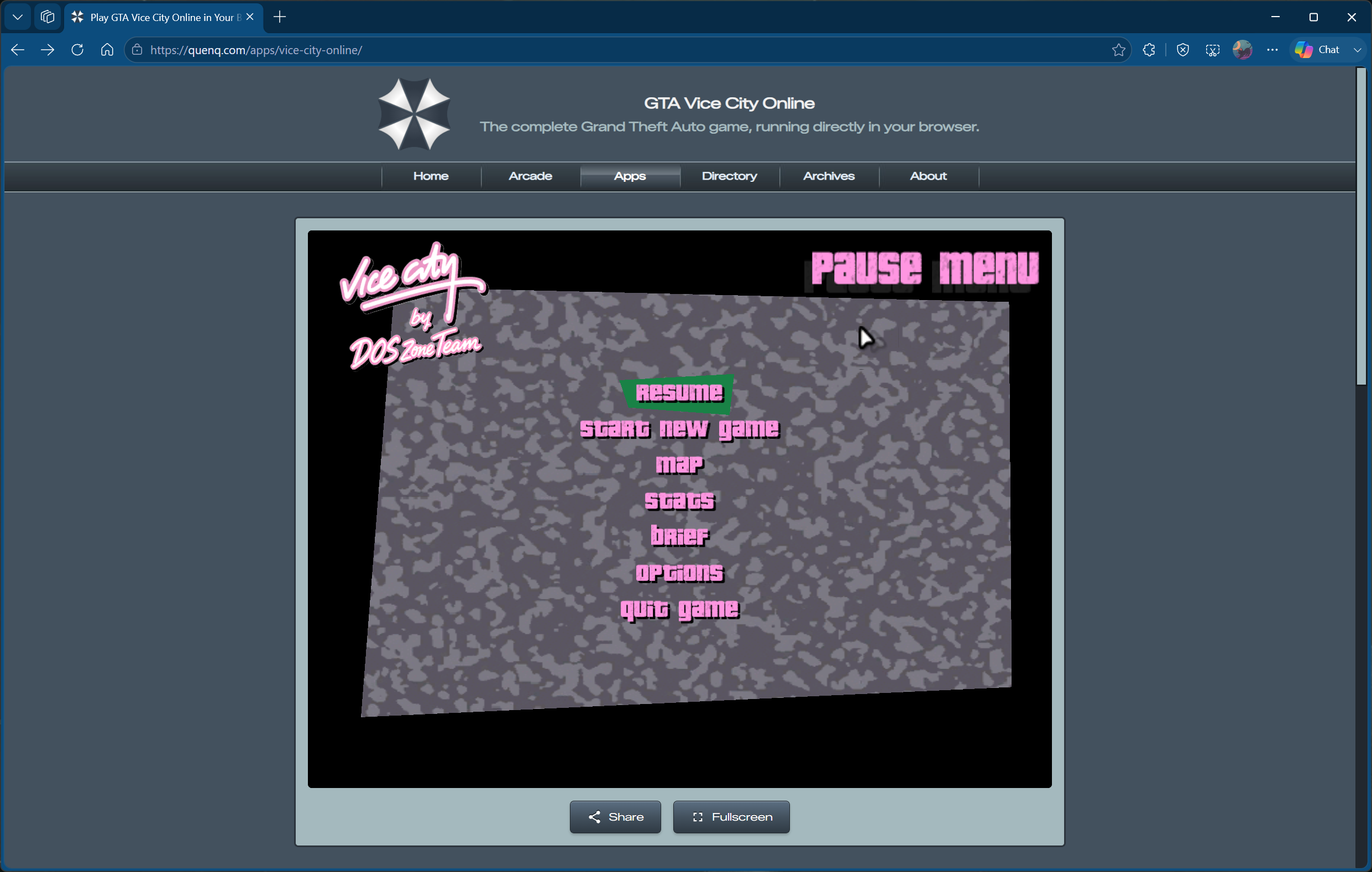
The project is still the same because it quite literally says DOS Zone in the pause menu. Anyhow, for a change of pace, we tried the game on a OnePlus 12; it loaded immediately and ran without any issues. Beyond keyboard/mouse and controller, the game is also compatible with touchscreen controls. We were able to seamlessly move around the world and control Tommy in both landscape and portrait orientations.
You get a save game and mod manager, allowing you to upload your own files right into the browser. You can type cheats using an external keyboard as well. There's an FPS limit option before the game begins because GTA Vice City was intended to run at 30 FPS, so playing it at unlocked framerates (which this port supports) can sometimes cause bugs and physics to break. We were able to easily play the game past 100 FPS on desktop, though.
FutureFuture
The project likely uses reVC — a community project that decompiles the original source code of GTA: Vice City into clean, readable C++ code. Then, WebAssembly helps translate C++ code into JavaScript that the browser can natively understand. The port should be running on WebGL 2, a JavaScript API that bypasses your browser's typical layout engine and talks directly to your GPU to execute graphics-intensive tasks.
The same goes for GTA III — it's also available on Quenq, features the same controls and options (except for the mod manager), and is likely built using re3, which is the decompiled source code of GTA III. This project doesn't seem to be ripped off from DOS Zone, as there is no indication of such in the pause menu. It also runs just as well as the Vice City port, and we had no issues playing it across a bunch of devices.
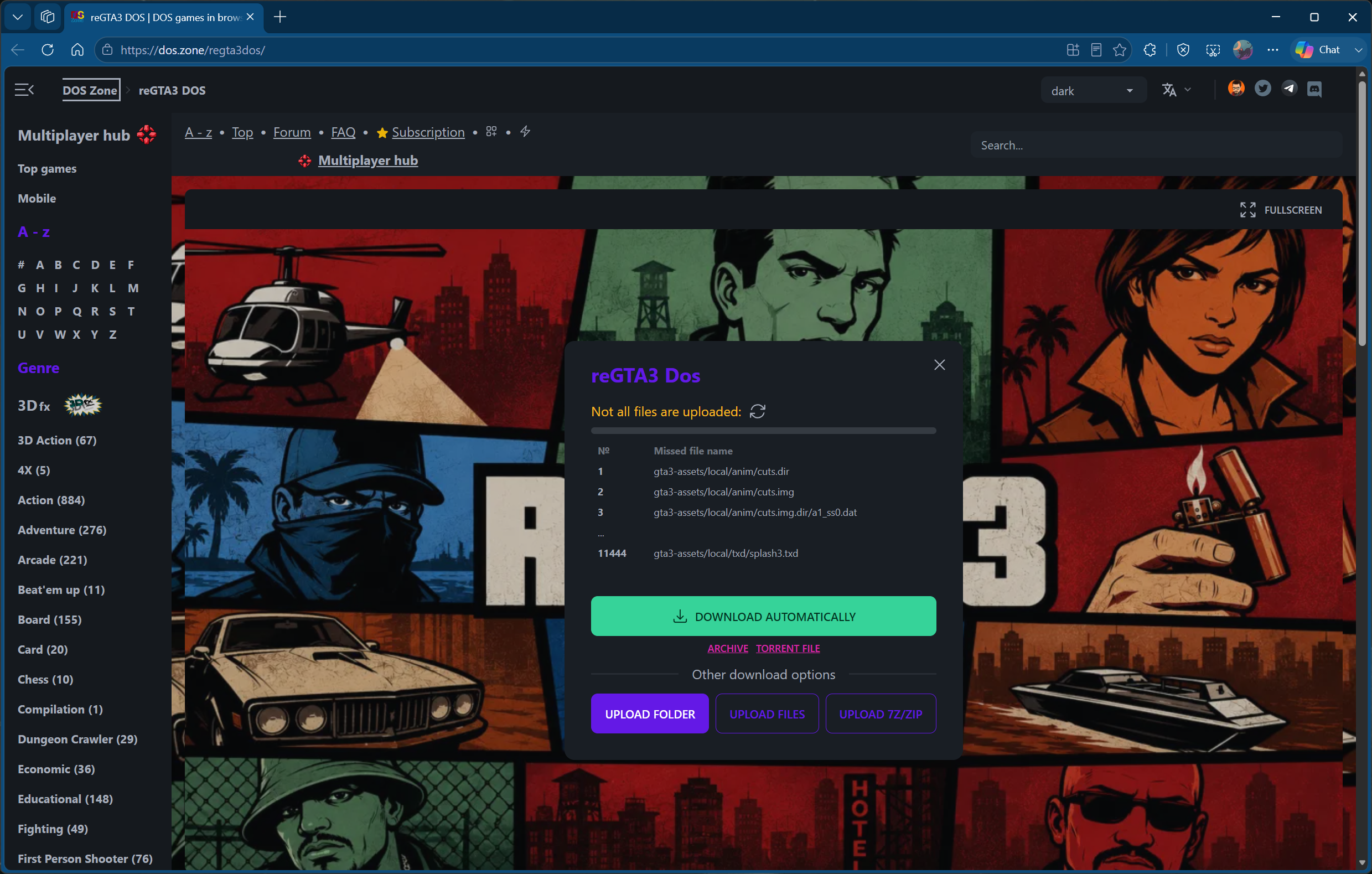
Just out of curiosity, we checked DOS Zone and actually found both Vice City and GTA III listed there, but they require uploading the game assets. You can also just download the data through a torrent after you click a button, but the platform leaves that choice to you with clear disclaimers that they won't be responsible for piracy. It's clear that the DMCA takedown has shifted the way the platform distributes these projects, but it's still impressive that they're up, nonetheless.
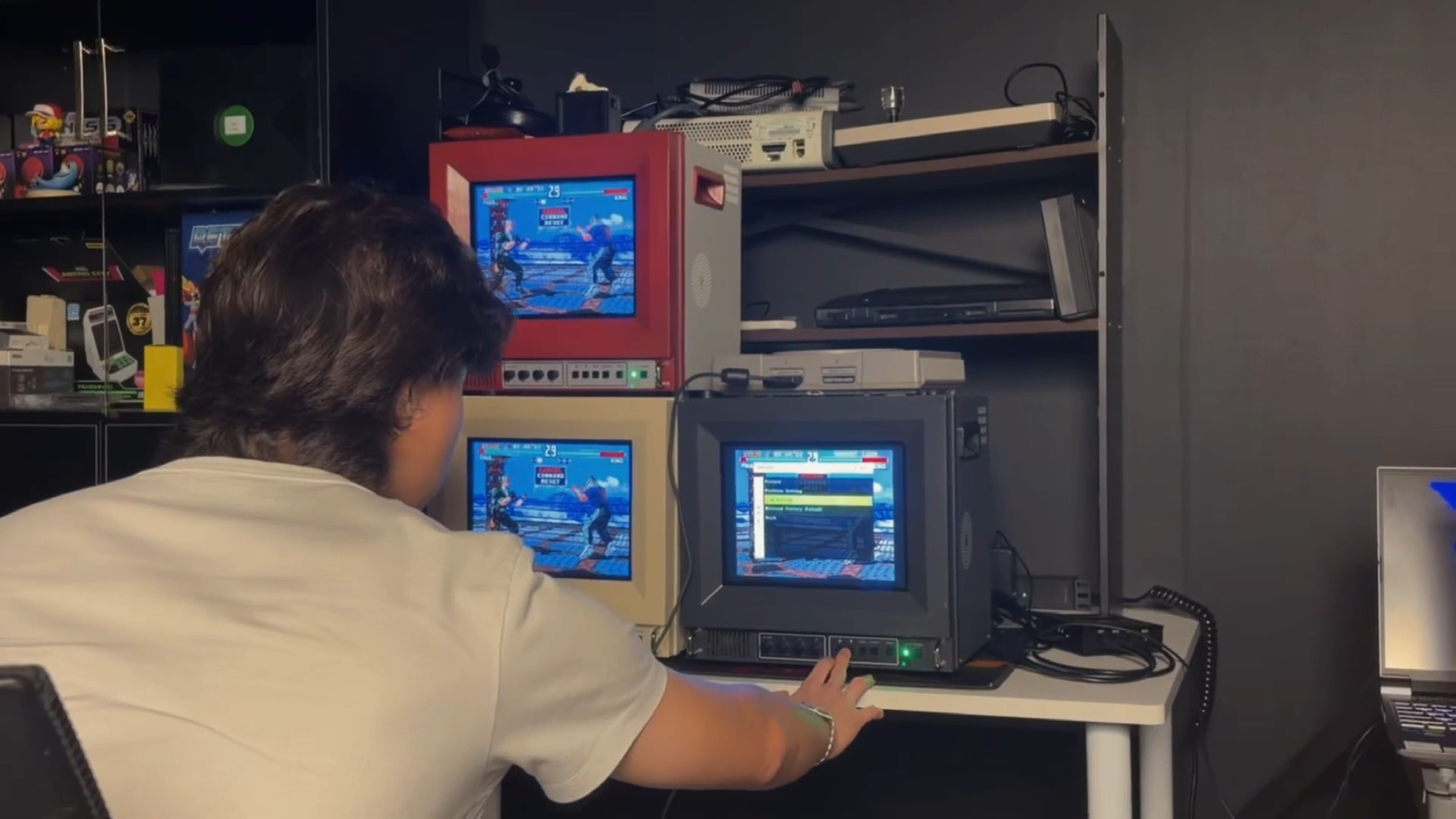
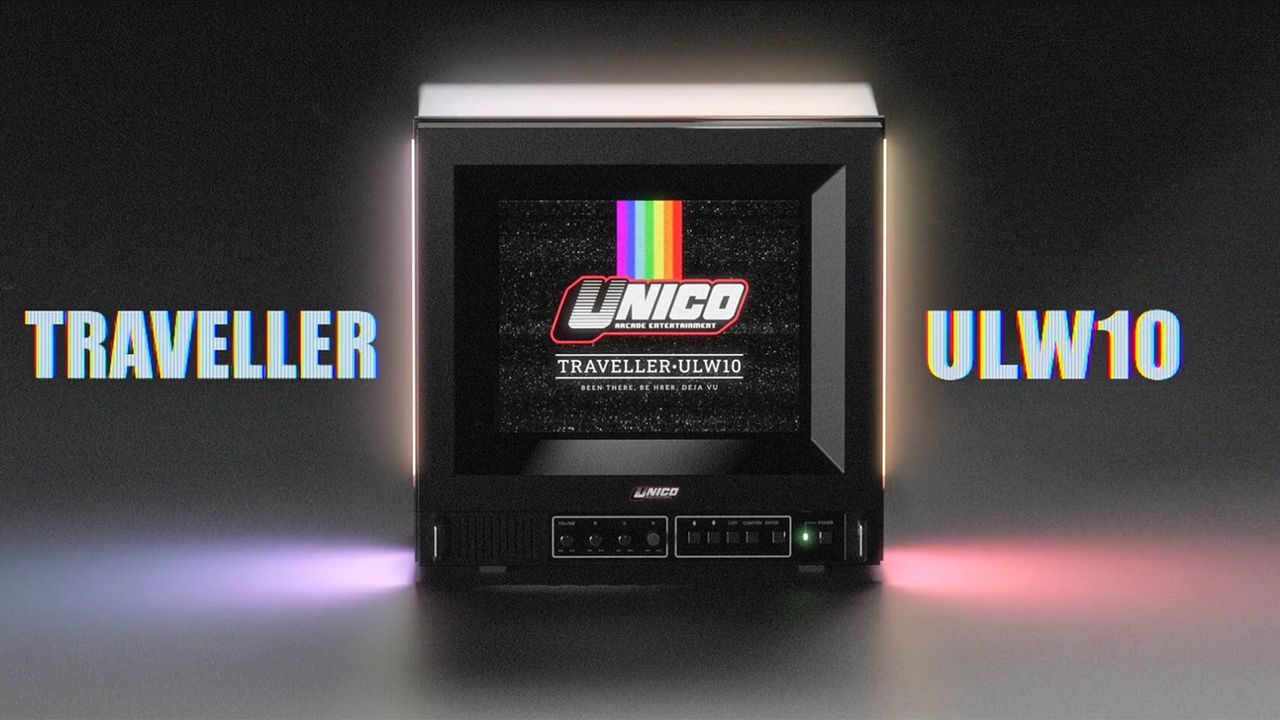
Getting a retro game console to look right on a modern TV can be a challenge, as legacy video signals need to be scaled or de-interlaced, while latency and aspect-ratio issues can further make retro games look or feel different from the original experience. In an attempt to recreate the nostalgic experience, retro gaming hardware manufacturer Unico has introduced the Traveller ULW10, a CRT-inspired 10-inch TV.
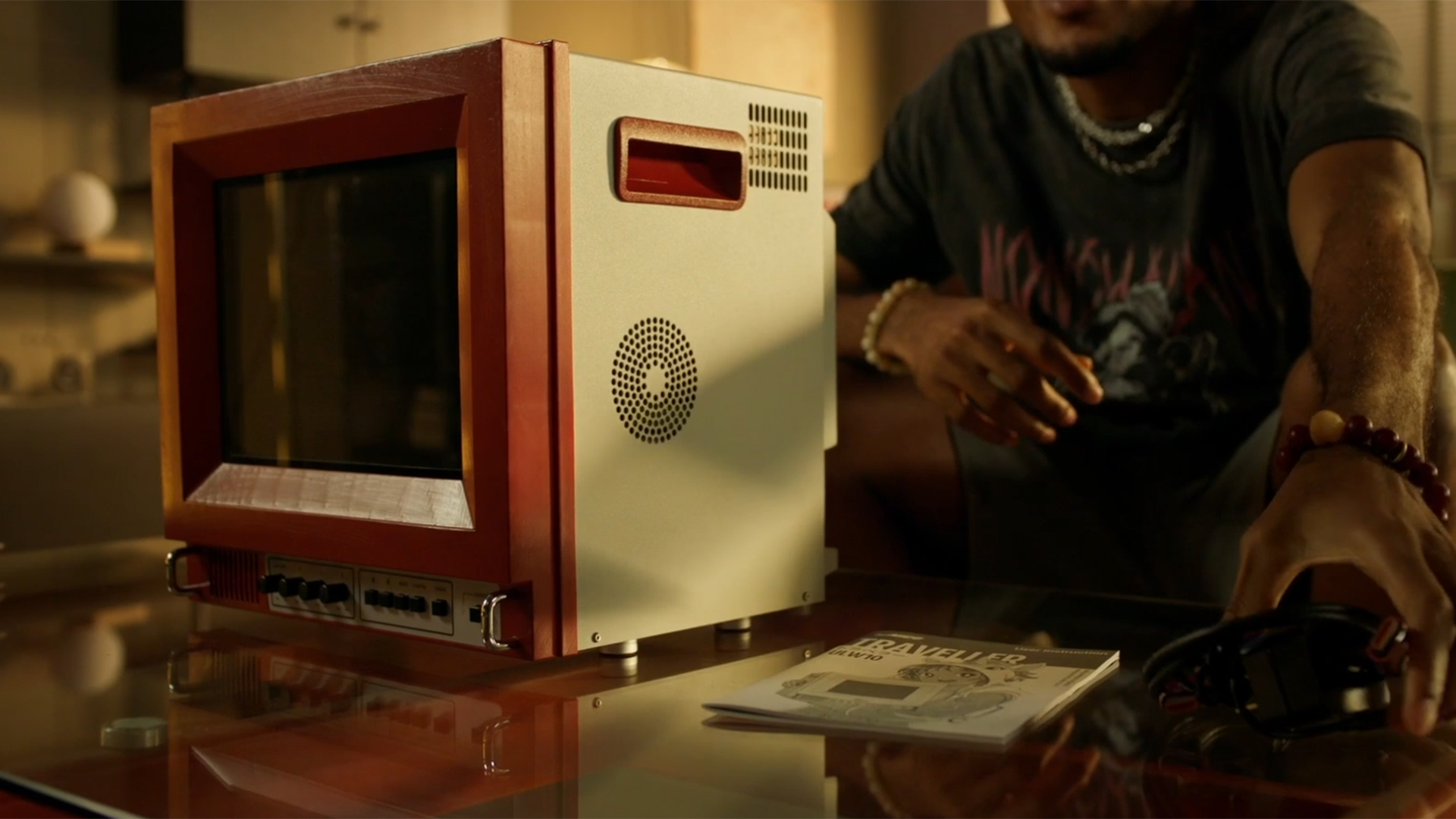
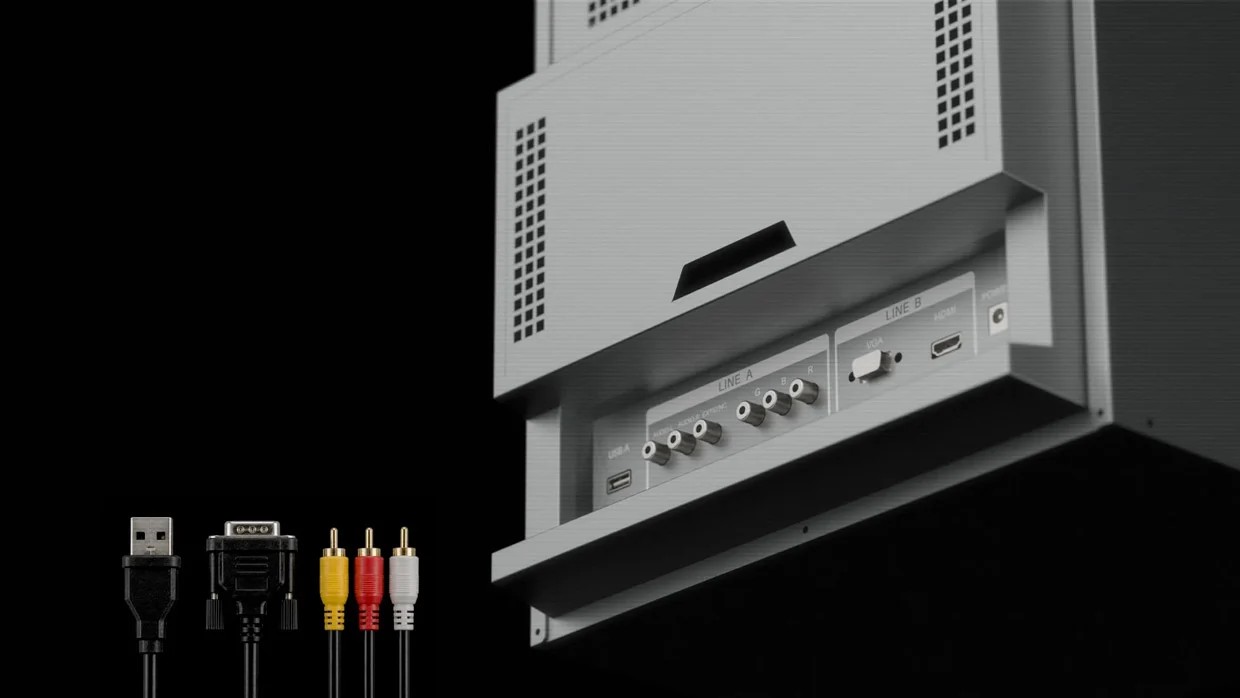
According to the company, the ULW10 is a PVM (Professional Video Monitor) with a vibrant 4:3 panel that “combines the character of a classic display format with the reliability of modern technology.” In terms of connectivity, the monitor comes with RGB, VGA, and HDMI video inputs, offering support for a wide variety of consoles. There is also a USB Type-A port, while the rear compartment provides storage for compatible consoles that can be tucked behind the display. It also includes knobs and physical buttons for various settings, similar to those found on old-school televisions.
UnicoUnicoUnico
Unfortunately, the ULW10 does not include a composite video input, and Unico says the decision ultimately came down to the limited space inside its compact chassis. With room needed for the signal board and other components, the company had to choose which video inputs to include. HDMI and VGA were retained for modern devices, PCs, and video converters, while RGB SCART was selected as the analog option because it offered the best balance between compatibility and image quality. It is also worth mentioning that the ULW10 is not a CRT monitor, but it can simulate the CRT or pixel-art style of old games.
The monitor will be offered in three color options: red and white, cream white, and studio gray. The casing includes built-in carrying handles as well as speaker vents, although the monitor itself does not include any speakers. The Traveller ULW10 will be available via Kickstarter, and while pricing information has not yet been confirmed, you can reserve a ‘Founder Spot’ for $5 and receive $30 back when you back the monitor on Kickstarter.
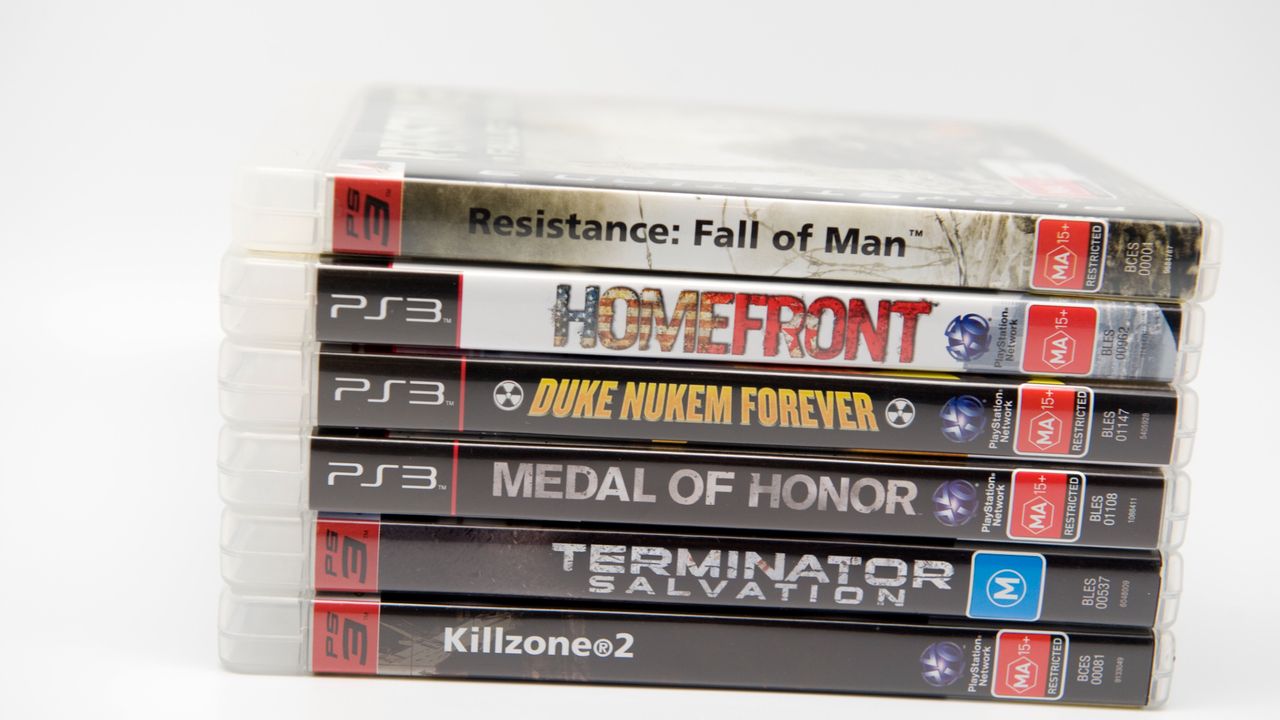
The developers of the Sony PlayStation 3 emulator RPCS3 have told their social media followers that it is now possible to play games straight from discs. As announced on Twitter/X, the emulator’s latest refinement works only with certain internal and external Blu-ray drives. Happily for retro gamers, there’s a lengthy compatibility list of drives featuring many models and brands, and the same drives are also compatible with dumping your media to fixed storage.
You can now play your PS3 games on PC... DIRECTLY FROM THE DISC DRIVE!💿 PLUG AND PLAY! Owning your games as physical media allows you to play games released as far back as 20 years ago without relying on any servers!See compatible disc drive models at https://t.co/nSzG5S954L pic.twitter.com/d1uKE7BpyrSeptember 6, 2026
Above you can see the RPCS3 devs are pretty happy with the slick new “plug and play” refinements that are available to users of the latest version of the emulator. “You can now play your PS3 games on PC... DIRECTLY FROM THE DISC DRIVE!” boast the open source emulator programmers. “PLUG AND PLAY! Owning your games as physical media allows you to play games released as far back as 20 years ago without relying on any servers!” The RPCS3 team thanks digant73 and Megamouse, specifically, for contributions making this feat possible.
Indeed, this is another step forward in making a slick emulator that works in a surprisingly frictionless fashion. Though the Tweet mentions PC, specifically, extended disc drive play support is also available on Linux, FreeBSD, and macOS. You just need to check that drive compatibility list. Moreover, all users can enjoy “optimized install times for package installations from the disc drive.” It has also been confirmed that PS4 and PS5 console users with Linux installs can launch PS3 games directly from disc using RPCS3.
Here’s a quick tip for folks who have an obscure Blu-ray drive that isn’t in the list. If you want to confirm compatibility with the drive, just put a PS3 disc in it. If you can browse its files, it's compatible; if nothing shows up, then it's not.
With pricing for the best SSDs now sky-high, being able to test-run new (old) games before dumping them to fixed storage could be a boon. It might also be good for auditioning a batch of discs you have recently bought, to see which ones are keepers.
Recent rumors suggest that Apple might finally be making its own hardware for video game fans. While the company already lets you use almost any popular gamepad with your devices, new evidence shows it could be building something in-house. Hidden code found recently reveals two unreleased gamepads with very different features. This suggests the tech […]
Code in an early macOS 26.7 release candidate suggests Apple has been developing two unreleased game controllers that identify as first-party hardware, according to reporting from MacRumors‘ Juli Clover.
MacRumors reader Pdfu found GameController profiles for devices labeled T6502 and T1057 in the first 26.7 release candidate, which shipped in mid-August. Both appear to include standard gamepad parts: a D-pad, dual analog sticks, shoulder buttons, Home and Menu buttons, and analog triggers. The two designs differ in haptics. T1057 also includes accelerometer and gyroscope support; T6502 does not.
Dedicated hardware plug-ins for each device were present as well, which Clover noted is more consistent with real hardware than leftover placeholder strings. Apple later removed the references in the second 26.7 release candidate.
The find sits alongside a broader set of unreleased-device strings previously spotted in the same build. Apple has long rumored work on a physical game controller and has never shipped one, despite chances around Apple TV, Apple Arcade, and Vision Pro. The company has instead leaned on third-party pads and, in the Vision Pro case, partnered with Sony on PlayStation VR2 Sense controllers.
The strings could describe shipping products or internal test hardware used to validate controller support. If Apple did bring a controller to market, features such as Find My and instant pairing across Apple devices would be the most obvious ways to stand out from Xbox, PlayStation, and Nintendo pads that many players already own.
MacDailyNews Take: To accompany the next-gen Apple TV hardware?
Please help support MacDailyNews — and enjoy subscriber-only articles, comments, chat, and more — by subscribing to our Substack: macdailynews.substack.com. Thank you!

 Login





 Pew pew!
Credit:
Pistol Shrimp Games