UK subsidies for land-based seafood farming would boost tree-planting policy

In 1948, Muriel Howorth was living a relatively ordinary life in the seaside town of Eastbourne on the south coast of England when she received a letter that would completely change the trajectory of her life.
From an early age, she had wanted to take part, or as she put it, “be of use” in international affairs. During World War II, she was employed by the Ministry of Information, the government office primarily responsible for wartime publicity and propaganda in the UK.
Howorth must have been talented at promotion and publicity, because the letter that arrived in 1948—“out of the blue,” according to her personal papers—inquired if she would like to apply her talents to making atomic energy seem more friendly.
She was well-educated, but not terribly knowledgeable about atomic science, so she borrowed a book by the radiochemist Frederick Soddy, who was born in Eastbourne, titled The Interpretation of Radium. Within a few chapters, she found herself a true believer in the promise of the atom. She would devote the rest of her life to sharing the wonders of atomic science with anyone who would listen.
The United States dropped atomic bombs on the Japanese cities of Hiroshima and Nagasaki on August 6 and 9, 1945, a key factor in the end of World War II. The scale of the destruction and the ongoing damage from nuclear fallout after these attacks was vast. Despite the devastation, when a Gallup poll was released in mid-August of 1945, 85 percent of Americans approved of the bombing.
The atom was more or less a mystery to the average American, and was seen both as something to be feared and a source of hope. The potential for nuclear energy seemed endless, and although the Soviet Union was America’s ally, establishing a lead over the Soviets in nuclear technology seemed prudent.

In the years after World War II, American and European scientists and heads of state agreed that there should be a focus on more productive and peaceful uses for atomic power. The letter that Howorth received in 1948 was part of this effort. She threw herself into projects that combined science education and entertainment.
Notable among these was an elaborately choreographed pantomime titled Isotopia: An Exposition on Atomic Structure. Howorth also self-published a children’s book featuring Daddy Proton, Mummy Neutron, and their electron children. Her greatest impact as an early science communicator, though, was her work in atomic gardening.
Applying radiation to agricultural plants was, in part, a response to wartime scarcity. Restricted rations had made people acutely aware of the possibility of food insecurity. Researchers hoped that exposure to gamma radiation might induce mutations that resulted in higher-yielding or disease-resistant crop varieties. Perhaps some of those crops might be more dense in nutrients, too.
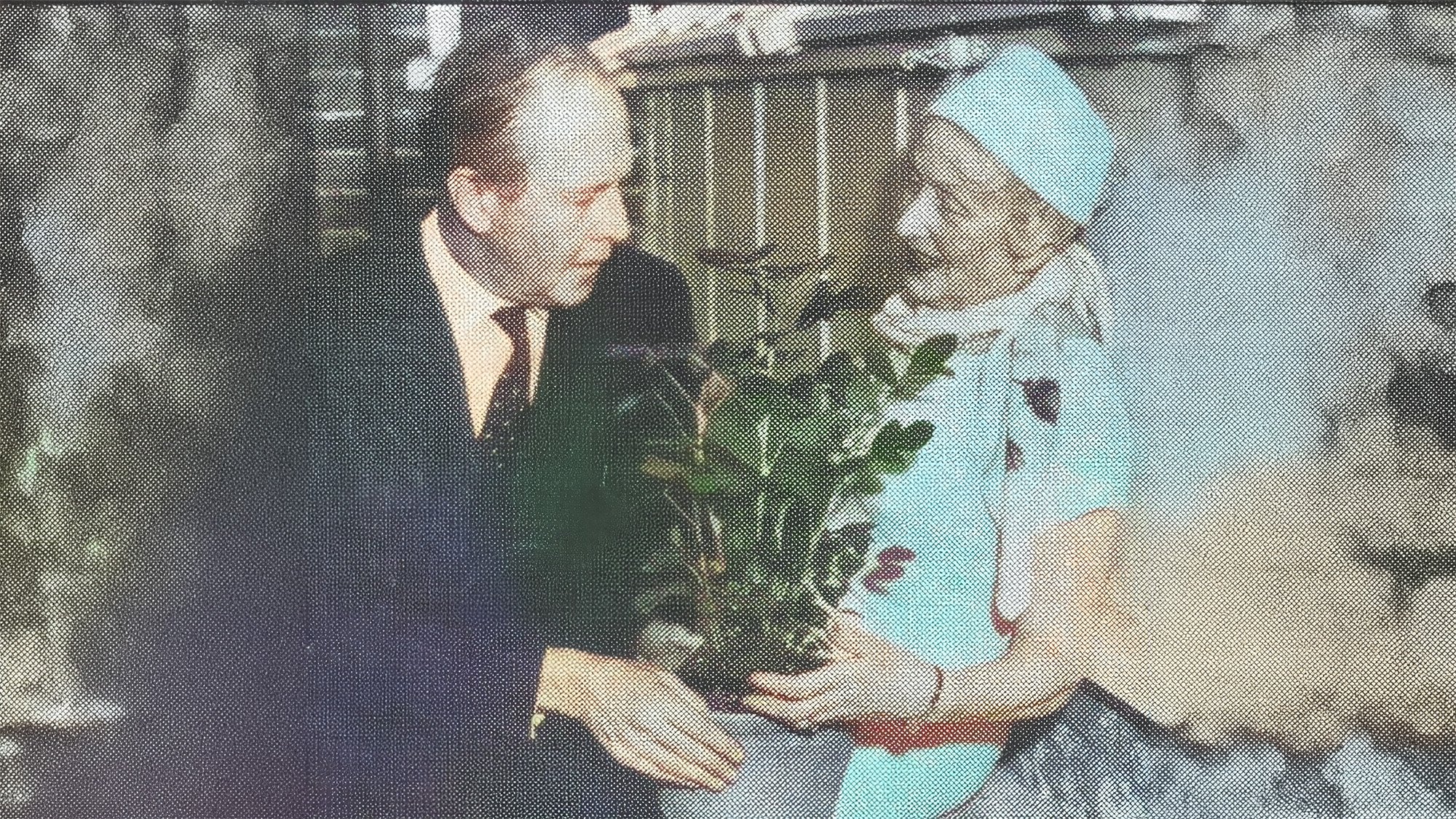
As atomic ambassador, Howorth founded the Atomic Gardening Association and recruited hundreds of members—or, as she called them, “atomic mutation experimenters.” Soon, atomic gardening kits were available to the public. One could send away for packets of seeds from an irradiated plant. By planting these seeds and propagating multiple generations of the plants, home gardeners could test whether any useful-seeming mutations had arisen.
Howorth herself served a mutated variety of Carolina peanuts to some of her scientist friends in 1959. Their response was underwhelming, so she planted the rest of the peanuts in her garden, where they grew remarkably quickly and produced extremely large peanuts. She usually kept a handful of these extra-large peanuts tucked away in her handbag in case the opportunity arose to recruit a new member to the Atomic Gardening Association.

It’s tempting to view Howorth as a kooky eccentric. Contemporary newspaper reports of her various events and projects were certainly dismissive in tone. More accurately, she represents an early effort at addressing the gap between scientific research and public understanding.
The world was far less interconnected in her day, with no internet, no omnipresent news media, and no social media platforms. Not only that, but the idea of women as integral parts of scientific research was slow to catch on, despite pioneering work by scientists like Marie Curie and Rosalind Franklin.
Today, the same gulf exists between what scientists publish in their fields and what the average person understands. The same challenge of translating scientific language for public consumption exists for science communicators, but the tools available to them have evolved beyond recognition. You can find videos and posts by scientists explaining everything from how blimps work to what various chemical reactions look like, or from how fossils form to why black holes are so dark.
If Howorth were around today, her atomic choreography might have gone viral. As it stands, she was a wonderful example of the love of sharing knowledge with the public, and of the excitement and joy that comes with learning new things about how our world works.
In That Time When, Popular Science tells the weirdest, surprising, and little-known stories that shaped science, engineering, and innovation.
During WWII, Great Britain poisoned sheep with anthrax on an idyllic Scottish island
When the U.S. almost nuked Alaska—on purpose
During WWII, a dress-wearing squirrel sold war bonds alongside FDR
During WWII, the U.S. government censored the weather
After WWII, flying saucer-shaped houses almost filled American suburbs
The CIA once trained cats to be Cold War spies
The post The British author who harvested mutant, jumbo peanuts from her atomic garden appeared first on Popular Science.

A biodegradable wash may help remove surface pesticide residues and keep fruit fresh longer, though more testing is needed before real-world use. Many shoppers follow the same pattern after buying produce: they bring fruits and vegetables home, wash them, dry them, and hope they stay good long enough to eat. Fresh produce, however, can deteriorate [...] The story of a Medieval European plague is coming into focus through historic manuscripts, but not in the way you might think. Instead of providing mere historical accounts, the animal skins from which these Medieval volumes are constructed provide genetic evidence for reconstructing the 3,500-year story of the sheepox virus (SPPV), which decimated European livestock.
In a recent paper published in Science Advances, an international team of interdisciplinary researchers ranging from geneticists and virologists to historians and conservators explored the history of this pre-modern plague.
The new work combs through Medieval history to reveal the lineages of diseases plaguing modern herds, providing new insight into the viruses threatening modern animal agriculture.
Chosen for the work were some of the most important Medieval manuscripts that Europe has to offer, including the millennium-old York Gospels, one of the best surviving examples of an early Anglo-Saxon illuminated manuscript. Another work used in the study was one of the earliest known English dictionaries, the Corpus Glossary of Corpus Christi College, Cambridge. Beyond these notable examples, the team exploited a variety of English and continental European works.
Medieval volumes did not contain paper pages like modern books, but instead, vellum pages made of calfskin, as well as the skins of goats and sheep. Therefore, these works are preserved as hundreds-of-years-old biological specimens for modern geneticists.
SPPV tends to target younger animals, such as the calves from whom vellum is made, and is highly contagious, rapidly spreading through large portions of a herd. While these factors made the disease easier for modern researchers to study via vellum samples, it also made it devastating to wool, meat, and milk production.
“The recording of ancient DNA of pathogens has completely changed our understanding of infectious disease in the past, and here we show that parchment can also preserve animal pathogen DNA. It is possible that archives and libraries around the world also contain the genetic traces of disease outbreaks in animals in the past,” said lead author Louis L’Hôte, PhD candidate at the University of Cambridge, Dublin.
“These genomes help us understand how these pathogens evolved and how they impacted past societies – such as sheeppox virus, which we show has been affecting Eurasian sheep herds for at least three and a half millennia,” L’Hôte added.
With the rapid spread of SPPV across herds, many manuscripts contained SPPV DNA on multiple pages within the same manuscript. Additionally, finding SPPV DNA on pages made from both calf and goat skin marks it as a rare example of cross-species infection.
“Parchment making has been considered a vanishing craft, but we are beginning to understand just how much of the past it has retained. This project shows that parchments not only preserve our cultural history for hundreds of years, but also the landscape of disease in our livestock in the medieval period,” said supervising author Dr Kevin G. Daly, Associate Professor at UCD School of Agriculture and Food Science.
“This kind of exciting, surprising discovery is only possible when researchers from a range of disciplines come together to share their expertise and data,” Day said, calling this “a generosity and trust that collaborative science depends on.”
The Medieval manuscripts combine with even older surviving biological records, such as teeth, to show the virus reaching back 3,700 years. Between the manuscripts and archaeological finds, the team identified 41 samples containing related viruses.
Along with the goatpox virus and the lumpy skin disease virus, SPPV belongs to a category called capripoxviruses. The new research allowed the team to compare the ancient and modern sequences to determine that the division between the various viruses in the group occurred between 3,700 and 11,500 years ago, around the time animal domestication took hold in Europe as sheep came off the steppe.
“Ancient genomes can help us understand how these pathogens affecting us today evolved. We find that, unlike the smallpox virus, the sheeppox virus genome was very stable over the last few millennia,” L’Hôte concluded. “This might mean that genetic changes before this point were very important to how the sheeppox virus evolved to infect its host, which may help us fight the pathogen in the future.”
The paper, “3,500 years of Sheeppox Virus Evolution Inferred from Archaeological and Codicological Genomes,” appeared in Science Advances on September 2, 2026.
Ryan Whalen covers science and technology for The Debrief. He holds an MA in History and a Master of Library and Information Science with a certificate in Data Science. He can be contacted at ryan@thedebrief.org, and follow him on Twitter @mdntwvlf.

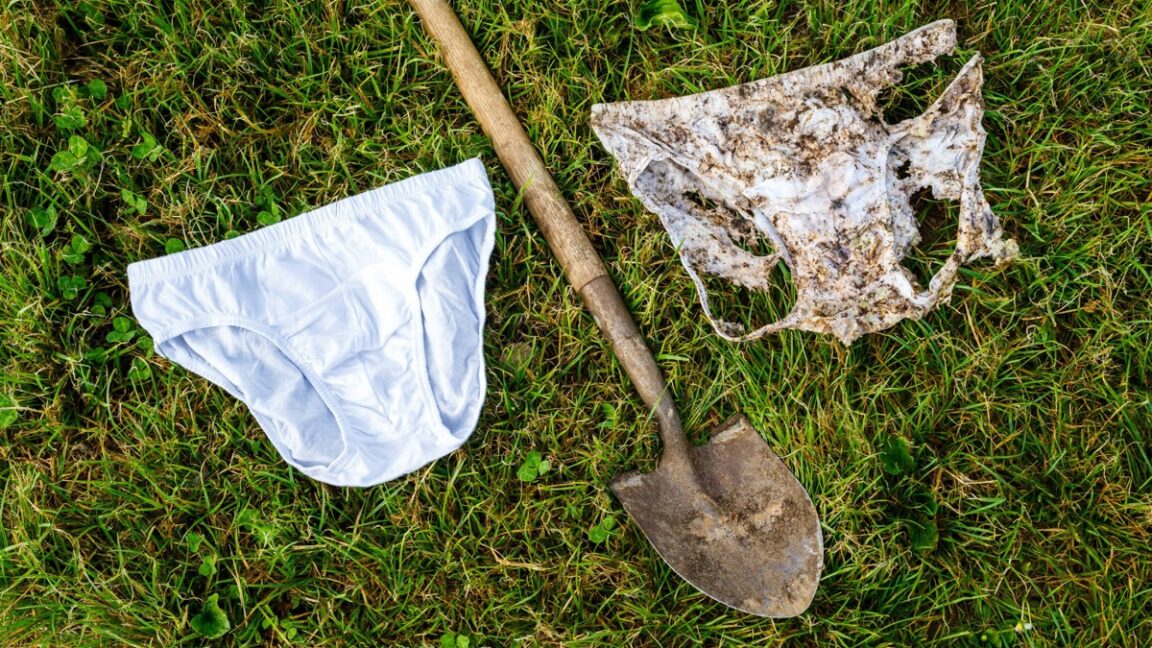
A thousand people voluntarily buried their cotton underpants for two months—not to keep the Underpants Gnomes from stealing them, but as part of a citizen science project to map out soil health in 25 countries around the world. The results of this unique experiment were reported in a new paper published in the journal Plants People Planet.
“Our results show that how soil is managed can significantly affect both soil life and soil quality,” said co-author Marcel van der Heijden, an agroecologist at the University of Zurich. “Healthy, biologically active soil is crucial for fertility, nutrient cycling and many other ecosystem services.”
Soil health is critical for agriculture and, by extension, food security, not to mention a healthy global ecosystem, but it has been declining worldwide, per the authors. One key indicator of soil health is decomposition rates of complex organic matter, breaking down stuff like leaves, wood, even cadavers into simpler organic and inorganic compounds, releasing C02 and nutrients in the process. There have been relatively few large-scale national decomposition studies involving different land use types, although smaller studies have shown that how humans use a site can significantly affect the soil's biological diversity.


© Nicolas Zonvi
Since the 1850s, plowing and clear-cutting in modern agriculture have increased how fast soil erodes in the Upper Mississippi River Valley. Across the globe, farming strips soil up to 100 times faster than natural processes. It also removes farmable land and clogs waterways, threatening long-term environmental sustainability. However, scientists in the past have struggled to separate the effects of land-use changes from the transition out of the last ice age over the past 20,000 years.
To determine whether current farming practices are sustainable, researchers from Minnesota recently measured the speed at which soil eroded during the ice age transition and compared it with modern agricultural erosion. They focused on the Trout Creek tributary of the Mississippi River. This tributary has 2 step-like formations, or terraces, on its bank that represent past floodplains before the river eroded to its current level.
The oldest, upper terrace is about 14 meters (50 feet) above the lower terrace, which is about 8 meters (26 feet) above the modern floodplain. Scientists studying nearby areas have suggested that the terraces contain sediment from the last ice age, 20,000 years ago, referred to as the Last Glacial Maximum, to today.
In the upper terrace, the researchers pushed an empty cylinder into the ground, like a straw into a layer cake, to collect a cylindrical sample of sediments about 4 centimeters (1.5 inches) wide and 6 meters (20 feet) deep, called a sediment core. They collected slices of this core from 2 meters (6 feet) and 6 meters (20 feet) to find the terrace’s age.
Some grains in the sediment trap electrons while buried and release them when exposed to light. So the team shone light on the sediment slices to stimulate these electrons and measure the intensity of light emitted, known as their optically stimulated luminescence. Brighter light emissions indicate the sediment is older and was buried for a longer period of time. Using this method, they confirmed that the deep sediment slice was 22,000 years old, and the shallow sediment slice was 20,000 years old, dating the terrace back to the Last Glacial Maximum.
Next, the team drilled into the upper terrace with an auger to collect 25-centimeter (10-inch) wide plastic tubes of sediment. They pulled 4 samples from 0 to 2 meters (0 to 6 feet), and 1 sample from 6 meters (20 feet) deep. They explained that minerals in the sediment called quartz produce the radioactive form of the element beryllium, known as 10Be, when exposed to the Sun, so low 10Be means the sediment was buried quickly and had little sun exposure. The team measured the concentration of 10Be in each sediment sample and used an online calculator to estimate how quickly it eroded. The researchers calculated that during the Last Glacial Maximum, 0.073 millimeters (0.003 inches) of surface sediment were removed per year.
The researchers collected similar samples from the lower terrace and used optically stimulated luminescence to determine that it was between 22,000 and 14,000 years old. This terrace was the floodplain during the transition out of the Last Glacial Maximum, or deglacial period, where temperatures warmed and permafrost retreated. They measured the concentration of 10Be in samples from this terrace and determined that 0.049 millimeters (0.002 inches) of surface sediment were removed per year.
Finally, the researchers measured 10Be in a sediment sample from the modern floodplain, deposited between 14,00 years ago and today. They found that the sediment had eroded 0.053 millimeters (0.002 inches) per year during that interval, at a rate slower than it had during the glacial period, but similar to the deglacial period.
The researchers compared their findings to the average soil loss caused by modern agriculture, as reported by 4 previous scientists studying the area. They saw that modern farming removes an average of 0.60 millimeters (0.02 inches) of soil per year, which is 8 to 12 times greater than all the natural erosion rates they calculated.
They concluded that the recent spike in soil loss from agriculture greatly exceeds that caused by the largest natural climate transition in recent Earth history. Human-driven erosion shows an upward “hockey stick” trend like the one seen in global temperatures, suggesting that similar trends could exist throughout Earth systems. The team concluded that modern agricultural practices aren’t currently sustainable. While measures like native plant reintroduction can help curb this trend, more research is required to determine how best to limit long-term erosion.
The post Is modern farming sustainable? appeared first on Sciworthy.