Revealed in a new filing from China’s Ministry of Industry and Information Technology (MIIT), the new VW ID. ERA 5X electric SUV is the first pure BEV on the brand’s new Compact Main Platform (CMP) platform.
Yiyang Zhuge was already an intellectual celebrity in China. Her viral interview with Christopher Nolan made her famous in the US—and quickly turned her into a political Rorschach test.
ByteDance is training an AI model that could approach the size of Anthropic’s most cutting-edge Mythos system, as Chinese companies continue to narrow the gap with the top US labs.
The Chinese tech giant is at an early stage of training a model with as many as 10 trillion parameters—three times larger than Moonshot’s Kimi K3, the biggest Chinese model released to date, according to three people with knowledge of the matter.
The ByteDance model is being pre-trained—a stage that typically takes three to six months—before it is fine-tuned and released if all goes well, one of the people said. The exact model size would only be determined at a later stage.
Sem grandes "trocas de cadeiras", o mais recente ranking da AnTuTu, dedicado aos smartphones Android mais poderosos de julho, continua a ser liderado pelo iQOO 15 Ultra, numa lista dominada por modelos equipados com o processador Snapdragon 8 Elite Gen 5.
Unitree Robotics wants to raise about $900 million in an I.P.O. that tests market interest in humanoid robots, a technology that wows but has yet to prove its viability.
In a striking reversal of traditional supply-chain dynamics, China’s ChangXin Memory Technologies (CXMT) has rebuffed Apple’s requests for lower prices on mobile DRAM, according to industry reports. The move underscores a severe shortage in general-purpose memory chips and hands greater negotiation leverage to South Korea’s Samsung Electronics and SK Hynix.
Apple had been exploring CXMT as a potential new supplier of LPDDR5X and other mobile DRAM for upcoming iPhones and smart devices, aiming to ease manufacturing cost pressures amid soaring memory prices. Sources indicate the iPhone maker sought further price reductions during negotiations. CXMT refused, instead holding firm at levels matching or even exceeding those charged by Samsung and SK Hynix.
The Chinese manufacturer’s bold stance stems from robust domestic demand. Companies such as Huawei and Xiaomi have locked in large volumes of CXMT’s DRAM through high-priced, long-term contracts. This push for supply-chain self-reliance has been intensified by ongoing U.S. semiconductor restrictions on China. With strong local orders secured, CXMT has little incentive to accommodate Apple’s stricter quality requirements or discount demands.
The episode highlights a broader market shift. Major memory producers have redirected significant wafer capacity toward high-bandwidth memory (HBM) to meet surging demand from AI servers and accelerators. This has sharply reduced output of conventional DRAM products like DDR5 and LPDDR5X, triggering a pronounced shortage—sometimes called “memflation” — and rapid price increases across the sector.Big tech firms that once used Chinese low-cost alternatives as leverage in annual pricing talks with primary suppliers now find that strategy ineffective. The low-cost “bypass” route has effectively closed, transferring pricing power from device makers to memory manufacturers.
For Samsung and SK Hynix, the developments create a favorable cycle. CXMT’s absorption of substantial Chinese commodity DRAM demand relieves the Korean firms of pressure to supply lower-margin general-purpose chips. They can instead prioritize higher-value AI memory products, including HBM4, LPCAMM2, and enterprise SSDs. Industry observers note that this positions the Korean companies with stronger control over global pricing in negotiations with major customers in the second half of the year.
One semiconductor industry source described the situation as unusual: CXMT is effectively supporting a floor under general DRAM prices while Samsung and SK Hynix consolidate leadership in premium AI memory. As a result, the Korean firms’ operating margins and market influence are expected to strengthen further.
Earlier this year, Apple had lobbied the U.S. government for clearer approval to source from CXMT, which appears on a Pentagon list of companies with alleged Chinese military ties. Memory cost pressures had already prompted Apple to raise prices on some Mac and iPad models. The latest reports suggest any potential deal with CXMT would not deliver the hoped-for cost savings.
MacDailyNews Take: The memory shortage is widely expected to persist well into 2027 and possibly beyond, as new fab capacity takes years to come online and AI-related demand continues to outpace supply growth. In this environment, the balance of power in the DRAM market has tilted decisively toward suppliers, particularly those focused on advanced, high-margin products.
Please help support MacDailyNews — and enjoy subscriber-only articles, comments, chat, and more — by subscribing to our Substack: macdailynews.substack.com. Thank you!
In the “Why don’t they sell that over here?” and “Why can’t we have nice things?” columns this morning, GM has announced range and pricing for its gorgeous new Electra L7 sedan in China, and it is a screaming deal.
China’s cyberspace agency launched an investigation into products sold in the country by Palo Alto Networks, as the government turns up the heat on US suppliers.
In a short statement, the Cyberspace Administration of China (CAC) explained it had launched a cybersecurity review into the company, as part of its bid to ensure safe and stable operation of critical information infrastructure, prevent risks and vulnerabilities, and safeguard national security.
It did not disclose potential penalties for violations or which products it is looking into.
Palo Alto states on its website it has offices in Shanghai, Beijing, Guangzhou, Shenzhen and Macau. It sells network, cloud and other cybersecurity products in the country, but does not break out individual sales figures for the market.
China’s review comes the same week its commerce ministry barred domestic companies from doing business with seven US entities, while beefing up export controls on the US drone market.
Reuters reported Beijing has said the moves are in response to recent US restrictions impacting the Chinese technology sector, including controls put on the nation’s telecoms operators.
A yearslong partnership between Indian policymakers and electronics manufacturers has shifted supply chains away from China, according to Bloomberg News.
Each day, more than 150 white buses fan out on the black tar roads that run through the outskirts of the Indian city of Chennai, ferrying workers to a factory run by the Taiwanese manufacturing giant Hon Hai Precision Industry Co., better known as Foxconn. Although calling the facility a factory doesn’t quite do it justice. It’s a 160-acre fortress lined with assembly shop floors, testing and storage rooms, nine hostel towers, huge parking bays, and a power station. Roughly 40,000 employees work through three shifts, under the strict watch of almost 700 security guards, making iPhones.
About 30 kilometers (19 miles) away stands another iPhone assembly facility, this one run by Pegatron Corp., now controlled by the Tata Group. There, about 10,000 people, most of them women, work in an equally disciplined environment.
The development forms part of Apple’s broader effort to build production capacity in India as a hedge against risks concentrated in China, Bloomberg News reports in its August 5, 2026, feature.
MacDailyNews Take: Clearly, it’s very important for Apple to not have all of their eggs in one basket – especially one owned by the CCP. The sky’s the limit for Apple in India!
Please help support MacDailyNews — and enjoy subscriber-only articles, comments, chat, and more — by subscribing to our Substack: macdailynews.substack.com. Thank you!
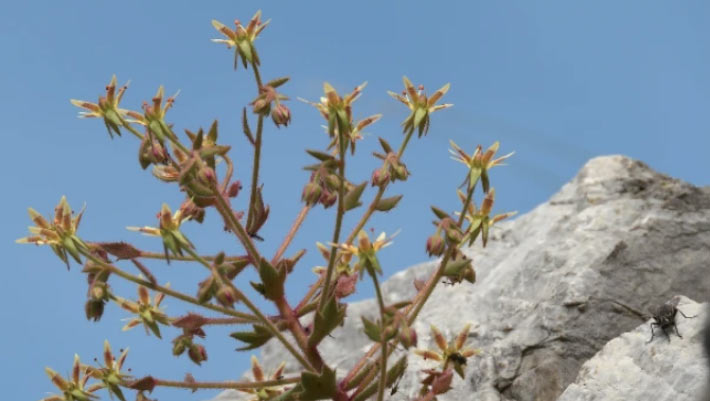
More than 150 years after Charles Darwin first wondered whether certain sticky-leaved Saxifraga plants might be secretly carnivorous, Kunming Institute of Botany researcher Tao Deng and colleagues say they have finally confirmed it.
Botanists are still proving Charles Darwin right with their recent identification of a new carnivorous plant growing in China’s mountainous forests.
Saxifraga candelabrum is a small, yellow flower with a taste for flesh that may one day help protect endangered crops, and researchers have revealed their detailed analysis of the carnivorous plant, conducted both in the field and the laboratory, in a recent paper published in Nature Communications.
The carnivorous plant attracts, traps, and finally digests prey, typically consisting of fruit flies and other small insects, breaking them down with a caustic enzyme that it produces.
Charles Darwin and Carnivorous Plants
Although it was philosopher Herbert Spencer who actually coined the phrase “survival of the fittest,” it was Charles Darwin who developed the concept behind it in his work on natural selection. With an eye towards survival in a harsh natural world, Darwin suggested in 1875 that some plants in the genus Saxifraga may be more than just beautiful flowers—they may also be very patient hunters.
Darwin’s suspicion centered on Saxifraga species other than S. candelabrum, the plant examined in the new study. However, the basis for his hypothesis holds true: the father of evolutionary biology focused on the microscopic hairs covering the plants’ surfaces, a feature shared by both the species he studied and the newly confirmed carnivorous plant.
Darwin suggested these hairs acted as a trap, capturing insects drawn to the flowers and holding them in place as the plants slowly absorbed nutrients from them. He was right.
A New Take on Carnivorous Plants
Most carnivorous plants rely on highly specialized structures to capture prey. The iconic clamping leaves of Dionaea muscipula, better known as the Venus flytrap, are one example. Another is Low’s pitcher plant, which lures insects into its pitcher-shaped trap before digesting them.
S. candelabrum, however, employs a far subtler strategy. Rather than relying on elaborate trapping structures, it uses innocuous-looking hairs covering its flowers and stems. Once insects land on them, they discover the bristles are exceptionally sticky, trapping them until the plant can digest them.
“The discovery of Saxifraga candelabrum reminds us that many inconspicuous carnivorous plants, or plants with partial carnivorous traits, may still exist in nature,” said lead author Hang Sun, a botanist at the Kunming Institute of Botany at the Chinese Academy of Sciences.
Investigating a Hidden Hunter
The team’s research involved a great deal of fieldwork, observing S. candelabrum consuming insects in the mountain forests of China. However, it was their detailed genetic analysis in the lab that later showed how similar the plant was to other carnivorous species, despite its unusually benign appearance.
As part of their laboratory experiments, the researchers fed the plants fruit flies while closely monitoring their behavior. These observations allowed the team to identify digestive enzymes secreted by the plant to break down nitrogen-rich nutrients from its prey.
Identifying a new carnivorous plant species is an uncommon achievement for botanists, with the last such discovery occurring only five years ago. Even more remarkable is that the finding so closely aligns with Charles Darwin’s century-old prediction.
The researchers say the discovery is more than a botanical curiosity. A better understanding of how carnivorous plants digest insects could eventually aid the development of natural pesticides and other agricultural tools, potentially transforming these tiny predators into allies for protecting the world’s food supply.
Ryan Whalen covers science and technology for The Debrief. He holds an MA in History and a Master of Library and Information Science with a certificate in Data Science. He can be contacted at ryan@thedebrief.org.
Europe risks becoming dependent on foreign orbital computing infrastructure as U.S. companies and China’s government-led push accelerate the development of space-based data centers, according to the European Space Policy Institute.
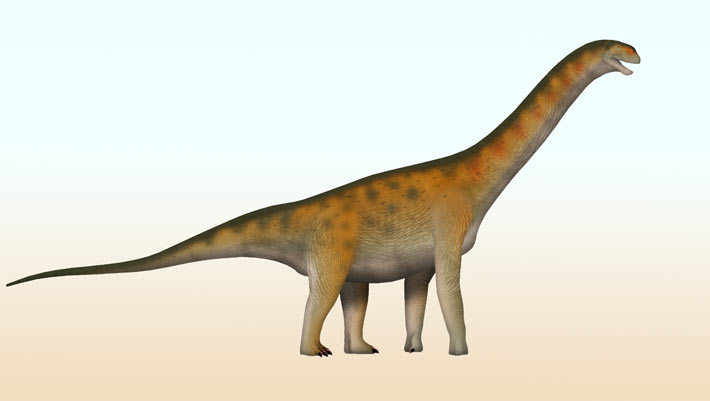
Paleontologists working in southern China have identified a new species of sauropod dinosaur that appears to belong to a group never before documented anywhere in East Asia.
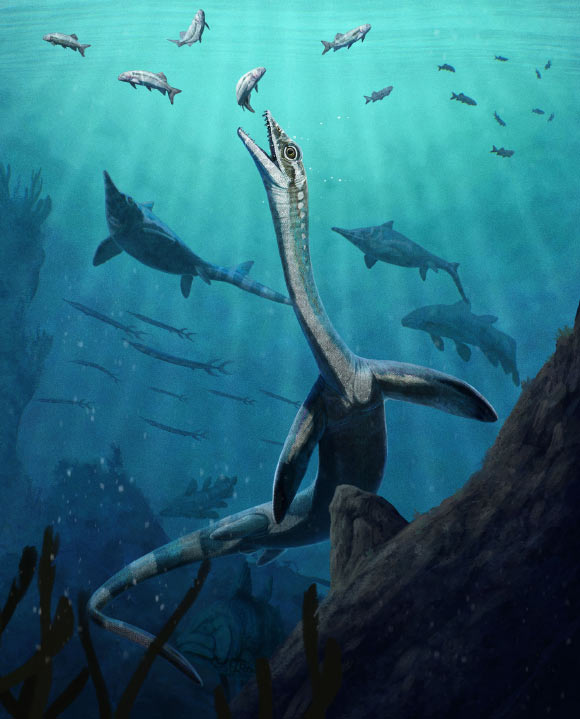
An exquisitely preserved specimen of Austronaga minuta, a small, long-necked marine reptile from the Triassic of China, contains a fossilized stomach, liver and intestines, offering paleontologists their oldest detailed glimpse yet of how early reptiles digested food.
Tesla’s sales inside China fell 19% in the first half of 2026 compared to its peak in 2023, dropping to the lowest level in years, according to new data from the China Passenger Car Association (CPCA).
At the same time, exports out of Giga Shanghai surged 127%. Tesla’s China plant is increasingly building cars to ship somewhere else.
The eagerly anticipated Geely Galaxy 700 was expected to be the Chinese brand’s answer to the Range Rover and Land Cruiser – but, with a tire-shredding 1,113 hp on tap, it may be a bigger, boxier answer to Italian exotic cars, instead!

 Login