
❌

Reading view

Scientists Find Traces of Two Unknown Archaic Hominins in Human DNA

An archaic hominin. Image credit: Ninara / CC BY 2.0.

New research led by the University of California, Berkeley reveals that beyond Neanderthals and Denisovans, humans interbred with two mysterious β€˜ghost’ lineages: one in Africa more than 50,000 years ago, another in Eurasia over 1.7 million years ago.

The post Scientists Find Traces of Two Unknown Archaic Hominins in Human DNA appeared first on Sci.News: Breaking Science News.
  •  

520-Million-Year-Old Fossil from China Fills Gap in Evolutionary History of Cephalopods

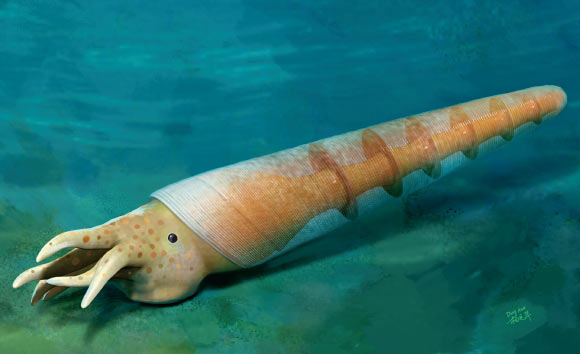
Life reconstruction of Eoceras shaanxiense. Image credit: Dinghua Yang.

Paleontologists have identified the earliest-known cephalopod equipped with a siphuncle -- a tubular extension of the mantle found in shelled cephalopods -- pushing back the fossil record of this key evolutionary feature to the Early Cambrian, roughly 520 million years ago.

The post 520-Million-Year-Old Fossil from China Fills Gap in Evolutionary History of Cephalopods appeared first on Sci.News: Breaking Science News.
  •  

40,000-Year-Old Bird Figurines Found in German Cave

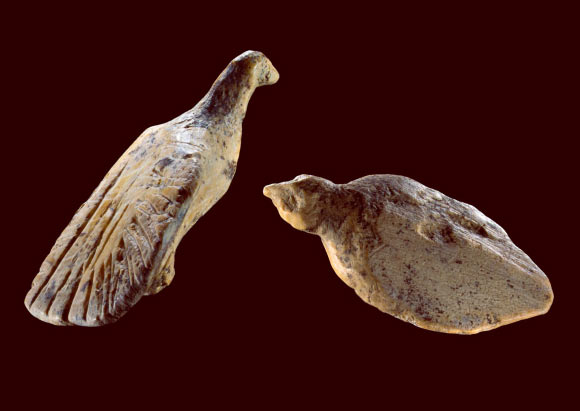
Two bird figurines found at Hohle Fels Cave in Germany. Image credit: Ralf Ehmann / University of TΓΌbingen / Museum of Prehistory and Ice Age Art.

Archaeologists in southwestern Germany have unearthed two miniature bird figurines carved from mammoth ivory, among the smallest and most delicate examples of Ice Age art ever found.

The post 40,000-Year-Old Bird Figurines Found in German Cave appeared first on Sci.News: Breaking Science News.

  •  

New Species of Triassic Dinosaur Discovered on Shores of Zimbabwe’s Lake Kariba

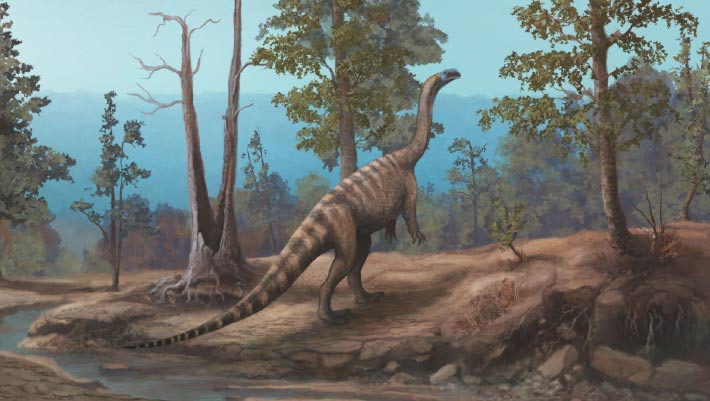
Life reconstruction of Musango matusadonaensis. Image credit: Mark Witton.

An international team of paleontologists has identified a new species of early sauropodomorph dinosaur in Zimbabwe, adding to growing evidence that southern Africa hosted a richer diversity of dinosaurs during the Late Triassic epoch than previously recognized.

The post New Species of Triassic Dinosaur Discovered on Shores of Zimbabwe’s Lake Kariba appeared first on Sci.News: Breaking Science News.
  •  

Ancient Footprints in Kenya Hint at Bigger Bodies and Group Behavior among Early Human Relatives

One of 1.43-million-year-old footprints found at the GaJi10 site in the Koobi Fora Formation in northern Kenya; a 15-cm (6-inch) ruler is shown for scale. Image credit: Kay Behrensmeyer.

A set of 1.43-million-year-old fossil footprints preserved along the margin of an ancient lake in northern Kenya is offering paleoanthropologists new evidence about the size, gait and social lives of the beings who made them and reopening questions about which species they belonged to.

The post Ancient Footprints in Kenya Hint at Bigger Bodies and Group Behavior among Early Human Relatives appeared first on Sci.News: Breaking Science News.
  •  

Astronomers Directly Image Betelgeuse’s Long-Suspected Stellar Companion

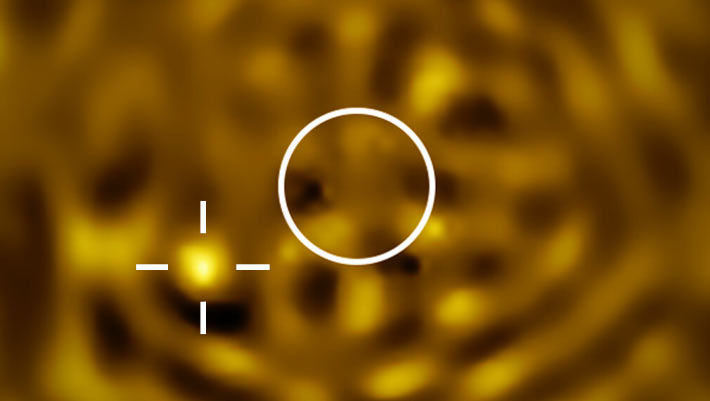
This VLT/SPHERE image shows the clearest image ever of what likely is Betelgeuse B. Image credit: ESO / Montargès et al.

After a century of speculation, astronomers using ESO’s Very Large Telescope (VLT) have captured the clearest evidence yet that the red supergiant Betelgeuse is orbited by a faint companion star.

The post Astronomers Directly Image Betelgeuse’s Long-Suspected Stellar Companion appeared first on Sci.News: Breaking Science News.

  •  

Japanese Fossil Bee Fills Two-Million-Year Gap in Honeybee History

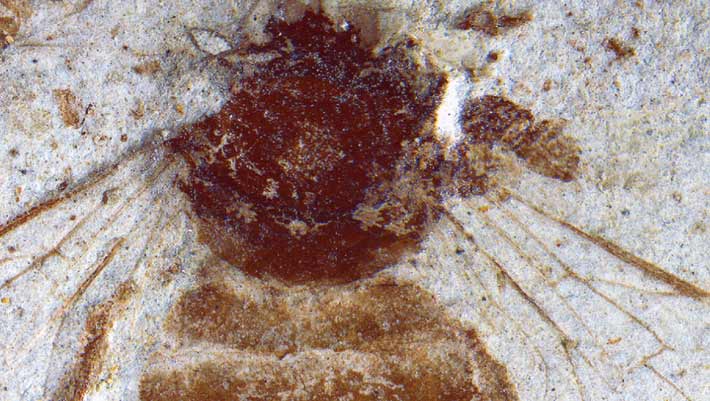
Apis aibai. Image credit: Y. Takahashi & J-ichi Takahashi, doi: 10.3897/zookeys.1255.162389.

Paleontologists have announced the discovery of a new fossil honeybee species that fills a long-standing gap in the evolutionary record of the genus Apis.

The post Japanese Fossil Bee Fills Two-Million-Year Gap in Honeybee History appeared first on Sci.News: Breaking Science News.

  •  

Hubble Spots Spiral Galaxy Warped by Cosmic Forces

This Hubble image shows NGC 4654, an intermediate spiral galaxy some 55 million light-years away in the constellation of Virgo. Image credit: NASA / ESA / Hubble / D. Thilker / J. Lee / PHANGS-HST Team.

A stunning new image captured by the NASA/ESA Hubble Space Telescope shows the lopsided intermediate spiral galaxy NGC 4654, whose unusual shape was sculpted by both a close encounter with another galaxy and a headlong plunge through the hot gas of the Virgo Cluster.

The post Hubble Spots Spiral Galaxy Warped by Cosmic Forces appeared first on Sci.News: Breaking Science News.

  •  
❌