❌

Reading view

What colors were prehistoric mammals?

The spots on a leopard, the stripes on a zebra, and the mask on a raccoon are all types of coloration in mammal fur, referred to as pelage. Scientists have struggled for a long time to understand how these colorations evolved. A team of researchers recently discovered how to reconstruct the colors of ancient mammal fur using cell structures that contain the chemical pigment melanin, known as melanosomes. They hope to use this understanding of ancient mammal pelage to determine how they lived and what their environments were like.

To decipher the color of ancient mammal fur, the researchers constructed a statistical computer model to predict their fur colors based on the shape of their melanosomes. First, they needed to understand how the shapes of melanosomes control fur color in modern mammals. To measure the length and width of the modern melanosomes, the scientists used a beam of electrons like a flashlight to map them in great detail, a technique called scanning electron microscopy.

They measured the length and width of 2,615 melanosomes from the fur of 116 different living mammal species, including a Red Panda, a German Shepard, and one or more species of most types in the mammalian classification. Then they recorded the wavelengths of light reflected off each melanosome using a microspectrophotometer. These wavelengths represented the exact color of hair from each melanosome they measured. This means they now had a quantitative measurement of the color of each hair to compare with its corresponding melanosome length and width.

When they examined their data, the researchers found that spherical melanosomes produced brighter fur colors, like reds and oranges, while elongated melanosomes produced darker fur colors, like browns and grays. The researchers plotted the microspectrophotometric measurements for each melanosome as a graph showing how much light it absorbed across each possible wavelength, creating reflectance curves. Based on these data, the researchers used computer software to create a statistical model that could predict reflectance curves, and therefore color, from melanosome shape alone.

Once the researchers created a model, they needed to find fossilized mammal melanosomes to predict their fur color. Mammal fossils are rare, and pieces of cells are only preserved in the most immaculate fossil deposits. In fact, these researchers only found 6 fossils of this caliber, from Mesozoic rocks deposited around 250 million years ago, soon after mammals evolved. 

The fossils came from 2 world-renowned deposits in Northeastern China, the Yanliao and Jehol biotas. They selected 5 previously studied fossils from these locations, including 1 specimen of Megaconus mammaliaformis, 1 specimen of Vilevolodon diplomylos, 2 specimens from the group Docodonta, and 1 specimen from the group Eutheria. All of these animals were small, rodent-like mammals. The researchers also discovered a new species of tree-dwelling mammal, Arboroharamiya fuscus.

The scientists used scanning electron microscopy to measure a total of 2,159 fossilized melanosomes to refine their color predictions. The fossilized melanosomes were all slightly elongated spheres and had far fewer differences in shape than in modern mammals. The researchers used their model to predict reflectance curves based on the shapes of the fossil melanosomes to determine the ancient mammals’ colors. They found that all the extinct mammals they examined likely had dark brown fur without any color patterns.

Based on these findings, the researchers suggested that most, if not all, early mammals were nocturnal, like many dark-colored mammals today. They suggested that this nocturnal lifestyle probably helped them survive the meteorite impact that wiped out the dinosaurs 100 million years later. While dinosaurs were unable to survive in the post-impact wasteland, these smaller, dark-colored mammals were more resilient and thrived in the aftermath. As mammals filled the ecological roles left by the dinosaurs, they evolved new color patterns, some based solely on camouflage, and others on new factors, like sexual selection and visual communication.

The researchers concluded that their model can predict fossilized mammal colors and help determine how these ancient animals lived. Notably, their data suggest that mammals likely stayed small and nocturnal throughout the Mesozoic until the dinosaurs were gone. Future researchers could use similar methods to uncover exactly how mammals evolved the colors we see today. For example, studying mammals closer to the impact event could reveal if it took a long time to develop diverse fur patterns, or if they began before the dinosaurs’ demise. Ultimately, similar studies could help determine whether the extinction of dinosaurs was necessary for the rise of mammals.

The post What colors were prehistoric mammals? appeared first on Sciworthy.

  •  

Science word of the day: Coprolite

Science word of the day: Coprolite

Pronunciation: KAHP'-ruh-lite

What it means: Coprolites are fossilized poop. Scientists have found coprolites from animals as diverse as fish, dinosaurs and saber-toothed cats. Teeth in the saber-toothed cat poop indicated that it had been eating baby sloths, which frankly feels a bit unfair from a creature with 11-inch-long (28 centimeters) teeth.

These fossils form when poop gets rapidly buried and mineralized instead of rotting away. Coprolites can be hard to match to the animal that produced them, but undigested bones and teeth in the fossilized poop can often provide clues to the kinds of animals that other animals eat.

How to use it in a sentence: If you're ever in a science museum and a volunteer, with a twinkle in their eye, asks you what you think a chunky, rock-looking thing is, the answer is always coprolite.

Can you crack our science word of the day puzzle, Chain Word?

  •  

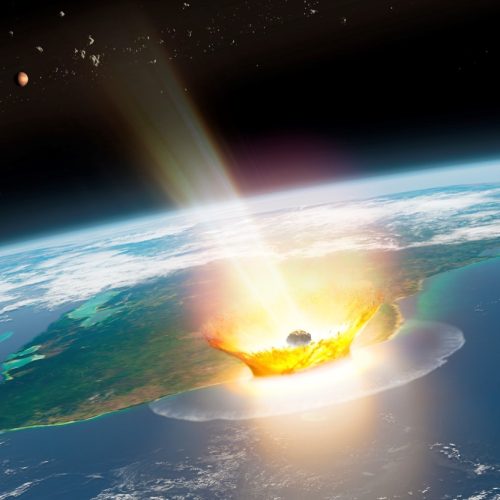
Study: Dinosaurs were charbroiled after Chicxulub impact

Some 66 million years ago, an asteroid impact wiped out three-quarters of all plant and animal species on Earth, most notably taking down the dinosaurs. But exactly how that impact caused those extinctions has been the subject of fierce debate. According to a new paper published in the Journal of Geophysical Research: Biogeosciences, the impact would have produced an immense cloud of dust that superheated the upper atmosphere, charbroiling living organisms unable to take shelter and igniting widespread wildfires.

As previously reported, the most widely accepted explanation for what triggered that catastrophic mass extinction is known as the “Alvarez hypothesis,” after the late physicist Luis Alvarez and his geologist son, Walter. In 1980, they proposed that the extinction event may have been caused by a massive asteroid or comet hitting the Earth. They based this conclusion on their analysis of sedimentary layers at the Cretaceous-Paleogene boundary(the K-Pg boundary, formerly known as the K-T boundary) found all over the world, which included unusually high concentrations of iridium—a metal more commonly found in asteroids than on Earth. (That same year, Dutch geophysicist Jan Smit independently arrived at a similar conclusion.)

Since then, scientists have identified a likely impact site: a large crater in Chicxulub, Mexico, in the Yucatan Peninsula, first discovered by geophysicists in the late 1970s. The impactor that created it was sufficiently large (between 11 and 81 kilometers, or 7 to 50 miles) to melt, shock, and eject granite from deep inside the Earth, probably causing a megatsunami and ejecting vaporized rock and sulfates into the atmosphere. It has been estimated that the impact would have released energy over a billion times higher than the atomic bombs dropped on Hiroshima and Nagasaki in 1945.

Read full article

Comments

© Mark Garlick

  •  

“Enough Heat to Sizzle Thin-Skinned Animals”: New Evidence Shows How a Dinosaur-Killing Meteor Set the World on Fire

New analysis of dust deposits left after the massive asteroid hit Earth around 66 million years ago suggests the event created a thick, worldwide dust blanket that drove heat down toward the planet’s surface, resulting in global wildfires.

The researchers behind the new study said the evidence for a post-impact dust blanket and resulting heat wave adds new fuel to the debate about what role, if any, the Chicxulub asteroid played in their extinction, by suggesting most unsheltered animals would have died instantly.

Scientists Debate Connection Between Asteroid Impact and Dinosaur Extinction

While scientists agree that a massive chunk of space rock slammed into Mexico’s Yucatan Peninsula 66 million years ago, they have continued to debate the event’s impact on the end of the dinosaurs‘ reign. Still, the timing of the two events, and the evidence for a mass extinction of animals incapable of seeking the necessary shelter to survive the asteroid’s impact, has led most to connect the two events to some degree.

Further studies of the impact have shown that the event’s immense heat and pressure vaporized a massive amount of rock, resulting in a huge cloud of dust and rock vapor high into the Earth’s atmosphere. As some of that dust condensed into tiny rock ‘spherules’ and slammed back into the surface, the friction between them and the air generated a corresponding heat pulse.

According to the authors of the new study, many theories suggested that this heat pulse acted like a planetary-wide broiler, including “radiating enough heat to sizzle thin-skinned animals without shelter,” but not enough for plants to suddenly burst into flames. The team said that this result temporarily caused researchers to move away from the idea that the immediate impact event caused the dinosaur’s extinction rather than a longer, more drawn-out event.

Now, after years of new ideas, the team said that a 2023 discovery once again changed the debate, leading to their new proposal.

Atmospheric Layer of ‘Post-Impact’ Dust Would Have Magnified Heat Wave 3.5 Times

According to the team’s statement, the 2023 discovery involved a layer of “extremely fine post-impact dust” that could have formed from rock vapor that did not condense into spherules.

“It reinvigorated my interest in what happened to the leftover vapor,” explained Brandon Johnson, a planetary scientist at Purdue University and lead author of the study detailing the new theory, “that’s where this work started.”

To determine what effect such a post-impact dust layer might have had on dinosaurs and other terrestrial animals, the team plugged the new data into previous simulations of the Chicxulub event. Johnson and colleagues especially wanted to know how the dust layer would boost Earth’s retention and release of heat energy generated by the falling rock spherules.

After running several simulations, the team determined that the dust layer would have increased the surface heat by 3.5 times compared to an event that only included the falling spherules. Unlike earlier models, this new version with the dust layer included showed that the heat pulse would have been enough to “kill animals and start spontaneous forest fires.”

“We’re in the realm where we might be essentially killing off everything within that first hour or two,” Johnson explained.

Notably, the researcher said his team’s concept is not unlike alternative extinction theories that credit a global post-impact winter for the eventual mass extinction of dinosaurs and other lifeforms.

“It seems counterintuitive,” Johnson said, “but actually it’s the same effect.”

The research compared the idea to how an insulated mug can keep hot coffee hot and iced coffee cold.

“Once the spherules finished falling and the fires petered out, massive dust clouds could have blocked warmth from the Sun for years to decades and caused a global winter,” the authors explained.

Results Could Help Unravel Why Some Animals Survived, and Others Didn’t

When discussing how the team’s findings might affect the ongoing debate about dinosaur extinction, Johnson said the work seems to offer strong support to the impact extinction theory.

“This work of ours supports this idea that it really is the impact that was devastating to terrestrial life and caused the mass extinction,” the researcher explained.

Although the team suspects that the global fires caused by the dust amplified the heat wave, they point out that a more complete geological record would likely be needed to provide confirmation. Alfio Alessandro Chiarenza, a paleontologist at University College London who was not involved with this study, said researchers could find a record of global wildfires, but “we just don’t have it so far.”

“It would be great to figure out which animals survived right at the impact and what their biological features were,” Chiarenza added. “This could finally tell us why some animals made it when others, like the dinosaurs, didn’t.”

The study “Heat and wildfires during the K-Pg mass extinction enhanced by fine dust” was published in the Journal of Geophysical Research: Biogeosciences.

Christopher Plain is a Science Fiction and Fantasy novelist and has spent the last six years as Associate News Editor and Head Science Writer at The Debrief. Follow and connect with him on X, learn about his books at plainfiction.com, or email him at christopher@thedebrief.org

  •  
❌