Un trou noir supermassif a été surpris en pleine action… loin de chez lui. Pour la première fois, des astronomes ont observé un de ces monstres « orphelins » dévorer une étoile en périphérie d’une galaxie. Une découverte inédite qui ouvre la voie à une chasse aux trous noirs errants dans tout...
The iPad Air has looked the same since 2020, making it the longest-running design in Apple's tablet lineup. There is a reasonable case that 2027 could be when that comes to an end.
Apple last gave the iPad Air a new enclosure in 2020, when the fourth-generation model introduced flat sides, an all-screen front, and Touch ID in the top button. The subsequent M1, M2, M3, and M4 updates were all internal with no design changes.
The substantial upgrade would be a suitable candidate for a complete redesign. When the iPad Pro moved to OLED in 2024, Apple completely redesigned the device for the first time since 2018, introducing a substantially thinner chassis.
The iPad Air and iPad mini have shared their design language since their introduction, with the mini most recently adopting the Air's look in 2021 and holding it through to the iPad mini 7. If the mini receives a new enclosure this year, the Air is the obvious candidate to bring over the same one next. It could be much like how the original iPad mini from 2012 set the design standard for the iPad Air just a year later.
There have been no specific rumors about an iPad Air redesign for next year, but if it does mirror the iPad mini, the device could gain the same vibration-based speaker system, water-resistance, and more.
Explorer for Artemis Geology, Lunar, and Earth — a NASA satellite program to study surface biology and geology on Earth, with technologies that could support future missions to the Moon and Mars.
Future Mission
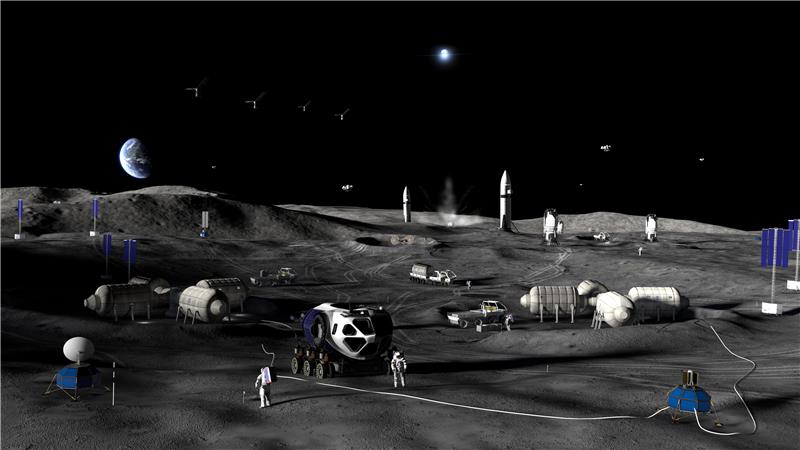
NASA’s EAGLE program — Explorer for Artemis Geology, Lunar, and Earth — will be a series of satellite missions studying surface properties using technologies for Earth observation that will also benefit future missions to the Moon and Mars, where they could identify critical resources and safe landing sites.
The satellites making up the first two EAGLE missions will study biology and geology on Earth’s surface to support agriculture, disaster response, and other needs. Each mission will carry a different instrument with capabilities that complement each other. The first mission (EAGLE-VSWIR) is scheduled to take flight in 2028.
Mission Type
Orbiter
Target
Earth, Moon, Mars
Launch
No earlier than 2028
Objective
Study surface composition and changes
EAGLE-VSWIR
EAGLE-VSWIR (Visible to Shortwave Infrared) will observe the Earth’s surface every 16 days with a high-resolution imaging spectrometer, which measures light reflected from the planet’s surface, separating wavelengths across the visual and into the infrared spectrum. The patterns created by light being reflected or absorbed across this spectral range act like fingerprints, letting scientists identify the composition of the surface.
A similar instrument, NASA’s EMIT (Earth Surface Mineral Dust Source Investigation), has been monitoring Earth from the International Space Station since July 2022, characterizing the surface mineral composition of Earth’s arid lands, monitoring ecosystem status, and tracking health and safety hazards — such as methane leaks and acid mine drainage — among other applications.
EAGLE-VSWIR will have 25 times more capability than EMIT has today. This technological leap will allow scientists to map surface deposits of critical and rare-earth minerals, strengthen food security, and aid wildfire prevention and recovery. It can also highlight environmental hazards such as oil spills or landslide risks, and monitor water quality and availability.
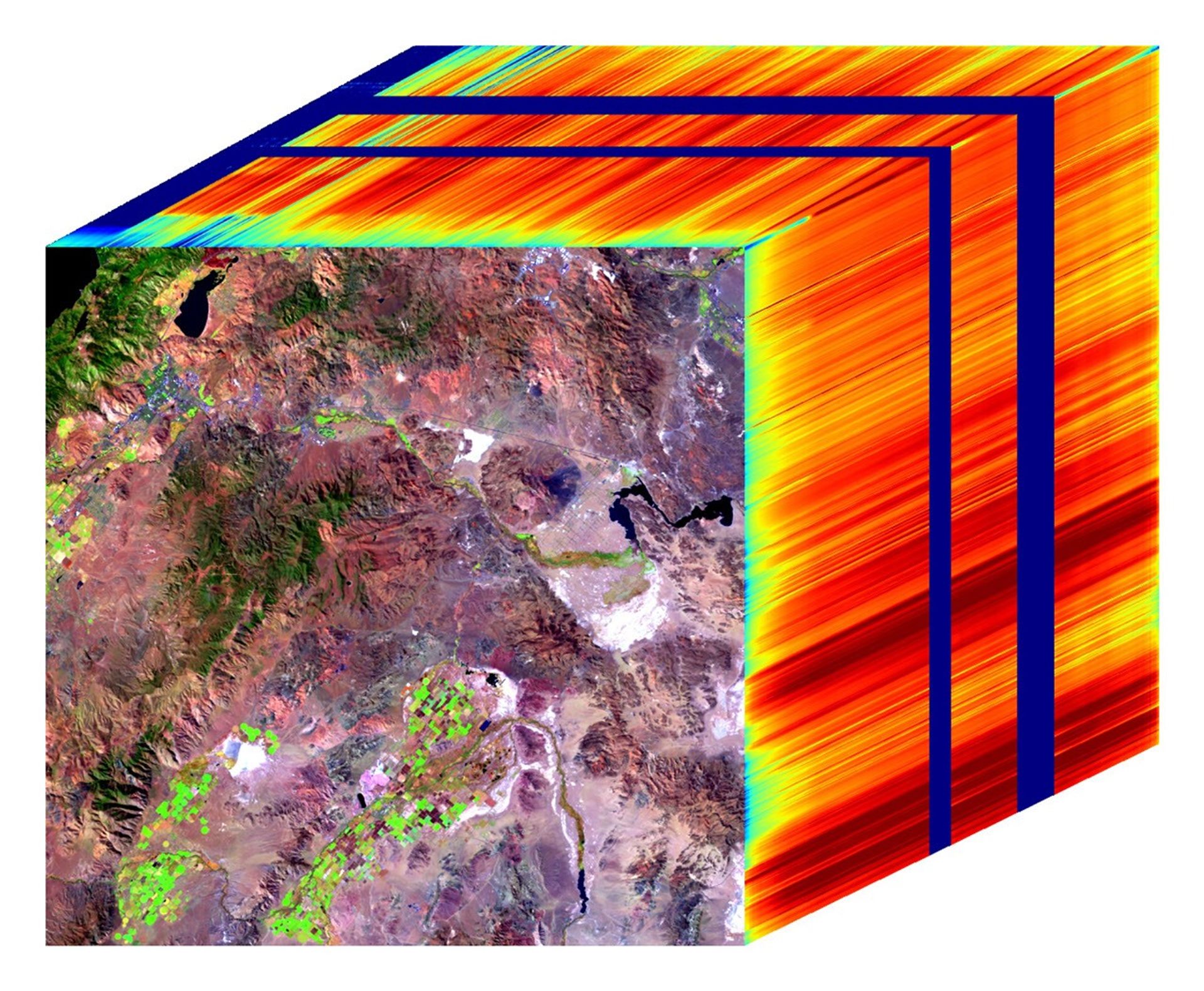
The front of this image cube shows a region in Nevada observed by NASA’s EMIT imaging spectrometer; the cube’s sides show the spectral fingerprint for every point in the image and can be used to discover mineral resources. EAGLE-VSWIR will have 25 times greater performance beyond NASA’s current state-of-the-art EMIT.
NASA/JPL-Caltech
EAGLE-TIR
The EAGLE-TIR mission will provide Thermal InfraRed (TIR) imagery when it launches two to three years after EAGLE-VSWIR, measuring energy emitted from the surface and producing data that scientists can use to map temperature, composition, and critical mineral deposits. On Earth that would let researchers monitor wildfires and volcanic activity, track drought and water use by crops, study urban heat islands, observe the rates that snow or ice accumulates or melts, and better understand Earth’s resilient ecosystems.
EAGLE-TIR follows on from ECOSTRESS (ECOsystem Spaceborne Thermal Radiometer Experiment on Space Station), which has been observing Earth from the International Space Station since 2018. ECOSTRESS was designed to study how different ecosystems respond to drought and water stress, and the data has provided a vital understanding of how plants’ water use changes throughout the day. Since ECOSTRESS also measures emitted energy in the thermal infrared, its surface-temperature products have also been used for urban planning and wildfire monitoring.
Further innovation and lessons learned from ECOSTRESS has led to EAGLE-TIR, which will carry a multi-band thermal radiometer. EAGLE-TIR’s great strength compared to existing missions is that it provides detailed imagery of the entire globe every two days, day and night, at multiple wavelengths not available from other instruments.
This image shows the minerals contained in Namibian dunes using ECOSTRESS data. EAGLE-TIR will have more spectral channels to enable even better mineral discrimination.
NASA/JPL-Caltech
EAGLE Program
By advancing vital techniques for measuring our planet’s surface composition, resources, and hazards, the EAGLE program addresses critical needs in Earth observation, with technologies that can also transfer to planetary exploration, where they’ll serve as pathfinders for future missions to the Moon and Mars.
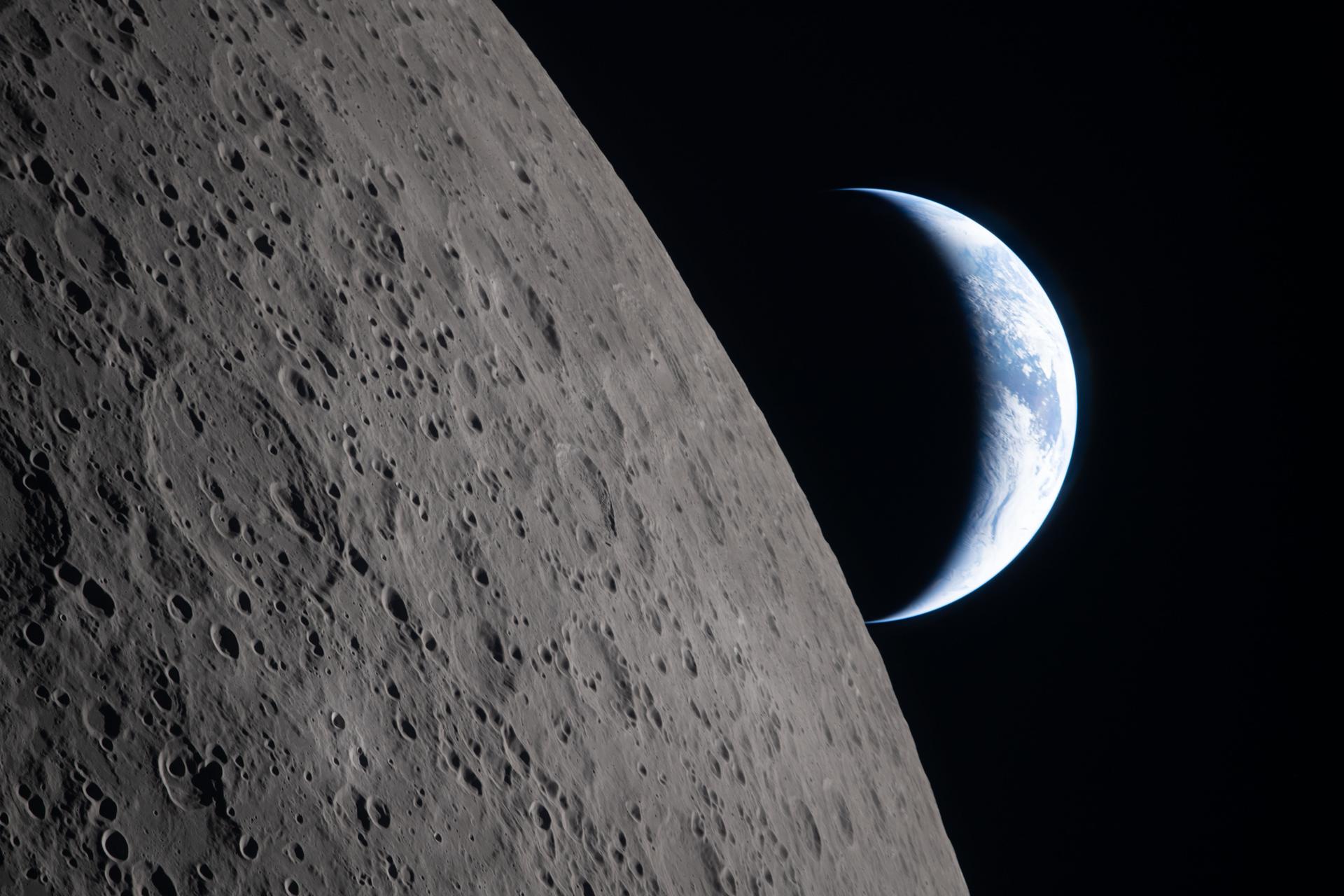
As the Artemis II crew came close to passing behind the Moon and experiencing a planned loss of signal, they captured this image of a crescent Earth setting on the Moon’s limb on April 6, 2026.
NASA
Featured Video
EAGLE
NASA unveiled the EAGLE program as one part of its “Ignition” event on March 24, 2026, when it announced a wide-ranging series of transformative agencywide initiatives. With EAGLE (the Explorer for Artemis Geology, Lunar, and Earth missions), NASA will deploy breakthrough hyperspectral images across Earth with later missions anticipated for the Moon and Mars in rapid succession. On Earth they’ll identify critical minerals for national security, enable precision agriculture, and support disaster response. On Earth and at Mars they will locate critical minerals and resources such as ice for propellants, rare-earth elements for technology, and construction materials for habitats.
EMIT
EMIT (Earth Surface Mineral Dust Source Investigation) measures the mineral composition of Earth’s dust source regions, to help scientists understand how they heat or cool our planet.
Join us for continuing coverage as our leaders discuss the agency's implementation of the National Space Policy and our plans to advance science and discover...
Les trous noirs supermassifs qui font évoluer les galaxies nous réservent sans aucun doute des surprises. La dernière en date concerne maintenant les amas de galaxies et leurs interactions avec ces astres compacts géants.
Apple plans to release a second-generation iPhone Air in the first quarter of 2027, according to Jeff Pu, an investment analyst who covers Apple.
In a research note with GF Securities today, Pu said the iPhone Air 2 will have the following five new features compared to the current model:
The addition of a second 48-megapixel rear camera — an Ultra Wide lens to complement the existing Fusion lens.
A slightly smaller Dynamic Island.
A faster and more power-efficient A20 Pro chip manufactured with TSMC's advanced 2nm process. The current iPhone Air has a 3nm A19 Pro chip.
Apple's second-generation N2 chip for wireless networking. In the existing iPhone Air, the N1 chip is an Apple-designed wireless networking chip that enables Wi-Fi 7, Bluetooth 6, and Thread. The chip also improves the overall performance and reliability of features like AirDrop and Personal Hotspot.
Apple's second-generation C2 chip for 5G. Apple says the current C1X chip is already the most power-efficient modem in an iPhone ever.
He expects the next iPhone Air to stick with a 6.5-inch display, 12GB of RAM, and an 18-megapixel Center Stage front camera.
Apple reportedly plans to release the iPhone Air 2 alongside the regular iPhone 18 and a lower-end iPhone 18e around March 2027. The higher-end iPhone 18 Pro, iPhone 18 Pro Max, and foldable "iPhone Ultra" are expected to launch this September, with the devices in the lineup rolling out at different times as part of a new strategy.
On a commencé à comprendre la nature des explosions d'étoiles, que nous appelons des supernovae, seulement au début des années 1930. Elles détiennent toujours des secrets et l'on soupçonne aujourd'hui qu'un type exotique et nouveau de supernova existe dans la Voie lactée avec des naines...
Many MacBook Air, MacBook Pro, and MacBook Neo owners have noticed something curious; their MacBook battery stops charging at 80% when plugged in. To add to the confusion, even if they leave their MacBook plugged in overnight, the battery seems to be stuck at 80% and will not charge any further. Because this is not ... Read More
DARPA officials said the successful flight of an aircraft category that is still in use for combat operations advances the state-of-the-art technological infrastructure needed to meet the challenges of a rapidly evolving aerial environment and will enable rapid, scalable combat AI pilot development across the broader U.S. military forces.
“These groundbreaking flight tests of VENOM-modified F-16s advance the infrastructure needed to develop trusted, autonomous air combat capabilities,” said Brig. Gen. James “Fangs” Valpiani, Ph.D., DARPA program manager.
AI-Controlled F-16 Test Flights Part of VENOM Program
According to a statement announcing the successful AI-controlled flights, the F-16 used in the tests was specifically converted to an AI testbed under the agency’s joint venture with the U.S. Air Force, the Viper Experimentation and Next-generation Operations Model (VENOM) program. The specific AI pilot installed in the F-16 is known as the VENOM Autonomy Kit, or VAK.
DARPA said VAK utilizes a “novel interface with the aircraft’s flight controls and mission systems.” This component allows an on-board human pilot to toggle between their traditional control systems and VAK “with the flip of a switch,” ensuring pilot safety during the testing phase where a human is still in the loop.
An F-16 Fighting Falcon modified for the Viper Experimentation and Next-gen Operations Model – Autonomy Flying Testbed (VENOM) program conducts flight operations during autonomous systems testing in June 2026 at Eglin Air Force Base. The VENOM F-16s serve as modified airborne test platforms equipped with specialized hardware, software, and instrumentation designed to enable artificial intelligence agents to pilot the aircraft while human pilots remain in the cockpit to monitor the AI agents and ensure flight and mission systems test objectives are met to rapidly evolve autonomous capabilities. Image Credit: U.S. Air Force | Samuel King Jr., 96th Test Wing
Valpiani said that the VENOM team installed the AI-controlled VAK interface, which successfully automated the F-16’s sensors and flight controls “without changing the jet’s core software.”
“This enables an efficient pipeline for developing dominant AI for aerial combat, allowing us to rapidly innovate for the warfighter,” the program manager explained.
Creating Dominant Autonomy Beyond Visual Range
When discussing the significance of the successful AI-controlled test flights, Valpiani once again highlighted the “emerging threat environment” in relation to aerial combat, including its increasing complexity.
“AI has tremendous potential to help humans manage this complexity in beyond-visual-range combat, but many hard questions remain concerning the performance and trustworthiness of combat AI in the extreme fog and friction of modern warfare,” explained the project leader, who was due to conclude his tenure as a DARPA program manager in the weeks after the announcement. “The AIR program aims to apply cutting-edge combat agents to operationally relevant scenarios to address these questions and field war-deterring, war-winning capabilities to our warfighters.”
Incoming program manager, Lt. Col. Patrick “Dice” Highland, Ph.D., highlighted the milestone’s role in “advancing our nation’s combat autonomy,” while also offering an eye toward the program’s future.
“We now have the opportunity to create dominant autonomy for beyond-visual-range, multi-ship combat,” Lt. Col Highland said. “These flights give us an early glimpse of how AI agents may begin actively transforming air warfare.”
Moving VAK’s Capabilities “Out of Simulation and Into the Sky”
Following the successful AI-piloted F-16 tests, the specially designed VENOM aircraft will join DARPA as it moves the entire venture under the umbrella of the agency’s Artificial Intelligence Reinforcements (AIR) program. According to the agency, this new program will use the aircraft in the VENOM fleet to “test multiple AI agents in live-flight scenarios.” If successful, DARPA said the program will “pave the way for human pilots to seamlessly command and orchestrate teams of autonomous, uncrewed aircraft.”
Current deputy program manager Terry Wilson, Ph.D., who will remain with the program, highlighted AIR’s longer-term goals of future joint force operations, including Collaborative Combat Aircraft programs. DARPA said that these efforts will focus on improving the speed and predictive ability of AI model development and “scale in-flight testing to multi-ship operations with increased complexity to unlock novel and robust AI-driven autonomy.”
“I share Gen. Valpiani’s deep appreciation for the incredible dedication of our DARPA and industry teammates, joint engineers, the System Program Office, Eglin’s test and maintenance crews, and the entire AIR and VENOM ecosystem which has made this milestone possible,” said Wilson. “I look forward to unleashing the VENOM platform and moving these capabilities out of simulation and into the sky.”
Christopher Plain is a Science Fiction and Fantasy novelist and has spent the last six years as Associate News Editor and Head Science Writer at The Debrief. Follow and connect with him on X, learn about his books at plainfiction.com, or email him at christopher@thedebrief.org

 Login