❌

Reading view

There’s No Place Like Home, Snoopy Arrives on Apple TV

There’s No Place Like Home, Snoopy is now available globally on Apple TV, beginning a new Peanuts adventure with the accidental sale of one of the comic strip’s most recognizable objects.

The 31-minute animated special follows Snoopy after his doghouse disappears during a yard sale. Charlie Brown attempts to help his devastated friend by organizing a search, but recovering the missing home becomes more difficult once it has left the neighborhood.

The story uses Snoopy’s doghouse as more than a familiar red prop. It is the place where he sleeps, stores his possessions and begins the imaginary adventures that transform him into a World War I flying ace, author and explorer.

Losing it removes the physical center of that private world. Charlie Brown and Snoopy must determine whether home depends on recovering the exact building or remaining close to the people and memories connected to it.

The Apple Original is rated TV-G and includes Dolby Atmos audio in supported languages and configurations. An Apple TV subscription is required, with availability extending across the Apple TV app and the service’s supported devices.

Snoopy hugs his red doghouse with pink hearts around him, as Woodstock flies above. Text: “Apple TV Snoopy Presents There’s No Place Like Home, Snoopy,” celebrating this heartwarming Peanuts special. Blue sky background.
Image Credit: Apple Inc.

There’s No Place Like Home, Snoopy Begins at a Yard Sale

The central problem begins with an ordinary neighborhood event rather than one of Snoopy’s elaborate fantasies.

His doghouse is mistakenly treated as an item that can be sold. By the time Charlie Brown and the others understand what happened, Snoopy has lost the one place he regards as entirely his own.

The premise creates a recognizable childhood fear. A treasured object can appear unimportant to another person while carrying memories and emotional meaning for its owner.

Snoopy cannot explain that attachment through conventional dialogue. His reactions, imagination and physical comedy must communicate why the loss feels larger than a missing piece of outdoor furniture.

Charlie Brown responds by doing something he rarely manages for himself: taking charge with enough confidence to help someone else. His search gives the special momentum while preserving the uneven friendship at the center of many Peanuts stories.

Snoopy frequently ignores Charlie Brown, takes his meals for granted and escapes into fantasies. Charlie Brown continues caring for him even when the beagle’s behavior makes that affection difficult to return.

The missing doghouse reverses their normal relationship. Snoopy needs practical help, while Charlie Brown becomes the person capable of guiding him through the disappointment.

Why Snoopy’s Doghouse Matters

Charles M. Schulz turned Snoopy’s doghouse into one of the most flexible locations in the Peanuts comic strip.

From the outside, it is a simple red structure with a black entrance. Snoopy rarely sleeps inside it, preferring to rest on the pointed roof despite the physical impossibility of remaining balanced there.

The interior follows no ordinary rules. Comic storylines have suggested that it contains a pool table, television, library, guest rooms, paintings and other possessions that could not fit within its exterior dimensions.

Schulz generally avoided showing the complete interior. That decision allowed the doghouse to expand according to Snoopy’s imagination without requiring one definitive layout.

The roof also becomes the Sopwith Camel flown by the World War I flying ace. A few changes in posture and sound can transform a suburban backyard into an aerial battle with the Red Baron.

For Snoopy, the building is simultaneously a bedroom, stage, aircraft, writing desk and portal into imaginary lives. Selling it removes the starting point for nearly every identity he creates.

There’s No Place Like Home, Snoopy can therefore explore loss without introducing a permanent tragedy into the Peanuts world. The doghouse is physically replaceable, but Snoopy’s attachment to the original makes the search emotionally credible.

A smiling cartoon girl stands behind a table with a white cloth at a yard sale, displaying stuffed animals and toys in boxes, reminiscent of scenes from a Peanuts special. A wooden fence and green trees are in the background.
Image Credit: Apple Inc.

Charlie Brown Voices Lead the New Special

Riley Vargas voices Charlie Brown, while Terry McGurrin returns as Snoopy. McGurrin has become closely associated with the modern animated version of the character through Apple’s Peanuts programming.

Rob Tinkler voices Woodstock, the small yellow bird who frequently joins Snoopy’s adventures. Although Woodstock’s speech appears as rapid bird sounds, Snoopy understands him, allowing the pair to communicate without conventional dialogue.

Grace Nicolaou-Wood voices Sally, and Jo-Hannah Atchison performs Lucy. Kitai O’Garro plays Franklin, Josephine Nisbett voices Marcie and Lexi Perri voices Peppermint Patty.

Athan Giazitzidis appears as Linus, while Diego Whalen voices Rerun. Noah Paisley plays Milo.

The larger ensemble gives Charlie Brown access to the neighborhood network needed for a search without shifting the story away from Snoopy. Each character can respond differently to the problem according to an established personality.

Lucy may approach the situation with certainty, Linus with reflection and Sally with her own interpretation of what occurred. Woodstock has the closest connection to Snoopy’s private world and understands what the doghouse represents without requiring an explanation.

There’s No Place Like Home, Snoopy Behind the Scenes

Ridd Sorensen directed There’s No Place Like Home, Snoopy, with Rob Boutilier serving as series director. Rob Hoegee wrote the special.

Executive producers include Josh Scherba, Stephanie Betts, Logan McPherson, Paige Braddock, Chris Bracco and Mark Evestaff.

The production continues Apple’s collaboration with WildBrain, Peanuts Worldwide and Lee Mendelson Film Productions. Those organizations combine modern animation production with the characters and creative legacy established by Schulz.

The special was produced in Canada and is available with extensive dubbing and subtitle support.

Apple lists audio options spanning languages including:

  • Arabic
  • Cantonese
  • Danish
  • Dutch
  • French
  • German
  • Hindi
  • Italian
  • Japanese
  • Korean
  • Mandarin
  • Portuguese
  • Spanish
  • Thai
  • Turkish
  • Vietnamese

Audio descriptions are included across many of those language options. English playback supports Dolby Atmos and Dolby 5.1 on compatible equipment.

The wide localization reflects the international reach Peanuts developed long before streaming. Schulz’s comic strip appeared in more than 2,600 newspapers and reached readers across 75 countries.

Apple can now release one new animated story simultaneously across more than 100 countries and regions without waiting for separate broadcast schedules.

An Original Song Gives the Story Its Emotional Center

There’s No Place Like Home, Snoopy includes the original song “Home, Where Your Heart Found Me” by singer-songwriter Allen Stone.

Music has always occupied an important place in animated Peanuts productions. Vince Guaraldi’s jazz compositions became inseparable from the classic television specials, creating a musical identity that later productions must acknowledge without simply reproducing the same material.

An original song allows the new story to develop its own emotional language around home and attachment. It can express ideas that Snoopy cannot communicate verbally while avoiding the need for Charlie Brown to explain the complete meaning of the adventure.

The title connects home with an emotional discovery rather than an address or possession. That idea supports the special’s central distinction between the missing doghouse and the relationships Snoopy still has around him.

Apple previously expanded the musical side of its Peanuts catalog through Snoopy Presents: A Summer Musical, the first Peanuts musical special in decades. The addition of Allen Stone continues that willingness to use original songs rather than treating music only as background.

There’s No Place Like Home Snoopy - Snoopy looks surprised with one paw up, while Sally and Charlie Brown stand on either side, both appearing shocked. Set against a blue sky with simple clouds, this scene perfectly captures the whimsical charm of a classic Peanuts special as seen in Snoopy Presents on Apple TV.
Image Credit: Apple Inc.

How to Watch There’s No Place Like Home, Snoopy

The special is available through the Apple TV app on iPhone, iPad, Mac, Apple TV 4K and Apple Vision Pro.

It can also be watched on supported smart televisions from manufacturers including Samsung, LG, Sony, Vizio and TCL. Roku, Amazon Fire TV, Google TV, PlayStation and Xbox devices provide additional access.

Web playback is available through tv.apple.com after signing in with an Apple Account carrying an active subscription.

Apple TV currently costs $12.99 per month in the United States and includes a seven-day trial for eligible new subscribers. Customers activating a qualifying new iPhone, iPad, Mac or Apple TV 4K may receive three free months, subject to Apple’s promotional conditions.

There’s No Place Like Home, Snoopy is presented as one complete special rather than an episodic series. Its 31-minute running time makes it closer to the length of traditional Peanuts television programs than a feature film.

Parents can locate it within the Kids & Family area of Apple TV. Its TV-G classification indicates that it is designed for a general audience, although rating systems and descriptions can vary by country.

Apple Builds a Permanent Peanuts Library

Apple has served as the principal streaming home for Peanuts since 2020, combining classic holiday programs with new specials, series and documentaries.

The agreement has sometimes received attention because programs such as A Charlie Brown Christmas, A Charlie Brown Thanksgiving and It’s the Great Pumpkin, Charlie Brown spent decades appearing on broadcast television.

Apple has provided limited free streaming windows for major holiday titles, allowing people without a subscription to continue watching selected specials during their associated seasons.

The wider library includes The Snoopy Show, Snoopy in Space and Camp Snoopy. Original Snoopy Presents specials have focused on characters and subjects that received less attention in the earliest television productions.

One-of-a-Kind Marcie centered on Marcie’s quiet approach to leadership. Welcome Home, Franklin expanded Franklin’s introduction to the neighborhood, while Lucy’s School explored the group’s anxiety about change.

Apple also carries the documentaries Who Are You, Charlie Brown? and Peanuts in Space: Secrets of Apollo 10.

The service added This Is America, Charlie Brown and The Charlie Brown and Snoopy Show during July 2026, bringing more material from the 1980s into the same streaming catalog as the latest production.

Snoopy’s Next Search Heads to the Big City

Apple’s Peanuts partnership extends through 2030, giving WildBrain and Peanuts Worldwide several more years to create original series and specials for the service.

The most ambitious announced project is Snoopy Unleashed, an animated feature film currently in production.

That story will reverse the situation presented in There’s No Place Like Home, Snoopy. Instead of Charlie Brown searching for the doghouse, the Peanuts gang will search for Snoopy after he runs away to the Big City.

The larger setting will move Snoopy beyond the familiar neighborhood and require Charlie Brown, Lucy, Linus and the others to navigate an environment rarely explored in the comic strip.

Apple plans to release Snoopy Unleashed in 2027. Until then, Snoopy’s missing doghouse provides a smaller journey built around the same question the film will approach from another direction: what remains of home when the person or place associated with it disappears?

The post There’s No Place Like Home, Snoopy Arrives on Apple TV appeared first on AppleMagazine.

  •  

First open-source firmware for AM5 officially launches — Dasharo v0.9.0 brings Coreboot and openSIL to Zen 4 APUs on MSI B850

Firmware development company 3mdeb has officially launched the first open-source UEFI firmware for AMD's AM5 platform. In a blog post, the company announced Dasharo v0.9.0, featuring initial support for Zen 4 Phoenix APUs and MSI's Pro B850-P WiFi motherboard. The firmware is built on Coreboot and AMD's openSIL, the latter being AMD’s new open-source firmware framework.

The patch notes are comprised of 19 features to make the open-source code work on the B850 board, including the following: a UEFI-compatible boot interface, UEFI Secure Boot support, fTPM support, fast boot support, EFI system partition scanning, quiet boot and fast boot support, AMD CPU temperature reporting, and integrated SBOM.

Development of this open-source firmware for the MSI Pro B850-P has been an ongoing process over the past several months. We initially saw development announced in February, after 3mdeb developed an open-source firmware for the Gigabyte MZ33-AR1, a server board compatible with AMD EPYC 9005 series CPUs. Development of the open-source firmware version for the MSI Pro B850-P is based on the work done for the MZ33-AR1.

Dasharo is the first development team to produce open-source firmware for AMD's mainstream consumer AM5 platform. AMD is already looking to switch from AGESA to openSIL starting with Zen 6, but 3mdeb has opted to port AMD's openSIL firmware to older Ryzen CPUs.

Open-source firmware represents a big improvement over existing closed-source firmware solutions, particularly AGESA. AMD touts its openSIL firmware as being more secure than AGESA, with better platform security and better vulnerability tracking thanks to its open-source nature. Going open-source opens up room for experts and developers beyond AMD's own firmware development team to check for vulnerabilities in firmware code.

Another benefit of openSIL is that it is compatible with alternative firmware beyond UEFI, including Coreboot, oreboot, FortiBIOS, and Project µ. Projects like Coreboot also provide optimized code compared to closed-source firmwares, improving boot-time performance.

The new firmware can be found on the 3mdeb shop, under the MSI Pro B850-P hardware-firmware bundle.

  •  
  •  

Bloody Awful Work Creeps in When Standards Are Relaxed

The Jason Arday scandal is just the latest symptom of a much bigger problem in UK universities: collapsing standards, poor scholarship and a system that has let it happen, says Dr David McGrogan.

The post Bloody Awful Work Creeps in When Standards Are Relaxed appeared first on The Daily Sceptic.

  •  

Le morse : tout savoir sur le géant des glaces de l'Arctique

Mettons le cap vers les régions glacées de l’hémisphère nord pour rencontrer un géant légendaire des mers arctiques. Avec sa silhouette massive, ses impressionnantes défenses et son regard énigmatique, il règne sur les plages de l’océan glacial. Saurez-vous deviner l’identité de ce colosse,...

  •  

More than two million lakes sit inside a single country, gouged out by Ice Age glaciers that spent tens of thousands of years grinding it into a landscape of water

There is something difficult to grasp about the number of lakes in Canada. A few thousand would already seem excessive. Tens of thousands would be hard to picture. Canada has more than two million by federal estimates, scattered across a landscape shaped by ice.

The number is so large that it almost stops meaning anything. You could visit a different Canadian lake every day for an entire lifetime and still see only a small fraction of them. On a map they appear as blue flecks, crowded together across the north, but each one is a real body of water with its own shoreline, islands, depths and surrounding ecosystem.

What does “60 per cent of the world’s lakes” mean?

The often repeated claim that Canada holds around 60 per cent of the world’s lakes needs some qualification. There is no universally agreed count of every lake on Earth, because the result depends on what size of body is included and how lakes are distinguished from ponds, reservoirs and seasonal water.

One of the most widely used global databases, HydroLAKES, maps about 1.4 million lakes and reservoirs with a surface area of at least ten hectares. According to research describing the database, roughly 62 per cent of those water bodies are in Canada.

That does not mean Canada contains 62 per cent of the world’s freshwater. It means that nearly two-thirds of the lakes included in that particular global dataset lie inside Canada. The country nevertheless holds an enormous amount of water, and fresh water covers about eight per cent of its surface area.

What the ice left behind

The explanation lies largely in the Ice Ages. During repeated periods of glaciation, much of Canada was covered by continental ice sheets several kilometres thick. These were not static blocks of ice. They moved slowly across the land, grinding against the bedrock beneath them.

As the glaciers advanced and retreated, they scraped away soil and rock, deepened existing valleys and gouged countless depressions into the surface. When the climate warmed and the ice melted, water collected in those hollows.

The glaciers also carried enormous quantities of stone, sand and clay. As they withdrew, they left behind ridges and irregular piles of debris that blocked rivers and trapped meltwater. Some lakes formed in basins carved directly into rock. Others developed behind natural dams of glacial sediment.

This process happened across an immense area. The Canadian Shield, which stretches around Hudson Bay and across much of central and eastern Canada, is particularly full of exposed rock, shallow soil and water-filled depressions. From the air, much of the region looks less like solid land dotted with lakes than a broken mixture of rock, forest and water.

A landscape made of water

Some Canadian lakes are among the largest in the world. The Great Bear Lake and Great Slave Lake dominate the Northwest Territories, while parts of four of the five Great Lakes lie within Canada. But the extraordinary total comes mainly from the vast number of smaller lakes scattered across the country.

Many are remote enough to have no roads, settlements or permanent names. Some can be reached only by aircraft, canoe or long journeys through forest and tundra. Others sit within sight of towns and cities, forming part of ordinary Canadian life through fishing, swimming, transport, tourism and hydroelectric power.

The abundance of lakes also creates problems. Water may appear limitless, but it is unevenly distributed, often far from the country’s largest population centres. Pollution, warming temperatures, invasive species and changing rainfall patterns can still damage individual lakes, no matter how much water exists elsewhere.

Closing thoughts

Standing beside one cold lake in the Canadian bush, there would be no way to sense that it was one of more than two million. That is the odd thing about scale. From the shore, the lake is simply a place: water against rock, trees reflected on the surface, perhaps an island in the distance. Only from the level of a map or a database does it become part of something almost impossible to imagine. 

The post More than two million lakes sit inside a single country, gouged out by Ice Age glaciers that spent tens of thousands of years grinding it into a landscape of water appeared first on Space Daily.

  •  

Dinosaur-killing asteroid may have caused firestorms 17 times hotter than the thermal limit lethal to humans

Scientists once suspected that a brutal, years-long winter starved the dinosaurs following an asteroid impact 66 million years ago. New evidence suggests a more violent end: widespread firestorms that may have burned even thick-skinned dinosaurs to a crisp within hours.

The roughly six-mile-wide (10-kilometer-wide) asteroid struck Mexico's Yucatán Peninsula, excavating the Chicxulub crater and vaporizing enormous quantities of rock. Some of that material condensed into tiny droplets called spherules, which spread around the planet before falling back through Earth's atmosphere at several miles per second.

As the spherules slowed, their kinetic energy became heat, producing an intense pulse of thermal radiation. Earlier models suggested the effect would have resembled a worldwide broiler that was potentially deadly to exposed, thin-skinned animals, but not powerful enough to ignite vegetation across the globe.

A new study argues that those calculations overlooked a crucial ingredient: a thick layer of fine silicate dust formed from rock vapor that did not initially condense into spherules. Evidence for that dust emerged in 2023 from the Tanis fossil site in North Dakota, where researchers identified a layer of extremely fine, impact-derived material deposited above the spherules. A similar dust layer has since been documented at the K–Pg boundary (which divides the "age of reptiles" and the "age of mammals") in Raton Basin across the Colorado–New Mexico border.

"It reinvigorated my interest in what happened to the leftover vapor — that's where this work started," lead author Brandon Johnson, a planetary scientist at Purdue University, said in a statement.

The dust would have acted like an insulating blanket, preventing thermal radiation from escaping into space and redirecting more heat toward Earth’s surface. The researchers estimated that the surface heat pulse could have been about 3.5 times more intense than what was suggested by models considering the falling spherules alone. "We're in the realm where we might be essentially killing off everything within that first hour or two," Johnson said.

The radiation may not have directly ignited thick pieces of wood, but it exceeded ignition thresholds for grass, lichen, and pine needles, which could have fueled larger fires. The study also found that exposed terrestrial animals may have received about 17 times the thermal dose considered lethal to humans.

Animals sheltering underground or in water would have had a better chance of surviving the initial heat pulse. Afterward, the same dust may have blocked sunlight for years, triggering the prolonged "impact winter" more typically blamed for the dinosaurs' extinction.

There is, however, a missing element: the wildfire evidence that supports this dust-caused inferno theory has only been found in North America. "It could be that we will eventually find the record of completely global wildfires," said Alfio Alessandro Chiarenza, a paleontologist at University College London who was not involved in the study. "We just don't have it so far."

The study was published on July 28 in the journal JGR Biogeosciences.

  •  

Shipwreck from the 5th-4th Centuries BC with a Cargo of Amphorae Containing Wine from the Northern Islands and the Bosporus Found off the Coast of Andros Island

The Ephorate of Underwater Antiquities, under the Greek Ministry of Culture, has completed an official inspection at a point along the shoreline of the island of Andros following a report from a private individual who alerted authorities to the presence of archaeological remains on the seabed. The technical team, composed of an archaeologist, a conservator, […]

  •  

A section of the Roman road connecting the fortifications of the Germanic Limes discovered beneath the route of the A8 highway in Germany

The construction of the new variant of the A8 highway in the area known as the Albaufstieg, south of Stuttgart (Germany), has uncovered a first-rate archaeological find: a segment of the ancient Roman road that, two millennia ago, structured defense and trade along the Empire’s frontier. The discovery reveals a stretch of approximately ninety meters […]

  •  

Scientists Who Uncovered Altermagnetism Win Major Physics Honor

Altermagnetic CrystalA previously overlooked set of spin symmetries has revealed that magnetism does not fit neatly into just two categories. For more than a century, physicists divided collinear magnets into two basic types. The discovery of altermagnetism has added a third, earning Professor Jairo Sinova of Johannes Gutenberg University Mainz (JGU), Dr. Libor Šmejkal and Professor [...]
  •  

Confira os painéis do Apple TV na San Diego Comic-Con 2026

Em seu canal do YouTube, o Apple TV disponibilizou os vídeos de todos os painéis da San Diego Comic-Con International.

Essa, como falamos, foi a primeira vez que o streaming da Maçã marcou presença no evento. Os painéis ocorreram no último sábado, dia 25 de julho.

Vamos conferir cada um deles?

“Mayday”

O painel do filme iniciou com os cineastas John Francis Daley e Jonathan Goldstein comentando as suas inspirações para criar a obra estrelada por Ryan Reynolds e Kenneth Branagh.

A dupla abordou ainda seu método de direção, destacando que incentivaram os atores a atuarem como se o título se tratasse de um drama, mesmo sendo uma comédia.

Na sequência, um clipe exclusivo foi exibido para a plateia (e a plataforma brinca com a impossibilidade de exibir o trecho na íntegra, mostrando apenas um retrato da dupla), com Daley e Goldstein comentando o uso de efeitos práticos para as cenas do longa-metragem.

“Mayday” retrata uma dupla composta de um piloto da Marinha dos Estados Unidos e um ex-agente da KGB, que embarcam em uma improvável jornada de fuga que mistura ação, espionagem e humor. O filme chegará no dia 4 de setembro ao Apple TV.

“Silo”

“Silo”, cuja terceira temporada estreou no início do mês, também não ficou de fora da SDCC: quem subiu ao palco foi tanto o criador, produtor executivo e showrunner Graham Yost quanto o elenco principal da temporada, incluindo Rebecca Ferguson, Common, Tim Robbins, Ashley Zukerman, Jessica Henwick e Alexandria Riley.

Os realizadores comentaram a história da nova temporada, incluindo o seu tema central (a manipulação e o controle de memórias como ferramenta de sobrevivência e poder), além da dinâmica dos personagens.

Yost relembrou que a série já foi renovada para uma nova temporada, prevista para chegar ao catálogo do streaming no ano que vem e, com isso, encerrar toda a sua história.

“Matchbox”

“Matchbox — O Filme” (“Matchbox: The Movie”), longa estrelado por John Cena, também marcou presença na Comic-Con: o ator subiu ao palco junto com Jessica Biel, Sam Richardson, Teyonah Parris e Arturo Castro.

O elenco discutiu sua experiência no set ao dirigir veículos esportivos reais para gravações de cenas de ação, destacando ainda a dinâmica de amizade dos personagens e as locações ao redor do mundo, que incluíram países como Budapeste, Marrocos e Eslováquia.

A narrativa se centra em um grupo de amigos de infância que têm suas vidas viradas ao avesso quando um agente secreto da CIA, Sean (interpretado por Cena), volta à sua cidade natal e envolve os companheiros em uma aventura mirabolante para salvar o mundo.

O filme será lançado no dia 9 de outubro.

“Matéria Escura”

O painel também contou com a apresentação da segunda temporada de “Matéria Escura” (“Dark Matter”). Participaram os atores Joel Edgerton, Jennifer Connelly, Alice Braga, Dayo Okeniyi e o criador, roteirista e produtor Blake Crouch.

O elenco discutiu os desafios de interpretar várias versões dos seus personagens, e Crouch mencionou aquilo que os fãs podem esperar da nova temporada.

Embora uma terceira temporada ainda não tenha sido confirmada, Braga brincou com a possibilidade de futuros episódios se passarem no Brasil.

Vale lembrar que, paralelamente, o Apple TV divulgou o trailer da segunda temporada, que será lançada no dia 28 de agosto.

“O Segredo de Widow’s Bay”

A maior surpresa ficou por conta do painel de “O Segredo de Widow’s Bay” (“Widow’s Bay”), cujos participantes não tinham sido confirmados até então. Subiram ao palco a showrunner Katie Dippold, o diretor e produtor executivo Hiro Murai e os atores Stephen Root, Dale Dickey, Jeff Hiller, K. Callan, Kevin Carroll e Kingston Rumi Southwick, além da aparição surpresa de Matthew Rhys.

Os realizadores discutiram a evolução da produção, a aclamação dela junto à crítica especializada e os desafios relativos à complexidade da narrativa e da mistura dos gêneros de comédia e horror.

Vale lembrar que a série foi renovada para uma segunda temporada, com filmagens previstas para o início do ano que vem.


O Apple TV está disponível no aplicativo Apple TV em mais de 100 países e regiões, seja em iPhones, iPads, Apple TVs, Macs, dispositivos Android, smart TVs ou online — além de também estar em aparelhos como Roku, Amazon Fire TV, Chromecast com Google TV, consoles PlayStation e Xbox. O serviço custa R$29,90 por mês, com um período de teste gratuito de 7 dias. Por tempo limitado, quem comprar e ativar um novo iPhone, iPad, Apple TV ou Mac ganha 3 meses do Apple TV. Ele também faz parte do pacote de assinaturas da empresa, o Apple One.

NOTA DE TRANSPARÊNCIA: O MacMagazine recebe uma pequena comissão sobre vendas concluídas por meio de links deste post, mas você, como consumidor, não paga nada mais pelos produtos/serviços usando os nossos links de afiliado.

  •  

What’s Up: August 2026 Skywatching Tips from NASA

A solar eclipse, the Perseids, bright Venus after sunset, and a deep partial lunar eclipse highlight August’s skywatching.

Skywatching Highlights

  • Aug. 5: Last Quarter Moon
  • Aug. 12: Total solar eclipse across northern Russia, Greenland, Iceland, northern Spain, and part of Portugal; partial eclipse in parts of the U.S.; New Moon
  • Aug. 12-13: Perseid meteor shower peak under dark skies
  • Aug. 14-16: Venus reaches greatest eastern elongation and shines low in the west after sunset
  • Aug. 27-28: Partial lunar eclipse visible from much of North and South America and parts of Europe and Africa

Transcript

A solar eclipse, one of the year’s best meteor showers, Venus at its brightest in the evening sky, and a lunar eclipse to close out the month.

That’s “What’s Up” for August.

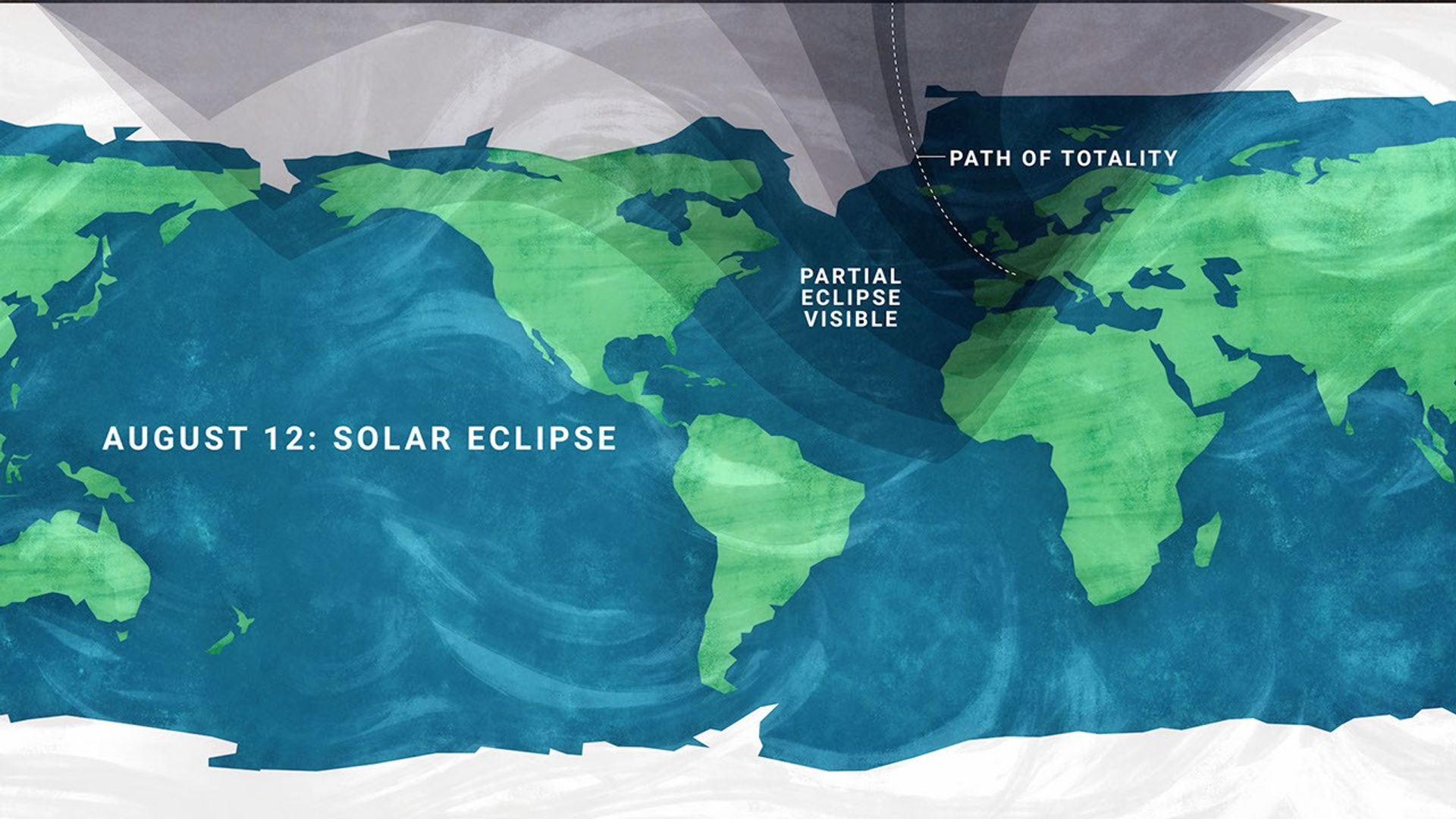
On Aug. 12, a total solar eclipse crosses northern Russia, Greenland, Iceland, and northern Spain, with a small corner of Portugal inside the path of totality.

In parts of the United States, from Alaska to North Carolina, the eclipse is partial. The Moon will take only a small bite out of the Sun, and the amount of coverage will vary with location.

A stylized flat map of the Earth indicating the viewing areas for a solar eclipse, with text on the left reading 'AUGUST 12: SOLAR ECLIPSE'. A semi-transparent dark shadow covers the northern portion of the globe, fanning out from the top edge. Within this shadow, a thin dotted line arcs down from the Arctic, crossing near Greenland and Iceland, passing over the Iberian Peninsula (Spain and Portugal), and ending near the Mediterranean Sea; this line is labeled 'PATH OF TOTALITY'. The broader shaded region surrounding this line is labeled 'PARTIAL ECLIPSE VISIBLE', and it covers northern North America, the Arctic, all of Europe, northern Africa, and northern and western Asia. The unshaded regions covering the rest of the map, including most of the United States, South America, central and southern Africa, and Australia, indicate areas where the eclipse will not be visible.
A map showing viewing areas of the August 2026 total solar eclipse.
NASA/JPL-Caltech

Remember to watch safely. Use certified eclipse glasses or a safe solar viewer any time any part of the Sun is visible. Regular sunglasses are not safe. And never use binoculars, a telescope, or a camera without a solar filter made for the front of the optics.

Later that same night, the Perseid meteor shower will light up the sky, peaking the evening of Aug. 12 into the early morning hours of the 13th. And with a New Moon arriving on the 12th, the skies will be ideally dark.

The Perseids happen every year when Earth passes through a debris stream left behind by Comet Swift-Tuttle. As those tiny bits of comet dust hit our atmosphere at high speed, they burn up as bright streaks of light.

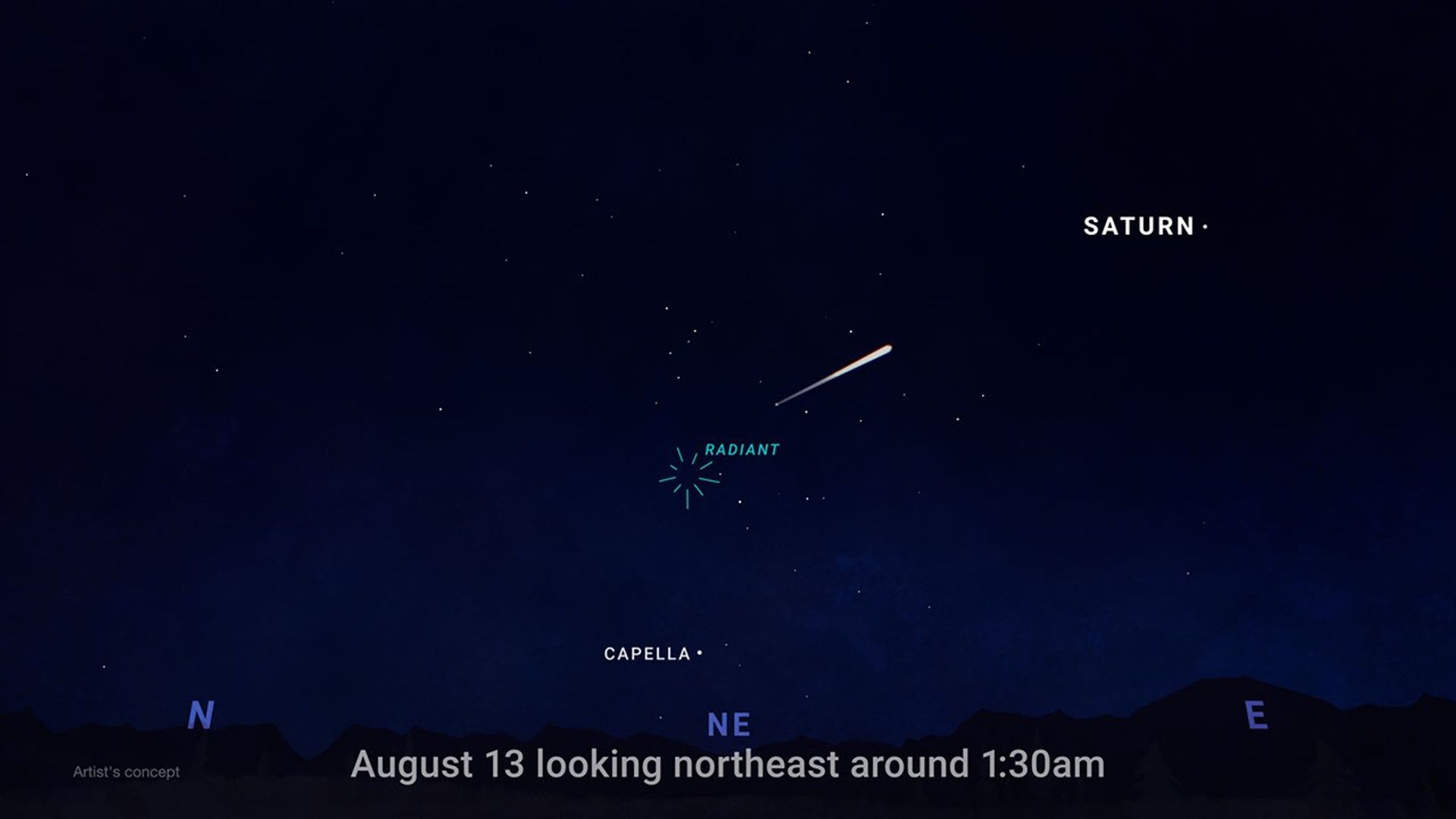
To view this meteor shower, look toward the northeast once it’s fully dark and watch for the constellation Perseus to clear the horizon. This is where the meteors originate, but let your eyes wander, because they can flash across any part of the sky.

For the best view, stay out late as the stars climb higher, find a dark open spot, and give your eyes 30 minutes to adjust.

An illustration of the night sky showing where to look for meteors, with text at the bottom reading 'August 13 looking northeast around 1:30am.' The bottom of the image shows a dark, silhouetted horizon of hills, marked with blue compass directions N (North), NE (Northeast), and E (East). In the center of the sky above NE is a teal burst icon labeled 'RADIANT,' indicating the point from which meteors appear to originate. A bright, white meteor streaks across the dark, starry sky, pointing back toward the radiant. Two other bright celestial objects are labeled: the star 'CAPELLA' is situated low in the sky below the radiant, and the planet 'SATURN' is positioned high up in the upper right corner. Small text in the bottom left corner reads 'Artist's concept.'
This illustration shows where in the night sky to look for the Perseid meteor shower.
NASA/JPL-Caltech

Aug. 14-16, Venus reaches its greatest eastern elongation, which is its widest apparent separation from the Sun during this evening appearance.

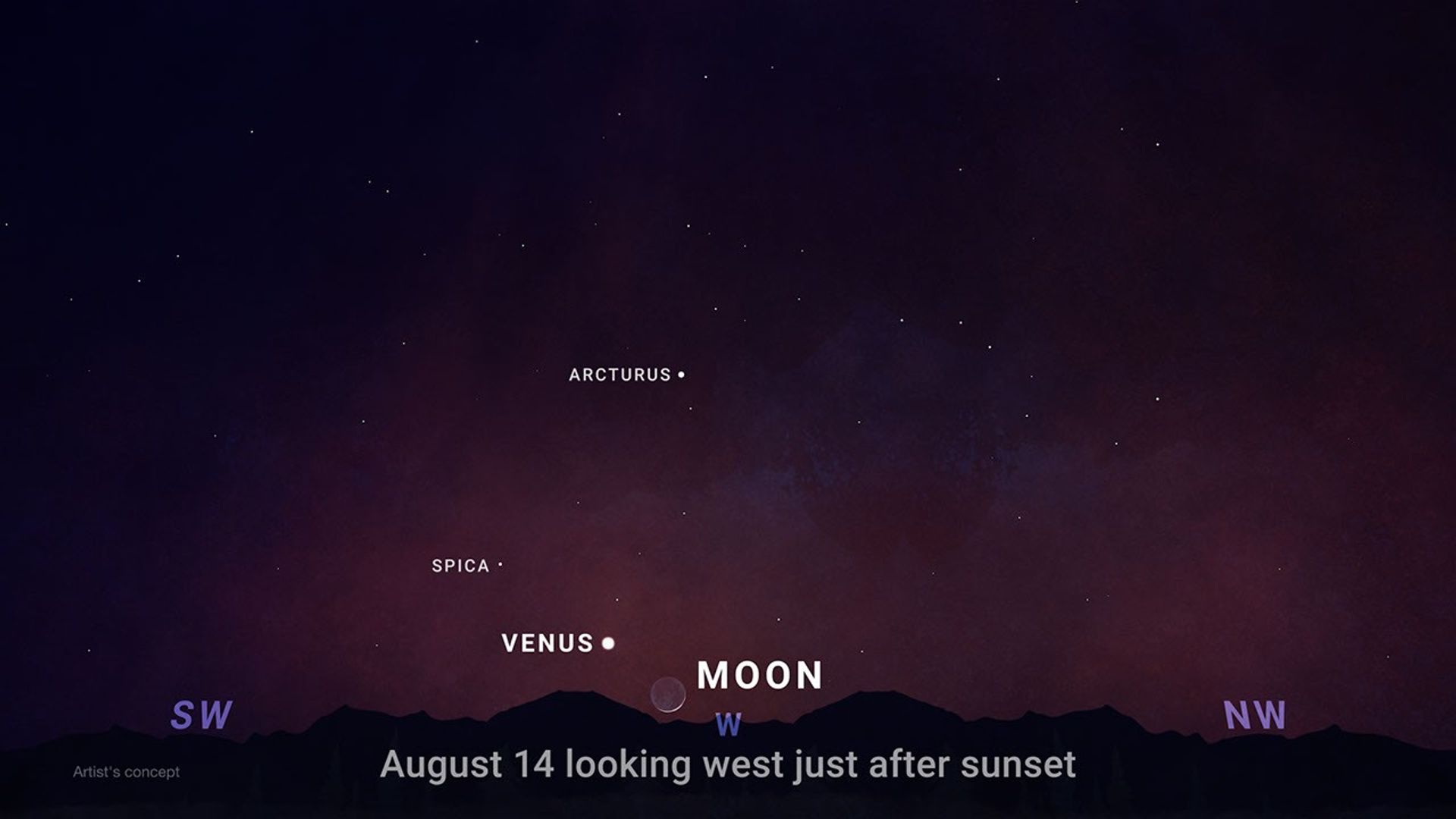
Look low in the western sky shortly after sunset for the bright object that will outshine every star around it. Through a telescope after sunset, Venus will look close to half lit, like a tiny lunar phase.

An illustration of the evening sky shortly after sunset, showing the positions of celestial objects. Text at the bottom center reads 'August 14 looking west just after sunset'. The bottom edge features a silhouetted, dark horizon of hills or mountains. Above the horizon, compass directions are indicated in purple: 'SW' (Southwest) on the left, 'W' (West) in the center, and 'NW' (Northwest) on the right. In the center, sitting very low on the horizon, is a faint crescent moon, labeled 'MOON'. Just to the left and slightly above the moon is a bright, white dot labeled 'VENUS'. Higher up and to the left of Venus is a smaller white dot labeled 'SPICA'. Above and to the right of Spica, towards the center of the image, is another labeled star, 'ARCTURUS'. The sky transitions from a deep reddish-purple near the horizon to dark blue at the top, sprinkled with numerous faint stars. In the bottom left corner, small text reads 'Artist's concept.'
This illustration shows where to observe Venus after sunset in August.
NASA/JPL-Caltech

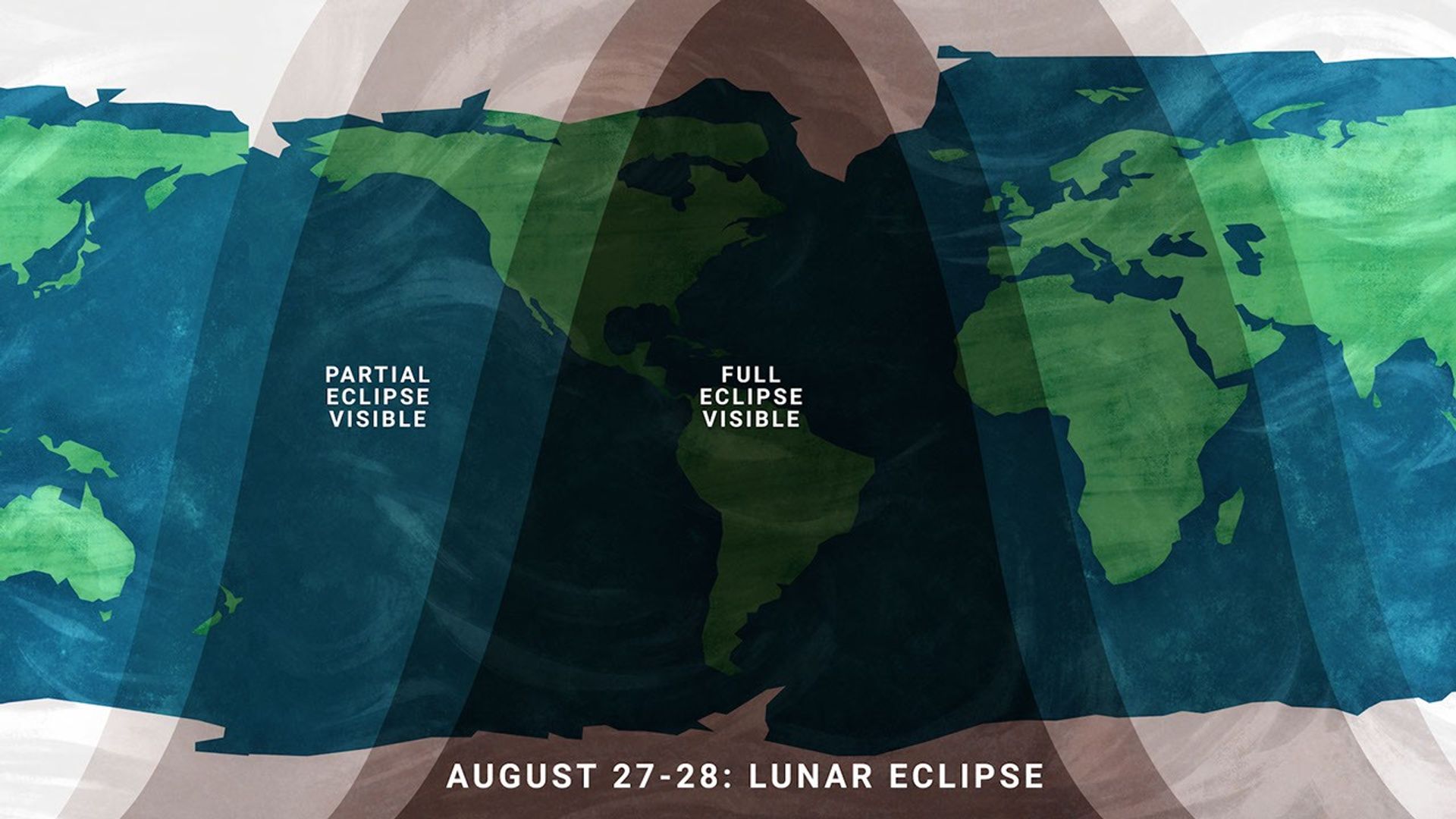
On the night of Aug. 27, continuing into Aug. 28 for some time zones, the Full Moon slips through Earth’s shadow, resulting in a partial lunar eclipse. It will be visible from much of North and South America and parts of Europe and Africa.

A stylized flat map of the Earth indicating the viewing areas for a lunar eclipse, with text at the bottom reading 'AUGUST 27-28: LUNAR ECLIPSE'. Large, semi-transparent dark bands arch across the map to represent visibility zones. The darkest central band, labeled 'FULL ECLIPSE VISIBLE', covers all of North America and South America, as well as the eastern Pacific Ocean and western Atlantic Ocean. Flanking this central region on the left and right are lighter shaded bands labeled 'PARTIAL ECLIPSE VISIBLE'. The western partial eclipse band covers the western Pacific Ocean and New Zealand, while the eastern partial eclipse band covers Europe and Africa. The unshaded outer regions of the map, including most of Asia and Australia, are areas where the eclipse will not be visible.
Viewing areas for the August 2026 lunar eclipse.
NASA/JPL-Caltech

At maximum eclipse, about 93% of the Moon’s diameter will be inside Earth’s dark central shadow, called the umbra. The Moon will not be completely covered, but it can look dramatically darkened, with a rusty, coppery tint along the covered edge.

Unlike a solar eclipse, a lunar eclipse is safe to watch with just your eyes. Binoculars or a small telescope can give you a closer view of Earth’s curved shadow moving across the Moon.

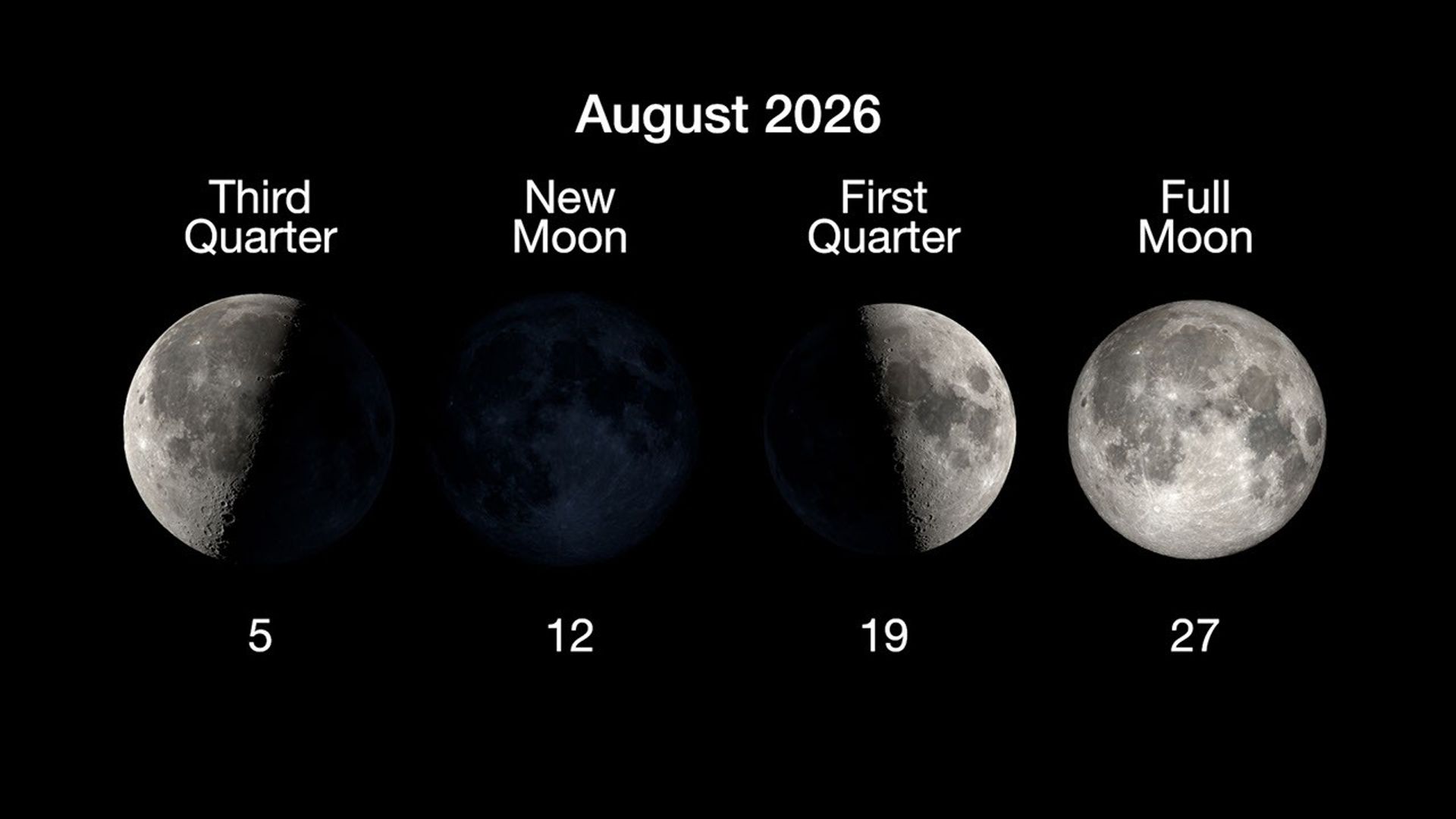
Here are the phases of the Moon for August.

An infographic on a black background titled 'August 2026' showing four primary phases of the Moon arranged in a horizontal row. Each phase features an image of the Moon with text above indicating the phase name and a number below indicating the date in August. From left to right:  'Third Quarter' on the 5th, showing the left half of the Moon illuminated. 'New Moon' on the 12th, showing the Moon's face completely in shadow. 'First Quarter' on the 19th, showing the right half of the Moon illuminated. 'Full Moon' on the 27th, showing the entire face of the Moon illuminated.
NASA/JPL-Caltech

You can stay up to date on all of NASA’s missions exploring the solar system and beyond at science.nasa.gov. I’m Raquel Villanueva from NASA’s Jet Propulsion Laboratory, and that’s What’s Up for this month.

Keep Exploring

Discover More Topics From NASA

The post What’s Up: August 2026 Skywatching Tips from NASA appeared first on NASA Science.

💾

A solar eclipse, one of the year's best meteor showers, Venus at its brightest in the evening sky, and a partial lunar eclipse to close out the month.On Augu...
  •  

What’s Up: August 2026 Skywatching Tips from NASA

A solar eclipse, the Perseids, bright Venus after sunset, and a deep partial lunar eclipse highlight August’s skywatching.

Skywatching Highlights

  • Aug. 5: Last Quarter Moon
  • Aug. 12: Total solar eclipse across northern Russia, Greenland, Iceland, northern Spain, and part of Portugal; partial eclipse in parts of the U.S.; New Moon
  • Aug. 12-13: Perseid meteor shower peak under dark skies
  • Aug. 14-16: Venus reaches greatest eastern elongation and shines low in the west after sunset
  • Aug. 27-28: Partial lunar eclipse visible from much of North and South America and parts of Europe and Africa

Transcript

A solar eclipse, one of the year’s best meteor showers, Venus at its brightest in the evening sky, and a lunar eclipse to close out the month.

That’s “What’s Up” for August.

On Aug. 12, a total solar eclipse crosses northern Russia, Greenland, Iceland, and northern Spain, with a small corner of Portugal inside the path of totality.

In parts of the United States, from Alaska to North Carolina, the eclipse is partial. The Moon will take only a small bite out of the Sun, and the amount of coverage will vary with location.

A stylized flat map of the Earth indicating the viewing areas for a solar eclipse, with text on the left reading 'AUGUST 12: SOLAR ECLIPSE'. A semi-transparent dark shadow covers the northern portion of the globe, fanning out from the top edge. Within this shadow, a thin dotted line arcs down from the Arctic, crossing near Greenland and Iceland, passing over the Iberian Peninsula (Spain and Portugal), and ending near the Mediterranean Sea; this line is labeled 'PATH OF TOTALITY'. The broader shaded region surrounding this line is labeled 'PARTIAL ECLIPSE VISIBLE', and it covers northern North America, the Arctic, all of Europe, northern Africa, and northern and western Asia. The unshaded regions covering the rest of the map, including most of the United States, South America, central and southern Africa, and Australia, indicate areas where the eclipse will not be visible.
A map showing viewing areas of the August 2026 total solar eclipse.
NASA/JPL-Caltech

Remember to watch safely. Use certified eclipse glasses or a safe solar viewer any time any part of the Sun is visible. Regular sunglasses are not safe. And never use binoculars, a telescope, or a camera without a solar filter made for the front of the optics.

Later that same night, the Perseid meteor shower will light up the sky, peaking the evening of Aug. 12 into the early morning hours of the 13th. And with a New Moon arriving on the 12th, the skies will be ideally dark.

The Perseids happen every year when Earth passes through a debris stream left behind by Comet Swift-Tuttle. As those tiny bits of comet dust hit our atmosphere at high speed, they burn up as bright streaks of light.

To view this meteor shower, look toward the northeast once it’s fully dark and watch for the constellation Perseus to clear the horizon. This is where the meteors originate, but let your eyes wander, because they can flash across any part of the sky.

For the best view, stay out late as the stars climb higher, find a dark open spot, and give your eyes 30 minutes to adjust.

An illustration of the night sky showing where to look for meteors, with text at the bottom reading 'August 13 looking northeast around 1:30am.' The bottom of the image shows a dark, silhouetted horizon of hills, marked with blue compass directions N (North), NE (Northeast), and E (East). In the center of the sky above NE is a teal burst icon labeled 'RADIANT,' indicating the point from which meteors appear to originate. A bright, white meteor streaks across the dark, starry sky, pointing back toward the radiant. Two other bright celestial objects are labeled: the star 'CAPELLA' is situated low in the sky below the radiant, and the planet 'SATURN' is positioned high up in the upper right corner. Small text in the bottom left corner reads 'Artist's concept.'
This illustration shows where in the night sky to look for the Perseid meteor shower.
NASA/JPL-Caltech

Aug. 14-16, Venus reaches its greatest eastern elongation, which is its widest apparent separation from the Sun during this evening appearance.

Look low in the western sky shortly after sunset for the bright object that will outshine every star around it. Through a telescope after sunset, Venus will look close to half lit, like a tiny lunar phase.

An illustration of the evening sky shortly after sunset, showing the positions of celestial objects. Text at the bottom center reads 'August 14 looking west just after sunset'. The bottom edge features a silhouetted, dark horizon of hills or mountains. Above the horizon, compass directions are indicated in purple: 'SW' (Southwest) on the left, 'W' (West) in the center, and 'NW' (Northwest) on the right. In the center, sitting very low on the horizon, is a faint crescent moon, labeled 'MOON'. Just to the left and slightly above the moon is a bright, white dot labeled 'VENUS'. Higher up and to the left of Venus is a smaller white dot labeled 'SPICA'. Above and to the right of Spica, towards the center of the image, is another labeled star, 'ARCTURUS'. The sky transitions from a deep reddish-purple near the horizon to dark blue at the top, sprinkled with numerous faint stars. In the bottom left corner, small text reads 'Artist's concept.'
This illustration shows where to observe Venus after sunset in August.
NASA/JPL-Caltech

On the night of Aug. 27, continuing into Aug. 28 for some time zones, the Full Moon slips through Earth’s shadow, resulting in a partial lunar eclipse. It will be visible from much of North and South America and parts of Europe and Africa.

A stylized flat map of the Earth indicating the viewing areas for a lunar eclipse, with text at the bottom reading 'AUGUST 27-28: LUNAR ECLIPSE'. Large, semi-transparent dark bands arch across the map to represent visibility zones. The darkest central band, labeled 'FULL ECLIPSE VISIBLE', covers all of North America and South America, as well as the eastern Pacific Ocean and western Atlantic Ocean. Flanking this central region on the left and right are lighter shaded bands labeled 'PARTIAL ECLIPSE VISIBLE'. The western partial eclipse band covers the western Pacific Ocean and New Zealand, while the eastern partial eclipse band covers Europe and Africa. The unshaded outer regions of the map, including most of Asia and Australia, are areas where the eclipse will not be visible.
Viewing areas for the August 2026 lunar eclipse.
NASA/JPL-Caltech

At maximum eclipse, about 93% of the Moon’s diameter will be inside Earth’s dark central shadow, called the umbra. The Moon will not be completely covered, but it can look dramatically darkened, with a rusty, coppery tint along the covered edge.

Unlike a solar eclipse, a lunar eclipse is safe to watch with just your eyes. Binoculars or a small telescope can give you a closer view of Earth’s curved shadow moving across the Moon.

Here are the phases of the Moon for August.

An infographic on a black background titled 'August 2026' showing four primary phases of the Moon arranged in a horizontal row. Each phase features an image of the Moon with text above indicating the phase name and a number below indicating the date in August. From left to right:  'Third Quarter' on the 5th, showing the left half of the Moon illuminated. 'New Moon' on the 12th, showing the Moon's face completely in shadow. 'First Quarter' on the 19th, showing the right half of the Moon illuminated. 'Full Moon' on the 27th, showing the entire face of the Moon illuminated.
NASA/JPL-Caltech

You can stay up to date on all of NASA’s missions exploring the solar system and beyond at science.nasa.gov. I’m Raquel Villanueva from NASA’s Jet Propulsion Laboratory, and that’s What’s Up for this month.

Keep Exploring

Discover More Topics From NASA

  •  

Researchers devise a full-color night vision goggle

Human eyes don’t register the infrared portion of the light spectrum because infrared photons don't carry enough energy to trigger the signaling pathway inside our light-sensing cells. But we’ve been able to make devices that give us a visual representation of what’s happening in the infrared.

A team at the Beijing Institute of Technology, led by Xin Tang and Ge Mu, has now built a device that lets people see infrared in a new way. Instead of just translating it to visible shades of green as it’s done in standard night-vision goggles, it translates different infrared wavelengths into distinct parts of the visual spectrum, giving the eye something closer to natural vision.

Researchers achieved that by combining mercury telluride colloidal quantum dots, which absorb infrared light, and a dual-layer OLED, which converts that absorbed energy into visible color. Stacked together with the right internal wiring, they make incoming infrared radiation come out the other side as an ordinary-looking, full-color image.

Read full article

Comments

© Dmitri Toms

  •  

Set a Custom EQ for Your AirPods in iOS 27

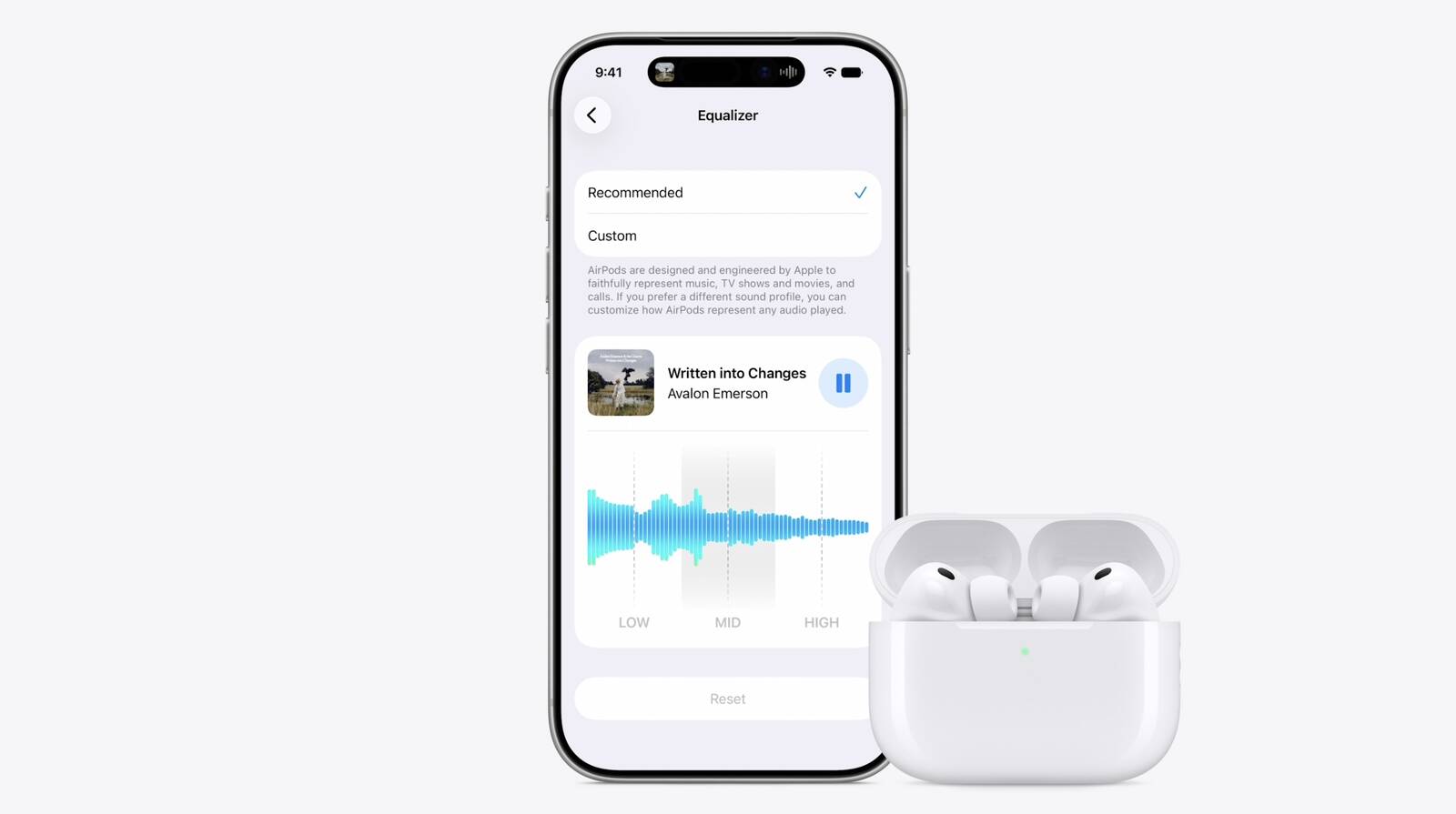
Sony, Bose, and Sennheiser owners have been able to adjust the audio frequency spectrum of their headphones for years, whereas AirPods owners have had to make do with Apple's default tuning. That's no longer the case in iOS 27, which adds a three-band equalizer to the AirPods settings screen.


It's worth noting that iOS has had an EQ setting for years – it's buried in Settings ➝ Apps ➝ Music, but it applies only to Apple Music playback, and works on any pair of headphones. In iOS 27, the new EQ is specifically tied to your AirPods, so it applies to everything you listen to. Your custom EQ profile also carries over to iPad and Mac when you pair your AirPods with them.

What You Need


Custom EQ requires Apple's H2 chip, so it supports AirPods Pro 2, AirPods Pro 3, AirPods 4, and AirPods Max 2. Earlier models, including the original AirPods Max, aren't compatible with the feature.

You'll also need current AirPods beta firmware. If the Equalizer option described below doesn't appear, pair your AirPods with your iPhone, tap your AirPods in Settings, then tap AirPods Beta Updates and toggle on the beta updates option. Afterwards, put your AirPods in the case, connect the case to power, and leave it near your unlocked iPhone to let the latest beta firmware install quietly in the background. It shouldn't take more than half an hour.

How to Adjust Your AirPods EQ


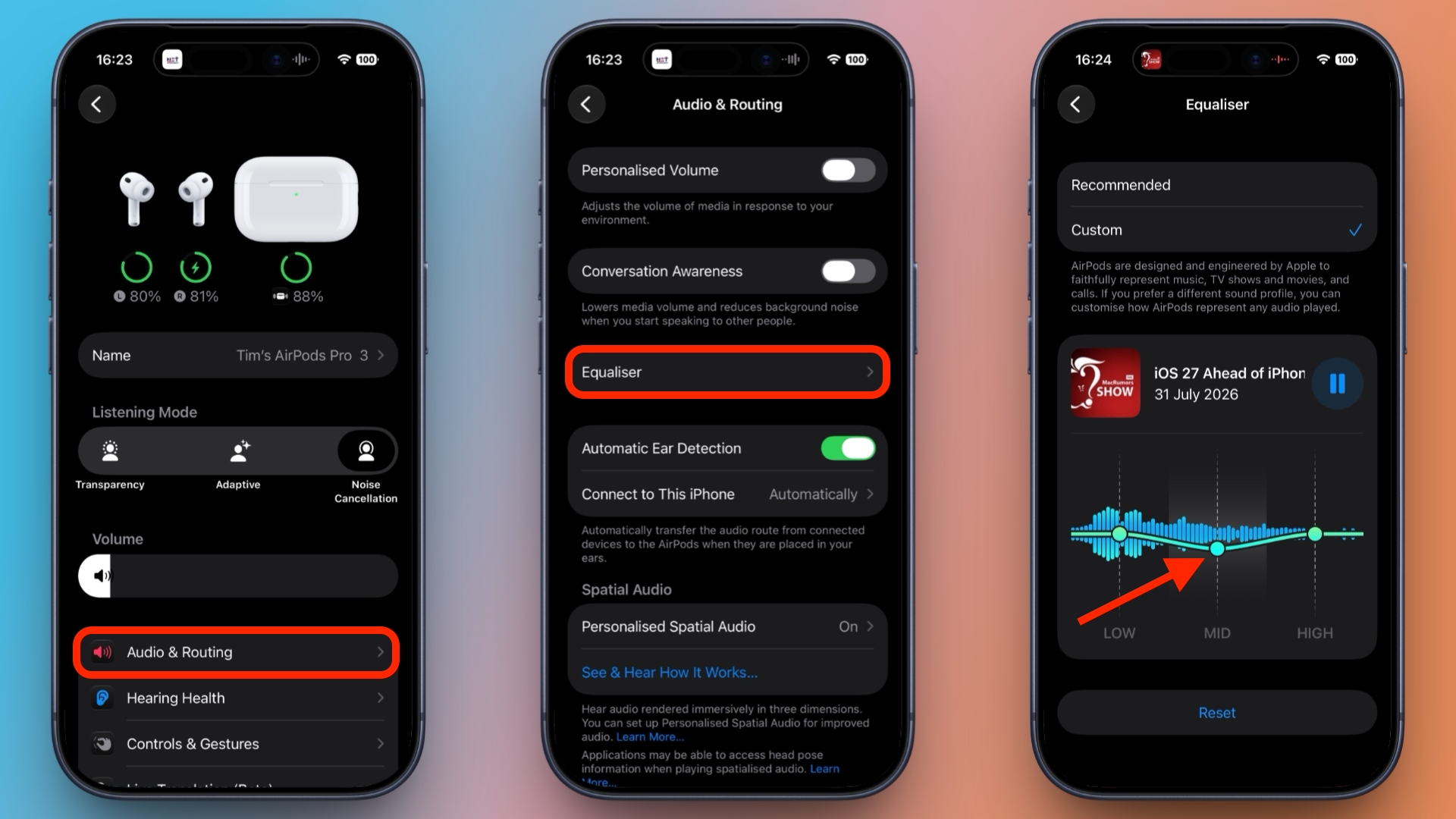
  1. With your AirPods connected, open Settings on your iPhone.

  2. Tap your AirPods at the top of the screen.

  3. Tap Audio & Routing.

  4. Tap Equalizer.

  5. Tap Custom, then drag the low, mid, and high points up or down.

settings
You should see a media playback control above the EQ showing the last thing you listened to, allowing you to hear how your adjustments sound in real time. Lows cover bass weight, mids carry vocals and most instruments, and highs handle treble detail and sibilance.

To undo your changes, simply tap Reset, or choose Recommended at the top to restore Apple's default profile. You'll find all the same options in iPadOS 27, as well as in macOS 27 Golden Gate (in System Settings).

iOS 27 and Apple's other upcoming software updates remain in public beta for now, with a general release expected sometime this September.
Related Roundups: AirPods 4, iOS 27, iPadOS 27
Buyer's Guide: AirPods (Caution)
Related Forum: AirPods

This article, "Set a Custom EQ for Your AirPods in iOS 27" first appeared on MacRumors.com

Discuss this article in our forums

  •  

Wildfire near Sizewell nuclear plant causes ‘total devastation’ to Suffolk landscape

Emergency crews say situation remains ‘dynamic’ as more than 100 firefighters battle Dunwich Heath blaze

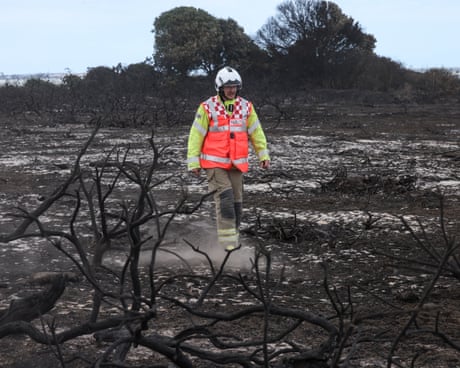
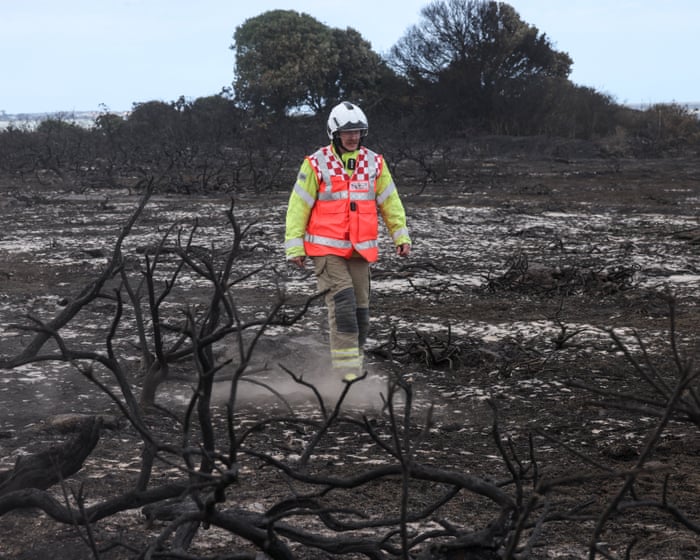
A wildfire near Britain’s biggest nuclear power station has caused “total devastation” to one of the UK’s most important landscapes, as fire crews said the situation remained “dynamic”.

More than 100 firefighters have been battling the blaze on Dunwich Heath, near Leiston, on the Suffolk coast since Wednesday evening. The fire service said on Friday afternoon the situation was stabilising but remained a “major incident” that was “dynamic and potentially changeable”.

Continue reading...

© Photograph: Humphrey Nemar/PA

© Photograph: Humphrey Nemar/PA

© Photograph: Humphrey Nemar/PA

  •  

Le drone le plus rapide du monde atteint une vitesse folle et pourrait bientôt changer les règles du combat aérien

Après plusieurs années de compétition entre passionnés, le record de vitesse des drones électriques change de dimension. Une entreprise allemande affirme avoir franchi un nouveau cap avec un prototype dont la technologie pourrait bientôt trouver des applications bien plus concrètes.

  •  

Honor Magic8 Lite : ce smartphone 5G avec écran AMOLED et 8 Go de RAM s’affiche à moins de 215 € sur AliExpress

Changer de smartphone est loin d’être simple tant l’offre est variée. Cette offre dédiée au Honor Magic8 Lite 256 Go met cependant tout le monde d’accord. Doté d’une puce Snapdragon, d’un grand écran AMOLED et d’un appareil photo complet, ce très bon smartphone de milieu de gamme s’affiche à...

  •  

4K, 180 Hz et dalle 27 pouces : ce moniteur gaming Alienware AW2725QF à moins de 455 € impressionne les joueurs

Un écran gaming doit trouver un équilibre entre qualité d'affichage et fluidité pour répondre aux attentes des joueurs actuels, surtout lorsqu'il n'est pas question de dépenser 800, 900, 1000 € ou plus. L'Alienware AW2725QF de DELL, avec sa dalle IPS de 27 pouces, sa résolution 4K UHD et son...

  •  
❌