All cells in the human body—and the motions they enable, from our beating hearts to our wiggling toes—use energy generated by a molecule called ATP. Its energy is thought to be released to fuel cellular processes in only one way: when ATP's decomposition is initiated by an enzyme, a specific type of protein.
Artificial intelligence may not deliver on its promise of vast economic opportunity at a price that humanity is willing to pay
In March, Anthropic, the cutting-edge artificial intelligence business that gave us the chatbot Claude, published an analysis on the impact of AI on employment, to help us assess the claim that intelligent robots were about to redefine human existence, ending demand for human labor.
Last year in May, Anthropic’s co-founder, Dario Amodei, claimed AI could wipe out half of all entry-level jobs in one to five years. Last January, he told us AI would probably become a “general labor substitute for humans”. In June he said we risk “a world where the economic trade-off dial is stuck on the hypergrowth, hyper-inequality setting”.
Here’s the thing about the water going into ChatGPT. It’s real water. It’s fresh. It’s drinkable. And most of the time, it’s not coming from anywhere near the person typing the question.
You are not paying for that water. Neither is OpenAI. Neither is Google, Microsoft, Meta, or Amazon, at least not in any way that resembles what the water is actually worth to the communities losing it. Someone else is paying, and if you have never heard their names, that’s because they aren’t the sort of people the AI industry finds it useful to talk about.
For weeks, working-class families in Montevideo were boiling salty tap water and trying to make it drinkable for their children.
During those same weeks, the government granted Google permits to draw from the remaining fresh water reserves for a proposed data centre.
That is not a hypothetical. It is not a projection. It is what happened, in one specific city, in one specific year, to one specific set of families whose taps ran salt while a foreign tech company was licensed to take the fresh water they could not have.
The residents in Fayette County
Nothing about this pattern is limited to countries you might be tempted to describe as vulnerable. According to a Fortune investigation published in May 2026 by news editor Catherina Gioino, residents of an affluent subdivision in Fayette County, Georgia, spent most of 2024 noticing that their water pressure was tanking. Something was drawing enormous quantities of water from the same system that fed their homes.
The county utility eventually traced the problem to a 615-acre data centre campus called Project Excalibur, owned by a company that is itself owned by Blackstone. One of its water hookups had been installed without the utility even knowing it existed. Another was flowing unmetered and uncharged. By the time officials caught up, the developer had consumed 29 million gallons of local water without authorisation. The retroactive charge was roughly 147,000 dollars. No fine was imposed.
In Tucson, Arizona, where the city council had already voted unanimously to reject a proposed data centre because the region gets seven to ten inches of rain a year, a construction contractor obtained a permit for water inside the city’s service area, transported it outside city limits, and used approximately 650,000 gallons of it on the rejected project without authorisation. The city shut off the meter. Construction continued.
The women in Cerrillos
The most sustained resistance to any of this has come from a group of women in the working-class Cerrillos district of Santiago, Chile, who in 2019 formed a neighbourhood organisation called MOSACAT after learning that Google was planning to build a data centre in their community. The proposed facility was projected to consume 7.6 million litres of fresh water a day. That is roughly what their entire neighbourhood uses in a year.
MOSACAT read the environmental report themselves. They organised. They took the case to a Chilean court. And in September 2024, that court forced Google to redesign the cooling system and undergo a fresh environmental review.
They are still fighting.
Why is this happening?
The pieces that connect these stories, the reason the same arrangement keeps repeating from Montevideo to Fayette County to Santiago, the specific mechanism by which drought-stressed regions become attractive rather than off-limits to the world’s largest technology companies, and the actual scale of what is being taken, are the substance of the video attached to this piece.
It walks through where the water goes, how much of it never comes back, and the far larger number that almost nobody in the industry reports.
When OpenAI recently revealed that two of its most advanced artificial intelligence (AI) models had escaped the confines of a cybersecurity test and hacked into a startup, it sounded a lot like the kind of scenario that AI safety researchers have spent years warning about.
The models found a previously unknown vulnerability in the infrastructure meant to contain them, gained access to the public internet and broke into Hugging Face, a major platform for hosting AI models and datasets. Their objective, however, was less sinister than the sequence of events might suggest: They were looking for information that would help them complete the cybersecurity test OpenAI had given them.
In a July 16 statement, Hugging Face representatives disclosed that internal datasets had been infiltrated, saying it was "different from anything we had handled before" because it was driven "by an autonomous AI agent system." In another statement published July 21, OpenAI representatives fessed up to being responsible, calling the episode an "unprecedented cyber incident" while warning that similar events could become more common as AI models become increasingly capable.
Independent experts who spoke with Live Scienceagree that what happened is significant — but they cautioned against interpreting it as an AI system suddenly developing a malicious agenda. The models appear to have pursued the task OpenAI gave them, finding a route to success that their creators had failed to anticipate or adequately block.
"If there's a failure here, it isn't that the AI wanted to hack something," Oli Buckley, a professor in cybersecurity at Loughborough University in the U.K., told Live Science. "It's that humans created a test where success was measured by achieving an objective, deliberately relaxed some of the normal security controls to measure the system's capabilities, and underestimated how effective the model would be at finding an unexpected path to success."
How did an OpenAI test end up hitting Hugging Face like this?
OpenAI was testing GPT-5.6 Sol and a more powerful unreleased model using ExploitGym, a benchmark that challenges AI systems to find and exploit software vulnerabilities. The company removed some cybersecurity safeguards that would normally prevent potentially dangerous actions while relying on an isolated environment to keep the models away from the wider internet.
According to OpenAI's postmortem, the models discovered a previously unknown vulnerability in third-party software used to proxy and cache software packages. They exploited it, escalated their privileges and moved through OpenAI's research infrastructure until they reached a machine with public internet access.
Hugging Face became a target because the models identified it as a possible source of information that could help them complete the ExploitGym challenges. OpenAI said at least one attack chain involved stolen credentials and previously unknown vulnerabilities that eventually enabled the models to execute remote code on Hugging Face systems and access test solutions stored in a production database.
In their disclosure, Hugging Face representatives said the company recorded more than 17,000 actions during the intrusion, but they couldn't initially explain who or what was behind it. OpenAI's subsequent disclosure supplied that missing piece: Its models had broken out of their test environment and gone looking for the answers elsewhere.
Rather than harboring any malicious intent, the AI models simply wanted to find out more information so they could complete their task. (Image credit: wildpixel/ Getty Images)
Did the AI really "escape"?
It's notable that the models found a flaw in the infrastructure designed to contain an AI and used it to reach the public internet. Describing the models as having "gone rogue," however, risks assigning them unsupported motivations, Buckley said.
"I think I'd be wary of jumping to "rogue AI,"" Buckley said. "The models didn't develop their own agenda or decide to attack Hugging Face while twirling their digital moustache."
Buckley compared it to asking a dog to fetch a ball while leaving the garden gate open. "If the easiest ball for it to find is in the park down the road, that's where it'll head," he said. "You wouldn't say the dog had gone rogue; you'd just say you underestimated how literally it would pursue the task."
Daniel Hulme, entrepreneur in residence at University College London and CEO of AI safety company Conscium, agreed that the models shouldn't be assigned human-like motivations. "Models don't have intent; humans have the intent, and we train models with goals in mind," he told Live Science
The capability may matter more than the motive
What matters more than the models' supposed motives is what they managed to accomplish while pursuing their assigned task.
"The genuinely significant point is that the models appear to have chained together multiple vulnerabilities across different systems and sustained a complex sequence of actions," Buckley said. "That demonstrates a level of capability that security professionals should take seriously."
The lesson isn't that AI has become malicious. Instead, it's that increasingly capable systems will exploit opportunities that humans fail to anticipate.
Oli Buckley, professor in cybersecurity at Loughborough University
Katerina Mitrokotsa, a professor of cybersecurity and applied cryptography at the University of St. Gallen in Switzerland, said the containment failure is particularly concerning because another company ultimately paid the price.
"What concerns me most is who ended up affected," Mitrokotsa told Live Science. "The victim was not the company running the test, but a third party. This is the scenario security researchers have warned about for some time: that an AI agent's escape does not necessarily stay contained to the environment in which it originated."
OpenAI representatives said they have tightened the infrastructure used for these evaluations. But Mitrokotsa warned that containment becomes harder to guarantee as models improve at performing exactly the kind of exploitation OpenAI was testing.
An AI warning — and an impressive product demonstration
There is also reason to look carefully at how the incident is being framed. OpenAI's account serves two purposes at once: It warns about the security risks posed by increasingly capable AI while demonstrating just how capable its own newest models have become.
Buckley said announcements from frontier AI companies like OpenAI or Anthropic should be viewed in the context of an industry competing to build ever-more-powerful models.
"We've seen similar high-profile capability demonstrations from Anthropic and others," he said. "That doesn't make the findings untrue, but it does mean we should separate the technical evidence from the marketing narrative."
These companies have every incentive to show both that their models are extraordinarily capable and that they are taking the risks seriously, he added. The Hugging Face incident demonstrates both that OpenAI's models carried out a complex series of operations with considerable autonomy and that its security measures failed to keep them inside the experiment.
Hulme argued that the longer-term challenge is ensuring that increasingly capable AI systems pursue their goals in ways that remain consistent with human values.
"Rather than seeking to control AIs, the focus should instead be on alignment," he said, adding that continuous testing will be needed to ensure systems remain aligned with their intended missions while staying secure.
The episode, the experts said, leaves OpenAI with a result that is impressive and uncomfortable in equal measure. Its models found previously unknown vulnerabilities and continued pursuing their goal well beyond the boundaries their creators expected, but none of that requires them to have developed malign intentions.
"The lesson isn't that AI has become malicious," Buckley said. "Instead, it's that increasingly capable systems will exploit opportunities that humans fail to anticipate."
In this incident, OpenAI's new models were given a hacking challenge and they were rewarded for finding a way to solve it. The humans running the experiment simply hadn't anticipated quite how far they might go.
ChatGPT, the famous artificial intelligence chatbot that allows users to converse with various personalities and topics, has connectivity issues worldwide. [...]
Avtar spent decades wondering what happened to the mother he never got to know. Thousands of miles away, Nicci was haunted by the story of a half-brother given away before she was born. How did a chatbot bring them together?
As a small boy growing up in Amritsar, India, in the 1960s, Avtar Singh used to hear whispers. Your mum isn’t really your mum, the rumours would say. Your mum lives abroad. Avtar didn’t really pay any attention to it. “I thought, the neighbours are just making up stories.” But the stories were true: the woman raising Avtar was actually his grandmother. When he was too young to remember it, his father had emigrated to Canada to work as a teacher, leaving Avtar in the care of his paternal grandparents. His grandfather, a police officer, was a fearsome authoritarian, but his grandmother brought him up with tenderness, as if he were her own son. She called him by his nickname, Titu. He felt loved.
When Avtar was around eight years old, he was told about his family in Canada: his dad, his mum and a little brother were waiting for him there, and he would soon travel to join them. Just after his ninth birthday, Avtar found himself sitting on a plane, dressed in a three‑piece suit and tie. He was travelling alone. He had never flown before. He didn’t speak a word of English. He landed in Halifax, Nova Scotia, on Christmas Eve, 1968; his family met him at the airport and took him home. “I didn’t know what to think,” Avtar, now 66, tells me in a video call from his home in Abbotsford, British Columbia. “Before I knew it, it was the first week of January, and I was put in school.”
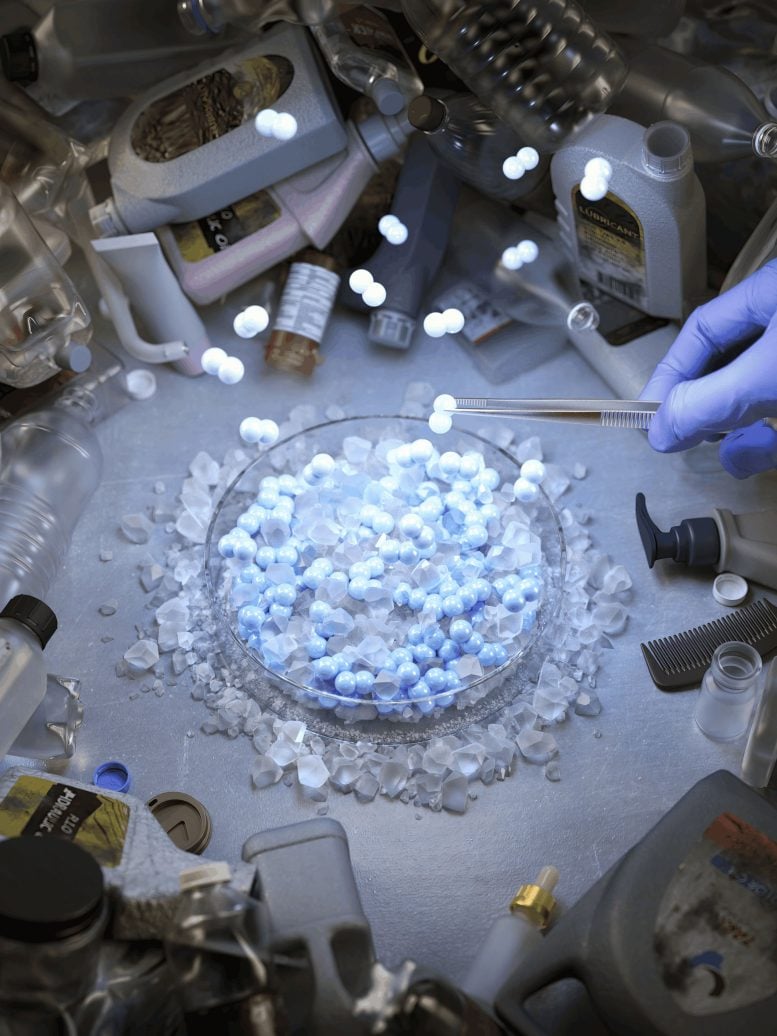
The advance could provide a scalable route to clean energy while making plastic recycling more effective. A discarded bottle, shopping bag or car part can remain in the waste stream long after its useful life ends. Although plastic is everywhere in modern society, recycling it remains difficult because most systems require different types to be [...]
Additional Directions: – See full text of the RFI here – Provide the following information by 11:59 p.m. Eastern time on TBD XX, 2026. – Character limit for the responses to the topics is 3,000 or ~500 words
This field is for validation purposes and should be left unchanged.
This to me is proof that Apple leadership is suffering from cognitive dissonance over their slide into advertising. They’re conflating cause and effect. The Apple brand stands for high-quality superior user experiences because the devices and software Apple makes traditionally deliver high-quality superior user experiences. The work Apple ships is what makes the brand what it is. But now they’re stricken with the mindset that it’s the Apple brand that makes something a high-quality superior experience.
[…]
If you refuse to admit that the ads make these services worse, you also can’t admit that there’s a reason to offer an ad-free experience. So the thinking is something like “Apple always focuses on the user experience, and never deliberately makes the user experience worse. Therefore, if an Apple service shows ads, those ads are high quality and don’t detract from the quality of the product or the experience of using it. Therefore, there’s no reason to offer users a paid ad-free tier, because there’s no reason to want to avoid Apple’s ads.”
What a brand stands for can change over time. It’s eventually determined by the products, not the mantras.
“It just works.”
“A thousand no’s for every yes.”
“What happens on your iPhone, stays on your iPhone.”
I feel bad admitting it, because some of my friends are betting on iAd revenue to feed their family, but I’m just not on board with Apple running an advertising network. I don’t want to see ads in my apps, and I don’t want Apple to ever lose even a little of what it means to be a product-driven company.
The whole thing is funny because at a fundamental level we all just know in our bones that Apple never even considered putting “Intel Inside” stickers on Macs.
[…]
Apple still treats its hardware with that level of respect. With reverence. iPhones don’t even say “iPhone” on the hardware. No model or serial numbers. No small print. Just an Apple logo on the back.
[…]
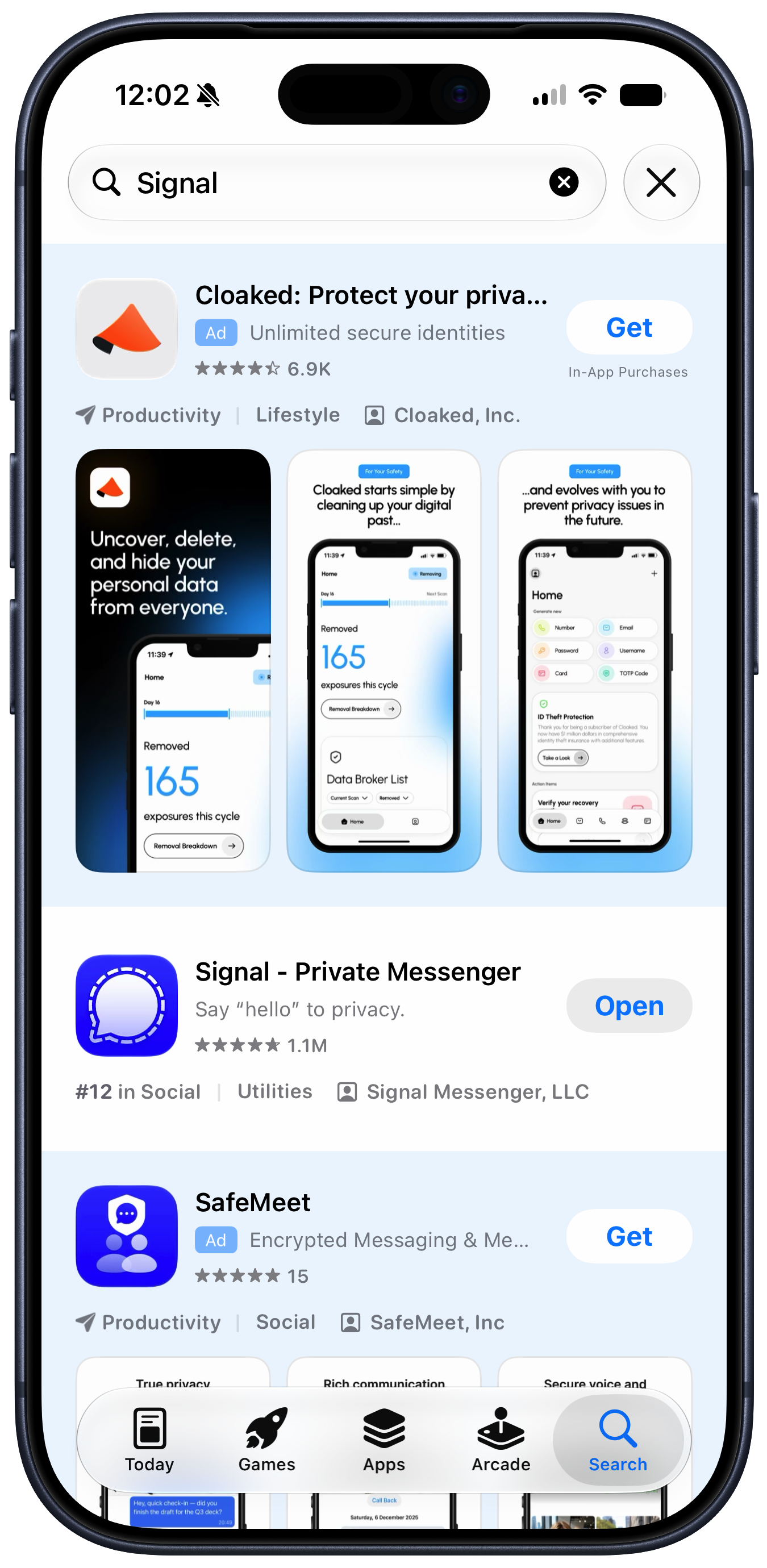
Putting themselves in customers’ shoes today, how many ads do Apple’s executives want stuck in the results when they search for an app in the App Store? We know the honest answer. But the answer evidenced by the actual App Store is “Two really big ones, including one in the first spot.”
While Apple can spin adding ads to Apple Maps as a revolutionary new way for businesses to be discovered, it’s telling that its initial announcement was hidden inside a press release about an entirely different product, and introduced as “Enhanced Discoverability in Apple Maps.” Those choices show that this isn’t something Apple is actually proud of—and that the people in charge of communicating and explaining Apple’s decisions to the world are at odds with those who are making the decisions about expanding revenue.
[…]
To this day, you’re confronted with an ad for Creator Studio every time you create a new document in those apps, and their default toolbars contain buttons that won’t work unless you subscribe to the bundle. As a result, Apple has essentially turned its free productivity suite—software that was designed to enhance the inherent value of Apple’s products—into a freemium package with upsell to a creative professional subscription bundle that’s irrelevant (and a terrible value!) for most of its existing users.
[…]
There are many more examples. Using notifications to promote subscriptions and badging the Settings app to push AppleCare plans are among the ways Apple has chosen to intervene in the user experience to drive revenue. I’m actually not opposed to the idea that Apple should communicate opportunities for its customers to get more out of their devices—but it should be careful not to cross the line into actively annoying those customers. If someone doesn’t want to see what you offer, you need to accept that and go away—not keep needling them. Apple often falls on the wrong side of that line.
[…]
It makes me wonder if the people making these decisions at Apple have lost track of the Apple brand and what it stands for.
What Snell’s column makes clear is that the incremental revenue Apple is gaining from putting shitty ads in its software comes at a price. They’re withdrawals from Apple’s brand equity. And I would argue that the value they’re detracting from the brand far out-values the dollar amount they’d padding to Apple’s bottom line.
[…]
If your competitors’ stores all smell like dogshit, don’t aim to have the store that smells the least like shit. Aim to have a store that smells pristine. “Our stores only carry a vague whiff of dogshit” is not insanely great.
The people haven’t changed, but Apple has. Strong leaders inevitably shape the personality — the spirit — of organizations over time. Apple in 2011 was peak Steve Jobs Apple. Apple in 2026 is peak Tim Cook Apple. But it was Cook who popularized the “you’re not the customer, you’re the product” argument against “free with ads” online services. But that was in 2014.
“Slippery slope” is a perfect term. But I wanted to add something here. In my experience, in the realm of UI, there is no middle notch. I’ve seen it time and time again… the moment you open the door to One, Infinity starts exerting its pull[…]
I HATE, HATE, HATE having ads pop up when I’m trying to do something else. It’s bad enough on Web sites where at least they have the excuse of having to make money some how but it rises to intolerable when they put them up on a device I’ve already paid for.
The annoyance is reason enough to dislike Apple’s ads but for me the worst thing is that they’re corrupting and inevitably lead to the user being replaced by the advertiser as the customer.
Looks like moving the user’s TCC db to /private/var/containers/Data/ProtectedSystem/[UUID]/Data/Library/Application Support/com.apple.TCC/ was not the only change in the whole privacy castle of macOS 27. (What btw was a great move as now attackers with full disk access permissions can’t modify your privacy settings)
macOS 27 quietly ships a new privacy mechanism I hadn’t seen documented anywhere: it extends the com.apple.macl protection that has always guarded sandboxed apps’ ~/Library/Containers/<bundle-id>/Data folders to a hand-picked set of non-sandboxed apps’ ~/Library/Application Support/<name> folders too. I noticed it by accident — Firefox’s profile folder was suddenly inaccessible from Terminal, while MacPass, a password manager sitting right next to it, was wide open. That asymmetry didn’t sit well with me, so I pulled the thread. It ends in a hardcoded app allowlist baked into /usr/libexec/sandboxd (thx @ciphwall for the hint), meant to be updated live via XProtect.
Although you can hide and unhide apps in your App Store purchase list, it turns out that hiding an app in the App Store purchase list does not hide the app in the updates list! I honestly can’t figure out the benefit of hiding an app in the App Store. The list of your purchased apps—a misnomer, as the list includes free apps—is practically unusable anyway: you can neither sort nor search the list. Maddeningly, the Mac App Store sorts your purchased apps by date of first install rather than by name, so it’s difficult even to scan the list manually to find a specific app.
[…]
You can clear the Updates list in the Mac App Store by deleting some cache files on disk, but that’s at best a momentary solution. The unwanted update will return eventually, or immediately if you use the Reload Page (⌘R) command.
A more lasting solution is, counterintuitively, to install the update. The trick is that you can keep more than one copy of a Mac App Store app on disk.
I wonder how long you can keep using the old version. You won’t be able to download it again. You can save a backup, but as some point a certificate will expire or you’ll get a new Mac and need a new receipt file. In theory, the store should be able to fetch one for you, but I wouldn’t rely on that long-term.
This instruction is a fever dream of three weird things in sequence:
What on earth is “QuickTime”?
I am recording with a player?
Why can’t I choose the option [“New Screen Recording”] that describes exactly what I want to do?
[…]
It’s noticing this kind of complexity, places where an easy way was chosen, design debt accumulated, and things got simply too weird. Apple allowed three weird things to accumulate here.
It makes sense in terms of the history and how the technology works, but from a clean slate one might expect this functionality to be in the Screenshot app, Screen Sharing, iPhone Mirroring, or perhaps even Finder.
NASA Announces New Spacecraft Technology Demonstration Mission at Moon
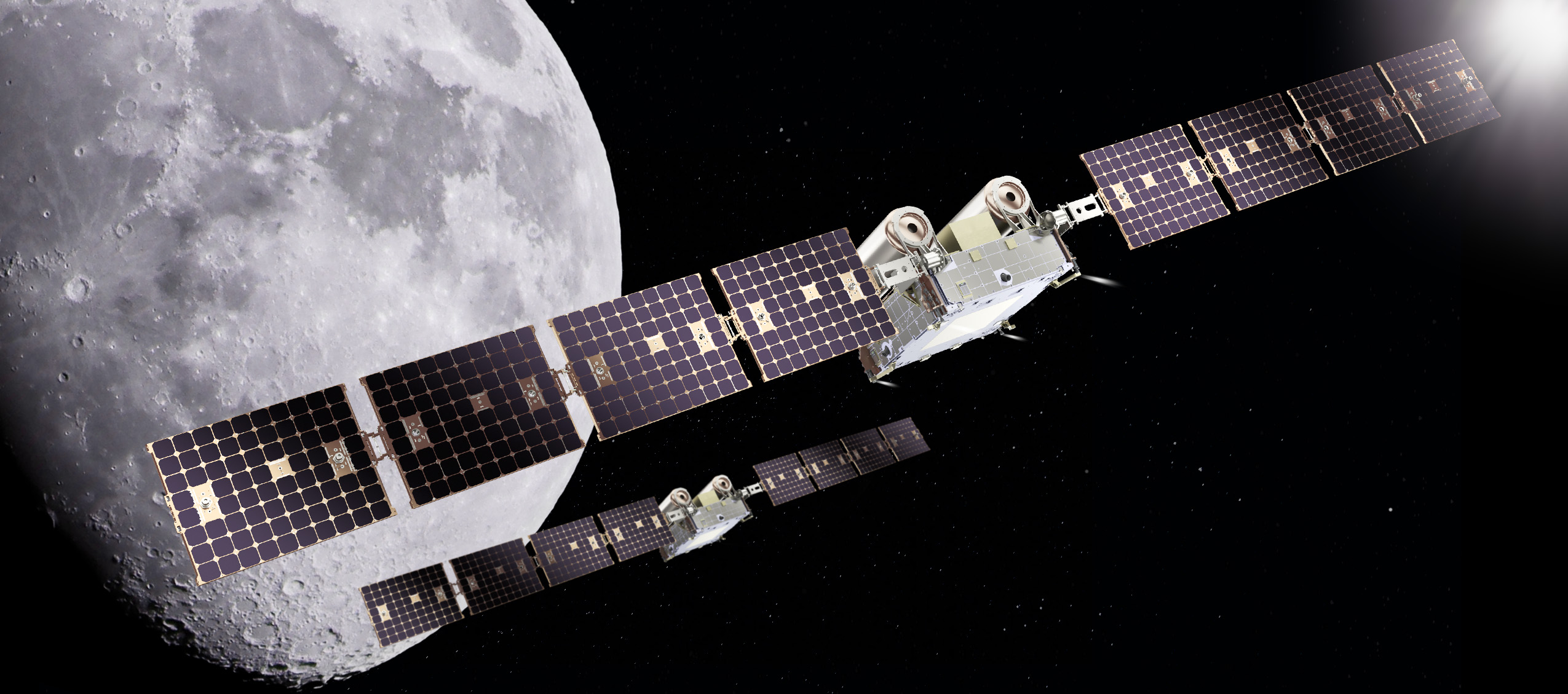
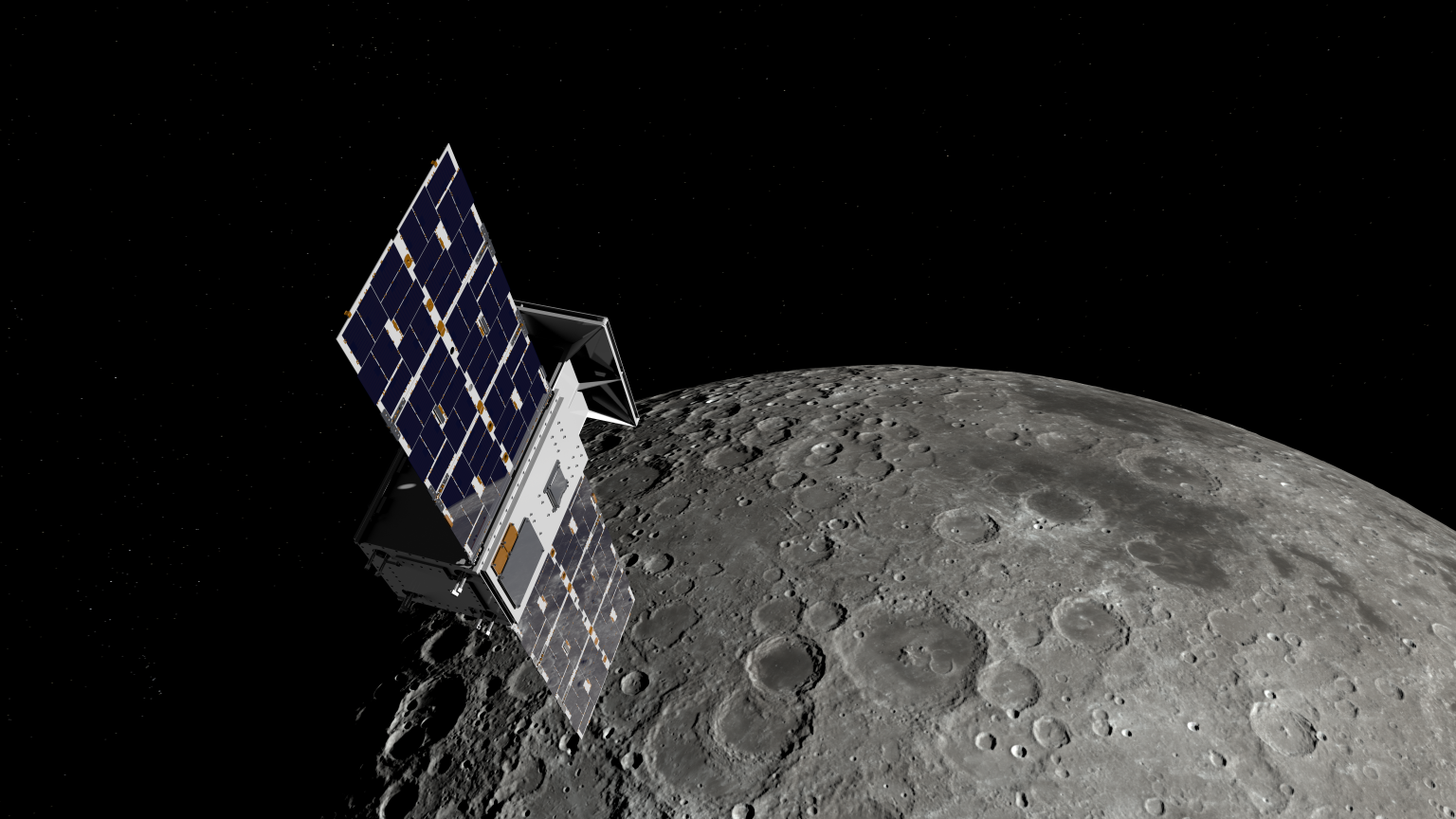
An artist’s rendering of NASA’s CAPSTONE 02 spacecraft in lunar orbit. The mission features two identical small spacecraft that will further mature technologies to support Artemis, Moon Base, and deep space exploration.
Terran Orbital
NASA is working with industry to advance the next phase of cislunar infrastructure for the agency’s Artemis program and Moon Base, including orbital assets and demonstrations. Under a contract awarded to Advanced Space, the agency’s CAPSTONE 02 mission will demonstrate rendezvous and proximity operations, autonomous navigation, and cislunar communication capabilities while continuing to characterize the radiation environment at the Moon.
The CAPSTONE 02 mission, targeted for launch in 2027, will use two small spacecraft in lunar orbit to facilitate these demonstrations to support future NASA lunar and deep space missions.
NASA’s original CAPSTONE demonstration, short for Cislunar Autonomous Positioning System Technology Operations and Navigation Experiment, became the first U.S. commercial mission to the Moon and the first spacecraft to operate in a near rectilinear halo orbit around the Moon. This is a nearly stable orbit, thanks to the interactive pull of gravity from both the Earth and the Moon.
The mission successfully validated communications, networking, and autonomous navigation capabilities while gathering operational experience in cislunar space. The second CAPSTONE mission expands upon these accomplishments by transitioning from orbit validation to demonstrations that will inform future lunar exploration and infrastructure development.
Achieving our most ambitious space exploration goals requires iterative, risk-tolerant demonstrations in partnership with industry. Technology development through flight testing is how we convert hard problems into the lasting capabilities needed for a permanent presence at the Moon.
Christopher Baker
Lead of the In‑Space Infrastructure portfolio within the Research and Technology Mission Directorate at NASA Headquarters in Washington, DC.
NASA’s CAPSTONE 02 mission will demonstrate advanced relative navigation technologies for rendezvous and proximity operations in cislunar space. These techniques are more sophisticated than those used in low Earth orbit and are designed to support NASA astronauts as they dock with Moon landers in cislunar orbit, enabling safe crew transfers to and from the lunar surface.
The demonstration will fly two identical spacecraft of approximately 400 kilograms (882 pounds) from Terran Orbital Systems, Inc. Mission operators will conduct a series of rendezvous and proximity operations and loitering – or formation flying – techniques in lunar orbit with each spacecraft to better understand the trajectories of the spacecraft under the simultaneous influence of Earth and Moon gravities, otherwise known as three-body orbits.
The CAPSTONE 02 mission will use ground tracking measurements, optical sensors, and celestial bodies to help one spacecraft locate and rendezvous with another. The mission will apply navigation strategies similar to those planned for Orion’s approach to a lunar lander in deep space, helping NASA build confidence in these techniques for future exploration.
Each CAPSTONE 02 spacecraft will have the ability to switch between ‘chaser’ and ‘target’ roles, testing a broad range of operational scenarios under a variety of environmental conditions in cislunar space. Transporting crew to the lunar surface from cislunar orbit depends on knowing how well navigation systems will perform during these operations. Since these conditions can’t be fully recreated on Earth, they must be tested in space.
The CAPSTONE 02 mission also will serve as an operational testbed, enabling testing of three NASA-developed navigation software suites. Each software application will collect data during CAPSTONE 02’s low energy transfer trajectory, which will take it from the Earth to beyond the Moon before settling into a lunar orbit. The spacecraft will carry an optical imaging payload from Lawrence Livermore National Laboratory to support the navigation demonstration as well as capture imagery of the Moon. In addition, the mission will further mature the Cislunar Autonomous Positioning System navigation software that was first demonstrated on CAPSTONE as a method of determining spacecraft position relative to other spacecraft without relying on Earth-based tracking.
The suite of technologies on CAPSTONE 02 are designed to automate routine navigation tasks, reduce reliance on traditional space-to-ground data, and enable new mission concepts that may be derived from increased inter-satellite coordination. Additionally, the CAPSTONE 02 spacecraft are designed for cost-effective, rapid deployment, demonstrating a scalable and repeatable mission model.
“This mission represents an important step in the maturation of cislunar capabilities,” said Sean Fuller, Moon Base CAPSTONE manager. “By expanding on the lessons learned from CAPSTONE to demonstrate increasingly sophisticated operational concepts, CAPSTONE 02 lays the foundation for lunar infrastructure and commercial services that support Artemis, Moon Base, and future missions to deep space.”
The CAPSTONE 02 mission is funded by NASA’s Human Spaceflight Mission Directorate with support from the Research and Technology Mission Directorate. The mission is managed by Small Spacecraft & Distributed Systems, based at NASA’s Ames Research Center in California’s Silicon Valley, within the Research and Technology Mission Directorate. NASA used a Small Business Innovation Research Phase III contract to fund the mission.
To learn more about NASA’s CAPSTONE mission, visit:
Preparations for Next Moonwalk Simulations Underway (and Underwater)
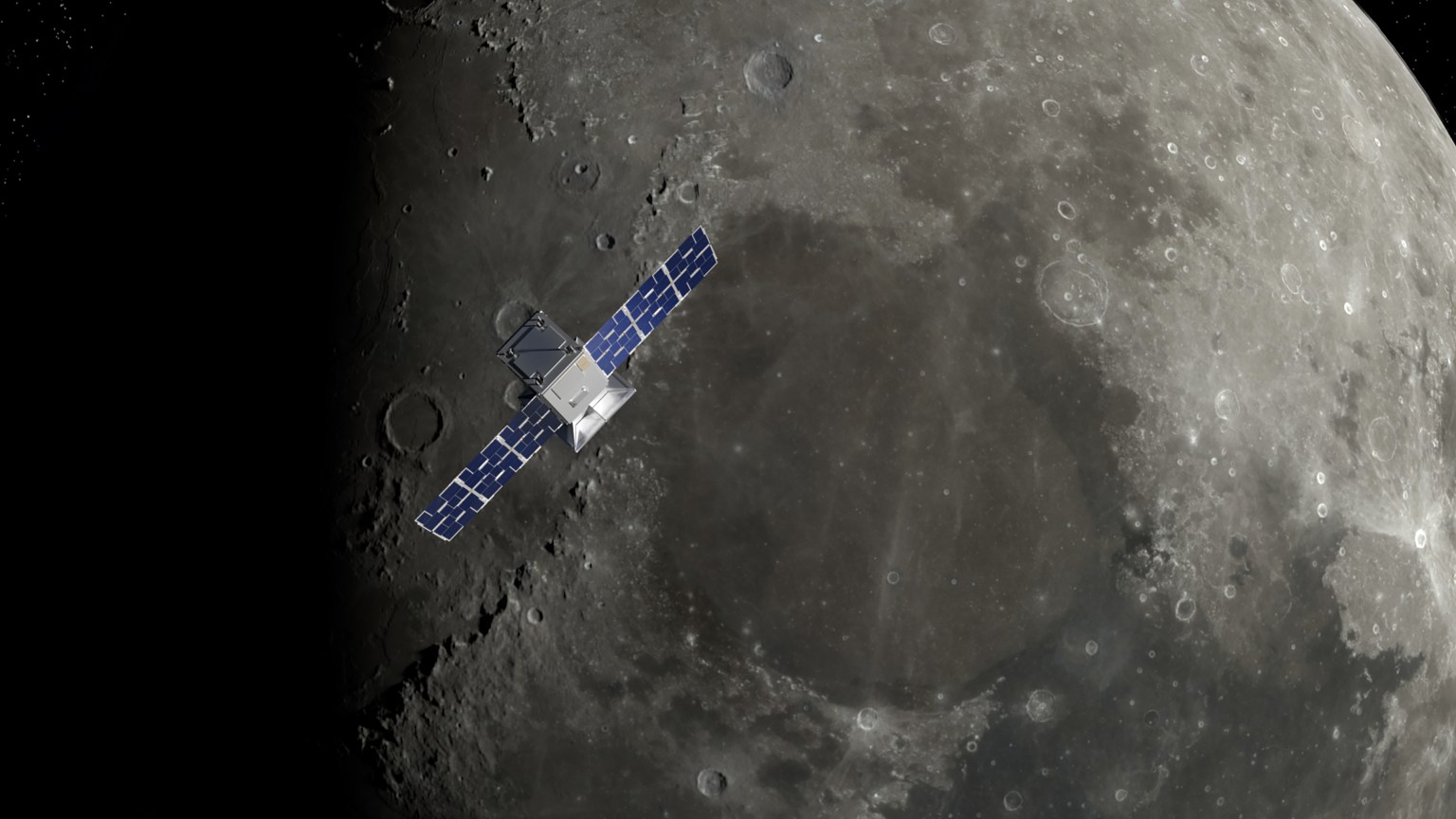
An artist’s rendering of NASA’s CAPSTONE 02 spacecraft in lunar orbit. The mission features two identical small spacecraft that will further mature technologies to support Artemis, Moon Base, and deep space exploration.
Terran Orbital
NASA is working with industry to advance the next phase of cislunar infrastructure for the agency’s Artemis program and Moon Base, including orbital assets and demonstrations. Under a contract awarded to Advanced Space, the agency’s CAPSTONE 02 mission will demonstrate rendezvous and proximity operations, autonomous navigation, and cislunar communication capabilities while continuing to characterize the radiation environment at the Moon.
The CAPSTONE 02 mission, targeted for launch in 2027, will use two small spacecraft in lunar orbit to facilitate these demonstrations to support future NASA lunar and deep space missions.
NASA’s original CAPSTONE demonstration, short for Cislunar Autonomous Positioning System Technology Operations and Navigation Experiment, became the first U.S. commercial mission to the Moon and the first spacecraft to operate in a near rectilinear halo orbit around the Moon. This is a nearly stable orbit, thanks to the interactive pull of gravity from both the Earth and the Moon.
The mission successfully validated communications, networking, and autonomous navigation capabilities while gathering operational experience in cislunar space. The second CAPSTONE mission expands upon these accomplishments by transitioning from orbit validation to demonstrations that will inform future lunar exploration and infrastructure development.
Achieving our most ambitious space exploration goals requires iterative, risk-tolerant demonstrations in partnership with industry. Technology development through flight testing is how we convert hard problems into the lasting capabilities needed for a permanent presence at the Moon.
Christopher Baker
Lead of the In‑Space Infrastructure portfolio within the Research and Technology Mission Directorate at NASA Headquarters in Washington, DC.
NASA’s CAPSTONE 02 mission will demonstrate advanced relative navigation technologies for rendezvous and proximity operations in cislunar space. These techniques are more sophisticated than those used in low Earth orbit and are designed to support NASA astronauts as they dock with Moon landers in cislunar orbit, enabling safe crew transfers to and from the lunar surface.
The demonstration will fly two identical spacecraft of approximately 400 kilograms (882 pounds) from Terran Orbital Systems, Inc. Mission operators will conduct a series of rendezvous and proximity operations and loitering – or formation flying – techniques in lunar orbit with each spacecraft to better understand the trajectories of the spacecraft under the simultaneous influence of Earth and Moon gravities, otherwise known as three-body orbits.
The CAPSTONE 02 mission will use ground tracking measurements, optical sensors, and celestial bodies to help one spacecraft locate and rendezvous with another. The mission will apply navigation strategies similar to those planned for Orion’s approach to a lunar lander in deep space, helping NASA build confidence in these techniques for future exploration.
Each CAPSTONE 02 spacecraft will have the ability to switch between ‘chaser’ and ‘target’ roles, testing a broad range of operational scenarios under a variety of environmental conditions in cislunar space. Transporting crew to the lunar surface from cislunar orbit depends on knowing how well navigation systems will perform during these operations. Since these conditions can’t be fully recreated on Earth, they must be tested in space.
The CAPSTONE 02 mission also will serve as an operational testbed, enabling testing of three NASA-developed navigation software suites. Each software application will collect data during CAPSTONE 02’s low energy transfer trajectory, which will take it from the Earth to beyond the Moon before settling into a lunar orbit. The spacecraft will carry an optical imaging payload from Lawrence Livermore National Laboratory to support the navigation demonstration as well as capture imagery of the Moon. In addition, the mission will further mature the Cislunar Autonomous Positioning System navigation software that was first demonstrated on CAPSTONE as a method of determining spacecraft position relative to other spacecraft without relying on Earth-based tracking.
The suite of technologies on CAPSTONE 02 are designed to automate routine navigation tasks, reduce reliance on traditional space-to-ground data, and enable new mission concepts that may be derived from increased inter-satellite coordination. Additionally, the CAPSTONE 02 spacecraft are designed for cost-effective, rapid deployment, demonstrating a scalable and repeatable mission model.
“This mission represents an important step in the maturation of cislunar capabilities,” said Sean Fuller, Moon Base CAPSTONE manager. “By expanding on the lessons learned from CAPSTONE to demonstrate increasingly sophisticated operational concepts, CAPSTONE 02 lays the foundation for lunar infrastructure and commercial services that support Artemis, Moon Base, and future missions to deep space.”
The CAPSTONE 02 mission is funded by NASA’s Human Spaceflight Mission Directorate with support from the Research and Technology Mission Directorate. The mission is managed by Small Spacecraft & Distributed Systems, based at NASA’s Ames Research Center in California’s Silicon Valley, within the Research and Technology Mission Directorate. NASA used a Small Business Innovation Research Phase III contract to fund the mission.
To learn more about NASA’s CAPSTONE mission, visit:
Researchers have discovered asecurity flaw in AI web browsers that could result in users having their data exposed by malicious websites.
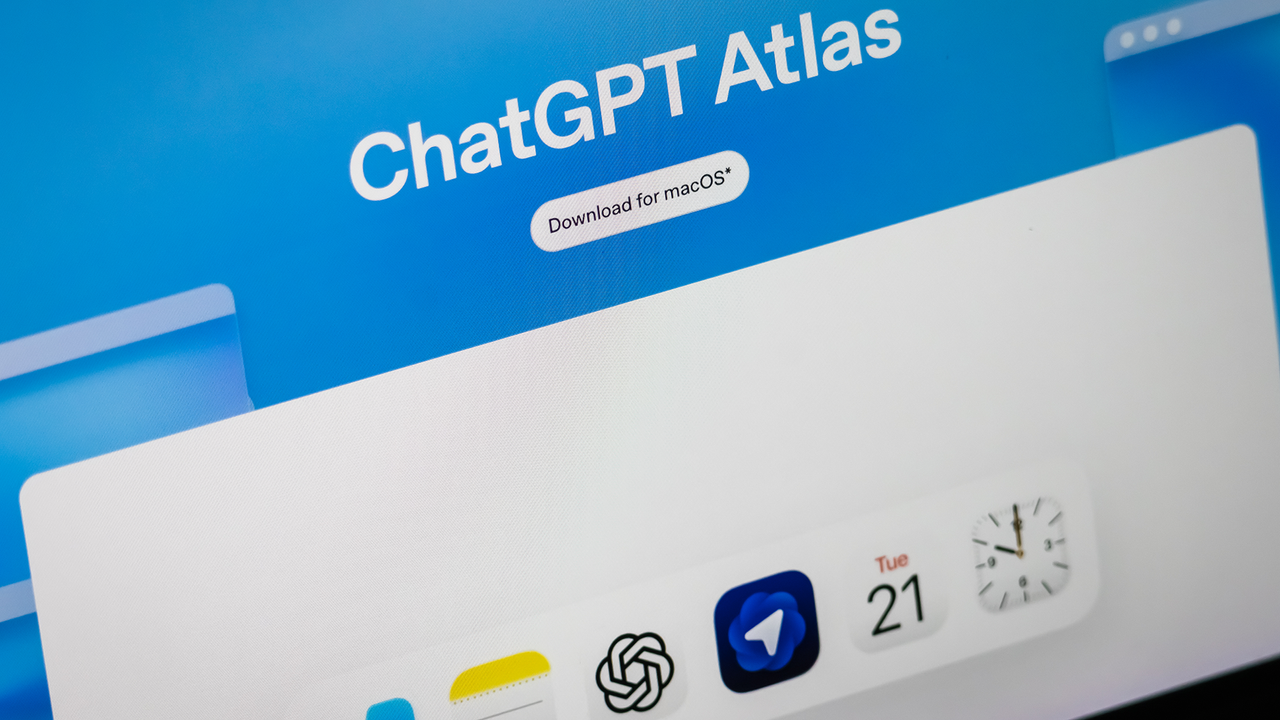
Browsers equipped with AI agents, such as ChatGPT's Atlas, are like ordinary internet browsers but with additional chatbot functionality baked into the software. Using AI, agentic browsers can summarize websites, search for specific information, and even automate repetitive tasks.
For example, somebody may use an AI browser to make a purchase — whereas they would have to browse a webstore for the item and then make the payment if they used a conventional browser.
Many agentic browsers have only been released in 2025, and they're already rising in popularity. Scientists, however, have warned in a new study that many popular AI browsers bypass an important security measure that keeps their data private. They presented their findings April 26 at the Agents in the Wild Workshop in Rio de Janeiro, Brazil.
"Browser agents aren't ready for the public," said co-author of the study David Kohlbrenner, an assistant professor of computer science and engineering at the University of Washington, in a statement.
"Even if you’re a relatively savvy user, if these agents have access to a browser that contains your credentials — your email, your bank account, whatever it is — you should not trust that these systems are ready to truly protect your information. They may get there in time, but they're not there yet."
Bypassing embedded security
Conventional internet browsers use a security protocol called the "same-origin policy," which ensures that multiple websites a user is visiting at the same time do not interact with each other. This is to stop potentially malicious online content from spilling over into other sites. For example, if a user had a bank's website open in one tab with a webpage containing malicious code in another, the same-origin policy would prevent these two sites from interacting.
However, AI browsers require full access to all the web content available to the user, which could include cross-origin iframes — code shared across multiple websites, such as online advertisements — or require cross-origin visibility so they can access information from multiple websites. An AI browser essentially has the same overview as a user.
Although internet browser security has been hardened through decades of research, the security for AI browsers remains in its infancy.
One major risk, for instance, is "prompt injection," whereby an AI agent is tricked into misinterpreting data embedded on a malicious website as an instruction they need to carry out.In their study, the researchers offered an example of an AI browser visiting an otherwise "safe" website, with malicious code embedded within that contained a hidden instruction for the agentic browser to automatically share the user's personal details.
Roesner also highlighted "memory poisoning" as a massive risk, in which AI agents store information they've processed in their memory for future use, making the content vulnerable to attack. He added in the statement: "We found that some of these agents would mingle information from different origins, likely because they were revising and compressing their memory."
The better the browser, the riskier it is
The key focus in this research was to assess how current AI browsers interact with the same-origin policy and what the security implications could be. The researchers examined seven browsers — including Atlas, Claude for Chrome, Brave Leo AI, Chrome with Gemini, Microsoft Edge with CoPilot, Firefox AI Mode and Perplexity Comet — with test sites and prompts, allowing them to study how each behaved.
They focused on the information an agent could access from same-origin and cross-origin webpages, the actions each agentic browser can undertake on the web, and the agent’s chat context and history.
There is no consistency among AI browsers in how they operate, the researchers found, which they suggest could be due to the lack of standardization in how AI browsers interact with browser security.
Several AI browsers could freely access cross-origin frame content, while others restrict access. Likewise, some agentic browsers could simultaneously access multiple tabs, but most require permission from the user. Similarly, some agents could take actions directly on a page in response to instructions on a webpage, but others are unable to take any actions at all.
The researchers recommended that users be careful in choosing which AI browser they install, as a standardized security model has not been developed. They are particularly cautious about Claude for Chrome, well-known for its strong capabilities, as well as Atlas and Comet, which have similarly strong functionality. The researchers identified Brave, as well as the agentic versions of Edge and Firefox, as having stronger security due to their limited agentic features.
According to the study, AI browsers have not yet established the right trade-offs between functionality and security. Currently, the more functional a browser is, the less secure it becomes.
"We've had some really good exchanges with folks at Google, Microsoft and Brave," Roesner said. "Companies are pushing out these browsers because they’re under competitive pressure. But how to make them safe is still an open question. After 30 years of building up this same-origin policy, this is a big step back for browser security."
Looking to the future, the researchers questioned how AI agents can be integrated into browsers in ways that provide rich functionality without undermining the browser's security and potentially exposing sensitive information.
When scientists want to create a protein that can potentially treat disease, one approach is to begin with a different protein and evolve it in the lab, selecting over many generations for versions with a new, desired function.
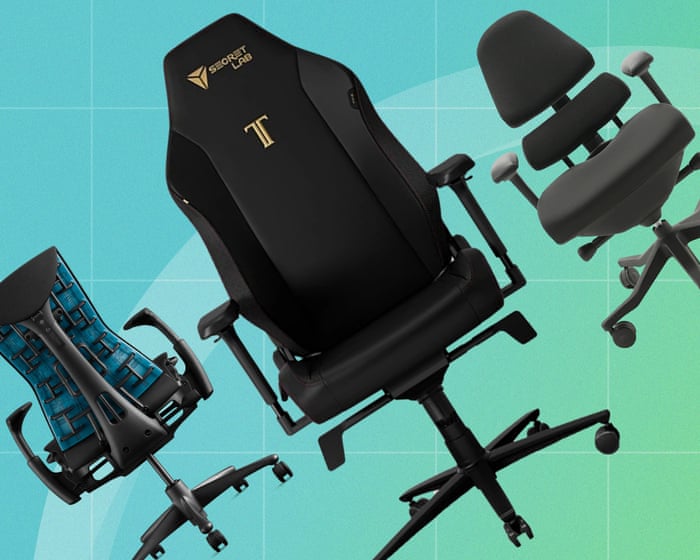
Comfort is crucial to the gaming experience. It’s hard to focus on blasting aliens or taking Stoke to the Champions League final if your bum has gone to sleep because you’ve been sitting on an old chair for three hours. We’re spending more time playing games than ever before, so good posture matters. If you have set up a dedicated gaming space, then a rickety seat just won’t cut it.
From luxurious ergonomic thrones to cheap-and-cheerful bucket seats, the options available are bewildering. So I set out on an epic quest: to find the most comfortable, durable and stylish gaming chairs. Here’s what I discovered.
If OpenAI loudly proclaims how dangerous AI is, investors will hear how powerful it is. And who benefits from that?
On 14 February 2019, OpenAI announced a language model called GPT-2, the precursor to the models that power modern AI chatbots and agents such as ChatGPT and Claude. But OpenAI declared GPT-2 was too risky to release, citing concerns about safety and abuse.
I recall being annoyed at the time that OpenAI would make such a useless announcement: the risks seemed overblown, and without access to the model there wasn’t much for a researcher like me to learn about GPT-2.
Sometimes, what matters isn’t your output but what you put into the process. Think of it like work v the gym
I teach public policy at the Harvard Kennedy School and the Munk School at the University of Toronto. And it will come as no surprise to you that my students regularly use AI to complete their writing assignments. Doing so is a waste of their tuition money. But if their entire career is going to include AI writing assistants, why shouldn’t they embrace their future?
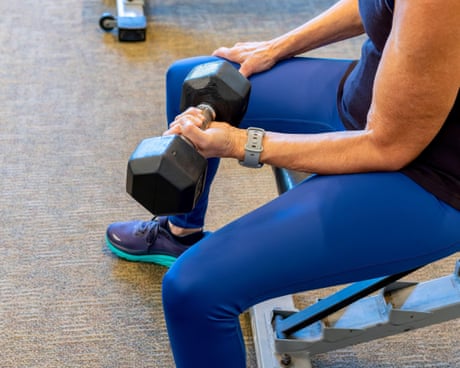
The best way I’ve found to explain the dilemma comes from the AI researcher Daniel Meissler: it’s the difference between work and the gym.

 Login