❌

Reading view

Hubble Spies One-Sided Spiral

3 min read

Hubble Spies One-Sided Spiral
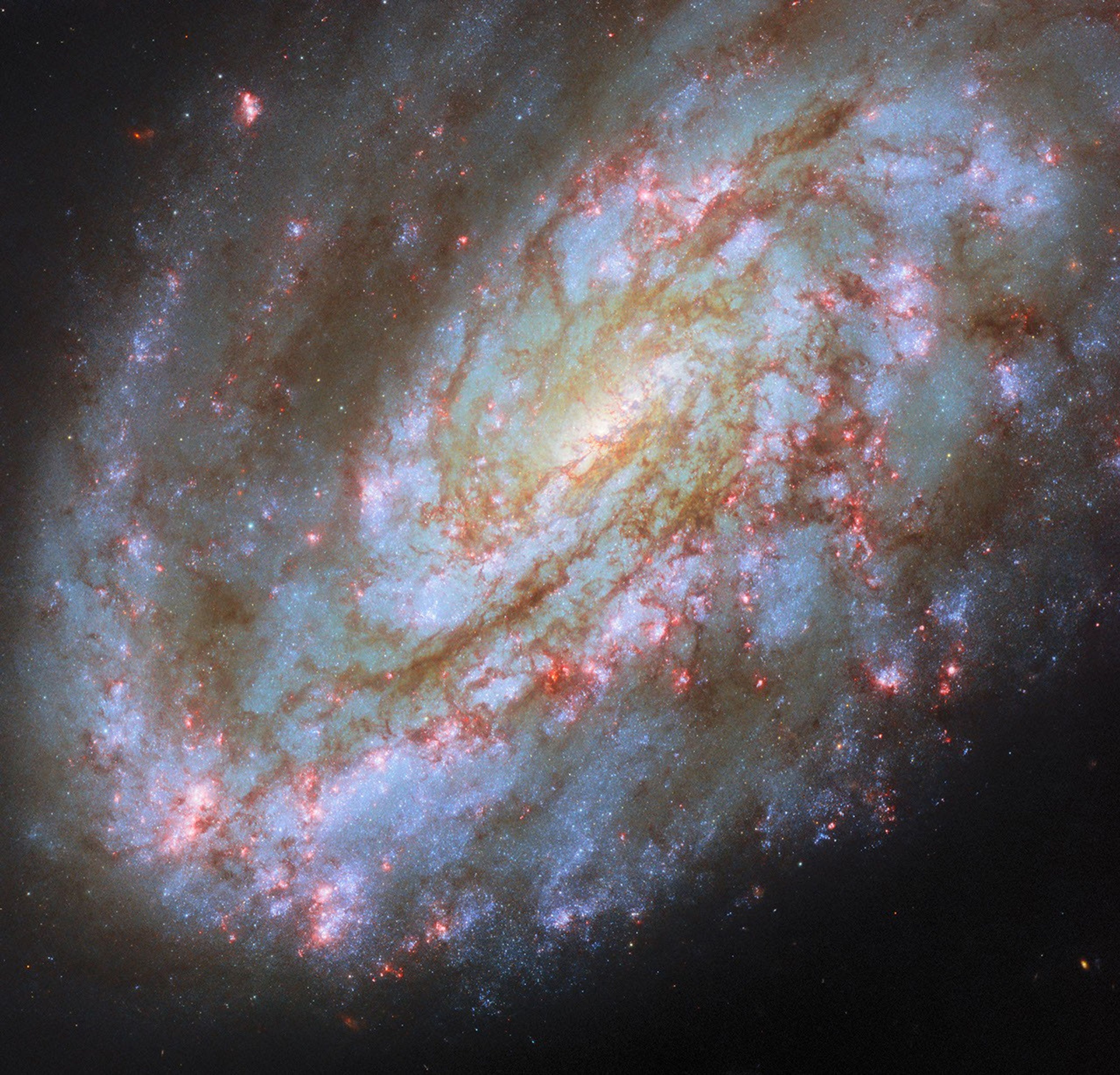
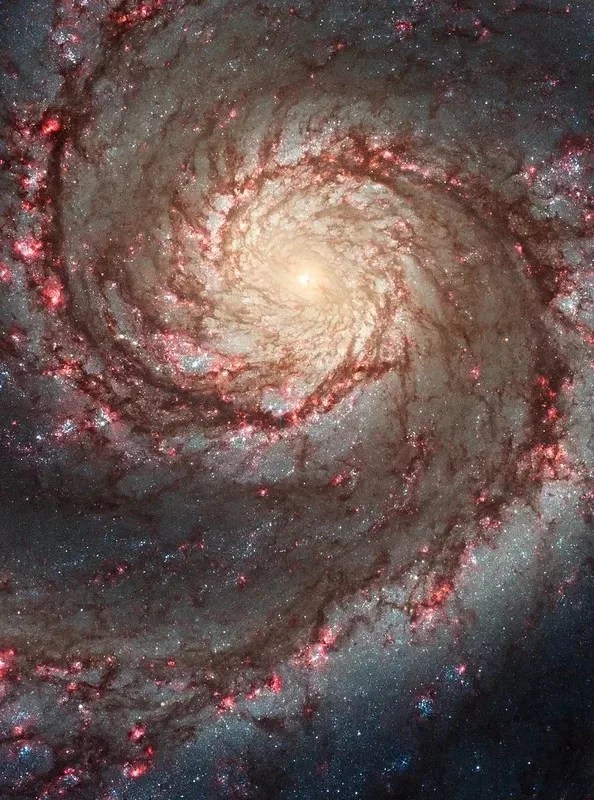
A spiral galaxy. It has a prominent spiral arm on one side (lower left) and a wide, glowing core. Dark brown filaments of dust swirl through its disk, while blue clusters of stars are visible mostly going out to its arm. On the opposite side of the arm (upper right), gas trails off from the disk, beyond the field of view in this image. A matching spiral arm is not visible on this side. The galaxy lies on a dark background.
This NASA/ESA Hubble Space Telescope image features the spiral galaxy NGC 4654, located 72 million light-years away in the constellation Virgo (the Maiden).
NASA, ESA/Hubble, D. Thilker, J. Lee, and the PHANGS-HST Team

The subject of this NASA/ESA Hubble Space Telescope image is a spiral galaxy struggling against titanic forces that appear on galactic scales in space. This is NGC 4654, an intermediate spiral galaxy in the constellation Virgo (the Maiden). It is classified as an “intermediate” because its overall shape lies between spiral galaxies that have a bar across their centers and those that don’t. NGC 4654 has a weak bar structure at its center and is located 72 million light-years from Earth in the Virgo Cluster, a particularly massive and populous galaxy cluster.

NGC 4654 is particularly asymmetric, with a rounded and clearly-defined edge on one side and a long tail of gas stretching out from the opposite side — outside the field of view captured in this image. This gaseous tail is the result of ram pressure stripping, a force that galaxies can experience as they plow through space. NGC 4654 moves with such high velocity that it sweeps up and rams through the hot, rarefied gas filling the space between the Virgo Cluster’s galaxies. This intracluster medium in turn exerts a “ram pressure” on the galaxy, compressing the galaxy’s leading edge and dragging its gas behind the galaxy, creating the elongated tail.

It’s not just the galaxy’s gas that is unevenly distributed: its stars are too, and this is more unusual for a spiral galaxy. While the spiral arm on its leading edge is rich with stars and gas, the opposite arm noticeably lacks stars, influencing the galaxy’s lopsided spiral shape. Astronomers think that ram pressure alone is unlikely to cause this effect. Rather, NGC 4654 was also subjected to the gravitational force of fellow Virgo Cluster galaxy NGC 4639. While the two galaxies are far apart now, it’s thought that a fly-by interaction between them around 500 million years ago ripped away NGC 4654’s gas along one side, limiting star formation there and creating the asymmetry in its shape.

Many galaxies that undergo ram pressure stripping suffer reduced star formation rates as the cold gas that collapses to form their stars is pulled away and lost. NGC 4654, however, is still forming nearly two Suns’ worth of stars every year, a rate comparable to other galaxies of similar size. The active star formation is visible in the latest Hubble data included in this image. The data picks up on a wavelength of red light emitted by the clouds of energized gas where newborn stars lurk. The bright pink bubbles that appear across NGC 4654 — from its forward spiral arm, to around its weak bar, and out to the edge of its disk — are areas where these newborn stars shine.

The data used in this image came from two observing programs (#15654, #17502) that aim to link the gas in galaxies with star formation. By observing many prominent galaxies in the vicinity of our own, researchers hope to better understand how gas moves in galaxies, where and when it collapses to form stars and star clusters, and what effect those new stars have on the gas around them.

Text Credit: ESA/Hubble

Media Contact:

Claire Andreoli
NASA’s Goddard Space Flight Center, Greenbelt, MD
claire.andreoli@nasa.gov

  •  

James Webb Telescope Discovers Hidden Giant Planet in Famous Star System

Beta Pictoris System (Artist’s Concept)Webb found a hidden giant planet by detecting its atmospheric chemistry through a bright debris disk. For years, a third giant planet remained concealed within the bright dust surrounding Beta Pictoris, one of the most closely observed planetary systems in the Milky Way. NASA’s James Webb Space Telescope has now exposed the hidden world by [...]
  •  

Hubble telescope watches unique nova explosion fire cosmic 'bullets' through the Milky Way at 20 million mph

Using NASA's long-serving Hubble Space Telescope, astronomers have discovered that a stellar explosion in the Milky Way is blasting out cosmic bullets travelling at 20 million miles per hour.

The cosmic explosion in question is V445 Puppis, which erupted in 2000 and is the only known "helium nova" in our galaxy. Though astronomers have been studying V445 Puppis for two decades, much of the phenomena associated with it were shrouded in mystery due to a vast cloud of dusty debris that surrounded this nova.

When this debris finally cleared, a team of researchers was able to peer into V445 Puppis using Hubble, NASA's exoplanet-hunting spacecraft TESS (Transiting Exoplanet Survey Satellite), and the Earth-based Very Large Telescope (VLT), along with an array of other instruments. This allowed them to discover not only the "bullets", clumps of potentially oxygen-rich gas it is firing, but also the true nature of this system. This revealed that V445 Puppis consists of a dead star hungrily feeding on a companion star that is, by itself, a rare find. Thus, this system offers scientists a rare chance to study one of the rarest types of binary systems and one of the rarest cosmic explosions.

"The origin of these 'bullets' is a mystery. We suspect that these originated post-outburst, but 'bullets' of this kind have not been observed in any other nova," team member John Mills, a researcher at the University of Warwick in the UK, said in a statement.

What is a helium nova?

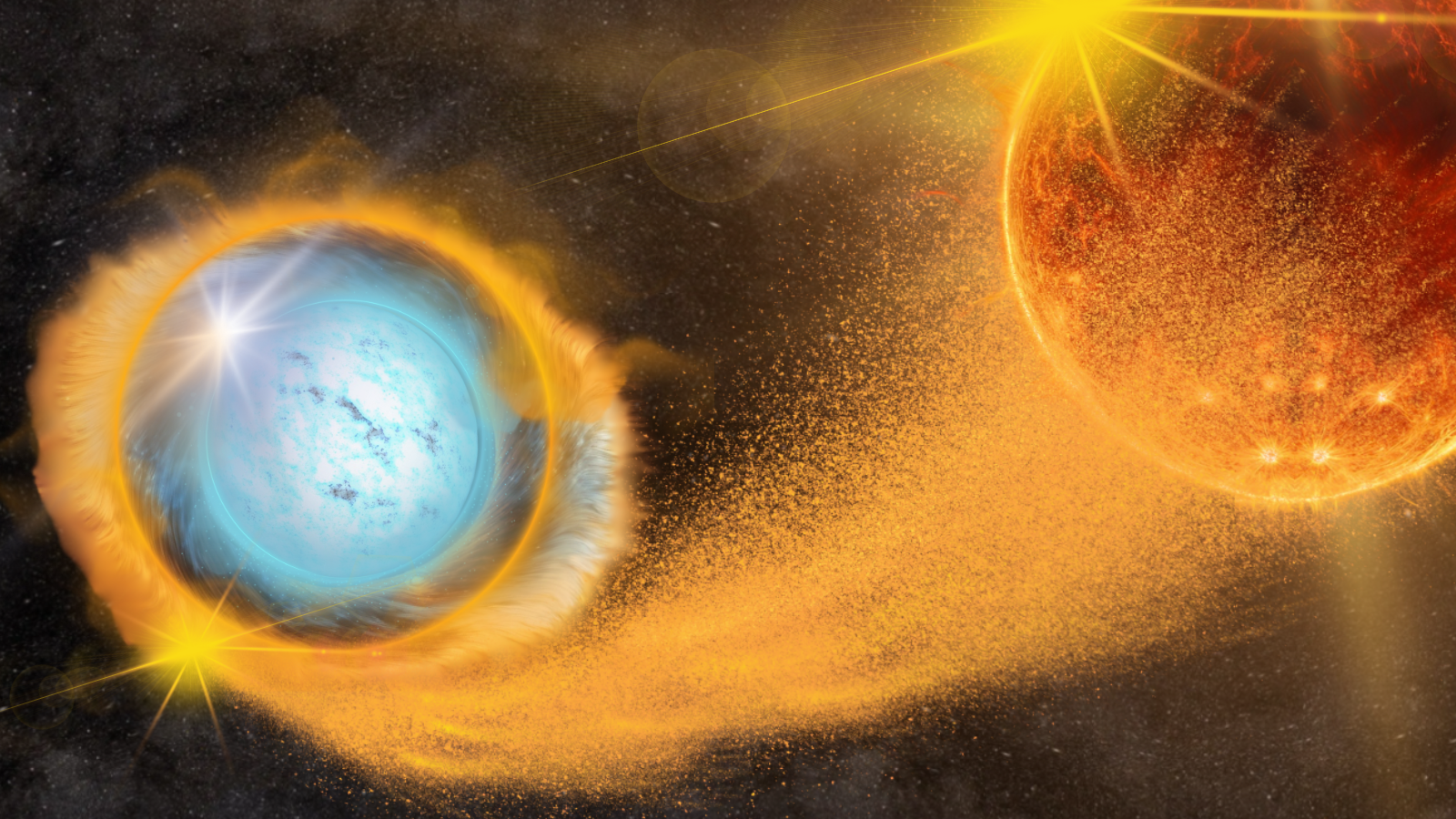
Helium novas like V445 Puppis occur when a white dwarf dead star cannibalistically strips helium-rich but hydrogen-poor matter from a star that has already lost its outer layer of hydrogen, exposing inner layers of helium; forming a rare "helium star." By contrast, "ordinary" novas are explosions triggered by the buildup of stolen stellar matter rich in hydrogen, not helium.

As the material accumulates on the surface of the white dwarf (a type of stellar remnant left behind when stars around the mass of the sun die) it creates runaway pressures and temperatures that eventually trigger a thermonuclear explosion.

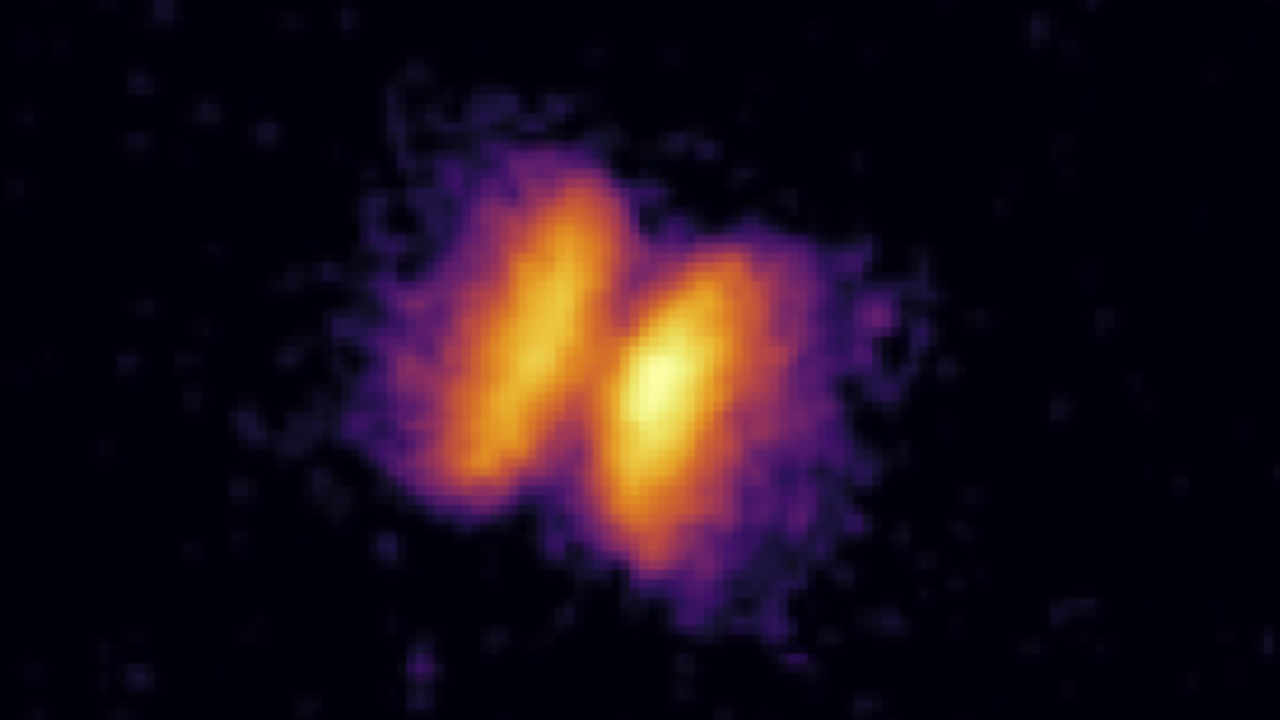
When V445 Puppis went nova back in late 2000, it launched vast, twin plumes of debris that resemble butterfly wings. Stretching out for more than a trillion miles, astronomers initially spotted this bipolar outflow in infrared. The nova also spawned a thick disc of dust that completely obscured the binary star system. That cloud persisted for over two decades, preventing astronomers who were investigating the expanding debris from determining what kind of stars the blast originated from.

Once the debris cleared, this team determined that the system contained a helium star, one of only a few thousand of these stripped stellar bodies to be discovered among the billions of stars that populate the Milky Way.

"The culprits behind this galactic eruption have been an enduring mystery over the past 25 years, which is why it is very exciting to confirm that this helium nova was the result of a helium star accreting onto a white dwarf," Mills said.

The findings also revealed cosmic "bullets" that are even more remarkable, as they have never been seen around any other novas. Intriguingly, the team also found that V445 Puppis may be about to go nova again, and this could lead to an entirely different type of cosmic explosion.

Is V445 Puppis about to blow its top again?

Mills found that the white dwarf in V445 Puppis has overcome its stellar indigestion and is once again feeding on its companion helium star.

This is the process that led to the initial helium nova, and could mean that another episode of this rare type of cosmic explosion is soon to occur.

That has implications for our understanding of another type of cosmic eruption, this time a type of supernova called a Type Ia supernova. These occur when white dwarfs overfeed on companions and are completely destroyed by the resultant explosion.

Scientists have long suspected that repeated helium nova eruptions could lead to final Type Ia supernovas.

An illustration  of a white dwarf star feeding on a stellar companion prior to a type Ia supernova

An illustration of a white dwarf star feeding on a stellar companion prior to the eruption of a type Ia supernova (Image credit: Robert Lea (created with Canva))

A new Type Ia supernova would be exciting because these events are so regular in terms of their light emission that they can be used as so-called "standard candles" to measure cosmic distances and gauge the age of the universe.

This means that they can also be employed in the quest to understand how fast the universe's expansion is proceeding, and the influence of the mysterious force called dark energy on this process.

"I look forward to seeing how this result may help us uncover what powers other similar hydrogen-poor astronomical explosions, such as the famous Type Ia supernovas," Mills said.

The team's research was presented this week at the Royal Astronomical Society's National Astronomy Meeting in Birmingham, UK.

  •  

Le télescope James-Webb a vu des centaines de « points rouges » : ce qu’ils pourraient réellement cacher est vertigineux

Il existe plusieurs objets et phénomènes exotiques en astrophysique qui sont des serpents de mer, comme on dit. Des signes de leur existence apparaissent parfois et à répétition dans les observations, sans que l'on puisse aboutir vraiment à une conclusion. C'est le cas avec une nouvelle...

  •  

The James Webb Space Telescope's disappearing 'Little Red Dots' may lead to another cosmic puzzle

Paleontologists now know that many of the dinosaurs didn't disappear but instead evolved into modern birds, and new research suggests that "cosmic dinosaurs" observed by the James Webb Space Telescope (JWST) didn't go extinct either. Rather, they may have evolved into familiar sights in the modern universe: vast conglomerations of densely packed stars called "globular clusters."

Little Red Dots became quite the puzzle for astronomers in 2022, when the JWST began to routinely spot them in abundance around 600 million years after the Big Bang. That is because these objects seemingly disappear before the cosmos gets to around 2 billion years old.

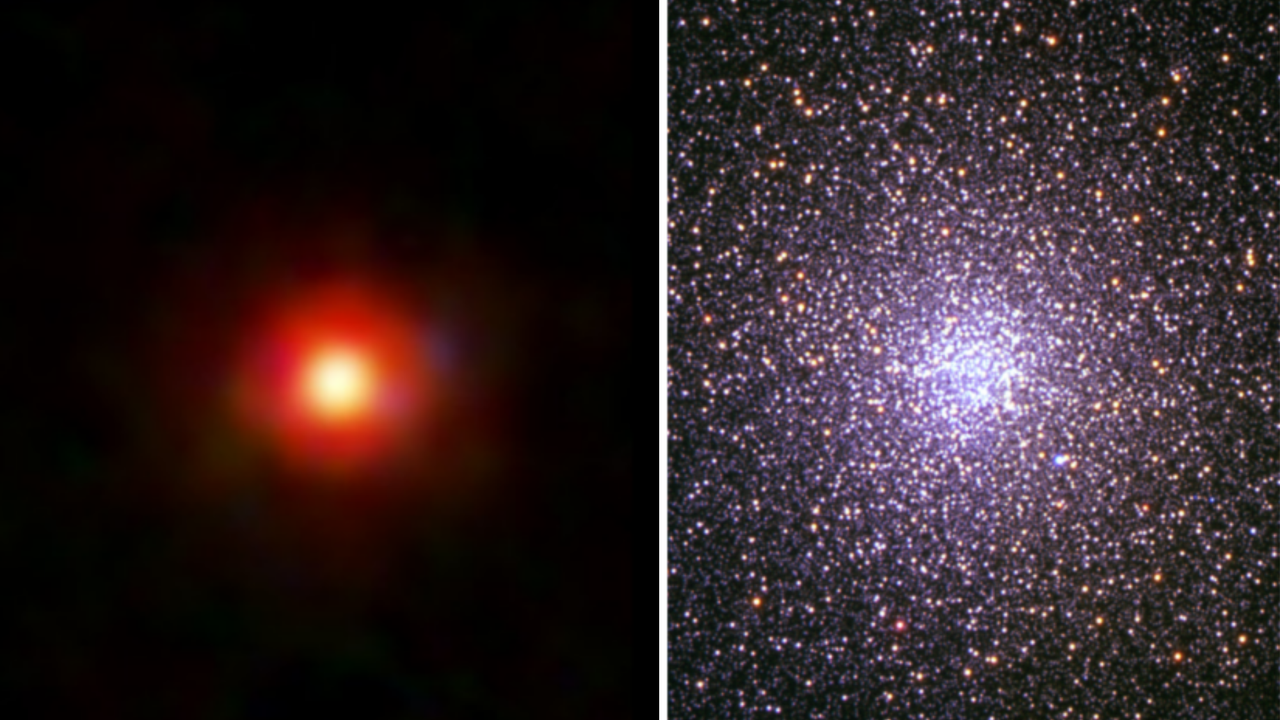
Astronomers have proposed many different explanations for Little Red Dots, including the suggestion that they could be "black hole stars," or black holes wrapped in vast shrouds of dense gas and dust. This team theorizes that a forming globular cluster with a supermassive star, a hypothetical short-lived stellar body with between 1,000 and 10,000 times the mass of the sun, would also look a lot like a Little Red Dot at its heart.

"These may not be just a strange new JWST population with no connection to the universe around us today," team leader John Chisholm of the University of Texas Austin said in a statement. "Instead, Little Red Dots may persist past the early universe, evolving into something relatively familiar.

"Little Red Dots could be galaxies, they could involve black holes, or they could be something even more unexpected. Our work shows that forming globular clusters with supermassive stars should be part of that conversation."

An unfamiliar side to a familar sight

Globular clusters are generally seen in large galaxies and are densely packed with up to many millions of ancient stars. Our galaxy, the Milky Way, is host to at least 150 globular clusters, and though familiar, astronomers still aren't quite sure how they form.

"We usually see them [globular clusters] after billions of years of evolution, at a time when their massive stars are gone, their gas has been cleared out, and dynamical processes have changed their masses and structures," team member Danielle Berg of UT Austin said in the statement. "That makes it very hard to reconstruct the original conditions they formed in."

It is thought that the stars in globular clusters all formed at the same time in the early universe. However, at this time the cosmos should only have had hydrogen, helium and a smattering of heavier elements (which astronomers call "metals") available for star construction. Yet, many stars in globular clusters are strangely abundant in helium and metals like nitrogen, sodium and aluminum, while lacking the expected levels of carbon, oxygen and magnesium.

"This specific pattern indicates nuclear fusion at very high temperatures, much higher than in the cores of even massive normal stars," team member Mike Boylan-Kolchin of UT Austin said in the statement. "A supermassive star is precisely the kind of environment that could produce this combination."

Globular cluster NGC 6638 looks like a sparkling conglomerate of blueish stars.

Globular cluster NGC 6638, as seen by the Hubble Space Telescope. (Image credit: ESA/Hubble & NASA, R. Cohen)

Supermassive stars capable of generating this kind of heat would form in the dense environments of early globular clusters in which stellar collisions and mergers would be expected to occur over and over again. The resultant supermassive stars would be short-lived, lasting just around 1 million years (remember the sun is middle-aged at 4.6 billion years old) — but this would be sufficient time to forge the elements needed to explain the peculiar chemistry of globular clusters.

When these supermassive stars die in supernova explosions, the elements they forged would be blasted out to become the building blocks of the next generation of stars. This would provide the stars of modern globular clusters with their unusual chemical fingerprints.

"In our model, the supermassive star that helps make the object look like a Little Red Dot would live for only a short time," Chisholm continued. "Once that star dies, the object may no longer look like a Little Red Dot, even if the cluster itself survives billions of years."

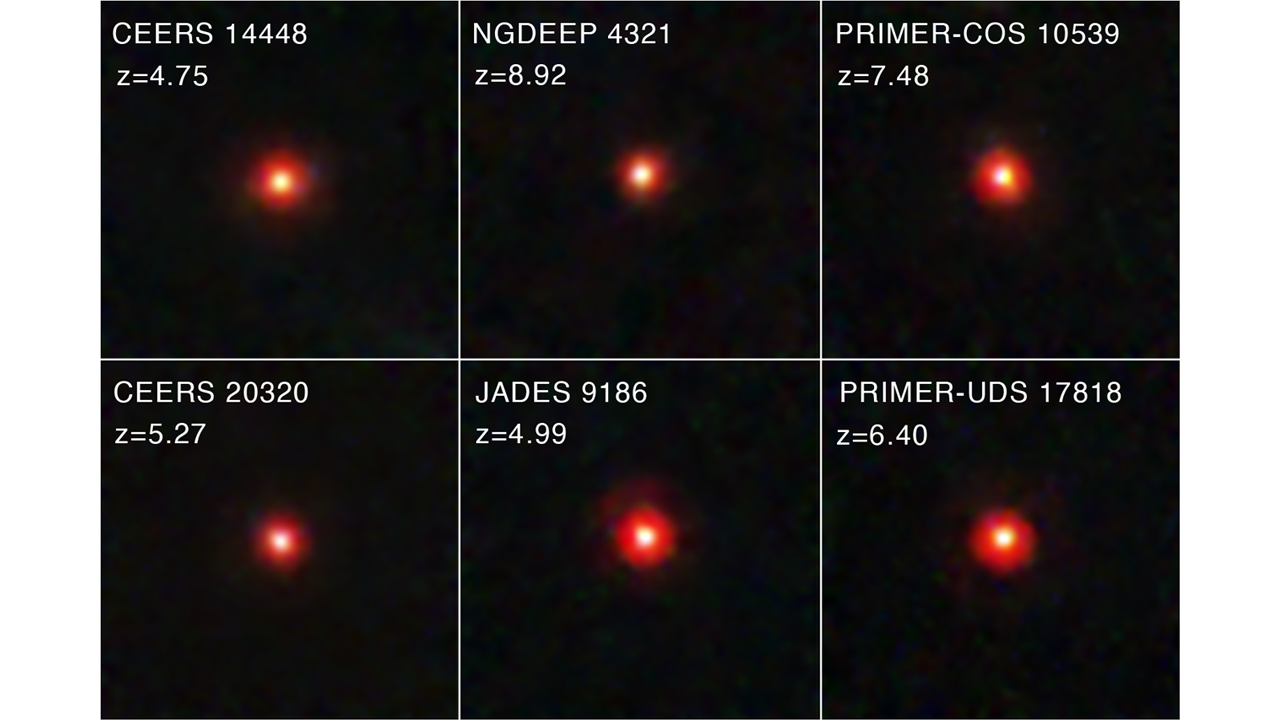
Six of the

Just some of the "little red dot" galaxies discovered by the JWST. (Image credit: NASA, ESA, CSA, STScI, Dale Kocevski (Colby College))

Strange chemistry isn't the only thing linking early globular clusters with Little Red Dots, however. Not only does the team propose that the distribution of Little Red Dots in the early universe matches the distribution of modern globular clusters, but they also say models of Little Red Dot evolution show that their estimated masses could easily lead to the masses of globular clusters seen in the recent universe.

There is also the issue of timing. Little Red Dots appear around 600 million years after the Big Bang, and that is also the time that scientists estimate that globular clusters would have begun to form.

"There's no single smoking gun at this point that says Little Red Dots are globular clusters, but it would explain a lot of diverse and surprising observations," said Boylan-Kolchin.

This study is currently available to view as a pre-print on the paper repository arXiv.

  •  

James Webb Space Telescope discovers the secrets of cosmic 'factories' that filled the early universe with stardust

Using the James Webb Space Telescope (JWST), astronomers have discovered the secrets of early galaxies that pumped the infant cosmos full of dust, which would become vital for the birth of new stars and the growth of galaxies.

However, while the JWST is powerful enough to see many of these early galaxies, it is still limited when it comes to delving into them in great detail. So, the team at the heart of this research worked around this by studying a much closer and more modern galaxy with many characteristics that resemble the universe's first galaxies.

In lieu of being able to study the processes that occurred in the early universe that allowed galaxies to be seeded with "metals, (the term astronomers use to describe elements heavier than hydrogen and helium), the researchers turned their attention to a dwarf galaxy just 4.6 million light-years away.

"Directly studying the galaxies that populated the early universe is still very difficult, which is why observing a nearby galaxy like Sextans A, which presents similar chemical conditions, offers us a precious opportunity to understand how the first generations of stars evolved and what role they played in transforming the interstellar medium," team leader Claudio Gavetti of the National Institute for Astrophysics (INAF) said in a statement.

How does Sextans A impersonate ancient galaxies?

The early universe was a pretty dull place in terms of chemistry. That is because it was dominated by the lightest element, hydrogen, with some helium and a tiny smattering of heavy elements, or metals. That means that the first generation of stars, so-called POP III stars, were correspondingly metal-poor.

During their lives, however, POP III stars fused hydrogen and helium in their cores to forge heavier elements. When these original stars reached the ends of their lives, they exploded in supernova explosions that dispersed these metals into the interstellar medium, the vast clouds of dust and gas between stars.

Eventually, dense and cool patches in these vast clouds collapsed under their own gravity, birthing the next generation of stars, POP II stars, which, thanks to the supernova deaths of their predecessors, were richer in metals.

The dwarf galaxy Sextans A observed by the James Webb Space Telescope.

The dwarf galaxy Sextans A observed by the James Webb Space Telescope. (Image credit: NASA, ESA, CSA, STScI, Janice Lee (NOIRLab). Image processing: Alyssa Pagan (STScI).)

Our own star, the sun, is classed as a POP I star, meaning it is even richer in metals than these second-generation stars. However, not all modern galaxies are so metal-rich; this is especially true for dwarf galaxies like Sextans A, even though it lies at the outer edge of our cosmic backyard, known as the "local group."

Sextans A is so metal-poor that it is estimated to contain only between 1% and 7% of the heavy elements found in the sun. That makes it a great proxy for the study of metal-poor early galaxies.

Using the JWST's NIRCam (Near-InfraRed Camera) and MIRI (Mid-Infrared Instrument) instruments, Gavetti and colleagues obtained high-resolution observations of Sextans A that allowed them to map the dwarf galaxy's entire population of stars during an evolutionary phase known as the "asymptotic red giant branch."

This phase occurs when stars larger than the sun exhaust helium in their cores, creating an inert carbon heart, but nuclear fusion continues in outer alternating helium- and hydrogen-burning layers. These stars "puff out" as a result of this and can undergo thousandfold increases in brightness.

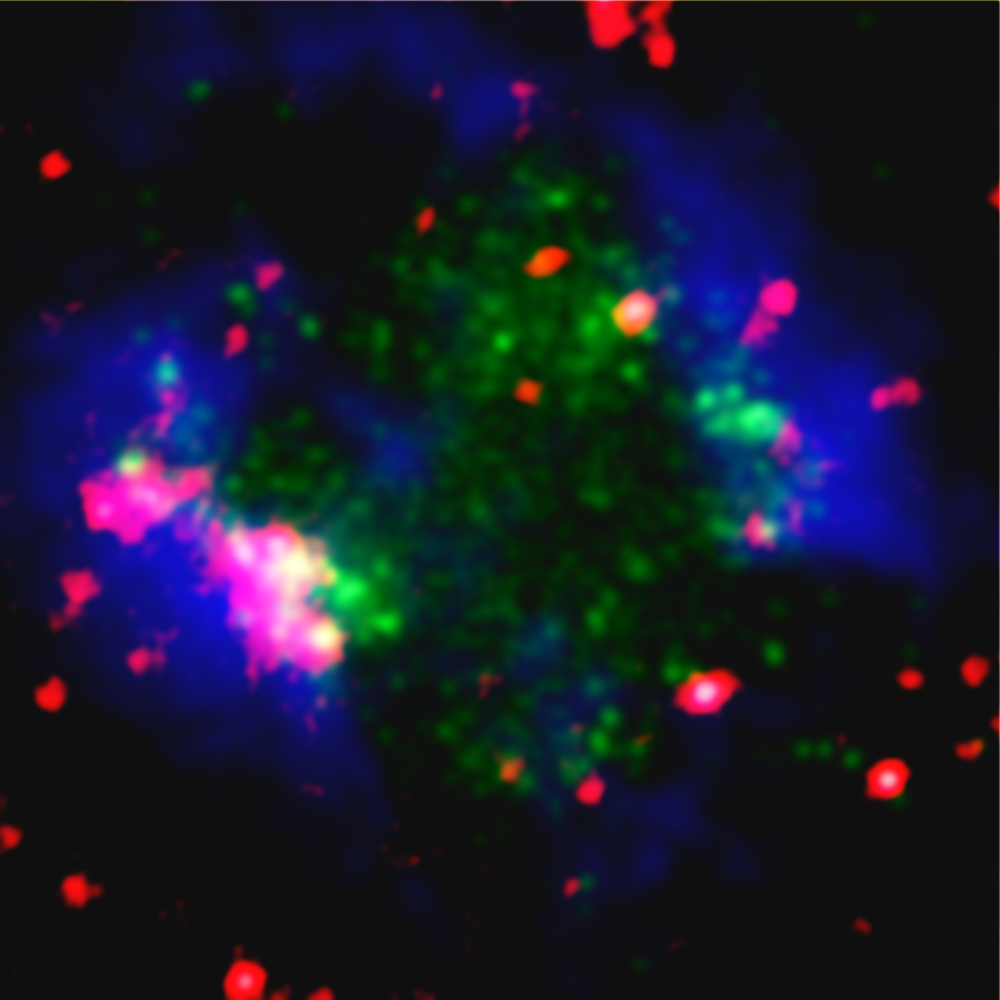
An image of the galaxy Sextans A where Red indicates the infrared emission of dust, blue the emission of atomic hydrogen gas, and green the far-ultraviolet emission created by newly formed stars.

An image of the galaxy Sextans A where Red indicates the infrared emission of dust, blue the emission of atomic hydrogen gas, and green the far-ultraviolet emission created by newly formed stars. (Image credit: Yong Shi)

The team's findings revealed that around 90% of the asymptotic red giant branch stars they studied were not surrounded by envelopes of dust. However, around 20 or so of these stars were embedded in thick dust shells. They also found that these "dust factories" formed between 2 billion and 3 billion years ago from stars with an initial mass about 1.5 times the mass of the sun.

This research is a leap forward in understanding which stars in the early universe were most likely to create the metal dust that would have enriched the next generations of stars. That means it helps paint a complete picture of how the universe as we see it today took shape.

The scientists behind this study say that this type of research would have been impossible before the launch of Webb.

"The JWST allows us to observe in unprecedented detail environments that until a few years ago were beyond our reach," team member Flavia Dell'Agli of the INAF. "The value of these data lies not only in the images, but in the ability to compare them with theoretical models and verify how correctly they describe the evolution of stars."

The team's research was published on Monday (July 20) in The Astrophysical Journal.

  •  

Scientists discover mystery molecule on Pluto and Saturn's moon Titan: 'We cannot say what it is'

Separated by billions of miles and shaped by very different environments, Saturn's smoggy moon Titan and the dwarf planet Pluto have, on paper, little in common.

Titan is a geologically active world cloaked in an atmosphere denser than Earth's, its landscape shaped by seas of liquid methane and vast dunes built from organic particles that rain out of its skies. Pluto, by contrast, is a frigid outpost with a tenuous atmosphere hovering above an icy, frozen surface.

Yet, observations from the James Webb Space Telescope (JWST) have revealed these two disparate worlds share an identical, unexplained infrared signature on their surfaces — a sign that similar chemistry may be unfolding on both worlds despite their stark differences, scientists say.

Detailed in a new study, the feature appears at precisely the same infrared wavelength on both Titan and Pluto, indicating that it absorbs light identically on both worlds. The signal points to the presence of an unknown compound, or a family of related compounds, that scientists have yet to identify.

"It's rather mysterious," Bruno Bézard, a planetary scientist at the Paris Observatory who led the discovery, told Space.com. "We cannot say what it is."

Chasing the signal

Bézard first spotted the unexplained feature while analyzing Titan observations from November 2022, when JWST gathered infrared light leaking through the haze in very specific, narrow wavelength bands, allowing scientists to peer directly through the otherwise opaque atmosphere.

To make sense of this light, researchers rely on spectroscopy, a technique used to identify compounds by the specific wavelengths of light they absorb. Because every molecule leaves behind a unique spectral fingerprint that telescopes can detect, astronomers can routinely identify substances across the solar system and beyond, ranging from simple water ice to complex molecules.

But the newly detected feature neither matches any of the standard library spectra cataloged so far, nor does it appear to be a fluke of the hardware, the study notes. The exact same absorption feature was detected by two different JWST instruments — the Near-Infrared Spectrograph (NIRSpec) and the Mid-Infrared Instrument (MIRI) — ruling out the possibility of an instrumental artifact.

After failing to find a match with the cataloged spectral fingerprints of the simplest and most common planetary ices, Bézard wondered whether another world with similar atmospheric chemistry might hold a clue. He turned to his colleague Emmanuel Lellouch of the Paris Observatory, who had led a JWST program that had observed Pluto in May 2023.

"I asked him, 'Do you also have a signature [on Pluto] at this exact wavelength?'" Bézard recalled in the interview with Space.com. "So we looked, and we found that it is present there."

The ground truth

There is no evidence that the mystery molecule is a biosignature, Bézard said. Instead, it likely reflects the kind of prebiotic chemistry that has been operating in Titan's oxygen-free environment for more than 4 billion years.

One compelling possibility is that it belongs to a family of hydrocarbons known as allenes, which the study notes are essentially the only organic compounds known to exhibit strong absorption bands within the same 5-micron infrared range as the mystery signal.

But the allene family contains many complex variations for which complete spectra do not yet exist, Bézard said. Alternatively, the signature could belong to a known molecule whose spectral fingerprint has shifted, potentially because it is mixed with other planetary ices that have not yet been fully cataloged.

"We only have spectra for the simplest of them," Bézard said. "But it is possible that within this family you could find one or several compounds which are present together and make such an absorption feature."

Whatever the compound ultimately proves to be, he and his team believe it forms in the atmosphere through photochemical reactions before eventually "snowing" down onto the surface.

Despite their stark differences, both Titan and Pluto possess atmospheres dominated by nitrogen and methane. Scientists know from spacecraft observations and lab simulations that in the upper reaches of the planets' atmospheres, ultraviolet sunlight breaks these molecules apart, triggering a cascade of highly reactive chemical fragments. These fragments then reassemble into complex organic compounds, some of which condense and snow back down onto the surface below, which is where the JWST detected them.

A couple of different lines of evidence support this atmosphere-to-surface pipeline. First, the team analyzed how the signal behaved across Titan's disk. As the JWST scanned Titan from the center of its circular face toward its outer edge, or limb, the mysterious signal steadily weakened, the study notes.

"This is what you expect if it comes from the surface," said Bézard.

Because of the three-dimensional geometry of looking at a sphere, a signal coming from a flat surface will appear strongest at the center and grow fainter near the edge, where the angle of view through the atmosphere becomes longer and more obscured. This specific dimming trait was not shared by atmospheric carbon monoxide the team checked, which remained essentially unchanged from center to limb, Bézard said, which helped the team infer that this mystery molecule likely resides on the ground.

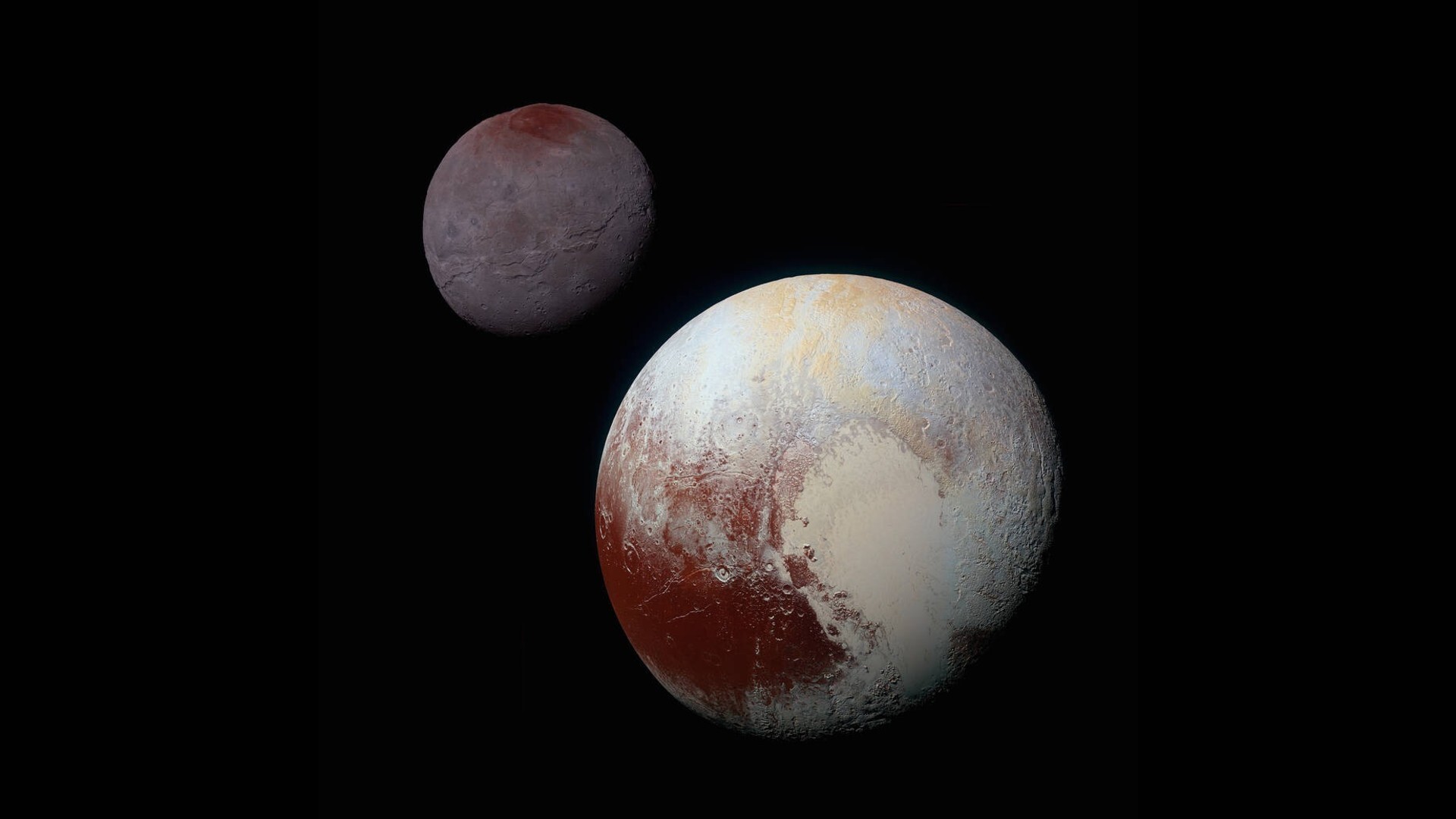
A close up of Pluto (a red and white planet in the front) and its moon Charon (a darker reddish sphere) in the back in the darkness of space

An image showing Pluto and its moon Charon in the back. (Image credit: NASA/JHUAPL/SwRI)

Pluto offered an independent line of evidence to back up this surface theory. Its near-vacuum atmosphere is physically too thin and sparse to generate an absorption feature of the observed depth, Bézard said, leaving the dwarf planet's solid surface as the only plausible source for the deep signature.

To further test their atmospheric-origin hypothesis, the team studied JWST observations of Jupiter's moon Ganymede. Because Ganymede lacks a nitrogen-methane atmosphere, it cannot run the same photochemical engine like Titan and Pluto do. Sure enough, the researchers found no trace of the mysterious feature, lending additional support to the theory that the compound is uniquely tied to the chemistry of nitrogen and methane skies.

Mapping Titan's surface

More clarity may arrive in the coming months. Researchers are currently analyzing newer JWST observations that provide a more complete view of Titan as it rotates. The data will allow the team to map the mysterious infrared signature across the moon's surface and determine whether it is associated with specific geologic features, such as Titan's vast organic-rich dune fields, which are continually replenished by a slow drizzle of complex particles produced in the atmosphere, Bézard said.

Further clues may have to wait for NASA's Dragonfly mission, a car-sized rotorcraft expected to launch in 2028 and arrive at Titan in the mid-2030s.

Although Dragonfly does not carry an infrared spectrometer to replicate JWST's light measurements, its onboard mass spectrometer will allow it to "taste" organic molecules across the various geologically interesting areas the spacecraft will fly to. By revealing which compounds are actually present on Titan's surface, the mission could give scientists a shortlist of candidates to replicate in laboratories back on Earth to see if they match the traits of the mystery molecule, Bézard said.

"It's always exciting when you discover something that was not seen before," Bézard said. "It's really the nicest part of our job."

The new study was accepted for publication in the journal Astronomy & Astrophysics.

  •  
❌