 Login

An Extraordinary White House Meeting
A new book sheds light on President Trump’s affinity for fossil fuels.


© Adriana Loureiro Fernandez for The New York Times
Google DeepMind CEO Demis Hassabis is pushing for the US AI industry to self-regulate, with the support of government, as a starting point for an international creating shared international standards. In a blog post, he called for a focus on artificial general intelligence (AGI) and national security.
But it is precisely that focus on national security that may make the results of such an effort, assuming it happens, less than palatable outside of the US.
“The rapid progress we’re seeing in AI requires a new approach to testing frontier AI model capabilities that is dynamic, adaptable, and rigorous,” Hassabis wrote. “The US is well positioned, given its economic and technical standing, to take the first step in developing such a framework. It could establish a new Standards Body modelled on a federally overseen public-private partnership or self-regulatory organization, much like the Financial Industry Regulatory Authority (FINRA), with a board that includes independent leading technical experts and open-source representatives.”
He noted, however, that the funding would need to be substantial, and would most likely come from industry, to allow the new body to attract world-class technical talent and obtain the necessary compute resources for large-scale testing.
Hassabis proposed that the organization “be responsible for developing assessment protocols and working with appropriate federal agencies and the US National Labs to conduct testing in areas relevant to national security,” and that AI vendor participants be encouraged to adopt best practices such as publishing model cards with technical details, maintaining strong internal cybersecurity, vetting key personnel, and providing sufficient resourcing for safety and security research.
This is not the first time Hassabis has expressed worries about AGI.
DeepMind was involved in an earlier US government initiative evaluating AI safety, alongside Microsoft and xAI (now SpaceXAI) working with the Center for AI Standards and Innovation (CAISI), a division of the US Department of Commerce. It allowed CAISI to conduct pre-deployment evaluations and targeted research to “better assess frontier AI capabilities and advance the state of AI security.”
Analysts and consultants were mixed about the move, with most expressing concerns about whether an industry-focused group would prioritize the public’s best interests.
“Self-regulation is not viable because it implies everyone is able to regulate themselves and will do so in line with the best interests of the public. Most tech vendors don’t have the capacity to self-regulate. They would just prefer a set of rules within which they can operate,” said Gartner VP analyst Nader Henein. “For-profit organizations are required to do what is best for their shareholders, and external regulation ensures that those organizations are never in a conflict of interest where they have to choose between what is good for their shareholders and what is good for the public.”
And, said Sanchit Vir Gogia, chief analyst at Greyhound Research, given the international nature of AI models, an effort coordinated by the US government might alienate other countries.
“National security is the proposal’s accelerator in Washington and its poison pill abroad: the framing that opens the only gate available at home invites foreign capitals to read the institution as an instrument of American strategy,” he pointed out.
“The map is already plural,” he said. “Brussels switches on enforcement powers over general-purpose models [starting in August 2026], London runs the AI Security Institute, and Beijing licenses on its own terms. California and New York have legislated for frontier models at home. The durable route is shared technical evidence with sovereign enforcement, sealed through mutual recognition rather than deference, with India and the other major non-Western markets holding authorship rather than seats.”
Gogia added that the rules enacted by even such a group may not address all of the key concerns of enterprise IT. A US government effort along the lines that Hassabis is proposing would result in testing that “sits close to intelligence and industrial policy, and those functions will not stay neatly separated. A model can pass every catastrophic-risk test and still fail the enterprise on privacy, reliability, and liability,” he noted.
Walmart’s former director of cybersecurity Steven Eric Fisher, who is now an independent cybersecurity consultant, said he found the proposal “well-intentioned, but it addresses a highly polarized topic at a time when commercial interests carry unprecedented political influence, which is not always applied benevolently.”
He added, “an exclusive US standard that is not globally respected or enforceable would likely fail to achieve its core purpose and would place US companies at a competitive disadvantage.”
Aman Mahapatra, chief strategy officer for Tribeca Softtech, a New York City-based technology consulting firm, said that a deep dive into how FINRA operates today is illustrative of what IT leaders can expect from this effort, assuming the industry adopts that model.
“When the CEOs of the five companies that would be regulated are also the primary drafters of the standards, the standards will reflect those companies’ interests. FINRA has an independent board, but the operational reality is that member firm perspectives dominate the working groups that write the actual rules,” he said. “There is no reason to expect an AI equivalent to work differently, and every reason to expect it to work worse, because AI standardization is happening faster than any industry has ever attempted to standardize itself, and speed is the enemy of independent oversight.”
Carmi Levy, an independent technology analyst, was even more emphatically opposed to the Hassabis proposal.
“Asking Big Tech companies to self-police is analogous to allowing foxes to guard the henhouse. It hasn’t worked to date, and it won’t work going forward. Expecting these organizations to somehow change their ways at this point in time represents the height of naïve thinking,” Levy said. “The framework proposed by Demis Hassabis is a self-serving roadmap for an industry bent on racing to the AI horizon regardless of the harms caused along the way. It is impossible to quantify the dangers to broader society should frameworks allowing self-regulation become the norm.”
An almost completely opposite stance came from Yuri Goryunov, CIO of consulting firm Acceligence, who applauded the proposed move.
“This is one of the rare setups where industry self-regulation has a real shot, and enterprise IT should be enthusiastically rooting for it,” he said. “It fails when harms are externalized, such as in social media content moderation. Or when the overseer outsources judgment to the overseen, such as the FAA’s delegation to Boeing before the 737 MAX. It works when everyone in the industry shares the catastrophic downside.”
He suggested, however, that the best precedent here isn’t FINRA, it’s INPO, the Institute of Nuclear Power Operations, which the nuclear industry created within months of the 1979 Three Mile Island partial reactor meltdown “on the logic that an accident anywhere is an accident everywhere. INPO peer-reviews every US plant, its evaluations move insurance premiums, and it sits on top of the NRC’s statutory floor. That is a public-private stack very close to what Hassabis is describing. Frontier AI has the same structure: one lab’s catastrophic failure brings regulation down on all of them.”
For enterprise CIOs and other IT executives, Goryunov said, that model has the potential for being a big win.
“Today, every enterprise duplicates the same AI diligence of red-teaming, eval suites, governance committees and each does so with less information than any certifying body would have,” Goryunov said. “A credible standards regime does for AI what UL did for electrical equipment and SOC2 did for cloud: it converts an unknowable risk into a procurable product and gives boards a defensible standard of care. That’s not red tape. That’s peace of mind with an audit trail.”
However, Mahapatra said, “the countervailing view is that the alternative to industry-led standards is probably not thoughtful legislation. It is probably no standards, or state-by-state fragmentation, or the current pattern of ex-post enforcement actions where regulators surface concerns years after harm has already occurred.”
Thus, he noted, “Hassabis is making the reasonable argument that imperfect fast standards are better than perfect slow ones, and there is genuine merit to that view for topics like agent identity, evaluation methodology, and interoperability, which are exactly the areas OpenClaw is also targeting.”
This article first appeared on CIO.


Humans have been around for only about 0.01% of Earth’s history, yet we’ve altered natural landscapes and processes that have remained stable for millions of years. A team of researchers from the University of Glasgow recently studied a formerly sandy beach in the UK that highlights how fast these changes can occur.
Industrial steel and iron furnaces operated extensively in the UK from 1856 until the 1980s. During these decades, workers dumped roughly 335 million cubic meters (90 billion gallons) of molten furnace waste, called slag, across the country. Of that, roughly 27 million cubic meters (6 million gallons) now sits on the coast of Derwent Howe in a massive 30-meter (100-foot), solidified cliff.
The researchers analyzed this region to understand how man-made, or anthropogenic, materials influence the way rocks form. Rocks naturally form and change into different types of rocks over million-year timescales, through a continuous process called the rock cycle. When the team uncovered a soda can tab manufactured in 1989 within the hardened grains, or clasts, of slag, they concluded that the beach had solidified within the last 35 years. Based on this discovery, they proposed a new term for rocks formed from anthropogenic sediments: the anthropoclastic rock cycle.
The team collected 1,300 grains of sediment from 13 sites in the study area and found that 83% were slag. Natural beach sediments, like quartz sand, comprised only about 17% of the grains. As wind and waves broke down the cliff, slag clasts fell off and became rounded by friction as tides transported them from the cliff to the beach.
At the boundary where the slag touched the beach, the researchers also saw evidence that the slag had seeped into the underlying wet sediment. The rocks there resembled a type of rock called peperite, which forms when lava flows over wet, loose sediments. They concluded that this peperite-like rock formed as the molten slag flowed over the still sandy beach. Slag is much thicker than wet sand, so the resulting rock looked like blobs of slag encased in sandy rock.
The researchers then visually observed how the slag grains were arranged in the solidified rock to reconstruct the tidewater speeds at different points in the coast’s history. The different ways sediments are arranged within a rock are called sedimentary features, and they reflect the processes that formed the rock. For example, as water flows over sand, it forms small, dune-like ripples. When the sand beds harden into rock, the ripples are preserved as features known as trough cross-bedding.
Faster water erases any ripple formations and instead forms horizontal layers in the sediment, known as planar lamination. The researchers observed both trough cross-bedding and planar laminations preserved in the slag beach rocks. These sedimentary features indicate that the beach at Derwent Howe turned from loose sediment into rock in a generation.
To investigate why this beach rapidly solidified, the researchers scanned the surfaces of the beach rock with electron beams and X-rays using a scanning electron microscope, or SEM, equipped with an energy dispersive X-ray, or EDX. Every chemical element emits a unique set of X-rays with different wavelengths when hit with EDX, so the researchers could compare the X-rays from their samples to databases of known mineral X-ray signatures. They identified the primary binding agents as calcium- and iron-rich minerals like calcite, goethite, and brucite. These minerals are called cements because they bind grains of sediment together.
The researchers expected the slag to produce these cement compositions, since extracting metal ores from rock enriches the resultant slag in calcium, magnesium, manganese, and iron, which readily dissolve in water. When water flowing between closely packed slag grains can no longer hold additional dissolved elements, those elements precipitate as solid mineral cements. Since cements only form when the water has very high concentrations of dissolved elements, the introduction of massive amounts of slag caused the cement to form faster than it would in waters with lower concentrations of elements.
The researchers suspected that the anthropoclastic rock cycle they observed at Derwent Howe is not uncommon. Since slag contains all the elements necessary to form rocks when in contact with seawater and air, slag deposits all over the world could be rapidly influencing their local environments. With this in mind, the team suggested that future researchers update geological models to account for human contributions to the natural rock cycle.
The post Industrial waste solidified a UK beach in just 35 years appeared first on Sciworthy.

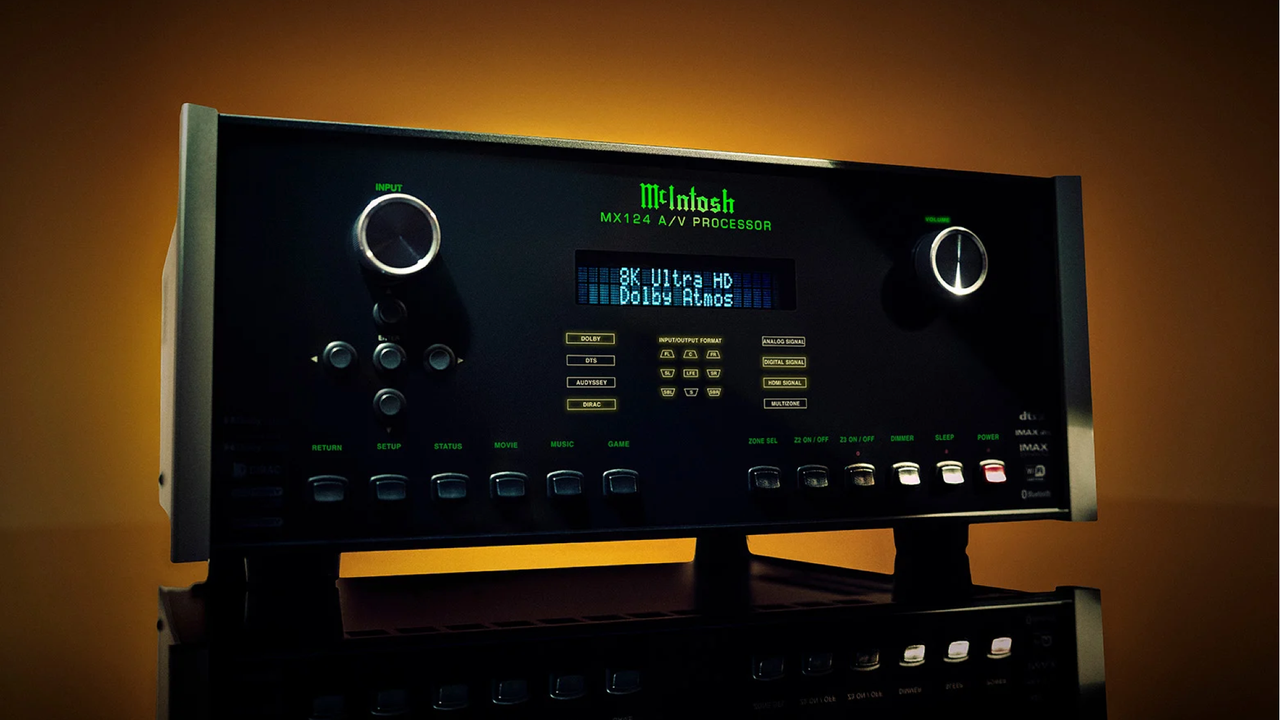
If you're looking for an AV processor so future-proof that your grandkids will want to inherit it, McIntosh Labs may have just the thing. The new MX124 A/V Processor is designed for "today's "most advanced home cinema systems" according to the company, and comes with extensive connectivity options, as you'd expect.
As you'd expect from McIntosh, it's a tough-looking thing, and to my eyes it resembles something from a 1960s recording studio or NASA control center. But while it may look a little retro on the outside, what's inside is bang up to date.
Its 13 surround channels with four inividual subwoofer outputs support speaker configurations of up to 7.4.6 or 9.4.4, and it has superb wired and wireless connectivity for your AV components.

The McIntosh MX124 A/V Processor is designed to sit at the center of a reference-spec home theater system, handling the audio and video sources and routing the audio to the appropriate amplifiers via its balanced or unbalanced outputs.
It has seven HDMI inputs and three outputs, including one with eARC for your TV, and all the HDMI inputs support 8K at 60Hz and 4K at 120Hz. They're compatible with Dolby Vision, HDR10+, HLG and IMAX Enhanced, and they also support HDCP 2.3, Rec.2020, 4:4:4 Color Spacing, Dynamic Lip-sync, 3D Video Passthrough, ALLM, VRR and Quick Frame Transport.
There are four dedicated digital audio inputs, one balanced and eight unbalanced analog stereo inputs, component and composite video inputs, and dual analog stereo outputs to accommodate two additional listening zones.
For streaming, the MX124 supports AirPlay, Bluetooth, Qobuz Connect, Spotify Connect, Tidal Connect and Roon Ready, supporting hi-res audio streaming at up to 32-bit/192kHz.
The MX124 also features Dirac Live Room Correction and Bass Control, with licenses included for both. It can also deliver Audyssey MultEQ XT32 room calibration if that's your preferred option.
As this is a premium AV product, it's been designed with professional installation in mind, and it's certified Connects With Control4 for simple and efficient setup and pre-configuration. It features RS232 for automation control and is suitable for rack mounting.
McIntosh didn't include pricing details in its official announcement but retailers are listing the new MX124 with a price tag of $15,000 (about £11,079 / AU$21,423). And as I mentioned above, that's excluding amplification.
If you're looking for something more affordable, you might prefer to take a look at Denon's two new affordable entry and mid-range AVRs, or Yamaha's two new budget AVR options.
Try our TV size and model finder! You tell it how far you sit from your TV, we'll tell you what size to buy based on viewing angle advice from image quality experts, and we'll recommend our three top TVs at that size for different prices.
German luxury brand Loewe has unveiled what it calls its "most individual Smart OLED TV to date," the Loewe Antares. It's a 4K TV with a modular design that enables you to personalize it to suit your particular preferences.
The Antares TV features interchangeable aluminum onlays with a range of fabric colors, and flexible setup options including a universal table stand, multiple floor stands including a motorized stand, and several wall mount options. The table stand can rotate and offers three height positions.
The TV has Loewe's Invisible Sound integrated speaker system, but you can specify it with lots of beefier options. You can add the Loewe Soundbar Antares, which is a front-firing 80W soundbar designed specifically for these TVs, and/or an optional subwoofer.
You can also specify your Antares with other Loewe audio products including the multi.room amp, Klang subwoofer, We.BOOST wireless surround sound system and the we.BOOST center speaker, though the TV itself can be the center speaker in the wireless surround system if you prefer.

Each Antares TV has a 4K OLED panel that's been "individually calibrated before leaving the factory" according to Loewe. Loewe is one of the few companies that gets raw OLED panels from LG Display and finishes the manufacturing itself, but the company confirmed that this is an OLED EX panel with Double Rate Driving technology, which suggests it's the same panel tech used in the five-star (albeit cheaper) LG C6 OLED TV, plus whatever finishing touches and calibration Loewe has added.
There's support for both Dolby Vision IQ and HDR10+ Adaptive when it comes to HDR. There's a dual-channel, triple-tuner setup with USB recording, parallel TV viewing and timeshift functionality, and the OS is a customized version of Vidaa OS, with key streaming apps, Apple AirPlay, Miracast and Matter on board.
For gamers there's HDMI 2.1 support, with 144Hz VRR at 4K, and a dedicated low-latency gaming mode. There are multiple sizes here, from the compact 42-inch to the range-topping 77-inch.
As you'd expect from Loewe these are premium priced TVs. Prices start at £2,500 (about $3,350 / AU$4,799) and rise to £4,000 (about $5,370 / AU$7,675). The Loewe Antares soundbar is £300 (about $400 / AU$575).
At the moment this is a UK-only release, though Loewe told TechRadar that a US launch is being considered, but isn't confirmed yet.
Try our TV size and model finder! You tell it how far you sit from your TV, we'll tell you what size to buy based on viewing angle advice from image quality experts, and we'll recommend our three top TVs at that size for different prices.


NASA is picking up the pace on its Artemis III mission preparations, pressing forward on multiple fronts to assemble launch vehicle hardware and beginning routine simulations inside Artemis mission control.
The agency is "full steam ahead," according to a July 13 NASA update. Across Kennedy Space Center (KSC) in Florida, components of Artemis III's Space Launch System (SLS) rocket are coming together, undergoing tests and awaiting transportation for final integration ahead of next year's launch. NASA is targeting mid-to-late 2027 for Artemis III, which will launch four astronauts into low Earth orbit (LEO) aboard the Orion spacecraft. It will be the second crewed mission of NASA's Artemis program, which aims to establish a permanent human presence on the moon.
Artemis III will be a critical stepping stone in NASA's lunar landing architecture, despite the mission not actually flying to the moon. Instead, SLS will launch Orion and its four-person crew into LEO for rendezvous and docking operations with the program's two commercial lunar lander vehicles: SpaceX's Starship and Blue Origin's Blue Moon spacecraft.
With the completion of the massively successful Artemis II mission that flew astronauts around the moon in April and the second half of 2026 beginning to count down, NASA has shifted into full gear to complete assembly and testing of the hardware that will launch Artemis III.
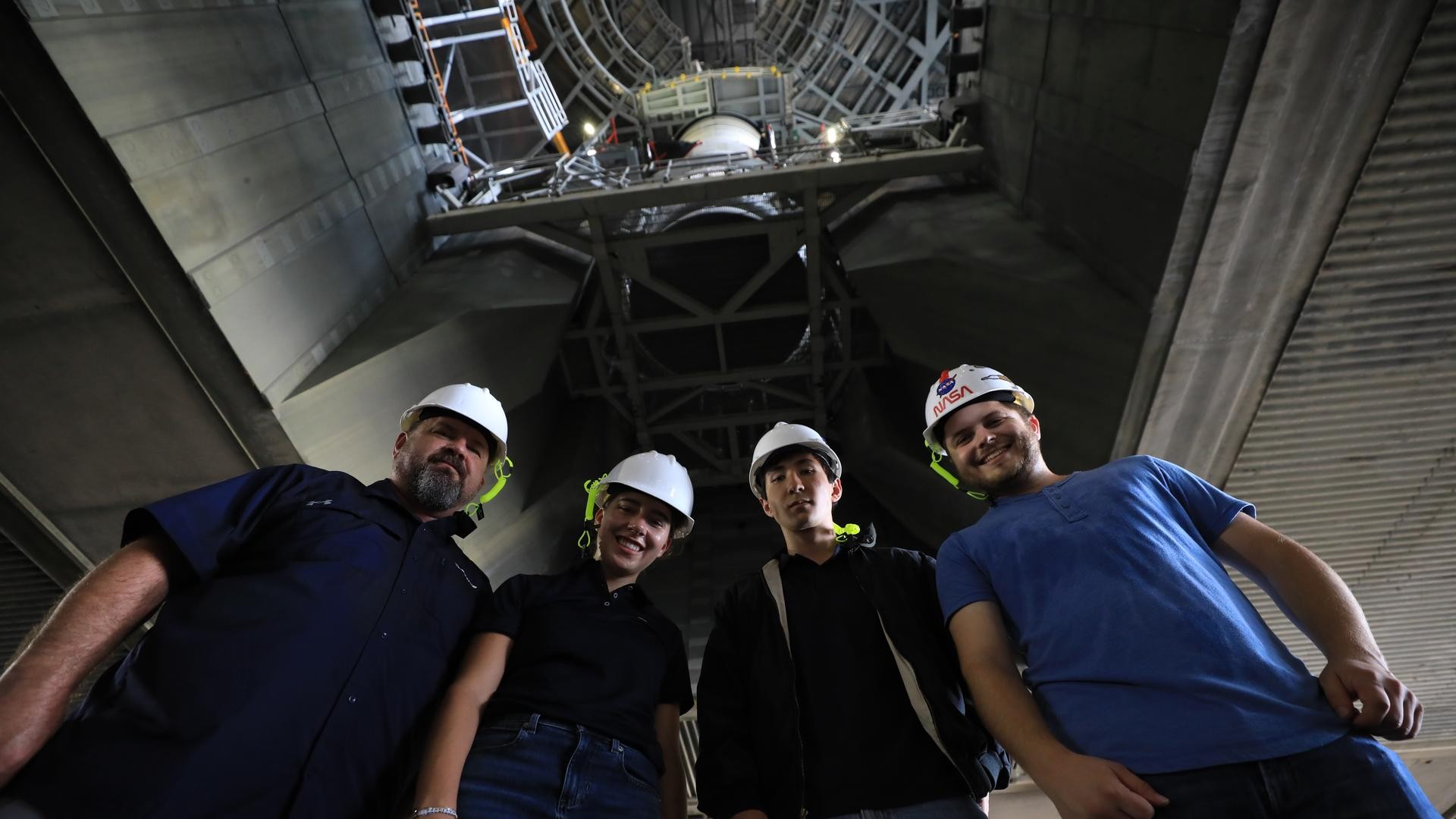
Several components for the mission's SLS rocket have arrived in the Vehicle Assembly Building (VAB) at KSC. The SLS core stage was delivered at the end of April, and it was connected with the rocket's engine block section in May. The first two of the core stage's four RS-25 engines arrived in June and will be installed on the SLS engine block once the remaining two are delivered, after which NASA plans to begin integration with the mobile launch platform (MLP) and launch operations tests. A temporary weather cap was also delivered in June, which will protect the stage when NASA transports it to the launch pad for tests before the full vehicle is stacked.
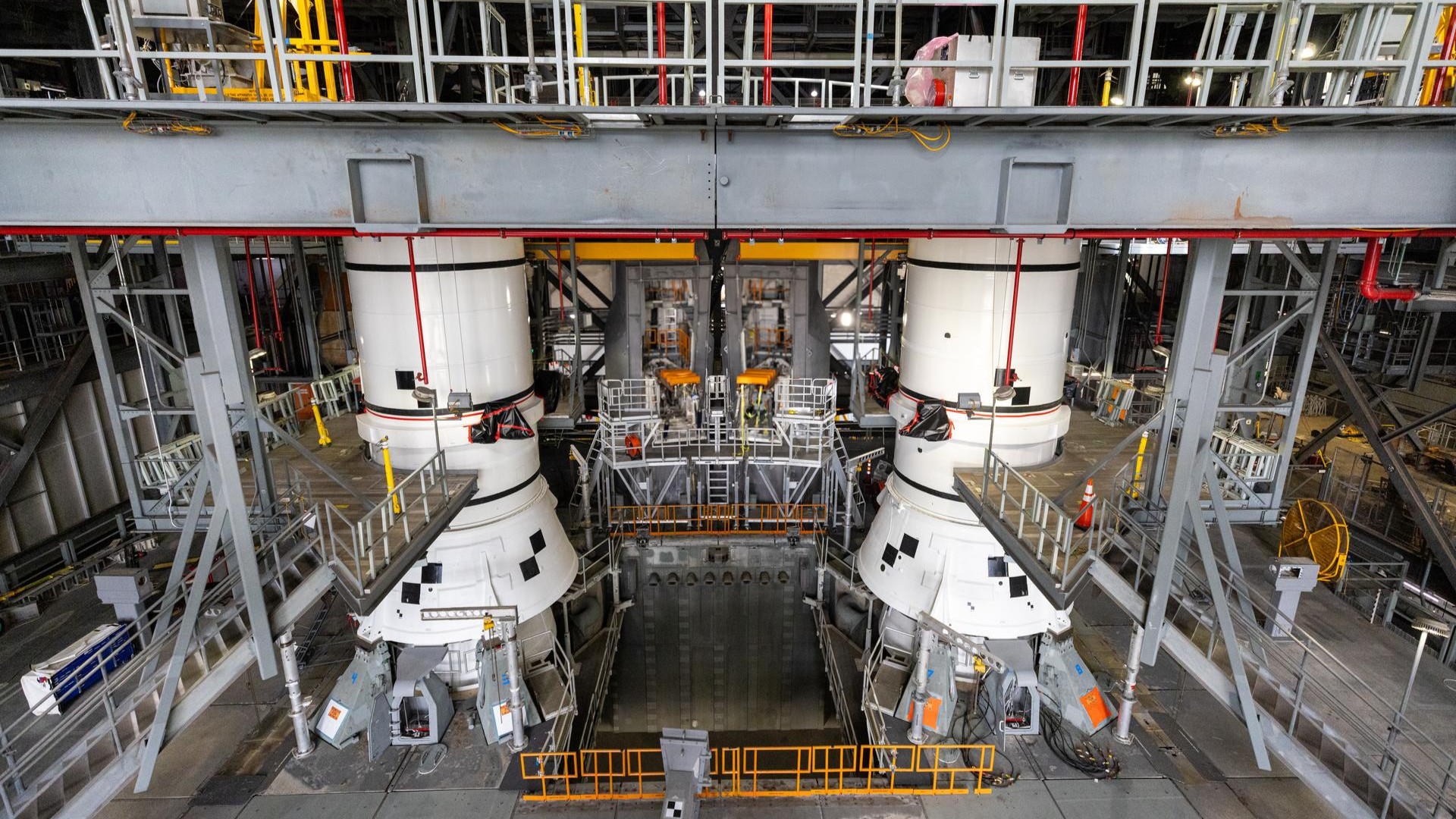
The bottom segments of both SLS solid rocket boosters (SRBs) were delivered over the last week, and they have been mounted on the MLP, according to NASA's update. The upper SRB segments arrived at KSC via train in June and will undergo inspection and testing before the twin boosters are fully stacked.
Inside KSC's Neil Armstrong Operations and Checkout Building, the Artemis III Orion is making significant progress — engineers have now finished installation of the spacecraft's heat shield.
Artemis III will be the first Orion mission to use an upgraded heat shield, featuring design improvements gleaned from analysis of unexpected wear on the heat shield flown on Artemis I. Orion's service module is also currently inside the Operations and Checkout Building and recently completed acoustic testing. Both the service module and Orion capsule are now being prepared for joining and eventual transportation to the VAB for stacking.
The pieces for Artemis III are coming together at @NASAKennedy.The twin solid rocket boosters? They’re getting stacked.The launch team? They’re simulating the countdown.The heat shield? It’s now attached to the Orion spacecraft.Full steam ahead for Artemis III. pic.twitter.com/2f92kv6HEiJuly 13, 2026
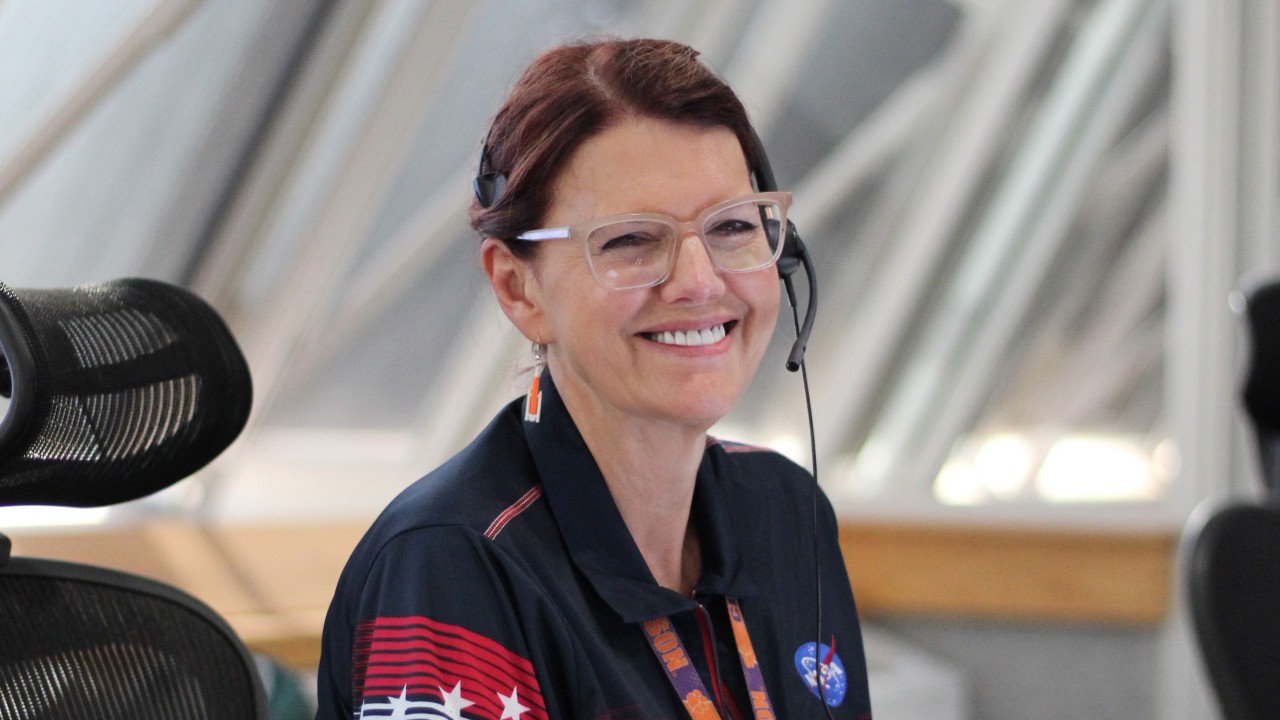
On the personnel side of things, Artemis III team members at KSC have begun monthly launch simulation tests to hone procedures for SLS propellant loading, terminal count operations (the final 10 minutes prior to liftoff) and launch day operations. Those tests will continue regularly leading up to Artemis III's launch next year, according to NASA.
As teams across NASA are busy readying all the pieces for Artemis III, others are looking ahead to the program's first lunar landing, planned for Artemis IV. That mission, scheduled for late 2028, will deliver a crew of astronauts to the surface of the moon for the first time since 1972. The SLS that will get them there is also coming together piece by piece.
The liquid oxygen (LOX) tank for the Artemis IV SLS core stage was recently relocated within NASA's Michoud Assembly Facility in New Orleans, positioning the tank for testing as it enters its next phase of production.

Google DeepMind CEO Demis Hassabis on Tuesday reiterated his push for an AI industry self-regulation effort, led by the US government, that is particularly focused on artificial general intelligence (AGI) and national security.
But it is precisely that focus on national security that may make the results of such an effort, assuming it happens, less than palatable outside of the US.
“The rapid progress we’re seeing in AI requires a new approach to testing frontier AI model capabilities that is dynamic, adaptable, and rigorous,” Hassabis wrote. “The US is well positioned, given its economic and technical standing, to take the first step in developing such a framework. It could establish a new Standards Body modelled on a federally overseen public-private partnership or self-regulatory organization, much like the Financial Industry Regulatory Authority (FINRA), with a board that includes independent leading technical experts and open-source representatives.”
He noted, however, that the funding would need to be substantial, and would most likely come from industry, to allow the new body to attract world-class technical talent and obtain the necessary compute resources for large-scale testing.
Hassabis said he would propose that the organization “be responsible for developing assessment protocols and working with appropriate federal agencies and the US National Labs to conduct testing in areas relevant to national security,” and that AI vendor participants would be encouraged to adopt best practices, such as publishing model cards with technical details, maintaining strong internal cybersecurity, vetting key personnel, and providing sufficient resourcing for safety and security research.
This is not the first time Hassabis has expressed worries about AGI. He has already worked on a US government initiative evaluating AI safety, which involved DeepMind, Microsoft and xAI (now SpaceXAI) working with the Center for AI Standards and Innovation (CAISI), a division of the US Department of Commerce. It allowed CAISI to conduct pre-deployment evaluations and targeted research to “better assess frontier AI capabilities and advance the state of AI security.”
Analysts and consultants were mixed about the move, with most expressing concerns about whether an industry-focused group would prioritize the public’s best interests.
“Self-regulation is not viable because it implies everyone is able to regulate themselves and will do so in line with the best interests of the public. Most tech vendors don’t have the capacity to self-regulate. They would just prefer a set of rules within which they can operate,” said Gartner VP analyst Nader Henein. “For-profit organizations are required to do what is best for their shareholders, and external regulation ensures that those organizations are never in a conflict of interest where they have to choose between what is good for their shareholders and what is good for the public.”
And, said Sanchit Vir Gogia, chief analyst at Greyhound Research, given the international nature of AI models, an effort coordinated by the US government might alienate other countries.
“National security is the proposal’s accelerator in Washington and its poison pill abroad: the framing that opens the only gate available at home invites foreign capitals to read the institution as an instrument of American strategy,” he pointed out.
“The map is already plural,” he said. “Brussels switches on enforcement powers over general-purpose models [starting in August 2026], London runs the AI Security Institute, and Beijing licenses on its own terms. California and New York have legislated for frontier models at home. The durable route is shared technical evidence with sovereign enforcement, sealed through mutual recognition rather than deference, with India and the other major non-Western markets holding authorship rather than seats.”
Gogia added that the rules enacted by even such a group may not address all of the key concerns of enterprise IT. A US government effort along the lines that Hassabis is proposing would result in testing that “sits close to intelligence and industrial policy, and those functions will not stay neatly separated. A model can pass every catastrophic-risk test and still fail the enterprise on privacy, reliability, and liability,” he noted.
Walmart’s former director of cybersecurity Steven Eric Fisher, who is now an independent cybersecurity consultant, said he found the proposal “well-intentioned, but it addresses a highly polarized topic at a time when commercial interests carry unprecedented political influence, which is not always applied benevolently.”
He added, “an exclusive US standard that is not globally respected or enforceable would likely fail to achieve its core purpose and would place US companies at a competitive disadvantage.”
Aman Mahapatra, chief strategy officer for Tribeca Softtech, a New York City-based technology consulting firm, said that a deep dive into how FINRA operates today is illustrative of what IT leaders can expect from this effort, assuming the industry adopts that model.
“When the CEOs of the five companies that would be regulated are also the primary drafters of the standards, the standards will reflect those companies’ interests. FINRA has an independent board, but the operational reality is that member firm perspectives dominate the working groups that write the actual rules,” he said. “There is no reason to expect an AI equivalent to work differently, and every reason to expect it to work worse, because AI standardization is happening faster than any industry has ever attempted to standardize itself, and speed is the enemy of independent oversight.”
Carmi Levy, an independent technology analyst, was even more emphatically opposed to the Hassabis proposal.
“Asking Big Tech companies to self-police is analogous to allowing foxes to guard the henhouse. It hasn’t worked to date, and it won’t work going forward. Expecting these organizations to somehow change their ways at this point in time represents the height of naïve thinking,” Levy said. “The framework proposed by Demis Hassabis is a self-serving roadmap for an industry bent on racing to the AI horizon regardless of the harms caused along the way. It is impossible to quantify the dangers to broader society should frameworks allowing self-regulation become the norm.”
An almost completely opposite stance came from Yuri Goryunov, CIO of consulting firm Acceligence, who applauded the proposed move.
“This is one of the rare setups where industry self-regulation has a real shot, and enterprise IT should be enthusiastically rooting for it,” he said. “It fails when harms are externalized, such as in social media content moderation. Or when the overseer outsources judgment to the overseen, such as the FAA’s delegation to Boeing before the 737 MAX. It works when everyone in the industry shares the catastrophic downside.”
He suggested, however, that the best precedent here isn’t FINRA, it’s INPO, the Institute of Nuclear Power Operations, which the nuclear industry created within months of the 1979 Three Mile Island partial reactor meltdown “on the logic that an accident anywhere is an accident everywhere. INPO peer-reviews every US plant, its evaluations move insurance premiums, and it sits on top of the NRC’s statutory floor. That is a public-private stack very close to what Hassabis is describing. Frontier AI has the same structure: one lab’s catastrophic failure brings regulation down on all of them.”
For enterprise CIOs and other IT executives, Goryunov said, that model has the potential for being a big win.
“Today, every enterprise duplicates the same AI diligence of red-teaming, eval suites, governance committees and each does so with less information than any certifying body would have,” Goryunov said. “A credible standards regime does for AI what UL did for electrical equipment and SOC2 did for cloud: it converts an unknowable risk into a procurable product and gives boards a defensible standard of care. That’s not red tape. That’s peace of mind with an audit trail.”
However, Mahapatra said, “the countervailing view is that the alternative to industry-led standards is probably not thoughtful legislation. It is probably no standards, or state-by-state fragmentation, or the current pattern of ex-post enforcement actions where regulators surface concerns years after harm has already occurred.”
Thus, he noted, “Hassabis is making the reasonable argument that imperfect fast standards are better than perfect slow ones, and there is genuine merit to that view for topics like agent identity, evaluation methodology, and interoperability, which are exactly the areas OpenClaw is also targeting.”
This article originally appeared on CIO.com.


The Federal Communications Commission (FCC) has approved the launch of Reflect Orbital's Earendil 1 satellite — a space mirror 18 meters wide designed to reflect sunlight to the ground.
The post Observers Beware: Reflect Orbital’s Space Mirrors Approved for Launch appeared first on Sky & Telescope.
When Apple sued OpenAI last week, the argument it made was that former employees had stolen Apple data and then used it to benefit OpenAI.
The technical details — an employee used “a rare, previously unknown authentication bug to access Apple’s shared network folders” — are interesting. But the larger story is Apple’s ridiculous attempt to stop its people from using anything they learned at Apple in other jobs.
“Hiring managers don’t mind some files being brought into the org during onboarding, but suddenly take umbrage when that same employee exits with some files later on,” said Mike Wilkes, enterprise CISO at Aikido Security. “Legal should be equally concerned about both events.”
The lawsuit focused on Chang Liu, an employee who had been recruited to work at OpenAI after working at Apple for eight years as a Senior System Electrical Engineer. The full text of the filing depicts a comedy of errors by Apple, offering the perfect “do not do” list of handling employee resignations — especially when they’re going to a direct competitor.
“When Apple contacted Mr. Liu to sign Apple’s confidentiality reminder, schedule an exit interview, and confirm that he had returned his devices and complied with other exit procedures, Mr. Liu did not respond.” And “after leaving Apple, Mr. Liu failed to return an Apple-issued work laptop that he had previously authenticated to Apple’s network.”
First, typical procedure for handling departures is to tie the return of all equipment and the signing of documents to any final payments. With Apple, that is likely to be a large amount of money. The lawsuit does not say whether Apple exerted any financial pressure on their employee for compliance.
But in terms of equipment with high-level access, why weren’t all privileges revoked, both for the employee and any and all company-issued devices? Did they not maintain a remote-wipe capability for these devices? Although remote-wipe is usually used when devices are missing or stolen, it should work as well when a departing employee refuses to return company equipment.
According to Apple, Liu apparently had help at Apple from Tang Yew Tan, who was supposedly also interviewing with OpenAI. “While employed by OpenAI, [Liu] accessed and used his former colleague’s Apple-issued work computer that was authenticated to Apple’s network, without Apple’s authorization.”
Apple tried to make much of this Liu’s fault. Legally, yes, there might be liability there; still, Apple made itself look as if it couldn’t protect its own data. “Upon discovering that he had this unauthorized access to Apple’s systems, [the former employee] did not report it, return his stolen Apple-issued work laptop or delete the program that allowed the access.”
Really, Apple? Your data-protection plan relies on ex-employees to “delete the program that allowed the access”? I’m not so sure you didn’t bring some of this data-leakage on yourselves.
This gets worse: “Over several weeks, while developing hardware for OpenAI, Mr. Liu surreptitiously accessed and downloaded dozens of Apple’s confidential hardware-related files, including voluminous, detailed information about unreleased products, engineering presentations, technical specifications, and proprietary project data.”
Setting aside the issue of privileges, access, and unreturned equipment that apparently had its own privileges, that statement points to massive data exfiltration from Apple systems. Even if it is coming from a current employee, why didn’t that raise any red flags?
Let’s get back to the broader implications. When professionals move from one company to another, they — of course — are bringing their experience and knowledge with them. Can Apple reasonably tell them that they can’t do so? Isn’t that experience and knowledge exactly why another company would want to hire them?
Now, to be sure, stealing diagrams and product spec sheets is a clear violation. Let’s say Apple spent a lot of money on some hardware research projects. A member of that technical team would learn an awful lot, all on Apple’s dime.
But is it fair and reasonable for Apple to say that the former employee can’t leverage that knowledge at his or her next job?
This brings us back to the point Wilkes made: If Apple is going to try to prevent any former employee from leveraging on-the-job experience, then it should instruct all new employees not to use anything they learned in a previous job.
That would be ridiculous. Companies pay for experienced talent because of that experience. Why pay for expertise if you insist employees not leverage any of it?
Then there’s the amorphous nature of knowledge. So, it’s wrong to take detailed diagrams and spec details and hand them over to a new employer. But what if that worker heading out the door memorizes the documents (photographic memory) a day before resigning? Is a person prohibited from using something from memory?
There’s also the fruit-of-the-poisonous tree legal argument. Even if a former employee doesn’t directly use stolen data, what if their knowledge leads to other money-saving insights for the new employer?
Given that Apple hires as many specialists as it loses to rivals, wouldn’t it make sense to leverage everything your workforce knows and then let new employers do the same? But before you do that, Apple, tighten your exiting employee tech controls.
Then maybe you wont’t have to file lawsuits like this down the road.


Caribbean nations have demanded that Britain give up its overseas territories in the region as part of 'slavery reparations'.
The post Caribbean Demands Britain Give Up Territories as Reparation for Slavery appeared first on The Daily Sceptic.
