A Google e a Epic Games retiraram esta semana o acordo que tinham alcançado para alterar uma decisão judicial nos Estados Unidos. A gigante tecnológica terá agora de abrir a Play Store a lojas de aplicações de terceiros a partir de 22 de julho.
Horror is so hot right now. There’s Obsession, Evil Dead Burn and Hokum in the cinema, Widow’s Bay, From and Something Very Bad Is Going to Happen on TV, and, of course, a rotting smorgasbord of horror games including Resident Evil Requiem (pictured top) and Reanimal, soon to be joined by Silent Hill: Townfall, Silver Pines and Dreadmoor. We’re also seeing weird cross-pollinations, with horror movie studio Blumhouse making games, while games themselves become horror films and the whole backrooms genre infects every medium it touches.
So it was fascinating to attend last week’s horror and gaming conference at Falmouth University, in Cornwall: a gathering of students, researchers and lecturers, all engaged in the academic study of horror games. There were brilliant talks on zombies and posthumanism, the gothic in games, and the role of monstrous little girls in survival horror (there are a lot of them!). Subjects as diverse as masculine fragility, disability and ageing came up; Will Doyle, creative director at Supermassive Games, gave a great keynote on the art of creating horror in games using tools such as revulsion, spatial alienation and the human instinct of apophenia. I learned a lot about theorists such as Julia Kristeva and Mark Fisher, and about the technical similarities between indie horror games and film noir (for example, the use of darkness and creative camera techniques to “hide” budget restrictions). It was incredible fun.
PC, PS5, Xbox Series X/S, Nintendo Switch, Nintendo Switch 2; Marimittu Games A soft puzzle game makes a sharp point about the over-optimised future ahead
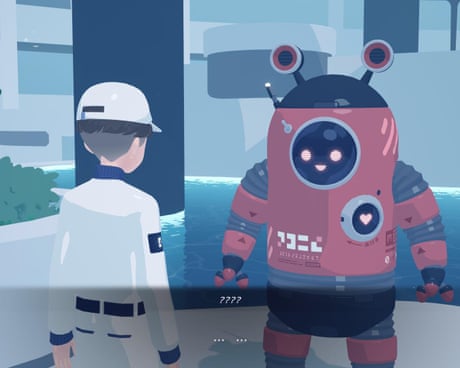
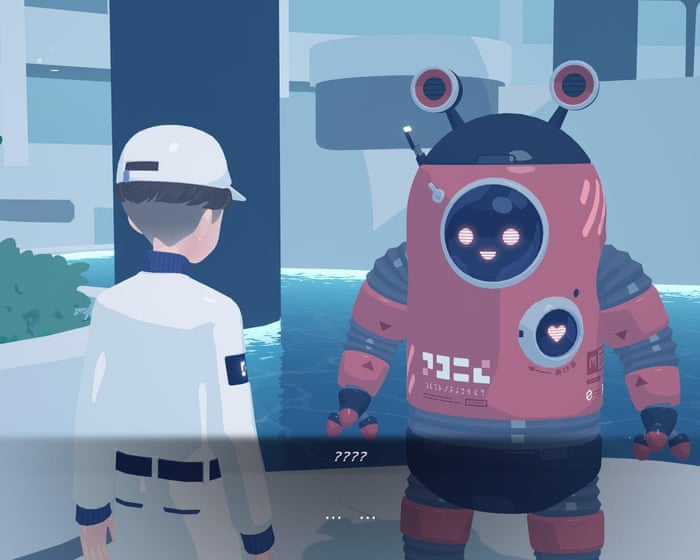
In the far future, on a planet that is not Earth, AI is in charge. This entity is no Skynet-esque killer robot but a machine that cares for humanity. Manifesting most visibly as cute droids, the technology is pervasive – embedded in everything from the design of the sleek architecture to the gorgeous, mostly sunny artificial weather. The so-called Optimization System has but one responsibility: ensuring the greatest happiness for the greatest number of people.
In less skilled hands this game might have felt like an undergraduate seminar on the limits of utilitarianism. But Japanese studio Marumittu Games elegantly marries its philosophical concerns with smart design choices. You play as a young, unnamed Facilitator tasked with tending to both the city’s bots and its human residents. Each morning you wake up, sleepily loping off to the bathroom before sitting down for an exquisitely rendered breakfast, and then embark on your day’s work. Like everything else in this near-future scenario, labour is designed to cause as little frustration as possible, amounting to simple maths brain teasers on a grid – nothing too taxing, but enough to keep you engaged.
Space is incomprehensibly vast. So huge that the human mind struggles to even conceptualize it. The observable universe spans roughly 93 billion light-years. Even our own humble galaxy, the Milky Way — a few tiny stitches of the universal canvas — stretches across 100,000 light-years and contains hundreds of billions of stars.
It's no wonder, then, that space video games struggle so mightily with anything approaching a "realistic" interpretation of those incredible distances, especially in an age where we have yet to invent a technology that can traverse them in a reasonable time.
The Artemis 2 mission's Orion module got up to speeds of around 25,000 mph during its trans lunar injection burn. Ignoring fuel and safety concerns, at those speeds, it would still take us at least 80,000 years to reach our nearest neighbor, Alpha Centauri.
So how do game developers manage to distill some of the awe of the vastness of space while making it feel like a manageable space? How do they shrink space to a navigable size without making it feel small or claustrophobic?
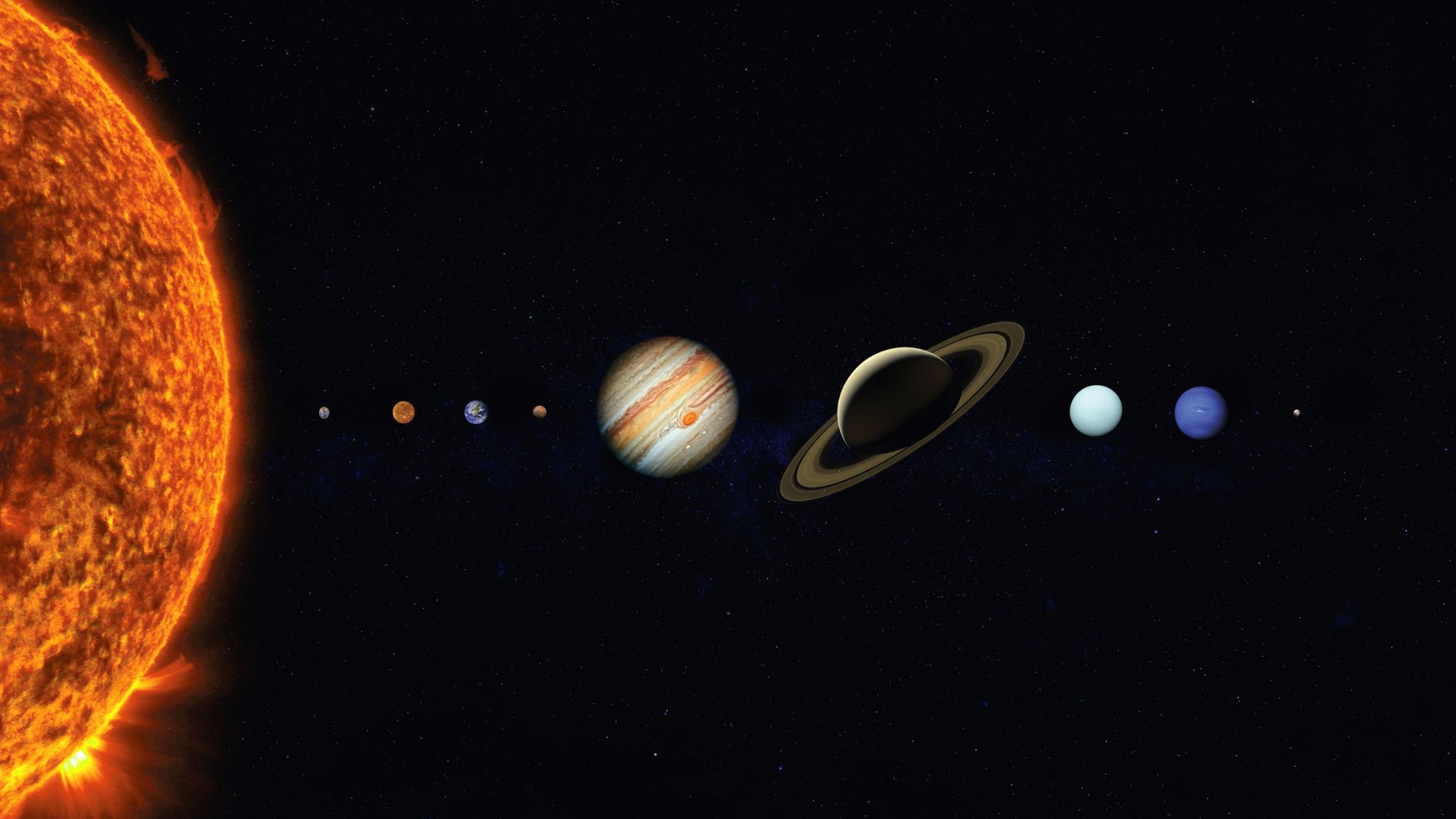
"On a 1 to 10 billion scale — which makes the Sun about the size of a large grapefruit — Earth is smaller than the ball point in a pen and located about 15 meters (49 feet) away from the Sun," explains Bennett. "On that same scale, the Moon — the farthest a human being has ever traveled — lies only about 4 centimeters (1½ inches) away from us. The planets of our solar system are much farther, though you can still walk to the outermost planets in only 10 minutes or so."
Bennett said most science fiction films and games get the scale wrong by making long-distance travel look too easy. Considering the above 1-to-10 billion-scale representation, for instance, and given that reaching the outermost planets in our system — far further than any human being has ever travelled — would take ten minutes, "to reach the nearest stars, you’d have to walk the distance across the United States."
Just simulating a small part of the existing universe would push current hardware to its limits, even with crutches like procedural generation. Developers use various techniques, like level-of-detail scaling, instancing, and streaming, to create the illusion of vastness without melting hardware.
Bennett also talks about how scale works in the case of interstellar objects like asteroids and maneuvering around them.
Films and games, he says, "tend to make it look very difficult to avoid collisions with asteroids, with spacecraft having to dart this way and that to pass through an asteroid region safely. In fact, while there are many millions of asteroids in the asteroid belt of our solar system, the full region is so large that it would take incredibly bad luck to crash into an asteroid by accident. That is why spacecraft studies of asteroids require careful planning to get a spacecraft close enough to any asteroid to get photos and other data."
The reality is that even in its most populated regions, asteroids are typically hundreds of thousands to millions of kilometers apart in our system's asteroid belt. Standing on one of the asteroids, it would be incredibly unlikely that you'd be able to see even one of the largest other asteroids with the naked eye.
How games cope with the enormity of space
(Image credit: Egosoft)
"This absolutely IS a design conflict that all space games have to solve," said Bernd Lehahn, Founder and Managing Director of Egosoft, the company that makes the successful X franchise of space simulators (most recently X4: Foundations).
"On the one hand, space must feel very large, or else players will feel cheated. Space and sci-fi have always been about the dream of infinite distances and exploration in a seemingly endless universe. At the same time, most games, the X games included, do not want to force players through unnecessarily long flight times or, god forbid, boredom."
Lehahn says his studio tries to strike a balance between areas that feel more content dense with regions that feel more like an unsettled frontier, to impart a sense of the true emptiness of space.
(Image credit: Egosoft)
"There should be room for both extremes: dense, highly populated regions, often with artificial means of transportation that allow the player to find and visit many important places relatively quickly, but also the empty, remote, fringe areas of space, where the experience is much slower, but where exploration happens, and the uncharted map allows for mystery and secrets."
Finding a solution to modeling and traversing the vastness of space has been an issue for Egosoft from the release of the original X game back in 1999, and continues to be something the studio grapples with today. The reality is that most of space is empty, so empty that you don't even have visual cues to indicate you're moving through it. Traveling through it without some kind of cheat or compression would involve unimaginable stretches of black emptiness with nothing happening, but too much compression begins to feel artificial.
"X4: Foundations probably has the most sophisticated solution to this conflict," Lehahn said. For the latest game, the team combines a number of solutions. It starts with scaled tiers of engine technologies with increasingly limited steering. Faster, more powerful engines allow for increasingly speedy, but more straight-line or on-rails travel.
(Image credit: Egosoft)
The team also uses the conceit of "jump gates" to leap across huge swaths of the universe in a blink, as well as teleportation and time acceleration to similarly compress travel. There are also space highways with slipstream acceleration to hurry things along.
Importantly, the X games also often give players things to do during the downtime of space travel. Giving players minor, uneventful tasks or other distractions can help fill out long stretches of uninterrupted travel. Above all else, Lehahn wants to ensure players are enjoying themselves.
"X4: Foundations is still a game. We want it to feel as realistic as possible—allow players to experience the universe and truly believe the 'sectors' are endless, planets are real size, and you can move in relation to planets and even larger celestial objects. But sometimes, if there is a conflict between fun gameplay and realism, then we may have to compromise on realism a bit."
A different approach
(Image credit: Frontier Developments)
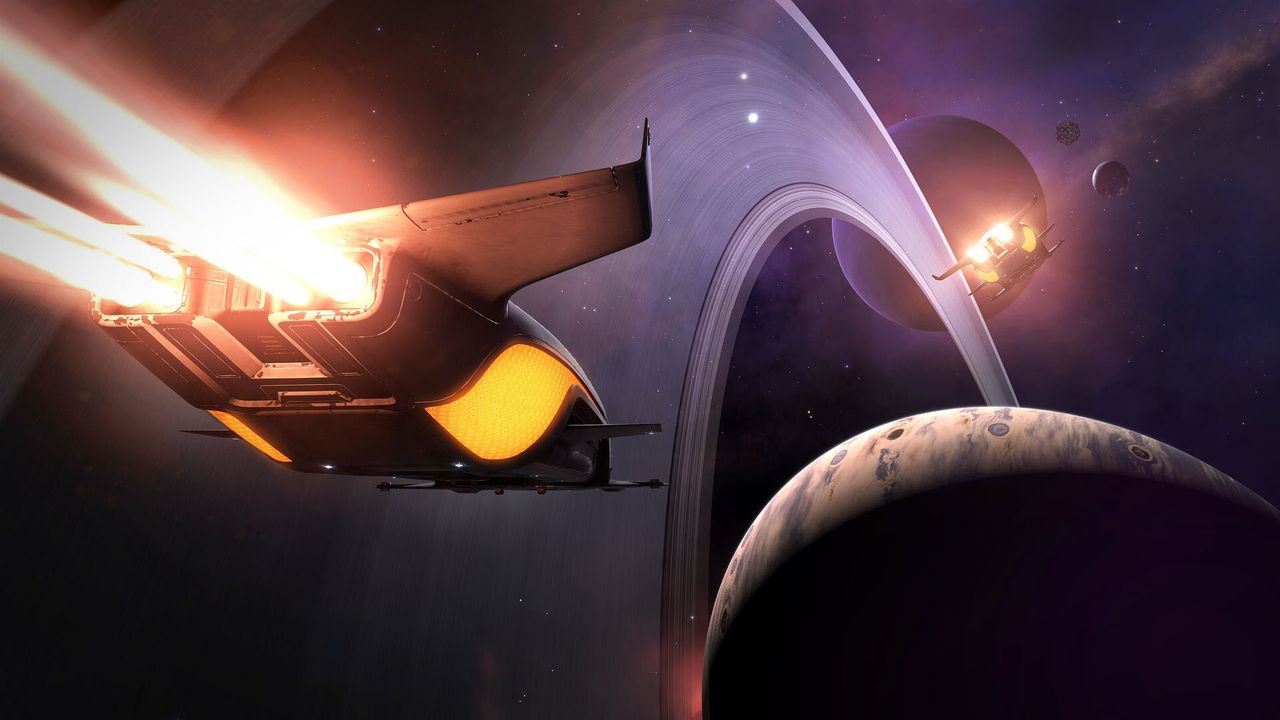
Rather than compress space into a manageable slice, the Elite Dangerous team at Frontier Developments takes on a much more ambitious challenge.
"We have a 1:1 scale Milky Way," says Executive Producer Gauthier Verquerre. "Roughly 400 billion star systems."
To create that vast canvas, the team uses a technology called the Stellar Forge, which uses real astronomical catalog data and models phenomena like the collision of stellar systems and the way stars and planets form to procedurally generate systems. The systems are generated once when a system is discovered and regenerated in the same way whenever a player visits them.
(Image credit: Frontier Developments)
One of the most daunting challenges Elite Dangerous faces is that the game doesn't just model the galaxy on a macro scale. It also has to generate planetary surfaces and space station interiors for players to explore.
"Throughout the universe, we have these spectacular stellar phenomena which players are out there discovering every day," said Verquerre. "The flip side of that is that we have players meeting in the same star systems, or on the planetary surface. We have to represent both the huge 1:1 scale of space that we have in the game for interstellar elements like Lagrange clouds or nebulae, and the personal scale of 'I'm on foot in a planetary settlement.'"
Despite releasing way back in 2014, only a tiny fraction of the space the game simulates has been explored by players.
According to Verquerre, "There's still over 99% of the universe out there, waiting to be explored, where any Commander can be the first to add their name to the system and say 'I was the first one to see this'. We also added System Colonisation last year, allowing our players to construct space stations and planetary settlements. That's been really rewarding for us, seeing the rate at which the bubble has expanded."
(Image credit: Frontier Developments)
To empower players to explore that nearly infinite playground, Elite Dangerous (like X4) takes a tiered approach. Three methods of travel provide increasing compression of space/travel time.
"There's Deep Space, where ships move at ‘slow’ speeds (around 300m/s, under Mach 1) to access individual gameplay actions like combat or mining," Verquerre told me, "Supercruise, which is essentially a form of FTL travel within a system useful for scanning systems, and Hyperspace, where players travel between star systems through a tunnel."
The game also recently introduced a fourth tier of movement, dubbed Supercruise Overcharge, which allows players to navigate star systems at a much greater speed. Even with these many systems for speeding up transit, however, traversing such unimaginably vast distances can eat up a huge amount of time, and Frontier has tried to ensure that travel is peppered with events and resource management to keep players engaged.
"It's all about the player," Verquerre explains. "Explorers often want a little solitude, or an unexpected encounter, whilst our traders are considering the risk of what they're carrying. Fuel and heat management tend to be primary considerations; no one wants to be marooned out in deep space! There are also interdictions, where a Commander can be pulled out of a jump and find themselves hunted."
(Image credit: Frontier Developments)
"Additionally, those long trips that our players are taking out into deep space mean that small damage adds up, canopy cracks and moments of tension take the beauty of space and translate it almost instantly into abject fear."
The magic and awe of the staggering scope of space is a core part of the Elite Dangerous mystique, and it's not lost on Verquerre.
"I remember a journey I once made to Beagle Point, one of the most remote star systems found in Elite Dangerous, which I’d consider to be one of the most memorable gaming moments in my life. The sense of achievement in reaching a system that you’ve plotted out at the end of a journey is something very tangible, and it always makes me look forward to the next adventure."
A (nearly) infinite challenge
(Image credit: ESA/Hubble & NASA (D. Calzetti (University of Massachusetts) and the LEGUS Team))
Space games don't fail to simulate the scale of the cosmos because developers lack ambition or imagination.
The reality is that the universe operates on scales that challenge not only the capacity of the human behind them, but also that of our machines to reproduce them. Bridging that gap requires not just bigger maps, but smarter design, and a recognition that sometimes, the awe of the infinite matters more than the numbers behind it.
"X4: Foundations" and "Elite Dangerous" are both available to play now on PC. You can also pick up Dr Bennett's book, "The Scale of the Universe", on Amazon.
Pokémon Go celebrated its 10th anniversary with a Times Square takeover in New York featuring a special event to defeat the Pokémon species Mewtwo. Nearly 2,000 people played the game together simultaneously in what organisers called one of the largest in-person Pokémon battles in history
Sony’s decision last week to quietly announce the end of physical games production for the PlayStation in 2028 is one of the most perfect PR disasters in recent gaming history – and considering what has been happening with Xbox, that’s saying something.
First, there was the timing. Sony posted the news of its decision on the PlayStation blog, less than a week after admitting that it would be deleting 550 movies from the digital libraries of PlayStation owners due to the end of a licensing deal – thereby perfectly illustrating the dangers of purchasing digital products. (Surprise! You never actually owned them!) The move is in stark contrast with the company’s stance on this very issue back in 2013. When Microsoft was attempting to push Xbox One as a digital-first console with strict controls on the sharing and reselling of its games, Sony brilliantly mocked its rival with a short video on how easy it was to lend physical games to pals on the PS4. Oh dear.
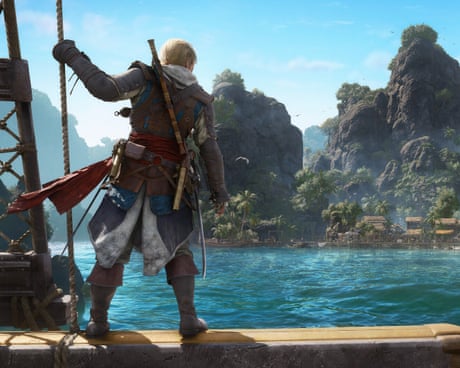
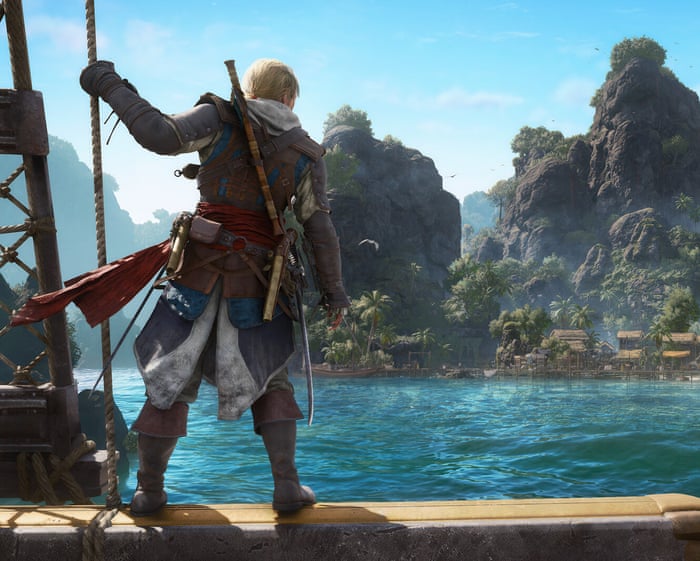
PS5, PC, Xbox Series X/S; Ubisoft Singapore/Ubisoft Ubisoft has removed all the boring parts of pirate life from its fantasy RPG, creating something more focused and fun
Edward Kenway isn’t your dad’s Assassin’s Creed protagonist. Neither sworn to ancient oaths nor given a noble destiny, he’s just a guy who likes coin, dislikes rules, and whose gold-chasing, rule-dodging lifestyle sees him embroiled in an ancient war between Templars and assassins quite by accident. After he’s shipwrecked with a man named Walpole who turns out to be a Templar, Edward assumes Walpole’s identity in the hopes of securing the bounty he mentioned.
Edward wears life lightly. The world around him is violent and chaotic, and those in his vicinity are more obsessed with double-crossings than a Mission:Impossible movie writers’ room. Ed just smiles, undeterred by it all, and gets on with plundering. It’s all just fun and games to him, and he is set on conquering the Caribbean on his own terms. He is a brilliant extension of the player, in that way, and that’s what this remake of the 2013 pirate-themed Assassin’s Creed does so well: the sense of freedom.

 Login