La Lune s'impose aujourd'hui comme l'enjeu central d'une nouvelle compétition spatiale mondiale. Mais derrière les annonces enthousiastes et les promesses d'une installation durable, quelle est la réalité ? James David Carpenter, responsable du Bureau des sciences lunaires à l'Agence spatiale...
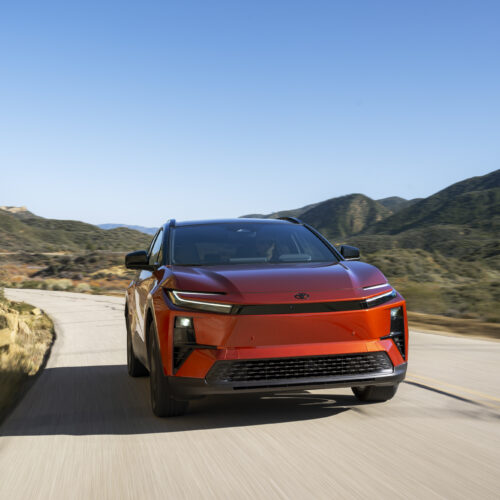
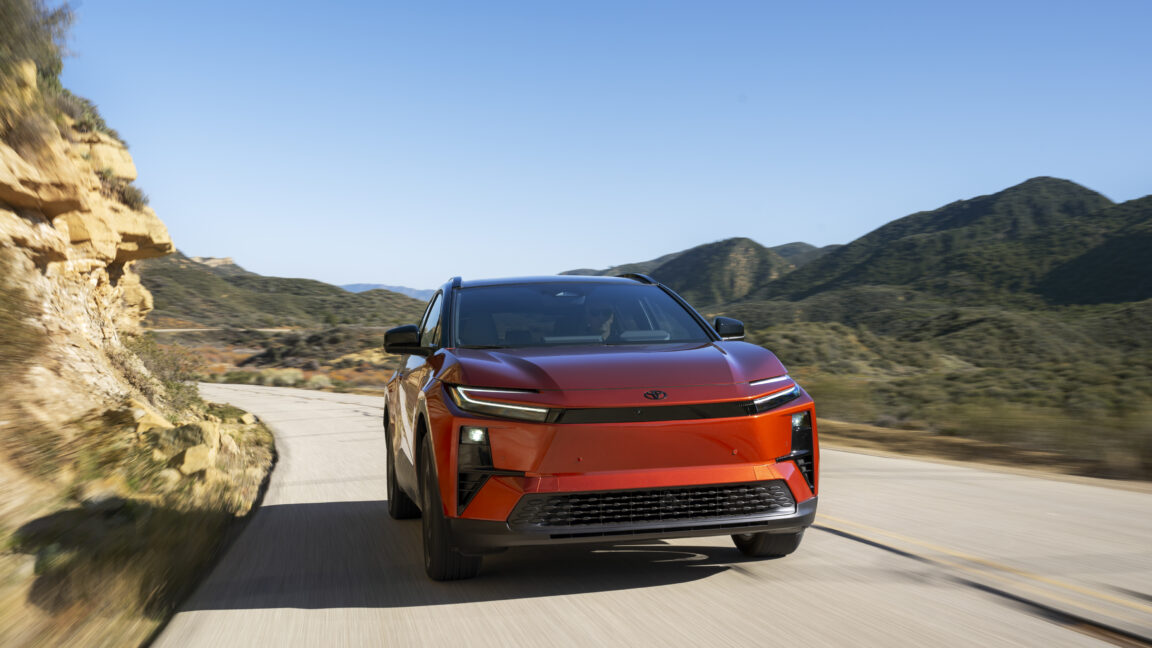
After a slower start than its major rivals, Toyota has been making up for it with a flurry of new electric vehicles for the North American market. Its first attempt, the bZ4x, was an also-ran, but a new battery pack, more efficient motors, and a NACS charging port transformed the face-lifted bZ into an EV I happily recommend. Then, earlier this year, it followed up with some bZ-related variants. For those who miss the vibe of a station wagon, there is the bZ Woodland, and an all-electric Highlander is nearing the showroom, too. But today's focus is the C-HR, and I'm still not entirely sure what to make of it.
It's the smallest of the bunch, some 6.7 inches (170 mm) shorter than the bZ. But it's still as wide and only a little more than an inch shorter. So if you're put off by the bZ's size and are looking for something diminutive—and based on reader feedback, there are many of you out there—this small SUV will probably still fail to pass muster.
It's not any cheaper than the bZ until you consider that the C-HR is only available with one choice of powertrain: a twin-motor AWD setup with a combined 338 hp (252 kW) powered by a 74.7 kWh battery pack. That same arrangement, with a 223 hp (167 kW), 198 lb-ft (268 Nm) front motor and 118 hp (88 kW), 125 lb-ft (169 Nm) rear unit, costs almost $3,000 more in a bZ than the $37,000 starting price of the C-HR.
ABC is urging viewers to write to the Federal Communications Commission and tell it to stop trying to "control who is allowed to appear" on The View. An ABC commercial that started airing yesterday asked viewers to submit responses to the FCC's call for public comment on whether the talk show is a “bona fide news interview program.”
"The View has welcomed your favorite guests and covered the issues you care about for nearly 30 years," ABC's ad said. "Now, the FCC wants to control who is allowed on the show. Viewers, use your voice. Tell the FCC to let the viewers decide."
For decades, the FCC has classified late-night and daytime entertainment talk shows as bona fide news for the purposes of their interview segments. This makes the shows exempt from the equal-time rule, which requires equal opportunities for opposing political candidates on non-news programming.
Doctorow doesn't actually enjoy talking about AI, but he's constantly being asked to comment on it. "I made the tactical error of being sick of talking about AI," Doctorow told Ars. "So I wrote a book about why I think it's a dumb thing to keep asking people to talk about, and now I have to talk about it." Reverse Centaur is Doctorow's attempt to "sort out the bullshit from the material reality."
In automation theory, per Doctorow, a "centaur" describes a human augmented with a technology, like machine learning, or even just driving a car or using autocomplete. A reverse centaur "is a machine head on a human body, a person who is serving as a squishy meat appendage for an uncaring machine," Doctorow said in a speech last December. He gave the example of an Amazon delivery driver, surrounded by AI cameras monitoring their driving, who essentially serves as a peripheral to the delivery van.
HP’s OmniBook Ultra 14 is one of the best alternatives to the MacBook Air you can buy right now, and it’s more affordable than many of its Windows competitors.
President Trump probably can’t get rid of her yet, but FCC commissioner Anna Gomez still checks her email every day to see if he has. Until then, she wants to stand up for the First Amendment.
I further develop "spiritual physics" to explore the dynamics of UFOs, linking their behavior to concepts of exotic energy and matter. By applying Newtonian kinematics and imaginary numbers, the model suggests UFOs harness unseen energy and achieve incredible speeds. The interplay between real and imaginary mass could explain their elusive movements.
NASA’s safety advisers say that while the agency and Boeing make progress in addressing problems with the CST-100 Starliner, it could be up to a year before it flies again.
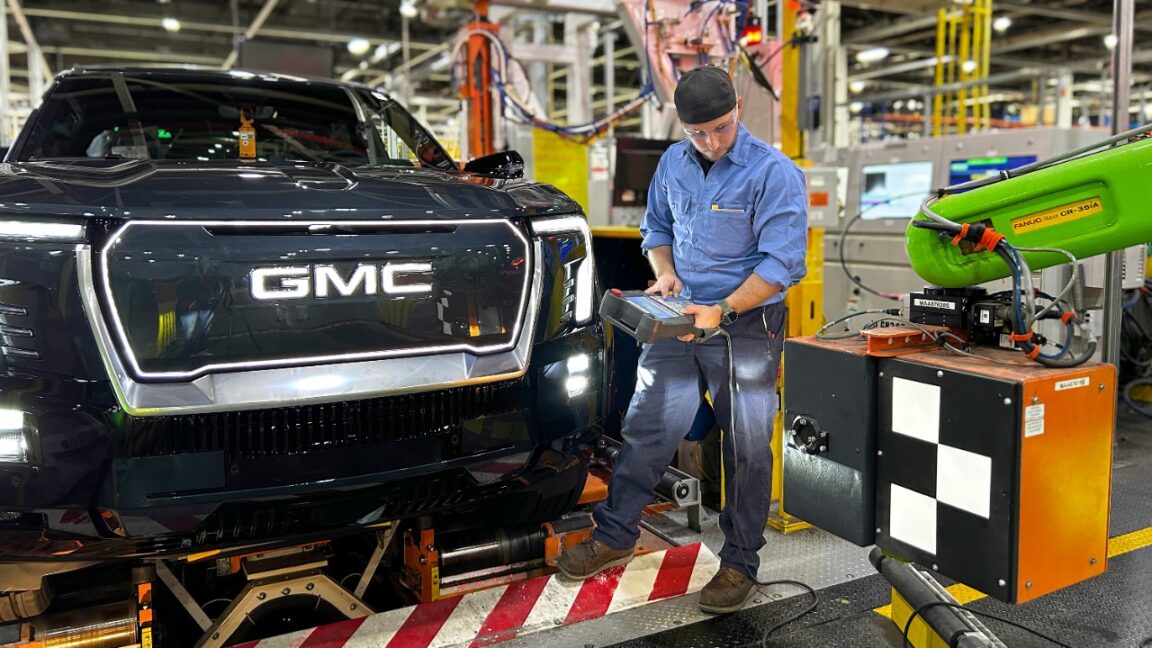
Dozens of new robot arms have been installed at General Motors’ flagship electric vehicle factory in Detroit—even as 1,300 workers remain out of work following what was supposed to be a temporary layoff. The latest automation push has spurred union pushback over a potentially existential issue for automakers and their workers.
General Motors installed approximately 50 robot arms at GM’s Factory Zero plant in Detroit, Michigan, according to reporting by Crain’s Detroit Business. Made by the Japanese robotics company FANUC, the robots are designed to help attach various components to vehicles during the assembly line process. But leaders at United Auto Workers (UAW), the primary US union for autoworkers, reacted with anger to the new robotic presence, given how GM has not yet called back any of the workers affected by supposedly temporary layoffs in March.
More than 1,000 union members are still “laid off indefinitely,” James Cotton, president of UAW Local 22, told The Detroit News. He said that the company could bring some of those members back to work instead of installing the 50 robots.
 Login