Plague is often linked to medieval Europe, crowded cities, and rats carrying infected fleas. However, a new study published in the journal Nature shows that the disease was already killing people thousands of years earlier. Researchers have discovered that plague caused deadly outbreaks among hunter-gatherers in Siberia about 5,500 years ago, long before cities and […]
Walking is something most people do without thinking. The brain automatically coordinates movements of the legs, balance, and timing of each step. For people with Parkinson’s disease, however, walking can become one of the most difficult parts of daily life. Many patients shuffle their feet, lose balance, or suddenly freeze in place. Falls become more […]
Depression is one of the most common and serious mental health conditions in the world. It affects hundreds of millions of people and can change nearly every part of daily life. People with depression often feel sad, empty, or hopeless for long periods of time. Many lose interest in activities they once enjoyed. Some struggle […]
Knee osteoarthritis is one of the most common causes of pain and disability around the world. The condition develops when the tissues inside the knee joint gradually wear down over time. As the disease progresses, people often experience pain, stiffness, swelling, and difficulty walking, climbing stairs, or taking part in activities they once enjoyed. According […]
For people with kidney failure, a kidney transplant can be life-changing. A successful transplant can allow someone to live longer, feel better, and spend less time receiving dialysis treatments. Yet getting a new kidney is often a long and difficult journey. A new study suggests that many people never get close to receiving a transplant […]
The 1 VIII doesn’t look much like any Xperia that’s come before.
The Xperia 1 VIII marks an attempt at a step change for Sony's flagship phone line. Not only has it had an aesthetic overhaul, but Sony has also revamped the camera system, dropping the continuous optical zoom telephoto that's defined the last four generations of Xperia phone.
It's not all different. Sony staples like a 3.5mm headphone jack and microSD card slot remain, and a few specific design touches, like a thick front bezel that fits stereo speakers, have stayed intact. Sony's ambitious pricing hasn't changed either: The Xperia 1 VIII isn't launching in the US, but in the UK and Europe, it starts from £1,399 / €1,499 (about $1,850), r …
Many people pay attention to sugar, salt, and fat when trying to eat a healthy diet. However, there is another group of ingredients that often receives much less attention. These ingredients are food preservatives. They are added to many packaged foods to help products stay fresh for longer periods and to prevent spoilage caused by […]
Falls are one of the biggest health risks facing older adults. Every year, millions of older people fall and many suffer broken bones, head injuries, loss of independence, and long hospital stays. A serious fall can also make people afraid to move around, which can lead to less physical activity, weaker muscles, and an even […]
When doctors talk about obesity and type 2 diabetes, they often focus on blood sugar levels, body weight, and cholesterol. Yet one of the greatest dangers of these conditions is the damage they cause to blood vessels. This damage can quietly develop over many years and eventually lead to heart attacks, strokes, and other serious […]
For many years, doctors treated diabetes and dementia as two separate health problems. Diabetes was mainly seen as a disease that affects blood sugar and damages organs such as the heart, kidneys, and eyes. Dementia was viewed as a disorder of memory and thinking that happens in the brain. Today, scientists are finding that these […]
Scientists have made an important discovery that may help explain why some people develop both leukemia and autoimmune diseases. The research was carried out by scientists at the Garvan Institute of Medical Research in Australia. Their findings could eventually lead to better ways to diagnose, treat, and even prevent these serious illnesses. Leukemia is a […]
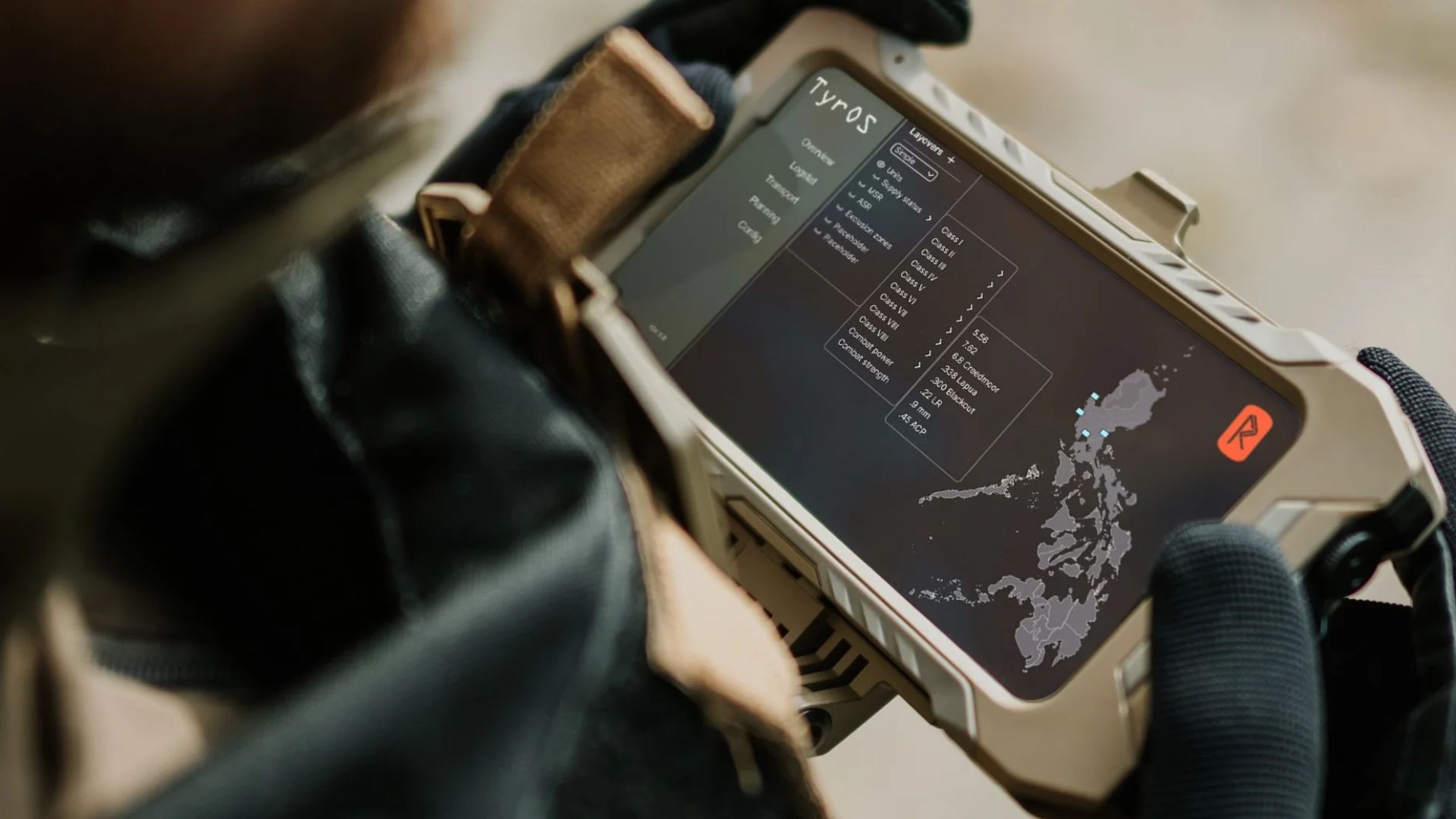
The United States Army (the Army) has awarded Rune Technologies a $99 million Indefinite Delivery, Indefinite Quantity (IDIQ) contract for its proprietary TyrOS platform.
The IDIQ framework will run for five years, during which authorized Department of War (DoW) organizations can place orders for the software and associated services through the contract, up to a maximum cumulative value of $99 million.
“Established by the Army and available for broader DoW use, the vehicle enables Soldiers, Marines, Sailors, Airmen, Guardians, Commanders, Sustainers, acquisition professionals, and contracting teams to rapidly access and field-proven software solutions at the speed of operations,” Rune explains in an official press release.
This differs from “normal” military procurement in that it offers a potential rapid-adoption pathway for interested parties. For anyone even remotely familiar with military purchases (which can take many months to years), this could reduce procurement timelines from many months to just days.
But what is the big deal with the new software? Well, Rune’s TyrOS is akin to a mix of Amazon, Google Maps, inventory management, an artificial intelligence (AI) chatbot, and predictive analytics in one place. In this sense, it acts a bit like an AI-assisted logistics operating system.
Windows for war
Windows for war, if you like. “Logistics is the distribution layer of military power, and it has to move at the speed of the fight,” said David Tuttle, Co-Founder and CEO of Rune Technologies.
“This contract gives sustainment teams across the Army and joint force a single, repeatable way to deploy TyrOS and other Rune capabilities into their units, while reducing acquisition friction and accelerating capability delivery to the tactical edge,” he added.
The system not only tells users that an asset needs resupply but can also identify potential bottlenecks and recommend alternative courses of action.
So, the AI will go far beyond something simple like “fuel will run out here in X days.” It will help users find alternative sources, reroute convoys to assist, etc., before a crisis occurs.
Beyond predictive modeling, one of TyrOS’ strengths, Rune explains, is that it uses a native large language model (LLM) as part of its interface. So, instead of clicking through menus, a user can simply ask a question using natural language to get the answer they want.
Say they ask something like “show every artillery battalion that will be below 30% ammunition within the next 72 hours.” The AI converts that into database queries and produces an answer.
Proactive, not reactive
But it gets better than that. As Rune explains, its software features a specially designed AI agent called Saga. This sophisticated piece of software effectively acts as an automated AI logistician in the system.
To this end, it is able to autonomously detect issues and then generate recommendations for action. A human still approves the decision, but the planning work is largely automated.
Yet another innovation is something called “edge-first architecture.” Normally, AI systems rely heavily on cloud servers, which, in turn, rely on stable and reliable telecommunications.
But satellite link failures, network jamming, and physical severing of telecoms are something of an occupational hazard in war. Edge-first means the AI runs locally on military computers or servers.
So even if disconnected from headquarters, a brigade can still use the system. Not too shabby.
You are sitting still, more or less, but the galaxy beneath you is not. The Milky Way and its neighbours are tearing through space at more than two million kilometres an hour, and that motion is not random. It is the result of a tug-of-war: distant concentrations of mass pulling us forward, and a vast, near-empty region of space effectively shoving us from behind.
The speed is real and measured. The direction tells a story about how matter is spread across the universe.
How we know we are moving
The yardstick is the cosmic microwave background, the faint afterglow of the early universe that fills the sky in every direction. If we were truly at rest, it would look the same temperature all around us. It does not. It reads very slightly hotter in one direction and cooler in the opposite one, a pattern called the dipole, and that asymmetry is a Doppler effect caused by our own movement into it, much as the pitch of a siren rises as it races toward you.
Read off that dipole, the Local Group of galaxies is moving at about 631 kilometres a second relative to the background, which works out to roughly 2.3 million kilometres an hour. We are not drifting. We are racing.
The pull ahead
Some of that motion has a long-known cause. In the direction we are heading lies the Great Attractor, a concentration of mass partly hidden behind the dust of our own galactic disc, which is why it took so long to make sense of. Beyond it sits something larger still, the Shapley Concentration, the densest collection of galaxy clusters in our part of the universe.
These overdense regions do what mass does. They pull, and the Local Group is being drawn toward them across hundreds of millions of light-years.
The push behind
The pull was only half the picture, and the other half is stranger. In 2017, a team led by Yehuda Hoffman mapped the local flow of galaxies and found that the motion is also being driven by a huge, sparsely populated region on the opposite side, which they named the Dipole Repeller.
A void cannot literally push anything. But gravity is a competition between directions, and a region with very little matter exerts very little pull. With density on one side and near-emptiness on the other, the net effect is that we drift away from the emptiness as surely as if it were pushing, falling toward the fuller side of the sky. The 2017 work found that this push and the pull ahead are of roughly equal importance.
What it actually means
None of this is the galaxy falling toward a single dramatic point. It is the Local Group riding the large-scale lumpiness of the cosmos, sliding down the gentle gradient from where matter is thin toward where it is thick.
The map is still being sharpened. The Great Attractor lies in the so-called Zone of Avoidance, the band of sky our own galaxy blocks from view, so it is awkward to study, and the Dipole Repeller is inferred from models of how thousands of galaxies are flowing rather than from a clear photograph of nothing. The broad conclusion, that we are caught between a distant abundance of mass and a distant absence of it, is well supported. The fine detail is still being filled in.
It is a strange thing to sit with. The ground feels still, the sky looks fixed, and all the while the entire galaxy is being carried across the universe at a speed no human machine has ever approached, pulled by what is out there and pushed by what is not.
Payer un abonnement tous les mois pour utiliser un VPN n’attire pas forcément tout le monde. Beaucoup d’utilisateurs cherchent aujourd’hui une solution plus souple. Une offre gratuite, un plan sans engagement ou une version limitée peuvent suffire pour protéger ses données sur internet, regarder...
La Commissione europea ha selezionato il consorzio EUROPA come vincitore del Frontier AI Grand Challenge, un progetto volto a sviluppare un modello di intelligenza artificiale europeo avanzato, open source e capace di operare in tutte le 24 lingue ufficiali dell'UE. Ma l'obiettivo remoto è quello di rafforzare la sovranità tecnologica dell'UE, e quindi colmare il divario con i grandi attori globali dell'IA.
Il modello sarà progettato per essere competitivo a livello internazionale, accessibile a ricercatori, imprese e istituzioni pubbliche. Henna Virkkunen, Vicepresidente esecutiva "per la sovranità tecnologica, la sicurezza e la democrazia", ha dichiarato:
L'Europa può essere leader nell'IA avanzata alle proprie condizioni. EUROPA creerà un modello europeo all'avanguardia per l'IA in tutte le 24 lingue dell'UE, dimostrando che possiamo competere con i migliori rimanendo fedeli ai nostri valori. Si tratta di rafforzare la capacità dell'Europa di plasmare il futuro dell'IA con apertura, fiducia e autonomia strategica al centro.
Per Suzuki la passione non è fatta solo di motori e prestazioni. Da anni il marchio nipponico affianca la propria attività nel settore delle auto, delle moto e dei motori marini, offrendo un impegno concreto anche nel mondo dello sport e nella beneficenza.Il frutto di questi impegni è raccolto nel Suzuki Bike Day, un evento capace di riunire migliaia di appassionati in una giornata dedicata al ciclismo, alla condivisione di valori comuni e alla beneficenza.Organizzato e promosso da Suzuki Italia – dopo il grande successo delle passate edizioni – il Suzuki Bike Day si è replicato anche quest’anno senza deludere, chiudendo questa sesta edizione con circa duemila partecipanti pronti a mettersi in gioco per una causa forte come la raccolta fondi per i bambini malati.<h2>Suzuki Bike Day 2026: tra mare e colline partendo dal Misano World Circuit</h2>Dalla prima manifestazione, datata giugno 2021, l’evento si è evoluto in maniera itinerante, trovando casa dopo le ultime edizioni proprio nella regione dei motori, la Romagna. Ad impreziosire negli ultimi tre anni, il Bike Day, sono state le partenze all’interno di circuiti leggendari del calibro di Monza, Imola e Misano e la partecipazione di atleti e personaggi dello sport come il dirigente sportivo ed ex ciclista professionista Davide Cassani.Il Suzuki Bike Day 2026 è stato ideato su un circuito di lunghezza variabile, dai 50 km della versione breve, agli oltre 65 di quella lunga, consentendo di fatto anche ai partecipanti non agonisti di questo sport, di poter lasciare il proprio segno.<img class="alignnone size-full wp-image-275563" src="https://www.hdmotori.it/app/uploads/2026/06/sbd2026-3.jpg" alt="" width="1179" height="765" />Il percorso, che si è sviluppato tra mare e colline – ricco di paesaggi mozzafiato - è stato interdetto alla circolazione del traffico cittadino – per quasi la totalità dei chilometri – al fine di garantire maggiore sicurezza ai partecipanti; ad affiancare i quasi duemila partecipanti durante la pedalata vi erano i membri del Team Suzuki che a bordo delle loro vetture ammiraglie, come Suzuki Vitara Hybrid, si assicuravano della salute dei partecipanti; il servizio d’ordine e i fotografi di gara, gestiti sempre dal Team, si sono mossi durante tutto il tragitto su una flotta di moto Suzuki, arricchita dalla presenza di modelli come Suzuki V-Strom e Suzuki SV-7GX.<h2>L’impegno per la Dynamo Camp</h2>Da anni, Suzuki Italia sposa il progetto della Dynamo Camp, un’associazione che da tempo si impegna sul nostro territorio, al fine di offrire programmi di terapia ricreativa a minori affetti da patologie gravi o croniche. La beneficenza devoluta con l’evento è figlia di ogni partecipante, in quanto conseguendo la quota d’iscrizione alla gara, l’intera somma viene devoluta direttamente alla Dynamo Camp; grazie al numeroso consenso raccolto dall’evento nelle ultime tre edizioni, si è raggiunta una somma di circa centomila euro, che ha permesso ad oltre ottanta ragazzi affetti da malattia di ricevere le cure promesse.Le dichiarazioni di Massimo Nalli, presidente e amministratore delegato Suzuki Italia: "una multinazionale come Suzuki - che costruisce auto, moto e motori marini - ha il dovere, oltre che il piacere, di restituire qualcosa ( esperienze come il Bike Day ndr) ai propri clienti e ai potenziali clienti. Noi lo facciamo supportando la passione per lo sport.”<img class="alignnone size-full wp-image-275564" src="https://www.hdmotori.it/app/uploads/2026/06/sbd2026-2.jpg" alt="" width="1179" height="670" />
Fidarsi del proprio olfatto per determinare se la bistecca lasciata in frigo o la bottiglia di latte aperta chissà quando sono ancora buoni non è sempre molto sicuro. E bisogna fare molta attenzione in questi casi, perché gli agenti patogeni negli alimenti avariati possono essere molto pericolosi per la nostra salute. Un naso elettronico potrebbe tuttavia fare al caso nostro.
Sviluppato dall'Università di Berkeley, Schnoz è un dispositivo dotato di 16 piccoli sensori di gas in grado di rilevare gli odori degli alimenti con estrema precisione, identificando istantaneamente non solo l'eventuale presenza di patogeni, ma anche di allergenicome noci e arachidi. Carla Bassil, autrice dello studio, ipotizza che in futuro questa tecnologia possa venire integrata nei frigoriferi intelligenti: il dispositivo invia notifiche sullo smartphone per segnalare lo stato di conservazione dei cibi, avvisando ad esempio quando il pollo sta per scadere o lo yogurt non è più commestibile.

 Login