Paleontologists have identified a previously unknown species of amphicyonid -- the extinct family of carnivorous mammals popularly known as bear-dogs -- from two specimens unearthed at a rich fossil site in the Vallès-Penedès Basin near Barcelona, Spain.
New research shows that wildlife reacts differently to human presence than to human-made landscapes. For centuries, people have transformed landscapes, forcing wildlife to adjust to a rapidly changing world. New research suggests that animals are not only responding to altered habitats, but also to the direct presence of humans. Researchers from UC Santa Barbara, the [...]
An aerospace and technology company recently conducted maiden piloted flight of its full scale prototype aircraft. Vertical Aerospace’s full-scale prototype is expected to accelerate flight testing, support piloted demonstrations and advance Vertical’s hybrid-electric aircraft programme.
The latest prototype will progress through all phases of piloted flight testing, including thrustborne, wingborne and transition flight.
The company also revealed that this is the final prototype before Critical Design Review (CDR), which will establish the certifiable aircraft design and pave the way for assembly of Vertical’s first pre-production aircraft.
New prototype is final aircraft to join Vertical’s flight test fleet
The new prototype is the final aircraft to join Vertical’s flight test fleet before the Company completes Critical Design Review (CDR), a major programme milestone that establishes the design baseline for certification. Following CDR, Vertical will begin preparations for assembly of its first pre-production aircraft as it continues toward certification and commercial service.
“Getting our latest prototype into flight testing is an important milestone because it allows us to learn faster in real world conditions and keep building momentum towards certification,” said Stuart Simpson, CEO of Vertical Aerospace.
“Expanding the flight test fleet will help us validate the aircraft more quickly, reduce risk, and move more efficiently towards bringing Valo into service.”
The company revealed that the latest aircraft doubles Vertical’s flight testing capacity and supports additional public demonstrations this year. Following the completion of all flight test phases – thrustborne, wingborne and transition flight – in its all-electric configuration, Vertical intends to retrofit this prototype for hybrid-electric flight testing.
The hybrid-electric variant is expected to support applications demanding greater range and payload capability across defense, logistics, and wider commercial sectors, according to a press release.
The prototype shares the same configuration as Vertical’s current full-scale aircraft, which has already completed all flight test phases. Vertical’s flight test programme is built around full-scale, piloted prototype aircraft with architecture, systems and flight characteristics closely aligned to the production-standard Valo aircraft, enabling the Company to validate the technologies, systems integration and flight models that will support certification, as per the release.
The new prototype shares the same configuration as Vertical’s existing full-scale aircraft, which has already completed all major flight-test phases. By using full-scale, piloted prototypes that closely resemble the production-standard aircraft, the company aims to validate key technologies, systems integration, and flight models required for regulatory certification.
The latest demonstration marks a significant step toward certification and commercial deployment of the company’s next-generation electric air taxi, Valo.
The Bristol-based company has secured approximately 1,500 pre-orders for the Valo aircraft from customers across four continents. Its customer base includes major aviation and leasing companies such as American Airlines, Avolon, Bristow Group, GOL, and Japan Airlines.
Granting promotions and tenure to faculty members is among the most consequential decisions a university makes. Growing evidence suggests that the process doesn't always work as it should.
In Hayneville, Alabama, a stark environmental justice issue is unfolding along the historic route where civil rights marchers once walked toward Montgomery. This rural community, where some residents still cannot flush their toilets due to inadequate sewage infrastructure, now faces the prospect of a massive data center being built in their backyard.
The proposed facility represents a troubling pattern of environmental inequality, where communities already struggling with basic utilities become targets for industrial development that could strain their limited resources further. Data centers are notorious for their enormous energy consumption and water usage requirements for cooling systems, potentially exacerbating existing infrastructure challenges in areas that can least afford additional environmental burdens.
The juxtaposition is particularly striking along Highway 80, a road that symbolizes the fight for equal rights and justice. Today, residents of this same corridor face a different kind of struggle—one for environmental equity and access to basic services that many Americans take for granted. The situation highlights how communities with limited political and economic power often bear disproportionate environmental costs while receiving few benefits from industrial development.
This case exemplifies the growing tension between the digital economy’s infrastructure needs and environmental justice concerns, particularly in rural areas where oversight may be limited and community voices often go unheard in development decisions.
A WIRED investigation found dozens of “nudified” deepfake images and videos on Grok's website, including nonconsensual depictions of celebrities and at least one prominent US politician.
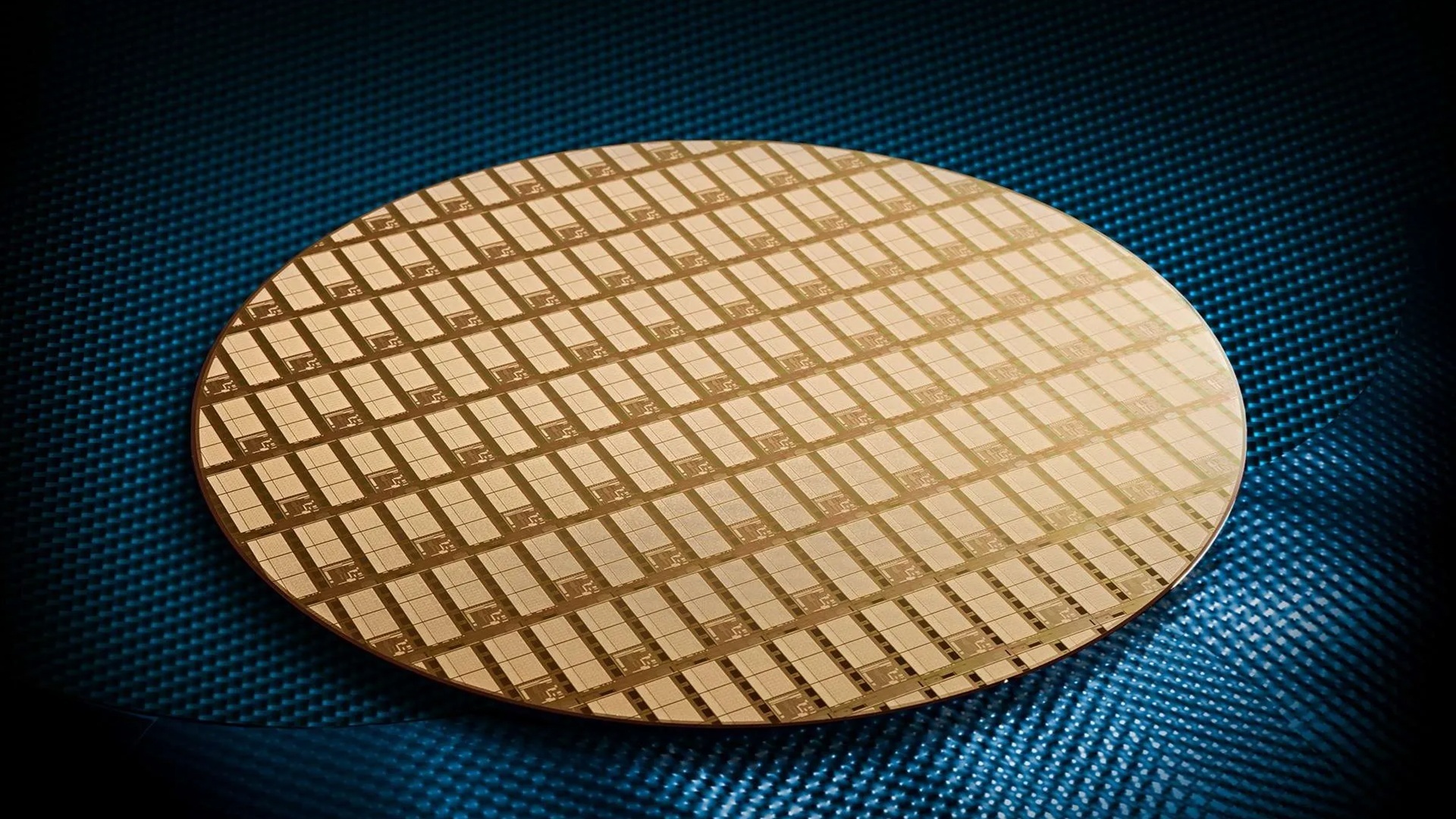
A Chinese startup has claimed a breakthrough in photonic chip manufacturing by producing 8-inch optical chip wafers without relying on conventional deep ultraviolet (DUV) lithography systems.
Hangzhou-based Prinano said it successfully validated mass production of photonic chips using its nanoimprint lithography (NIL) technology, a manufacturing approach that physically stamps nanoscale patterns onto wafers instead of projecting them through optical systems.
According to the company, the process was carried out in collaboration with Shenzhen Litra Technology and used its PL-AS vacuum air-cushion nanoimprint lithography equipment. Prinano said the method “completely avoids” the need for DUV lithography tools while reducing manufacturing costs to about one-tenth of traditional solutions.
The announcement comes as Chinese chipmakers continue looking for alternative manufacturing technologies amid restrictions on access to advanced lithography systems from Dutch supplier ASML.
Seeking lithography alternatives
Photonic chips are used in applications such as optical communications, sensing systems, lidar, and data centers. Unlike conventional electronic chips, they process information using light rather than electrical signals.
Prinano said its technology supports wafer-level production of photonic chips and can be applied to optical communication and sensing devices based on gallium arsenide, indium phosphide, and silicon photonics.
The company said its PL-AS tool offers sub-10-nanometer line-width resolution along with wafer-level pressure control. However, it did not disclose production volumes, manufacturing yields, or customer shipment data.
Nanoimprint lithography has long been viewed as a potential alternative to traditional optical lithography because it can create extremely fine features without the need for expensive projection optics. The technology was pioneered in the 1990s by Princeton University professor Stephen Y. Chou.
Prinano founder Ge Haixiong studied under Chou and established the company in 2017 to develop NIL equipment, materials, and manufacturing processes.
Questions over scalability
Interest in nanoimprint lithography has increased in recent years as chipmakers seek lower-cost manufacturing methods. In 2023, Canon introduced a commercial NIL system and promoted it as an alternative to some advanced lithography tools.
Despite the promise, analysts have questioned whether the technology can match the throughput and yields required for large-scale semiconductor manufacturing.
Research firm SemiAnalysis has previously noted that while NIL equipment can be cheaper than advanced lithography tools, overall economics depend on factors such as defect rates, template production, throughput, and process integration.
Prinano’s announcement focuses specifically on photonic chips rather than advanced logic processors, a distinction that may make commercialization more achievable. Photonic devices often rely on repeating nanoscale structures such as gratings, waveguides, and ring resonators, which can be well suited to imprint-based manufacturing.
The company said the technology has moved into wafer-level production validation, but independent verification of yields, commercial deployment, and manufacturing scale has not yet been disclosed.
For China’s semiconductor industry, the development highlights ongoing efforts to explore alternative manufacturing routes as access to advanced lithography equipment remains restricted.
For decades, the possibility of discovering extraterrestrial intelligence has captured the imagination of scientists, sci-fi enthusiasts, filmmakers, and the public alike.
In line with such efforts, the IAA SETI Committee and the uNHIdden Foundation, two separate not-for-profit organizations, have recently released updated rules for evaluating and disclosing detections, and preparing for public preparedness in the event of potential disclosure of extraterrestrial intelligence.
With the release of director Steven Spielberg’s new alien film Disclosure Day, nearly coinciding with the recent release of the government records from the Department of War related to UAP, it seems a growing number of individuals, from the film industry to the science community, have extraterrestrials and “disclosure” on their minds.
The IAA SETI Committee Rules
In June 2026, the International Academy of Astronautics (IAA) approved a major update to the protocols governing the evaluation, verification, and communication of evidence related to extraterrestrial intelligence. The revised guidelines were designed to address a modern information environment shaped by social media, artificial intelligence, and the rapid pace of the 24-hour news cycle.
Professor Michael Garrett, Sir Bernard Lovell Chair of Astrophysics, led the international effort to revise the long-standing post-detection protocols used by researchers engaged in the search for extraterrestrial intelligence. The updated guidelines have since been formally ratified by the IAA.
“The information environment we operate in today is vastly more complex than it was in 2010,” said Garrett, Chair of the IAA SETI Committee, in a statement. “In an era of deepfakes, automated misinformation, and instant global connectivity, a single unverified claim could trigger confusion or panic. These new protocols ensure that scientists maintain the highest standards of evidence before making announcements to the world.”
The revised declaration reflects the broader scope of modern SETI and technosignature research. Since the previous guidelines were adopted in 2010, advances in technology have enabled scientists to investigate the entire electromagnetic spectrum, including excess infrared heat signatures that could indicate megastructures, optical laser emissions, and even multi-messenger signals.
The updated framework also addresses modern challenges, including protections for researchers who may face harassment, doxxing, or intense media scrutiny. It further emphasizes the importance of distinguishing verified scientific data from viral rumors, hoaxes, or terrestrial interference.
“The last significant update was more than 15 years ago, and the world has changed a lot since then,” Andrew Siemion, Ph.D., Astrophysics and Director of SETI Research, said an email to The Debrief. “With the tremendous renaissance we are seeing in the technosignature field, and the advent of incredibly powerful AI tools, the prospect for a discovery of extraterrestrial intelligence has sharpened considerably.”
“In recognition of these developments, the IAA SETI Committee undertook a multiyear expansive effort to work with scientists across the world and across disciplines to present the most up-to-date guidelines possible to the community,” Siemeon said.
New Contact Rules at SETI
At the heart of the new guidelines is a familiar scientific principle: extraordinary claims require extraordinary evidence.
Under the revised protocols, no public announcement should be made until a signal or artifact has been rigorously verified by independent organizations using different instruments and methodologies.
“We do not shout ‘alien’ the moment we see a strange blip,” said Garret in a statement. “The scientific method demands we check, check again, and then ask others to check. Only when we have reached a consensus that a signal is credible do we bring it to the world.”
While the protocols explain how to share discovery news, they make one rule clear: no reply should be sent.
“The threshold for ‘extraordinary evidence’ is subjective,” Siemion says. “Because of the vast diversity of modalities in which a technosignature might manifest, it is impossible to state explicitly the criteria that would meet this threshold under all circumstances.”
“In the case of a coherent electromagnetic signal, like a narrowband carrier or a series of laser pulses, an example of ‘extraordinary’ would be if we repeatedly detected the signal at the same location with multiple independent observatories,” Siemion adds.
He also noted that, for a transient signal, compelling evidence might include multiple lines of data indicating that it traveled through interstellar space. Determining whether a phenomenon truly originated from extraterrestrial technology would likely be a lengthy process, with evidence presented, challenged, and reassessed over time.
The declaration reinforces that any response to extraterrestrial intelligence would be a decision for all humanity and should only occur following international consultation, particularly through the United Nations.
With the updated declaration now ratified by the IAA Board, it will be shared with stakeholders, including the United Nations. A formal presentation of the protocols is scheduled for the International Astronautical Congress (IAC) in Türkiye later this year.
“The release of these updated rules and protocols marks an important step in acknowledging both the radically different media landscape that science functions within today, and the vastly expanded efforts in terms of technology and resources being deployed in the search for intelligent life beyond Earth,” said Bill Diamond, President and CEO of the SETI Institute and IAA SETI Committee member. “We applaud Prof Garrett’s leadership in developing these new protocols and the IAA for their ratification.”
First Contact and Humanity’s Mental Health
Another nonprofit organization has taken a different approach, focusing on the potential psychological and public-health implications of disclosure. The uNHIdden Foundation, whose mission is to support mental health related to Unidentified Anomalous Phenomena (UAP), recently released a preparedness framework addressing the societal impact of a paradigm-shifting discovery.
If governments prepare for natural disasters, pandemics, and other low-probability, high-impact events, should humanity also consider preparing for the possibility of contact with another intelligent civilization?
On June 8, uNHIdden Foundation Founder and Chairman John Priestland, alongside clinical spokesperson Dr. Martin Abbas, launched what they describe as the first public-health preparedness framework focused on disclosure-related scenarios.
Developed by healthcare practitioners, physicians, clinical psychologists, and public-health specialists, “Preparing for Disclosure: A Public Health Framework for Paradigm-Shifting Revelations” examines how society might reduce harm, build resilience, and support individuals processing a profound shift in humanity’s understanding of its place in the universe.
“This report is not a prediction. It is a preparedness exercise,” Priestland says. “Governments prepare for all kinds of low-probability, high-impact events.”
“Our view is that if a paradigm-shifting disclosure were ever to occur, we should at least have thought about the human consequences in advance,” Priestland added.
The report suggests that certain groups could be more vulnerable to disclosure-related distress, including individuals with pre-existing mental health conditions, those facing socioeconomic hardship, UAP experiencers, highly religious individuals, and some STEM professionals. The authors emphasize that the report neither predicts disclosure nor attempts to judge future discoveries; rather, it argues that preparedness is a prudent response to the possibility of transformative new information.
David Whitehouse, former BBC Science Correspondent, wrote the report’s foreword, arguing that planning is essential should such a discovery ever occur.
The new framework proposes several practical actions to be taken, which include:
Reducing stigma surrounding anomalous experiences and disclosure-related concerns
Building public resilience and psychological flexibility
Developing trusted sources of information and support
Creating community conversation groups and peer-support networks
Strengthening mental health preparedness and triage capability
Encouraging collaboration between healthcare professionals, researchers, government, and civil society
The report argues that stronger community resilience, clearer communication during periods of uncertainty, and improved mental-health support would be critical not only during a disclosure event but during any large-scale societal disruption.
Ultimately, the question remains whether humanity is truly prepared—or whether a globally coordinated framework is still lacking. Voices ranging from the UAP community to figures within the U.S. government have argued that the public is ready. However, only time will tell what the result may be if confirmation of extraterrestrial intelligence were to arrive—and how humanity will collectively respond to the discovery.
Chrissy Newton is a PR professional and the founder of VOCAB Communications. She currently appears on The Discovery Channel and Max and hosts the Rebelliously Curious podcast, which can be found on YouTube and on all audio podcast streaming platforms. Follow her on X: @ChrissyNewton, Instagram: @BeingChrissyNewton, and chrissynewton.com. To contact Chrissy with a story, please email chrissy @ thedebrief.org.
Il y a plus de 550 millions d’années, les premiers animaux peuplaient déjà les océans terrestres sous des formes très différentes de celles d’aujourd’hui. Longtemps dominés par des organismes fixés au fond marin et se reproduisant probablement par clonage, ces écosystèmes auraient connu une...
NASA Robotic Tech Demo Will Advance Prototype Gamma-Ray Detectors
A new type of gamma-ray sensor developed by NASA, called AstroPix, will take part in a robotic arm demonstration on the agency’s upcoming Fly Foundational Robots mission, set to launch in late 2027.
Gamma rays are the highest-energy form of light. Scientists observe them coming from events like lightning in Earth’s atmosphere, powerful solar flares from our Sun, and cosmic collisions in distant galaxies. The sensors on the AstroPix technology demonstration are designed to measure gamma rays between 20,000 and 700,000 electron volts. For comparison, visible light’s energy falls between 2 and 3 electron volts.
But for energies between 500,000 to 1 million electron volts, existing detectors are less sensitive. This range is where many powerful explosions called gamma-ray bursts shine the brightest. It’s also where astronomers expect to see the strongest glow from the most massive and distant active galaxies powered by black holes. By stacking AstroPix detectors in future missions, scientists could bridge this gap and improve observations of these cosmic objects to better understand the processes that create and drive them.
“The Fly Foundational Robots spacecraft is also a technology demonstration, so the projects were a good fit for each other,” said Dan Violette, an AstroPix team member and post-doctoral fellow at NASA’s Goddard Space Flight Center in Greenbelt, Maryland. “We need to thoroughly test AstroPix’s performance before we can use the sensors in future science missions. We’ve flown comparable technologies on a scientific balloon mission, and the current prototype eventually will be part of a sounding rocket payload. Many of those flight opportunities only reach near space, though. It’s not often that technology demonstrations like ours can find a ride into orbit.”
Each AstroPix chip has four silicon pixel gamma-ray detectors. Each of these detectors incorporates 1,225 pixels. AstroPix detectors, which are developed by NASA’s Goddard Space Flight Center in Greenbelt, Md., function similarly to the sensors in cellphone cameras except they are sensitive to gamma-ray light.
Image courtesy of Argonne National Laboratory
Each AstroPix chip contains four silicon pixel gamma-ray detectors, and each detector incorporates 1,225 pixels. The chips function similarly to the sensors in cell phone cameras.
The AstroPix Satellite Technology dEmonstration Payload, also known as A-STEP, will be hosted within the Fly Foundational Robots mission’s Orbital Replacement Unit, a movable module built by Rocket Lab Robotics. Rocket Lab Robotics also will provide a robotic arm that will pick up and reposition the unit during flight and perform in-orbit operations as part of a robotic servicing demonstration. The A-STEP payload will collect its data following the repositioning. Astro Digital will provide the spacecraft.
The Orbital Replacement Unit was designed to support power and data interfaces for a payload, but the original plan called for the robotic arm to reposition the module without one. As mission development progressed, however, the Fly Foundational Robots team identified an opportunity to further maximize the mission’s value by integrating an additional technology demonstration that could fit within the 11.8-inch (30-centimeter) cube.
“The unit already had the volume, power, and data needed to support the AstroPix team’s design,” said Bo Naasz, senior technical lead, In-space Servicing, Assembly, and Manufacturing in the Space Technology Mission Directorate at NASA Headquarters in Washington. “One of our major goals with Fly Foundational Robots is to demonstrate robotic changeout of payloads in orbit, enabling upgrades or improvements to satellites and space instruments at a fraction of the cost of a full mission. Allowing AstroPix to complete its own technology demonstration in orbit is a bonus.”
NASA’s Fly Foundational Robots mission will be hosted aboard a spacecraft provided by Astro Digital of Littleton, Colo., as shown in this artist’s concept. The robotic arm, provided by Motiv Space Systems in Pasadena, Calif., will perform a technology demonstration in orbit, including picking up and moving a small box containing the agency’s AstroPix gamma-ray sensors.
Rocket Lab Robotics
The AstroPix team is working to deliver their hardware this September, and it will be integrated into the Fly Foundational Robots payload before final integration onto the spacecraft. The Orbital Replacement Unit will hold the chips and all the associated electronics needed to provide power, and collect and transmit data during flight.
NASA’s Fly Foundational Robots mission is funded through the Space Technology Mission Directorate’s ISAM portfolio, managed at NASA Goddard. Rocket Lab Robotics will supply the mission’s robotic arm system through a NASA Small Business Innovation Research Phase III award. Astro Digital will host the orbital flight test of the arm through NASA’s Flight Opportunities program, managed at NASA’s Armstrong Flight Research Center in Edwards, California. The development of AstroPix was supported by NASA’s Astrophysics Division in the Science Mission Directorate at NASA Headquarters, through the agency’s Astrophysics Research and Analysis Program, and funded through the Nancy Grace Roman Technology Fellowship.
Ferveret, a startup from the Massachusetts Institute of Technology (MIT), is using cooling technology deployed in nuclear reactors to solve challenges faced by data centers today. The waterless cooling technology can also help establish data centers in areas where water is scarce while abundant solar energy powers the chips and cooling infrastructure.
The recent surge in artificial intelligence (AI) applications has been made possible by high-performance computing chips from companies like NVIDIA. When AI needs to be deployed at scale, companies need to house many chips capable of processing information quickly enough. To save costs, they hire computing power from private data centers that buy and deploy the high-performance chips and rent them out over the long term.
As more and more companies deploy AI in their workflows, the demand for data centers has shot up. With new data centers, energy demand is also growing. Estimates suggest that by the end of the decade, up to 17 percent of the US electricity usage will be consumed by data centers. The power consumption is not just for high-performance chips but also for cooling them.
Liquid cooling chips
When data centers were first set up, chips were cooled using air. As their computing capacities increased, they began to generate more heat, which needed better cooling approaches.
Liquids are better than air at removing heat from a chip. Their performance is even better when the heat is used to bring about a phase change. At the liquid’s boiling point, it can extract more heat from the chip without increasing the temperature difference between the liquid and the chip.
The newest data centers use an immersion cooling approach in which the entire server rack is immersed in the cooling liquid to maximize heat transfer. However, with AI adding more computational power to the server pack, heat generation has increased, necessitating newer cooling solutions.
Nuclear reactor-inspired tech
MIT spin-off Ferveret is looking to deploy cooling technology used in nuclear reactors and adapt it for data center use. Called subcooled boiling, it uses a liquid with a low boiling point, which produces smaller bubbles than immersion cooling approaches.
While immersion cooling has to contend with issues such as capturing the bubbles and reliquefying them under constrained pressure and temperature conditions, in Ferveret’s approach, the bubbles recondense quickly into the surrounding liquid.
In a recent study, Ferveret found that its cooling solution resulted in up to 15 percent improvement in computational power efficiency compared to state-of-the-art immersive cooling techniques. This, combined with Fereveret’s proprietary power control system, allows data centers to extract 35 percent more tokens from the AI models without any increase in power usage.
Ferveret’s Adaptive Phase Cooling (APC) system is deployed in small boxes, each capable of housing one server. This modular approach allows its deploy and maintain its system much more easily.
“The physics enable us to get to form factors that weren’t possible in the past,” said Reza Azizian, co-founder at Ferveret, in a press release. “Most immersion cooling solutions are large tanks that people submerge the servers in. We have a smaller, modular rack-mounted solution that makes it adaptable to the current infrastructure, so it’s easier for people to deploy our technology.”
The waterless cooling approach is also beneficial in areas where water is scarce, but sunlight is plentiful. Setting up solar power plants in these areas is simple, but with low water, data centers could not be cooled down.
“This technology can help deploy data centers in regions where normally you wouldn’t have the resources to do so, including Africa, the Middle East, and of course parts of America. It’s a huge unlock,” added Matteo Bucci, associate professor at the Department of Nuclear Science and Engineering and also Ferveret co-founder.

 Login