Login

Britain Is Weighing a Social Media Ban for Children. How Did It Get Here?
Months after Australia banned social media for everyone under 16, the British government is considering new policies to keep children safe online.

 Scientists find fog droplets host growing bacteria that may help clean polluted air.
 Single cells used past nutrient shocks to change how they grew.
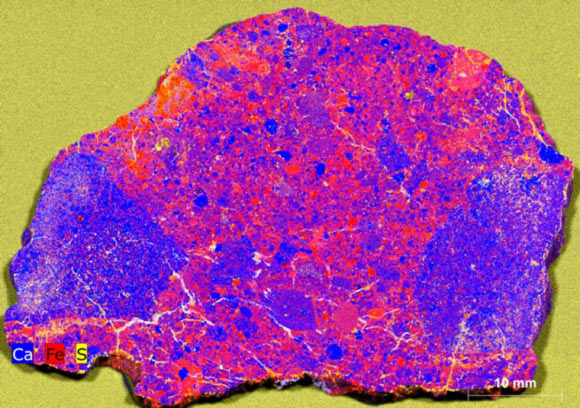
Planetary scientists analyzing a lunar meteorite known as Northwest Africa (NWA) 12593 have uncovered evidence of an asteroid impact that occurred 3.5 billion years ago on the Moon, helping to reconstruct a period of intense bombardment that left lasting marks across the inner Solar System.
The post Lunar Meteorite Preserves Evidence of Colossal Asteroid Strike appeared first on Sci.News: Breaking Science News.

In new research, scientists sequenced and analyzed chromosome-level genomes of the Linnaeus’s two-toed sloth (Choloepus didactylus) and the southern anteater (Tamandua tetradactyla).
The post Secret to Sloths’ Slow Life May Lie in Ancient ‘Jumping Genes’ appeared first on Sci.News: Breaking Science News.
Seven men die by suicide in Australia every day. Last month, the peak body for men's health decided to address this by teaching boys about gender equity. But men are not dying for lack of feminism, says Bettina Arndt.
The post Suicidal Men Don’t Need More Feminism appeared first on The Daily Sceptic.
Desde bolas com sensor de alta precisão a avatares 3D foto realistas gerados por inteligência artificial, conheça as inovações tecnológicas do Mundial de Futebol FIFA 2026, e como é que a tecnologia promete redesenhar o maior evento desportivo da história.
The post O Mundial FIFA 2026 e a revolução tecnológica no futebol appeared first on Tek Notícias.
California could be due for a major earthquake in the near future, according to concerning new models based on data comprising 1,000 years of quake activity on the West Coast.
According to recent findings, tectonic stress has quietly been building in California to levels not seen since the last major earthquake in the region, which bore a magnitude of 7.9 and struck the West Coast nearly 170 years ago.
That event, known as the Fort Tejon earthquake, affected the greater Los Angeles area, and since the time of those historic rumblings, researchers have grown increasingly concerned about a period of seismic silence that could point to the likelihood of an event of similar magnitude at some point in the future.
The potentially concerning new forecast was detailed in a recent study by an international team of researchers led by Dr. Liliane Burkhard of the Division of Space Research and Planetary Sciences (WP) at the Physics Institute of the University of Bern, which focused on historic earthquake data as a means of gauging current stress loading at Cajon Pass.
The study, published in the Journal of Geophysical Research: Solid Earth, indicates tectonic stress levels that are now believed to exceed the highest seen during the years the team surveyed.
The researchers aimed to investigate stress that has slowly built along the San Andreas and San Jacinto faults and incorporated what they likened to an “earthquake gate” at Cajon Pass, which, in their models, functioned like a point of control that governed the size of earthquakes and whether they could spread to both systems.
For their research, they used a four-dimensional earthquake cycle model that allowed them to replicate certain processes both in spatial dimensions and across time.
Using a millennium of reconstructed earthquake data from the region based on geological information such as radiocarbon dates, unusual events recorded in dendrochronological data (i.e., information obtained from tree rings), and historical information sources, the team gave this to the model they devised.
Dr. Burkhard said the team’s simulation offered them a unique opportunity to better understand the ways stresses in the fault system build up over long periods of several centuries.
“By running the earthquake history of Southern California as a simulation, we can estimate the extent to which the fault system is already under stress today,” Dr. Burkhard said. The results of those simulations weren’t particularly promising either: according to Burkhard, current stress levels in the region are the highest they have been in 1,000 years, based on the data.
The team also identified significant new information regarding the function of the so-called “earthquake gate” at Cajon Pass.
“The earthquake gate concept captures something important about how fault junctions work,” Burkhard said in a recent statement. “Cajon Pass doesn’t simply block or channel earthquakes: It responds to stress conditions, and those conditions change over centuries.”
Not only this, but Burkhard and her team also determined that a key element to these quakes involves not only the level of stress that accumulates at a single fault, but perhaps more significantly, the way stress between two systems can align. This is because, as the stress across a pair of faults rises together over longer periods, this appears to be most conducive to a large joint rupture comparable to the 1857 Fort Tejon earthquake.
Conversely, if stress levels are not in concert as they evolve, the team determined that this causes quakes that probably will not propagate beyond the junction.
In short, a more severe earthquake event today would entail a joint rupture that crosses the Cajon Pass, as opposed to one constrained either to the San Andreas or the San Jacinto Fault alone. Should such an event occur, it would likely impact one of the largest population centers, as well as a crucial infrastructure system that supplies energy and transportation to surrounding areas.
For Burkhard, “The question of when and how the next major earthquake will occur in this region is one of the most pressing problems in applied geoscience.” Based on the team’s findings, they say that their new modeling hopes to provide a much more complete picture of the science behind the factors that could lead to a major quake—conditions that could apply equally to other parts of the world as they do to California.
Burkhard adds that her team’s study is not intended merely as a prediction for when the next major earthquake could potentially occur, but also as a means of preparing for future quakes and mitigating their effects.
“What we can say is that the system is critically stressed and that physics-based models like ours give a clearer picture of the range of scenarios we should be prepared for,” Burkhard says. “This information is important for hazard assessment, infrastructure planning, and emergency preparedness.”
The team’s study, “Cajon Pass and the Southern San Andreas Fault System: Earthquake Cycle Stress Accumulation and Present‐Day Loading,” appeared in the Journal of Geophysical Research: Solid Earth.
Micah Hanks is the Editor-in-Chief and Co-Founder of The Debrief. A longtime reporter on science, defense, and technology with a focus on space and astronomy, he can be reached at micah@thedebrief.org. Follow him on X @MicahHanks, and at micahhanks.com.
O mês de maio foi o segundo mais quente de sempre à escala global, tanto em terra como nos oceanos. A temperatura média do planeta atingiu 15,81 graus Celsius, ficando apenas atrás de maio de 2024. Portugal está entre os países da Europa que tiveram verão antecipado.
The post Maio de 2026 foi o segundo mais quente de sempre com Portugal a registar calor recorde appeared first on Tek Notícias.

Most people go to the hospital expecting to recover from an illness or injury. Few imagine they could develop a dangerous new infection while receiving treatment. Yet this happens more often than many people realize. One of the most serious hospital-acquired infections is pneumonia, a lung infection that can become life-threatening, especially for older adults […]
The post Brushing Teeth in Hospital Could Reduce Risk of Pneumonia appeared first on Knowridge Science Report.

Millions of older adults around the world live with hearing loss. Many see it as an annoying part of getting older, something that makes conversations harder or requires turning up the television volume. However, scientists are increasingly discovering that hearing loss may affect much more than hearing alone. It may also play an important role […]
The post Large Global Study Links Hearing Aids to Lower Dementia Risk appeared first on Knowridge Science Report.
Concebida para quem está a aprender novas línguas, a Vocabi é uma extensão para o browser que permite traduzir e guardar palavras enquanto navega na Internet, sendo possível revê-las mais tarde para que não desapareçam da sua memória.
The post Aprenda novas línguas enquanto navega online. Vocabi ajuda a memorizar as palavras que encontra appeared first on Tek Notícias.
Starmer wants to ban children from social media. Jack Watson, 17, argues the Government is making a serious mistake – in his experience, the benefits of social media outweigh the costs.
The post As a 17 Year-Old Who Has Spent my Entire Life on Social Media, I Think the Benefits Outweigh the Costs appeared first on The Daily Sceptic.