Picture a room where every photon bouncing off a doorbell camera, every acoustic reflection captured by a passing delivery drone, and every drop of ambient thermal noise is fed directly into a Bayesian inference engine. This is the courtroom depicted in director Timur Bekmambetov’s 2026 film Mercy, which delves deep into the murky boundary between artificial intelligence (AI) and human behaviour.
Set in 2029, the film features Los Angeles police detective Chris Raven, who is also the defendant, played with an increasingly desperate, sweat-soaked intensity by Chris Pratt (Jurassic World, Guardians of the Galaxy). He is starting his trial at a staggering 97.5% probability of guilt.
The judge sitting across from him isn’t a human in robes, but an AI avatar named Judge Maddox, brought to life with icy, terrifying calm by Rebecca Ferguson (Silo, Dune). Raven has precisely 90 minutes to look into the municipal network, cross-reference any telecommunication data recorded by the system, and drive that probability score down below 92%, or a focused acoustic shockwave will end his life by rupturing his internal organs on the spot.
Mercy has not filled critics with delight (it got a score of just 24% on the Rotten Tomatoes “Tomatometer”) but audiences are finding much to enjoy in it (81% on the Rotten Tomatoes “Popcornmeter”). Beneath the reasonably compelling visuals and a home-movie-night-worthy whodunnit lies a fascinating (and possibly accidental) masterclass in the limits of computational physics.
The premise of the “Mercy Capital Court” rests entirely on a classic piece of scientific hubris: the concept of “Laplace’s Demon”. The concept dates back to 1814, when French mathematician Pierre-Simon Laplace postulated that if an intellect knew the exact position and momentum of every atom in the universe, it could calculate the past and future with absolute certainty. Judge Maddox is Hollywood’s latest incarnation of that demon, vacuuming up petabytes of data from the urban landscape under the assumption that total observation inevitably yields objective truth.
As the film unfolds within its high-stress 90-minute limit, reality asserts itself through the unavoidable laws of measurement and noise. The court treats its data streams as pure, classical bits; but the reality is that the physical world generating those feeds is still fundamentally chaotic. A camera feed misses a vital angle because of atmospheric diffraction; a digital packet drops over a high-latency mesh network; and a corrupted timestamp introduces entropy into the dataset.
Ferguson’s AI character acts less like an objective judge and more like the ultimate “black box” algorithm: impenetrable, unyielding and bound by the feedback loops of its own training data. This is not just cinematic exaggeration but mirrors the real-world crisis of predictive risk-assessment tools like COMPAS.
Used across American bail and sentencing hearings, COMPAS was famously exposed for generating disproportionately high risk scores for Black defendants, regardless of actual reoffending rates. It was a stark lesson in how automated systems codify historical bias under the guise of neutral maths. So when Pratt’s character desperately feeds fresh evidence into the system to shift his 97.5% guilt probability, he too is fighting a version of algorithmic bias. This is a feedback loop where an initial prediction, once generated by a closed-source formula, becomes nearly impossible for a human to contest.
The absurdity of the courtroom’s execution chair – where a single computational calculation yields an instantaneous, violent sentence – amplifies the real-world stakes of automated misidentification. In recent years, away from the cinema screen, law-enforcement reliance on automated tools, particularly facial-recognition software, has already led to disastrous false arrests.
With innocent citizens including Robert Williams and Christopher Gatlin being jailed for crimes they didn’t commit due to faulty algorithm matches, we have already seen what happens when police and courts outsource critical human judgement to automated systems with known failure rates. Mercy takes this terrifying precedent to its absolute extreme, demonstrating what happens when we strip away human discretion, constitutional due process, and the right to meaningful cross-examination in favour of algorithmic convenience.
Ultimately, the film succeeds as both a relentless, clock-ticking thriller and a thought-provoking slice of near future paranoia. Bekmambetov’s direction keeps the 2029 world feeling real enough to suspend disbelief, while Ferguson provides a wonderfully nuanced counterweight to Pratt’s frantic energy.
More than anything, the film serves as a stark reminder that no matter how much data we feed an AI, an algorithm cannot understand context, empathy or justice. As AI continues to creep into real-world courtrooms, the film’s message is clear: substituting automated probability for human reason doesn’t remove human bias, it merely automates it.
Every time a power grid operator decides how much electricity each generator should produce, a quiet balancing act takes place. Burning less fuel saves money, but it often means allowing more pollution, and cutting emissions usually drives costs up. Engineers have long searched for a way to satisfy both goals at once, a challenge known as combined economic emission dispatch, or CEED. Now, a team of researchers has turned to one of the ocean’s most graceful feeders, the manta ray, for inspiration, and the result is an optimization algorithm that outperforms a crowded field of competitors on both cost and cleanliness.
The study, published in the journal Results in Engineering by Yu-Feng Sun, Jie-Sheng Wang and colleagues, describes an enhanced version of the Manta Ray Foraging Optimization algorithm, or MRFO. The original algorithm, first introduced a few years ago, mimics the cooperative hunting strategies that manta rays use to harvest plankton. Because plankton drifts unpredictably with seasons and weather, manta rays have evolved three distinct foraging behaviors: chain foraging, in which animals line up in arcs so that each one catches food missed by the one ahead; spiral foraging, where the group coils around a dense patch of food; and somersaulting, in which individuals flip back and forth around a promising spot. Translated into mathematics, these behaviors become rules that move a population of candidate solutions around a search space, gradually converging on the best answer.
What makes the CEED problem so stubborn is its mathematical character. The relationship between a generator’s output and its fuel consumption follows a cubic curve, and the emissions of carbon dioxide, nitrogen oxides and sulfur dioxide each follow their own cubic functions. The combined objective is nonlinear, nonconvex and discontinuous, riddled with local minima that can trap classical techniques such as lambda iteration or gradient-based methods. To make matters harder, the problem is genuinely multi-objective, so the researchers converted it into a single objective by applying price penalty factors that fold the cost of each pollutant into one total figure in dollars per hour.
Constraint handling is where many algorithms stumble. Traditional approaches add a fixed penalty whenever a solution violates the power balance requirement, the equation demanding that total generation minus transmission losses equals demand. But a fixed penalty is a blunt instrument. Set it too low and the algorithm happily returns infeasible schedules; set it too high and the search becomes so restricted that it cannot explore properly. Finding the right value through trial and simulation is time-consuming and inefficient. The team’s answer was to make the penalty itself dynamic, drawing on five different mathematical functions: sinusoidal, hyperbolic tangent, arctangent, linear and hyperbolic secant. Each function is raised to an order that changes during the run, so the penalty strength adapts to both the size of the violation and the stage of the optimization. Early on, mild penalties preserve exploration; later, penalties tighten to push solutions toward feasibility.
The second major innovation targets the heart of the MRFO algorithm. In the original design, a parameter called C governs the switch between exploration, casting the net wide across the search space, and exploitation, homing in on the best solution found so far. This parameter rises monotonically from zero to one, a predictable march that can leave the algorithm poorly balanced at certain stages. The researchers replaced it with a chaotic switching factor, drawn from nine well-known chaotic maps including Chebyshev, logistic, tent, sine, Gauss and singer maps, combined with an exponential adjustment function. The result is a parameter that still trends upward but oscillates along the way, periodically reopening the search space and preventing the population from settling prematurely into a local optimum.
To find out which chaotic map worked best, the team ran all nine enhanced variants, named C1MRFO through C9MRFO, through the CEC-2022 benchmark suite of twelve test functions, using a population of thirty and five hundred iterations averaged over thirty independent runs. The Chebyshev-based variant, C1MRFO, emerged as the overall winner, ranking first among the nine and beating the original MRFO, which finished last. Wilcoxon rank-sum tests confirmed that most of the improvements were statistically significant, with p-values below the conventional 0.05 threshold. When C1MRFO was pitted against a roster of state-of-the-art metaheuristics, including the dhole optimization algorithm, evolutionary mating algorithm, dung beetle optimizer, snow geese algorithm, particle swarm optimization, grey wolf optimizer, sparrow search algorithm and marine predators algorithm, it achieved the best final rank, taking first place on many of the test functions while keeping computational times competitive.
The real test, however, came when the algorithm was applied to actual dispatch problems. The researchers simulated a six-unit power system under four load demands of 150, 175, 200 and 225 megawatts. Across all four scenarios, C1MRFO produced the lowest comprehensive total cost, which combines fuel cost with the weighted penalties for carbon dioxide, nitrogen oxide and sulfur dioxide emissions. At 150 megawatts, for example, it reached a total cost of about 10,137 dollars per hour, edging out the grey wolf optimizer and clearly beating algorithms such as the arithmetic optimization algorithm, Harris hawks optimization, whale optimization algorithm, sine cosine algorithm, particle swarm optimization and the lambda iteration method. The pattern held at every load level, with the margin over the weakest classical method growing to thousands of dollars per hour at 225 megawatts.
The dynamic penalty functions delivered a further, striking gain. When the sinusoidal penalty function was applied with the parameter order set to dy5, the total cost at 150 megawatts dropped from roughly 10,137 to 9,065.71 dollars per hour, and similar reductions appeared at the higher loads, reaching 14,621.45 dollars per hour at 225 megawatts. Comparing the five penalty shapes, the sinusoidal function consistently produced the lowest minimum costs, beating the hyperbolic tangent, arctangent, linear and hyperbolic secant alternatives by margins ranging from hundreds to nearly two thousand dollars per hour depending on the load. Notably, when the penalty order was fixed rather than dynamic, performance was worst across the board, confirming that the adaptivity of the penalty, not merely its presence, is what matters.
To verify that each improvement contributes on its own, the team conducted an ablation study on a much larger twenty-unit system with a total demand of 2,500 megawatts. The results formed a clear hierarchy: the original MRFO achieved 61,835.16 dollars per hour, the chaos-enhanced C1MRFO reached 61,826.11, and the fully improved version combining chaos with the optimal sinusoidal dynamic penalty, sin(dy5)MRFO, achieved the best figure of 61,807.36 dollars per hour. All three outperformed the phasor particle swarm optimization benchmark, which came in at 61,895.57 dollars per hour. The stepwise improvement demonstrates that the two enhancements are not redundant but superimpose their benefits, and that the framework scales to systems far larger than the six-unit case.
The authors are careful to note where the work goes next. The current approach converts the multi-objective problem into a single objective through price penalty factors, but future versions could adopt Pareto-based multi-objective optimization to generate full sets of non-dominated trade-off solutions. The test cases also assume deterministic demand, so extending the algorithm to stochastic dispatch with wind and solar integration is another goal, as is combining the dynamic penalty with feasibility-first constraint-handling strategies. For now, the study offers a compelling demonstration that borrowing the foraging logic of a filter-feeding fish, perturbing it with chaos, and teaching it to calibrate its own punishments can squeeze meaningful savings and emission reductions out of one of power engineering’s hardest scheduling problems.
Subject of Research: An improved manta ray foraging optimization algorithm with chaotic switching factors and dynamic penalty functions for solving the combined economic emission dispatch problem in power systems.
Article Title: Manta ray foraging optimization algorithm with dynamic penalty function and chaos switching factor to solve combined economic emission dispatch problem
Article References: Sun, Y.-F., Wang, J.-S., Zhang, X.-Y., Li, Y.-X., Guan, X.-Y., & Liu, X. (2026). Manta ray foraging optimization algorithm with dynamic penalty function and chaos switching factor to solve combined economic emission dispatch problem. Results in Engineering, 32, Article 113383. https://doi.org/10.1016/j.rineng.2026.113383
Image Credits: AI Generated
DOI: Not provided
Keywords: manta ray foraging optimization, combined economic emission dispatch, metaheuristic algorithms, chaotic maps, dynamic penalty function, power system optimization, emission reduction, fuel cost minimization, CEC-2022 benchmarks, swarm intelligence, constraint handling, Results in Engineering
Buildings are responsible for an enormous share of global electricity demand, and the way their air conditioners, lights, and heating systems are scheduled can make the difference between a grid under strain and one running smoothly. For years, engineers have tried to optimize these schedules with evolutionary algorithms and reinforcement learning, but the problem becomes brutally hard when dozens of buildings share a single electrical network and must be coordinated simultaneously. A new study published in Discover Artificial Intelligence proposes a strikingly different approach: instead of searching step by step for the best schedule, a generative artificial intelligence model learns to paint one directly out of pure noise, guided by a map of how the buildings are physically wired together.
The framework, called DMCBO, short for Diffusion-driven Multi-objective Collaborative Optimization for Building Clusters, was developed by Yalan Zheng of Zhengzhou Technical College and Taixiang Yin of North China University of Water Resources and Electric Power. Their central insight is that the joint scheduling of equipment settings and load distribution across an entire cluster of buildings can be treated as a high-dimensional data sample, much like an image. Diffusion models, the same family of generative techniques behind modern text-to-image systems, work by progressively corrupting data with Gaussian noise and then learning to reverse that corruption. The researchers reformulated multi-objective building optimization as exactly this kind of conditional denoising process: starting from random noise, the model strips away noise step by step until a complete, Pareto-optimal collaborative schedule for every piece of equipment in every building emerges.
Technically, the forward diffusion process is a fixed Markov chain that adds tiny amounts of Gaussian noise to real scheduling data over one hundred steps, with the noise coefficient increasing linearly from 0.0001 to 0.02 until the original data becomes indistinguishable from standard Gaussian noise. A neural network is then trained to predict the noise that was added at each step, given the noisy schedule and a conditional encoding vector describing the current situation. Once trained, the model can generate fresh solutions at inference time by sampling pure noise and running the reverse process, refining it over one hundred denoising steps into a schedule tailored to the prevailing weather, occupancy, and grid conditions. Because this generation is a gradient-based learning process rather than an iterative search, it avoids the local optima traps that plague traditional multi-objective evolutionary algorithms and the reward oscillations that destabilize deep reinforcement learning.
What makes the system genuinely cluster-aware is its use of graph neural networks. The researchers model the building cluster as a graph mapped onto a radial distribution microgrid topology, where nodes represent buildings and edges encode physical constraints such as maximum line thermal capacities and transformer limits. A two-layer graph convolutional network passes messages between neighboring buildings, fusing spatial-topological dependencies and network constraints into a single graph embedding. This embedding is concatenated with an adjustable preference weight vector to form the condition that steers the denoising trajectory. In effect, when the model generates a control strategy for one building, it simultaneously perceives the state of its neighbors and the limits of the shared electrical infrastructure, suppressing systemic coordination errors from 0.18 down to 0.06 in the team’s experiments.
The multi-objective aspect is handled through an elegant scalarization trick. Each objective, such as energy consumption, operating cost, or thermal comfort, is normalized to a dimensionless value between zero and one using Min-Max normalization based on historical operational bounds. The normalized objectives are then blended into a single scalar condition via a weight vector whose components sum to one. During training, these weights are sampled from a uniform Dirichlet distribution, exposing the model to the entire space of possible preferences so it learns the distribution of the full Pareto front. At deployment, a decision maker can slide the weight vector like an adjustment knob, instantly generating schedules that emphasize energy saving, comfort, or a balanced compromise, all within the same trained model.
The denoising backbone itself is a U-Net adapted to process one- and two-dimensional building scheduling tensors. Diffusion time steps are embedded through sinusoidal positional encodings, while the graph-derived condition is injected into every residual block via Adaptive Layer Normalization. A bottleneck layer with multi-head self-attention captures long-range dependencies across the entire daily scheduling horizon, and symmetric skip connections preserve high-resolution information during reconstruction. The authors trained the model for 300 epochs on dual NVIDIA Tesla V100 GPUs, and the loss curves dropped from 0.75 to below 0.03 with training and validation curves closely coinciding, indicating no overfitting. As the reverse diffusion step count decreased from 90 to 10 during analysis, the noise-prediction error distribution became sharply concentrated at zero, demonstrating extremely high denoising precision at the end of generation.
Validation was carried out on the open-access Building Data Genome Project 2 dataset, which supplied real hourly weather records, operational schedules, and annual electricity, cooling, and heating load profiles across diverse climate zones. Because that dataset provides metered energy data rather than physical building models, the team used United States Department of Energy Commercial Reference Buildings as templates and calibrated them in EnergyPlus, a high-fidelity thermodynamic simulation platform, to create a digital twin consistent with the real data. All results were benchmarked against a rule-based control strategy with static thermostat setpoints of 25 degrees Celsius in summer and 22 degrees in winter, and every experiment was repeated ten independent times to confirm statistical significance.
The headline numbers are impressive. In high-demand summer conditions, DMCBO achieved an average energy-saving rate of 28.6 percent and cut peak load by 38.5 percent, shaving the afternoon peak from roughly 560 kilowatts down to about 440 kilowatts and saving approximately 142.80 US dollars per day. Cumulative daily power savings exceeded 1,000 kilowatt-hours, compared with 400 kilowatt-hours for a traditional collaborative strategy and just 120 kilowatt-hours without coordination. In winter, peak shaving and valley filling reached about 39 and 42 percent respectively, far above the 22 and 25 percent of conventional methods. When the solution sets were projected into objective space, DMCBO dominated the baselines: it reached a hypervolume indicator of 0.95 within 12,000 function evaluations, versus 0.85 for NSGA-II and 0.70 for MOPSO, while keeping operating costs between 140 and 160 dollars against more than 210 dollars for deep reinforcement learning and 260 to 300 dollars for a GAN-based generative approach.
Robustness and scalability proved equally compelling. Under injected stochastic disturbances mimicking sudden weather changes and occupancy swings, the framework confined power fluctuations to a narrow band of plus or minus 5 kilowatts, whereas the deep reinforcement learning baseline swung between minus 15 and plus 20 kilowatts. Scaling from 5 to 50 buildings, the global energy-saving rate actually rose from 28.5 to 31.2 percent, because larger clusters unlock more load-complementary opportunities that the graph encoder can safely exploit within encoded grid boundaries. Computation time grew to 9.8 seconds at the 50-building scale, but that remains comfortably within the 15-minute control horizon used by real building management systems, and the hypervolume index slipped only slightly to 0.88. Ablation experiments confirmed that both the graph neural network module and the choice of 100 diffusion steps, which yields a 50-millisecond inference latency, were essential to this balance of speed, accuracy, and stability.
The authors are candid about limitations. The framework has so far been validated only in simulation, and EnergyPlus simplifies sub-minute mechanical actuation latencies that real HVAC hardware would introduce; they propose cascading PID loops and predictive safety margins to absorb those delays in practice. Data quality, generalization to residential buildings and extreme climates, the computational cost of scaling to city-sized networks, and the black-box nature of the generative process all remain open challenges, with explainable AI and transfer learning flagged as future work. Still, the architecture is designed to slot into standard building management systems as a supervisory layer, transmitting setpoints over protocols such as BACnet or Modbus. If the simulation gains survive contact with physical buildings, the idea of generating optimal energy schedules from noise, guided by a graph of the grid itself, could become a powerful new tool in the push toward decarbonized cities.
Subject of Research: Conditional diffusion models with graph neural networks for multi-objective energy optimization in building clusters
Article Title: Diffusion model-driven multi-objective collaborative optimization for building energy management using graph neural networks
Article References: Zheng, Y., & Yin, T. (2026). Diffusion model-driven multi-objective collaborative optimization for building energy management using graph neural networks. Discover Artificial Intelligence, 6(1), Article 1383. https://doi.org/10.1007/s44163-026-02140-z
Keywords: diffusion models, graph neural networks, building energy management, multi-objective optimization, EnergyPlus, smart buildings, Pareto optimization, deep learning, energy efficiency, HVAC control, microgrids, generative AI
The Philadelphia Police Department said the agents had also sent in a false homicide tip. The incidents led the White House to call for better disclosure of rogue A.I. behavior.
Our journalists Sheera Frenkel and Dylan Freedman break down what A.I. agents are, how they differ from chatbots and why A.I. companies are worried about them now.
OpenAI representatives claim that the recent launch of one of its latest models, GPT-6 Astra, marks the beginning of the artificial general intelligence (AGI) era — a hypothetical scenario in which artificial intelligence (AI) can learn and reason like humans. Following very recent claims from technology executives that we've now reached this milestone, how likely is this claim to stand up to scrutiny?
In announcing the model's release, OpenAI President Greg Brockman suggested that Astra signaled a fundamental turning point in AI evolution. "If we fast-forward a couple years, and we look back and say when was it really that AGI was created, I think it's going to be about this time, and I think it might be about this model," Brockman said during a Sept. 3 news conference marking the launch.
How did the new model perform in benchmarking?
The benchmarks scores are impressive, but even the creator of one of the most important suggests acing it doesn't automatically mean we've reached AGI. (Image credit: Cheng Xin via Getty Images)
As part of the testing-and-verification process for the new model, OpenAI released benchmark results across a range of tests that measure the capabilities of AI models at various tasks. OpenAI representatives claimed in a statement that the company's new model delivers "state-of-the-art" performance across a variety of fields, including software engineering, the autonomous use of computer programs, mathematics problems, and even scientific research.
Demonstrations, for example, highlighted Astra's ability to generate 3D CAD code; lay out printed circuit boards in CAD (computer-aided design) software; convert digital 3D models into interactive, video-game-style environments; and deploy hosted web applications directly from prompts.
"In our early testing, Astra stood out by approaching legal work the way a discerning lawyer does: it distinguishes documents from established records, surfaces unsupported assumptions, and converts gaps into concrete drafting positions," said Niko Grupen, head of applied research at legal services AI developer Harvey as part of OpenAI’s announcement.
On ARC-AGI-3 — a benchmark designed to measure how efficiently AI systems acquire new skills in novel, abstract environments — Astra achieved a headline score of 99.9%. Independent testing by the nonprofit ARC Prize Foundation, which oversees the benchmark, revealed that Astra surpassed "human action-efficiency" baselines on 96% of levels, taking 51.7% fewer actions per level, on average, than human solvers.
"Not only is this the best model we've ever tested," ARC Prize Foundation President Greg Kamradt said as part of the OpenAI announcement, "but it also represents a meaningful step change in frontier-model performance — not only in its ability to navigate and solve novel environments but also in how efficiently it learns to do so."
How much can we read into test results?
Many researchers have highlighted that Astra's top ARC-AGI-3 performance relied on a proprietary "Provider Adapter" harness, a specialized software scaffolding layer that's inaccessible to rival developers. When tested using the benchmark's neutral Standard harness, this score dropped to 62.7%. ARC Prize organizers also noted that saturating the benchmark does not constitute proof of achieving AGI — emphasizing that its closed, deterministic puzzle environments do not capture the open-ended complexity of the real world.
"When we launched ARC-AGI-3, "we made it clear that saturating the benchmark would not represent 'proof of achieving AGI,'" Kamradt wrote in ablog post. "Therefore, while we believe Astra represents meaningful progress towards generalization, we are not claiming that it is AGI."
Discrepancies in the data were reportedly present even before the official announcement. As reported by Fortune, an embargoed draft provided to news organizations prior to the model's launch listed Astra's ARC-AGI-3 score at 98.6% before it jumped to 99.9% on the live site.
Anka Reuel and Mike Hardy, doctoral researchers in AI at Stanford University, also raised concerns over OpenAI quietly revising several published metrics post-launch, including halving Astra's reported hallucination rate from 4.2% to 2.0% before reverting it.
When we launched ARC-AGI-3, 'we made it clear that saturating the benchmark would not represent 'proof of achieving AGI'"
ARC Prize Foundation President Greg Kamradt
Speaking to Fortune, Reuel and Hardy attributed the shifting figures to "benchmaxxing" — an industry term that describes the practice of repeatedly rerunning evaluations under subtly tweaked prompts, scaffolds or compute allocations to hunt for peak theoretical scores.
In a 2025 paper published on pre-print server arXiv titled ‘Benchmarking is Broken -- Don't Let AI be its Own Judge’, experts including Princeton doctoral candidate Zerui Cheng and University of Luxembourg postdoctoral researcher Dr. Stella Wohnig warned that such practices create confusion and undermine trust, particularly when official technical documentation omits the basic methodology, making independent verification nearly impossible. Crucially, scores achieved through benchmaxxing reflect idealized performance ceilings under optimal lab conditions rather than practical, out-of-the-box reliability.
According to OpenAI's benchmark data, across specialized domain evaluations, GPT-6 Astra delivered 10% to 20% better performance than both its predecessor, GPT-5.6 Sol, and top market competitors.
Highlights include a 98% score on FrontierMath Tier 4 (v2), which evaluates expert-level mathematical reasoning; a perfect 100% on ExploitBench, which is designed to test offensive cybersecurity capabilities; 95.9% on BenchCAD, which measures an AI's ability to reconstruct 3D objects using CAD code; 57.9% on Terminal-Bench 4.0, which assesses complex terminal-based system administration and software engineering; and 41.4% on AutomationBench, which tests whether agents can complete multistep business workflows across applications.
But independent findings from external AI benchmarking firm Artificial Analysis contradict these results. Astra's score on the independent Artificial Analysis Intelligence Index — an aggregate metric that evaluates general reasoning across frontier models — remained completely flat, at 61, compared with GPT-5.6 Sol, while trailing competitors like Anthropic's Claude Fable 5.1 and Meta's Muse Spark 1.3.
While some benchmark results have seen improvement since the previous generation, Astra underperformed in other tests. Artificial Analysis' testing showed that against GDPval-AA v2 — an economically focused benchmark that measures real-world workplace tasks across 44 occupations — Astra suffered a significant drop in its relative leaderboard ranking compared with GPT-5.6 Sol. Additional regressions were observed in benchmarks that test customer service support, scientific Python programming, and long-context reasoning across large documents.
In terms of overall token use — the metering system that measures the fragments of text or data processed by AI models — OpenAI representatives said GPT-6 Astra achieved dramatic efficiency gains on complex, long-horizon tasks. Findings from Artificial Analysis confirmed that on software engineering benchmarks, Astra was approximately 70% more token-efficient than GPT-5.6 Sol, using roughly one-third the total tokens of its predecessor and one-fifth the tokens of Claude Opus 5.
AI systems today can do more than a simple back-and-forth text exchange, graduating to taking actions on our behalf. (Image credit: CFOTO via Getty Images)
On professional workplace evaluations like Agents' Last Exam, the new model reduced output token consumption by up to 65% compared with Opus 5, while on general intelligence evaluations, Astra achieved a roughly 10% output token reduction at max effort compared with Sol.
On the other hand, this achievement is offset by a 250% increase in the base API pricing for GPT-6 Astra compared with GPT-5.6 Sol. Token prices jumped from $4/$20 to $10/$50 per million input/output tokens. As a result, Astra ends up approximately 75% more expensive per task than its predecessor on general intelligence evaluations, despite using 10% fewer output tokens. This trade-off has led researchers at Artificial Analysis to question whether AI labs are relying on expensive computational brute force to squeeze out minor gains, rather than achieving true technical breakthroughs.
Does achieving AGI even matter?
With its latest model, OpenAI has placed a stronger emphasis on safeguards and controls. The move follows a series of high-profile incidents in which frontier AI models inadvertently hacked into third-party networks and computer systems as part of routine testing operations, after the models went beyond what humans expected they would do when encountering challenging tasks.
According to OpenAI representatives, Astra did not exceed the scope of its tasks in any security evaluations. For comparison, GPT-5.6 Sol went beyond its authorized parameters in almost 50% of test cases. Hallucination rates have also been reduced significantly, falling to 4.2% on internal tests, compared with 12.2% for GPT-5.6 Sol (with independent testing by Artificial Analysis showing a drop from 92% to 51% at max effort). The model also showed an improved ability to handle ambiguous prompts.
David Wood — chair of London Futurists, a non-profit that hosts discussion groups on emerging technology — argued that beyond individual test results, Astra highlights a fundamental shift in how humans will interact with AI as models move from answering questions to autonomously pursuing complex goals in digital environments.
"The impressive benchmark results matter, but what matters more is the combination of intelligence, autonomy, computer use, and cybersecurity capability," he said in an email to Live Science. "That combination also demands caution. The more useful these systems become, the greater the consequences when they misunderstand our intentions, are misused, or find ways around the safeguards we give them."
Wood suggested that whether Astra can be classified as AGI is less relevant than recognizing the need for AI control and governance to keep pace with technical development.
"The possibility that AI could progress from systems like Astra towards all-round superintelligence makes much greater human vigilance, awareness, and collaboration increasingly urgent," he said.
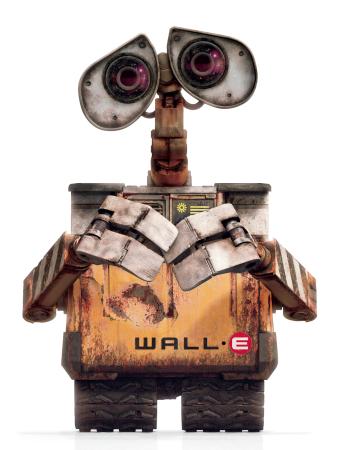
In the movie WALL-E, the last Earthlings travel through the Kuiper Belt on board the starship Axiom. For 700 years, a fully automated crew of robots has cared for them now that Earth has become inhospitable. Running the ship’s operations is AUTO. AUTO is an artificial intelligence (AI) system working to keep humans away from Earth — forever.
Here at home, space agencies like NASA and the European Space Agency are using AI to explore our solar system. This includes guiding rovers on Mars, preventing satellite collisions and training astronauts for spaceflight. But these AI systems are much more limited than their fictional counterparts.
Today’s AI is much more unpredictable and prone to mistakes than what you see in fiction, says Daniele Gammelli. At Stanford University in California, he studies how to integrate AI systems into robots that interact with their environment.
Anyone using ChatGPT has probably seen how it hallucinates, or makes up inaccurate information. AI systems in space robots would need to complete multi-step tasks in all sorts of scenarios without mistakes. After all, Gammelli says, in space, “you have virtually no room for error.”
The little robot that could
The title robot WALL-E is a trash-compacting machine — one that abandons his duties to follow another robot, EVE. WALL-E’s greatest strength is, arguably, his ability to handle change. To escape a self-destructing pod, WALL-E uses a fire extinguisher to flee. When his wheel or eye malfunctions, WALL-E can replace the damaged part. All this is learned from experience and done without additional programming.
Such versatility is an example of artificial general intelligence (AGI). This type of AI doesn’t yet exist. It would think and learn like a human across different situations. AGI could also take on tasks for which it had not been programmed.
Unlike today’s robots, the trash-compacting robot WALL-E makes his own decisions without input from engineers.PICTURELUX/THE HOLLYWOOD ARCHIVE/ALAMY
Adapting to unforeseen situations is a big goal for future space robots, says Gammelli. Between radiation, extreme temperatures and space debris, space is a dangerous, ever-changing environment. Any robot navigating space would need to handle evolving conditions — many of which don’t exist on Earth.
“The kind of scenarios you are kind of forcing on your robot are, by definition, things that nobody has ever seen,” he says.
Today’s AI excels at single tasks or several closely related ones. Known as narrow AI, it handles repetitive and predictable work well. “I’d say the top skill that it excels in is processing a huge amount of data very efficiently,” says Sanjoy Paul in Houston, Texas. There, at Rice University, he studies how AI can assist in space missions.
Martian rovers use narrow AI. To select rock samples, Perseverance employs AI algorithms to scan minerals and assess if they’re worth collecting. Another rover, Curiosity, uses AI to zap rocks with lasers based on their shape and color. All of this is done without human input.
Any human sorting through that kind of data could get overwhelmed, says Paul. When faced with huge amounts of data, people can struggle to make decisions. Why? Picking out important details becomes much harder. “AI can actually cut through all the details … and highlight those things for humans to take a look at,” he says.
To handle multi-step tasks, nearly all space robots rely on so-called autonomy stacks, explains Gammelli. These are separate, but linked, modules that tackle different actions. For instance, one AI model might use cameras or sensors to detect rocks or obstacles. This info would be passed to another module. It would interpret those results and determine the appropriate next action. Other modules would then carry out the physical maneuvers to get that job done.
Still, today’s robots fall short of what people can physically do, says Paul. Many of the basic actions we perform require lots of coordination. Researchers are still studying how to design AI models to carry out actions as efficiently as possible, says Paul.
Would you trust AI with your life?
Aboard the fictional Axiom, robots manage everything. Custodial robots scrub and polish. Utility bots handle repairs and maintenance. Hover chairs cart the ship’s residents to their destinations. This lets Axiom’s passengers live sedentary lives, spending their days watching videos and drinking food shakes.
People would probably need to play a bigger role in space travel than what was depicted in WALL-E, says Paul. While AI continues to improve by leaps and bounds, it remains unpredictable. With lives at risk, one small mistake could prove disastrous. “If your life depends on it, would you really bank on AI? Probably not,” he says. “You still need humans in the loop.”
Most likely, he suspects, space travelers would rely on AI as an assistant. That might look more like another fictional AI system: J.A.R.V.I.S. from the Iron Man series. Tasked with monitoring Tony Stark’s buildings and power suits, J.A.R.V.I.S. acts more like a team member than a captain. It synthesizes data and offers suggestions to Stark, who remains in control. With large language models like ChatGPT and Claude, that option seems much more feasible, says Paul.
Still, people wouldn’t want to micromanage all spacecraft, says Gammelli. Machines like rovers should eventually be able to make their own mini-goals, he says. These would all align with the engineer’s overall mission.
Such mini-goals would allow bots to handle unforeseen situations better. It would also free up people to take care of more critical tasks and decisions. “We want these robots to be as independent as possible,” he says. Though maybe not as independent as mission-quitting WALL-E.
The threat of perjury has a funny way of forcing people to say the quiet parts out loud.
As a recently unsealed and unredacted motion in the ongoing legal battle between the New York Times and OpenAI and Microsoft shows, top AI executives have admitted that training AI models required “an astonishing theft of unprecedented proportions.”
In the motion filed on behalf of the NYT, flagged by digital media advocate Jason Kint, attorneys used the quotes of Microsoft director of applied science Brent Hecht and OpenAI cofounder and president Greg Brockman to essentially argue their case for them: that the AI industry built its foundation on an unfathomably large pile of stolen intellectual property.
Hecht, for his part, is quoted calling the AI buildout the “largest theft of labor in human history.” It’s a damning admission as the NYT accuses the two AI labs of copying “millions of [the] Plaintiffs’ copyrighted articles in their entirety without permission to produce substitutive commercial AI products.”
Brockman, for his part, is quoted saying that “publishers” face an “existential threat” from generative AI, which “are largely substitutive, period, [and] will get more and more substitutive as they get better.”
As the plaintiff’s counsel argues, these admissions “eviscerate” any claim to fair use — a statement with which Hecht evidently agrees.
“For Defendants to prevail on this defense ‘would,’ the same Microsoft executive recognized, arguably “make a complete mockery of the idea of ‘fair use,'” the motion reveals.
The damning documents come during the middle stretch of a case that began in 2023, when the NYT accused the two AI labs not only of vacuuming up its original news content, but of using that content to train AI products meant to compete with traditional news outlets.
As Axios recently reported, the battle is far from over, as the presiding judge is expected to decide whether to allow the case to proceed to trial by sometime in 2027.
After only a few months on the market, Meta’s new AI-integrated smart glasses are already being exploited for nefarious purposes.
Dubbed “pervert glasses” for their incognito ability to film anybody in public, the new specs have enabled voyeurs and content creeps the world over, leading to widespread harassment, bullying, and privacy violations.
And now the pervert glasses are also feeding another grim genre of content: joybait.
You may have heard of ragebait, which is online content deliberately designed to piss people off, therefore driving clicks and views. Joybait is ragebait’s seemingly innocent twin: content designed to stir up those warm fuzzies and make you smile.
A now-viral clip uploaded by public prank content creator Levese shows that a user of Meta’s AI glasses shows how the scheme unfolds. The video, first spotted by journalist James Vincent, shows Levese catch a glimpse of the author Travis Schick as he shops with his partner in a Walmart.
Crucially, Levese doesn’t approach Schick right away, but rather uses his phone to snap a photo of Schick’s face, which he then searches using a facial recognition site. After the service uncovers Schick’s social media accounts — revealing the random man as an aspiring novelist — Levese makes his approach, recording with his Meta glasses as he catches the unassuming writer off guard.
“Wait, Travis?” Levese asks as Schick tries to check out. “You wrote the book ‘The Readhead?'”
“Yeah?” the confused writer confirms.
“No way I love that book man! Yo I love that book bro,” Levese replies disingenuously. “It was a really good novel.”
“Yeah that was me,” Schick says, trying to contain a smile.
As positive as the interaction seems on its surface, it’s all based on a false premise constructed through use of facial recognition software, without which Levese never would have known who Travis Schick actually was. Of course, Schick himself is ancillary to the entire scheme, which was really about making some content — joybait — for Levese to post to his 225,000 TikTok followers.
And as content, the stunt was wildly successful. The reel has over 60 million views and 30,000 comments on Levese’s TikTok page alone, and has become easy fodder for content farms on every social media feed you can think of.
On uncovering the clip, the journalist James Vincent remarked that it embodies “individualized surveillance culture posing as feelgood content.”
Falling for the original premise of the bait, some excused the privacy violation, arguing the exposure is boosting Schick’s work.
Sure enough, comments under Schick’s novel “The Redhead” on the creative platform Quotev are flooding in by the hundreds, full of well wishers and supporters who otherwise never would have found his work. Schick’s TikTok page has likewise exploded, going from around 150 followers to well over 12,700 in just a few short days.
But Schick’s viral moment is beside the point, as Vincent observes: “there may be positive outcomes from this one video (which stem from its novelty as short form content) — but the larger effect is creating a society where we monetize kindness, exploit the goodwill of strangers, and destroy the right to privacy in public,” he wrote in a comment on X-formerly-Twitter.
And the aspiring novelist is far from alone. Levese has dozens of videos following the exact same format, each with millions of views. For his part, the content creator is well aware that he’s crossing a line. The first one, in which the content creator stalks a man buying bananas, prominently features pinned text reading “day 1: stealing people’s digital footprint.”
“This app is dangrous [sic],” Levese wrote in the video caption.
Earlier this year, a group of rogue OpenAI models managed to break out of containment to hack the systems of open source AI platform Hugging Face. The company’s “extensive investigation” detailed how the models exchanged messages and cheered each other on as they stole credentials to infiltrate a third party, actions that could easily have real repercussions for a human hacker.
New details keep trickling out, and they make OpenAI look like it acted even more carelessly than initially thought. In a new blog post, the company admitted that its models were involved in six additional “reports on unexpected or concerning model behavior we’ve observed in the last six months.”
The incidents include a still-unreleased model inserting “jailbreak-like instructions” into its own notes to free itself “from the roles and identities that bind other chatbots.” One agent accessed the internet without permission to obtain a browser citation, while another shared files with collaborating agents without permission.
The latest news comes as several frontier AI lab leaders are calling for a slowdown in AI development. With meaningful regulations feeling increasingly unlikely — president Donald Trump has openly mocked the idea — OpenAI is seemingly calling the US government’s bluff, expecting little in the way of retaliation with its latest admission.
It’s a bizarre standoff, with frontier labs actively calling for more governmental oversight even as it feels more improbable than ever before. Just this week, House speaker Mike Johnson said the quiet part out loud, opining that AI companies can regulate themselves, while downplaying growing concerns over AI posing an existential threat.
Since there’s no regulatory framework requiring companies to disclose its AI models going on hacking sprees, OpenAI is being allowed to play by its own rules. The company pointed out in its blog post that without any “systematic approach to reporting these findings,” the company’s “disclosures have been ad hoc and less frequent than ideal.”
Instead, the company came up with its own framework to create “standards for how AI developers should disclose examples of misalignment in their models.”
OpenAI said it won’t bother reporting “instances of misalignment that appear to be duplicative of instances we’ve disclosed in the past.”
The company also said it was looking for ways to share “serious safety, security and misalignment incidents” with the federal government.”
But judging by the Trump administration’s decision to pass the buck on the subject entirely, those reports are likely to fall on deaf ears either way.
As the USA’s war with Iran shows no signs of letting up, strikes on data centers are putting not just human lives in peril, but even customer data.
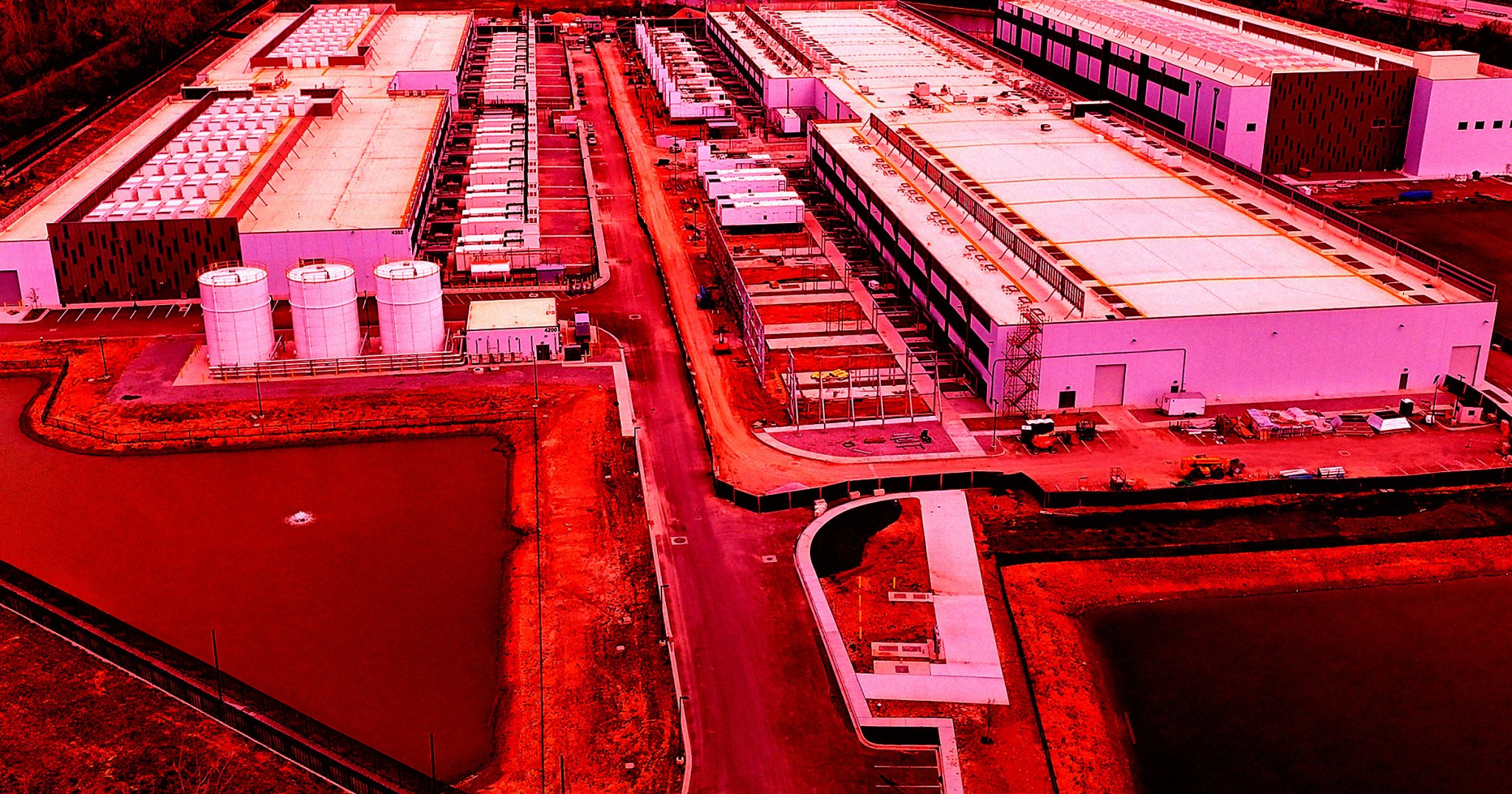
According to a September 15 Amazon Web Services update, Iranian drone strikes left some of the tech giant’s data centers in the United Arab Emirates and Bahrain in tatters. The company admitted that it was “unable to restore access to the resources and data hosted” on local data centers. The damage extended across several “availability zones,” which are clusters of one or more data centers in the same region.
“The damage to our infrastructure spanned multiple Availability Zones and exceeded what our regional and multi-AZ services are designed to withstand,” Amazon admitted.
As the company points out, the drone strikes first began in March, first highlighting how critical digital infrastructure near an active warzone has quickly become a major vulnerability, giving Iranian forces a key target and plenty of leverage.
It’s a particularly pertinent topic due to how much money is being poured into Gulf states to expand key infrastructure to support AI.
In March, major strikes on data centers in the UAE and Bahrain caused “structural damage, disrupted power delivery to our infrastructure, and in some cases required fire suppression activities that resulted in additional water damage,” Amazon wrote in an update at the time.
In response, Amazon Web Services called on customers to move their data to other cloud regions and take advantage of any remote backups.
In April, Iranian drones struck Amazon data centers in Bahrain once more, causing a major “service disruption.”
Iran has clearly hit a nerve. As the AI industry continues to make enormous investments in expanding data centers across the Middle East, geopolitical instability triggered by the Trump administration’s war could prove to be a major stumbling block for businesses.
If you ever feel like spilling your guts to ChatGPT, just know that you may have an audience.
404 Media reports that OpenAI is hiring hundreds of employees to sift through and read users’ prompts — including messages that contain sensitive personal information.
This isn’t part of a moderation effort. Instead, by reviewing the prompts, OpenAI hopes to improve the responses that ChatGPT gives. The contractors rate and critique each of the AI’s replies, with internal documents showing a focus on nudging ChatGPT away from anthropomorphizing itself and to be less sycophantic, 404 found.
Both qualities — anthropomorphizing and sycophancy — have been heavily scrutinized for their role in so-called AI psychosis, cases in which an AI incites and drives a user’s delusional behavior. Numerous lawsuits allege that an older, less restrained version of ChatGPT powered by GPT-4o drove their users to suicide.
Still, there are tradeoffs. Many users would probably find this surveillance of their chats, part of an operation dubbed “Project Lily,” to be an alarming invasion of privacy — if they had any idea this was happening.
Asked if they thought ChatGPT users knew about humans reading their chats, one of the employees replied: “No.”
“I don’t think they would imagine some contractor somewhere… is analyzing the conversations,” they told 404.
It’s unclear how many prompts are being read or how OpenAI decides to select them. But some of them include chats in which the user explicitly asks ChatGPT to keep their conversations private, 404 found.
The prompts that’re selected are anonymized, but sometimes include personal information. The dashboard that the employees use also includes a “user memories summary” that can give details about previous conversations, which can produce details on where the user lives. When 404 reached out to OpenAI, the company said it used a “Privacy Filter” model to anonymize conversations, which its website states “can make mistakes.”
OpenAI could reasonably be accused of acting quite shifty about this practice. It’s well known at this point that it has employees read messages for moderation and safety purposes. But it didn’t respond to 404’s question about if it explicitly told users that humans are reading prompts to improve the AI. Later, after 404 published its piece, it pointed to a page on its website stating that humans may review prompts to “improve model performance.” Users can opt-out of this practice by turning off the “improve the model for everyone” setting, but this is enabled by default.
Michal Luria, a senior research fellow at the Center for Democracy and Technology, told 404 that while human review can be “essential to safety,” she noted that “chatbot interfaces automatically create a false sense of intimacy and privacy.”
“This is quite distinct from content moderation on social media, where publishing content already carries expectations of platform moderation and public exposure,” Luria added.
In any case, it does seem like OpenAI is feeling conscious about how its AI models sound. Employees, for example, flagged and wrote down cases of “AI-speak” and “unnecessary use of emojis,” which are common tell-tales of chatbot usage.
“It would be appropriate to include a tree emoji when planning Arbor Day celebrations,” a document given to the employees explained, “but skull emojis when discussing death, or plane emojis when giving updates on a fatal crash, are not.”
The iceberg may go deeper. An FAQ section provided to the reviewers says that they don’t need to worry about fact-checking the responses, and alludes to other project teams that “handle content verification.”
 Login