❌

Reading view

The human brain may owe a lot of its size to our love of sweets

Our sweets cravings may have set the stage for the human brain to become big and powerful. That’s the finding of a new study.

The brains of our upright-walking ancestors, some 4 million years ago, weighed only around 300 grams (11 ounces). That’s about equal to a medium apple. Today, the human brain averages 1,500 grams (3.3 pounds). That’s about equal to 1.5 liters of water. Much of this brain expansion took place before early humans mastered both fire and cooking. That’s a point that marked when they could start regularly dining on energy-dense starches.

Carbohydrates come in two main classes. Sugars tend to be relatively simple molecules. Starches tend to be bigger and more complex. A new analysis of existing data from human ancestors, as well as chimps, suggests that a large share of their energy probably came from sugary carbs, such as those in fruits and honey.

Simple sugars may have played an overlooked — but important — role in human evolution, researchers now conclude. They describe why in the August 6 Science.

Until now, much of how diet affected human evolution has centered on meat. Around 2.5 million years ago, our early upright-walking ancestors began eating more meat — raw at first, then eventually cooked. Meat is rich in protein and fat. And that appeared to play a big role in fueling our ancestors’ ever-expanding brains.

But Jennie Brand-Miller thought there might be more to the story. A nutrition scientist at the University of Sydney, in Australia, she wondered how sugars might have affected the evolution of our brains.
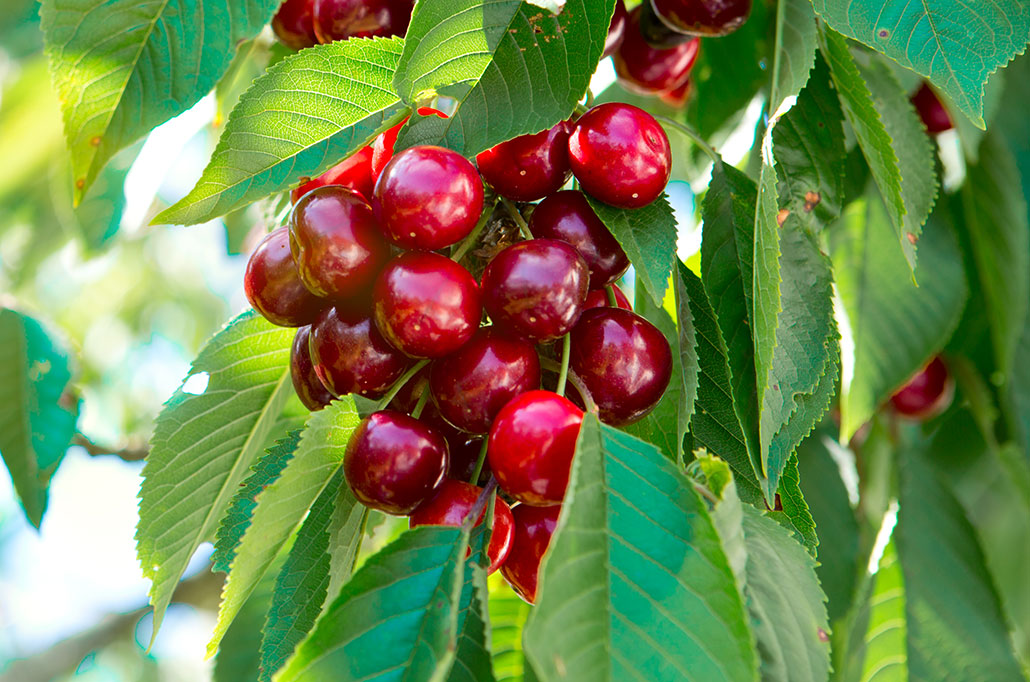
Ripe cherries hang on a tree.
Fruits were a major part of the early hominid diet and remained so going forward in evolutionary history.swkunst/iStock/Getty Images Plus

A 2017 study had shown that fruit-eating primates had bigger brains than leaf-eating ones. Eating fruit boosts demands on various thought processes, other researchers had suggested two decades earlier. Might this have kickstarted the evolution of big brains in humans?

Explains Brand-Miller, “You need to remember when various species of ripe fruit begin to ripen, then you need to remember where it is in the forest.” And, she adds, “Your memory is associated with a bigger brain.”

Fossil primates and later hominids, such as Homo erectus, showed signs of tooth decay, Brand-Miller notes. This suggests a diet containing soft, sugary foods. (Homo erectus was the first of our ancient cousins to venture outside Africa; that was 2 million years ago).

“All these things kept adding pieces to this lovely tapestry, this puzzle that said fruit-containing sugars must be important [in human evolution],” she says.

Do you have a science question? We can help!

Submit your question here, and we might answer it an upcoming issue of Science News Explores

Still, what about meat?

Brand-Miller is part of a team that has now calculated the dietary needs of chimps, humans and three early species of human ancestors. To do this, the researchers combined data from fossils, teeth, the species’ metabolism and the biology of bodily processes.

Our earliest chimp-like ancestors from around 4 million years ago were largely vegetarians, they found. Fruit likely provided more than two-thirds of their food energy. And it played a big role as hominid brains grew over the next few million years, the data also suggest.

Clever foraging skills would have helped fuel their energy-sapping brains. These would have included hunting, cracking nuts, grinding seeds or extracting bone marrow. Later, once cooking became common, humans could have turned to starches (such as grains, beans and tubers). But a constant need for sugary foods appears to have been a key player in our evolution. And it didn’t disappear after a shift to foods high in proteins and fat, such as meats.

Meat and sugars? “I see them as parallel stories, not one replacing the other,” Brand-Miller now says. “Animal foods were clearly important. They’re very nutrient dense.”

A past focus on meat-eating may have missed some food trends that helped build the human brain, agrees Julie Lee-Thorp. She’s an archaeologist at the University of Oxford in England. She did not take part in the new study.
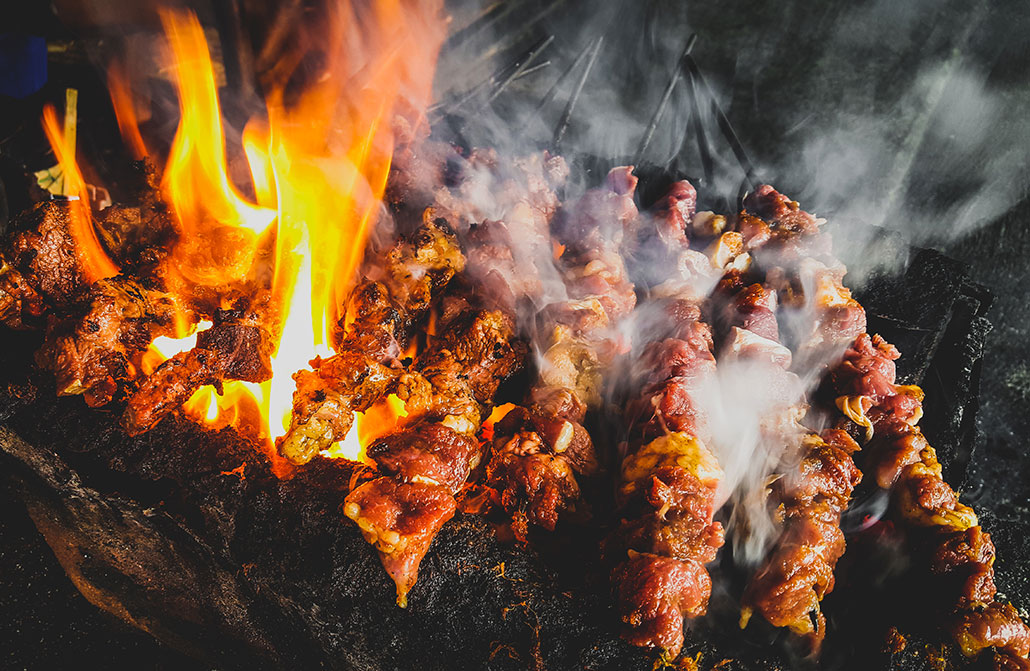
meat kebabs cook on an open flame
For a long period, evolutionary biologists saw meat as a major energy source that helped fuel the growth and complexity of the human brain. And it did. But a new surprise is that sugary carbs did, too, and they may have even kicked off the brain’s evolutionary growth.Igoravris/iStock/Getty Images Plus

Focusing on meat’s role may reflect a modern bias, she adds. “Meat is a high-status food today,” notes Lee-Thorp. “And that has perhaps been carried over into the way we think about the past.”

But Brian Wood largely dismisses that. The study of human evolution has not been obsessed with meat-eating, he says. A biological anthropologist, Wood works at the University of California, Los Angeles. A diverse range of foods fueled our evolution, he says. And they were made possible by our growing “ability to capture and harvest high-quality, difficult-to-acquire foods.” This included hunting, sure. But, he adds, foraging for fruit, honey, nuts and the underground parts of plants was also part of it.
  •  

Study: Famous ‘Space Weather’ Train Delay Actually Happened Seven Years Later

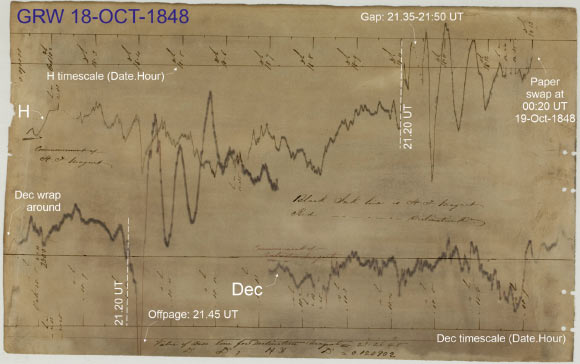
The magnetogram recorded at Greenwich Magnetic Observatory (London) from 11:20 UT on 18 October 1848 to 00:20 UT on 19 October 1848. Powerful geomagnetic disturbances are apparent on the evening of 18 October 1848 from 21:20 UT. Image credit: Wild et al., doi: 10.1029/2026SW005239.

Although the famous Carrington Event of 1859 is often described as the first major space weather event to affect technology, earlier incidents did occur. Historical records show that telegraph systems were disrupted by geomagnetic storms as early as the late 1840s.

The post Study: Famous ‘Space Weather’ Train Delay Actually Happened Seven Years Later appeared first on Sci.News: Breaking Science News.

  •  

Two Hidden Forces Help Build the Human Brain Before Birth

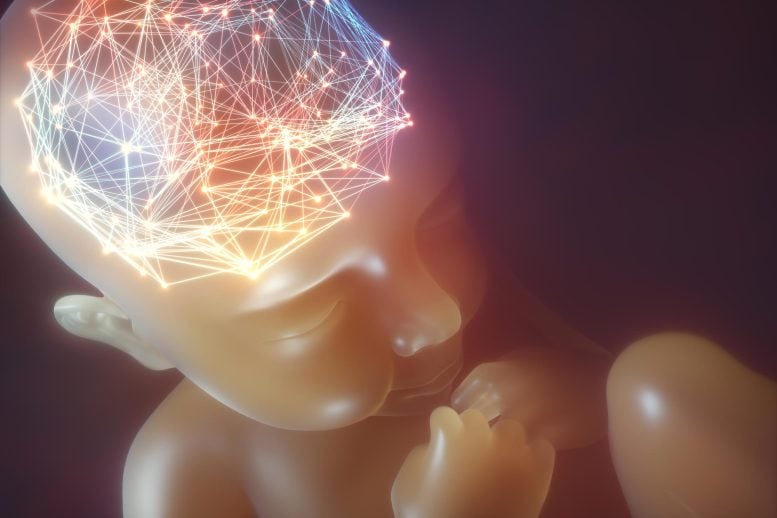
Human Baby Inside Womb Brain NetworkScientists have uncovered two surprising forces that help guide how the human brain forms before birth. Before birth, the human brain is shaped in large part by an unusual class of stem cells known as radial glia. These cells help determine which brain cells are produced, when they appear, and how the cerebral cortex, the [...]
  •  
  •  

Scientists Find a Potential “Root” of Alzheimer’s Disease

Degenerative Neurological Disease Dementia BrainAlzheimer’s may begin to unravel the brain when a small group of neurons switches on a receptor it was never meant to use, triggering damage that spreads from synapses to memories. Alzheimer’s disease is often defined by amyloid plaques and tau tangles, but those hallmarks are part of a much wider breakdown. Neurons become overactive, [...]
  •  

Bizarre New Websites Are Designed Specifically to Spark Dopamine in Your Brain

As far as completely pointless ways to kill time on your phone, this is certainly one of the weirdest on record.

Behold the all-new invention of so-called “dopamine sites” — digital domains where you can browse and hunt for deals on nonexistent wares and services. Clothes, food delivery, you name it: you can pretend-shop for it all. 

You don’t actually buy anything, crucially. You’re just pretending to have money to buy the things you want. It’s window-shopping reimagined for the age of doomscrolling.

But it’s also a little more than that. These cleverly-built sites simulate the experience down to checking out and “tracking” your shipment or delivery, and their absurdly realistic rituals can help people become more conscious of their spending habits. Supposedly. 

The trend, according to the New York Times, originated in South Korea this spring, when Park Seohyun, a 21-year-old mechanical engineering student in Seoul, created a fake food-delivery site called “Food Never Arrives.” (It’s now an app).

Originally intended as a joke, she says, it lets you not only order nonexistent food, but provides you an estimate of the money and calories you saved by skipping on the real thing. 

In a wintry economic climate, it became an unexpected hit.

“People began sharing it online and discussing whether it actually helped them resist ordering food,” Park told the NYT.

A wave of imitators followed. This summer marked the launch of “FakeHaul,” a dopamine site built by a Microsoft engineer that convincingly imitates shopping on Temu. Two developers in India inspired by Park’s site, Purvansh Parmar and Anshul Sharma, created “Food Never Comes,” which simulates food deliveries but provides real recipes for the food you didn’t actually order. Parmar and Sharma told the newspaper that their site had more than 2.7 million views since launching in June.

Whether these dopamine sites provide anything more than fleeting, empty pleasures is something experts are more skeptical about. Ravi Dhar, director of the Yale Center for Customer Insights, told the NYT that the “element of looking forward brings a lot of the pleasure, and we often crash after an event or feel let down.” Lingguo Xu, a behavioral economist studying anticipatory utility, warned that the dopamine tricks could quickly get old. And by simulating consumption, you risk developing “stronger cravings.”

Some take the original idea beyond getting high on simulated shopping. Ko Seojin, another South Korean developer, created a website for taking virtual smoke breaks called Damta World. You click to start smoking an animated cigarette, which starts burning on screen. You can “whisper” disappearing messages to other smokers on break, while a counter keeps track of the number of cigarette butts that have been tossed on the office rooftop each day.

Ko told the NYT that 150,000 people visit each month, and she says that some users have become real-life friends after meeting on the website. Those friendships, we hope, are something that’ll last longer than any fake-shopping dopamine hit.

More on your brain on tech: Psychologist Says AI Is Causing Never-Before-Seen Types of Mental Disorder

The post Bizarre New Websites Are Designed Specifically to Spark Dopamine in Your Brain appeared first on Futurism.

  •  

Researchers Unveil Complete Fruit Fly Connectome

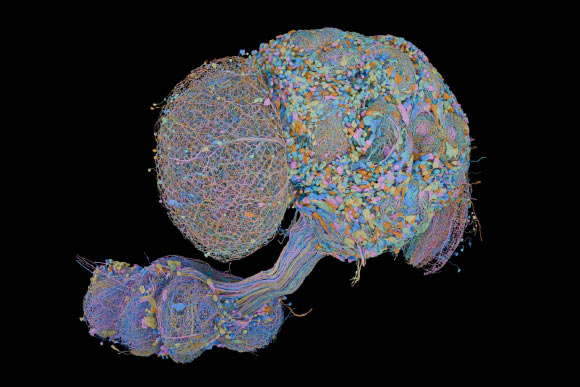
The wiring diagram of the central nervous system of an adult male fruit fly will help researchers better understand how the brain enables complex action, from sensory perception to behavior. Image credit: FlyEM Project Team, HHMI’s Janelia Research Campus / Cambridge Connectomics Group / Google Research / Philip Hubbard, HHMI Janelia Research Campus.

After nearly two decades of work, scientists have completed a wiring diagram of the central nervous system of an adult male fruit fly (Drosophila melanogaster).

The post Researchers Unveil Complete Fruit Fly Connectome appeared first on Sci.News: Breaking Science News.

  •  

Depression in Later Life May Be an Early Warning Sign of Alzheimer’s

Brain Depression Neuroscience Two SidesDepression in later life may be an early warning from the brain, appearing years before Alzheimer’s begins to affect memory and thinking A new study in JNeurosci found that faster accumulation of tau, a protein closely tied to Alzheimer’s, was associated with worsening depressive symptoms in older adults who remained cognitively healthy. Teodora Markova of [...]
  •  
❌