Analyst figures showed cellular IoT modules remained resilient in the face of memory component shortages which are hammering the smartphone sector, with shipments of the specialised units up 15% year-on-year in H1.
IoT Analytics estimates module shipments were aided by an acceleration during Q2, though its numbers also indicate the technology involved is a key element and may explain why the market has so-far resisted the broader component problem.
The research specialist believes shipments of LTE Cat 1 bis modules dominated the sector in H1, stating “5G deployment has been relatively gradual” and focused more around “higher-value applications”.
It is reasonable to conclude the lean towards established LTE equipment may have alleviated some of the component woes affecting broader device markets and IoT Analytics acknowledged expectations of increased prices for memory and other apparatus may have led some companies to bring orders forward.
Senior principal analyst Satyajit Sinha said it is unclear if the performance of the IoT module market “reflects underlying demand and how much is being pulled forward by longer lead times and rising component costs”.
Although cautious, Sinha noted the steady demand for LTE Cat 1 bis modules and fresh projects could contribute to continued shipment strength in the back-half of the year. The flip-side to this would be in making predictions for 2027 harder.
Other insights in IoT Analytics’ H1 numbers are RedCap and eRedCap modules remained nascent. The company stated the units are “only beginning to move from roadmap into volume” as devices become available and demand is spurred by rising standalone 5G coverage.
“NB-IoT continues to slip” from a peak in Q1 2024.
The company noted China remained the largest market for IoT module shipments, but stated those in India registered the swiftest growth.
Neuroscientists are debating a seemingly simple question: which way does a seizure propagate in the brain? Answering such a question could advance our understanding of epilepsy, but requires the development of cutting-edge microscopy techniques that are far from simple. Researchers from the University of Georgia have now developed an improved light-sheet microscope with the ability to perform fast 3D imaging of zebrafish seizures.
Reporting their findings in Biomedical Optics Express, the researchers found that seizures originated in the hindbrain and propagated forward (anteriorly). This corroborates a previous study examining 3D imaging of zebrafish seizures, but contradicts two earlier studies of 2D imaging (reported in Frontiers in Neural Circuits and eNeuro) that observed propagation in the reverse direction.
“I think the discrepancies about the direction of seizure propagation point to the need for more imaging,” says Peter Kner, an engineering professor who led the research efforts at the University of Georgia. “I believe we still don’t know how probabilistic the behaviour is and what factors are important.”
Adding a third dimension
The microscope developed by Kner and his team uses a so-called light sheet — a thin pancake of light that selectively illuminates a single 2D plane of a sample. This technique strongly reduces background noise from other planes that are not illuminated. Fluorescence light from the sample plane passes through a series of lenses, orthogonal to the light sheet, which reimage the sample onto a camera.
“There have been several papers analysing seizure events in zebrafish by looking at 2D imaging. So, the motivation here was to extend that work to 3D imaging”, explains Kner. Compared with other microscopy techniques, such as confocal microscopy, Kner’s team wanted to develop a solution for simple, fast and large field-of-view imaging in all three dimensions.
Light-sheet microscopy works inherently in 2D. To extend it to 3D, the researchers dynamically swept the light sheet through different planes of their sample. To keep the illuminated plane in focus at all times, they synchronously shifted the imaging system’s focal plane using an electrically tunable lens (ETL), which has a focal length that changes with applied current.
While this sounds straightforward in theory, in practice, adjusting the ETL introduces distortions or optical aberrations that degrade image quality. The researchers compensated for wavefront distortions using a deformable mirror whose shape was carefully calibrated at each axial plane imaged.
A wider view of seizures
Using predetermined settings for the deformable mirror, the team imaged volumes of 499 x 499 x 148 µm at a rate of four volumes per second. They also reported a fivefold increase in the area over which imaging remained near-diffraction-limited compared with uncorrected microscope images. These achievements allowed them to image zebrafish seizure propagation in real time under their microscope.
“This work adds pragmatic utility to 3D light-sheet microscopy for fast volumetric dynamics,” says Sixian You, an electrical engineering professor at the Massachusetts Institute of Technology who was not involved in this research. While deformable mirrors have been used to correct ETL aberrations before, she emphasizes that the advance comes from pre-calibration of the corrections; this is what makes the fast, wide field-of-view imaging possible. “I expect the same approach will transfer readily to other scanning modalities that stand to benefit from tunable lenses,” she adds.
After imaging the zebrafish continuously over a 2.5 min period, the researchers found that seizures propagated from the back of the brain to the front, and that the seizures subsided over tens of seconds. The findings add one more data point towards elucidating the statistics of seizure propagation which, if better understood, could aid epilepsy treatments in the future.
Kner’s team hopes to extend this work by next exploring different strains of zebrafish.
Microsoft is changing the destination address of two of its most popular services: starting this month, it will redirect M365 and Teams web users to copilot.cloud.microsoft and teams.cloud.microsoft, respectively.
The Teams move is already under way, and Microsoft has now added M365 to the mix. The company announced the changes in two MessageCenter posts: MC1465764 (mirror) and MC1462915 (mirror).
Organizations using these products are advised to update their systems and documentation to ensure continued access. Microsoft has told customers to review configurations on client devices, proxies, firewalls, secure web gateways, or other enterprise network controls to confirm that users can connect to the new addresses. Companies having trouble connecting should ensure that their environment aligns with the recommended network requirements for Microsoft 365 Copilot.
Enterprises that had been blocking the new Copilot address to prevent employees accessing their personal Microsoft accounts can use Microsoft’s TenantRestrictions control to achieve their goals instead, it said.
All redirects should be completed by early October, Microsoft said, advising companies that can’t meet the deadline to contact their account representative for help. Limited exceptions to the Teams redirect are possible until Dec. 31, 2026, but after that no further delays will be possible, it said.
Indian smartphone manufacturer Lava International made its debut in the UK at the end of August with a mid-tier offering. To coincide with the launch MD Sunil Raina caught up with Mobile World Live to discuss how he hopes it can stand out in its first market in the West.
Lava is positioning the AGNI 4N smartphone as having the highest build and component quality available in the mid-range, with the added benefit of no so-called “bloatware”. It is priced around the £500 mark.
The company’s foray into the UK comes after 17 years of supplying feature phones and then smartphones in its home market, where it also manufacturers the handsets.
It has a presence in over 20 countries, but Raina noted the UK would be its first “Western” venture.
The executive highlighted the business has “continuously grown in smartphones over the last 5 years,” though from a relatively small base, in an era of flat conditions for the overall market.
This factor “typically means that you are able to take share” from larger rivals; something the company aims to do in its new mature market.
Raina believes there is an opportunity in the UK’s Android segment given the high market penetration of Samsung and few alternatives in the mid-tier gaining significant traction.
He noted there was a relatively low penetration rate of Chinese brands in some Western markets, including the UK, companies which are stronger in this mid-range elsewhere in the world.
Lava’s origins, he hopes, will provide an advantage given India’s trustworthy status in the UK and the fact “there’s also a huge diaspora” who “I think would perhaps like to carry one of our products”.
Its debut device in the country is being sold initially through online channels. Subsequent releases are likely to be at the same or lower tier than the AGNI 4N.
“Because this is our first foray into a Western market we would like to gauge how it goes, take the first few steps wisely and cautiously,” Raina said, noting over the years it has learnt how to survive in a challenging and always shifting industry, building a brand for the long term.
“Very few companies who started around the same time we started could manage to survive in this industry,” he added, pointing to former big names who have come and gone include BlackBerry and HTC.
Youthful outlook Lava intends to position its debut UK release at the “mid belly” of the market primarily to an audience of young people.
Promoted points include a lack of already installed apps and other “bloatware” on the device when people buy it and use of high-quality components for its price.
Raina noted there was a trend for some makers of Android-based phones to install “dozens of applications” before sale, which consume valuable memory and potentially raise security issues, as well as being a general inconvenience for the consumer.
Lava promotes supplying a “very clean” version of the operating system.
The executive noted it delivers a high build quality and performance levels at the upper end of the mid-range.
Its AGNI 4N has an aluminium alloy metal frame, glass back and uses a MediaTek Dimensity 8350 chipset, alongside AI and camera features similar to those frequently promoted in the mid-tier.
“Below a certain price point there are a lot of compromises that brands make in terms of the build quality of the phone,” he asserted, stating many around the mid-price were “more plasticy” than its offering.
Below a certain price point there are a lot of compromises that brands make in terms of the build quality of the phone
Sunil Raina, MD
Lava International
Raina argues some brands which also sell at higher tiers have a vested interest in making their top products “more aspirational and therefore compromise at the lower level”.
In terms of its audience, the device is aimed primarily at a younger demographic who want high performance to suit popular applications such as gaming, but may not have a premium budget.
“It’s in a sweet spot where young people will be able to do high performance tasks, but at a price point which is good for their pockets as well”.
“We believe this device will be able to do a lot more things that other devices cannot at this price segment,” he concluded.
Apple officially entered the foldable smartphone market with the iPhone Duo, as new CEO John Ternus headlined the company’s signature event for the first time at its Cupertino, California, headquarters.
The iPhone Duo makes its debut seven years after Samsung launched its first foldable smartphone and on the heels of a recent launch by Huawei. Pre-orders for the device begin in October.
After running through the launches of the iPhone 18 Pro, Pro Max, Apple Watch Series 12, Apple Watch Ultra 4 and AirPods 5, Ternus saved the foldable for last but drew a quick distinction between the Duo and competing devices.
“Others have created foldables that just feel like two phones awkwardly stuck together,” Ternus (pictured) said during the company’s Surprise and Shine event yesterday (9 September).
He described the Duo as having “a larger display that feels as natural and intuitive as iPad,” and stated it has the “largest display ever on an iPhone, while still fitting easily in your pocket”.
Duo specs Once opened, the doublewide screen is 50% larger than the size of the iPhone 18 Pro Max and measures 7.6 inches on the diagonal, stated Greg Joswiak, Apple’s SVP for worldwide marketing.
The device pairs a mirror-polished grade 5 titanium chassis with a custom precision hinge engineered from over 100 components to deliver structural stiffness and smooth operation.
Powering the device is the A20 Pro chip built on a 2nm process, coupled with a custom vapor chamber cooling system, 16-core Neural Engine, and a 7-core GPU.
The device runs on iOS 27, which introduces side-by-side Split View multitasking to the iPhone lineup, and features an under-display FaceTime camera on the main panel alongside a side-mounted Touch ID sensor integrated into the power button.
The imaging hardware centres on a 48MP Fusion Main camera capable of 4K120 fps Dolby Vision recording, complemented by a 48MP Fusion Ultra Wide camera with macro support and a Center Stage front sensor.
The dual-battery architecture supports up to 31 hours of continuous video playback on the main screen or up to 44 hours on the cover screen, with support for fast wired charging as well as MagSafe and Qi2 wireless standards.
On the connectivity front, the device is eSIM-only globally, holds an IP67 rating for water and dust resistance, and incorporates Apple’s custom C2 cellular modem system along with the N1 wireless chip. The C2 modem integrates support for US mmWave 5G spectrum alongside Wi-Fi 7 and Bluetooth 6.
Available in star white and night sky finishes, the iPhone Duo starts at $1,999 for the base 256GB storage tier, with additional options extending to 512GB, 1TB, and 2TB. Pre-orders open on 16 October, with broad retail launch following on 23 October.
Anshu Goel, Lead Analyst, Digital Consumer at GSMA Intelligence, told Mobile World Live the Duo price point is worth watching going forward.
“While the quality and iOS customisation for Duo look good, this price point will limit demand,” he explained. “However, Apple customers are unlikely to go looking elsewhere if considering a foldable purchase.”
iPhone 18 Pro and Pro Max Apple also unveiled the iPhone 18 Pro and Pro Max, both powered by the same A20 Pro chip as the Duo. The pair introduce a redesigned 48MP variable-aperture main camera with physical aperture blades, a first for iPhone, alongside a slimmer Dynamic Island now capable of displaying up to three simultaneous Live Activities. New colour options include Burgundy and Glacier.
Pricing rose $100 over the equivalent iPhone 17 models, with the 18 Pro starting at $1,199 and the Pro Max at $1,299.
Analyst views Paolo Pescatore, chief analyst at PP Foresight, said Apple has taken its time entering the foldable category and is now seeking to redefine what consumers should expect from a smartphone rather than simply following rivals.
He noted higher pricing across the premium iPhone 18 line-up could also sway some customers toward the foldable, narrowing the perceived jump to a completely new form factor.
“Apple will now flex its considerable marketing muscle to kick-start demand and give the foldable category a major boost,” he said. “I fully expect it to be an instant hit, benefiting the wider market and developer community while putting rivals firmly on notice.”
He added that the increasingly split iPhone launch cycle gives Apple a powerful new revenue engine throughout the year, rather than concentrating attention on a single annual upgrade window, calling it a significant strategic shift and “potentially a gold mine for the business.”
On the leadership transition, Pescatore called the event a hugely important first moment for Ternus and a strong start to a new chapter at Apple.
“His challenge is to build on an enormously successful foundation while bringing fresh energy, ideas and priorities to the business,” he said, adding that the confident tone from the top mattered as an opening statement.
Nabila Popal, senior research director at IDC, said Apple appears to have hit it out of the park with the iPhone Duo.
“While a passport-size form factor is not new, the execution here looks quite good,” she said. “The user experience is intuitive and fluid, with a seamless transition from closed to open. The ease of use, coupled with an elegant design, should make the Duo stand out among the crowd of foldable devices today.”
She added the device could be a blockbuster product for Apple, and a great way for new CEO John Ternus to kick off his tenure.
CCS Insight chief analyst Ben Wood added the iPhone Duo was always going to eclipse Apple’s other announcements at the event, hailing a distinctive new design to the iPhone line-up and marking the company’s entry into the niche foldable category.
He stated while foldable smartphones are not new, Apple has clearly learnt from the evolution of rival devices from Samsung and others, noting the company has a track record of entering categories once they reach a certain level of maturity.
Wood said the Duo has benefited from major advances in flexible display quality and reliability, pointing to its near-creaseless screen, which, like Samsung’s Galaxy Z Fold8, uses a titanium plate beneath the display.
At $1,999, Wood said the Duo is Apple’s most expensive iPhone to date and $700 more than the iPhone 18 Pro Max, though less than some had feared, and said he expects strong demand.
However, he cautioned foldables remain a niche product accounting for less than 5% of the overall smartphone market, adding that the Duo’s arrival could still provide a lift to the wider foldable segment.
iOS 27 Wood also pointed to the significance of iOS 27, which brings major performance improvements and the latest version of Apple Intelligence and Siri, saying the update marks a step up from Apple’s earlier AI efforts based on his experience with the beta release.
He noted AI increasingly looks like less of a differentiator on smartphones, adding that Apple’s long-term commitment to privacy is likely to remain its most distinctive position on AI.
Huawei launched the Mate XT2 trifold smartphone, pointing to a faster chipset, slimmer profile and improved durability, just days before Apple’s expected foldable debut.
The Mate XT2 folds out twice into a tablet-sized 10.2-inch display, measuring 12.3mm when folded and 3.5mm when unfolded. It features a 6.5-inch external screen, with peak brightness reaching 6,500 nits.
The device runs on Huawei’s latest Kirin 9050 Pro chipset, which the Chinese vendor claimed delivers 42% higher overall performance than its predecessor.
The Mate XT2 is also the first Huawei smartphone to use the processor, which was designed using the company’s LogicFolding technology. Huawei said the approach intends to address challenges in scaling down semiconductor design while preserving performance.
The handset also features a redesigned hinge, upgraded durability and water resistance. In addition, the Mate XT2 introduces a hardware-level privacy display, which Huawei said allows the screen to remain clear when viewed from the front while restricting visibility from the side.
At its China launch, Huawei said the Mate XT2 is priced from CNY29,999 ($4,470) for the 16GB+2TB variant.
Richard Yu, executive director of Huawei, noted global shipments of tri-fold smartphones have surpassed one million units, adding “we lead the way in form factor innovation”.
Apple debut Competition in the foldable segment is set to intensify, with Apple expected to launch its first foldable iPhone on Wednesday (9 September). Analysts forecast Apple’s long-rumoured passport-style device to be priced at more than $2,000, with supply chain expectations putting it as high as $2,500.
IDC senior director Nabila Popal told Mobile World Live the technology giant’s arrival in the foldable segment would mark the “biggest catalyst the category has seen”.
Omdia forecasted foldable shipments will rise 22% in 2026 to more than 22 million units, up from 6% growth in 2025.
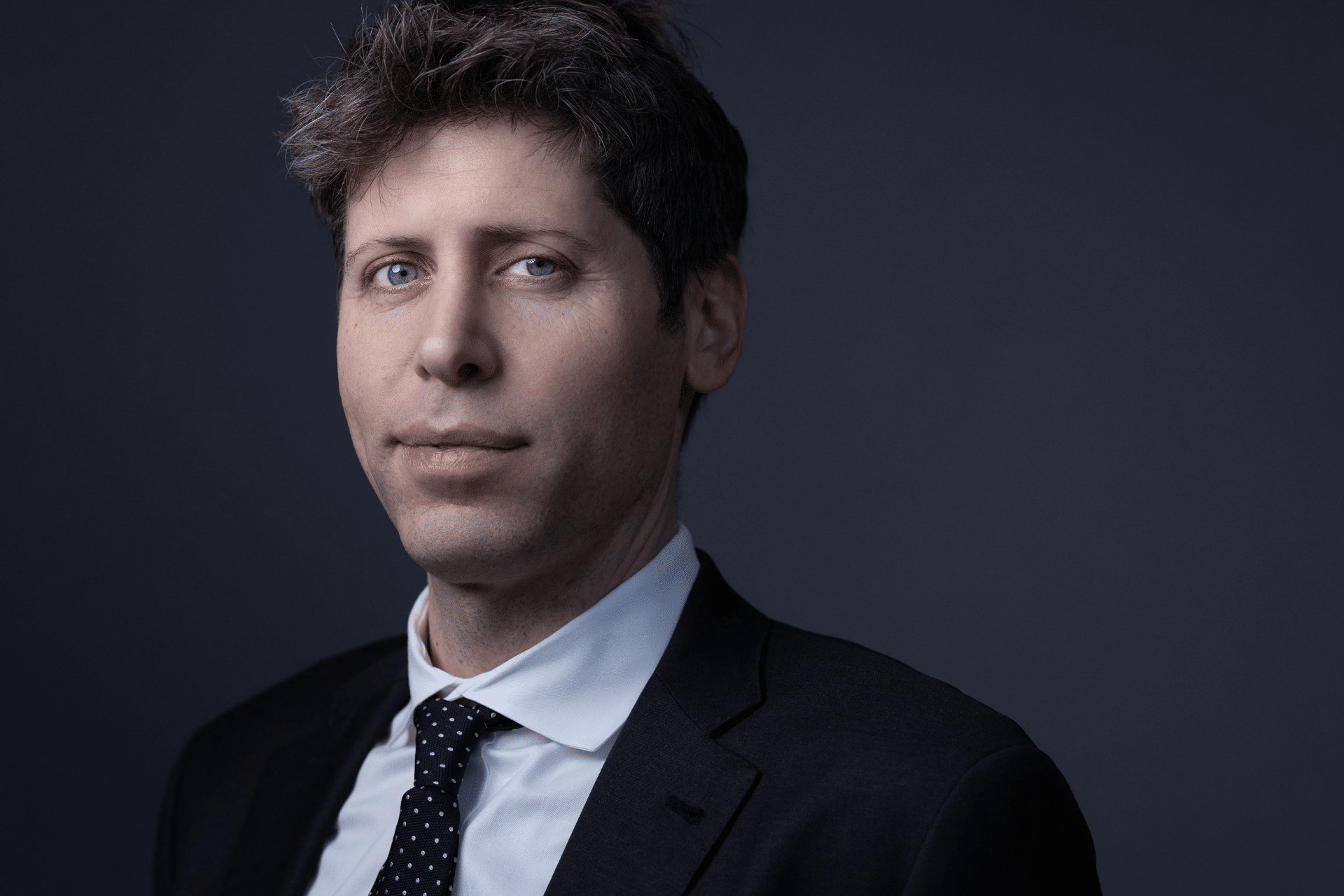
Sam Altman has described himself as a “mega Apple fanboy” while discussing the trade secrets lawsuit now dividing two companies that were close technology partners only two years ago.
Speaking with journalist Alex Heath on the Sources podcast, the OpenAI CEO said he was “very sad” when he learned about the case. His admiration for Apple, however, did not soften his rejection of the allegations against OpenAI and two former employees.
Altman said the company does not want another business’s intellectual property and would dismiss anyone found to have improperly brought confidential material into OpenAI. He also said an internal investigation left him convinced that the employee at the center of the dispute had not acted improperly.
That is OpenAI’s account, not a resolution of the lawsuit. Apple alleges that trade secrets connected to hardware design, manufacturing and supply-chain operations were taken for the benefit of OpenAI’s consumer-device program. The defendants deny wrongdoing, and the court has not settled those competing claims.
Sam Altman Separates Personal Admiration From the Case
Altman’s response was unusually personal for a dispute of this scale.
Technology executives normally leave active litigation to lawyers and carefully written company statements. Calling himself a fanboy places Altman on familiar ground with millions of customers who admire Apple products while disagreeing with a corporate decision.
His first reaction, he said, was to assume that the accusations sounded serious enough that someone must have behaved badly. OpenAI then examined the matter and reached a different view.
Altman said the company would act if it found that someone had taken another company’s intellectual property. At the same time, he argued that an employee who had done nothing wrong deserved a defense.
That distinction is central to OpenAI’s public position. It does not deny that former Apple employees now work on its hardware initiative. Instead, the company disputes the allegation that their movement between employers brought protected information into the program.
Personal admiration cannot answer the evidentiary questions. Being a customer, praising a company or enjoying its products has no bearing on whether confidential files were accessed or used. Altman’s comments are more revealing as an account of how sharply the relationship has changed.
OpenAI once promoted its work with Apple as a partnership built around safety, innovation and access to advanced AI. It now describes the lawsuit as aggressive, inaccurate and unnecessary.
Image Credit: OpenAI
From ChatGPT Partnership to Hardware Rivalry
In June 2024, both companies announced an agreement to integrate ChatGPT into experiences across iPhone, iPad and Mac.
Siri could ask for permission to send certain requests to ChatGPT, while Writing Tools could use the model for composition and image generation. The integration gave OpenAI direct exposure inside some of the world’s most widely used personal devices without requiring every user to create an account.
At the time, Sam Altman said the partnership would introduce ChatGPT to users in a new way. Apple presented the external model as an optional extension of Apple Intelligence, keeping permission and privacy controls between the user and the third-party service.
The arrangement made sense while the companies occupied complementary positions. Apple controlled the devices and operating systems; OpenAI supplied a widely recognized generative model.
Consumer hardware changed that balance.
OpenAI is developing a family of AI-native devices with designer Jony Ive, whose work at Apple helped shape products including iPhone, iMac, iPod and Apple Watch. Tang Tan, another longtime hardware figure who previously worked on major Apple products, is now OpenAI’s chief hardware officer.
Once OpenAI began recruiting deeply from Apple’s hardware organization, the relationship was no longer limited to providing a model inside Siri. The companies were moving toward competition over the physical objects through which people may interact with AI.
That competition helps explain why the lawsuit reaches beyond an ordinary employment disagreement. Hardware development depends on manufacturing knowledge, component choices, testing systems, supplier relationships and production methods that can take years to build.
Apple’s complaint alleges that OpenAI benefited from confidential information in those areas. OpenAI argues that the case is being used to slow a potential rival and discourage employees from leaving.
What Apple Alleges Against OpenAI
Apple filed its lawsuit in July against OpenAI, Tang Tan and former electrical engineer Chang Liu.
The complaint alleges that former employees misappropriated trade secrets connected to product development and shared them with OpenAI as it accelerated its consumer-hardware ambitions. Apple has also sought a preliminary injunction intended to prevent the use of disputed information while the case proceeds.
According to Associated Press reporting on the original complaint, Apple accused OpenAI of encouraging recruits to provide confidential knowledge and advising them on how to avoid scrutiny during the transition between companies.
Those are allegations. OpenAI has denied that it requested, received or wants Apple’s trade secrets.
In its public response, OpenAI disputed several details surrounding Apple’s communications and treatment of departing employees. It argued that continued access to some files resulted from Apple’s own account-management practices and said former employees had attempted to handle that access responsibly.
OpenAI also said Tan had instructed his team not to use confidential material belonging to previous employers. Its motion to dismiss asks the court to reject Apple’s case, while its opposition to the requested injunction challenges the evidence and need for immediate restrictions.
Reuters reported that roughly 400 former Apple employees had joined OpenAI’s hardware initiative, according to figures appearing in court filings. Headcount alone does not establish misuse of trade secrets. It does illustrate the scale of the talent movement and why the dispute has become a defining fight over the next generation of personal hardware.
OpenAI’s Device Work Is Continuing
Sam Altman said he does not expect the lawsuit to slow the company’s device program.
That is the most direct business claim in his interview. It suggests that OpenAI has separated disputed material and personnel questions from the work it believes can continue without relying on protected Apple information.
Whether the schedule remains unaffected may depend on the court. A preliminary injunction could impose restrictions before a full trial, depending on its scope. A denial would allow development to proceed without that requested intervention, although the wider lawsuit would remain active.
OpenAI has revealed little about the devices themselves. The company has discussed an AI-native hardware family rather than a single conventional phone replacement, and Altman has spoken about the privacy discomfort created by products that visibly point cameras at other people.
That leaves the design, release timing and commercial strategy largely unknown. No product has been publicly introduced, and Altman’s assurance that development continues does not amount to a launch announcement.
The lawsuit also does not automatically end ChatGPT’s role across Apple platforms. The existing integration remains a separate customer-facing arrangement unless either company announces a change.
For people using ChatGPT through Siri or Writing Tools, the legal conflict currently produces more drama in court filings than difference on the screen. The stranger question is how long two companies can remain software partners while preparing to compete over the device sitting on the table beside that screen.
Image Credit: Samuel Boivin—NurPhoto via Getty Images
On the Road to Macstock, Jill McKinley previews her third year’s presentation, focused on making Apple devices support daily habits through Focus modes, shortcuts, customized screens, and intentional setup. She explains how iPhone, iPad, Mac, and Apple Watch can work together to reduce distractions, surface useful tools, and help users shape technology around real life instead of default settings.
Animal testing has shaped modern drug development for decades, but its limitations become especially visible when scientists evaluate cancer immunotherapies. These treatments are designed to stimulate the immune system to recognize and destroy malignant cells, yet the same powerful immune activation can trigger life-threatening complications in patients. Researchers at the University of Rochester are developing a human-cell-based alternative: miniature tissue models known as organs-on-a-chip that could help predict these toxicities before experimental medicines reach clinical trials.
The work is being led through the university’s Translational Center for Barrier Microphysiological Systems, or TraCe-bMPS. The center is building drug-development tools around modular µSiM tissue chips, devices that contain ultrathin membranes populated with human cells. Unlike conventional laboratory cultures, these systems are engineered to reproduce key features of biological barriers, including the physical separation between tissues, controlled exposure to drugs, and measurable inflammatory responses. Their modular construction also allows the devices to be manufactured in large quantities with consistent dimensions and materials.
The platform is based primarily on acrylic components and incorporates membranes designed to mimic interfaces found in the human body. Such barriers regulate the movement of molecules and immune cells between compartments, making them central to drug absorption, toxicity, and inflammation. By assembling reproducible chips with human cells, researchers can study how a therapy affects a tissue under conditions that more closely approximate human biology than many animal models. The design also makes it possible to modify individual components for different organs or disease settings.
A major feature of the Rochester system is the integration of sensors directly into the chips. Developed in part through the work of biomedical engineering professor Benjamin Miller, these sensors can track barrier function and inflammatory signaling in real time. Instead of waiting until the end of an experiment to examine damaged cells, researchers can observe how a tissue responds as a drug is introduced. Changes in electrical or molecular signals may reveal that a barrier is becoming more permeable or that inflammatory pathways are being activated, providing an early warning of toxicity.
The immediate focus is on two severe complications associated with some cancer immunotherapies. Cytokine release syndrome, commonly called CRS, occurs when activated immune cells release large quantities of signaling proteins known as cytokines. The resulting systemic inflammation can cause fever, low blood pressure, breathing difficulties, and, in the most serious cases, organ failure. Immune effector cell-associated neurotoxicity syndrome, or ICANS, can affect the nervous system, producing confusion, seizures, impaired speech, or other neurological symptoms. Both conditions are difficult to predict reliably with animal testing because species differ in immune signaling networks and cell-surface receptors.
“The goal is to predict these toxicities from human cells on a chip, before a drug ever reaches a patient, and to do it without relying on animal models that have repeatedly failed to predict CRS in people,” says James McGrath, director of TraCe-bMPS and the William R. Kenan Jr. Professor of Biomedical Engineering. The approach does not simply attempt to reproduce a whole human body in miniature. Instead, it focuses on specific biological barriers and immune interactions that are directly relevant to the safety question being studied.
The project has now reached an important regulatory stage. The team was accepted into the US Food and Drug Administration’s Innovative Science and Technology Approaches for New Drugs, or ISTAND, pilot program. ISTAND is intended to help evaluate emerging methods that could improve drug development and eventually support regulatory decisions. Acceptance does not mean that the tissue-chip platform has already been approved for routine use, but it creates a formal pathway for the researchers to work with the FDA on defining the evidence needed for qualification.
The Rochester group is preparing a detailed qualification plan that will describe clinical considerations, timelines, data-sharing procedures, and statistical methods for evaluating the technology. If the platform ultimately receives FDA qualification, pharmaceutical companies could use its results as part of the evidence submitted in support of new drug applications. Such recognition would represent a significant step for organs-on-a-chip research, which has expanded rapidly but has only rarely progressed into formal regulatory programs.
The effort comes as US regulators seek alternatives to animal testing in preclinical safety studies. The FDA Modernization Act 2.0, enacted in 2022, opened the door for non-animal methods, while the agency’s 2025 roadmap outlined further efforts to reduce reliance on animal models. Researchers say pharmaceutical companies are showing strong interest because many immunotherapies are already in clinical development and carry risks of CRS or ICANS. The Rochester team collaborated with Graham Marsh of the Critical Path Institute and consulted with scientists at Pfizer about how the tool could fit into real-world drug development. If successful, the technology could give researchers a more human-relevant way to identify dangerous immune reactions early, helping developers eliminate unsafe candidates and refine promising treatments before patients are exposed.
Subject of Research: Human-cell tissue chips for predicting cancer immunotherapy toxicities.
Web References: University of Rochester; Translational Center for Barrier Microphysiological Systems; University of Rochester Biomedical Engineering; FDA ISTAND pilot program; FDA Modernization Act 2.0.
Image Credits: URochester photo / J. Adam Fenster.
A tiny microscope weighing just five grams could give neuroscientists an unprecedented view of how individual brain cells control behavior while animals move naturally. Researchers at the University of Colorado Anschutz Medical Campus and the University of Colorado Boulder have developed a head-mounted device that can both record neural activity and selectively activate individual neurons during movement. The technology could help scientists investigate how brain circuits generate behavior and how those circuits become disrupted in conditions such as Alzheimer’s disease, Parkinson’s disease and epilepsy.
The device, called Opto2P-FCM, combines two powerful techniques that have traditionally been difficult to use together in a freely moving animal. Two-photon microscopy provides detailed images of living brain tissue at cellular resolution, while optogenetics uses light-sensitive proteins to control selected neurons. By integrating both capabilities into a miniature instrument, the researchers can observe specific cells as they become active and then stimulate chosen neurons to test how they influence the surrounding network.
“These miniature microscopes have been increasingly used to study the neural basis of behavior in freely moving animals,” said Emily Gibson, PhD, associate professor of biomedical engineering at CU Anschutz and the study’s senior author. “This new microscope allows deeper penetration and higher resolution images in the brain. Importantly, it can also excite select neurons using optogenetics.”
For decades, conventional two-photon microscopes have been regarded as the gold standard for imaging neurons in living brains. These systems use infrared laser light to produce high-resolution images deep within tissue, allowing researchers to track calcium signals and other indicators of neural activity. However, conventional microscopes are generally large, stationary instruments. Animals must often remain immobilized beneath the objective, making it difficult to study brain activity during walking, exploration, social interaction or other natural behaviors.
Miniature microscopes have helped overcome that limitation by moving the imaging system onto the animal’s head. Yet reducing the size and weight of the equipment has often required compromises. Some compact systems provide lower-resolution images, while others can record neural activity but cannot stimulate precisely selected cells. The Colorado team designed Opto2P-FCM to address both problems through a dual-path optical architecture that separates imaging from stimulation.
In the imaging pathway, infrared light is directed through the brain to generate two-photon signals from fluorescent markers inside neurons. These markers can report changes in calcium concentration, which occur when neurons fire. The resulting signals are collected to create detailed images of neural activity at the level of individual cells. A separate optical pathway delivers patterned light for optogenetic stimulation, allowing researchers to activate specific neurons without disrupting the imaging beam or overwhelming the detectors.
This separation is technically important because imaging and stimulation place different demands on an optical system. High-resolution imaging requires precise focusing, efficient light collection and minimal optical distortion. Optogenetic activation, by contrast, requires intense, accurately positioned light capable of reaching the light-sensitive proteins expressed by selected neurons. Designing both functions into a device small enough to be carried by an animal required careful control of the alignment, geometry and weight of every optical component.
“This microscope is a game changer,” said Juliet Gopinath, PhD, professor of electrical, computer and energy engineering and physics at CU Boulder and a study co-author. “Being able to demonstrate a state-of-the-art instrument for both read-out and photo-stimulation of neurons is amazing.” The research team included engineers, physicists and neuroscientists who worked together to solve problems involving miniature lenses, mechanical tolerances, optical alignment and three-dimensional fabrication.
The device weighs approximately five grams, but its small size made construction unusually demanding. Mo Zohrabi, PhD, a senior research scientist at CU Boulder and co-first author, said the team initially thought such an instrument might be impossible to build because of the tight tolerances required by the optics and available 3D-printing technology. Gregory Futia, PhD, a senior research associate at CU Anschutz and co-first author, said that every component had to be designed and accounted for with extreme precision. Even slight misalignment could reduce image quality or prevent the stimulation beam from reaching the intended cells.
The researchers believe the platform could transform experiments designed to distinguish correlation from causation in the brain. Recording a neuron’s activity can show that it is associated with a behavior, but it does not prove that the cell helps produce that behavior. With optogenetic stimulation, scientists can activate a selected population and observe whether movement, decision-making or other actions change. At the same time, the microscope can record how neighboring neurons respond, providing a view of how local circuits coordinate activity.
The current Opto2P-FCM system is a prototype, and the researchers are working on future versions that could be smaller, lighter and faster. They also hope to expand the field of view so that more neurons can be monitored at once. Such improvements could make it possible to track larger networks over longer periods while animals engage in increasingly complex behaviors. By combining cellular-resolution observation with targeted manipulation in a freely moving subject, the technology may help reveal how healthy neural circuits operate and how neurological disease changes the communication between them.
Subject of Research: Miniature two-photon microscopy, optogenetics, neural circuits and brain activity during natural movement
Article Title: New Miniature Microscope Allows Scientists to Watch and Control Brain Cells During Natural Movement
References: Optica, “New Miniature Microscope Allows Scientists to Watch and Control Brain Cells During Natural Movement,” article publication date: Aug. 7, 2026
As data centers gobble up memory chips, other industries that need the components, including electronics companies like Apple and medical device makers, are asking for government help.
The iPhone X is a testament to device longevity, and durability. I gave mine to a family member when upgrading to an Xs Max in Late 2018, who held onto it all these years through a few different protective cases. Today I got it back where it’ll remain in my collection, after they upgraded to […]
TerraMaster’s F4-425 is a fast, versatile, four-bay storage, backup and media streaming NAS box that’s every bit as good as, if not better than similar units from QNAP and Synology. Especially as the company doesn’t gouge you for IP cam licenses.
Price When Reviewed
This value will show the geolocated pricing text for product undefined
Price comparison from over 24,000 stores worldwide
Product
Price
Price comparison from Backmarket
I’m always surprised how few people own a NAS (Network Attached Storage) box such as the highly capable F4-425 Pro reviewed here. NAS requires a bit more tech savvy than cloud services and storage, plus some upfront cost, but there’s one particular reason it’s worth it: complete and private control of the apps, services, and most importantly –the data you store on it.
Internet outage? Doesn’t affect your NAS. Online data breech? Doesn’t affect your NAS. Monthly payments? Only to your power company. Simply put, NAS is fantastic for data backup and streaming media about the house and can also serve as the engine for a home surveillance network.
We like NAS, and TerraMaster has quickly become one of our favorite consumer flavors thanks to excellent hardware and apps, a newly faster OS, and the lack of surcharges vendors such as QNAP and Synology hit you up with for things such as additional IP cam licenses.
That said, there was the occasional immaturity in the apps and operating system.
What are the F4-425 Pro’s features?
The F4-425 Pro is a silver and black hued, mostly metal, four-bay NAS box with quick swap, non-locking 3.5-inch drive trays. It measures approximately 7.1-inches wide by 8.6-inches deep, by 5.9-inches tall and weighs around 6.5 pounds bare. That will of course increase as you add drives.
If you remove the four screws on the bottom holding the aluminum body to the chassis, you’ll find three PCIe 3.0 NVMe M.2 slots that accept NVMe SSDs. There’s enough space for heat sinks, which would be a good idea to prolong SSD life. Note that you can use PCIe 4.0/5.0 SSDs but they’ll be limited to PCIe 3.0 speed.
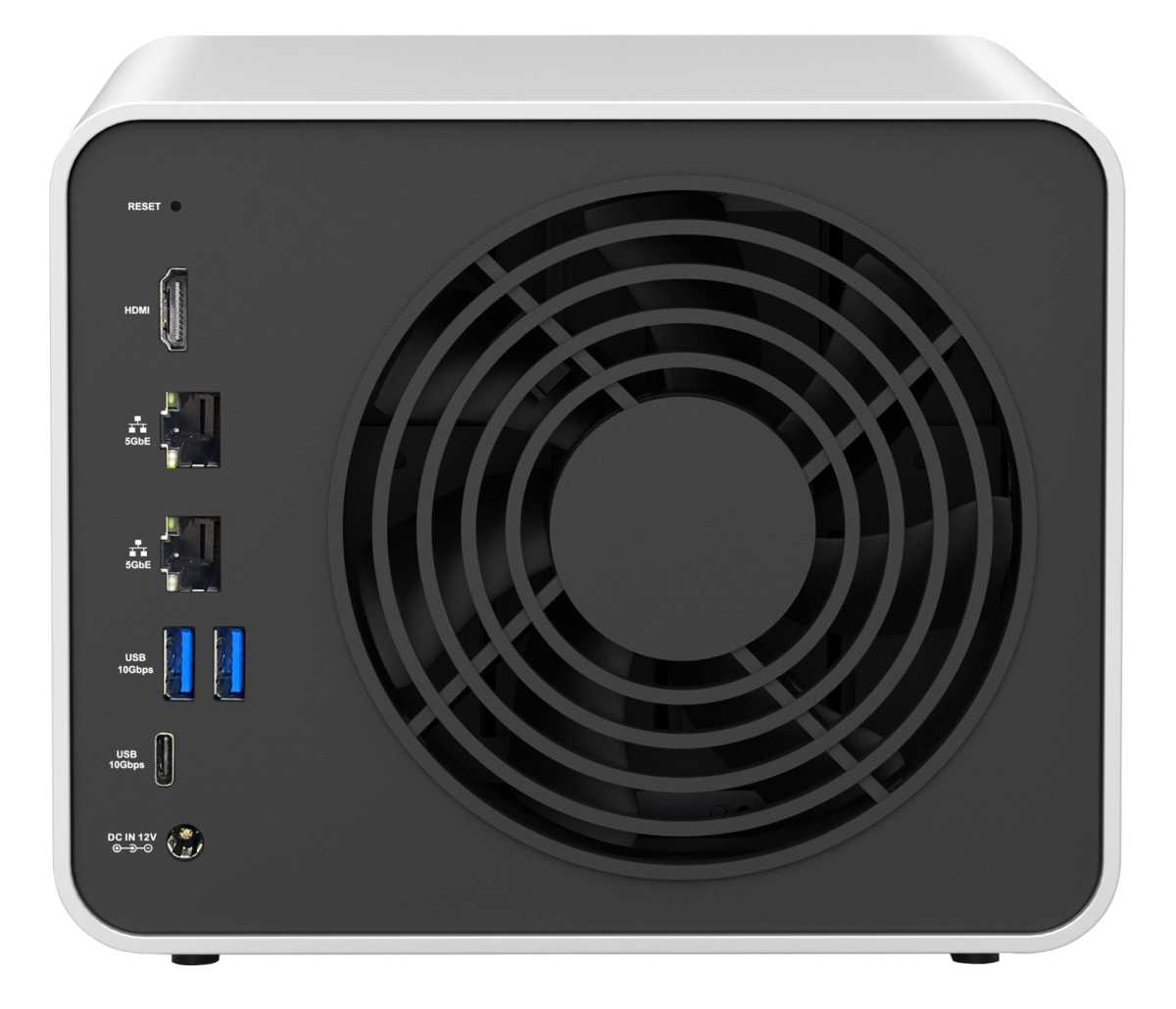
The front of the unit provides access to the four drive bays, as well as the power button and a single 10Gbps USB Type-A port. The back is home to an additional pair of 10Gbps Type-A USB ports, twin 5Gbe Ethernet ports, and HDMI port (console use only), and a single Type-C port for diagnostics and the like. There’s also the power jack, a pinhole reset button, and a rather massive exhaust fan.
The back of the F4-425 Pro with its dual 2.5Gbpe and 10GBps Type-A ports. There’s a Type-C port but it’s only for diagnostics. The HDMI port is for console (command prompt) use only.
The processor inside of our test unit was a capable 8-core Intel N350 with a substantial 16GB of DDR5 onboard. That’s plenty of power for advanced tasks like virtual machines and Docker.
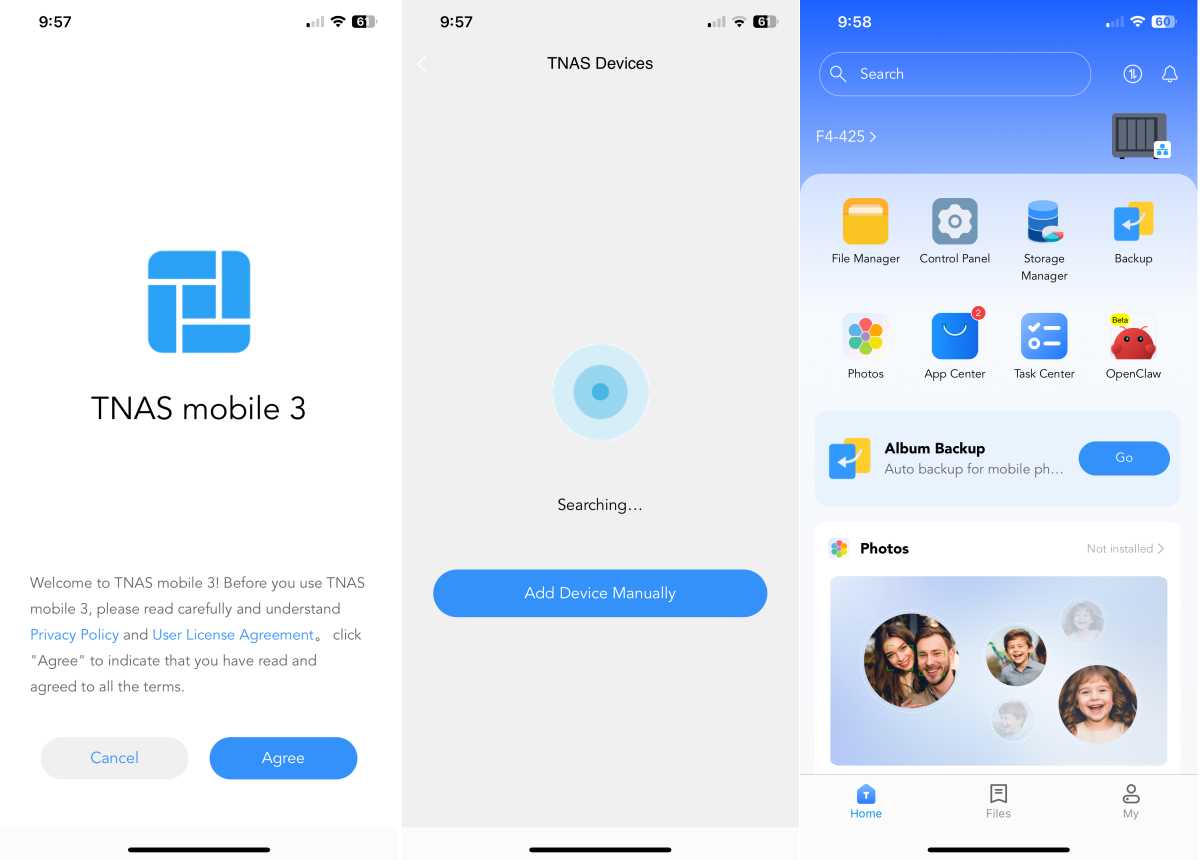
TerraMaster also provides several apps for backup up mobile devices, and even controlling the box.
The TNAS mobile app on install and first use.
TerraMaster provides 2-year warranty on the F4-425 Pro. And thankfully, the company now also provides a downloadable PDF user’s guide.
How is the F4-425 Pro’s setup?
Adding drives to the tool-less trays is largely painless: slide them out, pop out the side rails, slip in the 3.5-inch HDD and replace the side rails. Screws are provided for 2.5-inch hard drives or SATA SSDs. As described above, you’ll need to remove the outer shell to access the three PCIe 3.0 NVMe slots.
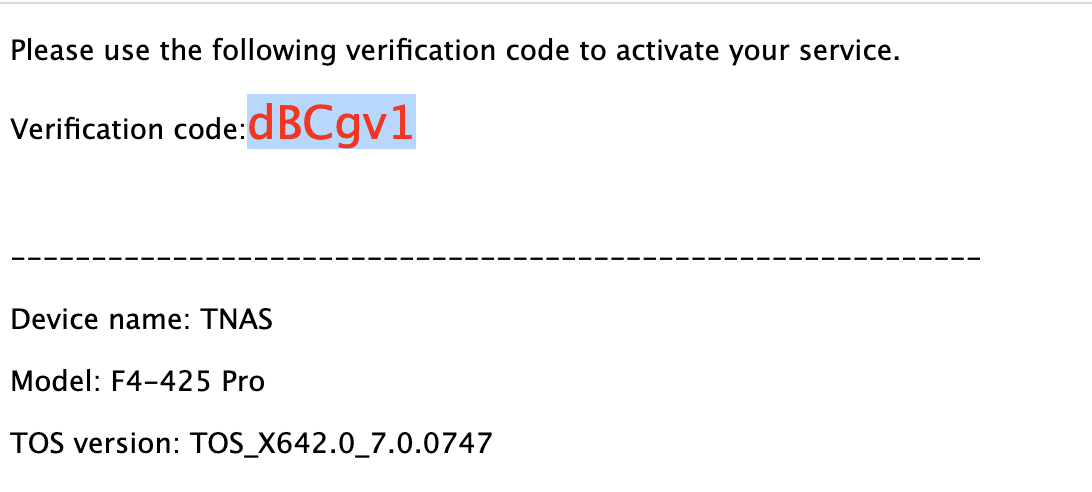
lWhen you first boot the F4-425 (and most TerraMaster NAS) it presents a dialog asking for your email address to receive a code. That’s of course after you find its IP address (E.g. 192/168.1.110) and visit with your browser. Below the email field, in very light lettering, is the ability to bypass this step.
If you choose, you can activate your online presence with TerraMaster during setup.
Alas, you still have to enter your email. I don’t like sending info to a company until I’m very familiar with the hardware and said company. I wish TerraMaster would abandon this practice ad to be blunt–it’s none of their darn business.
To be fair, you can put the F4-425 Pro into “Security Isolation Mode” (Control Panel / Security/ Security Isolation Mode) after setup, to prevent any further traffic outside of your local network. The F4-425 also features a highly configurable firewall if that’s too drastic a measure for you.
What is the F4-425 Pro’s operating system and software like?
The F4-425 Pro delivered our first look at the latest version 7 of TOS (TerraMaster Operating System), a substantially feature-equivalent but far better-performing version of the operating system (version 6) than I tested with the F2-425. Especially in regards multitasking.
Beyond that, it appeared to me to be more evolutionary than revolutionary, despite heralding itself as the first AI-enabled NAS OS. It does allow you to install OpenCLAW which enables normal language access to various features.
TerraMaster says OpenCLAW makes things easier, but the real issue with most new NAS users is that they don’t know what to ask, let alone how to ask it. Actually, thinking about it, that’s the issue with just about any AI system. Note also that the minute I opened OpenCLAW, the F4-425 Pro’s fan kicked into high gear. It takes some juice.
That said, I quite like TOS, it’s as well laid out as the QNAP and Synology equivalents, and perhaps a bit more intuitive. However, I found version 7 a bit buggy. Rough around the edges, as it were.
I stuck with TOS 7 as it’s so much quicker at everything than version 6 but there were some annoyances such as the inability to include spaces in a backup job name, and not automatically resuming jobs that were not completed in the last session. I’d also be careful doing searches and deleting the results with the file manager.
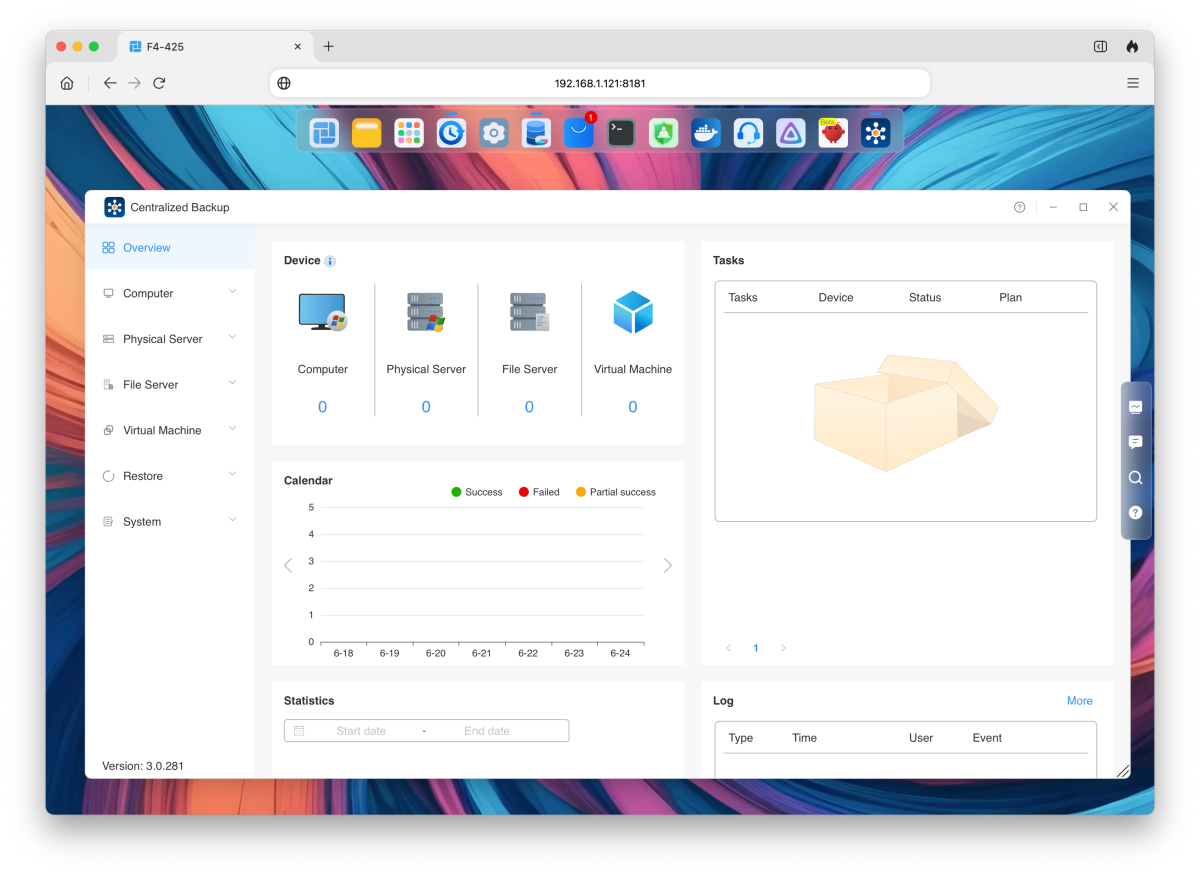
There are also tons of apps for backup, surveillance, development, and multimedia streaming. Below is my favorite: Centralized Backup, which can back up from numerous sources (SMB, FTP, etc.) without the need to install clients on every machine. Simply share the folders or files you want across the network, locate them and create a job to back them up.
I love Centralized Backup’s ability to back up my shared folders without me having to install client software on the involved computers.
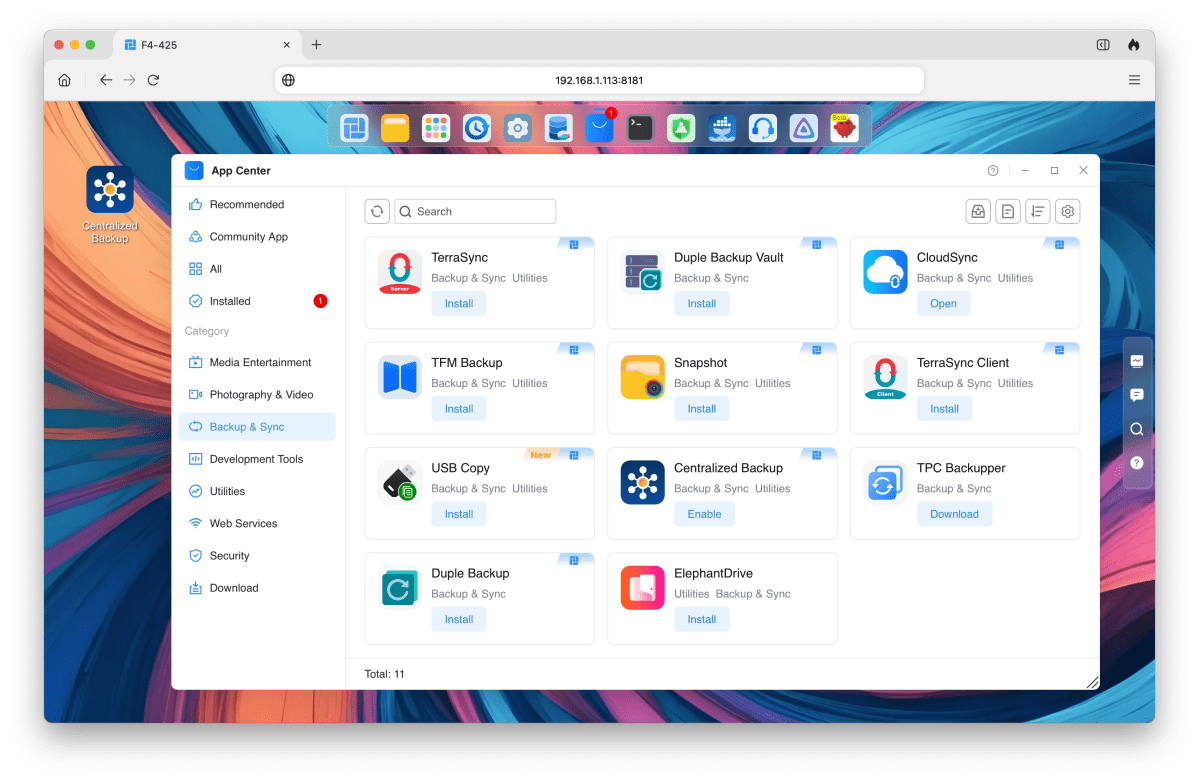
Centralized Backup, along with CloudSync (back up to a host of online services) are my favorite TOS backup apps, but there are quite a few others (Duple Vault, Elephant Drive, etc.) as well as TerraMaster’s own client-based, portal driven TerraSync. There’s also a handy folder mirroring utility (TFM) that you can use across volumes.
eAll the backup and sync options offered by TOS 7.
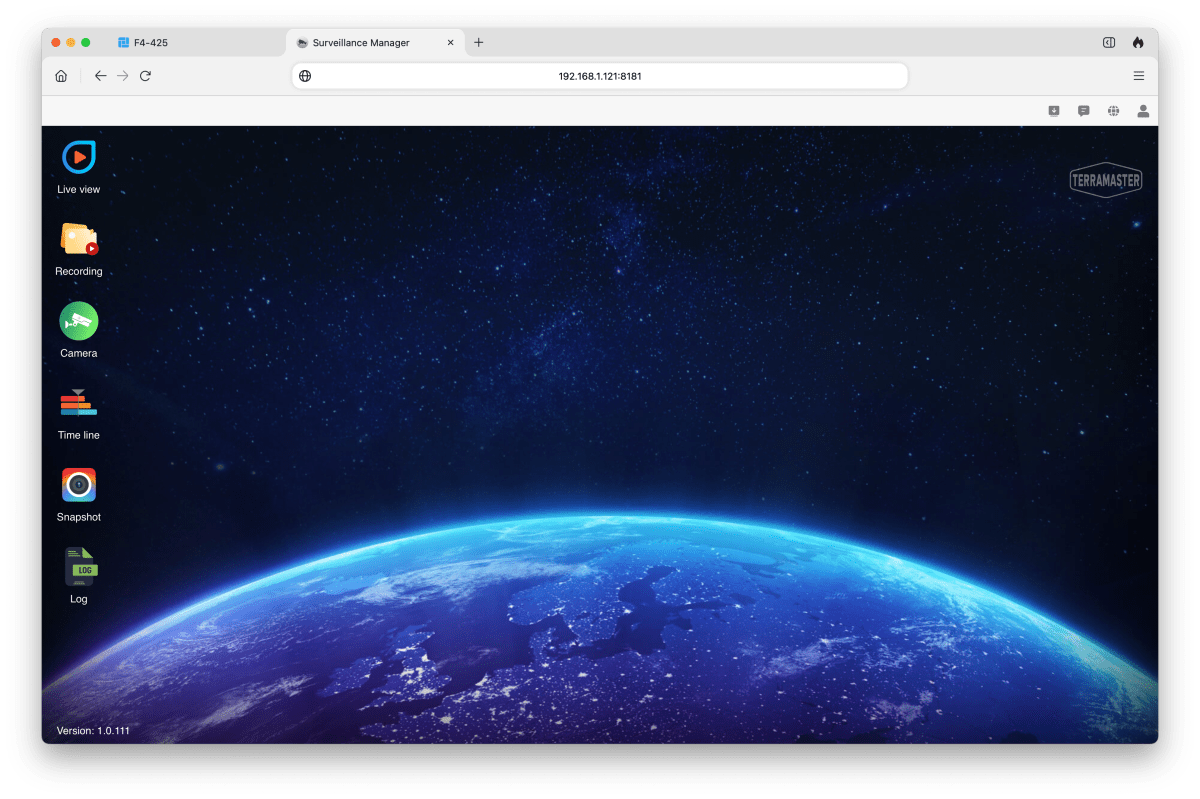
Want to keep tabs on your house? TerraMaster includes Surveillance Manager (shown below), which offers support for unlimited cameras. This is in distinct contrast to Synology and QNAP which limit you to one or two cameras so they can sell you more licenses. This is one of the best reasons to opt for a TerraMaster NAS box, however, note that you’ll have to configure your router to reach the app remotely.
The Surveillance Manager opens in a separate tab and allows up to tk IP cams.
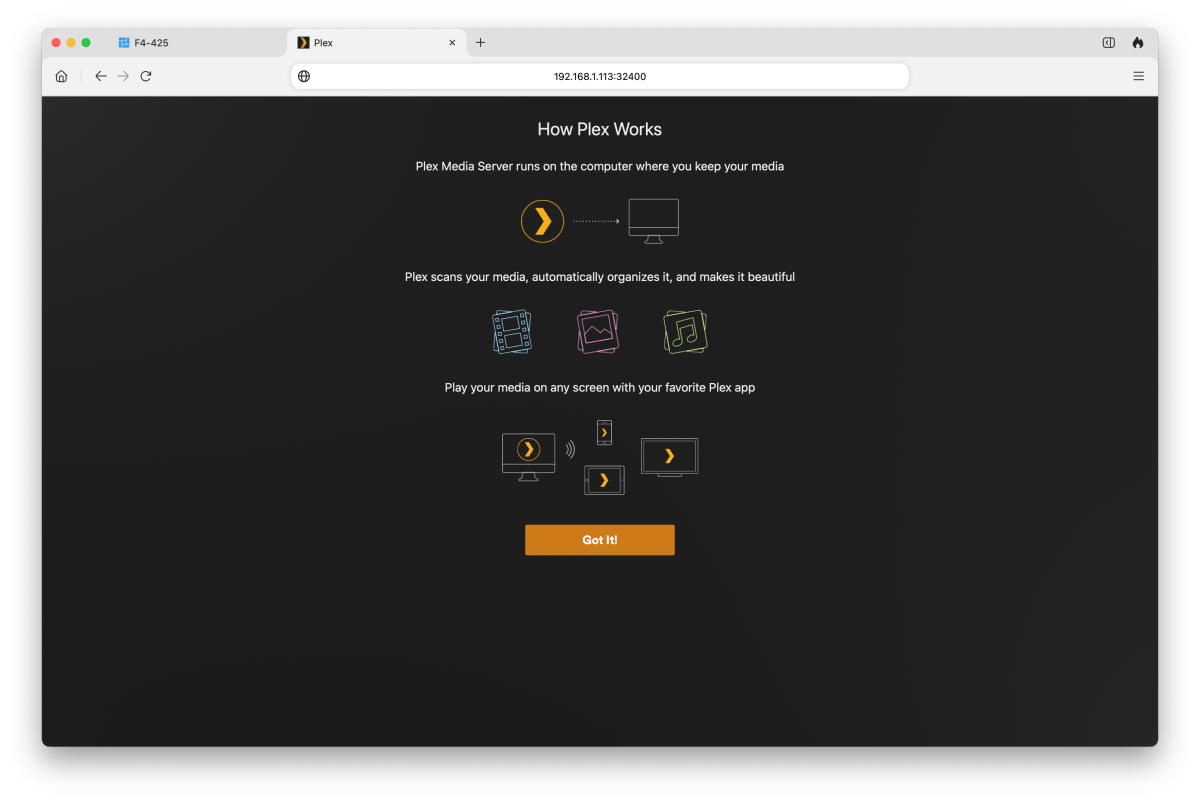
While I use TOS’s DLNA Multimedia Server to stream movies to my TV, TerraMaster also includes the extremely popular Plex (shown below), as well as Jellyfin and Emby for fans of those systems.
The extremely popular Plex Media Server is present in TOS 7.
TRAID is TerraMaster’s hybrid RAID solution (all NAS vendors have one these days) that combines mirroring (RAID 1) and parity (RAID 5). It allows you to combine drives of different sizes while using more of their capacity than standard RAID modes do.
Generally speaking, most RAID modes allow you to use only the capacity of each drive in the array equal to that of the smallest drive in the array. Combine a 4TB HDD and an 8TB HDD in RAID 0 (striping) or RAID 1 (mirroring), and only 4TB of the 8TB drive is used, while the rest just sits there. TRAID and similar solutions let you employ the otherwise wasted capacity as another volume, or part of one.
How much is the F4-425?
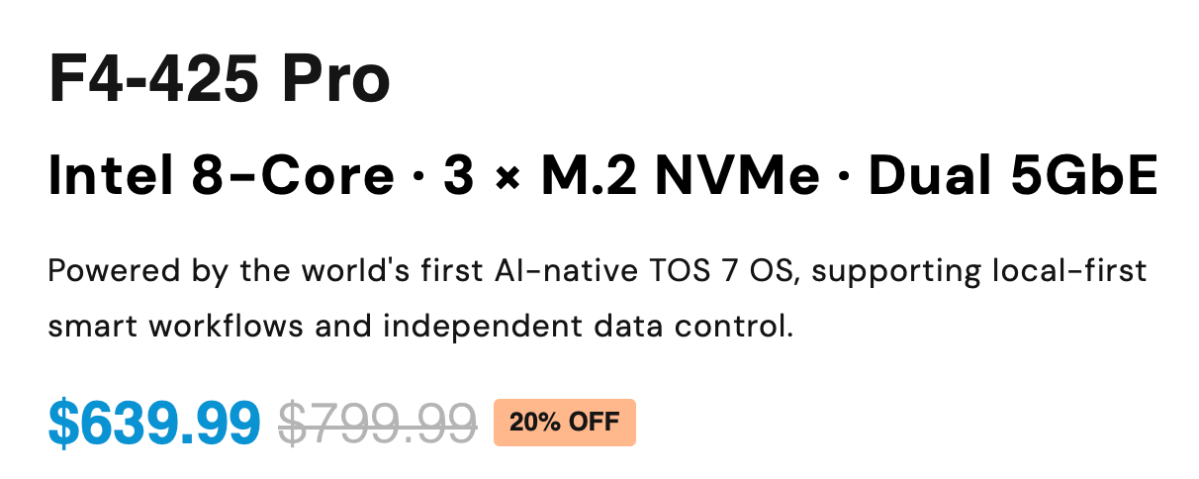
The F4-425 Pro with the Intel N350 retails for $799, but was on sale at TerraMaster’s site for $639 at the time of this writing. From TerraMaster’s Amazon store make that $699.
There’s a cheaper $569 Intel N305/8GB version of the F4-425 Pro available, as well as less endowed $599 F4-425 Plus (Intel N150 processor, 16GB), and $429 F4-425 (quad-core, 4GB) models if the Pro is too pricey for you, or you don’t need to run VMs, Docker, etc.
The Plus and plain versions were discounted to $480 and $344 respectively at the time of this writing. All use the same operating system and offer the same applications.
The F4-425 Pro’s price is roughly on par for a NAS box with this grade of processor, 16GB of memory and NVMe slots, but as always — shop around, though we’re fairly sure you’d be happiest with the TerraMaster.
How does the F4-425 perform?
The F4-425 Pro features dual 5Gbpe (Multi-gig) so it’s capable of nearly 600MBps when using that protocol, and around 1GBps if you aggregate the two 5Gbps Ethernet adapters. At 2.5Gbps, expect around 290MBps, and on gigabit, around 140Mbps.
There’s no Wi-Fi, but that’s not the best way to use a NAS box. You can with some (and an add-in card), but commonly NAS is connected via Ethernet directly to a router or switch.
I populated the F4-425 with a single 1.92GB Seagate IronWolf SATA SSD and two Crucial T710 PCIe 5.0 NVMe SSDs (running at PCIe 3.0 speed) and formatted with the Btrfs file system. All those SSDs are massively faster than 5Gbpe or even 10Gbpe. The test network consisted of my M4 Max Studio, an EnGenius ECS2512FP 12-port switch (8 x 2.5Gbe/4 x 10Gbe), and PCWorld’s 10Gbe Intel testbed.
I tested with both a single 5Gbe Ethernet connection and both 5Gbe Ethernet ports bonded using TOS 7. However, there was so little improvement with the ports bonded, I’m showing only the 5Gbe results. As to that…
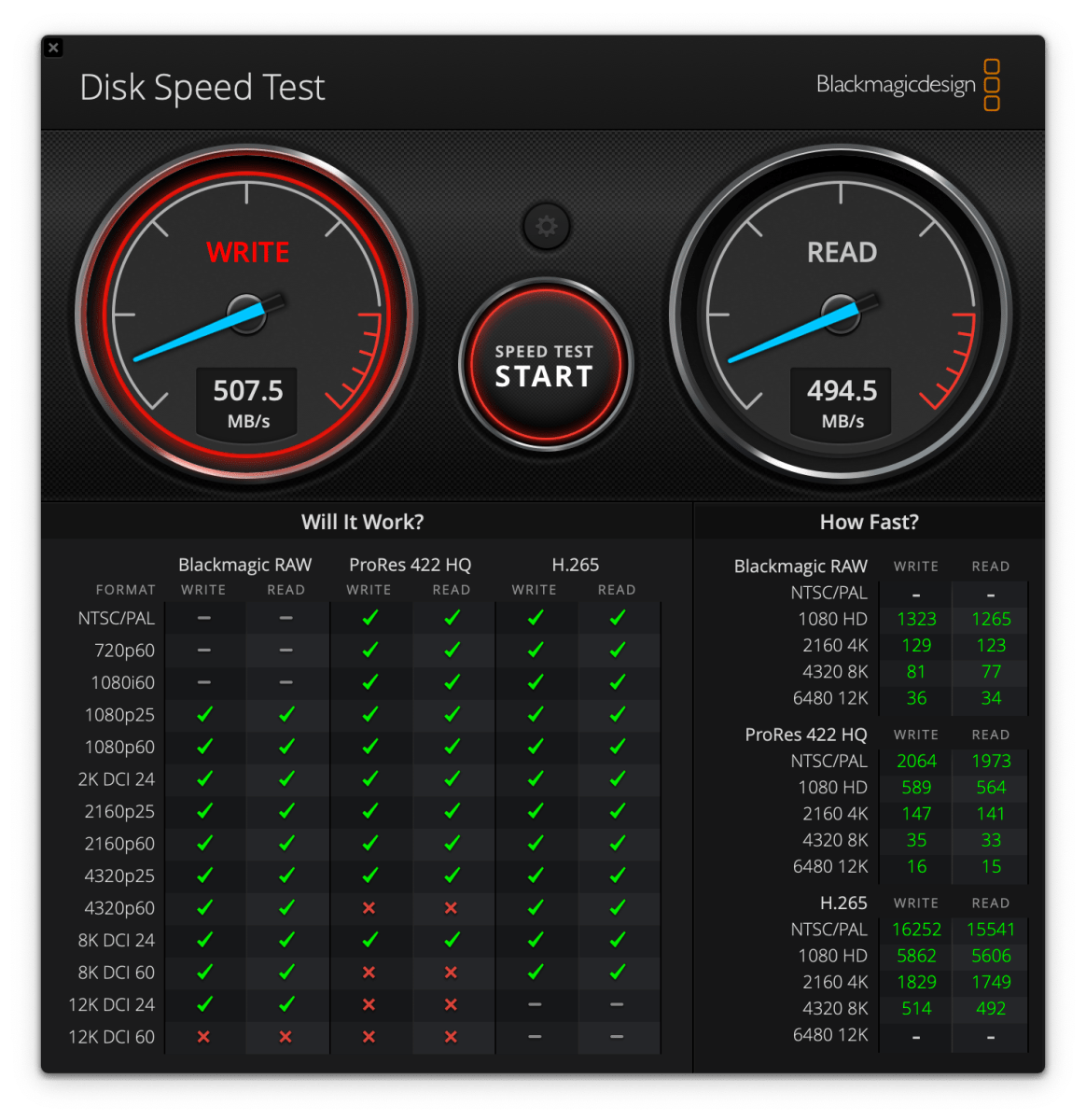
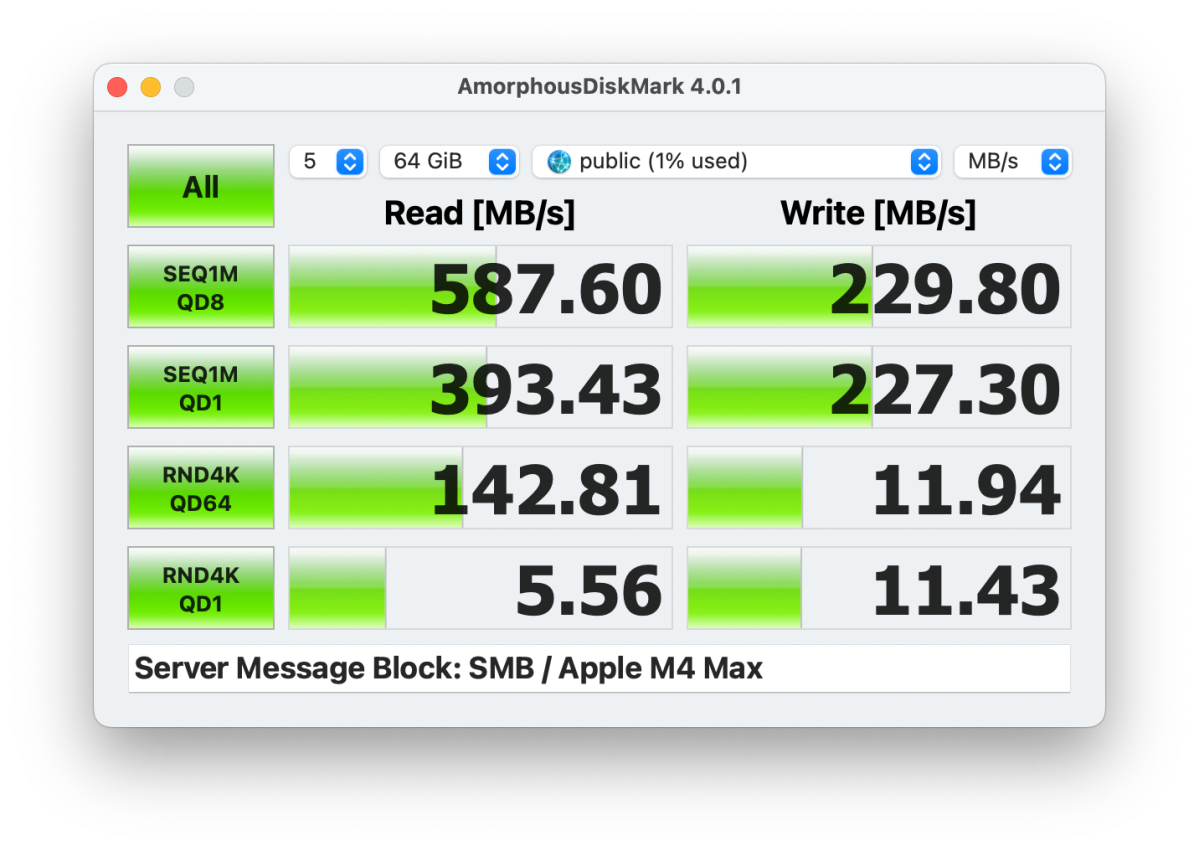
Disk Speed Test was quite complimentary of the F4-425’s throughput, and more so than AmorphousDiskMark.
Disk Speed Test was complimentary of the F4-425’s throughput, and more so than AmorphousDiskMark.
AmorphousDiskMark writes more data at a time than Disk Speed Test, which may be the reason for the lower write number. That said, CrystalDiskMark on the PC showed even greater performance that Disk Speed Test — 587MBps reading and 580GBps writing.
AmorphousDiskMark writes more data at a time than Disk Speed Test, which may be the reason for the lower write number. That said, CrystalDiskMark on the PC showed even greater performance that Disk Speed Test — 587MBps reading and 470GBps writing.
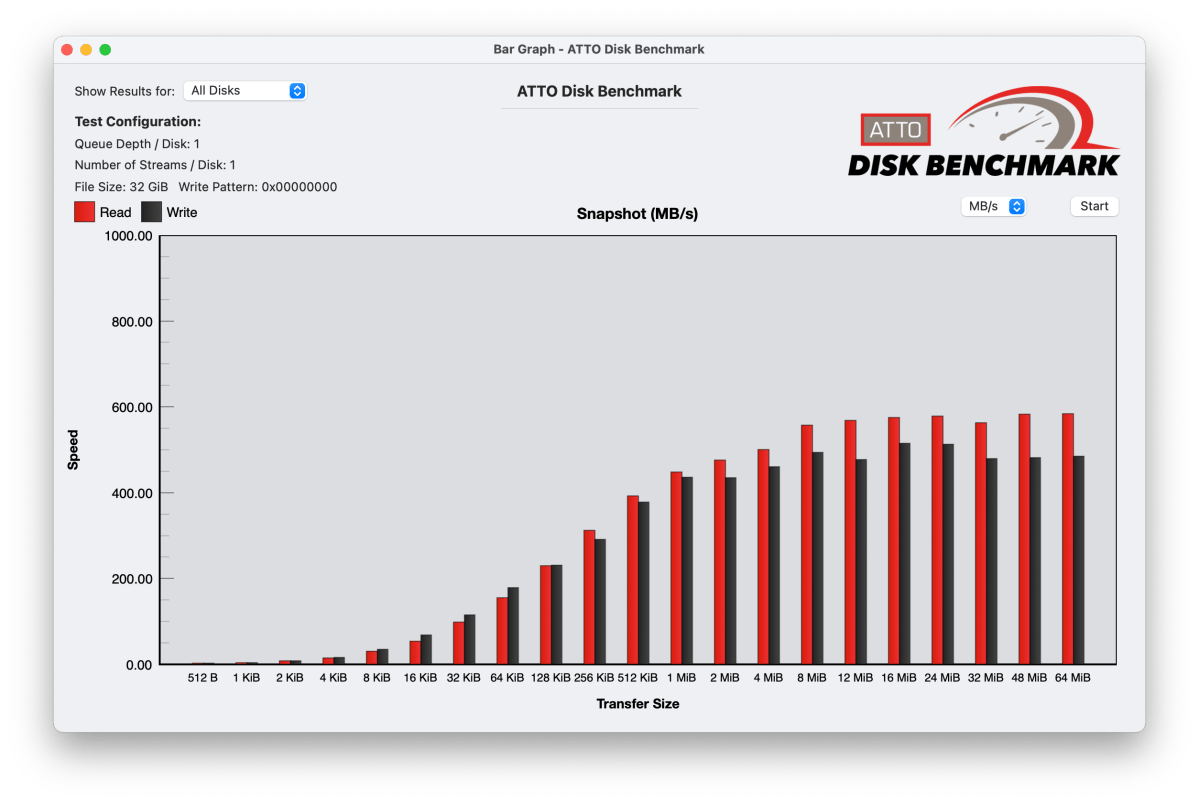
ATTO was more in line with Disk Speed Test than AmorphousDiskMark.
ATTO was more in line with Disk Speed Test than AmorphousDiskMark.
As to sprightlyness, I banged on the interface and apps pretty hard. The F4-425 Pro was extremely responsive. Tasks completely quickly, including firmware updates and reboots. The latter were far faster than what I’m used to with my older NAS boxes. Multi-tasking, which I complained about with TOS 6 on the F2-425 was light years better. Thank you TOS 7! And of course, more memory and a faster processor.
TerraMaster’s advertising teases over 1GBps performance. However, that’s simply totaling two separate 500GBps connections working separately. Expect what you see above.
Note also that there is a list of compatible NVMe SSDs found here. I’ve had issues with the F8 SSD Plus with some that weren’t supported, though the F4-425 seems fine with the same SSDs. I also found that some software required re-enabling after reboots or shutdowns in TOS 7.
Should I buy the F4-425 Pro?
If you need a very fast 4-Bay NAS box, the TerraMaster F4-425 fits the bill. Though you should expect a couple of software glitches here and there with TOS 7 that QNAP and Synology don’t suffer. That said, for creating a surveillance system, the lack of additional fees makes it top dog in that department.
Apple lawsuit against OpenAI has reached its first major procedural challenge, with the ChatGPT developer asking a US federal judge to dismiss allegations that it acquired or used trade secrets taken by former Apple employees.
OpenAI submitted its 31-page dismissal motion on Wednesday in the US District Court for the Northern District of California. The filing argues that Apple has not adequately identified protectable trade secrets or alleged facts showing that OpenAI misappropriated confidential information.
Apple filed the case on July 10 against OpenAI, its io Products hardware operation, former Apple Vice President Tang Yew Tan, and former electrical engineer Chang Liu. The complaint accuses the defendants of obtaining information connected to Apple’s product development, manufacturing, components, testing, and supply chain operations.
The allegations have not been proven, and OpenAI denies possessing or seeking Apple’s trade secrets. US District Judge Edward Davila must now decide whether Apple’s complaint contains enough factual detail for the litigation to continue.
OpenAI Challenges the Apple Lawsuit
OpenAI’s motion focuses initially on how Apple described the information it claims was stolen. According to OpenAI, the complaint relies on generalized product-development categories without identifying the protected information with enough precision.
Trade secret plaintiffs face a difficult balance at the beginning of litigation. Apple must describe the protected material sufficiently to establish a plausible legal claim, but revealing the material publicly could expose the same information it is trying to protect.
Sensitive details can later be handled under seal or through a protective order. At the dismissal stage, however, Apple must still provide enough information for the court to distinguish genuine trade secrets from general engineering knowledge, employee experience, or skills acquired through years of work.
OpenAI argues that Apple has not crossed that threshold. Its motion says the complaint fails to establish ownership of a protectable trade secret and does not plausibly allege that OpenAI acquired, disclosed, or used such information.
The filing also disputes the commercial premise behind Apple’s accusations. OpenAI says it is developing products that are different from Apple’s hardware and has no need or desire to use the iPhone maker’s confidential material.
That position does not settle whether information was taken. A company can potentially misappropriate trade secrets even when its eventual product has a different design. The court’s immediate task is narrower: determining whether Apple has alleged facts that could support its claims if those facts are later proven.
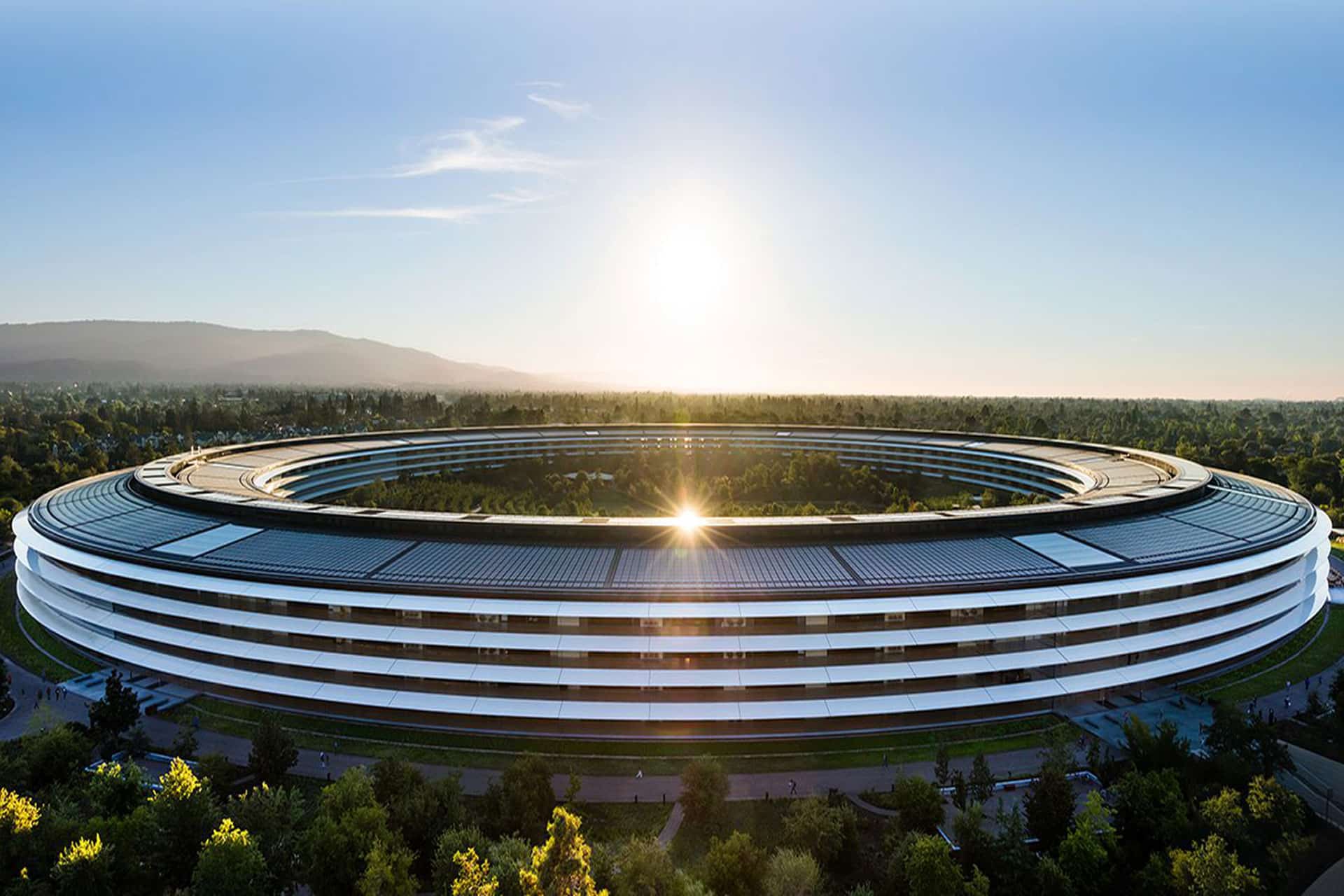
Apple Park | Image Source: Google
Disputed Access to Apple Information
Apple’s complaint centers partly on Chang Liu, who spent eight years working as a senior system electrical engineer at the company before joining OpenAI in January 2026.
Apple alleges that Liu retained an Apple-issued computer and accessed confidential technical information after leaving. It claims he exploited residual authentication access on multiple occasions to obtain internal documents while already working for OpenAI.
OpenAI presents a different explanation. It says Apple employees contacted Liu after his departure and asked him to help locate files needed for ongoing Apple work. The company published redacted messages that it says support this account.
OpenAI argues that Apple’s systems and policies allowed personal and corporate information to become intermingled through iCloud accounts. Former employees, it says, could retain access to Apple files without requesting it or realizing that access remained active.
The motion maintains that Apple cannot treat the foreseeable effects of its own access-management practices as proof that former employees intentionally stole data. Apple, in contrast, alleges that its records document repeated access to restricted information rather than an accidental discovery of lingering permissions.
These competing accounts are likely to become central if the case enters discovery. Authentication logs, downloaded files, device records, internal communications, and employment timelines could establish whether access was deliberate, what information was obtained, and whether it reached anyone working on OpenAI products.
A dismissal motion normally tests whether the complaint states a legally sufficient claim. It is not a trial, and the judge is not expected to resolve every factual disagreement using competing evidence at this point.
Tang Tan and OpenAI’s Hardware Team
Apple separately accuses Tang Tan, OpenAI’s chief hardware officer, of seeking confidential information from Apple employees during recruiting conversations.
Tan spent more than 24 years at Apple and worked on products including the iPhone, Apple Watch, AirPods, and iPod. He later helped establish io Products with former Apple design chief Jony Ive and other collaborators. OpenAI acquired the hardware company as part of its effort to create a family of devices built around artificial intelligence.
Apple alleges that Tan used confidential project names, retained internal materials, and encouraged job candidates to discuss unreleased components or bring physical parts to interviews. OpenAI rejects the claim that these interactions formed a coordinated effort to collect Apple secrets.
OpenAI says Tan repeatedly instructed employees that confidential information from previous employers could not be brought into its organization. It also offers an alternative explanation for an Apple offboarding document found in his possession, arguing that Tan retained it to help incoming employees comply with Apple’s departure procedures.
Apple’s position is that the document and recruiting communications must be examined alongside the other alleged conduct. It describes the events as part of a connected campaign rather than isolated employment or administrative issues.
The dispute comes during intense competition for engineers capable of developing consumer AI hardware. Apple alleges that more than 400 former employees have moved to OpenAI, although hiring people from a competitor does not by itself establish trade secret misappropriation.
A company must generally connect recruitment to the acquisition, disclosure, or use of protected information. OpenAI is relying heavily on that distinction, presenting Apple’s lawsuit as an attempt to respond to employee departures and its difficulties competing for AI talent.
Image Credit: Getty Images
Apple Seeks Immediate Restrictions
OpenAI’s dismissal request arrives shortly after Apple asked the court for a preliminary injunction. Apple wants restrictions imposed while the lawsuit proceeds, arguing that it could suffer harm if its confidential information is used during OpenAI’s hardware development.
The requested relief would prevent OpenAI and the individual defendants from acquiring, accessing, using, or disclosing the alleged trade secrets. Apple has also requested expedited discovery and forensic examination of relevant devices and accounts.
OpenAI says those restrictions are unnecessary because it does not possess or want Apple’s protected information. It has described Apple’s request as based on false information and has offered to cooperate in addressing specific concerns.
The two companies also disagree over their communications before the lawsuit. Apple initially said its concerns had been raised with OpenAI months earlier. OpenAI responded that Apple’s outside lawyers contacted the wrong person after confusing names and incorrectly described a conversation with OpenAI’s general counsel.
OpenAI says Apple did not present the specific accusations before filing the case and that the companies had previously discussed resolving any access issues. Apple has since provided additional information in support of its injunction request, including allegations involving other former employees.
These disputes have moved beyond ordinary court filings. OpenAI published messages and emails on its website to support its version of events, calling Apple’s lawsuit aggressive and poorly investigated. Apple has primarily presented its account through formal legal submissions.
Judge Davila could dismiss some or all of Apple’s claims, deny the motion, or allow Apple to amend its complaint with more specific allegations. Even a dismissal would not necessarily end the case if permission to revise the complaint is granted.
The next scheduled public test is an October 1 hearing covering Apple’s preliminary injunction and request for early discovery. That proceeding may determine whether OpenAI faces immediate limits on its hardware work before the underlying trade secret claims receive a full evidentiary review.

 Login