A team led by the National Museum of Denmark has worked out, for the first time, what people actually cooked in the pots of Hama, an ancient city in western Syria, roughly 4,500 years ago. By analyzing animal bones, plant remains, and fat residues absorbed into the vessel walls, the researchers found a surprisingly varied […]
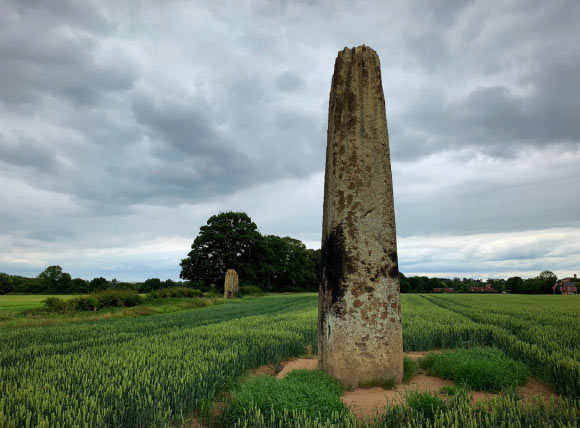
A Curtin University-led research team has successfully identified the mysterious origin of several 4,000-year-old 25-ton stones, which ancient architects used to construct Britain’s iconic Devil’s Arrows, as Birmingham Rocks in North Yorkshire, over 11 miles (18 kilometers) from the monument’s location.
The researcher behind the first-ever geological source identification of the ancient stone monument said the quarry’s distance and the work required to move such massive stones suggest the ancient architects intentionally selected the material used to construct Devil’s Arrows.
Unraveling the Mysterious Origin of the 4,000-Year-Old Devil’s Arrows
Announcing the discovery, the research team, which included scientists from the University of York, UK, noted that the famous stone pillars stand up to seven meters (22 feet) tall. The team also said the site is unusual because such alignments are rare in lowland settings. Still, researchers have struggled to locate the mysterious origin of the massive stone pillars used to create the over 4,000-year-old monument.
The Curtin-led team noted that previous studies determined that the stones used in Devil’s Arrows were transported to the site during the Late Neolithic or Early Bronze Age. This range means the site could have been constructed as early as 2000 BC.
Lead author Dr Anthony Clarke, from Curtin’s School of Earth and Planetary Sciences, noted the significant challenges with moving the stones over such difficult terrain.
“Each stone weighs more than 25 tonnes, so moving them would have required incredible planning, coordination and engineering skill,” the researcher explained.
Dr. Clarke also highlighted the value this effort suggests these ancient Britons “placed real importance” on the material used in the monument’s construction and the landscape itself.
“It wasn’t just about convenience – the location the stones came from likely held meaning for them,” the researcher explained.
Low Impact Sampling Method Confirms Ancient Stone’s ‘Fingerprints’
To unravel the ancient site’s mysterious origin, the researchers placed tiny pieces of low-adhesion tape on the stones and then removed them. The team said this “low impact” sampling process collected several tiny mineral grains on the tape without measurable damage to the ancient monuments.
According to the statement announcing their solution to the Devil’s Arrows origin mystery, the team performed an analysis of the “fingerprints” of the selected grains. The results matched material from Brimham Rocks.
Critically, the mystery’s solution also addressed the possibility that glacial movement or other natural processes moved the stones over the needed distance. Instead, the team said their results demonstrated that “the stones were intentionally transported by people.”
“Our research shows these stones weren’t simply taken from the nearest available source – they were deliberately chosen from a challenging landscape 18 kilometers away,” Dr Clarke said.
Clarke also said that the results eliminate the nearer site of Plimpton Rocks, which “had previously been identified as the probable source of the stones.”
“Our findings instead point to Brimham Rocks, showing that prehistoric builders transported these enormous stones significantly further than thought,” he explained.
Solving Similar Stone Monument Origin Mysteries
After discovering the mysterious origin of the 4,000-year-old pillars, Dr Clarke said the team will apply its low-impact sampling method to similar stone monument origin mysteries. The team also hopes to conduct future “targeted excavations” at the Devil’s Arrows site and the newly identified source.
Dr. Clarke said that analysis might help explain how these ancient architects moved the massive stone pillars several miles over rugged terrain over 4,000 years ago. The research said the work could also unravel “how these extraordinary monuments were constructed.”
Co-author Dr Jim Leary from the University of York echoed Dr Clarke’s sentiments, while also suggesting that the team’s findings ‘reshaped’ how researchers understand the art of prehistoric monument-building.
“These results show that ancient communities were making deliberate and meaningful choices about where their stones came from,” Dr Leary explained.
The York researcher said their solution to the Devil’s Arrows origin mystery also “highlights the importance of landscape and shared belief systems, as well as the remarkable effort involved in transporting and raising stones of this size.”
Christopher Plain has spent the last six years as Associate News Editor and Head Science Reporter at The Debrief. Follow and connect with him on X, learn about his novels at plainfiction.com, or email him at christopher@thedebrief.org.
Around 1590 BCE — more than 800 years before Rome was founded, and before Tutankhamun was even born — a small number of people in what is now southeastern Poland started eating a cereal that had never grown in their fields. It wasn’t a local crop, and it didn’t belong to any plant known elsewhere […]
Scientists from Curtin University and the University of York have pinpointed the origin of the Devil’s Arrows, the three towering gritstone megaliths that have stood on the edge of Boroughbridge, Yorkshire, for roughly 4,000 years, ending a long-running archaeological debate.
Deep within ancient chamber tombs where elite members of society in ancient Greece and Crete were once laid to rest, new evidence has emerged that these high-status individuals wore some out-of-this-world iron jewelry.
Among the most coveted jewelry worn in the Bronze Age Mediterranean world were rings that were likely made from extraterrestrial iron, according to a new study published in the Journal of Archaeological Science.
Researchers Matthieu Gounelle and Eleni Mantzourani used chemical analysis to examine more than 90 iron objects from the Bronze Age and Early Iron Age, uncovered from 33 archaeological sites, revealing that about one-third of the artifacts were likely crafted using iron that fell from space.
Although iron harvested from ancient meteorites accounted for at least 10 of the rings the researchers examined, another three “might deserve further examination,” the study’s authors say, in new observations that indicate these ancient extraterrestrial adornments “may have been popular power symbols among prominent individuals” that included the Mycenaean and Minoan palatial elite.
Yet despite their apparent significance, the otherworldly fashion trend involving these otherworldly rings seems to have mysteriously vanished by the 12th century BCE, for reasons that remain unclear to researchers.
Meteoritic Iron as a Status Symbol
Using portable X-ray fluorescence, or XRF, to assess these rare artifacts in various museums where they are kept, most of the objects were found to contain very little nickel, if any at all. This is consistent with iron produced using smelting processes from the periods in question, which relied on terrestrial ores.
However, 13 of the objects possessed elevated levels of nickel, which hinted at the likelihood that some of these ancient rings had been crafted with metal originating in meteorites, which contain far more nickel than smelted varieties of iron do.
Another intriguing discovery the researchers made was that each artifact suspected of being made from meteoritic iron was either a whole or fragmentary signet or bezel ring, combining the suspected meteoritic iron with gold, silver, or bronze. Most were also found in various chamber tombs alongside other luxury goods, adding to the likelihood that these unique artifacts may have been considered symbols of status or authority.
Where Did Ancient Greeks Obtain Extraterrestrial Iron?
However, another mystery involves the source of the meteoritic material, which remains uncertain since extraterrestrial iron was uncommon in ancient Greece. Because of this, the team suspects that one reason for this material’s role as a status symbol may have been not just its otherworldly nature, but also the fact that it was likely imported.
“Given the rarity of meteorites in Greece and the established trade networks during the Bronze Age, we propose that the source of the raw meteoritic material was Egypt,” the team writes, “where meteorites are numerous due to the abundance of deserts.”
Several famous examples of meteoritic iron have been recovered from Egypt, which include a dagger found among the items entombed with the Pharaoh Tutankhamun.
The abundance of rings made from this extraterrestrial metal contrasts with the more common iron objects that appear to have been made from smelted material. This suggests that ancient metalworkers recognized the distinction between the materials, and ascribed higher value to the far rarer meteoritic forms of iron.
An Otherworldly Fashion Trend Goes Missing
Curiously, the researchers also found that by around the 12th century BCE, this otherworldly fashion trend appears to have almost completely vanished, and for reasons that remain unclear.
Possible reasons for this may include interruptions to trade networks, political upheaval, or simply changes in trends from the period. However, one potential clue is that the ancient Greeks’ production of meteoritic iron rings seems to have ended coinciding with the collapse of the Mycenaean palace system.
“Such a development could be related to economic, social or political changes,” the team speculates, although they also acknowledge more mundane possibilities.
“It is also possible that the meteoritic finger ring fashion, almost exclusive to Minoan and Mycenaean Late Bronze Age, has ‘naturally’ faded away as does any fashion,” the researchers write.
Micah Hanks is the Editor-in-Chief and Co-Founder of The Debrief. A longtime reporter on science, defense, and technology with a focus on space and astronomy, he can be reached atmicah@thedebrief.org. Follow him on X @MicahHanks, and at micahhanks.com.
A chance discovery in central Turkey is offering archaeologists a rare glimpse at the remarkable technical skills of one of the most influential civilizations of the ancient world.
The tiny bronze artifact, now on display at the Boğazköy Museum, is a small, seemingly simple figurine depicting an individual fitted with a long, pointed cap. But beyond its unassuming appearance is something far more complex, and which offers an unprecedented look at the advanced metalworking techniques and religious worldview of the Hittites.
Crafted nearly 3,500 years ago, archaeologists believe the figurine represents a Hittite storm god, displaying remarkable craftsmanship for its era. Uncovered by a resident in the Alaca district of Çorum Province, the figurine’s discovery site marks an area that once placed it in the heartland of the ancient Hittite Empire.
Fortunately, rather than being kept as a memento, the rare find was handed over to museum authorities, who have now placed it on display for the first time as one of the newest additions to the museum’s permanent collection.
The tiny figurine, cast from arsenical copper, is now on display at the Boğazköy Museum (Image Credit: IHA)
A Hittite Storm God of Small Proportions
At only around three inches tall, experts determined that the tiny figurine was cast from arsenical copper—a material that was widely implemented during the height of the Bronze Age, although it was rarely preserved in a form conveying such intricacy.
Finding a small artifact from this period that displays such remarkable craftsmanship conveys the level of sophistication of its creator, although that’s only one part of what makes the artifact so unique.
The figurine also displays advanced riveted assembly techniques—an invention of Hittite metalworkers from the era, as evidenced by mortise sockets and pinholes visible on the artifact’s shoulders and lower garment areas. This indicates that the arms and legs were crafted separately from the main torso and head and were later attached to the body, like how modern action figures and other toys are assembled.
For its time, this was a sophisticated method of construction, demonstrating a remarkable level of engineering precision at very small scales. The resulting artifact is now recognized as one of the smallest Hittite metal figurines ever discovered, displaying 3,500-year-old advanced manufacturing techniques at surprisingly small scales.
A Tiny Artifact Conveying Ancient Beliefs
Going beyond just the technical precision the ancient figurine represents, it also provides insights into the religious beliefs of the Hittites.
“In the Hittite religion, which was polytheistic, our colleagues have described [the artifact] as the Young Storm God,” said Ali Çalgan, current Governor of Çorum province in Turkey, at a recent ceremony that revealed the unique discovery.
According to their worldview, the storm god held one of the highest places in their pantheon of deities, given that these sorcerers of the elements could control rain, winds, and the coming of the seasons—elemental forces that were also associated with fertility and royal authority.
In ancient Anatolia, these storm deities were known by a variety of names, which included Taru, Tarhunza, Teshub, and Tarhuna. Often associated with animals like bulls, physical representations of storm gods were also conveyed in human form, as in the case of the pointy-capped example now on display at the Boğazköy Museum.
Given the artifact’s unique craftsmanship and state of preservation, which Çalgan called “one of the best examples of its kind,” the figurine represents more than merely a decorative object—it offers modern researchers a tangible connection to the ritual traditions and symbolic beliefs that shaped life in the Hittite Empire during the Late Bronze Age.
The Secret World of the Storm Gods
While the recent unveiling ceremony marks the artifact’s official public debut at the museum, archaeologists and art historians have already had an opportunity to examine the unique discovery, of which images were displayed as part of an international Hittite exhibition in South Korea, and later presented during the 8th Çorum Excavation and Research Symposium.
Officials at the Boğazköy Museum and regional authorities on the country’s antiquities say they hope the exhibition will help to further deepen the public’s interest in the rich archaeology and cultural heritage of the region. Significantly, Çorum Province is also home to nearby Hattusa, the ancient Hittite capital now recognized as a UNESCO World Heritage Site.
The young storm god now adds another example of the region’s ancient historical significance in terms of archaeological tourism in the region.
With the figurine’s discovery, we are reminded that often the smallest artifacts can have great significance and offer an unprecedented view of past human achievement. In this case, the young storm god tells a story of advanced metalworking and technological innovation, as well as artistic mastery and religious devotion in one of the ancient world’s most influential civilizations.
Micah Hanks is the Editor-in-Chief and Co-Founder of The Debrief. A longtime reporter on science, defense, and technology with a focus on space and astronomy, he can be reached atmicah@thedebrief.org. Follow him on X @MicahHanks, and at micahhanks.com.
Every ancient language that has ever been deciphered needed an anchor. Usually that’s a bilingual text, like the Rosetta Stone, or a known relative to compare it to. Linear A, the writing system of the Bronze Age Minoan civilization on the Greek island of Crete, has neither.
Linear A is described as a “language isolate” because it has no confirmed link to any known language, living or dead. As such, it has posed a significant challenge for linguists over the past century.
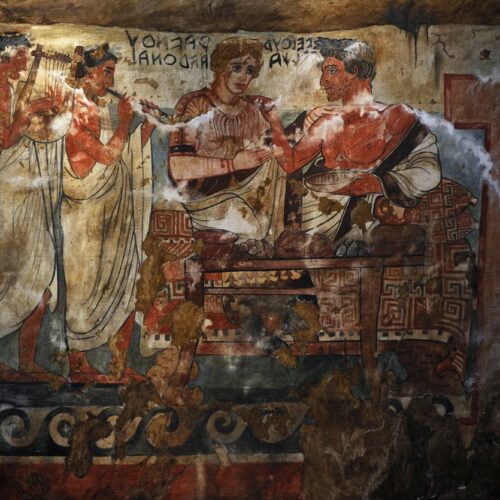
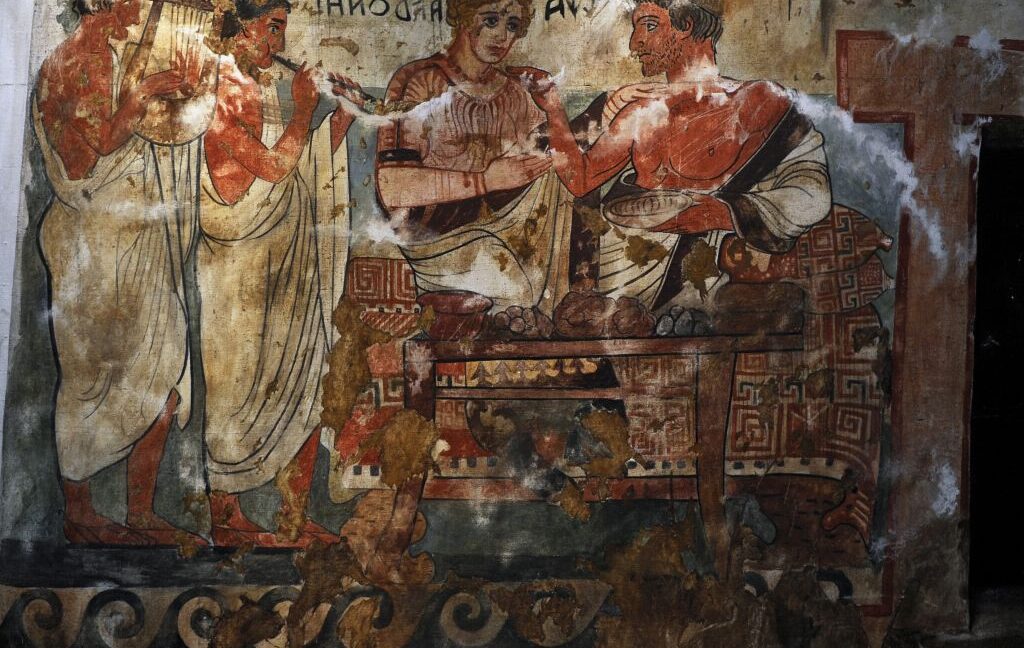
Etruscan, a language of Italy that was used before the rise of the Roman Empire, has fared only slightly better. A partial vocabulary has been collected from short funerary inscriptions, but its grammar and deeper meaning still elude linguists.
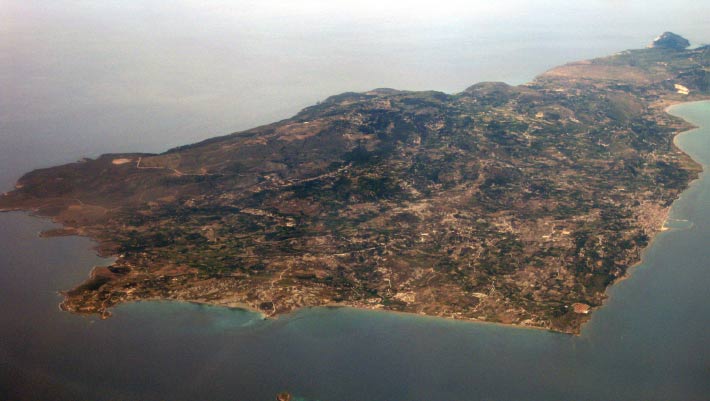
For as long as readers have pored over Homer’s Odyssey they have pictured Ithaca, the homeland Odysseus fights for ten years to reach, as an island unto itself.
New radiocarbon dates from Sala Keimada, a hard-to-reach chamber of Cueva Palomera in the province of Burgos, northern Spain, suggest that generations of people returned to the sacred space from the end of the Ice Age through the Iron Age, leaving behind art, structures and offerings.

 Login