❌

Reading view

Few Americans Use a Simple Salt Swap

Millions of Americans live with high blood pressure, a condition that can quietly damage arteries and organs over time. Controlling it can involve medicines, exercise, weight management, and changes to what people eat. Sodium is one important part of the diet. Eating too much can raise blood pressure in many people, while potassium can help […]

The post Few Americans Use a Simple Salt Swap appeared first on Knowridge Science Report.

  •  

Hurricane Polo Explodes in Pacific, UK Aphid Swarm Wipes Out 30 Million Lettuces, Glasgow Braces for Rubbish Pileup — Today’s Environmental Briefing for Thu, Sep 24 2026

Satellite view of Hurricane Polo swirling over the Pacific Ocean with visible eye structure

Across the stories today, a common thread emerges: the planet is speaking in signals — some subtle, some deafening — and the question is whether our institutions can listen fast enough to act.

Start with the signals themselves. El Niño has surged to record strength weeks ahead of schedule, and its fingerprints are already visible — from Hurricane Polo’s explosive intensification in the Pacific to the climate volatility rippling through global weather systems. In the UK, an aphid outbreak wiped out 30 million lettuce heads almost overnight, a small but telling example of how shifting conditions can upend food systems in ways no one budgets for. In Malawi, an unexplained weed overgrowth has choked Chia Lagoon, stranding farmers and fishers in flooded fields nearly seven months after the rains should have drained. These aren’t isolated oddities. They’re the planet’s early warning system, written in crop yields and clogged waterways.

Then there’s the human response — uneven, but not absent. Germany’s landmark pledge to phase out fossil fuels by 2045 marks a rare moment of policy catching up to urgency, moving beyond vague “carbon neutrality” language toward something more concrete. The UK’s decision to declassify a once-suppressed intelligence report — warning that climate breakdown is a direct threat to global security — suggests governments are quietly acknowledging what scientists have said for years, even if political will lags behind. And at UN climate talks in New York, amid what The Guardian describes as a genuinely grim mood, solar power’s continued growth offered rare, tangible hope. As Al Gore noted twenty years after An Inconvenient Truth, he’s surprised by the ferocity of fossil fuel pushback — but still believes, cautiously, that the fight can be won.

Behind the numbers are real communities adapting in real time. In the Andes, villagers near Villa de Arma are turning to ancient wetland systems as glaciers they once walked across vanish into bare rock. In Guam, resident Leevin Camacho learned his family’s water contained a pesticide banned since 1987 — a stark reminder that militarization and environmental cost are often intertwined, especially in the Pacific. And in Sarawak, Indigenous communities are still reckoning with displacement from the Bakun megadam three decades later, a cautionary tale as the world races toward a “clean” energy future that doesn’t always ask who pays for it.

It’s a reminder that progress and pressure often arrive together. Endangered birds on South Australia’s Eyre Peninsula won last-minute protection from a rocket launch site — a genuine conservation victory — even as a Norfolk Broads housing levy was quietly slashed, raising fears that environmental safeguards elsewhere are eroding. Meanwhile, olive ridley sea turtles nesting for the first time ever on California beaches offer something rarer: wonder. A signal, too, but one that invites curiosity rather than alarm — proof that the natural world is still capable of surprising us.

As the week unfolds, all eyes will be on whether momentum from Climate Week — bolstered even by a monster from Sesame Street reminding children it’s okay to feel both fear and courage — translates into follow-through. The data, the disasters, and the small human stories all point the same direction: the era of asking “if” is over. What remains is the harder work of “how fast,” and “for whom.”

The post Hurricane Polo Explodes in Pacific, UK Aphid Swarm Wipes Out 30 Million Lettuces, Glasgow Braces for Rubbish Pileup — Today’s Environmental Briefing for Thu, Sep 24 2026 first appeared on EnviroLink Network.

  •  

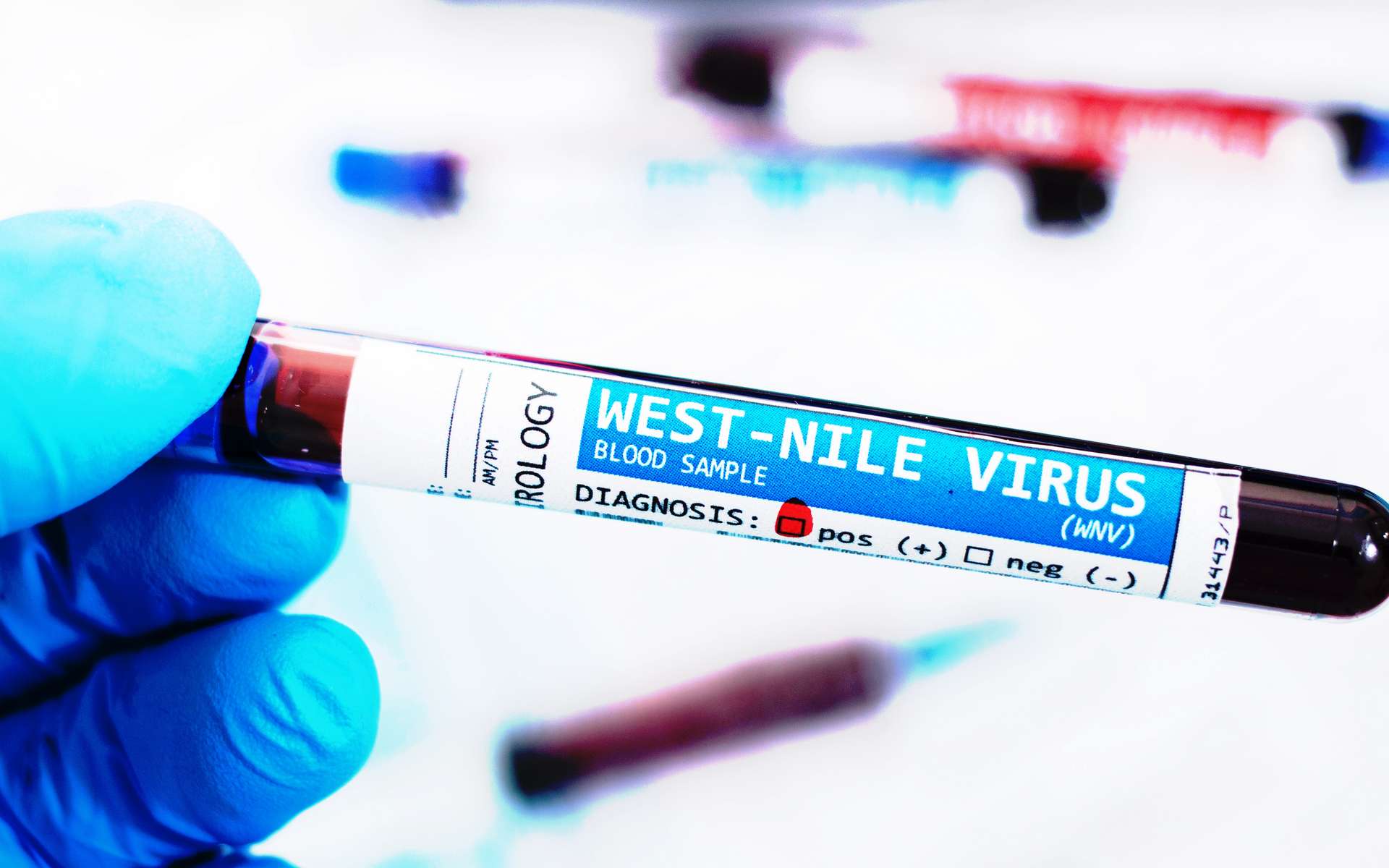
« L’année 2026 marque un tournant » : le virus du Nil occidental étend sa présence à un rythme inédit en France

La circulation du virus du Nil occidental, ou West Nile, bat des records cette année, non seulement les cas humains ont explosé, mais sa présence s'est étendue sur de nouveaux territoires métropolitains, de même qu'en Europe. Quelles sont les causes de cette hausse : climat, mutation du virus ou...

  •  

Alzheimer précoce : cette boisson très courante pourrait accélérer le vieillissement de votre cerveau

Une nouvelle étude révèle les effets néfastes d'une boisson populaire sur notre santé cognitive. Les chercheurs mettent en garde contre sa consommation excessive, qui pourrait accélérer le déclin cérébral. Découvrez les résultats alarmants de cette recherche et les recommandations des experts...

  •  

Hydratation : ce qui compte ne serait pas seulement le volume bu, mais la composition de la boisson

Plusieurs études classent le lait devant l'eau sur un critère précis : la quantité de liquide encore présente dans l'organisme quelques heures après l'avoir bu. Le résultat est réel, mais il porte sur la récupération après un effort sportif, pas sur l'hydratation par forte chaleur. La nuance...

  •  

Trump veut confier une partie du ciel des États-Unis à l’IA : les contrôleurs s’inquiètent déjà

L’intelligence artificielle commence à entrer dans les salles de contrôle du ciel américain. Baptisé Smart, ce système doit anticiper les embouteillages aériens, les effets de la météo et les conflits de trajectoires. Cette révolution technologique n’est pas tout à fait du goût des contrôleurs...

  •  
  •  

Plus de 50 % de baisse : ce banc de musculation pliable n'a jamais été aussi accessible

Le home gym prend du muscle sans faire fondre le budget ! Le banc de musculation pliable FLYBIRD FED FITNESS passe à seulement 89,99 € au lieu de 199,99 € chez Cdiscount. Réglable et facile à ranger après l’effort, ce banc de musculation permet de varier les exercices à domicile sans transformer...

  •  

Why high levels of the amino acid cysteine are toxic to cells

Cysteine is one of the main building blocks that cells use to make proteins. But this amino acid is a double-edged sword—too much cysteine is toxic to the cell. Cells therefore keep free cysteine levels to a minimum, converting most of the amino acid into the antioxidant glutathione.

  •  

There Has Been No Reckoning for the Five Months it Took to Warn the Public About Myocarditis From Covid Vaccines

There has still been no reckoning for the five long months it took for the authorities to warn the public about myocarditis from Covid vaccines, nor for falsely claiming it was only "mild" when they did, says Dr Ros Jones.

The post There Has Been No Reckoning for the Five Months it Took to Warn the Public About Myocarditis From Covid Vaccines appeared first on The Daily Sceptic.

  •  

AI is shaping kids. What if kids could shape AI, too?

Vanderbilt University's Golnaz Arastoopour Irgens, assistant professor of human-centered learning technologies at Peabody College of Education and Human Development, partnered with Sarah K. Burriss (Ph.D. '23, Peabody's Department of Teaching and Learning), assistant professor of the practice at the College of Connected Computing, to rethink how kids should learn about artificial intelligence.

  •  

Meet Hilary Cremin: The Cambridge Professor of Education Who Wants to Abolish Secondary Schools, Among Other Mad Ideas

Meet Hilary Cremin: the Cambridge Professor of Education (yes, the one who appointed Jason Arday) who wants to abolish all secondary schools because they're "fascist", among other mad ideas, says Dr Nicholas Tate.

The post Meet Hilary Cremin: The Cambridge Professor of Education Who Wants to Abolish Secondary Schools, Among Other Mad Ideas appeared first on The Daily Sceptic.

  •  

University Asks Freshers to Write About “White Privilege”

First-year university students in Northampton are being asked to complete a race equality course as part of their induction, with requirements to write about "white privilege" and how to "improve anti-racist practice".

The post University Asks Freshers to Write About “White Privilege” appeared first on The Daily Sceptic.

  •  

ChatGPT at university: Study maps why students stick with AI for learning

What factors influence students' decisions about whether they will continue to use ChatGPT for learning in the future? This was the question addressed by a new study from ELTE's Faculty of Informatics, which used an interpretable machine learning framework to identify the factors that most strongly influence the use of generative artificial intelligence in higher education.

  •  

L’hydrogène, un maillon essentiel de la transition énergétique, à condition d’être décarboné et acheminé

Alors que l’Europe travaille dans une logique de décarbonation à faire émerger une économie de l’hydrogène à l’échelle continentale, son développement reposera autant sur sa production que sur les infrastructures nécessaires pour relier les bassins de production aux bassins de consommation.

  •  
❌