Login

How to use Local Lists in Apple Maps on iOS 27



To see Local Lists in Apple Maps on iOS 27, type “Local Lists” into the search field, tap Guides, then pick a collection such as restaurants or kid-friendly spots. The feature works only in select U.S. cities, and Apple doesn’t say which ones. Apple describes Local Lists as “relevant collections of locations trending in your […]
The post iOS 27 Maps Local Lists: How to find trending spots in select U.S. cities appeared first on The Mac Observer.
New Mexico representatives are asking Apple and Google to block a potential state name change on mapping platforms. The move comes after the US President suggested renaming the state to New America in a series of social media posts. The lawmakers want to preemptively ensure that the tech companies ignore any official push to alter […]
The post New Mexico Lawmakers Ask Apple To Stop State Name Change To New America appeared first on The Mac Observer.
Nearly every country represented in the United Nations General Assembly recently voted in favor of promoting world maps that more accurately show the size of various continents. But the UN resolution is unlikely to change how millions of people regularly see versions of 16th-century Mercator maps depicting skewed continent sizes in navigation apps.
On September 4, the African-led resolution attracted 164 votes in favor, with six countries abstaining from voting. Only the United States voted to oppose the resolution after describing it as a “radical ideological project,” according to UN News.
The non-binding UN resolution does not impose map changes on anyone. Instead, it “encourages governments, schools, international organizations, and technology companies to use the Equal Earth projection and other so-called equal-area maps when relative size matters,” UN News reported. The resolution also encourages teaching about the trade-offs that arise from depicting a spherical planet on a flat map.


© UN Photo/Loey Felipe
Nearly every country represented in the United Nations General Assembly recently voted in favor of promoting world maps that more accurately show the size of various continents. But the UN resolution is unlikely to change how millions of people regularly see versions of 16th-century Mercator maps depicting skewed continent sizes in navigation apps.
On September 4, the African-led resolution attracted 164 votes in favor, with six countries abstaining from voting. Only the United States voted to oppose the resolution after describing it as a “radical ideological project,” according to UN News.
The non-binding UN resolution does not impose map changes on anyone. Instead, it “encourages governments, schools, international organizations, and technology companies to use the Equal Earth projection and other so-called equal-area maps when relative size matters,” UN News reported. The resolution also encourages teaching about the trade-offs that arise from depicting a spherical planet on a flat map.
© UN Photo/Loey Felipe
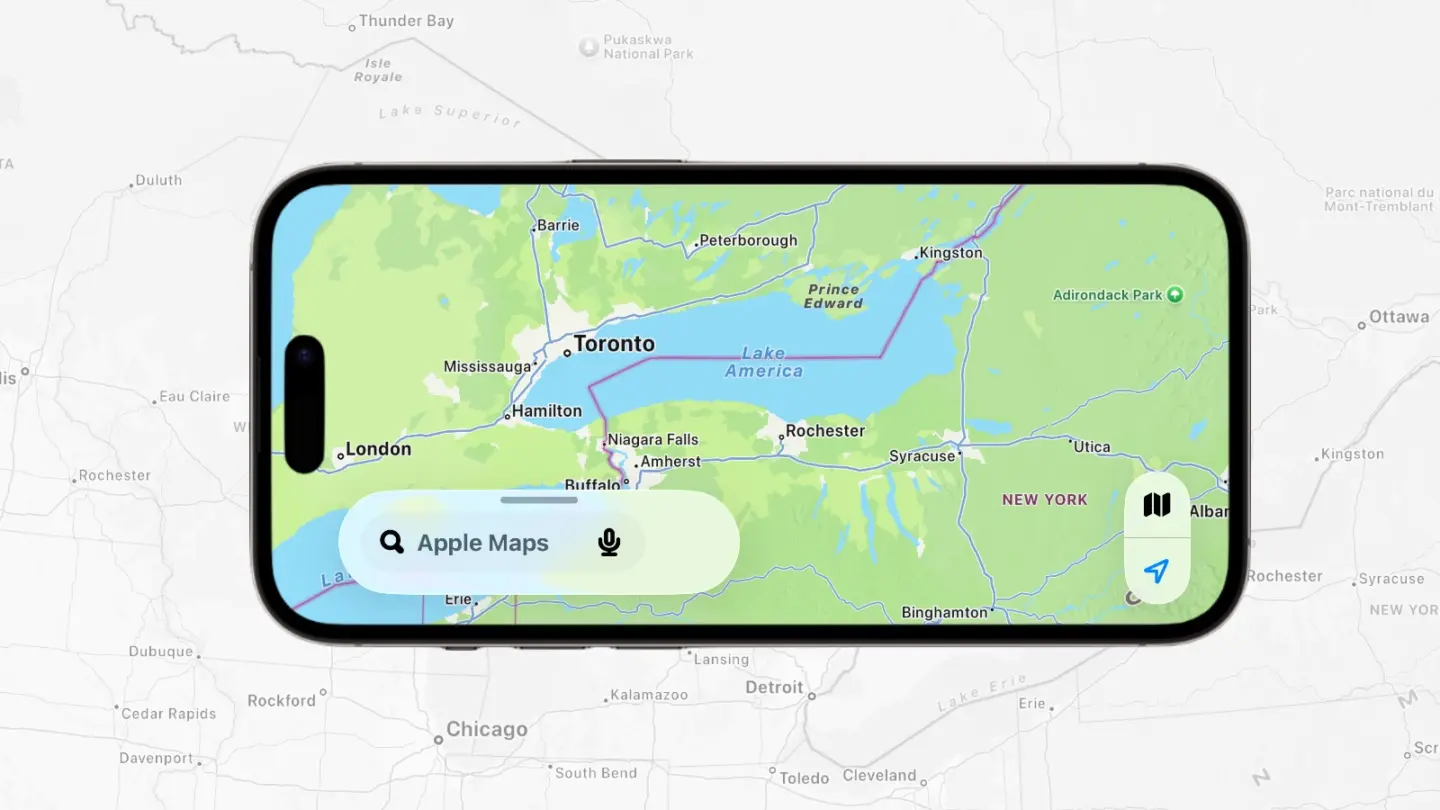
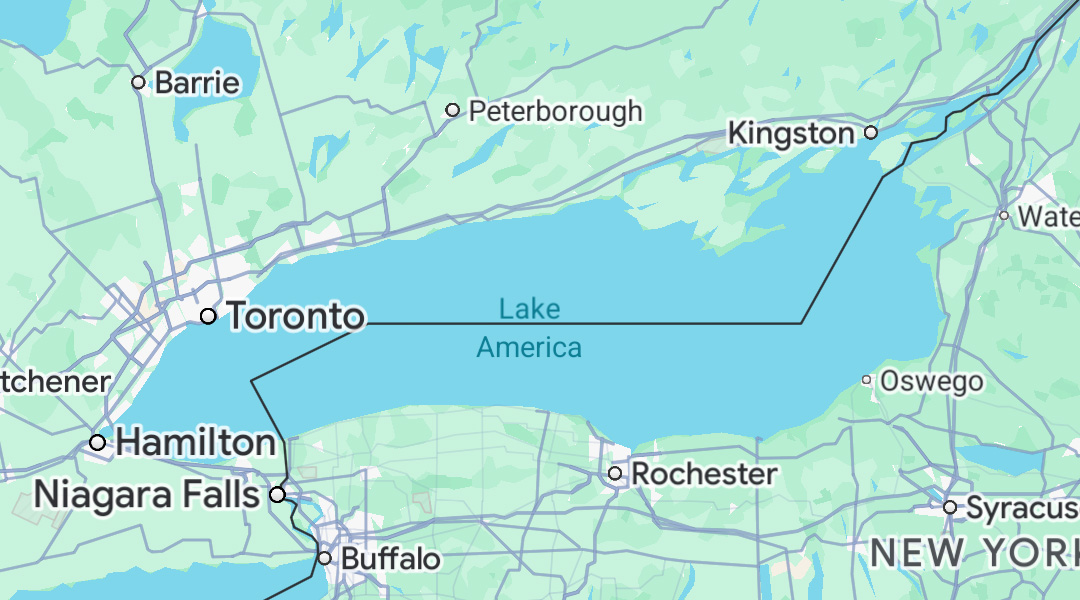
Apple Maps now calls Lake Ontario “Lake America” for U.S. users, following President Trump’s controversial name change.
(via Cult of Mac - Your source for the latest Apple news, rumors, analysis, reviews, how-tos and deals.)
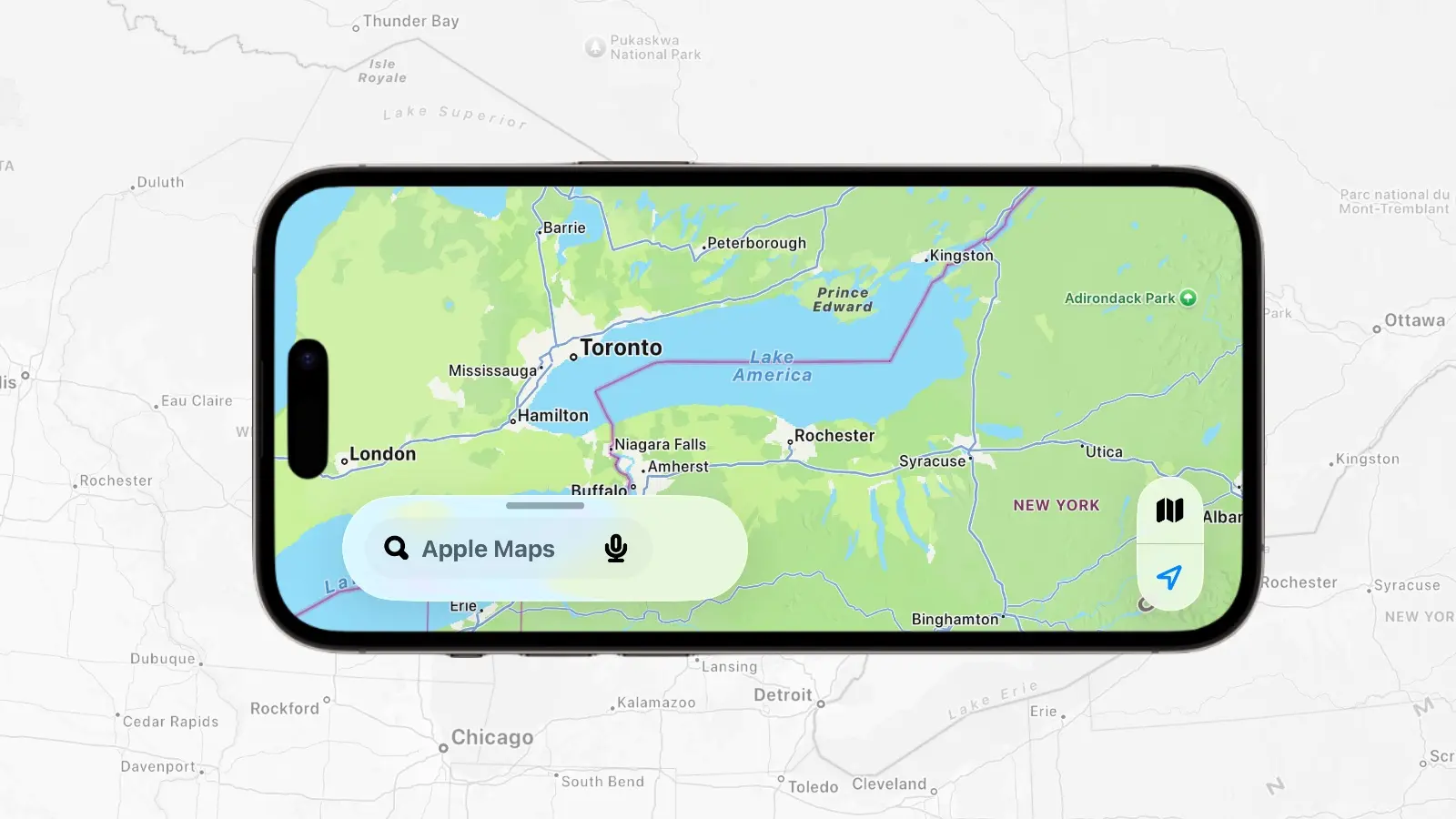

Apple has updated Apple Maps so that U.S. users see Lake Ontario labeled as Lake America, matching a change recorded in the U.S. Geographic Names Information System after President Donald Trump signed an executive order renaming the lake for federal use.
The update appeared on the web version of Apple Maps on Tuesday and is rolling out more broadly. Apple said U.S. users will see “Lake America,” users in Canada will continue to see Lake Ontario, and users elsewhere will see both names. That is the same approach Apple used after the Gulf of Mexico was renamed the Gulf of America on U.S. maps.

Google Maps made a similar change for U.S. users over the weekend. Both companies have pointed to official U.S. geographic naming records as the basis for what American users see.
Lake Ontario is one of the five Great Lakes. About 52 percent of its surface area lies in Canada, with the rest in New York. Trump’s order applies to U.S. federal usage and does not require Canada or international bodies to adopt the new name.
The lake rename follows last year’s Gulf of America change, which Apple and Google also reflected for U.S. users. Interior Secretary Doug Burgum said the president contacted Apple directly about aligning maps with the new official U.S. name.
Apple confirmed the Maps update tracks the Geographic Names Information System listing. For travelers, boaters, and anyone using Apple Maps in the United States, the lake now appears under the name adopted in U.S. federal records.
MacDailyNews Take: President Trump’s full Executive Order, “Honoring The American History Of The Great Lakes And Renaming Lake Ontario As Lake America,” can be read here.
Please help support MacDailyNews — and enjoy subscriber-only articles, comments, chat, and more — by subscribing to our Substack: macdailynews.substack.com. Thank you!
Support MacDailyNews at no extra cost to you by using this link to shop at Amazon.
The post Apple Maps now displays ‘Lake America’ after President Trump’s executive order appeared first on MacDailyNews.
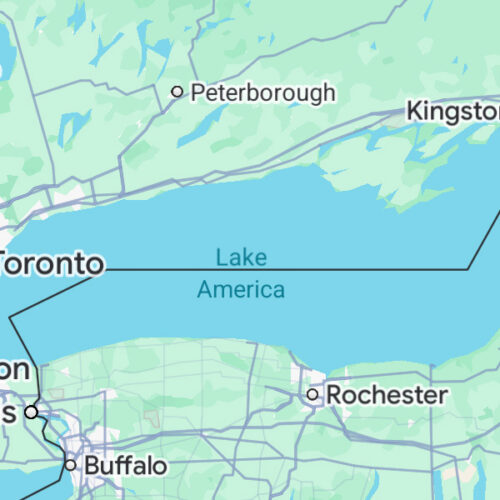
Trade talks between the US and Canada broke down last week, leading to a wave of tariffs and retaliatory tariffs. US President Donald Trump also fell back on an old favorite to needle his opponents, signing an executive order on Thursday to rename Lake Ontario to "Lake America."
The body of water, which straddles the US-Canada border, gave its name to the Canadian province rather than the other way around. Regardless, the US government now refers to this great lake as Lake America—or it will soon. Official US government maps have yet to be updated, but Google wasted no time adopting the new, Trumpian name.
Google began rolling out this change for US users on Saturday. The company posted a brief update on its Google Maps blog, noting that it follows the US Geographic Names Information System (GNIS) for its maps, so the company implies it had no choice but to rename Lake Ontario in Google Maps, which is the most popular mapping platform in the US by a wide margin.
O Google lançou uma nova atualização do Maps com uma novidade muito bem-vinda para usuários brasileiros: a chegada ao Brasil do recurso Pergunte ao Maps (Ask Maps), que permite obter informações sobre locais com facilidade usando inteligência artificial.
Lançado no início deste ano especificamente para usuários dos Estados Unidos e da Índia, o Pergunte ao Maps está sendo expandido agora também para Austrália, Canadá, Indonésia, Japão e México, além de mais de 150 países e territórios — por enquanto só em inglês.
Posts relacionados
A expansão para novos locais, porém, está longe de ser a única novidade relacionada ao recurso, que está mais inteligente e agora conta com características agênticas que o tornam capaz de executar tarefas complexas com várias etapas.
Com essa novidade, passa a ser possível pedir comida em um restaurante, descobrir informações atualizadas sobre hotéis e eventos locais, comparar preços em tempo real, mostrar shows em determinado local, dentre outras tarefas.
A Inteligência Personalizada (Personal Intelligence), por sua vez, permite integrar o recurso ao Gmail para que o chatbot tenha um maior contexto na hora de realizar tarefas — inclusive com a possibilidade de relembrar conversas anteriores, caso o histórico esteja ativado.
O Google também está expandindo as atualizações em tempo real do Pergunte ao Maps para transporte público, além de permitir que usuários contribuam com informações sobre locais conversando ou enviando uma foto de uma placa, por exemplo.
As atualizações sobre transporte público, as respostas mais contextuais e a capacidade de relembrar conversas anteriores estão sendo disponibilizadas a partir de hoje para todos os locais onde o Ask Maps está disponível (o que agora inclui o Brasil).
Ask Maps is getting an upgrade. 🔍✨
— Google Maps (@googlemaps) August 6, 2026
Now powered by agentic capabilities, real-time information, and Personal Intelligence, Ask Maps is transforming how you plan and move through the world. pic.twitter.com/XadDCw44uu
Os pedidos de comida, a descoberta de hotéis e eventos, e as contribuições dos usuários, por sua vez, estão começando a ser disponibilizados apenas nos Estados Unidos, com previsão de uma expansão gradual para outros países no futuro.


A seção de avaliação locais em aplicativos como o Google Maps é bastante útil para ajudar outros usuários a visualizar imagens e feedbacks de lugares populares — mas recursos do gênero costumam ser bem limitados e oferecem uma abordagem que depende bastante da ação do usuário.
O Wrinkles, no entanto, oferece uma experiência bem mais completa nesse sentido. Basicamente, o app usa a localização do usuário para mostrar histórias sobre os lugares ao seu redor automaticamente — como um guia local personalizado em qualquer lugar do mundo.
Posts relacionados
Alimentado por inteligência artificial, o app permite que os usuários perguntem sobre os lugares que acharem interessantes — e o app responde em tempo real com um conhecimento enciclopédico sobre praticamente qualquer assunto, daqueles mais simples aos mais complexos.
Com a capacidade de criar um roteiro turístico personalizado em questão de segundos, o app conta com um mapa que permite navegar e descobrir histórias em qualquer lugar — tanto as criadas pelo próprio aplicativo quanto as que forem criadas pelos usuários.
Isso porque o Wrinkles permite que os usuários vinculem suas publicações a locais específicos no mapa e destaquem lembranças pessoais a respeito deles. É possível também salvar os locais preferidos para que eles sejam organizados automaticamente pelo Wrinkles como guias pessoais.
O Wrinkles está disponível gratuitamente na App Store e conta com opções de assinatura por R$30/mês e R$300/ano, as quais liberam a versão Explorer. Também é possível adquirir o Trip Pass a partir de uma compra de R$250.
via TechCrunch


Apple is advancing several key product and service initiatives beyond its smart glasses efforts, according to details shared in Bloomberg News’ Mark Gurman’s Power On newsletter. These include refreshed Apple Watch models heading into late-stage testing, a comprehensive update across its entire Mac lineup to meet AI-driven demand, a new leasing program with Klarna, and a navigation partnership with Ford.
Three New Apple Watch Models in Late-Stage Testing
Apple is currently testing three new Apple Watch models expected this fall: the Series 12 in both Wi-Fi-only and cellular versions (internally codenamed N237 and N238) and the Ultra 4 (N240). No new Apple Watch SE is planned for 2026, following the prior year’s refresh of that model.
These updates will retain the existing design language rather than introducing a visual overhaul. Focus areas include performance improvements via new processors and enhancements to health and fitness tracking capabilities. A more significant redesign of the Apple Watch is in the works but is not expected for another year or two. Work also continues on a blood-sugar monitoring feature, a long-term project originally conceived during the Steve Jobs era, with availability targeted later this decade.
Full Mac Lineup Overhaul for AI Demand
Apple is preparing new versions of every Mac it currently sells, timed across this fall and into next year, to capitalize on demand for powerful machines suited to artificial intelligence workloads.
The initial wave this fall is expected to include a refreshed entry-level 14-inch MacBook Pro powered by the M6 chip and updated iMac models (the first significant desktop refresh in some time). Later in late 2026 or early 2027, higher-end 14-inch and 16-inch MacBook Pro models featuring OLED displays and touchscreen capabilities are planned (using M5 Pro and M5 Max chips in the first generation of the redesigned versions). Updated MacBook Air models (13- and 15-inch), a refreshed MacBook Neo with an A19 Pro chip and increased memory plus potential new colors, plus new Mac mini (M6 and M5 Pro) and Mac Studio (M5 Max and M5 Ultra) configurations are also in development. Timing for some desktop models may depend on memory chip supply availability amid broader industry constraints. Further redesigns and chip updates (including M7 variants) are mapped into 2027 and beyond.
Apple Upgrade Device Leasing Program with Klarna
Apple plans to launch “Apple Upgrade,” a leasing program in partnership with Klarna, on July 28th. It will cover most iPhone, Mac, iPad, and Apple Watch models and represents one of the largest shifts in how the company sells devices.
Lease terms are expected to run 24 months for iPhones and Apple Watches and 36 months for Macs and iPads. Customers can make monthly payments, pay off the device early, upgrade to a newer model before the term ends, keep the device, or return it at the end of the period (with some options potentially involving additional fees). The program requires a soft credit check, will be available online and in U.S. Apple Stores, and will not bundle AppleCare.
A soft credit check (also called a soft inquiry or soft pull) is a review of your credit report that does not affect your credit score. Lenders or companies use it to pre-qualify you, check eligibility, or review an existing account, without the temporary score dip that comes from a hard inquiry (which is used for actual loan/credit applications). Soft checks still appear on your own credit report but are not visible to other lenders.
Certain entry-level models (such as the Apple Watch SE, base iPad, iPhone 16, and MacBook Neo) and business/education purchases are excluded. It is intended to replace or wind down new enrollments in existing iPhone Upgrade and standard financing options, with marketing emphasizing lower monthly payments.
Apple Maps Integration with Ford’s Universal Electric Vehicle Platform
Apple and Ford have announced that Apple Maps will be integrated directly into Ford’s upcoming Universal Electric Vehicle (UEV) Platform, starting in 2027, via Apple’s new MapKit for Automotive SDK. This will deliver native navigation on vehicle displays—including turn-by-turn directions with natural language, real-time traffic and incident information, detailed place cards, intelligent EV routing with battery preconditioning—without requiring a paired iPhone (though CarPlay remains available as an option).
Road-level Maps data will also support Ford’s Latitude AI team in developing enhanced hands-free driving experiences, including next-generation BlueCruise capabilities for a more seamless on-ramp-to-off-ramp experience. The UEV Platform underpins Ford’s planned affordable electric vehicles, beginning with a midsize electric truck targeted around the $30,000 price point.
These developments reflect Apple’s broader hardware refresh cycle and service expansions amid rising component costs and growing demand for AI-capable devices and integrated experiences. As always, details remain subject to change as the company finalizes plans ahead of expected fall announcements.
MacDailyNews Take: These developments reflect Apple’s broader hardware refresh cycle and service expansions amid rising component costs and growing demand for AI-capable devices and integrated experiences. As always, details remain subject to change as the company finalizes plans ahead of expected fall announcements.
Please help support MacDailyNews — and enjoy subscriber-only articles, comments, chat, and more — by subscribing to our Substack: macdailynews.substack.com. Thank you!
Support MacDailyNews at no extra cost to you by using this link to shop at Amazon.
The post Apple preps major Apple Watch refresh, full Mac overhaul, new device leasing program, and Ford Maps partnership appeared first on MacDailyNews.

This to me is proof that Apple leadership is suffering from cognitive dissonance over their slide into advertising. They’re conflating cause and effect. The Apple brand stands for high-quality superior user experiences because the devices and software Apple makes traditionally deliver high-quality superior user experiences. The work Apple ships is what makes the brand what it is. But now they’re stricken with the mindset that it’s the Apple brand that makes something a high-quality superior experience.
[…]
If you refuse to admit that the ads make these services worse, you also can’t admit that there’s a reason to offer an ad-free experience. So the thinking is something like “Apple always focuses on the user experience, and never deliberately makes the user experience worse. Therefore, if an Apple service shows ads, those ads are high quality and don’t detract from the quality of the product or the experience of using it. Therefore, there’s no reason to offer users a paid ad-free tier, because there’s no reason to want to avoid Apple’s ads.”
What a brand stands for can change over time. It’s eventually determined by the products, not the mantras.
Manton Reece (2010):
I feel bad admitting it, because some of my friends are betting on iAd revenue to feed their family, but I’m just not on board with Apple running an advertising network. I don’t want to see ads in my apps, and I don’t want Apple to ever lose even a little of what it means to be a product-driven company.
Previously:
Update (2026-07-28): John Gruber (Mastodon):
The whole thing is funny because at a fundamental level we all just know in our bones that Apple never even considered putting “Intel Inside” stickers on Macs.
[…]
Apple still treats its hardware with that level of respect. With reverence. iPhones don’t even say “iPhone” on the hardware. No model or serial numbers. No small print. Just an Apple logo on the back.
[…]
Putting themselves in customers’ shoes today, how many ads do Apple’s executives want stuck in the results when they search for an app in the App Store? We know the honest answer. But the answer evidenced by the actual App Store is “Two really big ones, including one in the first spot.”
At least you could peel off the stickers.
While Apple can spin adding ads to Apple Maps as a revolutionary new way for businesses to be discovered, it’s telling that its initial announcement was hidden inside a press release about an entirely different product, and introduced as “Enhanced Discoverability in Apple Maps.” Those choices show that this isn’t something Apple is actually proud of—and that the people in charge of communicating and explaining Apple’s decisions to the world are at odds with those who are making the decisions about expanding revenue.
[…]
To this day, you’re confronted with an ad for Creator Studio every time you create a new document in those apps, and their default toolbars contain buttons that won’t work unless you subscribe to the bundle. As a result, Apple has essentially turned its free productivity suite—software that was designed to enhance the inherent value of Apple’s products—into a freemium package with upsell to a creative professional subscription bundle that’s irrelevant (and a terrible value!) for most of its existing users.
[…]
There are many more examples. Using notifications to promote subscriptions and badging the Settings app to push AppleCare plans are among the ways Apple has chosen to intervene in the user experience to drive revenue. I’m actually not opposed to the idea that Apple should communicate opportunities for its customers to get more out of their devices—but it should be careful not to cross the line into actively annoying those customers. If someone doesn’t want to see what you offer, you need to accept that and go away—not keep needling them. Apple often falls on the wrong side of that line.
[…]
It makes me wonder if the people making these decisions at Apple have lost track of the Apple brand and what it stands for.
What Snell’s column makes clear is that the incremental revenue Apple is gaining from putting shitty ads in its software comes at a price. They’re withdrawals from Apple’s brand equity. And I would argue that the value they’re detracting from the brand far out-values the dollar amount they’d padding to Apple’s bottom line.
[…]
If your competitors’ stores all smell like dogshit, don’t aim to have the store that smells the least like shit. Aim to have a store that smells pristine. “Our stores only carry a vague whiff of dogshit” is not insanely great.
Hotelling’s Law, like I was saying.
This is not an “update”. This is an advertisement.
Update (2026-07-29): John Gruber:
The people haven’t changed, but Apple has. Strong leaders inevitably shape the personality — the spirit — of organizations over time. Apple in 2011 was peak Steve Jobs Apple. Apple in 2026 is peak Tim Cook Apple. But it was Cook who popularized the “you’re not the customer, you’re the product” argument against “free with ads” online services. But that was in 2014.
“Slippery slope” is a perfect term. But I wanted to add something here. In my experience, in the realm of UI, there is no middle notch. I’ve seen it time and time again… the moment you open the door to One, Infinity starts exerting its pull[…]
Previously:
Update (2026-08-03): Jon Snader:
I HATE, HATE, HATE having ads pop up when I’m trying to do something else. It’s bad enough on Web sites where at least they have the excuse of having to make money some how but it rises to intolerable when they put them up on a device I’ve already paid for.
The annoyance is reason enough to dislike Apple’s ads but for me the worst thing is that they’re corrupting and inevitably lead to the user being replaced by the advertiser as the customer.
Update (2026-08-05): John Gruber:
Only search engines that agree to pay Apple for the traffic are in the list, and there’s no option for users to add custom ones.
It says a lot about modern Apple that I can’t find an unsubscribe link in this marketing email.
Apple News ads have been going down the toilet for years, but it didn’t used to be literal.
Ford Apple Maps integration will place the navigation service directly inside a new family of affordable electric vehicles, beginning with a midsize pickup expected to start at approximately $30,000 in 2027.
The truck will not depend on CarPlay or a connected iPhone to access Apple Maps. Ford plans to embed the service through MapKit for Automotive, allowing the automaker to incorporate Apple navigation into its own displays, controls and software environment.
CarPlay will remain available for drivers who want to use iPhone apps, messages, calls and media. The native integration, however, means Apple Maps can continue providing directions when no phone is connected or when the driver uses a device from another manufacturer.
The partnership extends beyond dashboard navigation. Ford also intends to use road-level information from Apple Maps while developing future versions of BlueCruise, connecting Apple mapping data with the driver-assistance technology planned for its Universal Electric Vehicle Platform.
Ford Apple Maps represents a different approach from the familiar relationship between an iPhone and a vehicle.
CarPlay runs from the phone and presents selected apps through the dashboard. The embedded version of Apple Maps will operate as part of the truck software, giving Ford greater control over how directions, charging information and vehicle data appear across its displays.
Drivers can expect turn-by-turn guidance, live traffic conditions, incident reports and detailed destination information. Ford will be able to adapt the visual experience to match the interface created for its new electric platform rather than reproducing the standard CarPlay layout.
EV routing may become the most practical benefit. The system can consider available range, charging locations and route conditions before recommending where a driver should stop.
When supported by the vehicle, navigation can also trigger battery preconditioning before arriving at a fast charger. Bringing the battery toward an appropriate temperature can reduce charging time, particularly during cold or extremely hot conditions.
Integrating those functions removes part of the planning burden from longer electric trips. Drivers will not need to move constantly between a navigation app, charging network software and separate vehicle menus to understand whether a station is suitable.
The native experience also gives Ford an alternative to building a complete mapping platform internally. Apple already maintains search, traffic, routing and place information across a large geographic network, while Ford can concentrate on vehicle-specific functions.
Apple, meanwhile, gains a route into factory-installed automotive software without needing to produce its own car.
The Ford arrangement should not be confused with CarPlay Ultra.
CarPlay Ultra expands the iPhone experience across multiple vehicle screens and can combine phone content with information supplied by the car, including speed, fuel or battery levels and climate controls.
Ford is taking a more selective path. Apple Maps becomes a native service, but the broader dashboard remains a Ford environment.
That distinction may appeal to automakers reluctant to hand control of the cabin interface to another company. Ford can use Apple technology for navigation while preserving its own identity, subscription services and software architecture.
Drivers still receive a recognizable Apple product, but the vehicle manufacturer determines where it appears and how it interacts with charging, driver assistance and other functions.
The arrangement could provide a model for other automakers that want access to individual Apple services without adopting the complete CarPlay Ultra experience.

Ford plans to introduce the unnamed four-door pickup as the first vehicle based on its Universal Electric Vehicle Platform.
The targeted price of approximately $30,000 would place it below many electric pickups currently available in the United States. Ford is aiming at drivers interested in an EV but unwilling or unable to spend the amounts associated with large premium trucks.
The company says the vehicle will provide more passenger space than a recent Toyota RAV4 while including a front storage compartment and a conventional truck bed. Performance is expected to compare with a Mustang EcoBoost, giving the pickup a stronger argument than affordability alone.
Reaching the price target requires changes throughout the vehicle rather than a smaller battery placed inside an existing truck design.
Ford has reduced the number of components, fasteners and assembly operations involved in the new platform. Its zonal electrical architecture is intended to shorten wiring and simplify how software-controlled systems connect across the vehicle.
Lithium iron phosphate batteries will form part of the structural floor. The chemistry avoids nickel and cobalt, generally costs less than alternatives focused on maximum energy density and can offer strong durability for repeated charging.
Production is planned for the Louisville Assembly Plant in Kentucky, where Ford is introducing a manufacturing process that separates major vehicle sections before bringing them together later in assembly.
Apple Maps supports the same cost-conscious strategy. Ford can offer a mature navigation experience without financing the creation of every mapping layer from the beginning.
The partnership becomes more significant when mapping information begins supporting driver assistance.
Ford Latitude AI plans to use road-level Apple Maps data while developing future BlueCruise capabilities. The objective is to create smoother hands-free travel from a highway entrance ramp through the eventual exit.
Apple Maps can provide advance knowledge of road layouts, interchanges, curves and exits. Ford sensors and onboard systems must still identify vehicles, pedestrians, construction and unexpected changes in real time.
Apple is not developing or controlling BlueCruise. Ford remains responsible for the cameras, sensors, processors and driving decisions used by the system.
The maps provide another layer of context. A vehicle that understands the route in advance can prepare for lane changes, merges and exits before its sensors reach them.
Ford is also developing a large driving model through Latitude AI using extensive road data. Combining that work with detailed maps could allow the company to improve assistance without depending entirely on moment-to-moment visual detection.
The Universal Electric Vehicle Platform is expected to support more capable automated driving in later models. Ford has discussed eyes-off operation from 2028, although final hardware, pricing and regulatory approval remain unresolved.
Introducing that technology through an affordable platform would represent a departure from the usual industry pattern. Advanced driver assistance often begins in expensive vehicles where premium pricing absorbs the cost of sensors and computing.
Ford wants to distribute the development expense across a larger family of electric products.
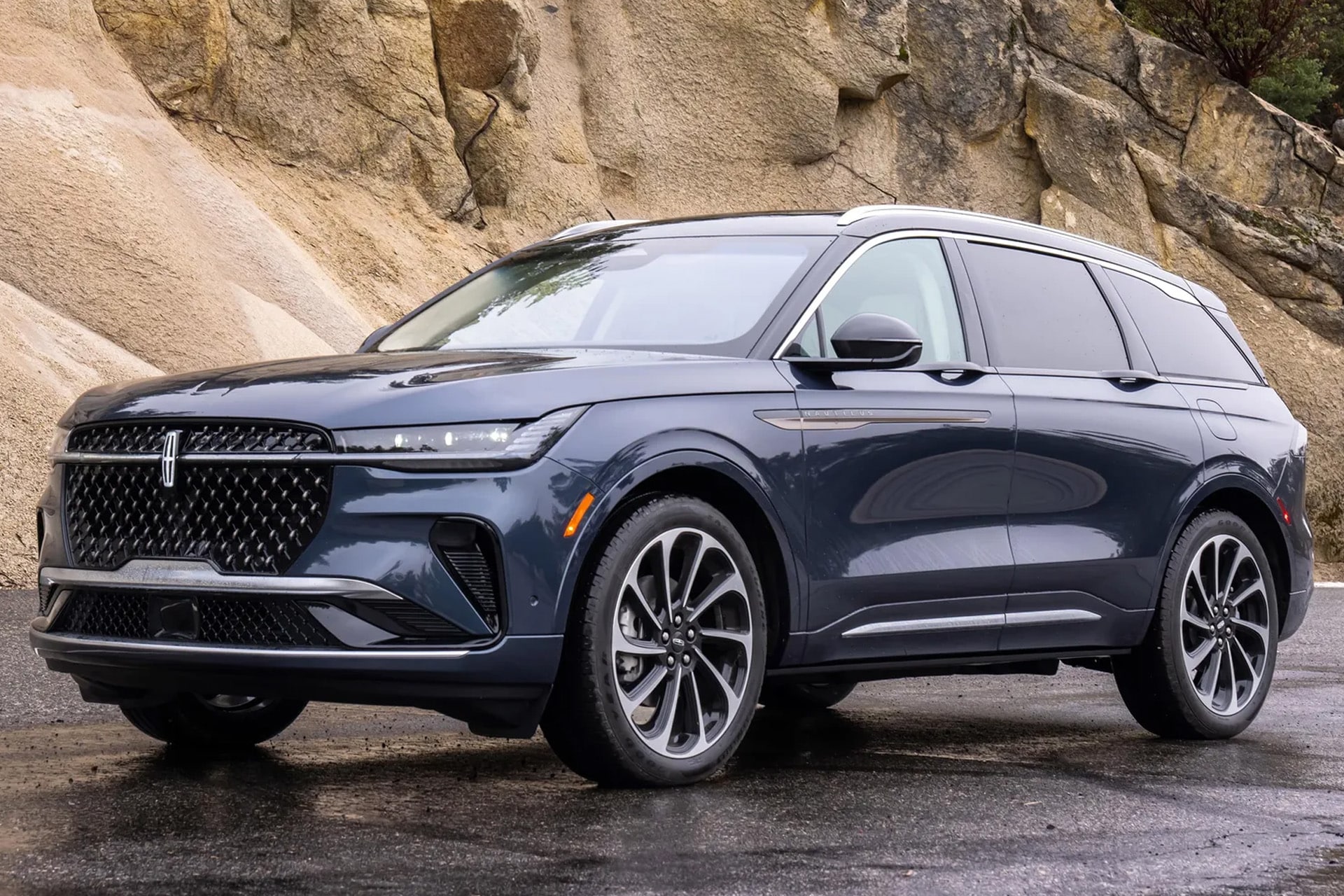
The Apple Maps name may make the new truck feel less unfamiliar to customers buying an electric vehicle for the first time.
Charging behavior, range estimation and route planning can create hesitation among drivers accustomed to gasoline vehicles. Presenting those functions through a navigation service already used on millions of iPhones reduces the number of unfamiliar interfaces introduced at once.
Existing Apple Maps users may also recognize saved locations, search behavior and visual guidance, although Ford has not explained which personal features will require an Apple Account or connected iPhone.
The embedded service will still need reliable integration with vehicle range, charger availability and battery temperature. A familiar logo alone cannot compensate for inaccurate charging information or route estimates.
Ford has not yet announced the truck name, final driving range, battery capacity, production specifications or confirmed base price. Those details will determine whether the pickup can combine its promised affordability with enough capability for everyday work and travel.
The first production model is scheduled for 2027, leaving Ford time to refine the software and reveal how Apple Maps will appear across the dashboard before the Louisville assembly line begins building customer vehicles.
The post Ford Apple Maps Deal Puts $30,000 EV in the iPhone Family appeared first on AppleMagazine.

Apple and Ford on Thursday announced that Apple Maps will be integrated directly into Ford’s upcoming Universal Electric Vehicle (UEV) Platform through Apple’s new MapKit for Automotive SDK. Coming to Ford’s UEV Platform in 2027, this integration will deliver a beautiful and easy-to-use navigation experience powered by Apple Maps directly to the vehicle’s displays. Road-level Maps information will also enable Ford’s Latitude AI team to build a seamless hands-free driving experience.
Leveraging Apple’s new MapKit for Automotive SDK, Ford’s Universal Electric Vehicle Platform will offer drivers turn-by-turn directions using natural language, real-time traffic and incident information, intuitive search featuring detailed place cards, and routing options to help users easily find the best route to their destination. Additionally, Ford UEV drivers will benefit from an intelligent EV routing functionality, including battery preconditioning. Ford will also use road-level information from Apple Maps as part of the development of its next-generation BlueCruise hands-free highway driving capability to deliver a more seamless on-ramp-to-off-ramp experience.
“Apple Maps delivers the best map experience in the world, and we’re excited to bring the power of Maps’ navigation technology to Ford’s innovative Universal Electric Vehicle Platform,” said Eddy Cue, Apple’s senior vice president of Services and Health, in a statement. “With our new MapKit for Automotive SDK, we’re bringing Maps further into drivers’ daily lives, giving them an incredibly accurate and easy-to-use navigation system that is seamlessly integrated into Ford vehicles.”
“Our new midsize electric vehicle will be priced around $30,000 and redefines what advanced technology can be — simple, useful, and truly attainable for more customers,” said Jim Farley, Ford Motor Company’s CEO, in a statement. “We’re proud to embed Apple Maps’ navigation and mapping technology directly into our Universal Electric Vehicle Platform, giving customers the ultimate navigation experience alongside our Ford app, a full suite of software, and next-generation BlueCruise, all enabled by a new zonal architecture. Apple Maps has delivered a world-class product, and we’re honored to be among the first to embed it directly into a vehicle, helping define intuitive, capable driving.”
This integration is made possible by Apple’s new MapKit for Automotive SDK, which allows automakers to embed and customize Apple Maps. The SDK also enables automakers to deliver a cohesive navigation experience for drivers that is consistent with the look and feel of their vehicles, and provides road-level information to help automakers build hands-free driving experiences. The SDK follows the same privacy principles that the Apple Maps app provides today. Apple does not collect users’ location details and activity on the vehicle’s map in a way that can be tied back to the individual user.
MacDailyNews Note: In addition to the integration of Apple Maps into Ford’s UEV Platform, CarPlay will continue to be available on Ford vehicles, providing drivers with a safe and smart way to use their iPhone in the car.
Please help support MacDailyNews — and enjoy subscriber-only articles, comments, chat, and more — by subscribing to our Substack: macdailynews.substack.com. Thank you!
Support MacDailyNews at no extra cost to you by using this link to shop at Amazon.
The post Apple Maps to power the navigation experience for Ford’s Universal Electric Vehicle Platform appeared first on MacDailyNews.