❌

Reading view

iPhone 18 Pro adds variable aperture, A20 Pro, and longer battery life

iPhone 18 Pro arrives with Apple concentrating its biggest changes in three areas: camera control, sustained performance, and battery life. The new Pro models retain familiar 6.3-inch and 6.9-inch display sizes, but introduce a variable-aperture main camera, the 2-nanometer A20 Pro chip, redesigned thermal hardware, and a smaller Dynamic Island.

The lineup consists of iPhone 18 Pro and iPhone 18 Pro Max, starting at $1,199 and $1,299 in the U.S., respectively. Both begin with 256GB of storage and are available in black, silver, glacier, and a new burgundy finish. Preorders opened September 12, with retail availability beginning September 18 in more than 65 countries and regions.

Rather than treating the Pro models as a cosmetic update, Apple has focused on changes that become more noticeable during demanding use, particularly photography, video work, gaming, AI processing, and long sessions away from a charger.

iPhone 18 Pro brings variable aperture to the main camera

The centerpiece is a new 48MP Fusion Main camera with a physical variable aperture, a first for the iPhone.

Six laser-cut aperture blades can adjust the amount of light reaching the sensor while also changing depth of field. The camera supports four aperture settings: ƒ/1.48, ƒ/1.8, ƒ/2.8, and ƒ/4.0.

At the wider end, the camera can gather more light in darker scenes. A narrower aperture can keep more people or background detail in focus, giving photographers another tool beyond computational depth effects and Portrait mode.

Apple also gives users direct access to those settings through new Pro controls in the Camera app. Aperture, shutter speed, and white balance can be adjusted manually, while a histogram provides a more conventional way to monitor exposure.

The feature is paired with a new main-camera sensor and updated computational imaging pipeline. Apple says the combination improves low-light performance and detail, while Photographic Styles gain texture and grain controls for additional control over an image’s appearance.

Video receives several additions as well. Cinematic effects can now be applied after recording to footage captured at up to 60 frames per second, while Time-lapse can record in 4K with Dolby Vision HDR. Audio Mix has also been updated with improved voice processing and the ability to isolate music.

For photographers who want more evidence of how an image originated, Apple is introducing Apple Reference Image. In Reference mode, the main camera signs sensor data, which Private Cloud Compute uses to create an unalterable reference version that can be compared with an edited image in Photos. Apple is also preparing support for the SynthID standard as another way of identifying AI-generated or altered content.

Close-up of a camera lens with visible aperture blades, surrounded by a maroon-colored body—reminiscent of the sophisticated design seen on the iPhone 18 Pro Max. Subtle reflections are visible on the lens surface.
Image Credit: Apple Inc.

iPhone 18 Pro uses A20 Pro and a redesigned vapor chamber

A20 Pro is built using a 2-nanometer manufacturing process and contains a six-core CPU, seven-core GPU, and dual 16-core Neural Engine.

Apple says memory bandwidth is 50% higher than on A19 Pro, while GPU performance can be up to 40% faster. The Neural Engine provides 32 cores in total, doubling the AI processing capability of the previous Pro chip.

The silicon change is closely tied to a redesigned cooling system. Apple has rearranged the chip package so that the silicon die sits beside the memory rather than beneath it in the thermal path, allowing A20 Pro to connect more directly to a next-generation vapor chamber.

That vapor chamber has three times the surface area of the previous generation and uses new materials to move heat away from the processor more effectively. Apple claims the design can deliver up to a 40% gain in sustained performance compared with iPhone 17 Pro.

That distinction is more relevant than peak benchmark numbers for workloads such as extended gaming sessions, video editing, computational photography, and local AI models, where heat can force a phone to reduce performance over time.

Connectivity has also moved further toward Apple-designed silicon. The N1 wireless chip supports Wi-Fi 7, Bluetooth 6, and Thread, while the new C2 modem succeeds C1X. Apple says C2 uses 15% less energy while offering faster uploads and adds mmWave support in the U.S.

A metallic chip with the Apple logo and text “A20 PRO” in bold, centered on a dark background with a subtle multicolored glow around the edges—designed to power the next-generation iPhone 18 Pro and iPhone 18 Pro Max.
Image Credit: Apple Inc.

iPhone 18 Pro Max reaches 45 hours of video playback

Battery improvements are another major part of the new hardware.

Apple rates eSIM-only versions of iPhone 18 Pro for up to 36 hours of video playback, while iPhone 18 Pro Max reaches as much as 45 hours. Apple says Pro Max receives the largest battery-life increase ever delivered in an iPhone.

Some of that gain comes from using the space previously occupied by a physical SIM tray. In markets receiving eSIM-only models, including the U.S., Canada, Japan, Mexico, Saudi Arabia, and the UAE, the larger internal battery provides an additional two hours of rated video playback.

Charging has accelerated as well. iPhone 18 Pro can reach 50% charge in approximately 15 minutes using a supported wired setup, while wireless charging reaches 50% in around 30 minutes. Apple says five minutes of wired charging on iPhone 18 Pro Max can provide roughly seven hours of video playback.

Both devices use aluminum unibody construction with Ceramic Shield 2 on the front and Ceramic Shield on the back. Storage options run from 256GB through 2TB.

The iPhone 18 Pro weighs 211 grams, while iPhone 18 Pro Max weighs 249 grams. Display sizes remain 6.3 inches and 6.9 inches, respectively.

Four iPhones—featuring the iPhone 18 Pro and iPhone 18 Pro Max—in black, white, blue, and deep red colors are displayed upright in a row against a black background, showing their backs and triple camera arrays.
Image Credit: Apple Inc.

iOS 27 brings Siri AI and new Apple Intelligence tools

The hardware launches alongside iOS 27, which places Apple Intelligence and the new Siri AI more prominently across the system.

Siri AI can use personal context from information stored across apps, respond to onscreen content, perform actions in supported apps, and handle more open-ended questions. A new Siri mode in Camera lets users ask questions and take action based on objects or information visible through the viewfinder.

Photo tools include Spatial Reframing, Extend, and an upgraded Clean Up feature, while Safari can monitor selected webpages for changes such as a product restock or price adjustment.

The Dynamic Island has also been physically reduced and redesigned. It can display up to three Live Activities simultaneously while continuing to support Face ID.

Apple released iOS 27 on September 14, while Siri AI is rolling out initially as a beta in English, with additional language support planned. iPhone 18 Pro and iPhone 18 Pro Max reach stores September 18, giving Apple a Pro lineup whose most substantial additions are less about a new exterior shape and more about physical camera control, heat management, and how long the hardware can sustain demanding workloads.

The post iPhone 18 Pro adds variable aperture, A20 Pro, and longer battery life appeared first on AppleMagazine.
  •  

Perseid meteors meet mesmerizing star trails over Egypt's Western Desert

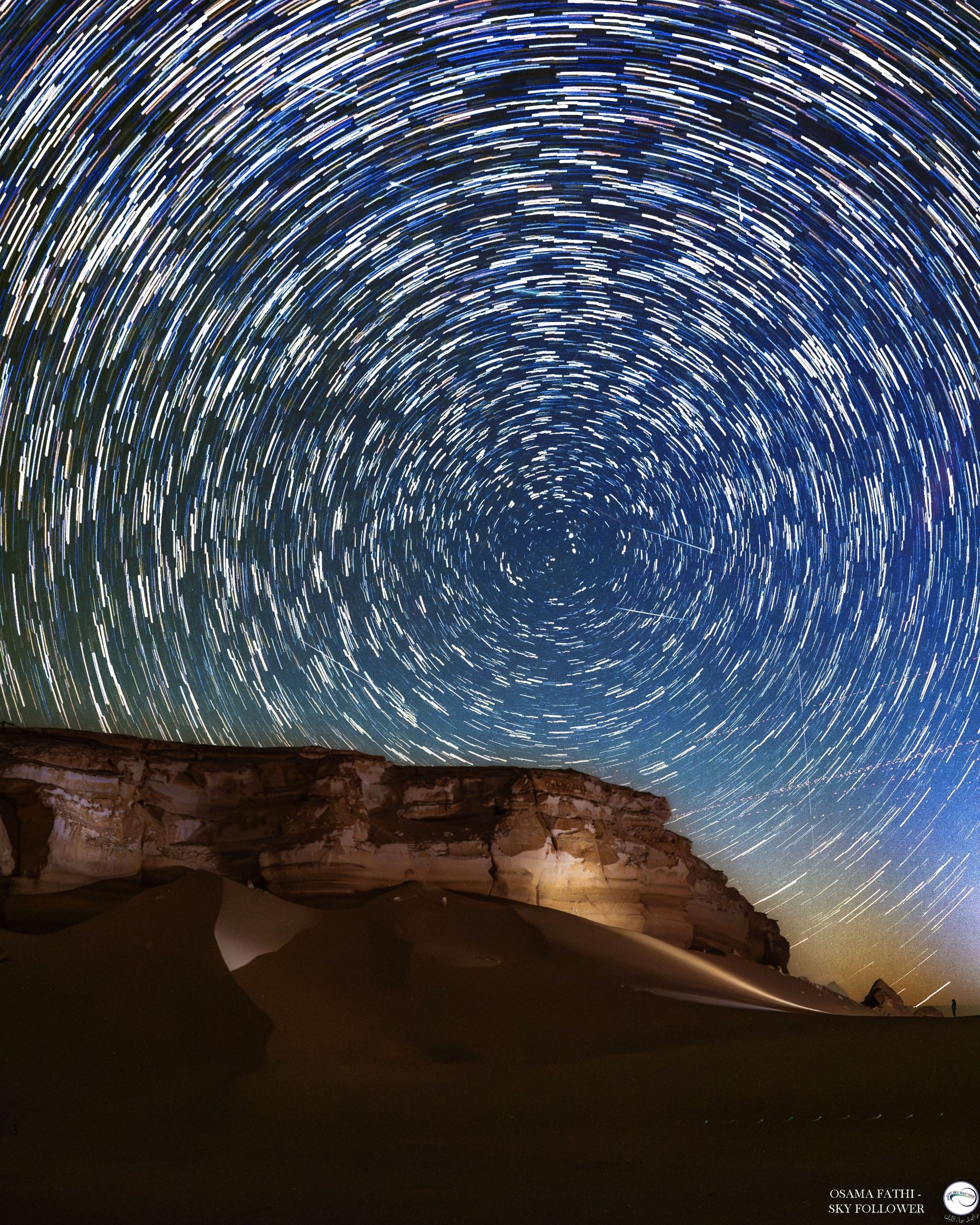
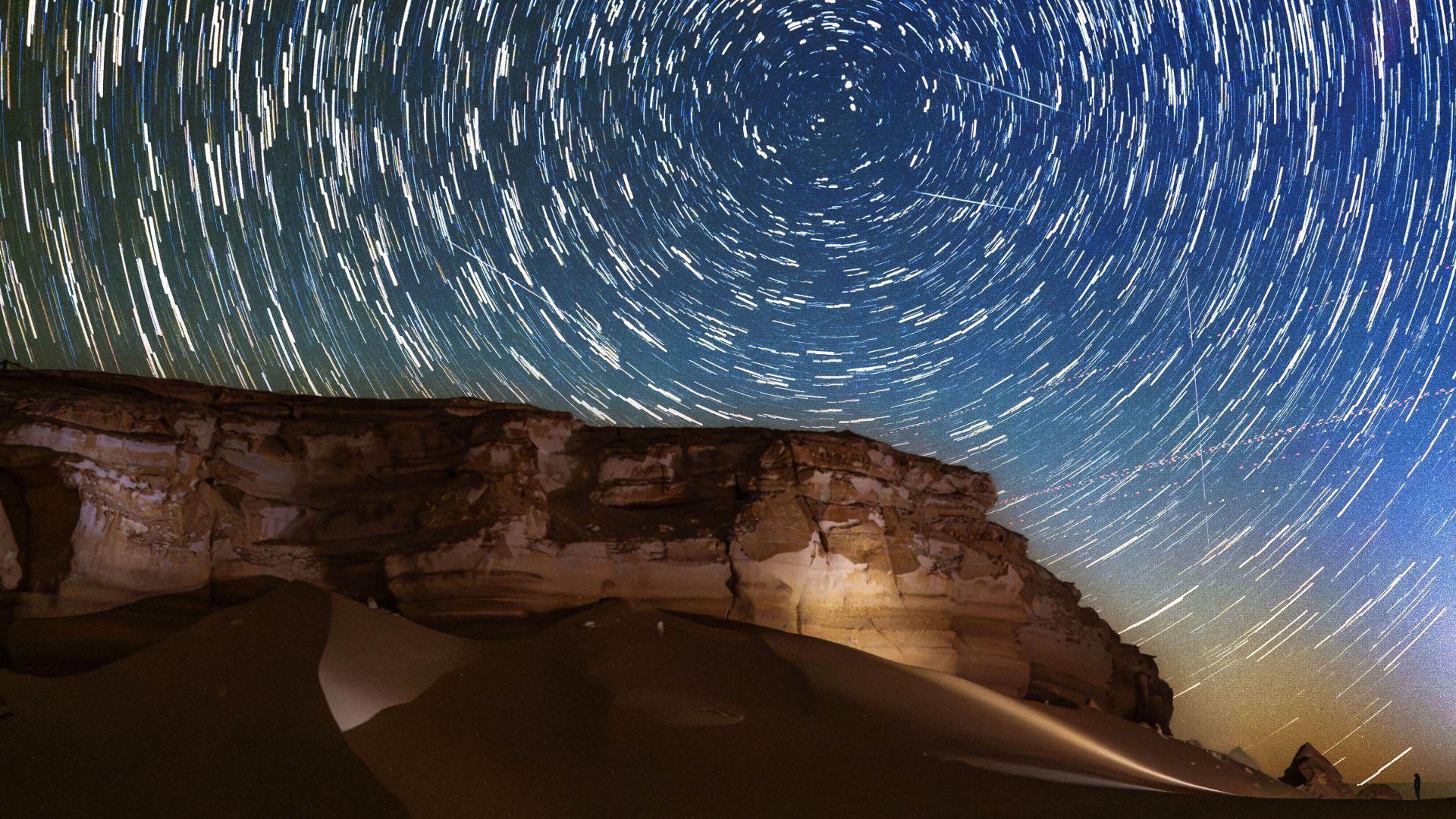
Astrophotographer Osama Fathi created this incredible view of Perseid meteors streaking through circling star trails above Egypt's Western Desert on Aug. 13-14, the night following the shower's peak under dark new-moon skies.

Fathi imaged the star trails in 240 consecutive 25-second exposures, which captured the apparent motion of the stars in Earth's sky as they seemed to circle the celestial north pole and the North Star Polaris. The length of each trail reveals how far the stars appeared to move as Fathi captured their ancient light with his Sony A7 III camera and a 16-35 mm lens during the 100-minute shoot.

But Fathi wasn't alone beneath the desert skies as he captured the scene.

"Capturing this photo in Egypt's Western Desert during the Perseids was an unforgettable experience," Fathi told Space.com in an email. "The night was exceptionally clear and I was surrounded by around 200 fellow astronomy enthusiasts sharing stories, stargazing and photographing the sky."

Star trails circle above a desert at night as meteors streak through the sky.

Perseid meteors and satellites intersect star trails in the skies over Egypt. (Image credit: Osama Fathi)

Perseid meteors appear as unbroken streaks of light, captured in a single exposure as tiny particles — often no larger than a grain of sand — burn up in Earth's atmosphere in the blink of an eye.

Dotted trails closer to the horizon depict the trajectories of satellites as they passed silently through the skies over Egypt's Western Desert. Fathi captured the landscape and starscape separately before combining, or stacking, the images into a mesmerizing image.

The result is a gorgeous nightscape that highlights the beauty of the natural landscape, the rotation of Earth and the natural light show of the Perseid meteor shower that we experience as Earth passes through the trail of debris shed by comet 109P/Swift-Tuttle.

Want to capture beautiful images of the night sky for yourself? Then be sure to read our guide to photographing star trails, along with our picks of the best cameras and lenses for astrophotography available in 2026.

Editor's Note: If you would like to share your photos of the night sky with Space.com's readers, then please send your photo(s), comments, name and location to spacephotos@space.com.

  •  

RISION Magic REVIEW Compact Thermal Camera for Your Smartphone

RISION Magic Thermal Camera

$139.00
Price as of 09/10/2026
We may earn a commission when you buy through our links. This helps support MacSources and keeps our content free. Thank you!

The RISION Magic brings detailed thermal imaging to your smartphone in a compact, affordable package, although its software still needs some refinement.

As a product tester, one of the biggest things I run into is people asking about how hot a device gets with standard use. Typically, I will use infrared thermometers to get temperature readings but I would much rather use a thermal imager so that the device can actually be seen and users can visualize where hot spots are. Some thermal imagers are too large to use conveniently, which is why I was excited about the RISION Magic being released.

RISION Magic Thermal Camera

About the RISION Magic

The RISION Magic is a compact USB-C thermal camera designed to turn a compatible smartphone, tablet, or Windows PC into a portable thermal imaging tool. At just 24 grams and without its own battery, the Magic draws power from the connected device, making it easy to carry and use without another device to charge. RISION offers support for iOS, Android, and Windows, along with free mobile and desktop versions of its RISION View app.

RISION Magic Thermal Camera

The Magic uses a native 160 × 120 thermal sensor and RISION’s QuadIR™ technology to produce a 320 × 240 super-resolved image. It also uses AI BiSpectrix™ to combine thermal and visible-light imagery in real time, helping users connect temperature differences with the physical objects or areas responsible for them.

RISION designed the Magic primarily for everyday troubleshooting and home maintenance. It can be used to look for energy loss around doors and windows, identify HVAC issues, find potential moisture problems, and spot overheating electrical connections without having to touch hot surfaces or exposed wiring. The RISION View app also provides temperature measurements, real-time waveform monitoring, customizable temperature thresholds, multiple measurement zones, thermal image and video capture, and automated PDF reporting.

RISION Magic Thermal Camera

Features & Specs

  • Thermal resolution: 160 × 120 native
  • Super resolution: 320 × 240 with QuadIR™ processing
  • Thermal sensitivity: ≤40 mK NETD
  • Refresh rate: 25 Hz
  • Temperature range: -4°F to 1,112°F (-20°C to 600°C)
  • Temperature accuracy: ±2% / ±2°C
  • Thermal/visible fusion: AI BiSpectrix™ dual-light fusion
  • Connection: USB-C
  • Power: Draws power directly from the connected device
  • Power consumption: 0.32W
  • Battery: No built-in battery
  • Continuous use: Approximately 5–8 hours, depending on the connected device
  • Compatibility: iOS, Android, and Windows PCs
  • App: RISION View mobile and desktop applications
  • Color palettes: 12, with adjustable text color and size
  • Temperature monitoring: Up to five points, five lines, and five areas simultaneously
  • Analysis: Real-time temperature waveform monitoring and customizable temperature thresholds
  • Image capture: Thermal photographs with temperature data
  • Video: Thermal video recording with temperature data
  • Reporting: Automated PDF reports
  • Documentation: Custom watermarks and GPS location information
  • Cloud: Cloud synchronization and multi-device access
  • Housing: Aerospace-grade alloy
  • Weight: 24 grams
  • Warranty: 24 months
  • Return period: 30 days
RISION Magic Thermal Camera
Thermal Image of Keyboard

Pricing & Availability

The RISION Magic has an MSRP of $139, although RISION is currently offering it for $119 through its website. The camera includes free shipping, a 24-month warranty, and a 30-day return period. It can be ordered through rision.com and Amazon.

User Experience

I tested the RISION Magic with my iPhone 16 Pro, and getting started was very easy. After downloading the RISION View app, I plugged the Magic into the phone’s USB-C port, and the app recognized it immediately. I was able to start taking thermal measurements very quickly.

Thermal Image of Air Conditioning Vent

The camera itself is a good size for carrying around. It is compact without being so small that I feel like I am going to lose it. The included carrying case works well for protecting the camera, although I think it could be smaller to better match the compact size of the Magic.

The RISION View app is generally easy to use, but I did run into some software issues during testing. A few settings also weren’t located where I expected them to be. For example, I had to go into my Profile to change the temperature unit from Celsius to Fahrenheit rather than finding that option under Settings. More importantly, the app locked up a few times. If my phone went to sleep while the camera was connected, I sometimes had to disconnect and reconnect the Magic before the app would work again.

RISION Magic Thermal Camera
Thermal Image of Me Standing in front of a sliding glass door.

The thermal images were the highlight of my testing. They looked very good, with enough detail that it was easy to identify the objects I was looking at. I used the Magic to check a variety of things around the house, including my coffee before and after adding fresh coffee, an air conditioning vent, my keyboard, and our dog. It was interesting to see the differences in temperature across these everyday objects.

I also compared the Magic’s temperature readings with a handheld infrared thermometer. The readings were reasonably close, although the infrared thermometer consistently measured approximately 4 degrees higher. For the type of general-purpose troubleshooting the Magic is designed for, I found the readings accurate enough to be useful.

RISION Magic Thermal Camera
Close Up of our Dog

I did run into another software issue when I tried the reporting feature. Creating a report requires signing up for a RISION account, but I couldn’t complete the registration. After entering the requested information and verification code, the Sign Up button remained disabled. That meant I wasn’t able to test the PDF reporting feature.

Overall, my experience with the Magic was a little mixed. The hardware is compact, easy to use, and produces surprisingly detailed thermal images, but the software still feels like it needs some refinement. I encountered several issues during testing, although none prevented me from using the camera after reconnecting it. Based on the image quality alone, I would recommend the RISION Magic at its $119 price, particularly for homeowners and DIY users who want an easy way to add thermal imaging to a smartphone.

RISION Magic Thermal Camera
Coffee before refilling it.
RISION Magic Thermal Camera
Coffee as I refilled it
RISION Magic Thermal Camera
Coffee after refill.

Conclusion

The RISION Magic is an interesting addition to my testing setup because it gives me something an infrared thermometer can’t: a visual representation of where heat is coming from. Being able to see hot spots across a device or identify temperature differences around the house makes thermal imaging much more useful than simply getting a single temperature reading.

RISION Magic Thermal Camera

The hardware does what I want it to do, and the thermal images are detailed enough to make the camera genuinely useful. If RISION can address some of the software bugs, the Magic would be an even stronger recommendation. For now, I think it is a good option for anyone looking to add thermal imaging to their smartphone without spending a lot of money.

For more information, visit rision.com

  •  

iPhone 18 Pro Gets A20 Pro and Variable Aperture Camera

Apple’s iPhone 18 Pro and Pro Max pair the faster A20 Pro chip with a variable-aperture Fusion Main camera, a smaller, more capable Dynamic Island, longer battery life, and higher prices, while otherwise changing surprisingly little from last year.

macOS Hidden Treasures: Copy and Paste

  •  

MacVoices #26253: Live! – Apple’s ‘Suprise and Shine’ Event (1)

Apple’s 'Surprise and Shine' event sparks a lively debate over the new iPhone Duo and iPhone 18 Pro lineup. The panel weighs the Duo’s foldable design, large display, durability, price, and potential to replace an iPad against the Pro Max’s camera improvements. From immediate buying decisions to first-generation caution, everyone has a different take on Apple’s latest hardware.

💾

  •  

Astrophotographer captures jaw-dropping view of the Crescent Nebula

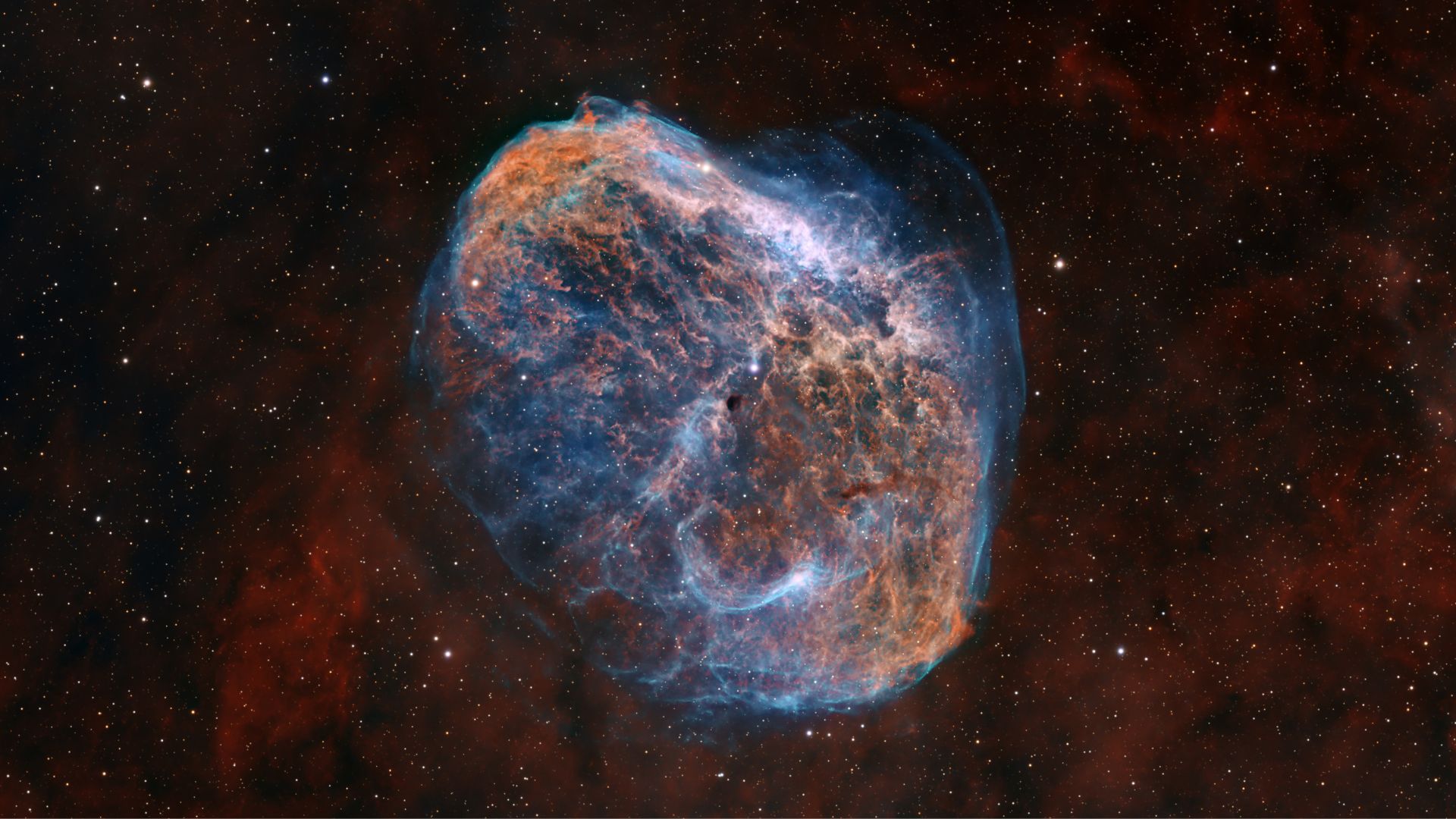
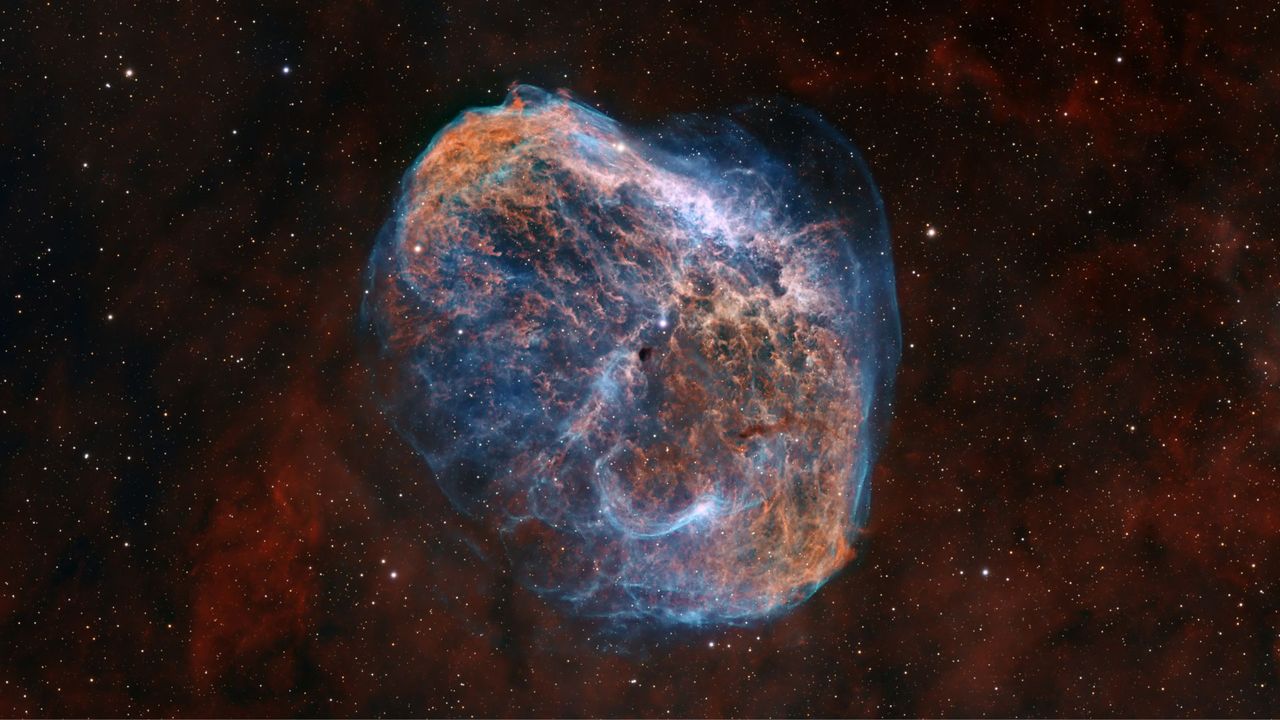
A red and blue nebula glows against distant stars. A bright blue star can be seen glowing in its core.

The Crescent Nebula shines in the constellation Cygnus. (Image credit: Kevin Boardman)

Astrophotographer Kevin Boardman captured this spectacular view of the Crescent Nebula, revealing intricate filaments of gas surrounding a massive star nearing the end of its life some 4,700 light-years from Earth in the constellation Cygnus.

Boardman's image represents a turbulent chapter in the life of the colossal Wolf-Rayet star WR 136 (HD 192163), which, visible as a blue point of light at the center of the image, is expected to end its life in a dramatic supernova explosion in about 100,000 years.

The 25-light-year-wide bubble is formed from stellar material cast off by WR 136 during its transformation into a red giant star, according to NASA. Repeated impacts by fast-moving stellar winds later send shockwaves through the outer shell, creating the complex filaments we see today.

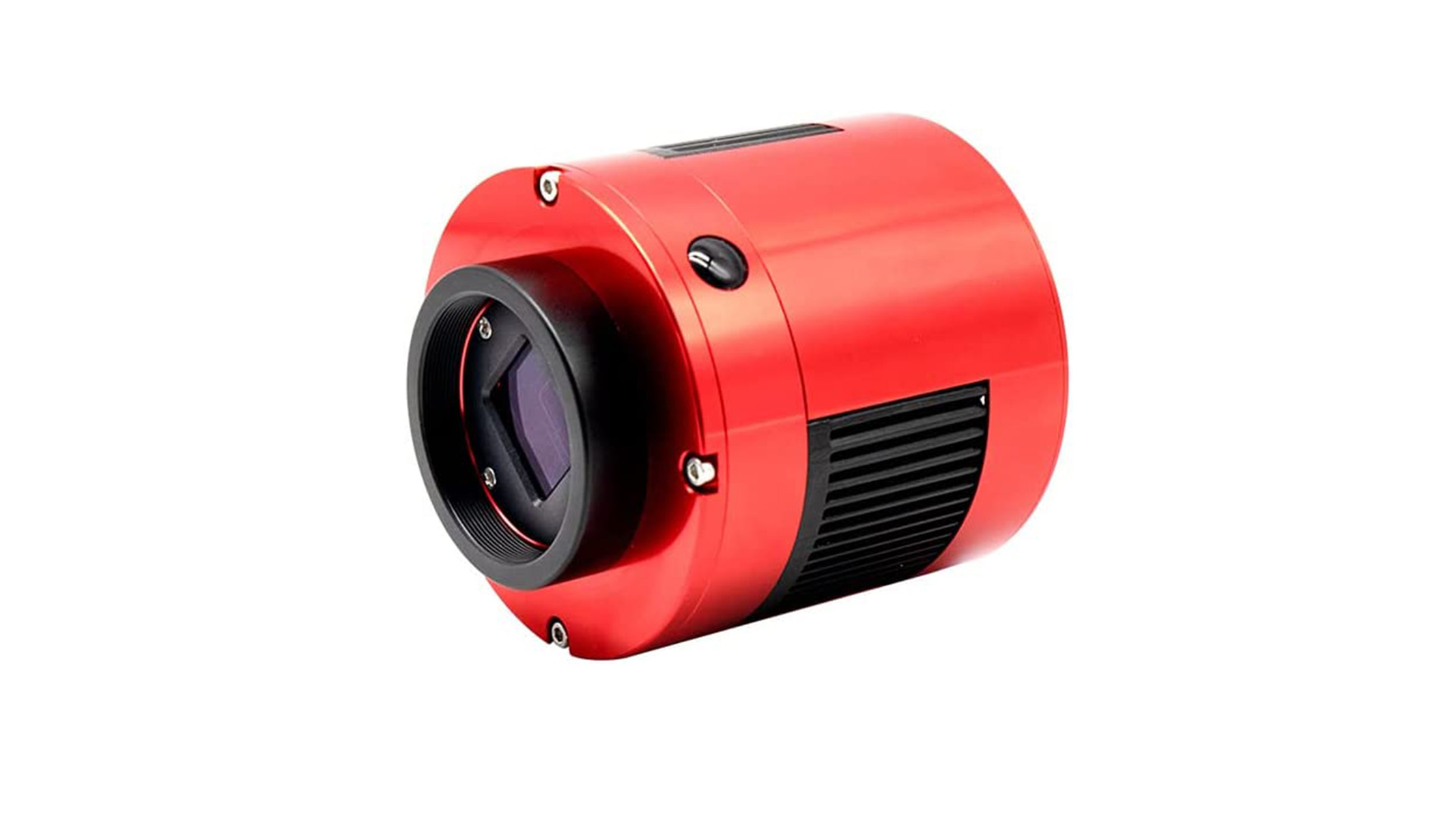
ZWO ASI533MC Pro

A product photo of the ZWO ASI1533MC Pro Camera

(Image credit: Amazon)

The ZWO ASI533MC Pro camera is the best dedicated astro camera out there, in our opinion. It features zero amp glow, 80% quantum efficiency and a 20FPS frame rate. It also features a 9MP sensor and you can check out our ZWO ASI533MC Pro review for a more in-depth look.

Catalogued as NGC 6888, or Caldwell 27, the Crescent Nebula, gets its nickname from its crescent-moon like appearance when observed in certain wavelengths of light. Boardman revealed spectacular detail in the nebula by imaging it with a set of narrowband filters over 16 hours and 18 minutes spread across five nights in late July.

"In the image, orange-red H-alpha reveals the tangled filaments while blue-cyan [O III] outlines emission from doubly ionized oxygen around the shell," Boardman told Space.com in an email. Each filter isolates specific wavelengths of light emitted by ionized gases, allowing different structures within the nebula to stand out.

Boardman collected roughly 12 hours of narrowband data from the nebula itself, along with four hours and 20 minutes of data capturing the surrounding stars, before combining exposures using the astronomy software PixInsight during post-processing.

The Crescent Nebula is too faint to be spotted with the naked eye, but can be seen with a moderate-to-large telescope equipped with a light pollution filter throughout September.

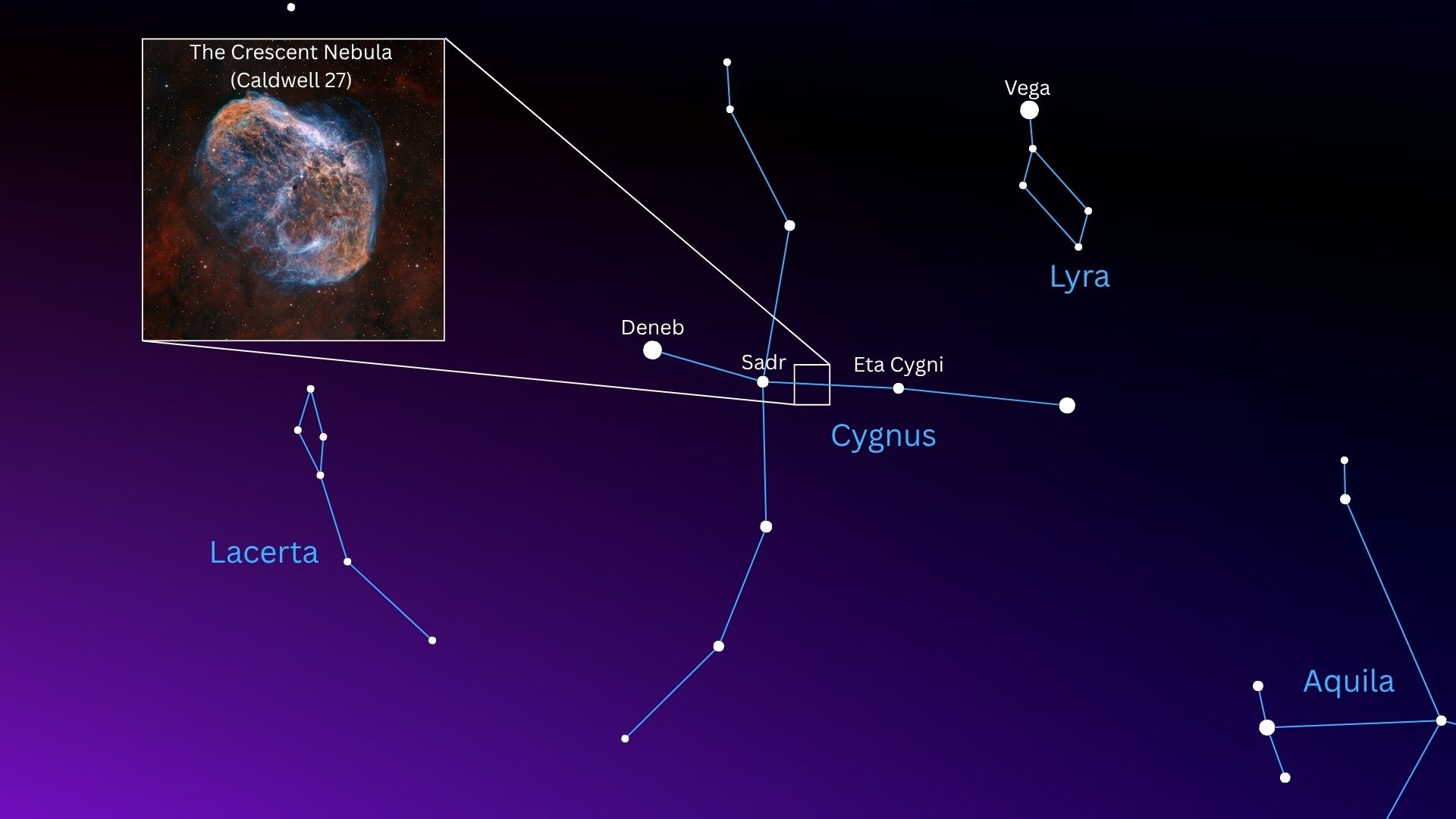
A starchart showing the location of the Crescent Nebula among the stars of the constellation Cygnus.

How to find the Crescent Nebula among the stars of the constellation Cygnus. (Image credit: Inset image: Kevin Boardman, created by Anthony Wood in Canva.)

First, locate the magnitude +2.34 star Sadr at the center of the cross-shaped constellation Cygnus, which appears high overhead for Northern Hemisphere observers in late summer.

Next, locate the dimmer magnitude +4.03 star Eta Cygni using the simplified star chart above, or with the aid of a smartphone astronomy app. The Crescent Nebula lies directly between these two bright stars and is best seen on the dark nights surrounding this month's new moon phase on Sept. 10-11.

Be sure to check out our roundups of the best cameras and lenses for astrophotography if you're looking to upgrade your equipment, along with our picks of the top telescopes for observing the night sky.

Editor's Note: If you would like to share your astrophotography with Space.com's readers, then please send your photo(s), comments, and your name and location to spacephotos@space.com.

  •  

MacVoices #26249: Briefing – The Insta360 Snap Selfie Screen with Light and SmallRig Phone Vlog Selfie Monitor

This MacVoices Briefing compares the Insta360 Snap Selfie Screen with Light and SmallRig Phone Vlog Selfie Monitor, two solutions for framing shots while using an iPhone’s best camera. Factors in choosing include MagSafe mounting, wired versus Wi-Fi connections, screen size, touch controls, lighting, battery life, compatibility, portability, pricing, and flexibility. Chuck talks about how to determine help which monitor is best for your different shooting needs, and  how he solved the choice question. 

💾

  •  

How to Manage Photos Between MacBook Pro & iPhone

Macbook Pro, 15", 2017
Mac OS Monterey, Version 12.6

iPhone 13 Pro Max
IOS 16.0

For managing Pictures in the Photo Application between my MacBook and iPhone - I want to be able to delete pictures from the iPhone but they always come back from the MacBook Pro?
How can I keep pictures from always coming back?

Apologies for not using correct nomenclature / terms - I am not much of a chiphead.

Is there a good resource for using Photo Application for both the Laptop and...

Read more
  •  

16 glistening galaxies shine in new images form NASA’s Chandra X-Ray Observatory

While we have months to wait for the first images from the freshly-launched Nancy Grace Roman Space Telescope, NASA’s other incredible observatories do not disappoint. The agency released a new collection of 16 galactic images taken with the Chandra X-ray Observatory and other telescopes. 

Galaxies are separated into three main categories—spirals, ellipticals, and irregulars. Spirals are like our own Milky Way and appear to spin around a central focus. Ellipticals are older galaxies and likely the results of mergers. Irregulars that can encompass a wide range of galactic phenomena. 

Spirals, ellipticals, and irregulars are all represented in this new collection. Each image hasX-ray data from Chandra, combined with data from other telescopes such as the James Webb Space Telescope (JWST), Hubble, IXPE, Swift, and NuSTAR, and others both in space and on the ground. Gaze into the galaxies in the gallery below. (Click to expand images to full screen.)

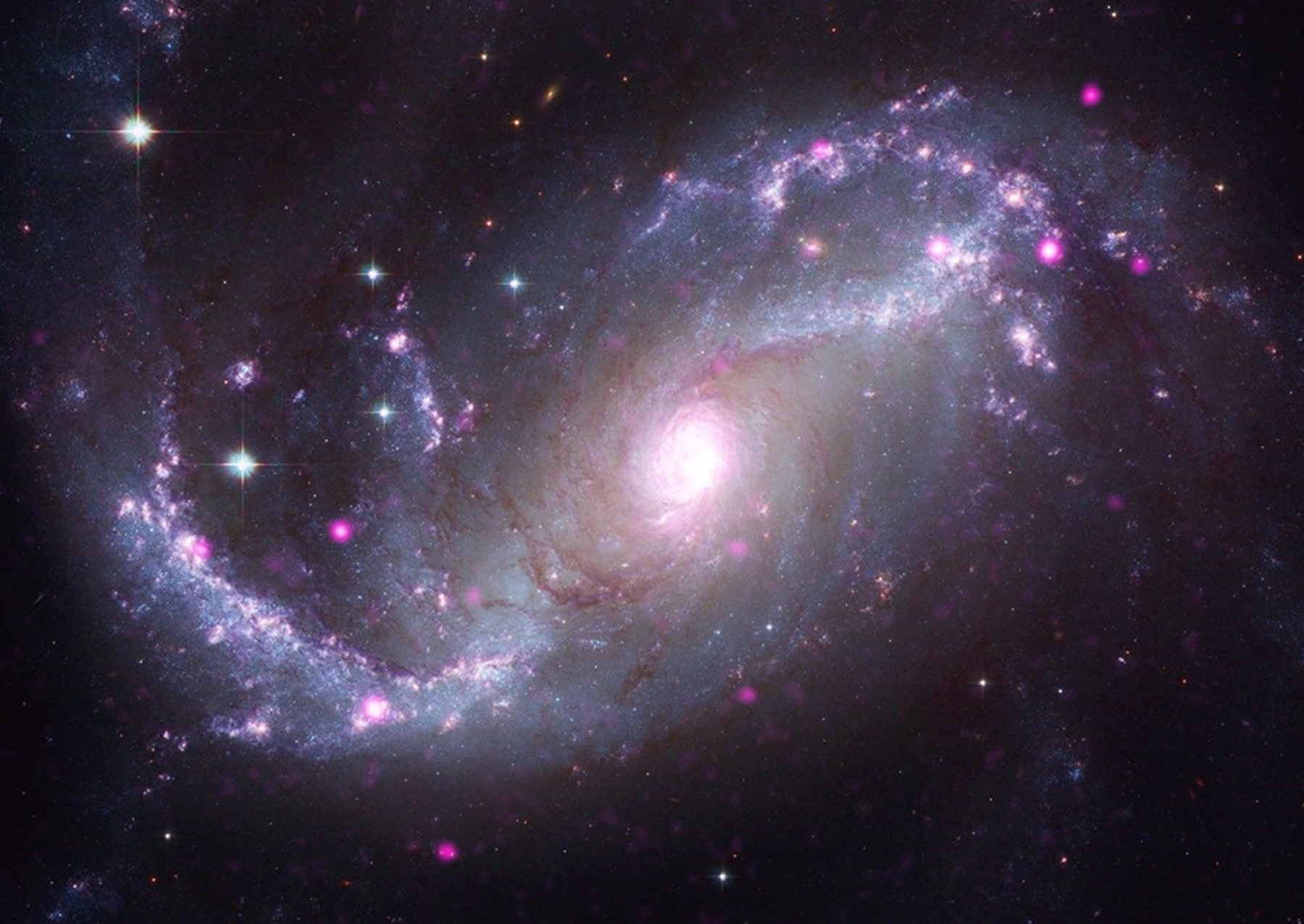
NGC 16-72

A barred spiral galaxy featuring a prominent central bar or bridge of stars that channels gas toward its core. Chandra X-rays (purple) highlight growing black holes along the bar and core, merged with Hubble optical light (white, yellow and soft blue) and JWST infrared dust filaments (red). Studying barred spirals in action can help reveal how gas in our own Milky Way, which is also a barred spiral, feeds its central black hole and forms new stars. Image X-ray: NASA/CXC/SAO; Optical: NASA/ESA/STScI/Hubble Heritage Team; Infrared: NASA/ESA/CSA/STScI/J. Lee and T. Williams; Image Processing: NASA/CXC/SAO/L. Frattare, J. Major, K. Arcand.

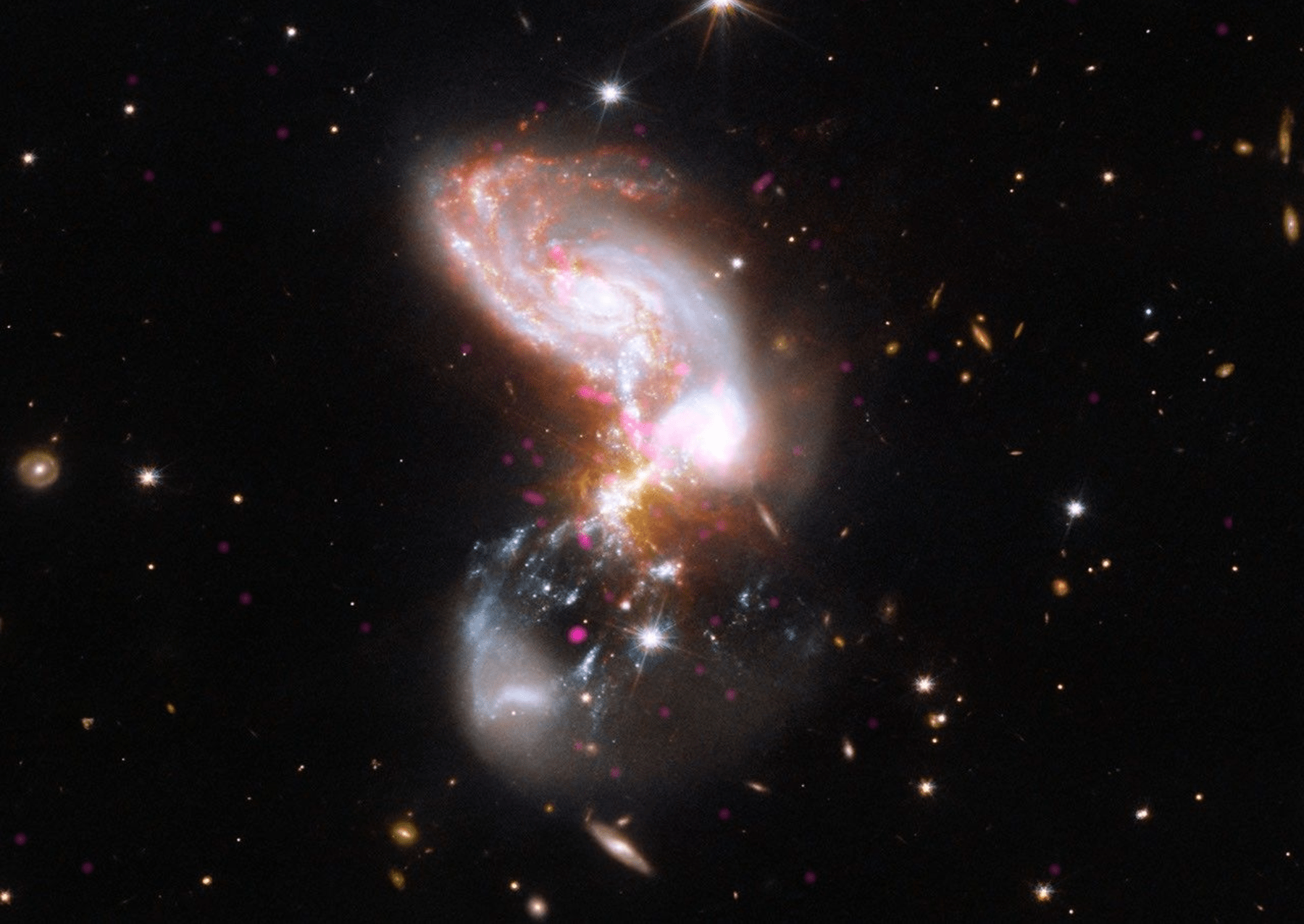
II Zw 096

A chaotic, dust-shrouded system of merging galaxies forming stars at a furious rate. Chandra X-ray data (magenta) pinpoint powerful black hole activity and hot gas, while Hubble optical (blue and white) and Webb infrared (red and grey) data illuminate vast stellar nurseries hidden behind interstellar dust. Systems like II Zw 096 show us how powerful galaxy collisions shaped the early universe. Image: X-ray: NASA/CXC/SAO; Optical: NASA/ESA/STScI; Infrared: NASA/ESA/CSA/STScI; Image Processing: NASA/CXC/SAO/L. Frattare and J. Major.

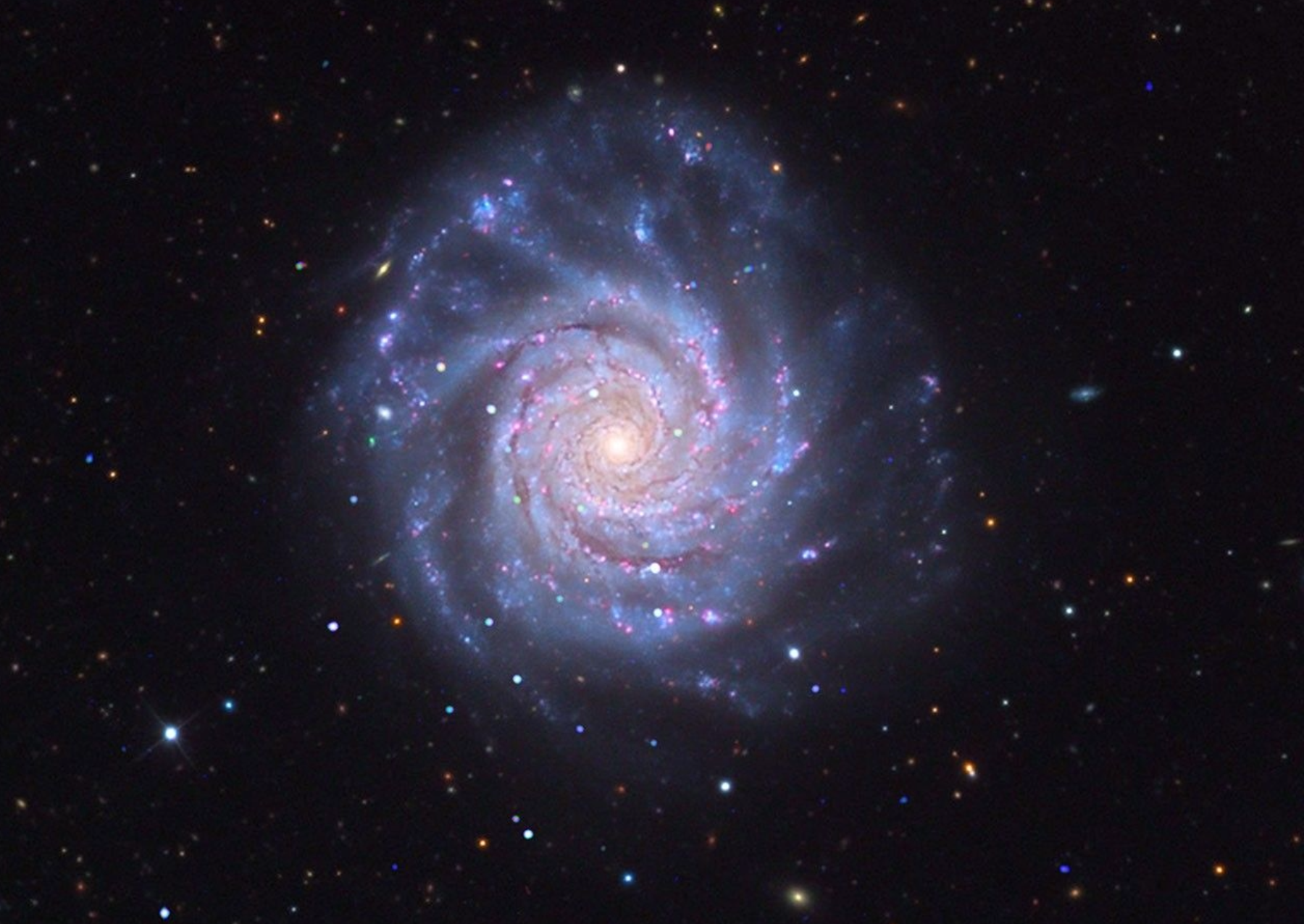
M33

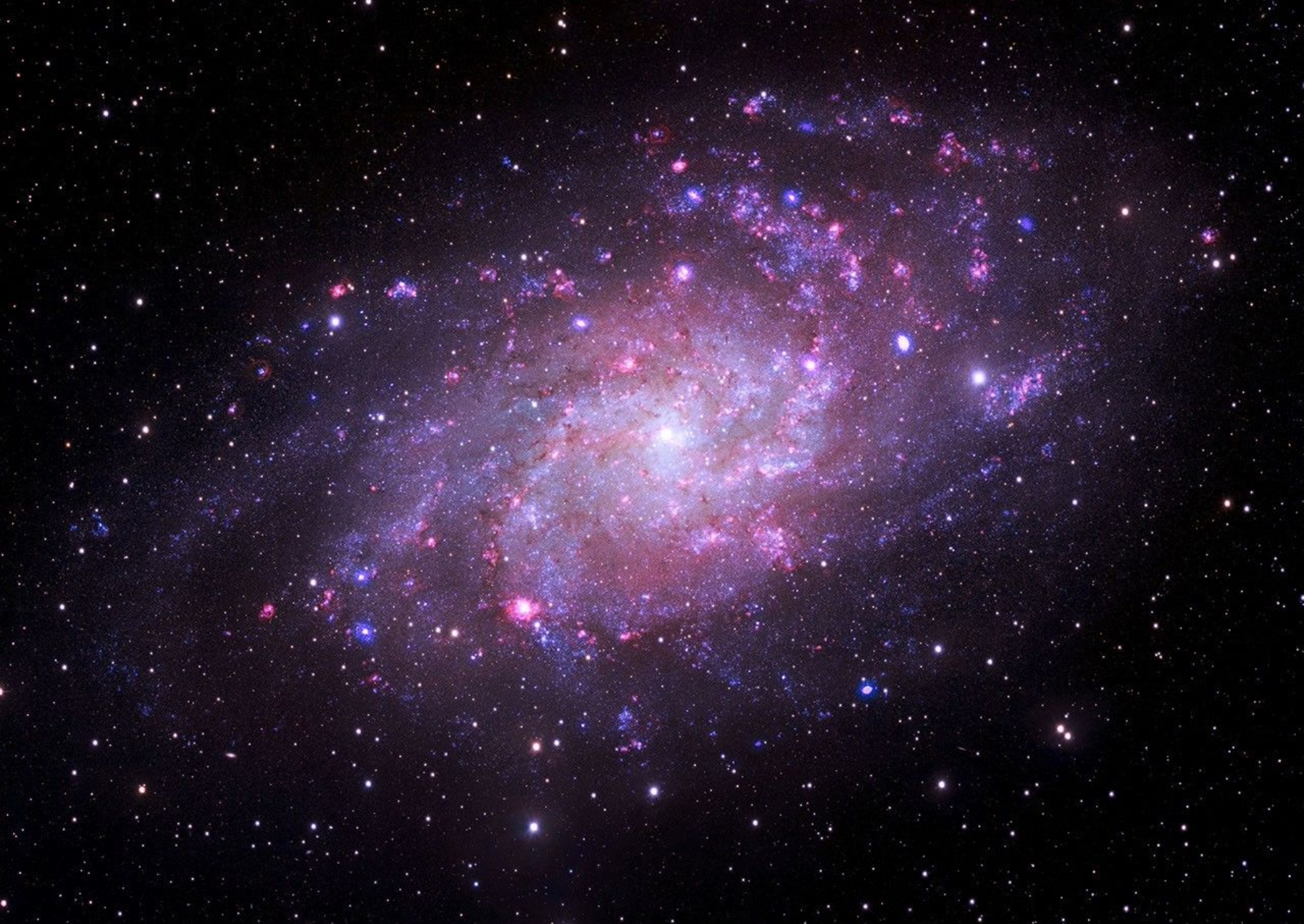
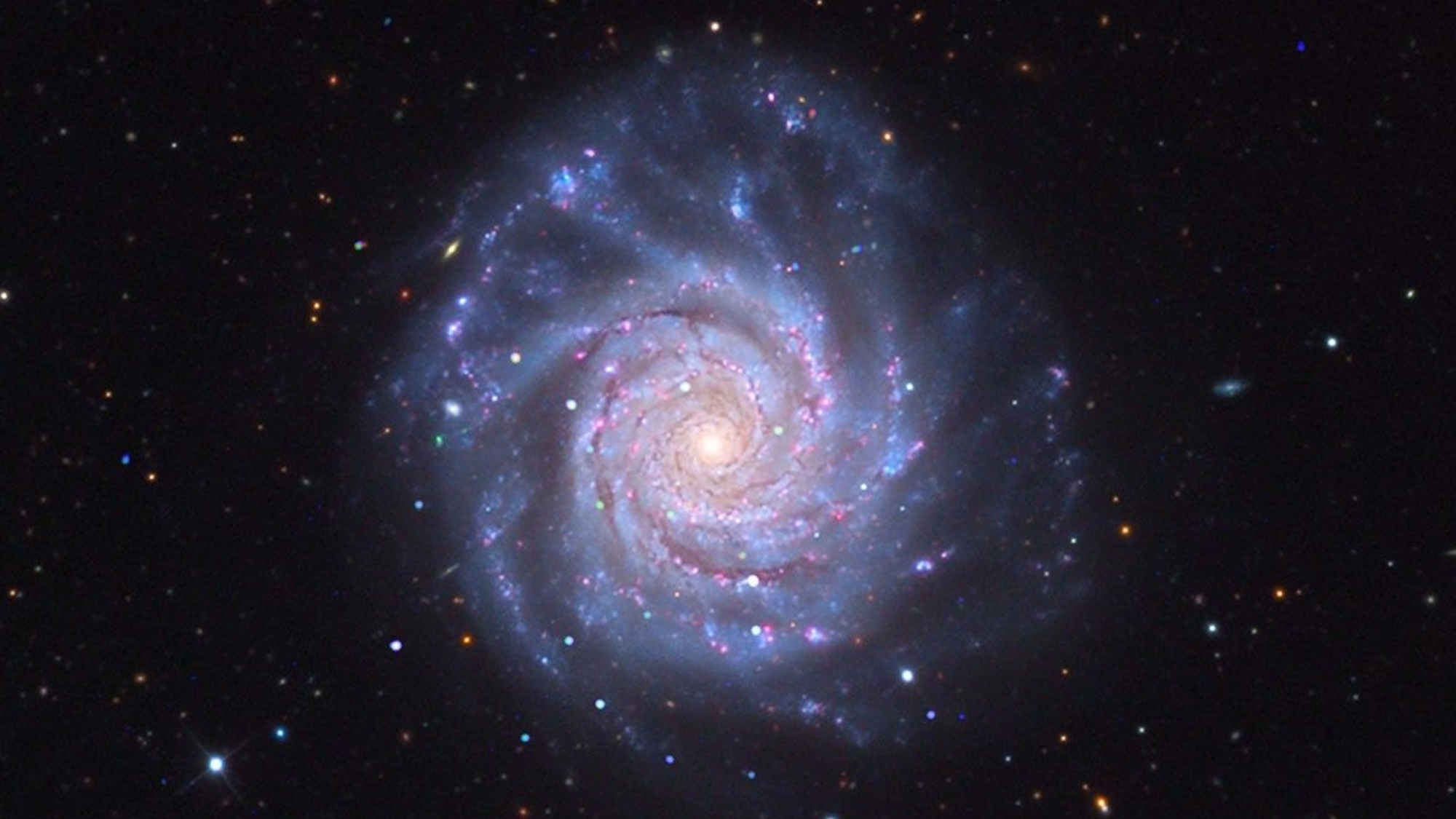
A nearby, face-on spiral galaxy whose clear spiral arms offer an unhindered view of its stellar engine. X-ray data from Chandra (purple) highlights point sources like neutron stars and stellar-mass black holes pulling material off companion stars (systems called X-ray binaries), while optical data from the Very Large Telescope’s MUSE instrument (pink and grey) maps glowing pockets of hydrogen gas. Ultraviolet data from NASA’s Swift telescope (blue) reveals populations of young, massive stars sizzling across the spiral arms. M33’s proximity to us allows astronomers to audit individual high-energy objects and map how stellar feedback affects a galaxy's ecosystem. Image: X-ray: NASA/CXC/SAO; Optical: ESO/VLT; UV: NASA/Swift; Image Processing: NASA/CXC/SAO/L. Frattare.
A nearby, face-on spiral galaxy whose clear spiral arms offer an unhindered view of its stellar engine. X-ray data from Chandra (purple) highlights point sources like neutron stars and stellar-mass black holes pulling material off companion stars (systems called X-ray binaries), while optical data from the Very Large Telescope’s MUSE instrument (pink and grey) maps glowing pockets of hydrogen gas. Ultraviolet data from NASA’s Swift telescope (blue) reveals populations of young, massive stars sizzling across the spiral arms. M33’s proximity to us allows astronomers to audit individual high-energy objects and map how stellar feedback affects a galaxy’s ecosystem. Image: X-ray: NASA/CXC/SAO; Optical: ESO/VLT; UV: NASA/Swift; Image Processing: NASA/CXC/SAO/L. Frattare.

NGC 4258

A spiral galaxy famous for having two extra, "anomalous" spiral arms composed of hot gas. Chandra's X-rays (royal blue) show superheated shockwaves created by central black hole jets, combined with optical light from Hubble (red, yellow and pale blue) and infrared dust filaments from Webb (bright orange). M106 helps show how supermassive black holes can create structural features that mimic star-bearing spiral arms, influencing a galaxy's evolution. Image: X-ray: NASA/CXC/SAO; Optical: NASA/ESA/STScI; Infrared: NASA/ESA/CSA/STScI; Image Processing: NASA/CXC/SAO/L. Frattare.
A spiral galaxy famous for having two extra, “anomalous” spiral arms composed of hot gas. Chandra’s X-rays (royal blue) show superheated shockwaves created by central black hole jets, combined with optical light from Hubble (red, yellow and pale blue) and infrared dust filaments from Webb (bright orange). M106 helps show how supermassive black holes can create structural features that mimic star-bearing spiral arms, influencing a galaxy’s evolution. Image: X-ray: NASA/CXC/SAO; Optical: NASA/ESA/STScI; Infrared: NASA/ESA/CSA/STScI; Image Processing: NASA/CXC/SAO/L. Frattare.

NGC 1569

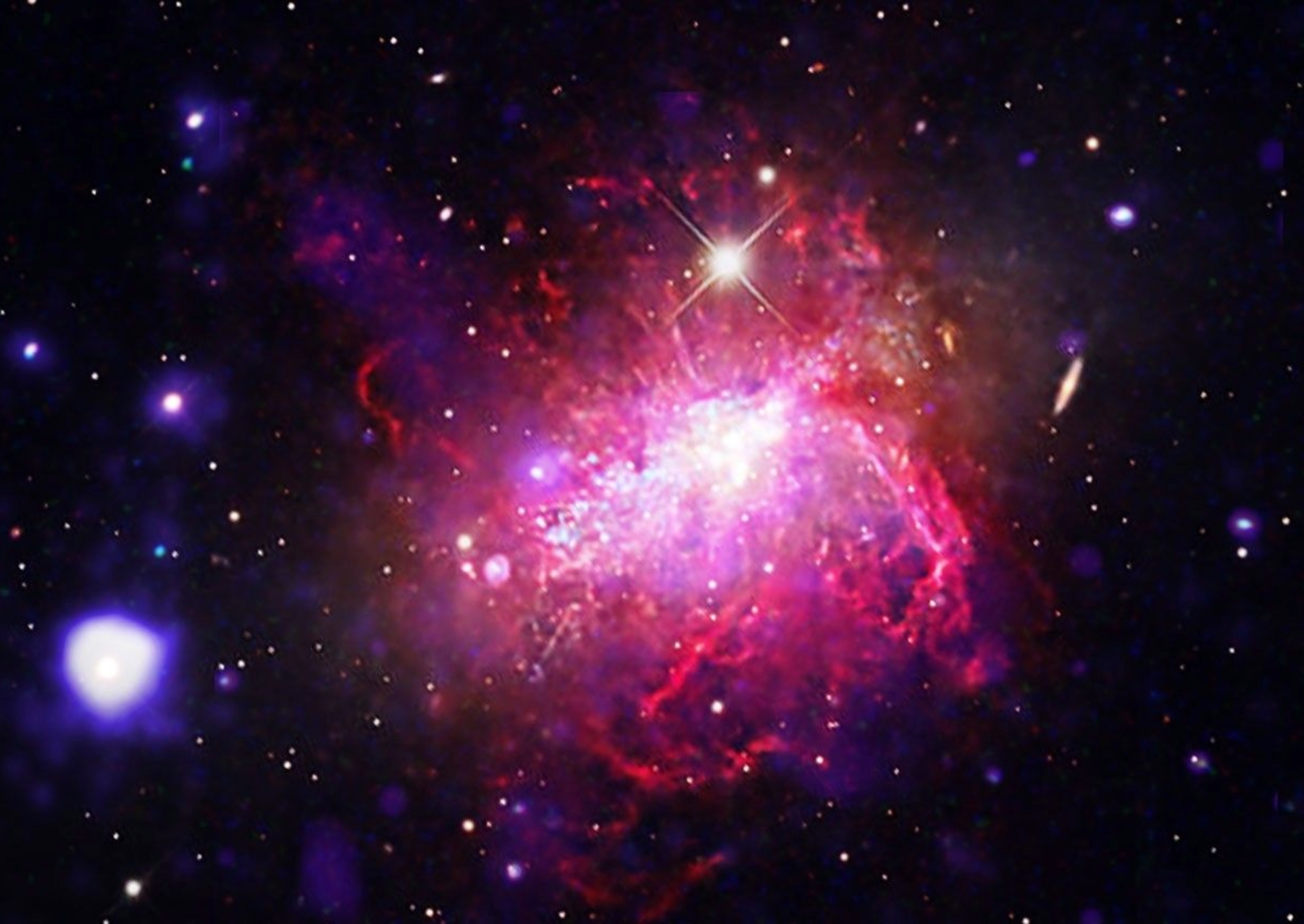
A compact dwarf irregular galaxy undergoing a violent, compact burst of star formation. Chandra and XMM-Newton observations (blue and purple) reveal massive bubbles of million-degree gas inflated by stellar winds, set against a backdrop of optical light (magenta, orange and white) imaged by Adam Block. Dwarf starburst galaxies can serve as local laboratories for studying the conditions of the early universe, where small, primitive galaxies formed stars at frantic rates. Image: X-ray: (XMM):ESA/XMM-Newton, (Chandra): NASA/CXC/SAO; Optical: Univ.of Arizona/Mt Lemmon SkyCenter/Adam Block/Josep Drudis; Image Processing: NASA?CXC/SAO/L. Frattare.

M90

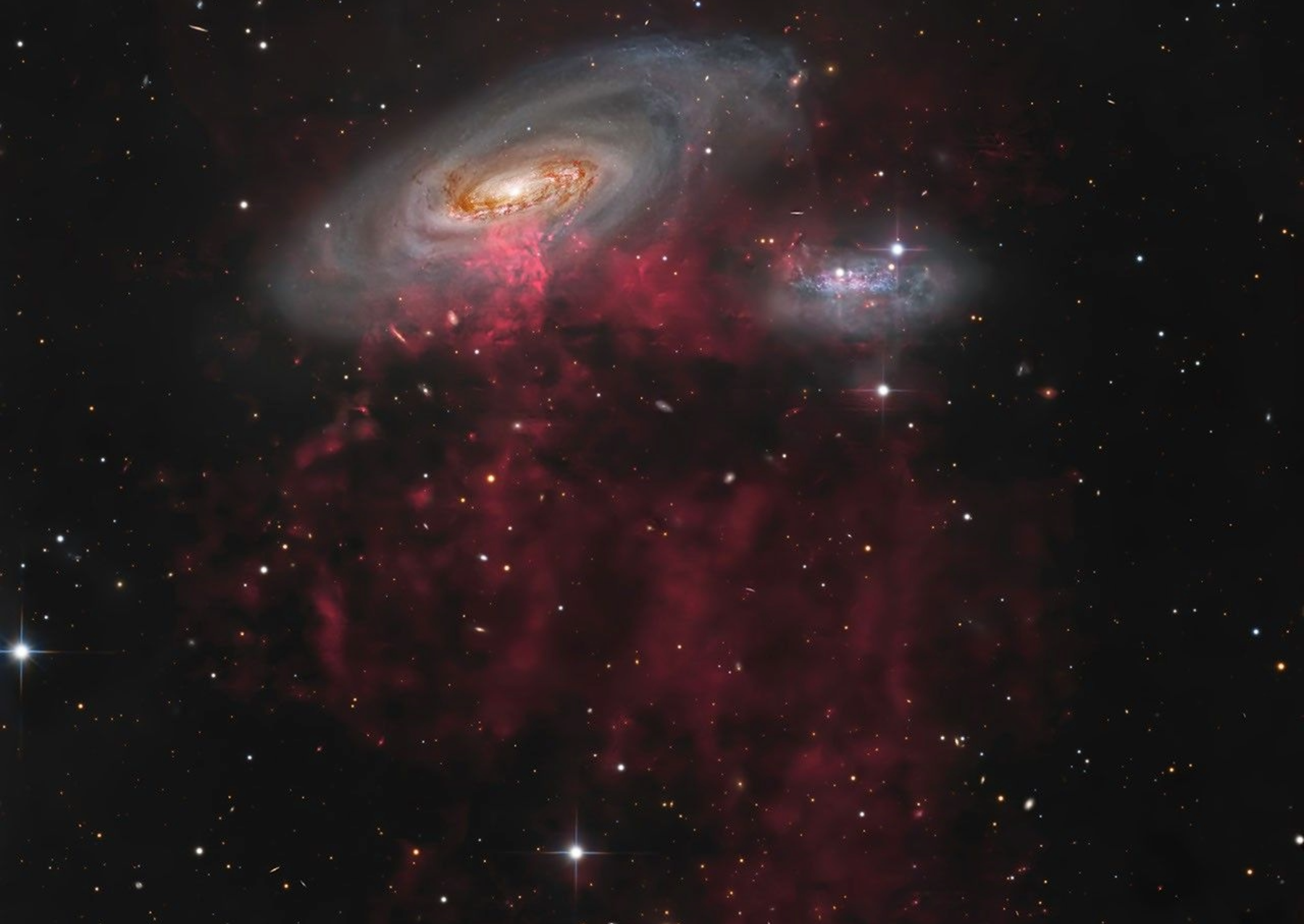
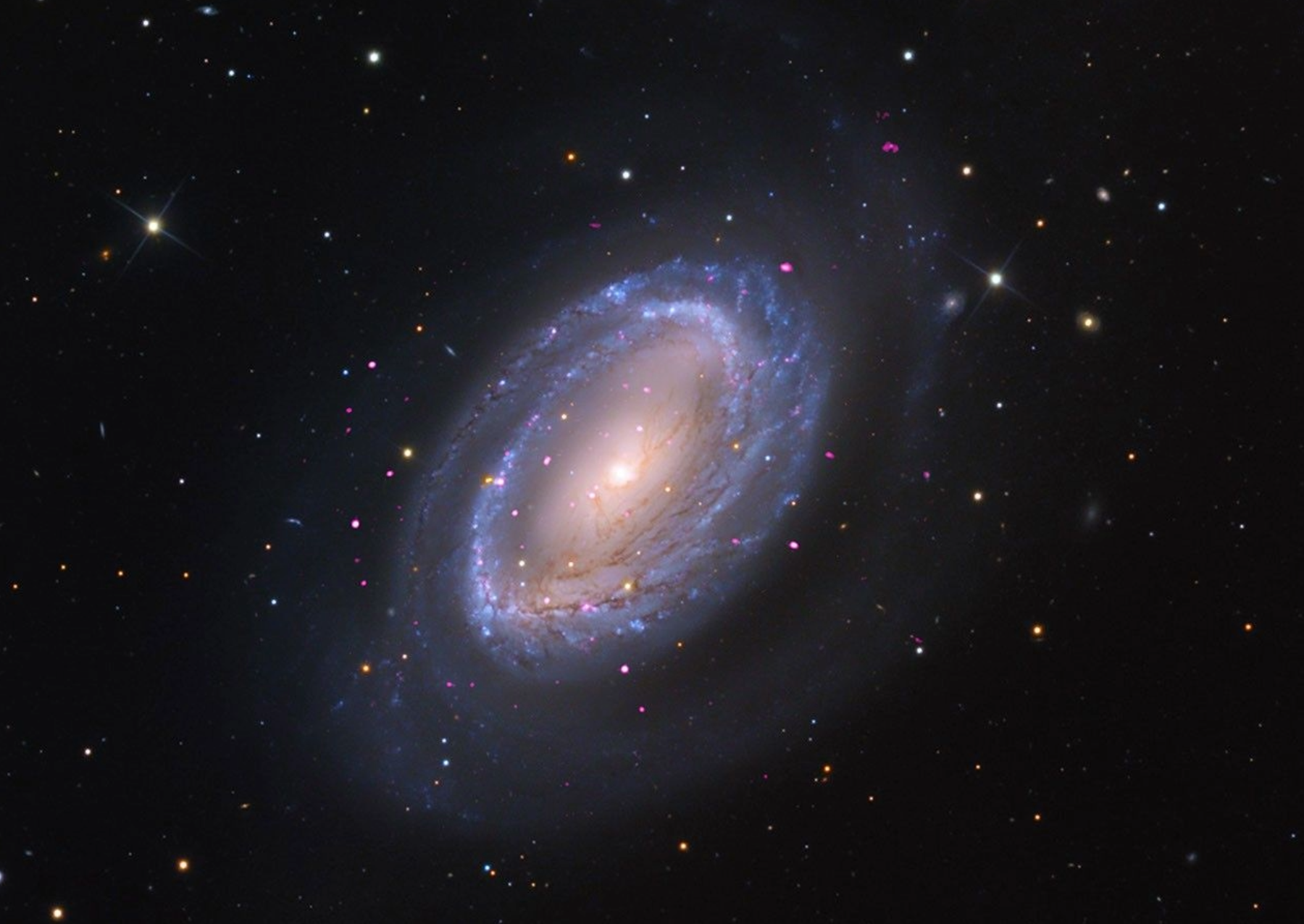
A large spiral galaxy that is being stripped of its gas as it plunges at high speed through hot gas in the Virgo Cluster of galaxies. Chandra’s X-ray data (magenta) pinpoints high-energy point sources—such as X-ray binaries and supernova remnants—and diffuse hot gas nestled within the spiral disk imaged by Hubble (blue, brown and gold). A ground-based optical light image taken from New Mexico by Timothy Martin reveals red filaments of hydrogen gas streaming over 300,000 light-years behind the galaxy as it falls into the Virgo Cluster. Image: Accidental Astronomers. X-ray: NASA/CXC/SAO; Optical: NASA/ESA/D. Thilker/J. Lee/PHANGS-HST Team; Full-field: Tim Martin; Image Processing: NASA/CXC/SAO/L. Frattare.

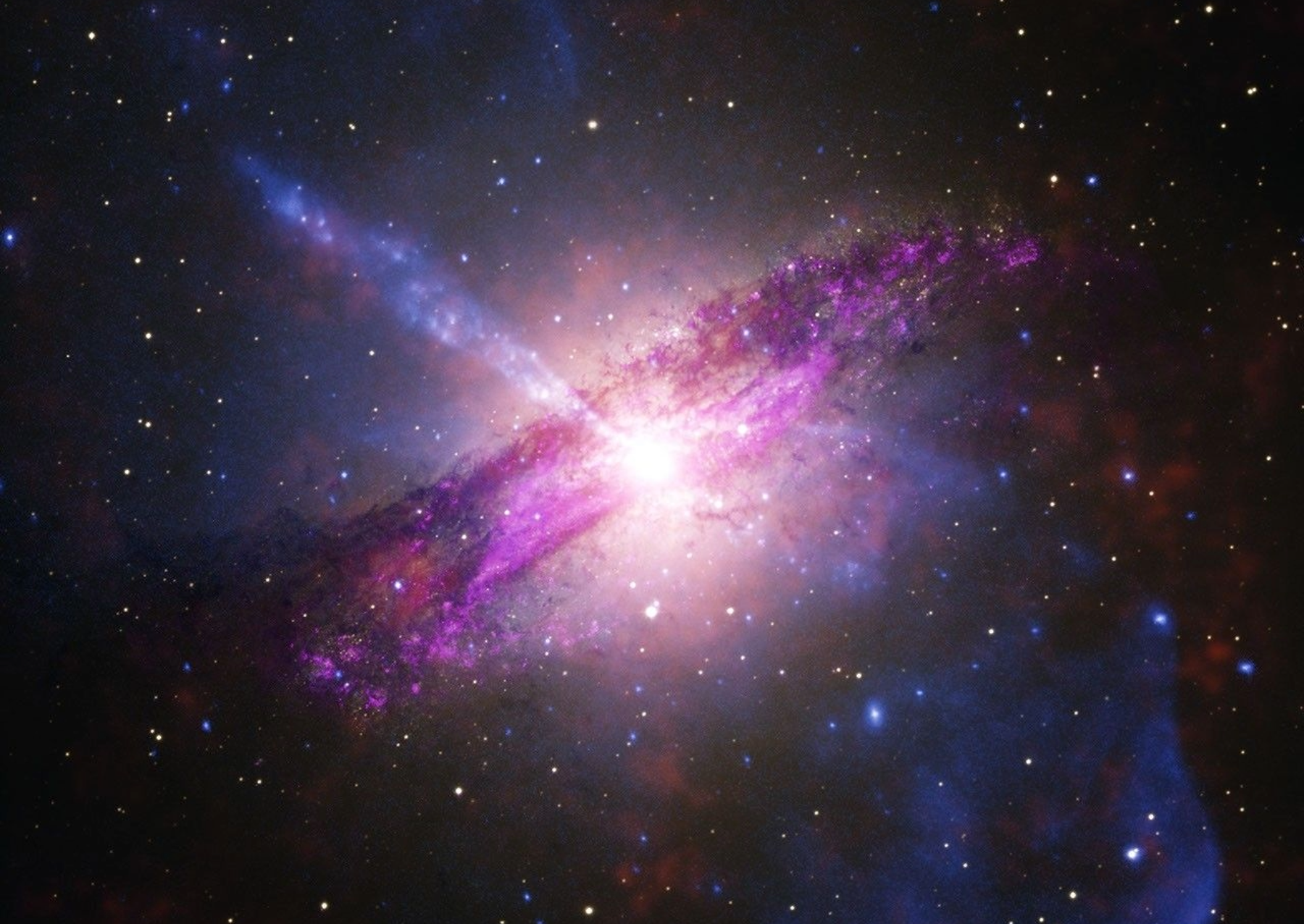
Centaurus A

A giant elliptical galaxy undergoing a dusty merger, featuring a powerful jet of particles blasting tens of thousands of light-years into space. Chandra’s X-rays (blue) showcase the high-energy jet, with additional X-rays from IXPE (orange), while Webb infrared (magenta) and optical light (amber and white) from the European Southern Observatory expose a dark, churning dust lane. As one of the closest active galaxies to Earth, Cen A allows astronomers to study the effects of supermassive black hole jets in extraordinary detail. Image: X-ray: (Chandra) NASA/CXC/SAO, X-ray (IXPE): NASA/MSFC; Optical: ESO; Infrared: NASA/ESA/CSA/STScI; Image Processing: NASA/CXC/SAO/L. Frattare, K. Arcand, and J. Major.

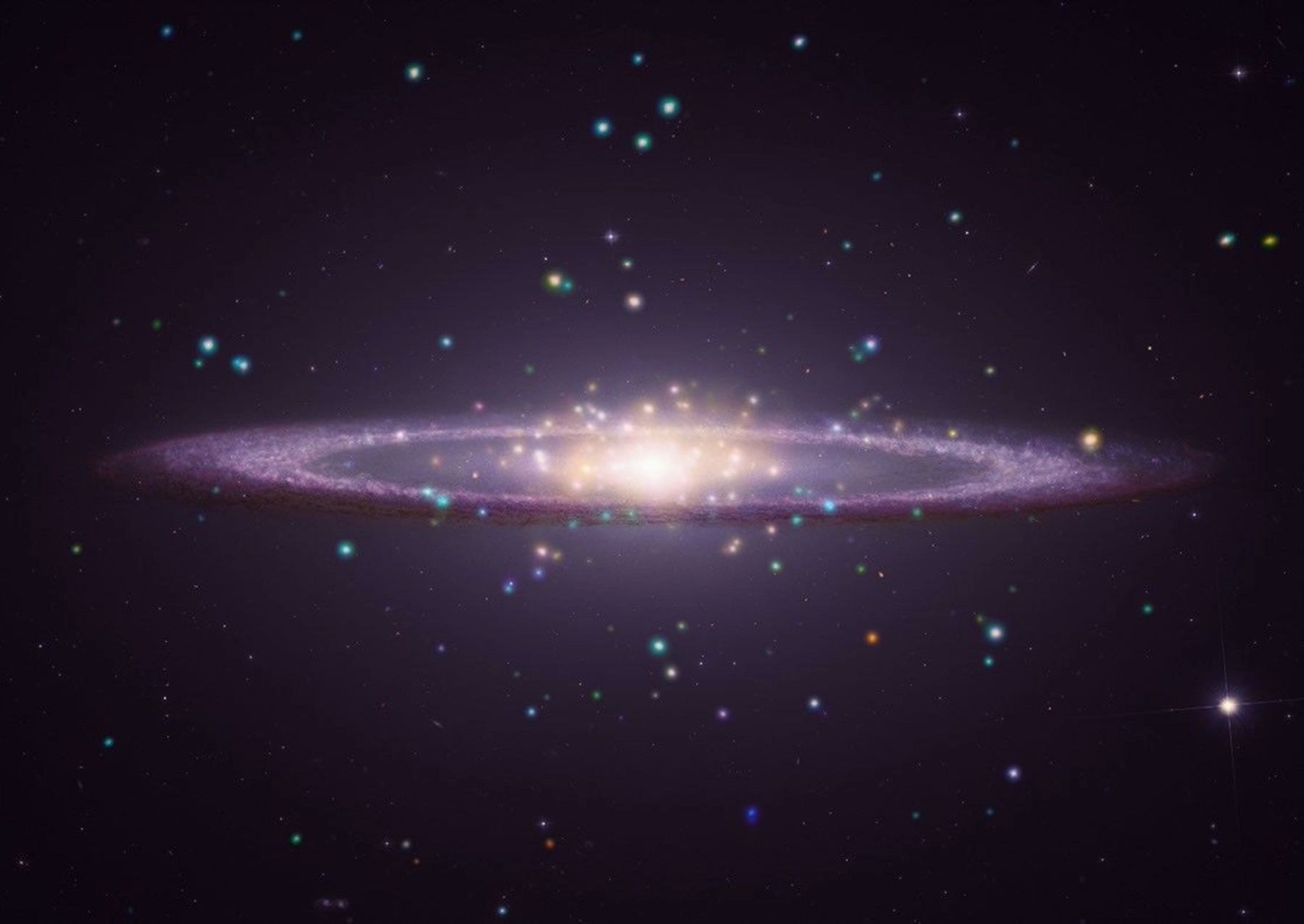
M104

Famous for its broad central bulge and dark outer dust ring, this galaxy sits at a nearly edge-on tilt to Earth. Chandra X-rays (cyan and orange) isolate compact point sources and hot gas in the galaxy's sprawling halo, merged with Hubble optical light (warm white) and Webb infrared vision (purple-red dust lane). Studying M104 may help bridge the gap between spirals and ellipticals, helping astronomers better understand how a galaxy's giant outer cloud of stars grows and ages alongside its inner disk. Image: X-ray: NASA/CXC/SAO; Optical:NASA/Hubble Heritage Team/AURA/STScI; Infrared: NASA/ESA/CSA/STScI; Image Processing: NASA/CXC/SAO/L. Frattare.
Famous for its broad central bulge and dark outer dust ring, this galaxy sits at a nearly edge-on tilt to Earth. Chandra X-rays (cyan and orange) isolate compact point sources and hot gas in the galaxy’s sprawling halo, merged with Hubble optical light (warm white) and Webb infrared vision (purple-red dust lane). Studying M104 may help bridge the gap between spirals and ellipticals, helping astronomers better understand how a galaxy’s giant outer cloud of stars grows and ages alongside its inner disk. Image: X-ray: NASA/CXC/SAO; Optical:NASA/Hubble Heritage Team/AURA/STScI; Infrared: NASA/ESA/CSA/STScI; Image Processing: NASA/CXC/SAO/L. Frattare.

Arp 143

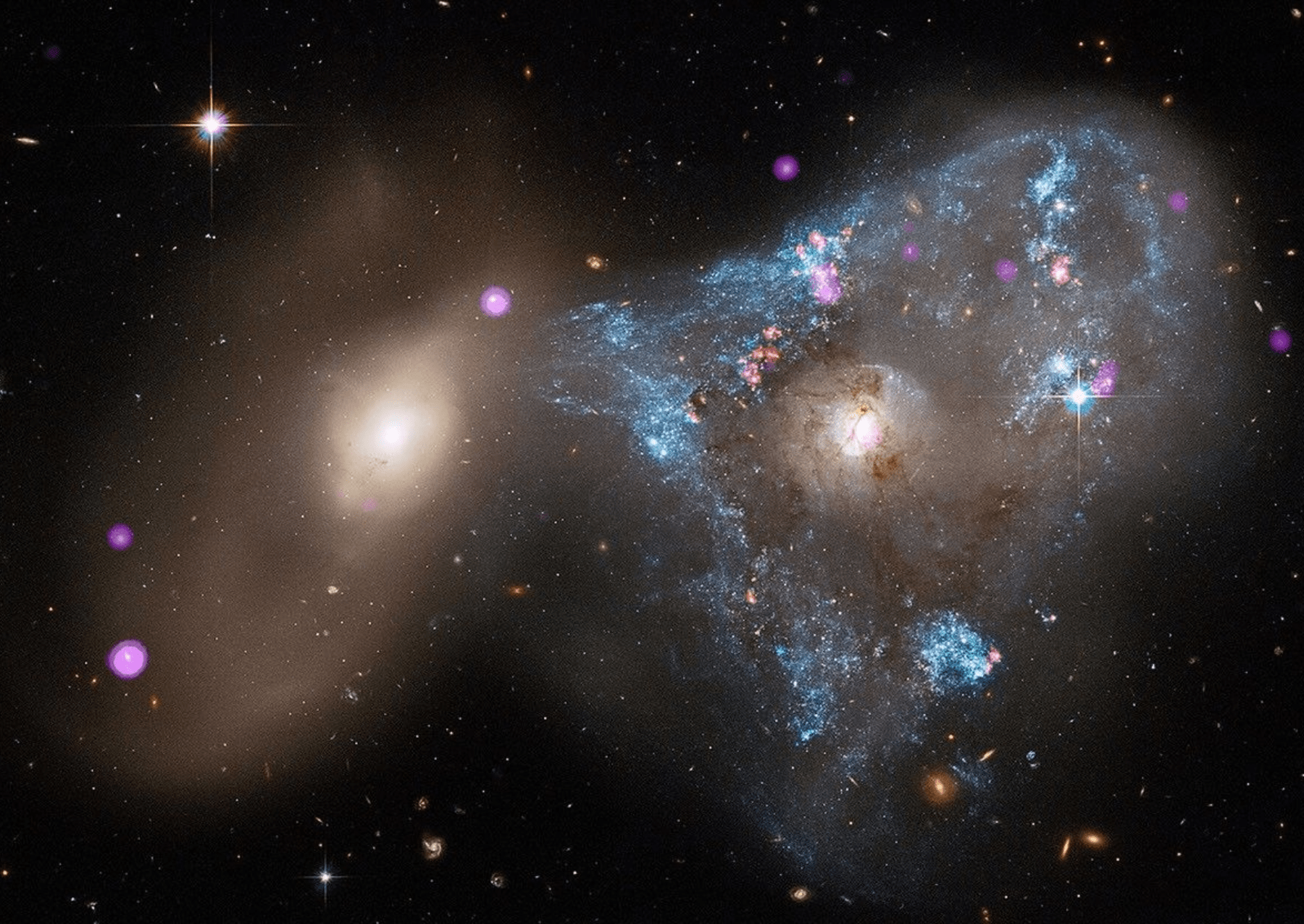
This ring galaxy system formed when a smaller companion galaxy punched straight through its center like a bullseye, creating a powerful cosmic shockwave. Chandra X-rays (purple) uncover bright X-ray binary systems scattered along the collision shock wave, laid over Hubble’s optical image (blue and white) of expanding stellar rings. Such head-on collisions can trigger vast ripple effects, sparking huge waves of star birth across entire galaxies. Image: X-ray: NASA/CXC/SAO; Optical: NASA/ESA/STScI/J. Dalcanton; Image Processing: NASA/CXC/SAO/L. Frattare.

NGC 4725

A "one-armed" barred spiral galaxy surrounded by a prominent star-forming ring. Chandra's X-ray data (magenta) pinpoints several bright X-ray sources, likely caused by growing black holes, embedded within the sweeping optical disk (soft blue and white) captured with the Mt. Lemmon Observatory. Galaxies with unusual single arms can offer a window into how the gravity from a passing galaxy can trigger bursts of star formation. Image: X-ray: NASA/CXC/SAO; Optical: NASA/ESA/STScI/NAOJ/R. Gendler; Image Processing: NASA/CXC/SAO/L. Frattare.
A “one-armed” barred spiral galaxy surrounded by a prominent star-forming ring. Chandra’s X-ray data (magenta) pinpoints several bright X-ray sources, likely caused by growing black holes, embedded within the sweeping optical disk (soft blue and white) captured with the Mt. Lemmon Observatory. Galaxies with unusual single arms can offer a window into how the gravity from a passing galaxy can trigger bursts of star formation. Image: X-ray: NASA/CXC/SAO; Optical: NASA/ESA/STScI/NAOJ/R. Gendler; Image Processing: NASA/CXC/SAO/L. Frattare.

NGC 1385

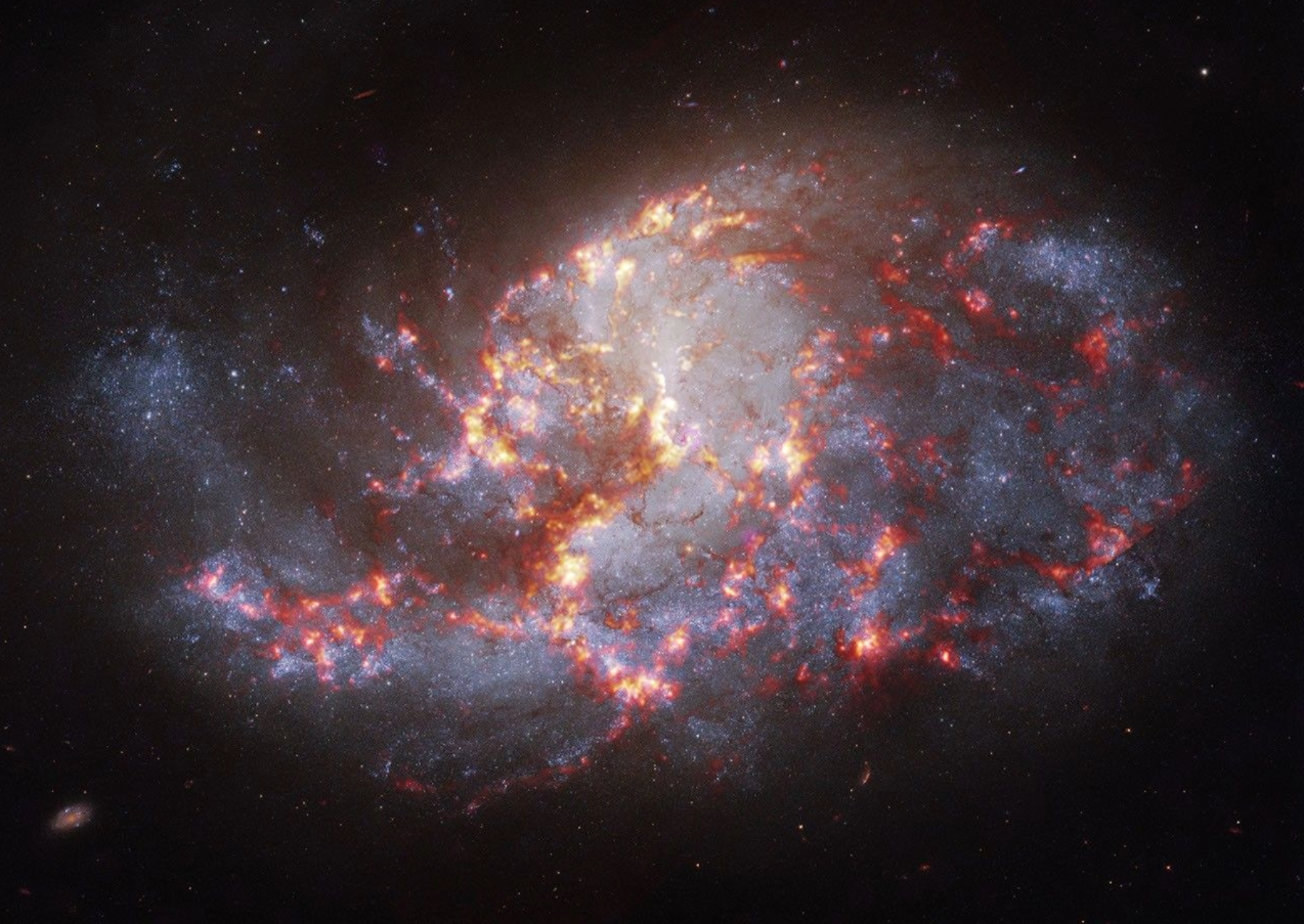
A barred spiral galaxy packed with regions where stars are actively forming. Chandra X-ray data (magenta) highlights stellar nurseries and X-ray binaries scattered along dusty spiral structures brought to life by Hubble optical (white and grey) and Webb infrared (orange and red) observations. Comparing multiwavelength data of barred spirals containing active star formation helps scientists map how local starbursts build up galactic mass over time. Image: X-ray: NASA/CXC/SAO; Optical: NASA/ESA/STScI; Infrared: NASA/ESA/CSA/STScI; Image Processing: NASA/CXC/SAO/L. Frattare.

NGC 660

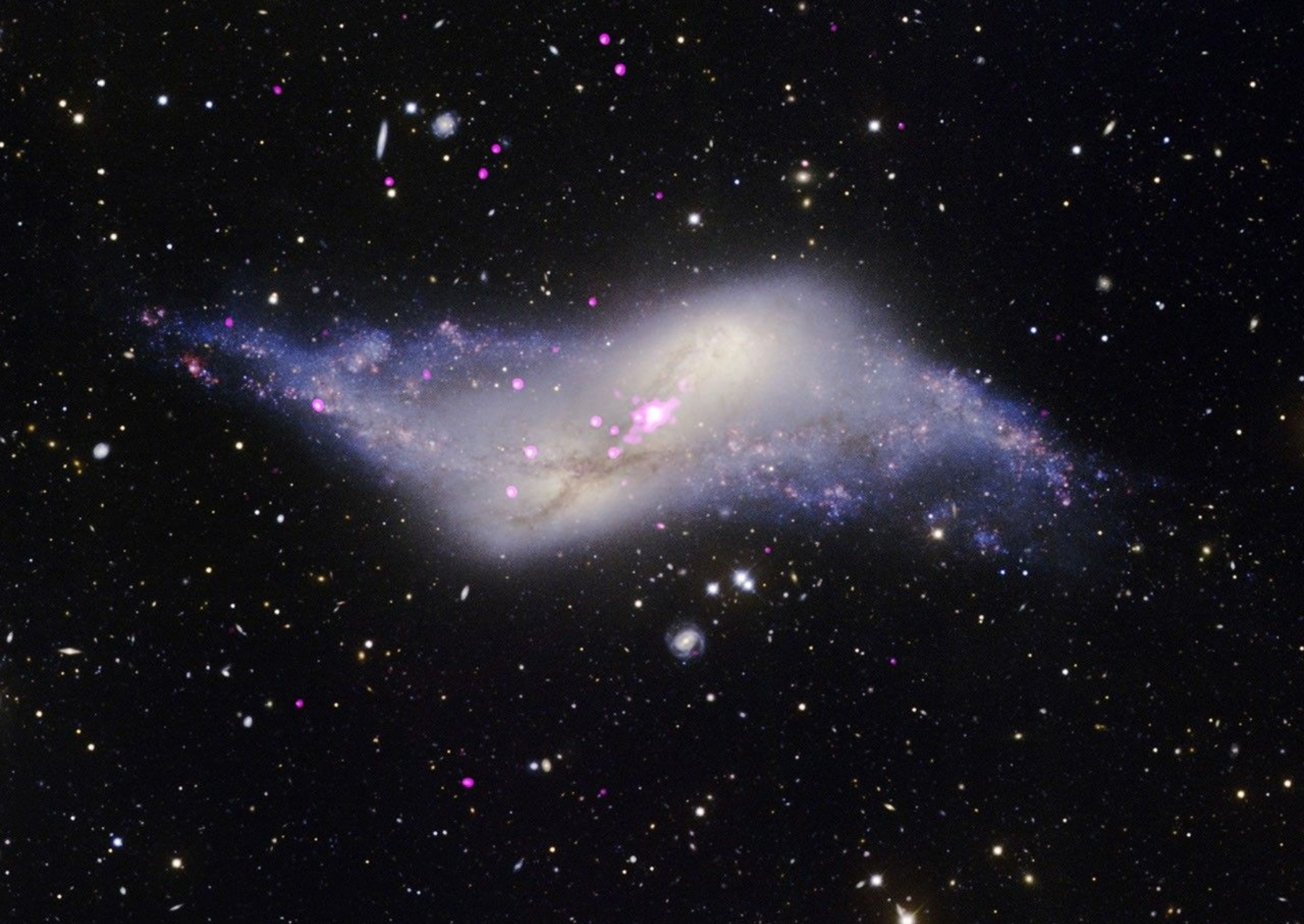
A rare "polar ring" galaxy where a tilted outer ring of stars and dust rotates over the galaxy's poles, an unusual structure likely caused by a collision with another galaxy about a billion years ago. Chandra’s X-rays (purple) reveal a possible growing supermassive black hole in the center of the galaxy, plus X-ray binaries nestled within the stars and dust captured by the Gemini Observatory in optical light (gold, blue and white). Studying polar rings teaches us about the diverse effects of stellar collisions on the shapes of galaxies. Image: X-ray: NASA/CXC/SAO; Optical:NSF/International Gemini Observatory/AURA; Image Processing: NASA/CXC/SAO/L. Frattare.
A rare “polar ring” galaxy where a tilted outer ring of stars and dust rotates over the galaxy’s poles, an unusual structure likely caused by a collision with another galaxy about a billion years ago. Chandra’s X-rays (purple) reveal a possible growing supermassive black hole in the center of the galaxy, plus X-ray binaries nestled within the stars and dust captured by the Gemini Observatory in optical light (gold, blue and white). Studying polar rings teaches us about the diverse effects of stellar collisions on the shapes of galaxies. Image: X-ray: NASA/CXC/SAO; Optical:NSF/International Gemini Observatory/AURA; Image Processing: NASA/CXC/SAO/L. Frattare.

M82

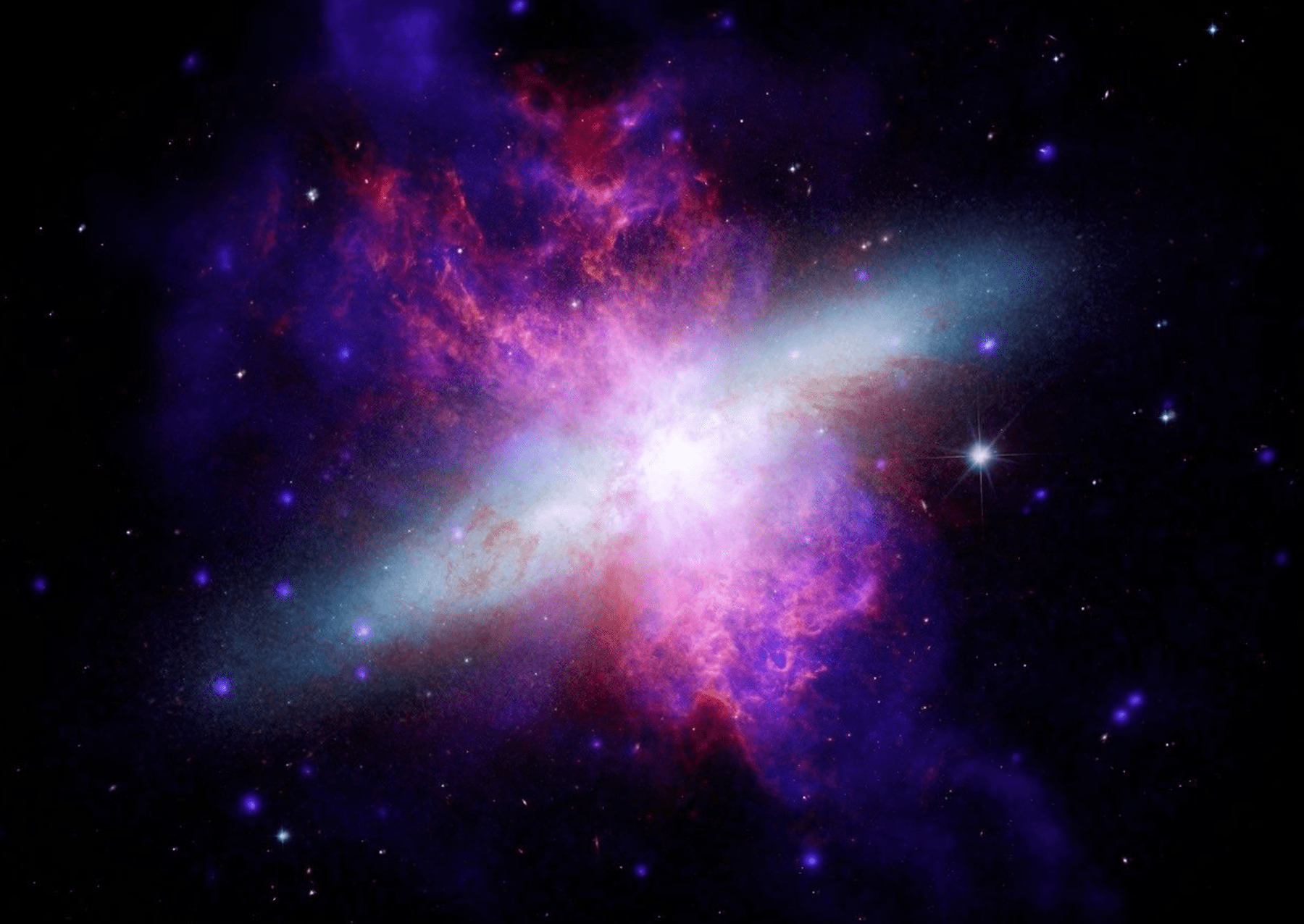
An irregular galaxy undergoing intense star formation because of a gravitational interaction with a neighboring galaxy hundreds of millions of years ago. Chandra X-rays (blue), supplemented by NuSTAR data, show towering superwinds of million-degree gas blowing thousands of light-years out of the galactic disk, with Hubble optical light (yellow, orange and white) showing the galaxy shape, and Webb and Spitzer detailing infrared dust emission (red). M82 was nicknamed the Cigar Galaxy mostly because of its edge-on angle to Earth, which makes its central disk look like an elongated, cigar-shaped oval with small optical telescopes. The galaxy illustrates how violent galactic "exhaust systems" can regulate a galaxy's growth by venting gas outwards. Image: X-ray: NASA/CXC/SAO; Optical: NASA/ESA/STScI; Infrared: NASA/ESA/CSA/STScI; Image Processing: NASA/CXC/SAO/L. Frattare, J. Major, and K. Arcand.
An irregular galaxy undergoing intense star formation because of a gravitational interaction with a neighboring galaxy hundreds of millions of years ago. Chandra X-rays (blue), supplemented by NuSTAR data, show towering superwinds of million-degree gas blowing thousands of light-years out of the galactic disk, with Hubble optical light (yellow, orange and white) showing the galaxy shape, and Webb and Spitzer detailing infrared dust emission (red). M82 was nicknamed the Cigar Galaxy mostly because of its edge-on angle to Earth, which makes its central disk look like an elongated, cigar-shaped oval with small optical telescopes. The galaxy illustrates how violent galactic “exhaust systems” can regulate a galaxy’s growth by venting gas outwards. Image: X-ray: NASA/CXC/SAO; Optical: NASA/ESA/STScI; Infrared: NASA/ESA/CSA/STScI; Image Processing: NASA/CXC/SAO/L. Frattare, J. Major, and K. Arcand.

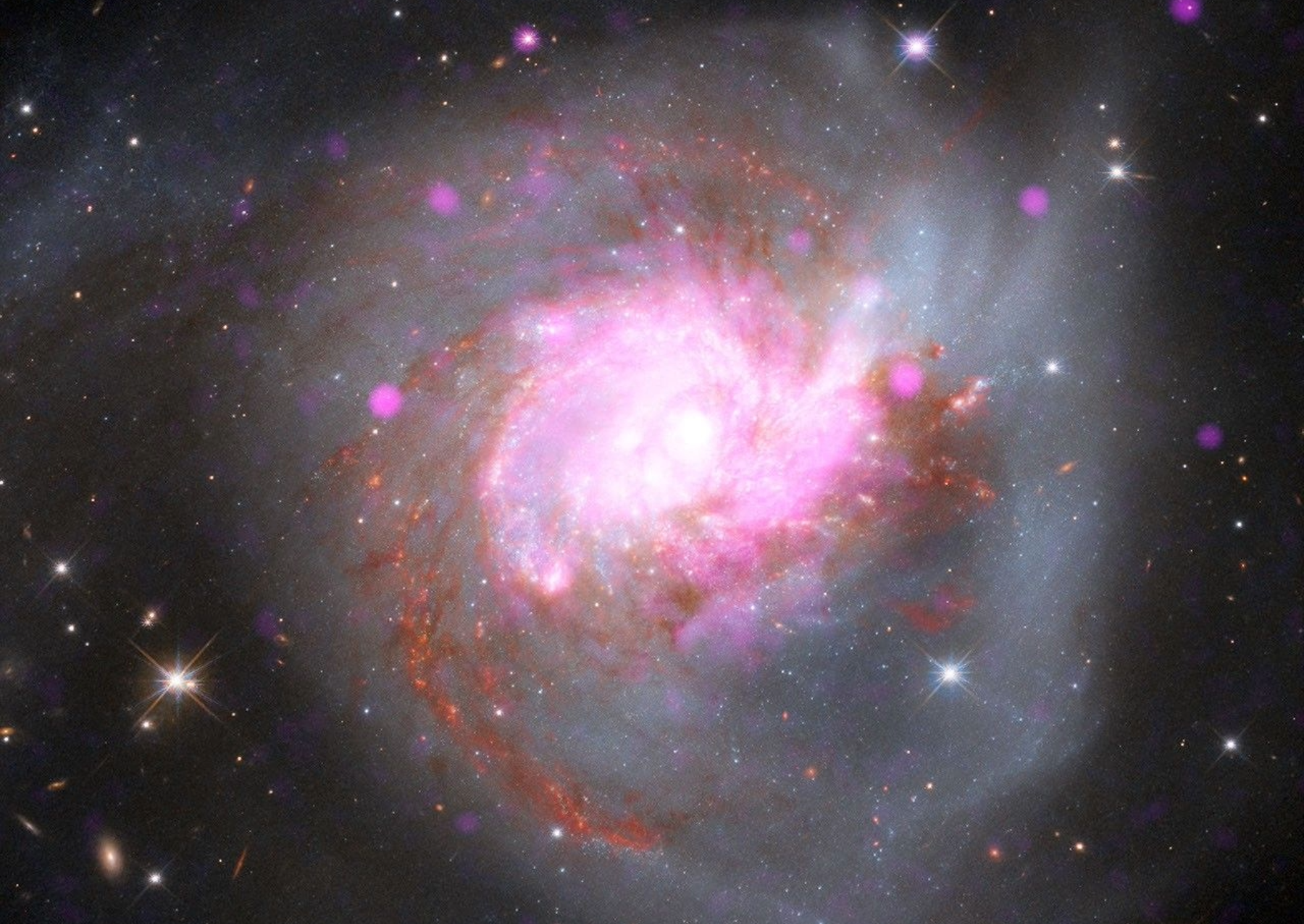
NGC 3256

A pair of colliding, gas-rich spiral galaxies merging into a single massive system. Chandra’s X-ray data (pink) isolates point sources and shock-heated gas, Hubble’s optical light (blue and white) captures tidal tails of stars, and Webb’s infrared vision (red and orange) cuts through the dust to show hidden star formation. Galaxy collisions like this offer a preview of our far future, showing what might happen if our own Milky Way collides and merges with the nearby Andromeda Galaxy. Image: X-ray: NASA/CXC/SAO; Optical: NASA/ESA/STScI; Infrared: NASA/ESA/CSA/STScI; Image Processing: NASA/CXC/SAO/L. Frattare.

NGC 3938

A face-on spiral galaxy whose orientation gives us an unobstructed view of its disk. X-ray emissions from Chandra (magenta) detail energetic X-ray binaries and supernova remnants scattered across dust lanes in an optical image (white, blue and gold) from Adam Block with Mt. Lemmon Observatory. Face-on orientations are important for galactic studies because they provide the most unobstructed views of a galaxy’s stars and gas. Image: X-ray: NASA/CXC/SAO; Optical: Adam Block/Mount Lemmon SkyCenter/University of Arizona; Image Processing: NASA/CXC/SAO/L. Frattare.

NGC 4631

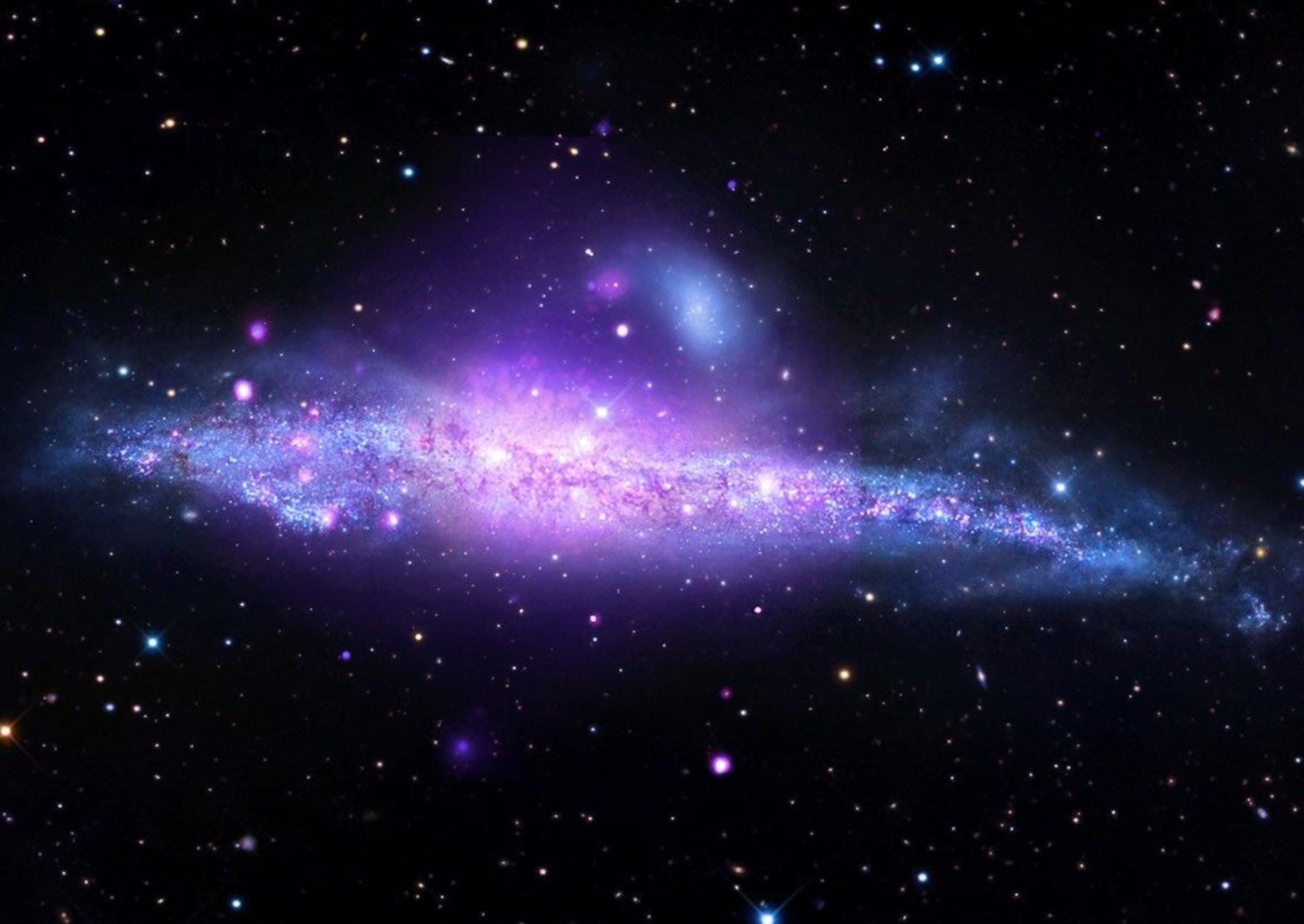
A spiral galaxy viewed from its side, featuring a giant halo of hot gas blowing out of its stellar disk. X-rays from Chandra and ESA’s XMM-Newton (purple and royal blue) trace hot gas driven out by supernovas and black holes and neutron stars pulling gas from their companions, while optical light (light blue, gold and white) from ground-based observer R. Jay GaBany showcases dense dust lanes. Edge-on views of galaxies allow astronomers to study how flat their stellar disks are and provide the clearest views of material located above or below the disk. Image: X-ray: NASA/CXC/SAO; Optical: ©2011-2015 by R Jay GaBany, Cosmotography.com; Image Processing: NASA/CXC/SAO/L. Frattare.

The post 16 glistening galaxies shine in new images form NASA’s Chandra X-Ray Observatory appeared first on Popular Science.

  •  

How do I get my photos from my iPhone to my Mac?

Hi,

I have to send from photos to a friend. I took these photos on my iPhone 5C (about 6 or 7 pics) and I'd like to transfer them to my Mac laptop (OSX 10.7.5) and then send them as attachments to an email to my friend. But I don't know how to do any of this. Sorry, I'm not really a power user and I don't usually take many photos. Of course, I do know how to send an attachment to an email but I don't know how to get the photos from my iPhone to my Mac. I have the latest version of iTunes...

Read more
  •  

Tweet! Here are the winners of the 2026 Audubon Photography Awards

It’s a bird’s world, and we’re just living in it. Today, the National Audubon Society officially announced the winners of the 2026 Audubon Photography Awards. The contest is now in its 17th year and celebrates stunning photos (and even a few videos) that showcase the beauty of birds and the challenges they face. For the second year, the judges awarded prizes to residents of Chile and Colombia, as well as the United States and Canada, highlighting how avians connect us across geographies and ecosystems. 

This year’s Grand Prize winners each received $5,000 and a voyage to Antarctica with HX Expeditions—an expedition cruise company and Audubon’s exclusive cruise partner.

Take a peek at the winners in the gallery below. (Click to expand images to full screen.)

Prizes for United States and Canada Residents

Grand Prize: Jacqueline Burke, roseate spoonbill

a bird with pink feathers glides over the water
A roseate spoonbill (Platalea ajaja) at the St. Augustine Alligator Farm Zoological Park, in St. Augustine, Florida. Image: Jacqueline Burke.

Youth Prize: Ian Shultz, rock pigeon

a pigeon with outstretched wings glides over water
A rock pigeon (Columba livia) in Golden Gardens Park in Seattle, Washington. Image: Ian Shultz.

Video Prize: Piper VanOrd, great blue heron

A great blue heron (Ardea herodias) at Allegheny Islands Wilderness, National Wild & Scenic Allegheny River, in Warren, Pennsylvania. Credit: Piper VanOrd.


Female Bird Prize: Gail Bisson, common merganser

a bird with black, white, and brown feathers flies over water with a fish in its mouth
A common merganser (Mergus merganser) in East Bay Sandbar, Nova Scotia, Canada. Image:  Gail Bisson.

Plants for Birds Prize: Mike Henry, Gila woodpecker and saguaro cactus

a bird with black and white feathers sticks its beak and most of its head into the yellow pollen-filled center of cactus flower
A Gila woodpecker (Melanerpes uropygialis) and saguaro cactus (Carnegiea gigantea) in Tucson, Arizona. Image: Mike Henry.

Birds Without Borders Prize: Nick Parayko, Tennessee warbler

a bird with yellow-green feathers stands on a leaf
A Tennessee warbler (Leiothlypis peregrina) in photographer Nick Parayko’s backyard in St. Albert, Alberta, Canada. Image: Nick Parayko.

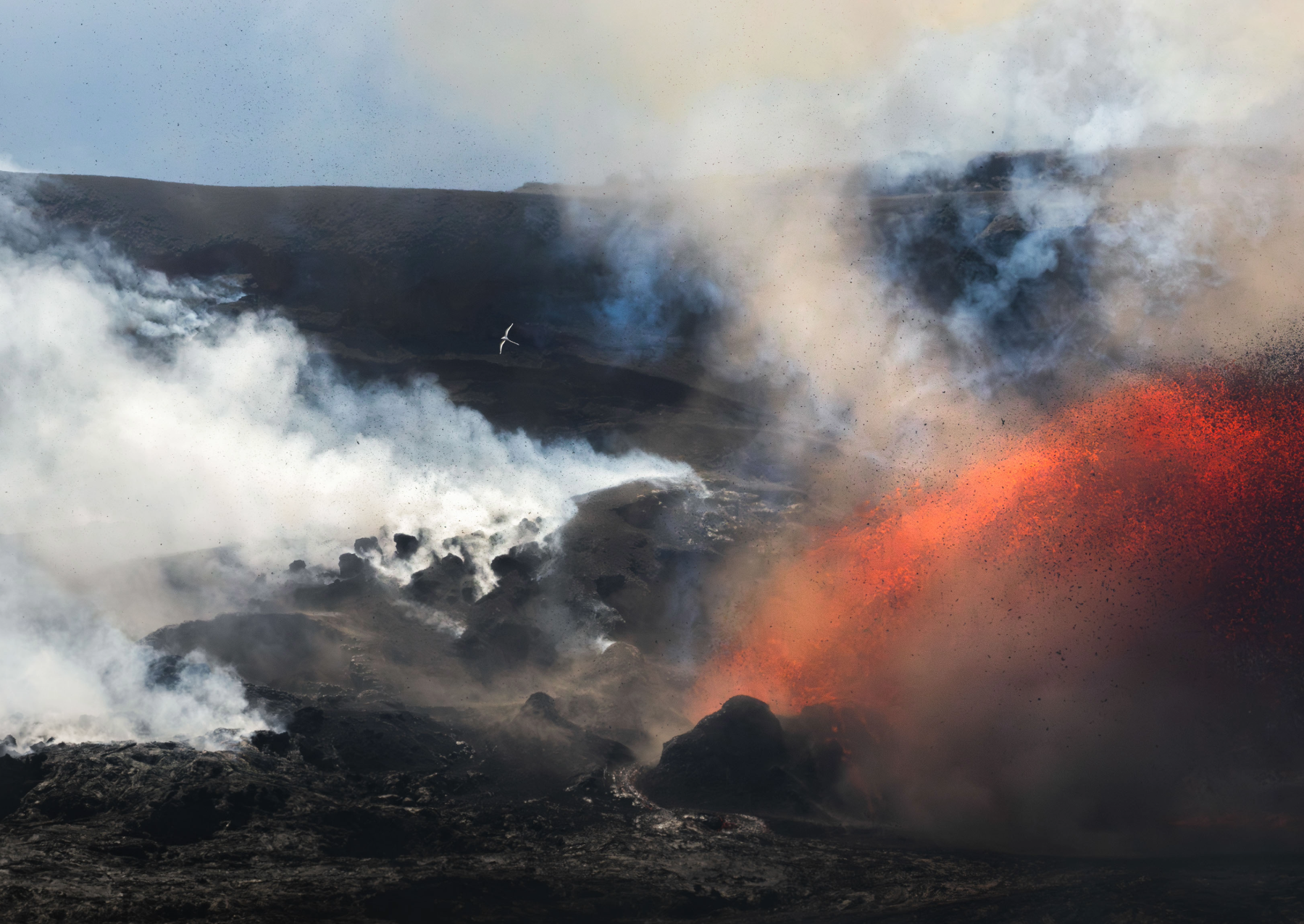
Birds in Landscapes Prize: Liron Gertsman, white-tailed tropicbird

a white bird flies by a volcano with red lava and white smoke spewing out
A white-tailed tropicbird (Phaethon lepturus) in Hawai’i Volcanoes National Park in Hawai’i. Image: Liron Gertsman.

Conservation Prize: Josh Galicki, northern gannets

several white birds on a rock cliff with plastic
Northern gannets (Morus bassanus) on the Isle of Noss in the Shetland Islands, United Kingdom. Image: Josh Galicki.

Prizes for Chile and Colombia Residents

Grand Prize: Francisco Castro Escobar, lesser horned owl

an owl with gray, brown, and white feathers, with prominent black feathers over its eyes sits on a tree branch next to a spiky cactus
A lesser horned owl (Bubo magellanicus) in Antofagasta, Chile. Image: Castro Escobar.

Youth Prize: Juan David Camacho Márquez, Canada warbler

a bird with grey and black feathers with prominent yellow feathers on its belly stands on a branch of a tree with a spider web underneath it
A Canada warbler (Cardellina canadensis) in Doña Dora Birding, El Queremal, Valle del Cauca, Colombia. Image: Juan David Camacho Márquez.

Video Prize: Nicolás Muñoz García, black-browed albatross

A black-browed albatross (Thalassarche melanophris) is on Isla Chañaral Marine Reserve, Huasco Province, Chile. The nearest town is Caleta Chañaral de Aceituno. Credit: Nicolás Muñoz García.

Birds Without Borders Prize: Rodrigo González Pairoa, black-browed albatross

a close-up of the profile of a bird with white feathers, a dark eye, and light orange beak
A black-browed albatross (Thalassarche melanophris) in Almirantazgo Fjord, Chile. Image: Rodrigo González Pairoa.

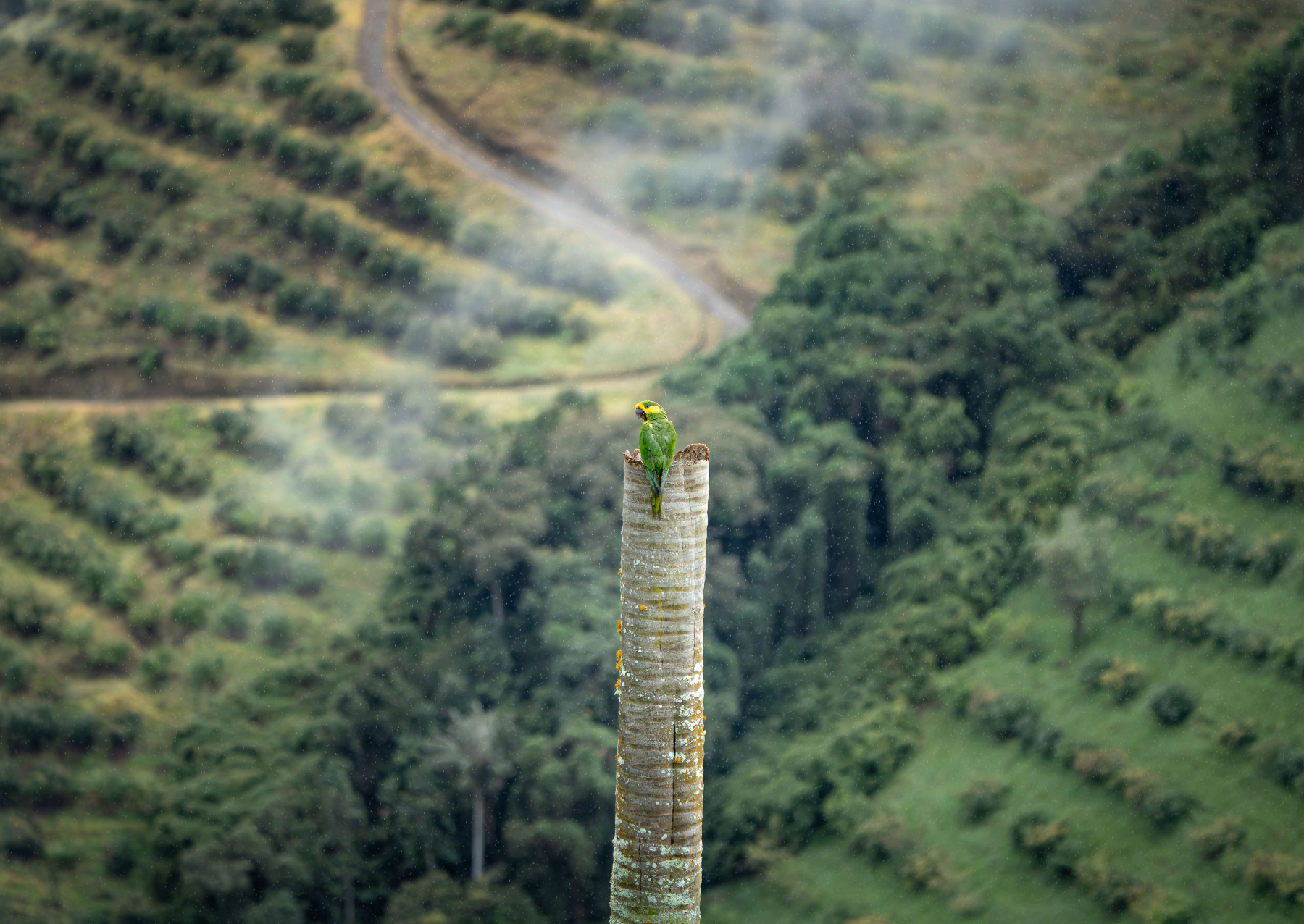
Conservation Prize: Santiago Pérez Rincón, yellow-eared parrot

a parrot sits n top of a palm tree trunk with green feather and yellow feathers on its face
A yellow-eared parrot (Ognorhynchus icterotis) in Anaime River Canyon, Rural District of the Municipality of Cajamarca, Department of Tolima, Colombia. Image: Santiago Pérez Rincón.

Plants for Birds Prize, Colombia: Santiago Giraldo, yellow-eared parrot and Quindio wax palm

two parrots with green feathers with yellow feathers on their faces touch beaks on the trunk of a palm tree. one of the birds is inside of a hole in the tree, while the other stands below
A yellow-eared parrot (Ognorhynchus icterotis) and Quindio wax palm (Ceroxylon quindiuense) in Anaime, Cajamarca, Tolima, Colombia. Image: Santiago Giraldo.

Birds in Landscapes Prize, Colombia: Faber Mosquera Álvarez, oilbird

a bird with gray and brown feathers flies in the dark night sky
Oilbird (Steatornis caripensis) in the Cañón de los Guácharos, Pijao, Quindío, Colombia. Image: Faber Mosquera Álvarez.

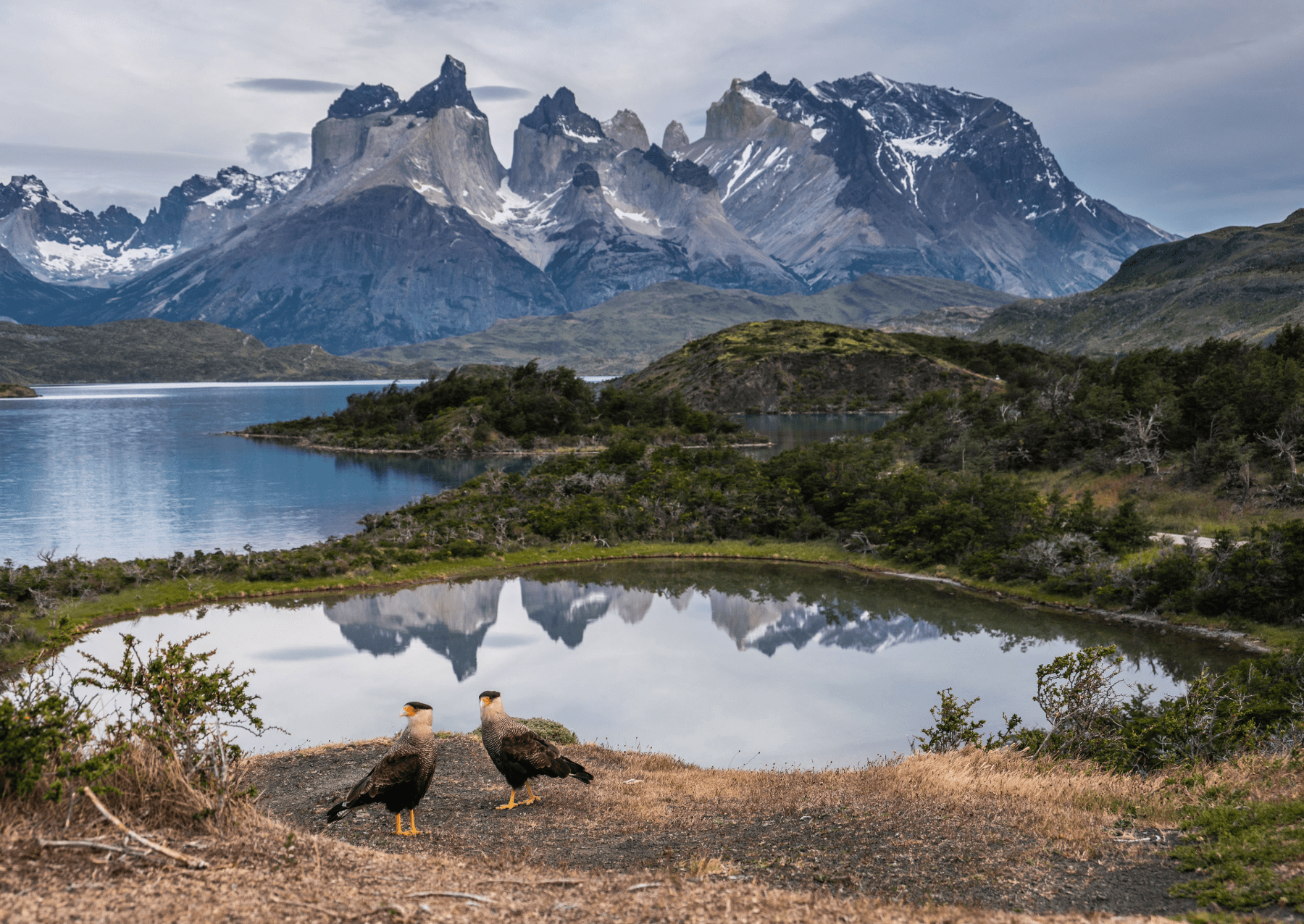
Birds in Landscapes Prize, Chile: Timothy Dhalleine, crested caracara

two birds with brown and white feathers stand by a pond and a lake underneath snow-capped mountains
A crested caracara (Caracara plancus) in Torres del Paine National Park, Magallanes and Chilean Antarctic region, Chile. Image: Timothy Dhalleine.

Coastal Birds Prize, Chile: Gonzalo Bertolotto Quintana, gentoo penguin

a top view of a penguin with white and black gliding through the ocean
A gentoo penguin (Pygoscelis papua) in Fildes Bay, Antarctica, in the vicinity of the Chilean bases. Image: Gonzalo Bertolotto Quintana.
Gonzalo Bertolotto Q

The winners and honorable mentions are published online in Audubon magazine, and winners will be in the Fall 2026 print issue. The annual Top 100 photos will also be announced on September 23, 2026, and additional selections will be featured in digital galleries on Audubon’s website.  

The 2027 Audubon Photography Awards will open for entries on January 13, 2027. 

The post Tweet! Here are the winners of the 2026 Audubon Photography Awards appeared first on Popular Science.

  •  

MacVoices #26163: NAB – CYME Expands Peakto for Larger Libraries and Team Collaboration

In the CYME booth at NAB in Las Vegas, Matthieu Kopp, Chief Technology Officer, previews the next Peakto release, highlighting support for much larger media libraries, expanded collaboration, guest sharing, and secure on-premise access without cloud uploads. He also discusses other features such as new culling tools, improved ingest control, subclips for video workflows, and […]

💾

  •  

MacVoices #26151: NAB – Topaz Labs Talks Upscaling, HDR, and Apple Silicon Performance

At NAB 2026, Russell Pompea, Account Executive from Topaz Labs, discusses major advances in Topaz Video, including Starlight Precise 2.5 for restoring low-quality footage, SDR-to-HDR conversion, and Apple Silicon optimization. The conversation also covers Topaz’s photography tools, model customization, subscription pricing, local vs. cloud processing, and shared responsibility for cloud security. 

💾

  •  

Hubble captures a corner of M20

Life in space is hard. Most orbiting observatories retire well before their 20th birthday. Yet the Hubble Space Telescope has survived and continues to thrive well into its 30s. Astronomers celebrated the observatory’s 36th birthday in April by releasing a new image of the Trifid Nebula (M20). This stellar nursery lies about 5,000 light-years fromContinue reading "Hubble captures a corner of M20"

The post Hubble captures a corner of M20 appeared first on Astronomy Magazine.
  •  

How one student captured the universe without light

Astrophotography tends to blur the boundary between science and art. The incredible images from Hubble and JWST, for example, captivate us as much for their aesthetic beauty as for their data. Recently, a photography student blurred those lines even further, taking the concept of capturing the cosmos quite literally by creating images from film’s interactionContinue reading "How one student captured the universe without light"

The post How one student captured the universe without light appeared first on Astronomy Magazine.
  •  

A Rare Celestial Alignment Links Two Ancient Volcanoes in This Spectacular New Image Shared by NASA

Two dormant volcanoes in the Andes are shown “connected” by the glowing ribbon of a distant cosmic feature stretching across the sky between them, in a rare cosmic alignment echoing ancient legends about these neighboring peaks—and all of it was captured in one of the most breathtaking astronomy images in recent memory.

The photo (seen below) was captured by astrophotographer Gonzalo Laserna Vargas and showcased by the American space agency this week. In it, we see Parinacota and Pomerape, a pair of ancient stratovolcanoes that form an unmistakable part of the landscape along the border between Bolivia and Chile.
In local folklore, these two prominences represent a prince and princess whose forbidden romance forever linked them in myth. Although no geological evidence exists for any physical links between them, astronomy recently helped fulfil that mythic connection in an unprecedented night sky display. The unique conditions that made this image possible, as well as the planning and preparation that went into it, were described by Vargas in a recent post on his Instagram account.
Barnard’s Loop Rising

In the new imagery, recently featured as NASA’s Astronomy Picture of the Day, Barnard’s Loop—a vast arc of glowing hydrogen gas surrounding part of the constellation Orion—is showcased in a long-exposure photograph as it appears behind the two volcanoes.

The image was captured coinciding with the appearance of the nebula directly behind the volcanoes, and from an angle that causes the visible portion of the celestial object to appear as though it is rising from the mouths of the ancient volcanic peaks, uniting them through what resembles a colorful, luminous aerial display.

Despite the awe-inspiring appearance of the imagery, as part of the larger Orion Molecular Cloud, Barnard’s Loop remains at a distance of around 440 parsecs from these dormant volcanic peaks—in other words, close to 1,400 light-years away.

a Cosmic Convergence

Capturing a cosmic convergence at this scale required careful planning by Vargas, who took a sequence of exposures from the same location in Bolivia in mid-April, at a time when the nebula appeared perfectly in between the two mountain summits.

One thing that helped with this is the fact that Barnard’s Loop is one of the largest emission nebulae visible from Earth. Although it is far too faint to be seen easily with the naked eye, the nebula’s vibrant pink and orange colors appear in long-exposure photography, revealing its eerie halo fueled by the presence of hydrogen gas.

Along with Barnard’s Loop, several of the night sky’s most recognizable objects also make an appearance in Vargas’s photo. Near the center of the image is the Orion Nebula, which happens to be one of the nearest stellar nurseries to Earth. Such areas of the cosmos are places where new star formation occurs within vast clouds of cosmic dust and gas.

To the nebula’s right, Betelgeuse is also visible, the reddish supergiant which was recently confirmed to have a stellar companion after more than a century of speculation about what might cause unusual variances in its brightness.

Higher in the image, another striking feature—the Rosette Nebula—can also be seen, revealed as a massive cloud of glowing gas around a small group of young stars.

A Cosmic Neighborhood United in Imagery

Although each of these features is separated by hundreds or even thousands of light-years from Vargas’s imagery, they all appear in a singular frame, producing a dramatic cosmic backdrop for the ancient volcanic landscape they appear above.

Hence, for reasons that are easy to see, Vargas’s photo was named NASA’s Astronomy Picture of the Day for July 28, 2026, revealing another artful view of the cosmos that relies on far more than just advanced equipment—it also showcases the necessity for astronomical knowledge, careful preparation, and, of course, impeccable timing.

The result in this case is a moment captured in time, where mythology, an ancient volcanic landscape, and the cosmos all converge within a single frame.

You can learn more about this image at NASA’s website, and follow Vargas and his cosmic photography on Instagram.

Micah Hanks is the Editor-in-Chief and Co-Founder of The Debrief. A longtime reporter on science, defense, and technology with a focus on space and astronomy, he can be reached at micah@thedebrief.org. Follow him on X @MicahHanks, and at micahhanks.com.

  •  
❌