A satellite phased-array transceiver that folds up for launch and unfolds in space has been shown to work successfully in orbit, as reported by researchers from Science Tokyo. By using an innovative approach to correct nonplanar deformations in the deployable membrane antenna, this work lays the foundation for satellite constellation-based wireless communications in the Beyond 5G and 6G era.
A new stretchablequantum-dot light-emitting diode (QLED) delivers incredibly high resolution while producing record brightness that can be clearly viewed even outside in direct sunlight.
In a recent paper published in Nature Nanotechnology, Korean researchers unveiled a new QLED material with applications far beyond televisions, stretching into many future daily-use technologies.
This new QLED can stretch in every direction, just like organic skin, making it extremely useful in future wearable applications and as a covering for soft robots. Unlike earlier attempts to make a stretchable QLED, this one doesn’t lose picture quality when it stretches, delivering high resolution and extreme brightness under tension.
QLED Explained
For most of us, QLEDs are familiar as one of the technologies available in modern televisions. Conventional QLED TVs use quantum dots—nanoscale semiconductor crystals—to help produce exceptionally bright and vivid colors. OLED displays, by comparison, use self-emissive pixels that can switch off individually, allowing them to produce deeper blacks. While OLEDs perform particularly well in dark viewing environments, the high brightness achievable with quantum-dot displays can make them especially well-suited for brightly lit environments.
Despite the technology’s suitability for the bright world around us rather than just darkened environments, major challenges remained in producing a stretchable version. Early attempts addressed the problem by allowing the wiring to stretch while the light-emitting pixels remained unchanged in size. This meant that as the material expanded, its effective resolution dropped because the same number of pixels became spread across a wider area, much like enlarging a low-resolution digital image.
Building on these efforts, some researchers attempted to replace conventional materials with more stretchable alternatives, but these tended to make achieving high resolutions and efficiently moving electrical charge through the material difficult. As a result, these systems produced dimmer, lower-resolution images, limiting their utility.
A New Process
The researchers developed a new fabrication approach to address some of the major problems facing stretchable QLED technology. Central to their innovation is the use of an elastic polymer incorporating MPA as a ligand, or bonding molecule. This approach improves charge injection efficiency while helping eliminate the image stretching and smearing that have affected previous stretchable displays.
Using this new process, the researchers produced a display with a resolution of about 16,000 pixels per inch, with features spaced at roughly 700 nanometers. Red, green, and blue emissive layers can also be precisely arranged, allowing the stretchable material to produce full-color images.
Testing a New QLED
In tests, the team’s new QLED proved to be a major advance. They successfully stretched the material to 1.65 times its original size with no damage to its light-emitting performance. Additionally, their stretchable QLEDs were the brightest ever tested at 53,300 nits, more than triple the brilliance of prior attempts.
Based on these tests, the researchers see numerous future applications for their material in extended reality devices, soft robots, electronic skin, wearable technologies, health care, and automotive displays.
“We resolved both the drop in resolution and the limits on light-emitting performance, which had been the biggest challenges for stretchable displays, and secured core technology for commercialization,” concluded co-author Professor Moon Kee Choi of Ulsan National Institute of Science and Technology in Korea. “It will be used widely as a manufacturing platform for various next-generation soft devices, including wearables and electronic skin.”
Ryan Whalen covers science and technology for The Debrief. He holds an MA in History and a Master of Library and Information Science with a certificate in Data Science. He can be contacted at ryan@thedebrief.org, and follow him on Twitter @mdntwvlf.
Scientists have developed a low-cost device that can continuously check air ducts at nuclear facilities for traces of radioactive material. The detector, created at the U.S. Department of Energy’s Oak Ridge National Laboratory, or ORNL, can take measurements once a minute when running on a battery. When connected through an Ethernet cable, it can collect […]
Scientists have developed a new way to make an extremely strong metal-based material much less likely to break when it is bent or squeezed. The discovery could eventually lead to tougher materials for aircraft engines, turbines, energy systems and other machines that operate under extreme conditions. The research was led by engineers at Purdue University […]
Corrosion is a major concern for aging steel bridges because progressive material loss can affect their long-term serviceability and, in severe cases, structural safety. Visual inspection remains indispensable for assessing bridge condition, but inspectors must evaluate corrosion under widely varying conditions, including differences in lighting, coating color, shadows, surface deposits, structural geometry and accessibility. These factors can make consistent corrosion assessment challenging.
Researchers at the Department of Energy's (DOE) Oak Ridge National Laboratory (ORNL) developed a new type of monitor that can check every minute or even every second for the buildup of nuclear material in the air ducts of nuclear fuel cycle facilities, promoting high standards of safety and security.
Scientists have used an X-ray detector on a sounding rocket, a type of research rocket that flies to the edge of space, then returns to Earth within minutes, to document metal dendrites—the branching structures that form as liquid metal cools—forming in microgravity conditions for the first time. By analyzing the images using machine learning, they reveal insights that could improve how metal components are solidified and manufactured.
Radar technology is one of the most powerful tools for better understanding the world around us. Researchers use radar to see beneath the surface of ice, forest canopies or soil in ways the human eye never could. As the planet changes, that capability matters more than ever.
Today’s chatbots aren’t likely to help lone actors invent a deadly pathogen, experts say. But newer models, trained in biology, may need stronger safeguards.
Billions of people still suffer from hunger and food insecurity worldwide. Meanwhile, microbial contamination causes a third of global food waste annually, resulting in major economic losses and illnesses. Although antibiotics and pesticides help control contamination, their excessive use can promote bacterial resistance or leave toxic residues.
One alternative uses materials that generate highly reactive forms of oxygen when exposed to light, called photocatalysts, to prolong food freshness. These molecules kill bacteria by damaging their cell components in a process called photodynamic inactivation or PDI. However, current PDI systems rely on energy-intensive lasers and long exposure times because the bacteria’s protective cell membranes block reactive oxygen molecules. As a result, the systems don’t kill bacteria effectively and risk overheating food, affecting its freshness and nutritional value.
Scientists at Zhejiang University in China thought that it would be possible to achieve a PDI system using accessible, free sunlight with the right photocatalyst. Moreover, they also wanted to integrate this photocatalyst into food packaging to combat microbes during storage.
To make the photocatalyst, the researchers mixed water with a glue-like plant fiber that provides structural support, called pectin, and a chemical from plant seeds that supplies phosphorus, called phytic acid. Then they heated the mixture in a sealed reactor at 220ºC (428ºF) for 5 hours to form tiny structures composed of a carbon core surrounded by a phosphorus-rich shell called phosphorus-modified carbonized polymer dots or PCDs.
To incorporate the PCDs into film packaging, the researchers dissolved equal amounts of a plant fiber from konjac, called glucomannan,and another plant-derived molecule, called carboxymethylcellulose, in warm water to form a network of entangled molecular chains. Then, they added 1.5 milligrams of PCD per milliliter to this mixture, which linked the chains together like molecular fasteners. Finally, they added a moisture-binding chemical called glycerin to prevent brittleness. The researchers cast this mixture onto separate Petri dishes and dried them, forming thin, plastic-like PCD films.
To test the films, the researchers placed Escherichia coli bacteria between 2 sterilized film sheets and exposed the samples to either darkness or simulated sunlight for 20 minutes. They then transferred the microbes onto agar plates and incubated them for 15 hours, allowing surviving bacteria to form visible colonies. They compared the number of bacterial colonies with those of untreated samples to calculate the percentage of bacteria the films eliminated in each environment.
Tests under darkness showed that the films eliminated about 60% of the bacteria. The researchers attributed this result to the positive electrical charge of PCDs, which attracts the bacteria’s negatively charged cell surfaces. The electrical attraction stresses their cell membranes, interfering with essential life processes. This result suggested that the films use a separate charge-based antibacterial mechanism apart from PDI, which requires light to work.
Under simulated sunlight, the films eliminated nearly 100% of the bacteria. The researchers identified 2 principal mechanisms causing this. First, the PCDs acted as tiny heaters that generated localized heat, which stretched holes in the bacterial membranes, allowing contents to leak out of their cells through a process called photoporation. Second, the PCDs generated reactive oxygen molecules that could then penetrate the bacteria. Once inside the cells, these molecules irreversibly damage the bacteria’s internal components and genetic material through PDI.
The researchers also investigated whether PCD films could serve as food packaging by using them to wrap fresh strawberries. Compared with conventional nonbiodegradable polyethylene packaging where visible rotting occurred, the PCD films kept the strawberries fresh for more than 4 days by suppressing bacterial growth and regulating moisture levels. When the team tested whether the films were toxic, they found that the films are safe for humans and compatible for food applications. They also buried the films in soil for 24 days and found that they degraded by 78%, demonstrating biodegradability suitable for packaging fresh foods.
The team concluded that PCD films could be a biodegradable food packaging that combines plant-based materials with multiple antibacterial strategies. The films retained antibacterial activity in darkness and became more effective under sunlight through the combined effects of photoporation and PDI. These findings demonstrated that by combining multiple mechanisms into a single material, researchers can create multifunctional food packaging that remains effective across different storage conditions.
By the time naval architecture firm George G. Sharp tasked Jack Heaney with the design of the world’s first nuclear-powered merchant ship, the Glasgow-born designer had already broken many styling norms. In the mid-1940s, Heaney transformed routine ocean transport into a festive occasion when he designed the interiors of the SS President Wilson and SS President Cleveland with Hawaiian murals, carved glass panels, and a smoking lounge dressed in playful, exotic wall art. His gift for making the mundane desirable wasn’t confined to ocean liners—New York’s Museum of Modern Art had already put one of his stackable aluminum chairs on display in 1947. But nothing in Heaney’s career had prepared him for the commission that reached his drawing board in 1957.
At the time, the shadow of 1945, when the world first witnessed the terrifying power of the atom, loomed large. Following World War II, the United States and Soviet Union were locked in a nuclear arms race, and the public associated splitting atoms with annihilation. Atoms meant war.
To shift that sentiment, President Eisenhower launched his Atoms for Peace initiative, aimed at demonstrating the civilian benefits of nuclear technology—and the NS Savannah, or Nuclear Ship Savannah, was to be its flagship. Heaney suddenly had a much more daunting task than usual; he would have to make the feared desirable.
More than half a century since theSavannah was decommissioned in 1971, there is no nuclear-powered merchant ship in active commercial service anywhere in the world. Four nations have tried. None succeeded, mostly because the economics were not compelling enough and no one trusted nuclear ships.
In the interim, nuclear reactors have only become smaller and safer. Now, as the true cost of burning oil at sea comes due—commercial shipping produces more than three percent of global greenhouse gas emissions—the economics of nuclear-powered merchant ships may finally be compelling. But the problem Heaney was hired to solve in 1957 still stands in the way, persuading people to trust what they fear.
The making of a maritime designer
John “Jack” Heaney was born in Glasgow in 1904. He grew up during a time when the River Clyde, which runs through the heart of Glasgow, served as the world’s premiere shipbuilding hub, with nearly 40 shipyards situated on its banks. Heaney studied naval architecture at the University of Glasgow, while taking classes at the Glasgow School of Art and apprenticing at the Fairfield Shipbuilding and Engineering Company.
When Heaney emigrated to New York in 1926, he worked a string of jobs, including a brief stint as a door-to-door refrigerator salesman, before joining the New York City-based naval architecture firm George G. Sharp, Inc. in 1937. At Sharp, Heaney quickly developed a reputation for having an engineer’s eye and artist’s hand, helping design the interiors of several prominent passenger-cargo ships—a specialized form of merchant ship that is part cruise liner, part cargo vessel—including the Robin Line, the Delta Line, and the American President Lines. In 1947, the same year MoMA put his chair on display, Heaney opened his own design firm on West 54th Street in Manhattan. A decade later, the Savannah project came across his bow.
Originally tasked with the ship’s exterior design, Heaney eventually assumed responsibility for the ship’s interior styling, too. From stem to stern, it was Heaney’s job to design a nuclear-powered ship that passengers would want to cruise on for pleasure, and that businesses would want to ship merchandise on for commerce.
The NS Savannah was the first nuclear-powered merchant ship. Image: Contributor / Getty Images / Mondadori Portfolio
Atoms for Peace
Eisenhower had announced the Atoms for Peace initiative four years earlier, in a December 1953 address to the United Nations. The atom, he argued, should be turned from a great destructive force “into a great boon, for the benefit of all mankind.” Under Eisenhower, the U.S. began sharing reactor technology and medical isotopes with allied nations. Atoms for Peace sought to prove that the technology that had obliterated two cities could also light homes, treat cancer, build harbors, and move ships.
The U.S. Navy, meanwhile, saw the advantages of a vessel that could continuously plow the ocean without refueling for months, or even years. The USS Nautilus was the first atomic-powered vessel, a sub, launching in 1955. By the time Sharp signed Heaney to the Savannah project, two more atomic-powered subs were patrolling the world’s oceans (USS Skate and USS Seawolf). But military vessels primarily keep to military ports, so the public rarely saw them.
Eisenhower needed a civilian showcase that would disassociate atom-splitting from mushroom clouds. That showcase would be Heaney’s NS Savannah. As a passenger-cargo ship, the Savannah would routinely sail into commercial harbors like Rotterdam, Le Havre, and New York, normalizing nuclear reactors and demonstrating their safety. At least, that was the goal.
How safe is our A-ship?
In 1959, the same year the Savannah launched, Popular Science ran a short feature designed to quell readers’ fears: “How Safe Is Our A-Ship Savannah?” The staff-written story read more like a safety brief than an objective review. While boasting about its efficiency—“on a single loading of A-fuel, the Savannah will have a range of 350,000 nautical miles”—the article focused mainly on the “worst possible accidents that might befall the first atomic merchant vessel.” Such caution seemed justified. That same year, Denmark canceled a scheduled visit by the USSSkate to Copenhagen, and England agreed to receive visiting nuclear submarines only at the remote Isle of Portland, population 12,000, rather than major ports.
Popular Science’s initial coverage was not anomalous. “Passengers will receive no more radiation on the Savannah than they receive from normal background radiation of the earth in their day-to-day lives,” The New York Times reassured its readers.
By 1961, however, as the Savannah prepared to begin its cargo and passenger service, which commenced in 1962, Popular Science’s editors were fully onboard, launching a four-part series that spanned four consecutive issues and more than a dozen pages. The do-it-yourself mini-manual provided detailed instructions for readers to build and sail their own four-foot model of the ship. Four different writers and editors took part in the project: hull casting one month, superstructure the next, then a working steam turbine, and finally radio controls. Even as Popular Science promoted its features, the real Savannah was being fitted with Heaney’s final touches.
The January 1961 issue of Popular Science shows a model of the NS Savannah assembled with screws and dowels. Image: Popular Science, January 1961 issue
Domesticating the atom
On a conventional ship, fuel is stored low in the hull, in tanks that any port can refill with diesel by hose. But Savannah’s single, massive fuel core had to sit in the hull’s center, beneath an opening in the deck, so it could be accessible by overhead crane for refueling. Heaney’s answer to this exterior design problem became the ship’s signature: a streamlined, teardrop-shaped superstructure. Popular Science’s writers praised Savannah’s sleek, futuristic lines as “graceful as a racing yacht’s,” and called its reactor housing “a well-placed superstructure [that] blends airfoil curves with sharply angled planes for a dazzling effect.”
Below decks, Heaney took the fear problem head on, weaving Atomic Age motifs into the ship’s interior. In the veranda, the cocktail bar’s backlit wine rack depicted the trilinear chart of the nuclides in blue, red, and yellow glass; the tables ringing the dance floor glowed, their tops lit by “panelescent,” or electrically charged luminescent panels. Even the floor tiles in the main stairwell carried the atomic theme. A separate lounge nearby offered passengers a closed-circuit television view into the reactor containment vessel. Overhead light beamed down through light fixtures adorned with stylized atoms.
In the dining room, sculptor Pierre Bourdelle installed a wall mural titled “Fission.” Nearby, suspended in glass, hung a small gold model of the NSSavannah’s namesake, the 1819 steamship SSSavannah, the first ship to cross the Atlantic under sail and steam. Heaney hoped such Old World symbolism would make people feel comfortable dining, dancing, and sleeping no more than a dozen yards from a nuclear reactor.
As a design achievement, Savannah was a triumph. Her passenger cabins were mostly full from 1962 to 1965, and more than 1.4 million people toured the ship across 46 ports in 13 countries.
Even the plates and silverware used on the NS Savannah had an atomic motif. Image: Baltimore Sun / Contributor / Getty Images / Kim Hairston
Sunk by economics—and fear
But novelty was never going to be enough to move public sentiment or make Savannah pay for itself. The combined ship-and-reactor construction cost ran to roughly $46 million, three to four times what a comparable conventional freighter cost at the time, and the ship’s specialized nuclear crew commanded specialized wages. No private insurer would touch a nuclear-powered merchant ship; the U.S. government had to indemnify it instead, extending $500 million in federal liability coverage just to get foreign ports to receive the ship. Every port call required a small diplomatic mission of its own, negotiated weeks in advance, with tugs standing by in case of an accident. Some countries, like Australia, New Zealand, and Japan, never accepted Savannah.
By the end of the 1960s, the U.S. Defense Department, one of merchant shipping’s largest customers, had concluded that conventional freighters remained the better bet. With no federal appetite left to continue funding a revenue-losing program, Savannah was withdrawn from service in late 1971 with no plans to build another.
The timing proved fateful. Two years after Savannah was decommissioned, the 1973 oil embargo sent fuel prices soaring; had it still been sailing, the ship’s independence from oil might have tipped the scales for commercial customers, even if the public remained fearful.
Fear kills future “A-ships”
In 1979, the partial meltdown at Three Mile Island—eight years after Savannah’s own retirement—hardened American public fear of nuclear power for more than a generation. The Soviet Union’s Chernobyl accident in 1986 and Japan’s Fukushima accident in 2011 reinforced that fear.
Three other nations tried what the U.S. attempted with Savannah, and each ran into the same wall. West Germany’s nuclear-powered merchant ship Otto Hahn logged 650,000 nautical miles over a decade before port restrictions and rising costs forced her conversion to diesel in 1979—the same year as Three Mile Island.
Japan’s nuclear-powered Mutsu fared worse. Local fishermen blockaded it in harbor for two years before the ship could even sail, and when its reactor went online in 1974, it leaked. The crew had to improvise radiation shielding using boiled rice and old socks.
The Soviet Union’s nuclear-powered Sevmorput, the last of the four and the only one to operate into the 21st century, has sat idle at a dock in Murmansk since 2024. As of today, not a single nuclear-powered merchant ship plows the seas anywhere on Earth.
And yet, military fleets have proven the technology works. The U.S. Navy alone has logged more than 6,200 accident-free reactor-years since 1955. What’s more, reactor designs have advanced significantly since Heaney’s day. Small modular reactors, or SMRs, have been engineered to be smaller, safer, and simpler to certify than anything available in 1959. SMRs are now in active development for maritime use, including a Norwegian consortium’s NuProShip program, and a molten-chloride test reactor that Core Power and TerraPower are building at the Idaho National Laboratory.
The pressure to act has intensified, too. Commercial shipping produces more than three percent of global greenhouse gas emissions—a share that could climb to 10 percent by 2050 if the industry does nothing while the rest of the world decarbonizes. In 2023, the International Maritime Organization, which governs commercial shipping, committed its member states to a net-zero target by 2050, a goal serious enough that the IMO is now weighing previously unthinkable measures like SMRs.
But none of it matters if nuclear-powered merchant ships remain taboo.
Sixty-five years after Jack Heaney tried to make the atom desirable, the real problem with nuclear reactors was less about the technology and more about public perception. Unfortunately, that perception has kept a viable climate solution off the table for more than half a century, at a cost now measurable in our planet’s atmosphere. As the shipping industry searches for a way to shed its considerable share of global carbon emissions, it is not physics but persuasion that remains unsolved.
In A Century in Motion, Popular Science revisits fascinating transportation stories from our archives, from hybrid cars to moving sidewalks, and explores how these inventions are re-emerging today in surprising ways.
When a tunnel catches fire, temperatures inside the concrete lining can soar to 800 or 900 degrees Celsius, and the emergency response almost always involves dousing the structure with water. A new study suggests that this familiar firefighting image—flames followed by a torrent of cooling water—may be doing far more damage to the concrete than engineers have typically accounted for. Researchers investigating basalt fiber-reinforced concrete have found that how a fire-damaged structure is cooled can be as important as how hot it got in the first place, with water quenching consistently inflicting greater strength loss than slow, natural cooling across every temperature they tested.
The research, published in Case Studies in Construction Materials, systematically examined how heating temperature, cooling regime, fiber content, and impact loading combine to determine whether concrete survives a fire with its load-bearing capacity intact. The team, led by Yang Liu and colleagues including Delin Li, Jinyue Dong, Yingda Zhang, Xianliang Zhou, and Qiong Zhou, chose basalt fiber-reinforced concrete, or BFRC, as their test material because of the fiber’s unusual combination of properties. Basalt fibers, drawn from volcanic rock, offer high tensile strength, thermal stability up to melting points between 1350 and 1450 degrees Celsius, and a cost profile far more attractive than premium alternatives such as carbon fiber. This makes them an appealing candidate for tunnel linings, where fire resistance and economy must be balanced.
The experimental design was exhaustive. The researchers prepared a C35-grade concrete mix—the grade commonly recommended for tunnel design—using ordinary Portland cement, medium sand, and continuously graded gravel between 5 and 10 millimeters. Into this base mix they incorporated chopped basalt fibers, 12 millimeters long with a monofilament diameter of 17 micrometers, at volume fractions of 0, 0.1, and 0.2 percent. The fibers were added in small batches during dry mixing to prevent agglomeration, and the fresh concrete was cast into cylindrical specimens measuring 50 millimeters in diameter and 25 millimeters in height, then cured under standard conditions at 20 degrees Celsius and 95 percent relative humidity.
The thermal assault began in a high-temperature electric oven capable of reaching 1200 degrees Celsius. Specimens were heated at a controlled rate of 5 degrees Celsius per minute to target temperatures of 200, 400, 600, and 800 degrees Celsius, then held at temperature for a full hour to ensure the heat penetrated the interior. Half the specimens were then removed and allowed to cool naturally in ambient air, mimicking a structure left to cool on its own after a fire. The other half were plunged immediately into a tank of tap water, replicating the thermal shock of firefighting operations. After cooling, the water-immersed specimens were conditioned in air for seven days to return them to a natural moisture state before testing.
The dynamic mechanical properties were then probed using a split Hopkinson pressure bar, the workhorse instrument for measuring how materials behave under the extreme strain rates produced by impacts and blasts. The apparatus used bars 75 millimeters in diameter, made of high-strength steel with an elastic modulus of 210 gigapascals, with a striker bar propelled by compressed gas striking an incident bar that transmitted stress waves through the specimen. Three impact velocities—3.5, 4.4, and 5.2 meters per second—were tested, achieved by varying the operating gas pressure, with three specimens per condition. A thin pulse shaper was pasted at the impact end of the incident bar to smooth out high-frequency oscillations, and stress equilibrium between the two faces of each specimen was verified from strain-gauge signals, confirming the reliability of the data. Fragments from each impact were sieved through meshes ranging from 4.75 millimeters down to 75 micrometers so that a fractal dimension could be calculated, providing a quantitative measure of how thoroughly each specimen shattered.
The visual evidence of thermal damage followed a familiar but telling progression. At 200 degrees Celsius, the concrete surfaces turned bluish-gray, with no cracking. By 400 degrees, the color shifted to yellowish-gray, still structurally sound. At 600 degrees, fine cracks appeared along with slight surface peeling, and by 800 degrees the specimens showed severe cracking, spalling, and edge breakage. Water-cooled specimens generally exhibited more pronounced surface damage than their naturally cooled counterparts, and at 800 degrees the concave shape at the start of the stress-strain curve—evidence of pre-existing microcracks being closed under compression—was especially marked in the water-quenched samples.
The strength data told a stark quantitative story. For naturally cooled specimens containing 0.2 percent basalt fiber, the dynamic peak stress at an impact velocity of 3.5 meters per second fell from 51.1 megapascals at room temperature to 18.6 megapascals at 800 degrees—a reduction of 63.6 percent. Water cooling made matters worse across the board: at the same impact velocity, the reductions reached 23.9 percent at just 200 degrees and climbed to 64.9 percent at 800 degrees. Averaged across the temperature range, each 100-degree increment cost naturally cooled specimens roughly 6.7 to 8.0 percent of their strength, while water-cooled specimens lost about 7.5 to 8.1 percent per 100 degrees. The gap between the two cooling regimes widened at higher impact velocities: at 5.2 meters per second and 800 degrees, the water-cooled specimens suffered 6.4 percent greater strength loss than the naturally cooled ones, whereas at the lowest velocity the difference was a mere 1.3 percent. The explanation lies in competing timescales—at slow loading rates, cracks have time to propagate and dissipate energy, blunting the effect of water-induced damage, but at high rates the loading outpaces the material’s energy dissipation, and the microcracks created by thermal shock propagate catastrophically.
Against this backdrop of degradation, the basalt fibers demonstrated genuine protective power. At every temperature from 200 to 800 degrees, specimens with 0.2 percent fiber content outperformed both plain concrete and the 0.1 percent mix. At 400 degrees and an impact velocity of 3.5 meters per second, the naturally cooled fiber-reinforced specimens reached peak stresses of 40.1 megapascals, some 16.9 percent above plain concrete, while at 200 degrees under water cooling the 0.2 percent mix achieved 38.8 megapascals—a remarkable 32.4 percent improvement over unreinforced concrete. The mechanism, the authors explain, is architectural: randomly distributed fibers form a three-dimensional network that binds tightly with the cementitious matrix, reduces internal pores and cracks, and bridges microcracks before they can coalesce into fracture surfaces. But this protection has a ceiling. Above roughly 600 degrees, the fibers begin to degrade and lose their reinforcing capability, and the fiber-matrix interface—already weakened by thermal mismatch between fiber and paste—becomes a liability during water quenching.
Fractal analysis of the impact debris added another layer of insight. The fractal dimension of the fragments rose steadily with temperature, from around 1.82 at 200 degrees to above 2.3 at 800 degrees under the highest loading rate, indicating progressively finer and more complex fragmentation. Water-cooled specimens consistently shattered into finer pieces than naturally cooled ones, particularly at 600 and 800 degrees, confirming that the steep thermal gradients during quenching seed dense populations of microcracks that later explode into fracture networks under impact.
Microstructural investigation grounded these observations in chemistry and physics. X-ray diffraction of specimens heated to 800 degrees showed the disappearance of calcium hydroxide peaks and weakened calcium carbonate signals, evidence that these phases had thermally decomposed—reactions that release vapor, increase porosity, and weaken the matrix. Scanning electron microscopy revealed the deterioration in vivid detail: an unheated specimen showed a dense microstructure with abundant calcium-silicate-hydrate gel and a compact interfacial transition zone around each aggregate, while specimens heated to 800 degrees contained no detectable C-S-H gel at all, their structure riddled with pores and cracks and hosting instead a dicalcium silicate-like phase. Comparing cooling regimes at 400 degrees, the naturally cooled sample remained relatively dense and rich in hydration products, whereas its water-quenched twin displayed obvious cracks at the interfacial transition zone and a loosened surrounding matrix—the fingerprint of thermal shock stress racing through the cooling material.
The practical implications reach well beyond the laboratory. Tunnel linings that survive a fire are routinely assessed and, if necessary, repaired, but this study shows that the assessment itself must account for the cooling history. A lining quenched by firefighting water may be significantly weaker than its peak temperature alone would suggest, particularly if it subsequently faces dynamic loads from traffic vibration, rockfall impacts, or secondary events. Conversely, the results give engineers a positive tool: specifying basalt fiber reinforcement at around 0.2 percent by volume can meaningfully bolster the impact resistance of fire-exposed concrete below 600 degrees, at a modest material cost. The authors frame their work as a theoretical foundation for post-fire safety assessment of tunnel linings and for the wider engineering adoption of basalt fiber-reinforced concrete—a reminder that in structural fire engineering, what happens in the minutes after the flames matter almost as much as the fire itself.
Subject of Research: Dynamic mechanical properties and deterioration mechanisms of basalt fiber-reinforced concrete after exposure to high temperatures under natural cooling and water cooling, investigated using split Hopkinson pressure bar testing, XRD, and SEM analysis.
Article Title: Dynamic mechanical properties of basalt fiber-reinforced concrete after exposure to high temperature and different cooling methods
Article References: Liu, Y., Li, D., Dong, J., Zhang, Y., Zhou, X., & Zhou, Q. (2026). Dynamic mechanical properties of basalt fiber-reinforced concrete after exposure to high temperature and different cooling methods. Case Studies in Construction Materials, 25, Article e06505. https://doi.org/10.1016/j.cscm.2026.e06505
Scientists have unveiled a computational design for a terahertz metasurface biosensor that combines five distinct materials—graphene, MXene, tungsten disulfide, gold, and copper—into a single multilayer architecture capable of detecting refractive-index changes associated with chikungunya virus infection. The study, published in Results in Optics by G. Arunachalam, A.R. Kalaiarasi, Giri.G. Hallur, and V. Parthasarathy, reports a numerically predicted sensitivity of 907 GHz per refractive-index unit, among the highest values reported for hybrid-material terahertz biosensors, and couples the electromagnetic design to an XGBoost machine-learning surrogate model that predicts sensor behavior with accuracies exceeding 99.8 percent.
Chikungunya virus is an enveloped, positive-sense single-stranded RNA alphavirus transmitted primarily by Aedes aegypti and Aedes albopictus mosquitoes. While mortality remains low, generally below 0.1 percent, the broader public health burden arises from severe polyarthralgia that can persist for months or even years in a substantial fraction of patients across tropical and subtropical regions. With no approved antiviral therapy or licensed vaccine currently available, diagnostic accuracy sits at the center of clinical management and transmission control. Yet existing diagnostic tools face significant practical constraints, particularly in point-of-care and field settings.
Serological methods such as enzyme-linked immunosorbent assay suffer from cross-reactivity with related alphaviruses, including Ross River and O’nyong-nyong viruses, reducing diagnostic specificity. Real-time reverse transcription polymerase chain reaction offers high sensitivity during the acute phase but depends on laboratory infrastructure, trained personnel, and controlled sample handling. Virus isolation in cell culture provides confirmatory results but requires biosafety level-3 facilities and extended processing time. These limitations have motivated the search for rapid, label-free sensing approaches capable of operating at clinically relevant concentrations in decentralized environments.
The new work turns to the terahertz band, spanning roughly 0.1 to 10 THz, which lies between microwave and infrared regions of the electromagnetic spectrum. Terahertz radiation is non-ionising, with photon energies in the millielectronvolt range, allowing interaction with biological samples without causing ionising damage. Crucially, terahertz waves couple to low-frequency vibrational and rotational modes of biomolecules such as proteins, nucleic acids, and polysaccharides, producing measurable spectral features that support label-free detection. Because biological media including blood plasma and viral suspensions exhibit refractive-index variations in this domain, differences on the order of 0.01 to 0.02 refractive-index units can shift resonance frequency and field distribution when coupled to resonant sensing structures.
The proposed sensor is built around a periodically repeated square unit cell containing two identical square resonators, 2000 nanometers on a side, coated with tungsten disulfide—a two-dimensional transition metal dichalcogenide with strong light–matter interaction, high carrier mobility, and excellent dielectric confinement. This layer localizes the electric field in the sensing region and increases the interaction volume between the resonant field and the surrounding analyte. A pair of concentric circular rings, 3200 and 3800 nanometers in diameter and functionalized with MXene, surrounds the resonators, enhancing electromagnetic coupling, promoting efficient charge transport, and strengthening plasmonic interactions between resonator elements. An outer gold ring, 6000 nanometers in diameter, serves as the main plasmonic resonator supporting strong localized surface plasmon resonances with low optical loss. The entire multi-resonant assembly is embedded within a monolayer graphene sheet measuring 14,000 by 14,000 nanometers, which acts as a broadband absorber and a high-mobility charge transport medium whose electrically tunable chemical potential allows dynamic, active control of the resonance characteristics. Copper elements woven into the architecture provide supplementary conductive pathways that reinforce current distribution and coupling among the hybrid resonators. The structure rests on a silicon dioxide substrate, chosen for its low dielectric loss and mechanical robustness, which preserves the resonance quality factor.
The authors stress that the multilayer design is compatible with established microfabrication techniques. Fabrication would begin with a cleaned silicon dioxide substrate, followed by polymer-assisted transfer of monolayer graphene and thermal annealing. Gold and copper resonators can be deposited through electron-beam evaporation or magnetron sputtering with lift-off patterning, MXene rings through solution-based deposition, and the tungsten disulfide layer through chemical vapor deposition or thin-film transfer. With a unit-cell dimension of approximately 14 micrometers, the required feature sizes fall comfortably within conventional photolithography capabilities, and because fabrication imperfections remain far smaller than the operating terahertz wavelength, moderate tolerances are expected to have only limited influence on the electromagnetic response. For biosensing, the graphene surface could subsequently be functionalized with chikungunya-specific antibodies or aptamers using EDC/NHS or pyrene-based linker chemistries.
The electromagnetic modeling, performed in COMSOL Multiphysics, reveals a pronounced resonance at 0.355 THz, where electric-field simulations show the strongest and most spatially extensive enhancement. Varying the graphene chemical potential from 0.1 to 0.9 electronvolts produced dramatic modulation of the transmission contrast, which increased roughly 36-fold at the highest bias, from less than one percentage point to more than 27 percentage points, while peak transmission remained essentially unchanged above 98.6 percent. This asymmetric response—stable maxima paired with strongly modulated minima—arises because increasing chemical potential enhances graphene’s intraband conductivity, deepening resonant absorption through stronger light–matter interaction. The sensor also demonstrated remarkable angular robustness, maintaining peak transmittance above 97.8 percent across incident angles from 0 to 80 degrees, an important tolerance for realistic deployment where normal incidence cannot always be guaranteed.
Geometric optimization identified an outer circular resonator radius of 2500 nanometers and a square resonator side length of 2500 nanometers as the dimensions that maximize resonance strength, driving minimum transmittance down to approximately 65 to 67 percent and signifying optimal electromagnetic confinement within the active sensing region. When evaluated across refractive indices from 1.33 to 1.39, a range encompassing reported values for healthy plasma (approximately 1.35 RIU), healthy platelets (1.39 RIU), chikungunya-infected plasma (1.33 RIU), and infected platelets (1.38 RIU), the optimized configuration achieved a maximum sensitivity of 907 GHz/RIU, a figure of merit of 18.519 RIU⁻¹, a minimum detection limit of 0.061 RIU, a sensor resolution of 55.178, and a refractive-index resolution of 0.001 RIU. In comparative benchmarks against recently reported graphene- and hybrid-material-based terahertz biosensors—including graphene/copper/aluminum, graphene/silicon dioxide, MXene–graphene–black phosphorus, and graphene-integrated copper–silver designs—the proposed architecture’s sensitivity exceeded most published values, reflecting the synergistic field confinement produced by the five-material stack.
The machine-learning component addresses one of the central bottlenecks in metasurface development: the computational cost of repeated full-wave finite-element simulations during structural optimization. The team trained an XGBoost regressor, an ensemble method based on gradient-boosted decision trees, on simulation data covering incidence-angle variation and circular-ring dimension variation, using stratified sampling with 80 percent of data for training and 20 percent held out for independent testing, alongside five-fold cross-validation and grid-search hyperparameter optimization. The model captured more than 99.7 percent of response variance on unseen data, with mean absolute percentage errors below 0.162 percent and prediction accuracies from 99.838 to 99.959 percent. Acting as a computational surrogate, the trained model enables rapid interpolation across the design space without sacrificing the fidelity of the underlying electromagnetic model.
The authors are careful to frame the work as a computational proof-of-concept rather than an experimentally validated diagnostic. The sensor detects changes in the local dielectric environment surrounding the resonators, not viral particles or nucleic acids directly, and refractive-index sensing alone cannot intrinsically distinguish chikungunya from other viruses with similar dielectric properties. Analytical specificity in practice will depend on surface biofunctionalization with chikungunya-specific recognition molecules immobilized on the graphene or gold sensing surface. Future work will focus on device fabrication, biofunctionalization, calibration with reference refractive-index standards, experimental validation with clinically relevant plasma and platelet samples, and systematic evaluation of selectivity against related arboviruses—steps that would transform this numerically validated platform into a practical tool for rapid, label-free infectious disease diagnostics in the field.
Subject of Research: Label-free terahertz metasurface biosensing for chikungunya virus detection using a hybrid graphene–MXene–WS₂–Au–Cu architecture with machine-learning-assisted optimization
Keywords: chikungunya virus detection, computational biosensor design, high sensitivity biosensors, hybrid graphene MXene WS₂, machine learning in biosensing, multilayer architecture, nanomaterial-based sensors, public health diagnostics, refractive index sensing, terahertz metasurface biosensor, virus diagnosis in field settings, XGBoost surrogate model
The ocean has quietly absorbed billions of tons of humanity’s carbon emissions over the past two centuries, but scientists and companies racing to supercharge that natural service have long been hampered by a stubborn and costly engineering problem. Now researchers at Stony Brook University, working with the Research Foundation for the State University of New York, have unveiled a method for electrochemical ocean alkalinity enhancement that they say can dramatically lower the cost of ocean-based carbon dioxide removal by eliminating one of the most expensive steps in the entire process: the pretreatment of seawater before it enters an electrochemical reactor. The innovation, now available for licensing through SUNY TechConnect, promises high-quality carbon offsets at a substantially reduced cost while simultaneously helping to counteract the acidification that threatens marine ecosystems worldwide.
At the heart of the challenge is a delicate chemical balancing act. As atmospheric carbon dioxide dissolves into seawater, it forms carbonic acid, which lowers the ocean’s pH and erodes the carbonate chemistry that corals, shellfish and other calcifying organisms depend upon. Ocean carbon dioxide capture exploits a simple principle: if the ocean becomes more alkaline, it can absorb more CO2 from the air and lock it away safely as bicarbonate, one of the most stable and abundant forms of inorganic carbon on Earth. This process, known as ocean alkalinity enhancement, effectively turns the surface ocean into a vast, distributed carbon sink. But adding alkalinity to seawater is not trivial, and doing it in a way that is energy-efficient, scalable and safe has become one of the central engineering puzzles of the emerging carbon removal industry.
One of the most promising approaches relies on electrochemistry, specifically a technique called bipolar membrane electrodialysis. In this system, ion-selective membranes are stacked between two end electrodes, and the arrangement allows operators to split ordinary saltwater into its constituent acid and base. When brine containing sodium chloride flows through the stack, the process generates hydrochloric acid on one side and sodium hydroxide, a strong base, on the other. The elegance of the scheme lies in its product handling: if the hydrochloric acid is kept on land, where it can be stored, neutralized or put to industrial use, and only the sodium hydroxide along with the treated seawater is returned to the ocean, the receiving waters gain a net infusion of alkalinity. That added alkalinity shifts the carbonate equilibrium, allowing the ocean to draw down carbon dioxide from the atmosphere and convert it into dissolved bicarbonate that remains stable for millennia.
This electrochemical pathway has attracted serious commercial interest precisely because it produces what carbon markets call negative emissions, meaning carbon dioxide is durably removed from the atmosphere rather than merely avoided. Companies pursuing net-zero targets increasingly rely on such carbon removal credits to offset their residual emissions, and ocean alkalinity enhancement is widely regarded as one of the largest-capacity avenues available, given the sheer scale of the world’s oceans. Yet the technology has been held back by a deceptively mundane problem: what flows into the reactor matters just as much as what flows out.
Seawater, and many other brine streams that might feed these systems, contains divalent cations, most notably calcium and magnesium ions, alongside the sodium and chloride that the process is designed to split. When these divalent ions encounter the high-pH conditions created at the base-producing side of a bipolar membrane stack, they precipitate as solid calcium and magnesium compounds that coat the membranes in a crust known as scale. The consequences are cascading. Scaled membranes lose their ion-selective efficiency, forcing the system to push harder and consume more electricity to achieve the same output. Over time, the deposits shorten membrane lifetime, increasing maintenance frequency and replacement costs. The conventional answer has been water softening pretreatment, in which the incoming seawater is stripped of calcium and magnesium before it ever reaches the electrodialysis unit. While effective, such pretreatment adds significant capital and operating expense, undermining the economic case for the entire carbon removal operation and eroding the value proposition of the resulting carbon credits.
The Stony Brook researchers behind the new method have essentially designed around this bottleneck. Their technology enables electrochemical enhancement of ocean alkalinity without any pretreatment of the incoming seawater at all. By rethinking how the electrochemical system handles brine streams laden with divalent cations, the researchers have created a process that tolerates raw seawater directly, sidestepping the water softening infrastructure that previous designs demanded. According to the announcement from the Research Foundation for SUNY, the result is a system that produces negative emission carbon offsets of very high quality at a substantially reduced cost, simply because the most expensive upstream step has been engineered out of existence. The advantages claimed for the approach are straightforward and commercially significant: it is cheaper, more energy efficient, and requires no expensive water softening pretreatment.
The implications ripple across both the carbon markets and the broader climate technology landscape. Carbon offset buyers, including corporations striving to meet net-zero commitments, place a premium on removal credits that are durable, verifiable and cost-competitive. Ocean alkalinity enhancement already offers exceptional permanence, since bicarbonate dissolved in seawater represents one of the most long-lived forms of carbon storage known. By cutting costs at the front end, the Stony Brook method could help push the price of these high-quality ocean-based offsets toward levels that make them viable at gigatonne scale, a threshold that analysts consider essential if carbon removal is to play a meaningful role in stabilizing the global climate. Cheaper alkalinity generation also strengthens the second major application of the technology: mitigating ocean acidification directly, without necessarily framing it as a carbon market product at all.
Ocean acidification itself is a mounting crisis. Since the industrial revolution, the average surface ocean pH has dropped measurably as the sea has absorbed roughly a quarter to a third of anthropogenic CO2 emissions. The consequences have been documented across coral reefs, oyster hatcheries, pteropods and other calcifying organisms whose shells and skeletons become harder to build in increasingly acidic waters. A technology that adds alkalinity to coastal waters and open ocean regions simultaneously addresses this chemical stress and harvests the carbon removal benefit, a dual function that distinguishes ocean alkalinity enhancement from many other carbon removal approaches. In regions where fisheries, aquaculture and reef ecosystems are economically vital, localized deployment of alkalinity-enhancing electrochemical systems could offer both environmental resilience and revenue through carbon credit sales.
The scientific pedigree of the work reflects the growing maturity of the carbon removal field. Stony Brook University, a flagship research institution within the SUNY system, has become an active hub for climate and energy innovation, and the new method is protected under intellectual property identified in the licensing announcement. The Research Foundation for the State University of New York, the nation’s largest research foundation supporting the nation’s largest public university system, is actively seeking development partners, commercial partners and licensees to translate the laboratory advance into deployed systems. The foundation describes a broad portfolio of SUNY-led research spanning artificial intelligence for the public good, quantum technologies, next-generation semiconductors, biotechnology and medicine, and energy and climate solutions, with system-wide research expenditures approaching 1.5 billion dollars in fiscal year 2025.
For the carbon removal industry, the timing of the announcement is notable. As voluntary and compliance carbon markets mature, buyers are demanding higher fidelity in the offsets they purchase, favoring durable removal over avoidance-based credits. Electrochemical ocean alkalinity enhancement, with its well-understood chemistry and measurable inputs and outputs, is well positioned to meet rigorous monitoring, reporting and verification standards. The obstacle has always been cost, and the pretreatment bottleneck has been a substantial contributor. If the Stony Brook design performs as described at industrial scale, it could remove one of the largest cost wedges standing between laboratory demonstration and commercial deployment, accelerating a technology class that many climate analysts view as indispensable to achieving deep decarbonization.
The broader lesson of the advance may be as important as the technology itself. In the race to scale carbon removal, progress often comes not from exotic new chemistry but from eliminating the hidden costs and fragilities that make promising concepts uneconomic in practice. Water softening pretreatment is exactly the kind of unglamorous engineering detail that determines whether a climate technology remains a paper exercise or becomes infrastructure. By designing a bipolar membrane electrodialysis system that thrives on untreated seawater, the Stony Brook researchers have addressed one of those decisive details. The ocean, meanwhile, stands ready. Every unit of alkalinity added is an invitation for the sea to take up more carbon dioxide and, in doing so, to heal a little of the acidification that a warming world has inflicted upon it. What remains now is the work of scaling, partnering and commercializing, and the SUNY licensing announcement signals that the researchers and their institution intend to see this chemistry leave the laboratory and reach the sea.
Subject of Research: Electrochemical ocean alkalinity enhancement for carbon dioxide removal and ocean acidification mitigation
Article Title: Method for electrochemical ocean alkalinity enhancement
Article References:Method for electrochemical ocean alkalinity enhancement. Research Foundation for the State University of New York, via EurekAlert! News by Subject: Tech & Engineering. Available at: SUNY TechConnect (https://suny.technologypublisher.com/) Original publication
Image Credits: AI Generated
DOI: Not provided
Keywords: ocean alkalinity enhancement, carbon dioxide removal, bipolar membrane electrodialysis, ocean acidification mitigation, carbon offsets, Stony Brook University, negative emissions, seawater pretreatment, net-zero goals, electrochemistry, Research Foundation for SUNY
Artificial intelligence (AI) combined with virtual reality (VR) could guide us through tomorrow's cities before they are even built, according to research in the International Journal of Environment and Pollution. Such models could be useful for architects, planners and policymakers.
Researchers from the European AM2SoftMag project have developed a new iron-based metallic glass that could lead to 3D-printed components for the manufacture of more efficient electric motors. The new alloy, designed by researchers at Saarland University (UdS) in Germany, is free of critical elements with significant social impacts, such as cobalt, and elements with unstable supply chains, such as rare earths. In addition, it can be 3D printed in a fully amorphous state and with a density exceeding 92%, giving it exceptional magnetic properties.
Researchers at AIST, in collaboration with researchers at the National Institute of Technology, Kagoshima College, have developed the Anaerobic Baffled Continuous Stirring (ABCS) reactor, a device capable of simultaneously treating solid waste and wastewater from biomanufacturing processes while recovering methane for energy self-sufficiency.
In order to survive, the first humans to reach Mars will immediately need a safe and reliable place to set up shop. But building on Earth’s neighbor is immensely more challenging than construction projects at home. The Martian surface is a practically airless vacuum, constantly bombarded with radiation, and regularly reaches temperatures as low as -81 degrees Fahrenheit.
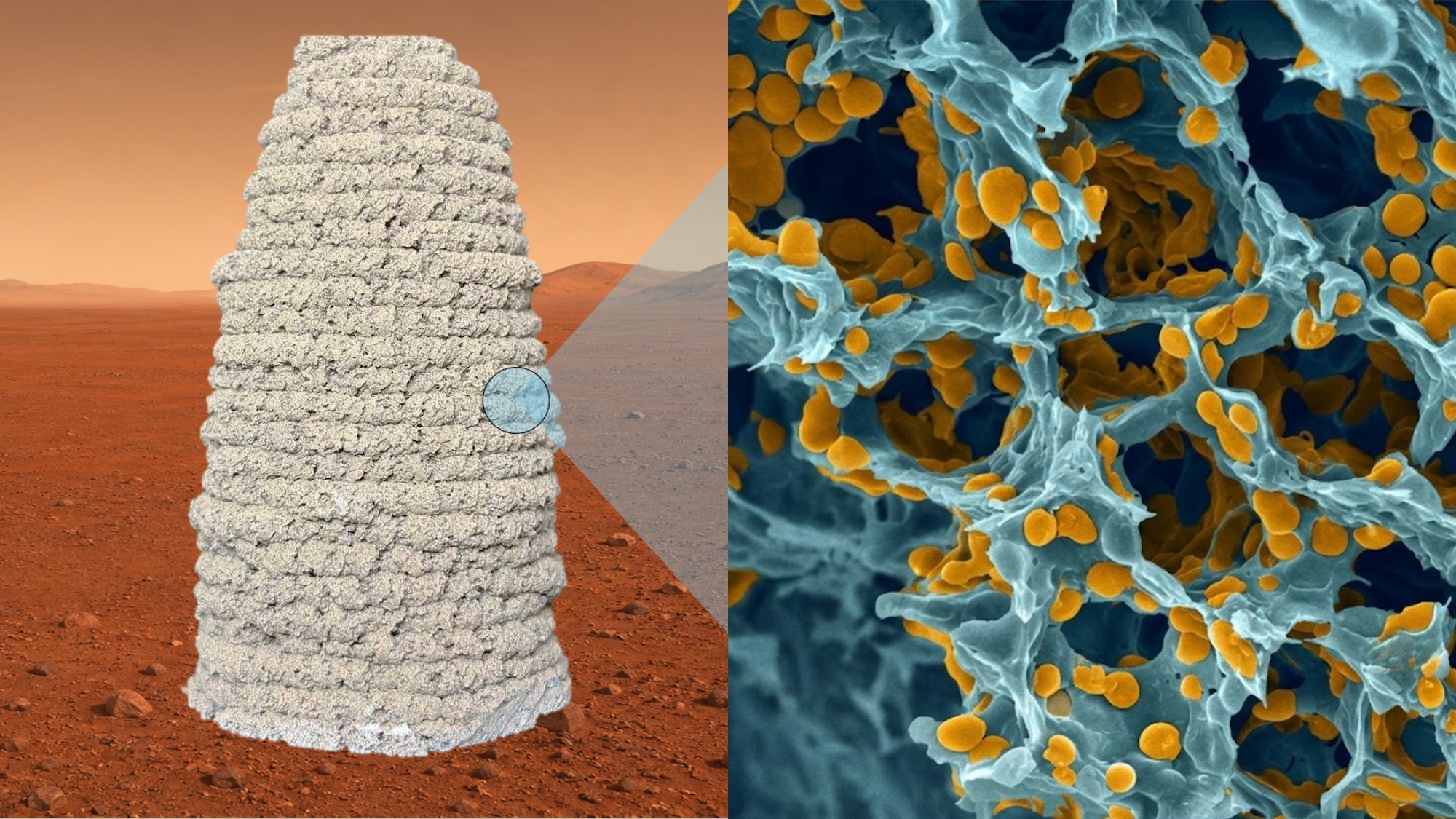
However, there is a very specific process on Earth that approximates similar conditions to the Red Planet: freeze-drying. According to researchers at The Hong Kong University of Science and Technology, the same method used to preserve perishable foods could also inspire sturdy and even recyclable 3D-printed houses on Mars. The secret ingredients? Everyday gelatin and yeast. The novel approach is detailed in a study published today in the journal Chem Circularity.
“My inspiration came from freeze-dried fruits that become harder. So I asked myself if we can take advantage of that and make some materials,” Jishen Qiu, a study co-author and civil engineer, said in a statement.
The combination of materials are simple: sand and an adhesive binder. Since gluing tiny rocks together requires specialized stickiness, Qiu’s team invented a new concoction from gelatin and lab engineered yeast. When mixed, the yeast microbes become coated with adhesive proteins similar to those used by mussels to anchor on stones underwater. The goop is then extruded through a 3D printer nozzle into an extremely cold, low-pressure environment, where it solidifies as the water instantly freezes and converts from ice to vapor. The final result is a light, porous, foam-like material that remains very resilient.
“This is actually strong enough to build a one- or two-story building on Earth—whose gravity is three times that of Mars,” explained Qiu. “So, you can probably easily build a multistory building on Mars with the material.”
Qiu and his collaborators know they must first start small before expanding to Martian neighborhoods. Their prototype domes are only about the size of a wine cork at this point, but their compressive strength is comparable to low-grade concrete.
Engineers have experimented with 3D-printed structures to use on the moon and Mars for years, but many of these still require steps like melting down rocks or lunar regolith. These methods usually require a lot of extra energy, which may limit their utility. Qiu’s technique requires comparatively little energy, although he admits it’s still unclear if yeasts can withstand life on Mars. That said, the team’s early results are a promising step towards simple, efficient, and sturdy buildings beyond Earth. If nothing else, yeast also lends itself to trial-and-error.
“As long as there’s one yeast that’s still alive, you can grow them again,” added Qiu.
Signals that appear to show ions moving through a battery material may sometimes be caused by nothing more than a rough surface, according to new research from the Korea Advanced Institute of Science and Technology, or KAIST. The discovery could help scientists avoid misleading measurements while developing faster-charging and longer-lasting batteries. It may be especially […]

 Login