❌

Reading view

Astronomers Discover First-Ever Three-Lobed Asteroid

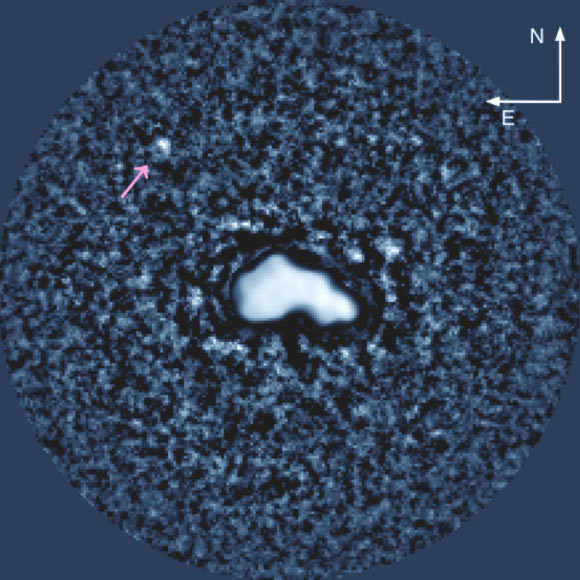
This image of the Nysa system was captured on February 15, 2026. Image credit: Minker et al., arXiv: 2607.25786.

High-resolution images from ESO’s Very Large Telescope and the Large Binocular Telescope reveal that the E-type asteroid (44) Nysa may be unlike any other world in the Solar System, with three connected lobes and a newly discovered satellite that could help explain how the bizarre object formed.

The post Astronomers Discover First-Ever Three-Lobed Asteroid appeared first on Sci.News: Breaking Science News.

  •  

RecapMed é um app que reúne dados sobre dor, sintomas e medicamentos

Quando a nossa saúde exige mudanças repentinas de rotina, organizar a frequência e a quantidade de medicações e horários para consultas/exames pode se tornar um desafio. Foi a partir dessa necessidade que o desenvolvedor brasileiro Wilton Fernandes criou o RecapMed, uma espécie de diário sobre dores, sintomas e medicamentos.

Entre os seus recursos, destacam-se o registro de dor — que possui indicadores de região e uma escala visual para intensidade, além do tipo (pontada, queimação, choque, peso, formigamento, pressão, rigidez ou latejante) —, notificações e acompanhamento de adesão a medicamentos (permitindo registrar as doses tomadas para alimentar automaticamente o cálculo do percentual de adesão) e o Health Vault, que permite anexar exames, receitas e laudos em um espaço com acesso protegido por autenticação biométrica. Todos os registros são armazenados localmente, sem processamento em nuvem.

App RecapMed

Outra funcionalidade bem interessante é o Doctor Brief, que consolida todos os seus registros em um documento PDF resumido que pode ser compartilhado com o médico na hora da consulta, para que ele compreenda seu quadro clínico rapidamente.

O app também é compatível com o Apple Watch, permitindo registrar dores, confirmar doses de medicamento e acompanhar a sua porcentagem de hidratação, sincronizando automaticamente as informações registradas no iPhone.

O RecapMed pode ser adquirido na App Store por R$10 — não contando com nenhum tipo de assinatura ou compra interna.

  •  

Astronomers Directly Image Betelgeuse’s Long-Suspected Stellar Companion

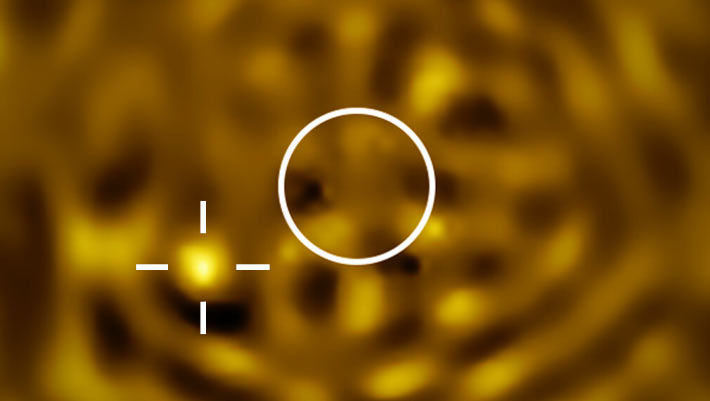
This VLT/SPHERE image shows the clearest image ever of what likely is Betelgeuse B. Image credit: ESO / Montargès et al.

After a century of speculation, astronomers using ESO’s Very Large Telescope (VLT) have captured the clearest evidence yet that the red supergiant Betelgeuse is orbited by a faint companion star.

The post Astronomers Directly Image Betelgeuse’s Long-Suspected Stellar Companion appeared first on Sci.News: Breaking Science News.

  •  

Planetary-Mass Exomoon Found Circling Brown Dwarf

This illustration shows the stellar system CD-35 2722, with the newly found exomoon at the center; the star has about half the mass of our Sun, and it is orbited by a brown dwarf, the reddish-brown object seen here in the foreground (right). Image credit: ESO / M. Kornmesser.

Astronomers using ESO’s Very Large Telescope (VLT) have discovered a gas giant around a brown dwarf in the stellar system CD-35 2722.

The post Planetary-Mass Exomoon Found Circling Brown Dwarf appeared first on Sci.News: Breaking Science News.

  •  

Dos bebés fueron enterrados en una antigua letrina romana del santuario de Artemisa en Éfeso en el siglo VIII, siglos después del abandono del edificio

El hallazgo se produjo en el lugar menos esperado. Durante las excavaciones en el Odeón de Éfeso, un edificio dedicado a representaciones musicales y poéticas construido en el siglo I de nuestra era, los arqueólogos localizaron en 2010 un pequeño enterramiento que ha permanecido oculto durante más de doce siglos. No se trataba de una […]

  •  

Puzzling Near-Earth Asteroid Turns Out to Be Comet with Weak Tail

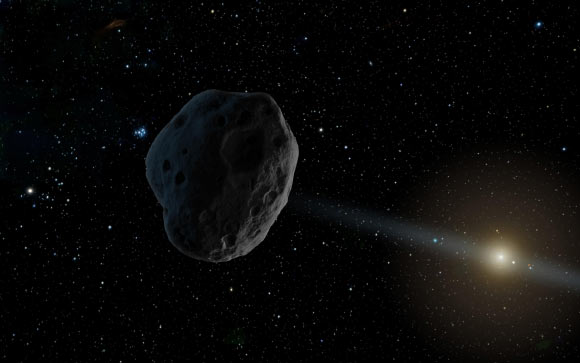
This artist’s concept depicts a near-Earth asteroid with an elongated orbit; a few objects such as these can exhibit significant perturbations in their motion around the Sun and, like 1998 SH2, could turn out to be regular comets with a weak tail and coma. Image credit: NASA / JPL-Caltech.

The near-Earth object (875163) 1998 SH2, which is currently classified as an asteroid, has revealed a hidden identity: it’s actually a comet in disguise, according to a new study published in the journal Nature Astronomy.

The post Puzzling Near-Earth Asteroid Turns Out to Be Comet with Weak Tail appeared first on Sci.News: Breaking Science News.

  •  

Astronomers Discover and Directly Image Third Planet in Beta Pictoris System

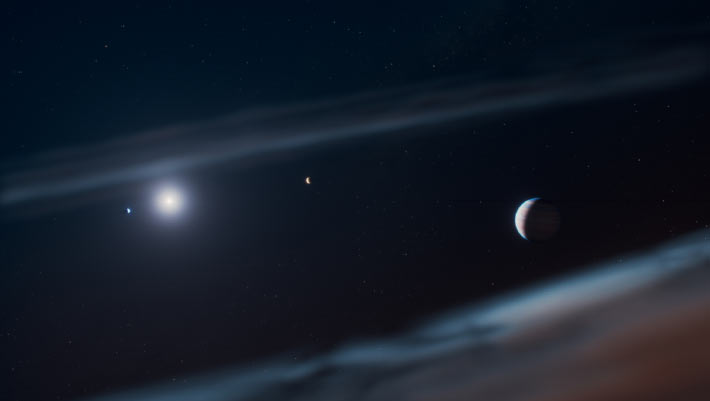
This artist’s concept shows the Beta Pictoris system with the discovered giant exoplanet Beta Pictoris d at the right. Image credit: NASA / ESA / CSA / STScI / Ralf Crawford, STScI.

Named Beta Pictoris d, the newly-discovered world is 100 times fainter than Beta Pictoris b -- the first planet discovered around the A5-type star Beta Pictoris -- and is among the lightest exoplanets ever to be imaged from the ground.

The post Astronomers Discover and Directly Image Third Planet in Beta Pictoris System appeared first on Sci.News: Breaking Science News.

  •  

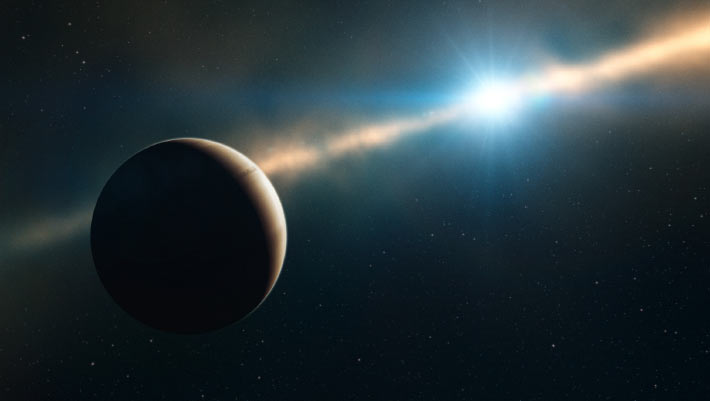
Astronomers Probe Chemistry of Giant Exoplanet Beta Pictoris b

This artist’s impression shows how the gas giant exoplanet inside the disc of Beta Pictoris may look. Image credit: L. Calçada / ESO.

Using the upgraded GRAVITY+ instrument on ESO’s Very Large Telescope Interferometer (VLTI), astronomers have measured the ratio of carbon isotopes in the atmosphere of the young exoplanet Beta Pictoris, offering new insights into how giant planets form.

The post Astronomers Probe Chemistry of Giant Exoplanet Beta Pictoris b appeared first on Sci.News: Breaking Science News.

  •  

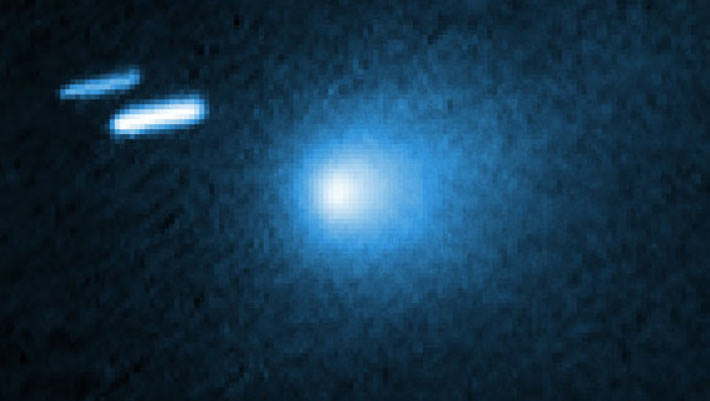
Interstellar Comet 3I/ATLAS Formed Up To 12 Billion Years Ago, New Observations Suggest

Hubble captured this image of 3I/ATLAS on July 21, 2025, when the comet was 446 million km (277 million miles) from Earth. Image credit: NASA / ESA / David Jewitt, UCLA / Joseph DePasquale, STScI.

The interstellar comet 3I/ATLAS carries a chemical fingerprint unlike anything in our Solar System, and it may have formed 10 to 12 billion years ago, before our Sun even existed, according to two papers published in the journal Nature.

The post Interstellar Comet 3I/ATLAS Formed Up To 12 Billion Years Ago, New Observations Suggest appeared first on Sci.News: Breaking Science News.

  •  

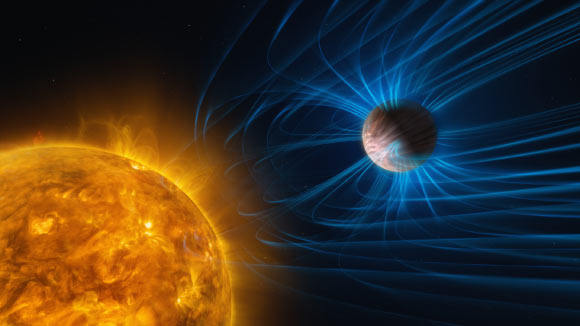
Astronomers Detect Clearest Signs Yet of Magnetic Fields on Extrasolar Planets

This illustration shows magnetic activity in an ultra-hot Jupiter. Image credit: ESO / M. Kornmesser / L. Calçada.

By tracking fierce winds racing through the atmospheres of seven ultra-hot Jupiters, astronomers have uncovered the strongest evidence yet that magnetic fields shape weather on worlds beyond our Solar System.

The post Astronomers Detect Clearest Signs Yet of Magnetic Fields on Extrasolar Planets appeared first on Sci.News: Breaking Science News.

  •  
❌